
High sensitivity cardiac troponin I at presentation enables
High sensitivity cardiac troponin I at presentation enables early safe discharge Dr Clare Ford Consultant Clinical Scientist Royal Wolverhampton NHS Trust UK
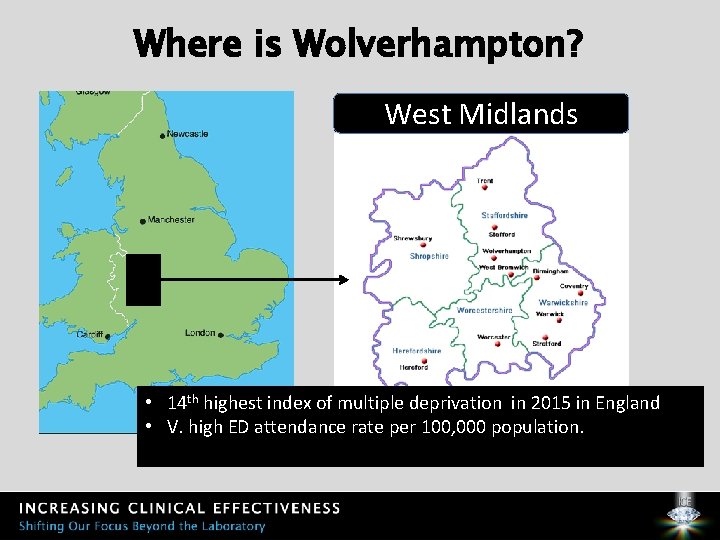
Where is Wolverhampton? West Midlands • 14 th highest index of multiple deprivation in 2015 in England • V. high ED attendance rate per 100, 000 population.
ED chest pain pathway 2012 • ? Cardiac chest pain AMU for 12 hr c. Tn. • Drivers for change § Commissioners keen to avoid unnecessary hospital admissions. § ED excessive workload § Financial penalties as more than 5% patients exceeding 4 hr ED wait

Where is Wolverhampton? West Midlands

Stafford Hospital Scandal
Introduction of POCT cardiac troponin I in late 2012 • Low risk patients with cardiac chest pain • POCT c. Tn. I measured on admission and 3 hours later.
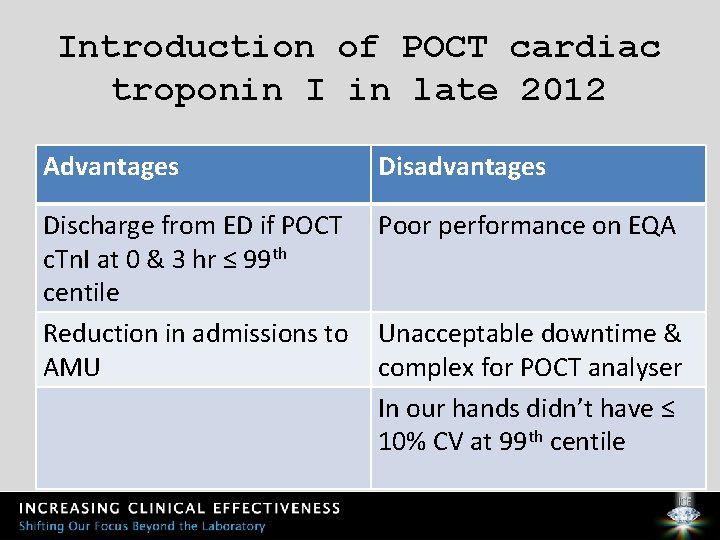
Introduction of POCT cardiac troponin I in late 2012 Advantages Disadvantages Discharge from ED if POCT c. Tn. I at 0 & 3 hr ≤ 99 th centile Reduction in admissions to AMU Poor performance on EQA Unacceptable downtime & complex for POCT analyser In our hands didn’t have ≤ 10% CV at 99 th centile
New Pathology Lab Apr 2013
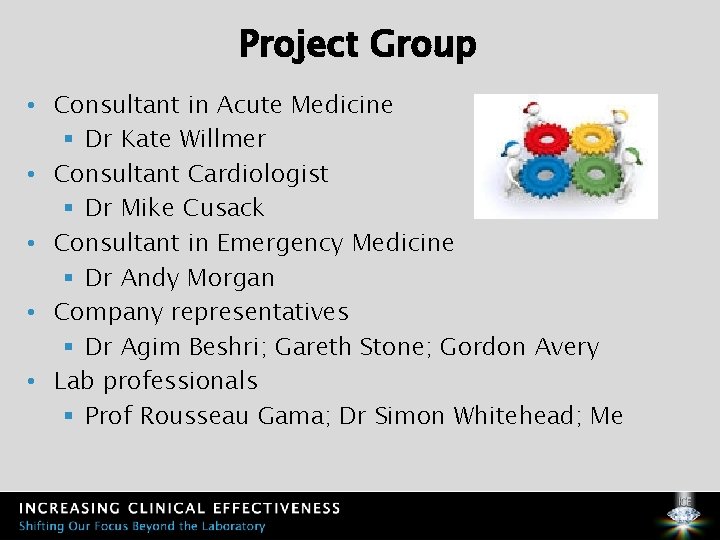
Project Group • Consultant in Acute Medicine § Dr Kate Willmer • Consultant Cardiologist § Dr Mike Cusack • Consultant in Emergency Medicine § Dr Andy Morgan • Company representatives § Dr Agim Beshri; Gareth Stone; Gordon Avery • Lab professionals § Prof Rousseau Gama; Dr Simon Whitehead; Me
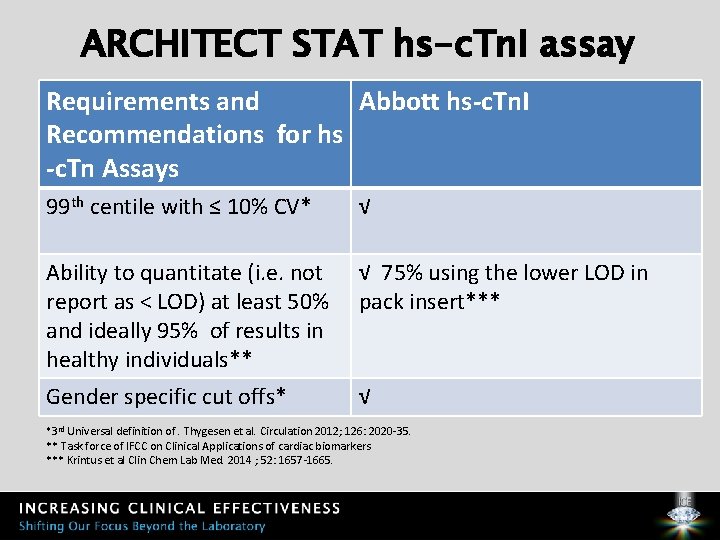
ARCHITECT STAT hs-c. Tn. I assay Requirements and Abbott hs-c. Tn. I Recommendations for hs -c. Tn Assays 99 th centile with ≤ 10% CV* √ Ability to quantitate (i. e. not report as < LOD) at least 50% and ideally 95% of results in healthy individuals** √ 75% using the lower LOD in pack insert*** Gender specific cut offs* √ *3 rd Universal definition of. Thygesen et al. Circulation 2012; 126: 2020 -35. ** Task force of IFCC on Clinical Applications of cardiac biomarkers *** Krintus et al Clin Chem Lab Med. 2014 ; 52: 1657 -1665.
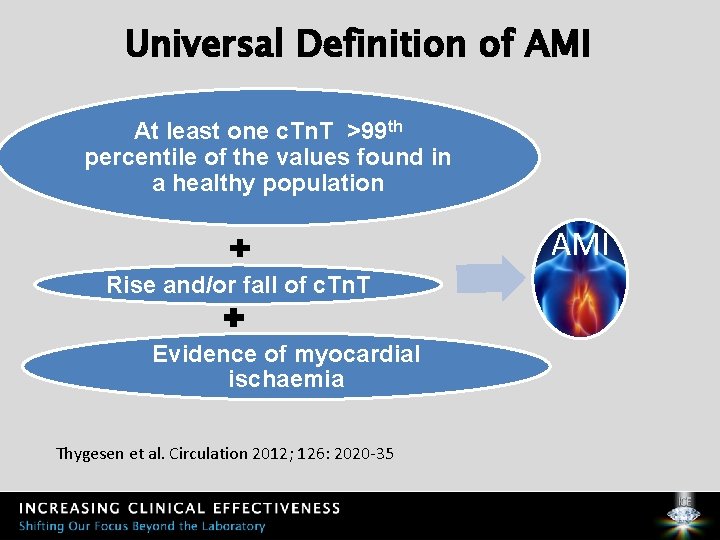
Universal Definition of AMI At least one c. Tn. T >99 th percentile of the values found in a healthy population AMI Rise and/or fall of c. Tn. T Evidence of myocardial ischaemia Thygesen et al. Circulation 2012; 126: 2020 -35
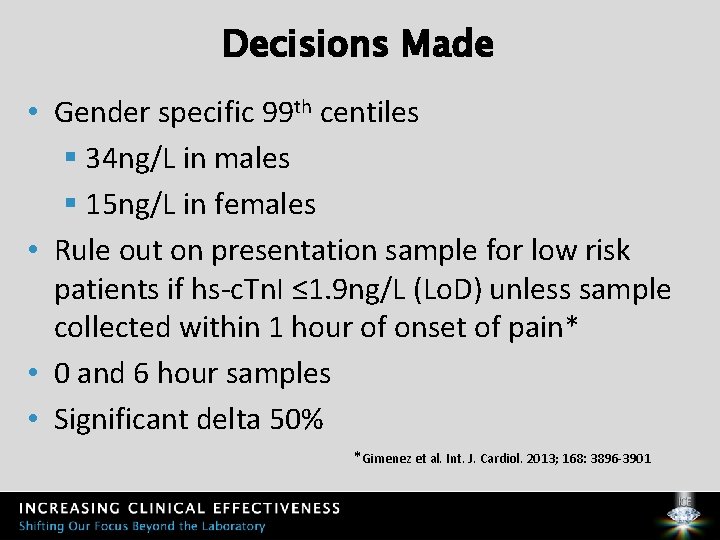
Decisions Made • Gender specific 99 th centiles § 34 ng/L in males § 15 ng/L in females • Rule out on presentation sample for low risk patients if hs-c. Tn. I ≤ 1. 9 ng/L (Lo. D) unless sample collected within 1 hour of onset of pain* • 0 and 6 hour samples • Significant delta 50% *Gimenez et al. Int. J. Cardiol. 2013; 168: 3896 -3901
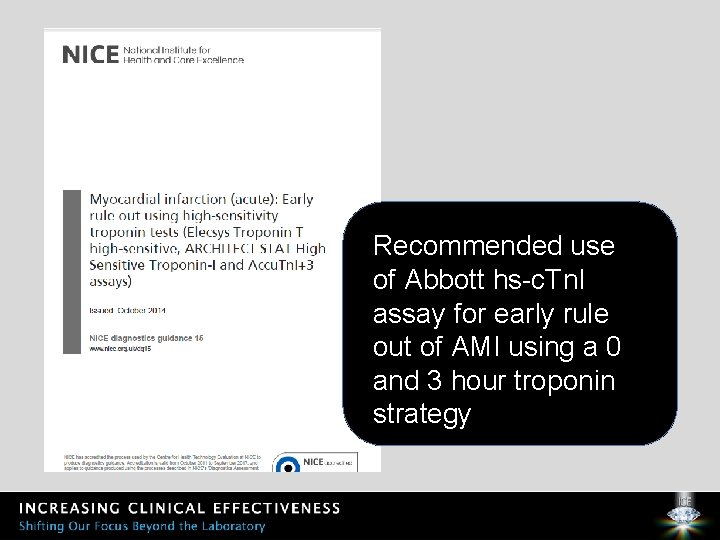
Recommended use of Abbott hs-c. Tn. I assay for early rule out of AMI using a 0 and 3 hour troponin strategy
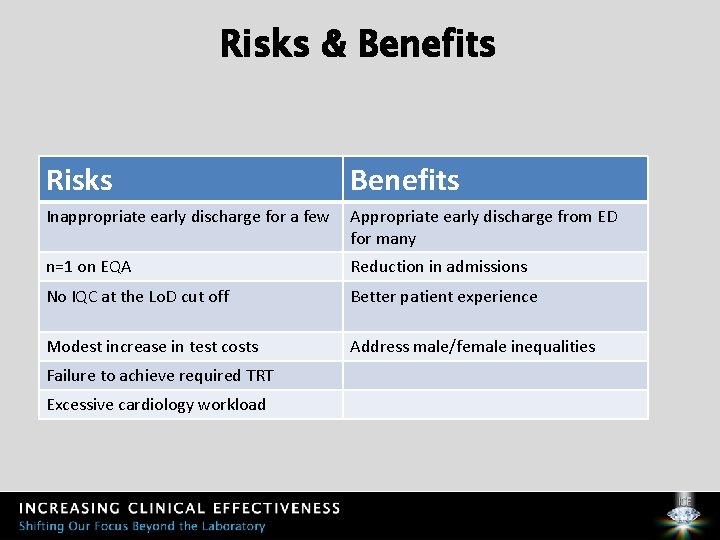
Risks & Benefits Risks Benefits Inappropriate early discharge for a few Appropriate early discharge from ED for many n=1 on EQA Reduction in admissions No IQC at the Lo. D cut off Better patient experience Modest increase in test costs Address male/female inequalities Failure to achieve required TRT Excessive cardiology workload

Implementation • Chest pain pathway designed and agreed • hs-c. Tn. I algorithm designed and agreed • Interpretative comments produced and agreed • IT implemented and tested • Communication strategy compiled

Chest Pain Pathway Immediate clinical assessment & ECG Presentation Sample sent to lab for hs-c. Tn. I (if needed) If low risk & hs-c. Tn. I ≤ 1. 9 ng/L or ≤ 99 th centile if >12 hr post pain: Discharged If hs-c. Tn. I >1. 9 ng/L and patient low risk: CDU If patient high risk: AMU
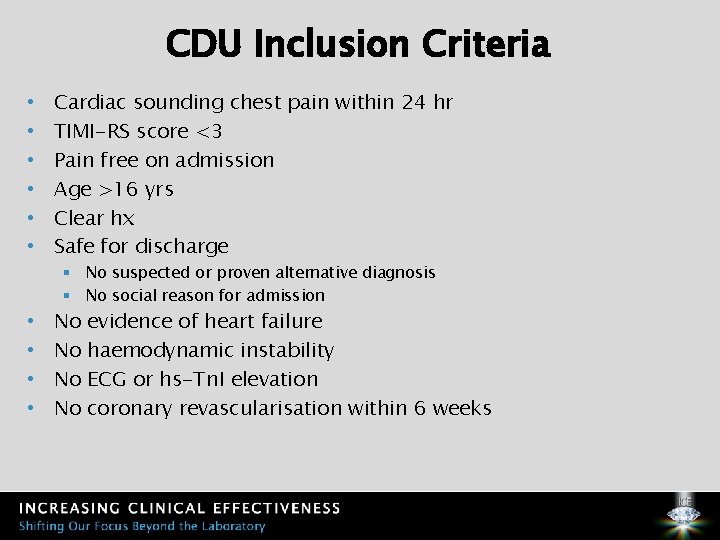
CDU Inclusion Criteria • • • Cardiac sounding chest pain within 24 hr TIMI-RS score <3 Pain free on admission Age >16 yrs Clear hx Safe for discharge § No suspected or proven alternative diagnosis § No social reason for admission • • No No evidence of heart failure haemodynamic instability ECG or hs-Tn. I elevation coronary revascularisation within 6 weeks
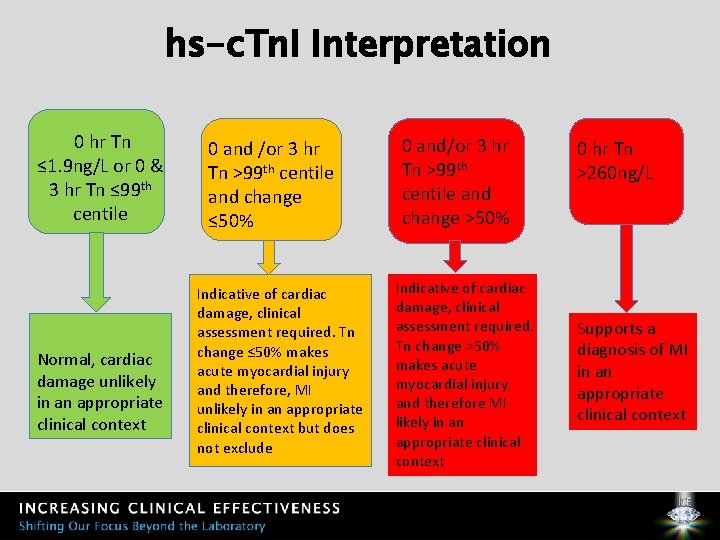
hs-c. Tn. I Interpretation 0 hr Tn ≤ 1. 9 ng/L or 0 & 3 hr Tn ≤ 99 th centile Normal, cardiac damage unlikely in an appropriate clinical context 0 and /or 3 hr Tn >99 th centile and change ≤ 50% Indicative of cardiac damage, clinical assessment required. Tn change ≤ 50% makes acute myocardial injury and therefore, MI unlikely in an appropriate clinical context but does not exclude 0 and/or 3 hr Tn >99 th centile and change >50% Indicative of cardiac damage, clinical assessment required. Tn change >50% makes acute myocardial injury and therefore MI likely in an appropriate clinical context 0 hr Tn >260 ng/L Supports a diagnosis of MI in an appropriate clinical context
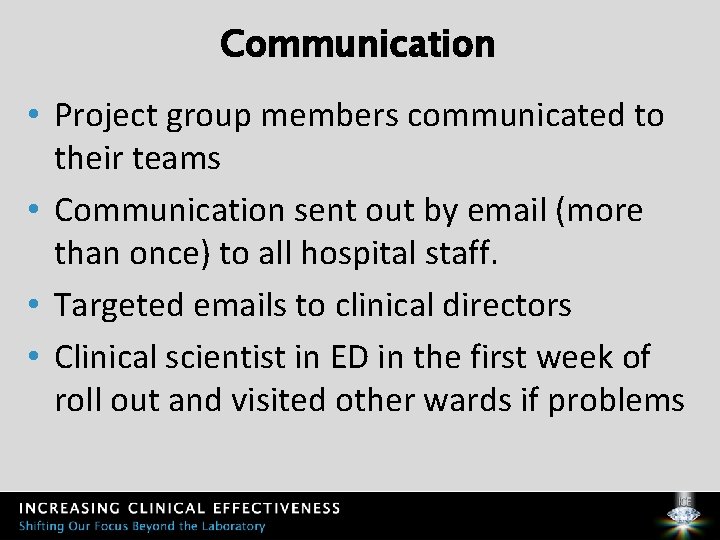
Communication • Project group members communicated to their teams • Communication sent out by email (more than once) to all hospital staff. • Targeted emails to clinical directors • Clinical scientist in ED in the first week of roll out and visited other wards if problems
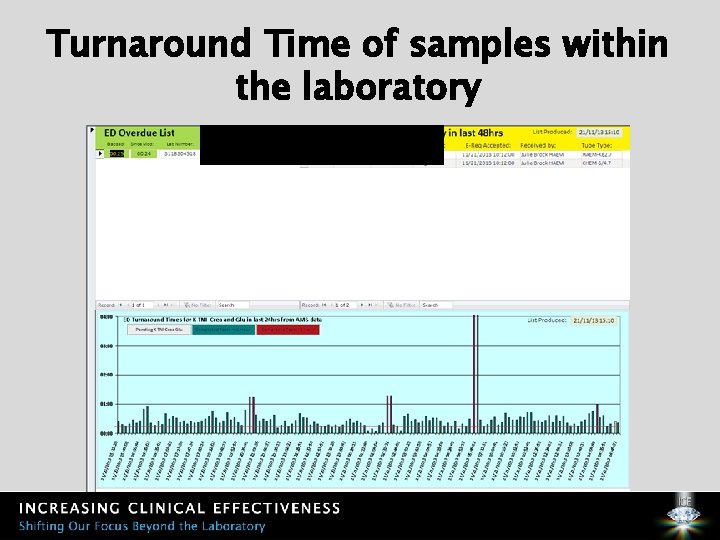
Turnaround Time of samples within the laboratory
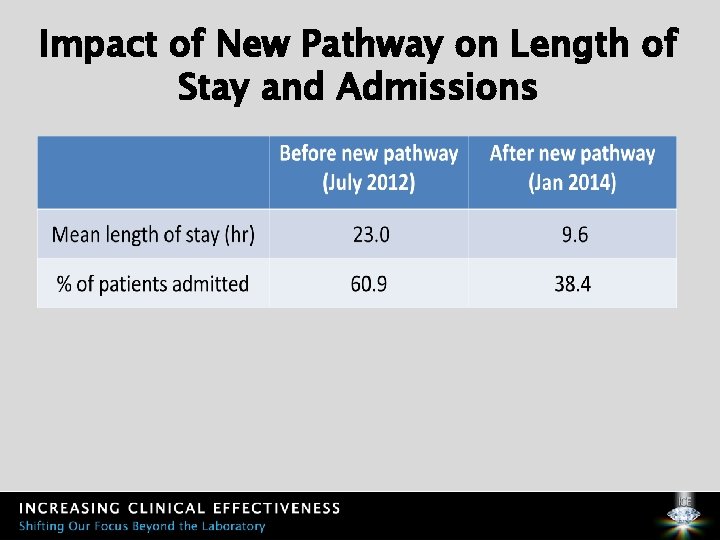
Impact of New Pathway on Length of Stay and Admissions
Impact of pathway on Cardiology The cardiology input of all patients presenting to ED with chest pain was assessed for all presentations in October 2013.
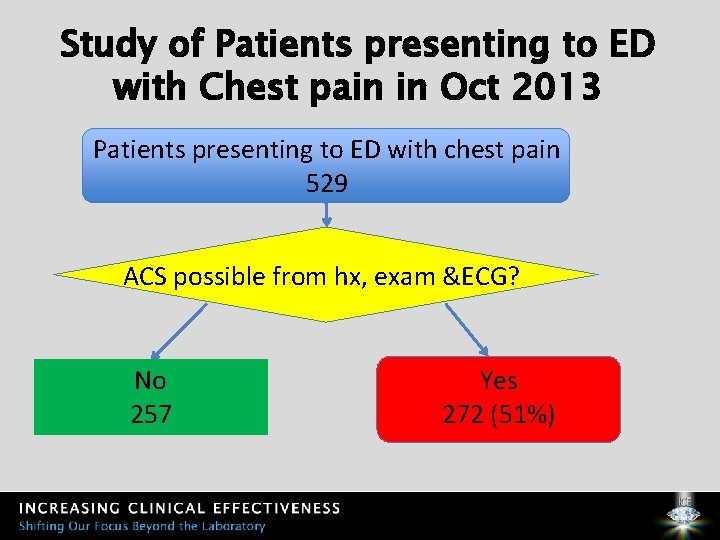
Study of Patients presenting to ED with Chest pain in Oct 2013 Patients presenting to ED with chest pain 529 ACS possible from hx, exam &ECG? No 257 Yes 272 (51%)
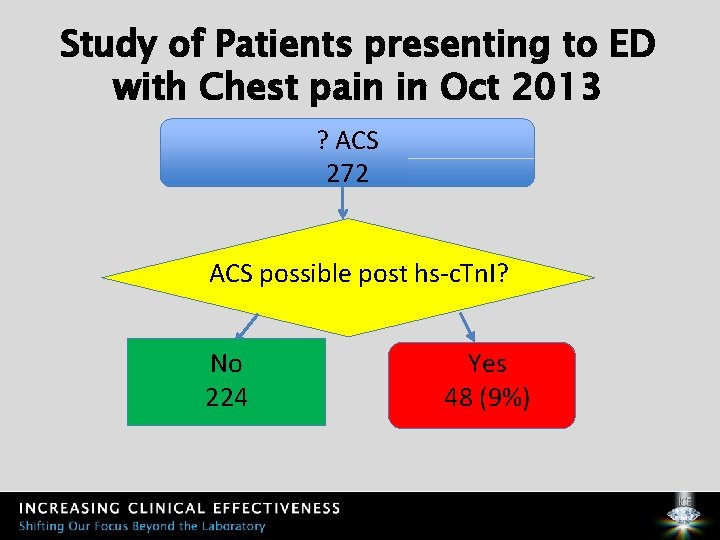
Study of Patients presenting to ED with Chest pain in Oct 2013 ? ACS 272 ACS possible post hs-c. Tn. I? No 224 Yes 48 (9%)
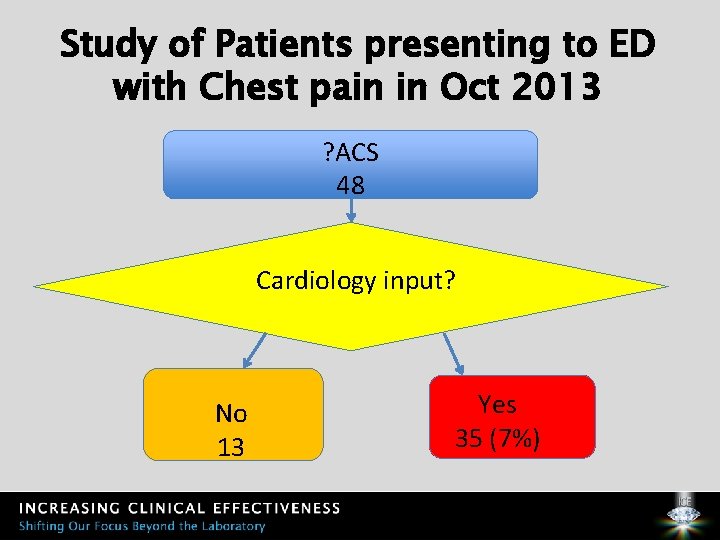
Study of Patients presenting to ED with Chest pain in Oct 2013 ? ACS 48 Cardiology input? No 13 Yes 35 (7%)
Study of the safety of the pathway Study Group • Consecutive patients presenting to ED with chest pain for 6 months (Jul 13 – Jan 14) Exclusions • < 16 yrs • Trauma calls • Self discharge
Study of the safety of the pathway Study Design • Evaluation of NPV of hs-c. Tn. I ≤ 1. 9 ng/L for MACE (defined as death; myocardial infarction; symptom driven revascularisation and readmission for ACS) o At 30 days o At 9 months
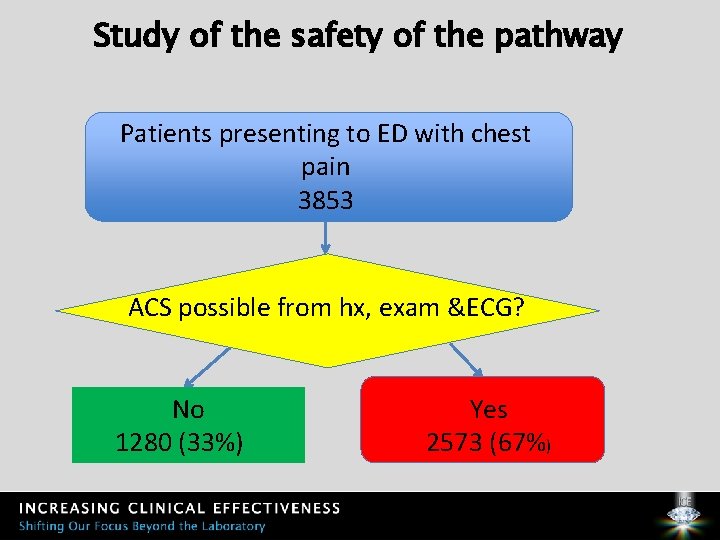
Study of the safety of the pathway Patients presenting to ED with chest pain 3853 ACS possible from hx, exam &ECG? No 1280 (33%) Yes 2573 (67%)
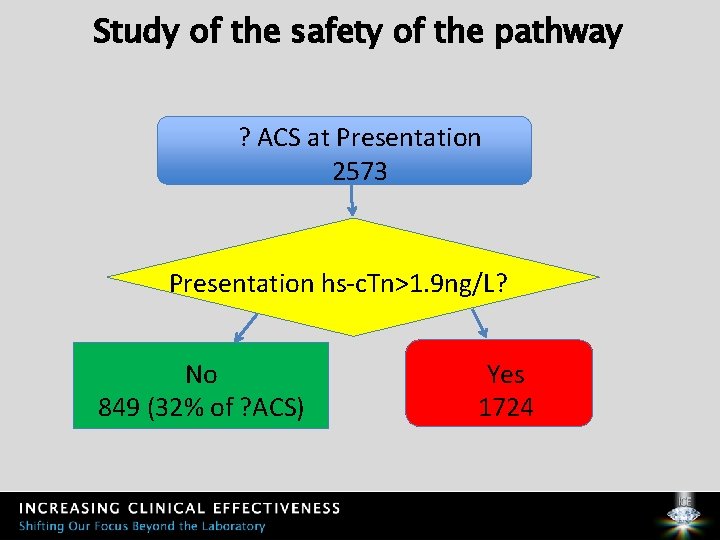
Study of the safety of the pathway ? ACS at Presentation 2573 Presentation hs-c. Tn>1. 9 ng/L? No 849 (32% of ? ACS) Yes 1724
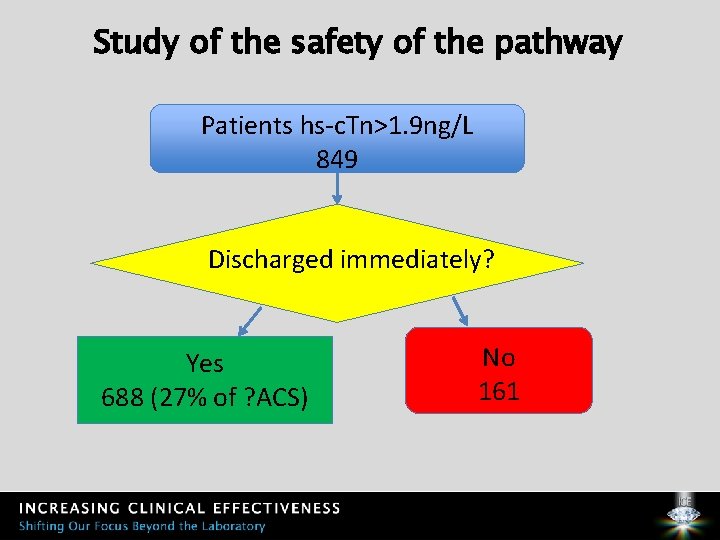
Study of the safety of the pathway Patients hs-c. Tn>1. 9 ng/L 849 Discharged immediately? Yes 688 (27% of ? ACS) No 161
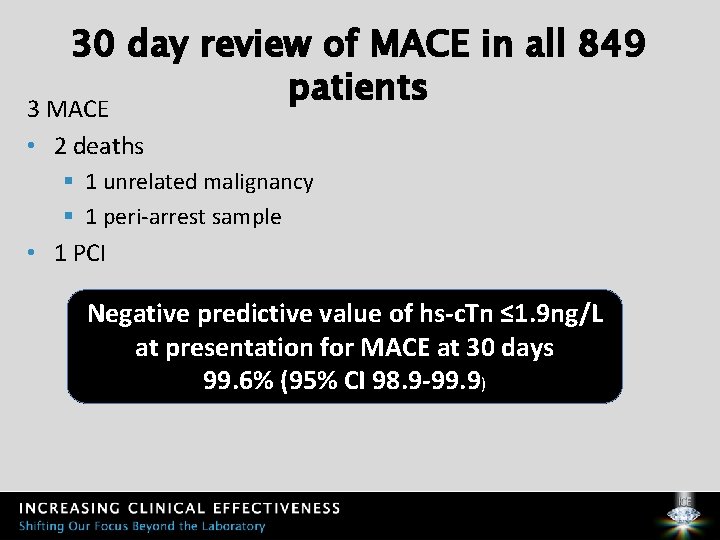
30 day review of MACE in all 849 patients 3 MACE • 2 deaths § 1 unrelated malignancy § 1 peri-arrest sample • 1 PCI Negative predictive value of hs-c. Tn ≤ 1. 9 ng/L at presentation for MACE at 30 days 99. 6% (95% CI 98. 9 -99. 9)
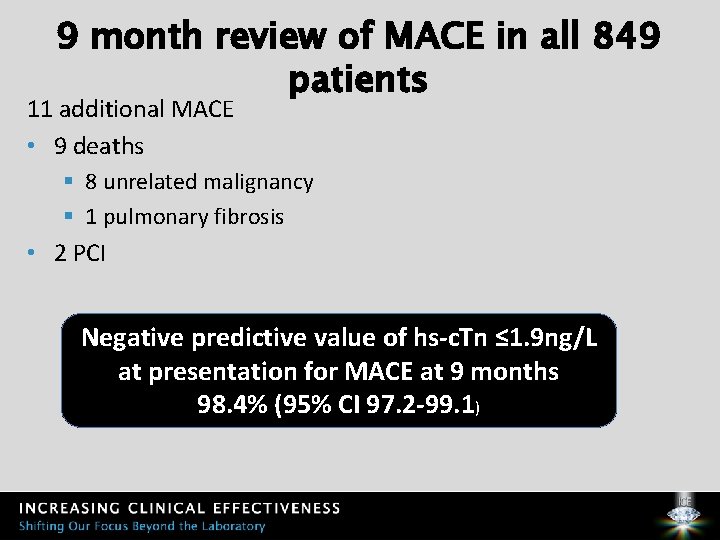
9 month review of MACE in all 849 patients 11 additional MACE • 9 deaths § 8 unrelated malignancy § 1 pulmonary fibrosis • 2 PCI Negative predictive value of hs-c. Tn ≤ 1. 9 ng/L at presentation for MACE at 9 months 98. 4% (95% CI 97. 2 -99. 1)
9 month review of MACE in all 849 patients • One discharged patient had a MACE; elective PCI following ED referral to cardiology • There were no MI or ACS re-presentations
Conclusion ARCHITECT STAT hs-c. Tn. I at presentation may be used to safely discharge over 25% of low clinical risk patients attending ED with possible ACS
Thank you for Listening!
- Slides: 35