
High School History 2 14 Symbols and imagery
High School History 2. 14 Symbols and imagery: Understanding His message.
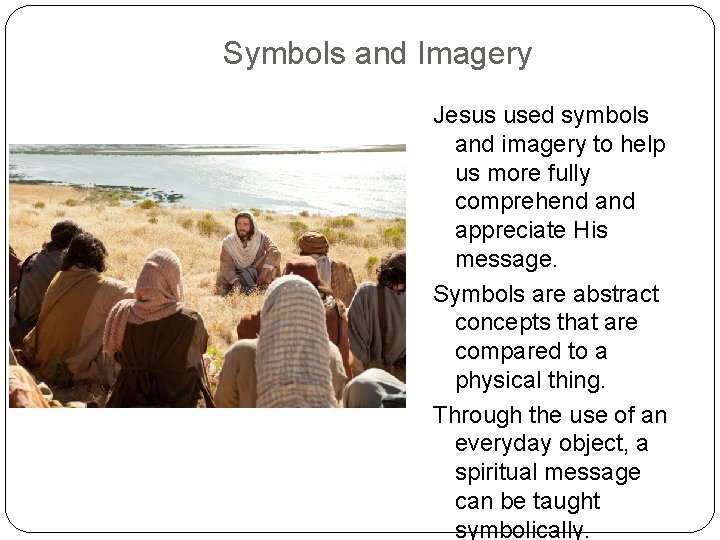
Symbols and Imagery Jesus used symbols and imagery to help us more fully comprehend appreciate His message. Symbols are abstract concepts that are compared to a physical thing. Through the use of an everyday object, a spiritual message can be taught symbolically.
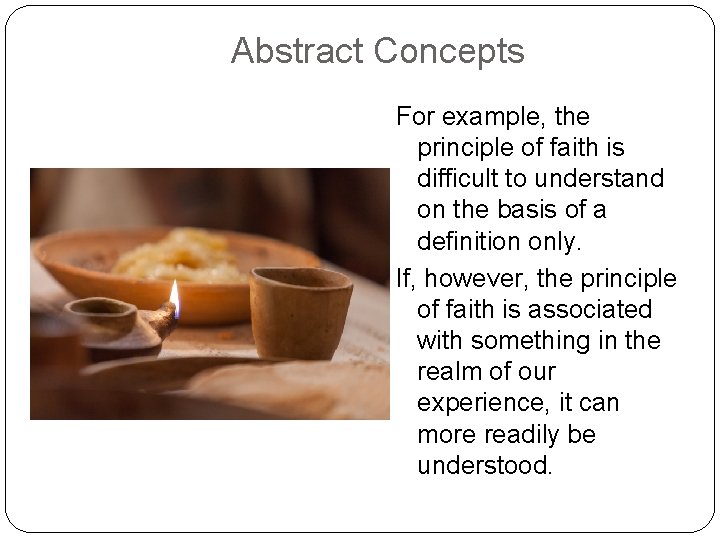
Abstract Concepts For example, the principle of faith is difficult to understand on the basis of a definition only. If, however, the principle of faith is associated with something in the realm of our experience, it can more readily be understood.
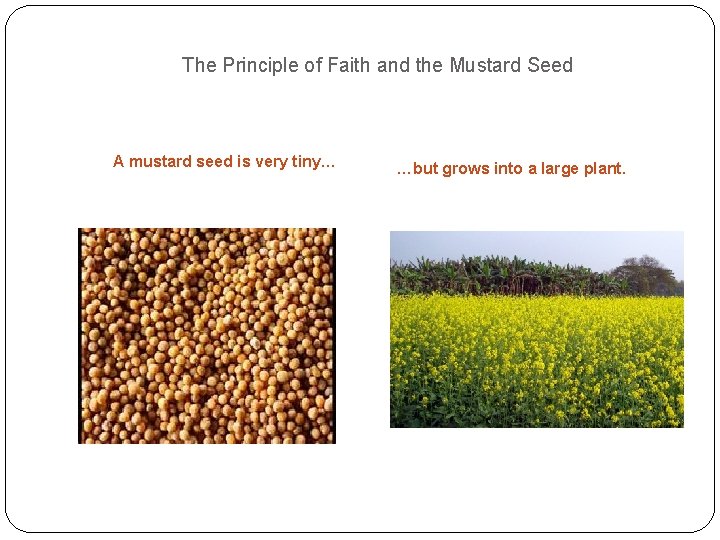
The Principle of Faith and the Mustard Seed A mustard seed is very tiny… …but grows into a large plant.
The Nature of Symbolism ü Symbols broaden our understanding of the gospel, and help us evaluate possible interpretations of their meanings. ü It is necessary to understand the underlying spiritual truths before symbols that relate to those truths can be understood. ü Understanding the Atonement of Christ and its relationship to the laws of justice and mercy require us to recognize the meanings attached to the various aspects of the law of sacrifice. ü Gospel truths are consistent. Truth does not contradict truth. ü All correct interpretations of symbols and figures

Symbolism and Eternity ü Symbolic language and imagery play a central role in teaching man his eternal destiny. ü Religious ordinances and rituals are deeply symbolic, and the scriptures, which contain the word of the Lord revealed for His children, abound with similes, metaphors, parables, allegories, types, and symbols. ü The symbolism is so profound and so extensive that if one does not have an understanding of the meaning of symbolism, many of the most important and satisfying truths will be missed. Elder Jeffrey R. Holland of the Quorum of the Twelve Apostles said, “Every ordinance of the gospel focuses in one way or another on the atonement of the Lord Jesus Christ, and surely that is why this particular ordinance [of the sacrament] with all its symbolism and imagery comes to us more readily and more repeatedly than any other in our life. ”
Why does the Lord use so much symbolic language to teach His children? ü Symbolic language and imagery have the power to convey important truths through many languages and cultures with great power and impact. ü A figurative image can provide powerful teaching impact. ü Couching great truths in symbolic language helped preserve them from those who sought to take away the plain and precious parts of the scriptures. ü Figurative language can convey truth and meaning to all levels of spiritual maturity. ü Symbols deeply affect the emotions and attitudes of an individual.

“How do I know what is symbolic and what is literal? ” ü Notice key words or phrases that imply symbolism —words or phrases such as like, likened, as it were, and like unto. Example: 2 Nephi 15: 28 Whose arrows shall be sharp, and all their bows bent, and their horses’ hoofs shall be counted like flint, and their wheels like a whirlwind, their roaring like a lion. ü Look for symbolism when something being discussed seems unnatural or even impossible: ü Example: Joel 2: 8. “When they fall upon the sword, they shall not be wounded. ”

Look at the symbol in context. A particular symbol may be used to represent different concepts. ü Colors: Purple or scarlet: Royalty; Black: [Calamity, affliction] ü Body Parts: Shoulders: [Carrying, bearing; ] Heart: [The inner man, feelings; ] Loins: [Source of children, offspring] ü Creatures: Serpent: [Evil, deceiver]: Lion: [Power, royalty; ] Locust: [Devastation, destruction] ü Clothing: Being clothed signifies possessing a quality or being in a certain condition: Clothed in righteousness: [Worthy; ] Clothed in shame: [Guilty; ] Clothed in sackcloth: [Humility, sorrow. ]
![Symbolism in Context ü Food: Milk: [Prosperity; ] Fruit: [Results, consequences. ] ü Minerals:](http://slidetodoc.com/presentation_image_h/05fc348a55fd9bffa8448fc8a3c14730/image-10.jpg "Symbolism in Context ü Food: Milk: [Prosperity; ] Fruit: [Results, consequences. ] ü Minerals:")
Symbolism in Context ü Food: Milk: [Prosperity; ] Fruit: [Results, consequences. ] ü Minerals: Clay: Fragility (weak or easily broken); Silver: Of significant value, but less than gold ü Natural Elements: Fire: Purification by the Holy Ghost, destruction of corruption; Winds: Tribulation, opposition ü Objects: Yoke: Captivity, burdens; Keys: Authority ü Places: Zion: The righteous; Sodom and Gomorrah: The wicked ü Ordinances: Baptism: Cleansing; Marriage: Covenant relationship with God ü Actions: Laying on of hands: Conveying power or authority; Washing feet: Humility, cleansing from the influence of the world. ü Numbers: One: Unity—that which is of primary importance; Three: Godhead, presidency
Symbolism centers our thoughts on Christ. Symbol of Bread and Water: The bread and water used in the sacrament are symbols of the Atonement. The ordinance of the sacrament instituted by the Lord at His last supper is a continual reminder of His sacrifice for us. We have the opportunity each Sunday to renew the covenant we made to follow His example and keep His commandments. Partaking of the Sacrament points back in time to the Atonement, whereas the ordinance of sacrifice anciently pointed forward to the Atonement.
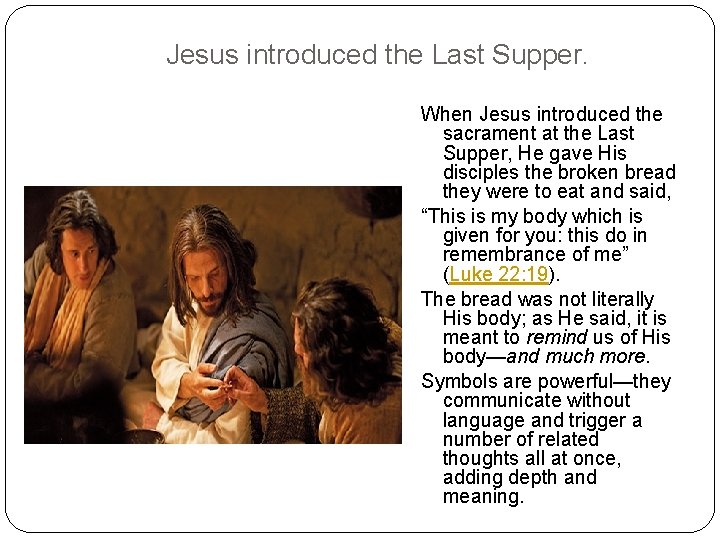
Jesus introduced the Last Supper. When Jesus introduced the sacrament at the Last Supper, He gave His disciples the broken bread they were to eat and said, “This is my body which is given for you: this do in remembrance of me” (Luke 22: 19). The bread was not literally His body; as He said, it is meant to remind us of His body—and much more. Symbols are powerful—they communicate without language and trigger a number of related thoughts all at once, adding depth and meaning.
What is the symbolism of John 6: 35? The Bread of Life: John 6: 35 “And Jesus said unto them, I am the bread of life: he that cometh to me shall never hunger; and he that believeth on me shall never thirst. ”
What is the symbolism of John 4: 14? Symbol of “living water” Mankind needs the “living water” from Christ that leads to everlasting life. John 4: 14 14 But whosoever drinketh of the water that I shall give him shall never thirst; but the water that I shall give him shall be in him a well of water springing up into everlasting life.
The Symbol of the Cross For many in the world, the wooden structure upon which Jesus Christ was crucified is seen as symbol of Christ’s crucifixion and atoning sacrifice. However, the Lord established his own symbols for his crucifixion and sacrifice—the bread and the water of the sacrament. We are told in the scriptures that those who take up their cross are those who love Jesus Christ so much that they deny themselves ungodliness and keep his commandments. What is meant by “taking up the cross? ” JST, Matt. 16: 25 25 Then said Jesus unto his disciples, If any man will come after me, let him deny himself, and take up his cross and follow me.
Temples and Symbolism Elder Russell M. Nelson of the Quorum of the Twelve Apostles said, “…everything in the temple points us to Christ when we are prepared to learn through symbolism. There we are taught in the Master’s way. His way differs from modes of others. His way is ancient and rich with symbolism. ”
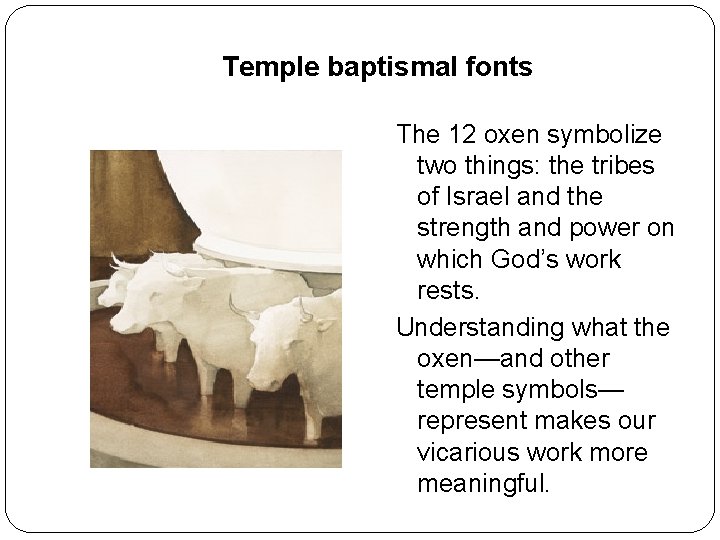
Temple baptismal fonts The 12 oxen symbolize two things: the tribes of Israel and the strength and power on which God’s work rests. Understanding what the oxen—and other temple symbols— represent makes our vicarious work more meaningful.
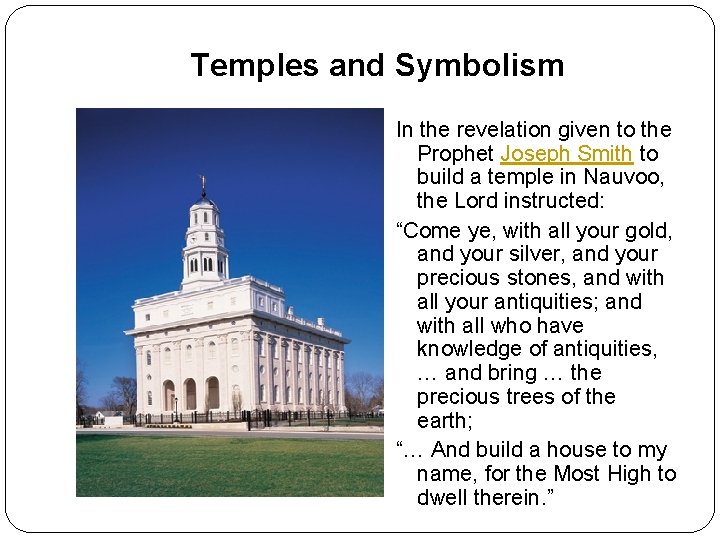
Temples and Symbolism In the revelation given to the Prophet Joseph Smith to build a temple in Nauvoo, the Lord instructed: “Come ye, with all your gold, and your silver, and your precious stones, and with all your antiquities; and with all who have knowledge of antiquities, … and bring … the precious trees of the earth; “… And build a house to my name, for the Most High to dwell therein. ”
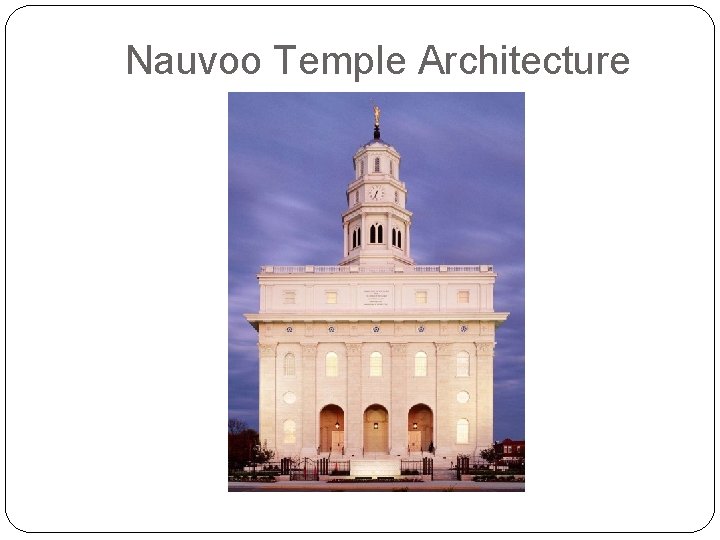
Nauvoo Temple Architecture
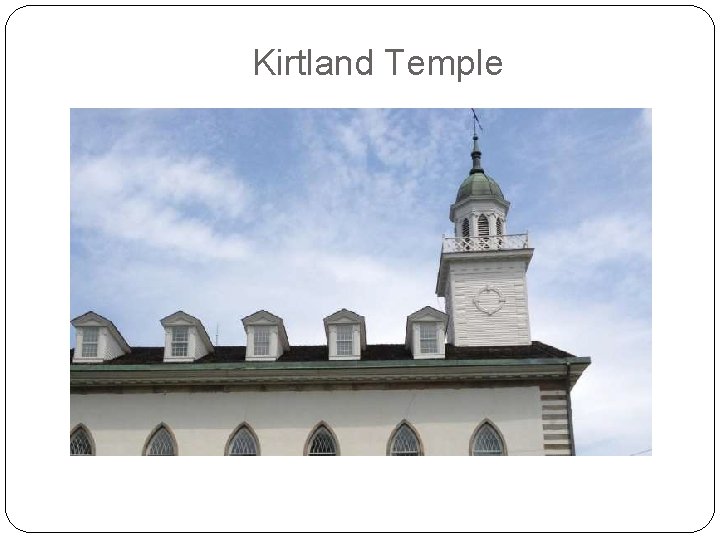
Kirtland Temple
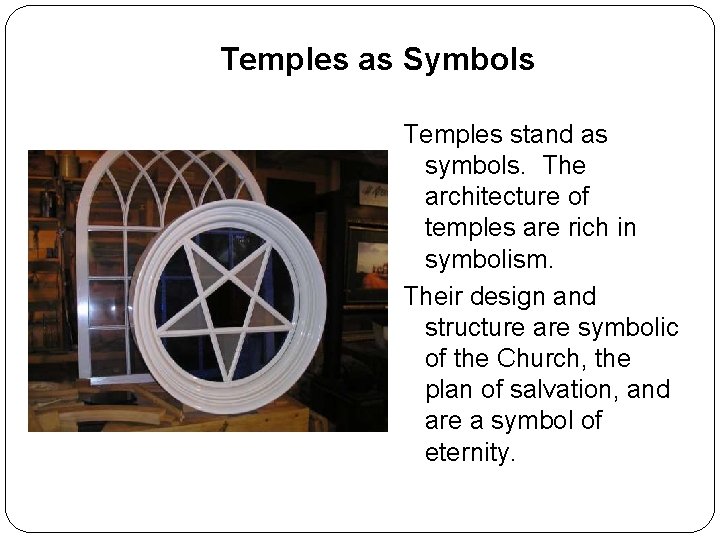
Temples as Symbols Temples stand as symbols. The architecture of temples are rich in symbolism. Their design and structure are symbolic of the Church, the plan of salvation, and are a symbol of eternity.
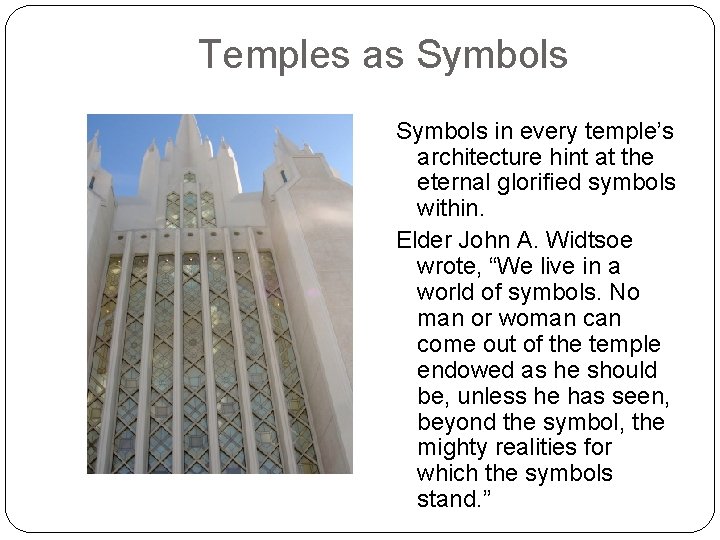
Temples as Symbols in every temple’s architecture hint at the eternal glorified symbols within. Elder John A. Widtsoe wrote, “We live in a world of symbols. No man or woman come out of the temple endowed as he should be, unless he has seen, beyond the symbol, the mighty realities for which the symbols stand. ”
Discussion Reason and Relate Why is it important for Jesus to teach us with symbols? What kind of “everyday” symbols do we have in our lives? Are there any that deeply affect our emotions and attitudes? Why is faith important to our understanding of symbols? Symbol of Faith: Alma 37: 38, 40 38 And now, my son, I have somewhat to say concerning the thing which our fathers call a ball, or director—or our fathers called it Liahona, which is, being interpreted, a compass; and the Lord prepared it. 40 And it did work for them according to their faith in God; therefore, if they had faith to believe that God could cause that those spindles should point the way they should go, behold, it was done; therefore they had this miracle, and also many other miracles wrought by the power of God, day by day.
- Slides: 23