
High resolution infrared spectroscopy of quantum helium nanoclusters
![artist’s impression of He density distribution around an OCS molecule [Wolfgang Jäger, 2006]](https://slidetodoc.com/presentation_image_h2/a7cd08cd5883014747cf2a32bec35ae2/image-49.jpg "artist’s impression of He density distribution around an OCS molecule [Wolfgang Jäger, 2006]")
- Slides: 49
High resolution infrared spectroscopy of quantum helium nanoclusters A. R. W. Mc. Kellar Steacie Institute for Molecular Sciences National Research Council of Canada
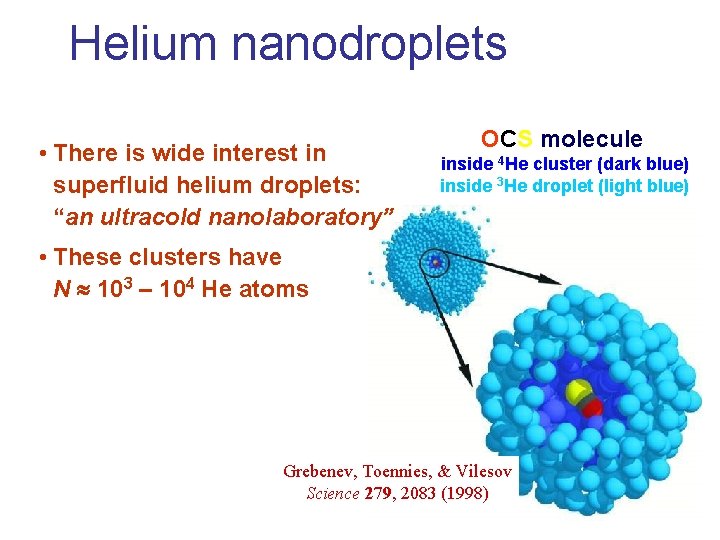
Helium nanodroplets • There is wide interest in superfluid helium droplets: “an ultracold nanolaboratory” OCS molecule inside 4 He cluster (dark blue) inside 3 He droplet (light blue) • These clusters have N 103 – 104 He atoms Grebenev, Toennies, & Vilesov Science 279, 2083 (1998)
Helium clusters This talk is not about nanodroplets, but about smaller helium clusters (N ~ 1 to 100), observed by direct infrared absorption spectroscopy
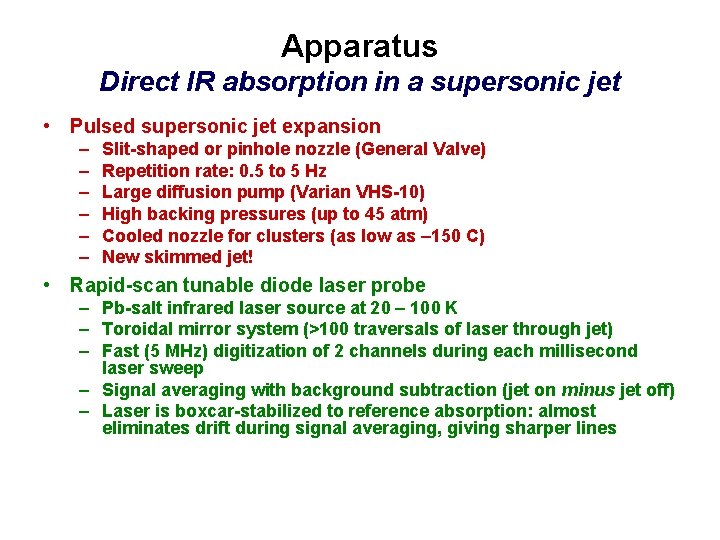
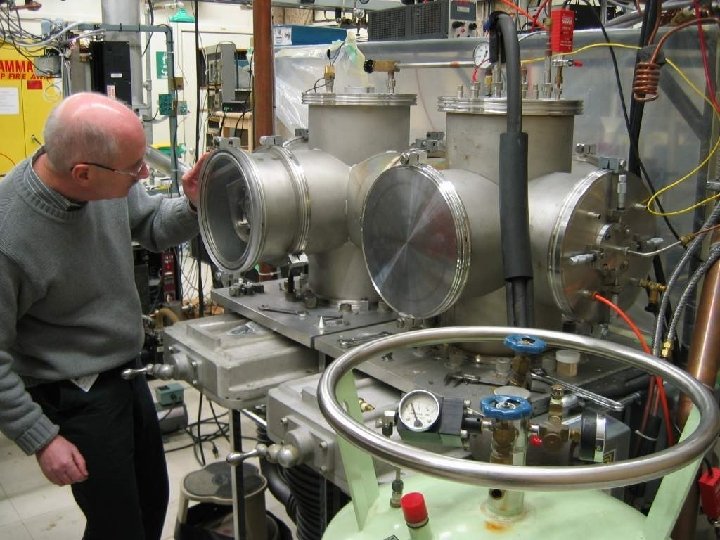
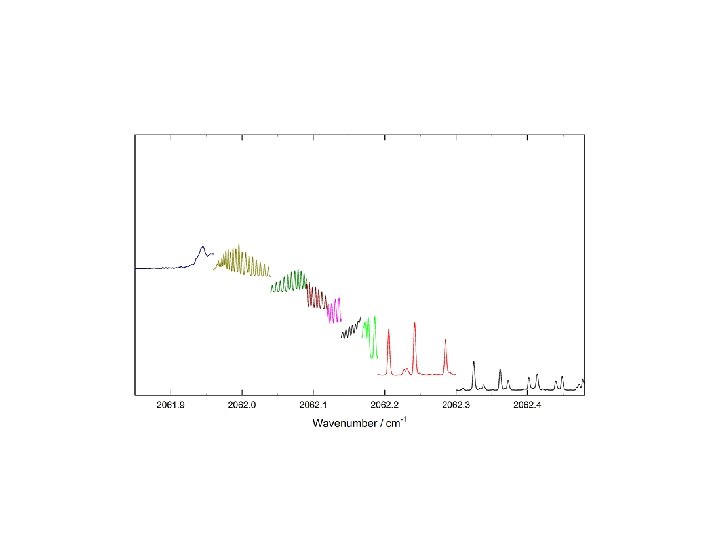
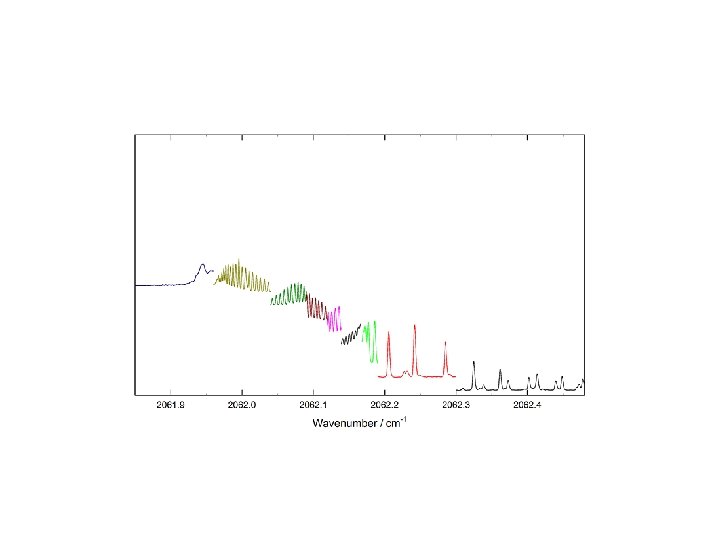
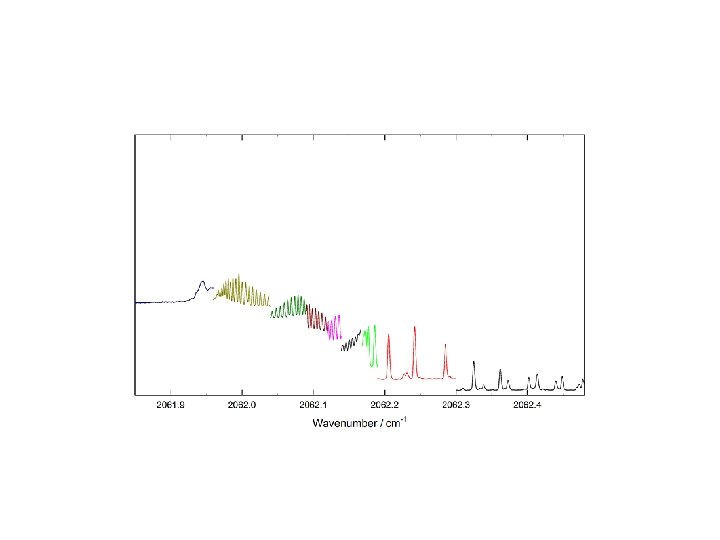
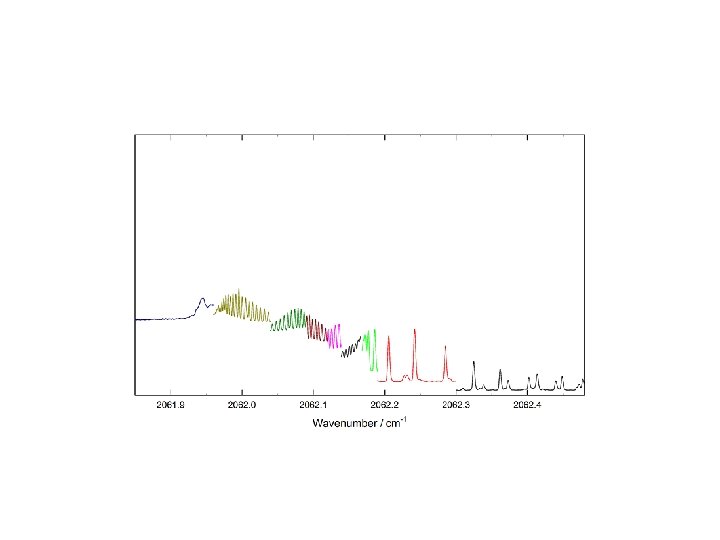
Apparatus Direct IR absorption in a supersonic jet • Pulsed supersonic jet expansion – – – Slit-shaped or pinhole nozzle (General Valve) Repetition rate: 0. 5 to 5 Hz Large diffusion pump (Varian VHS-10) High backing pressures (up to 45 atm) Cooled nozzle for clusters (as low as – 150 C) New skimmed jet! • Rapid-scan tunable diode laser probe – Pb-salt infrared laser source at 20 – 100 K – Toroidal mirror system (>100 traversals of laser through jet) – Fast (5 MHz) digitization of 2 channels during each millisecond laser sweep – Signal averaging with background subtraction (jet on minus jet off) – Laser is boxcar-stabilized to reference absorption: almost eliminates drift during signal averaging, giving sharper lines
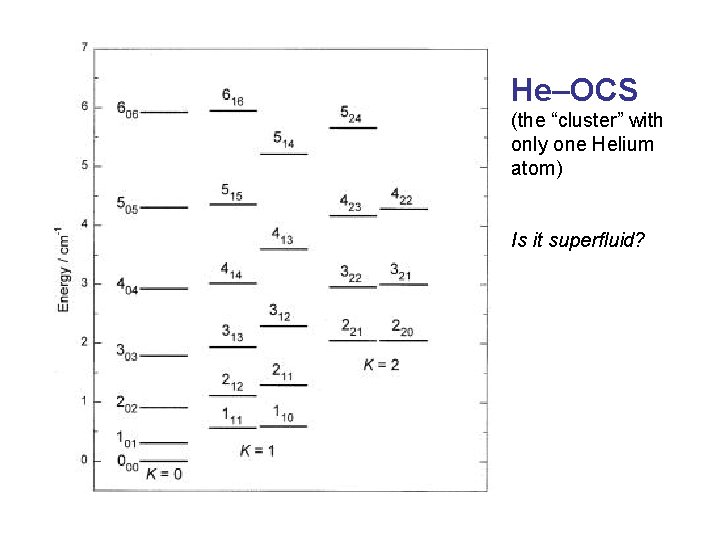
He–OCS (the “cluster” with only one Helium atom) Is it superfluid?
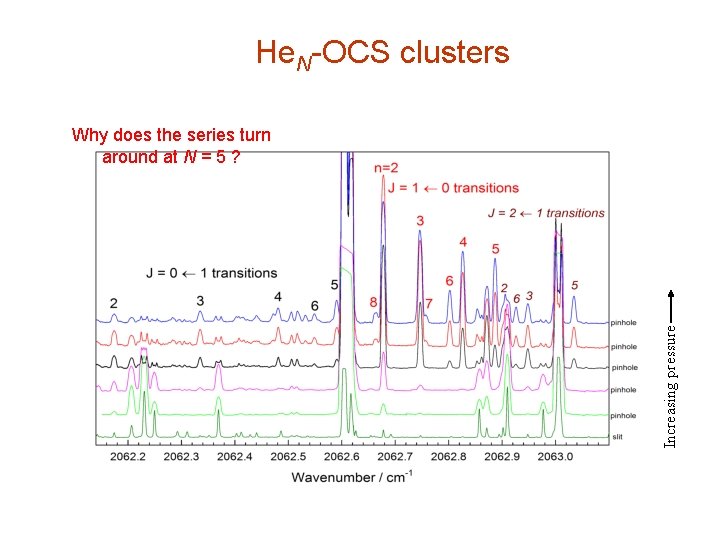
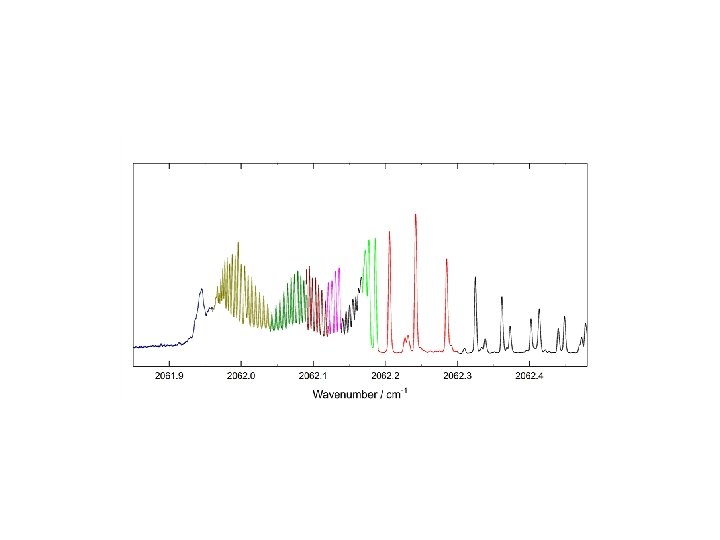
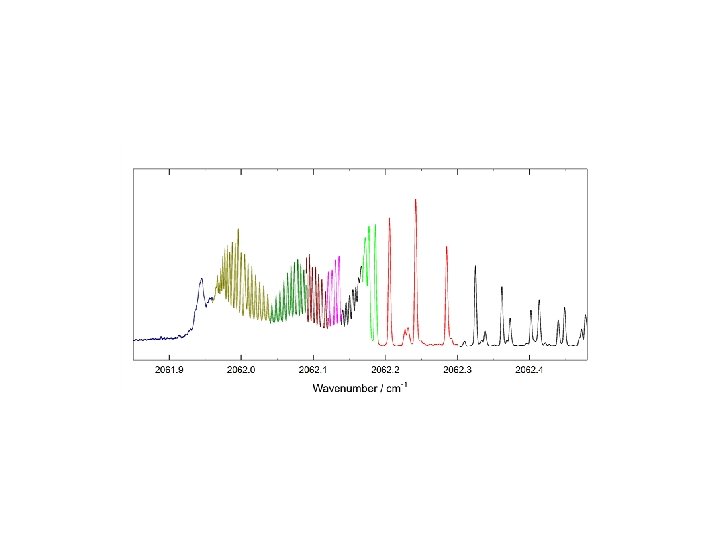
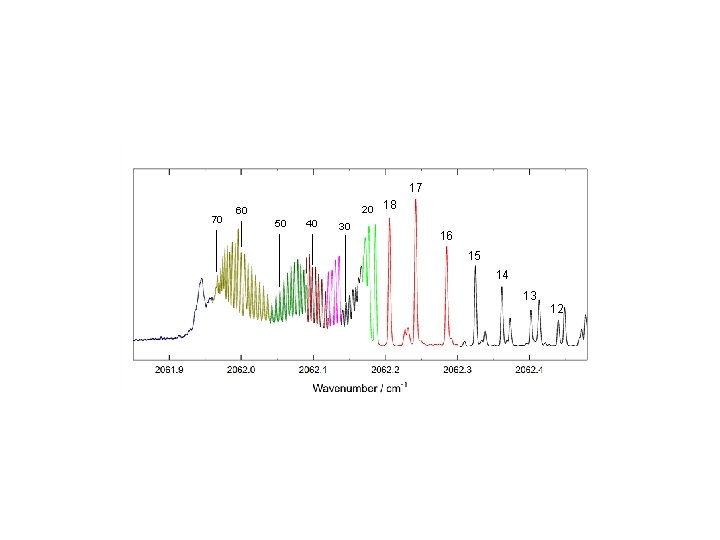
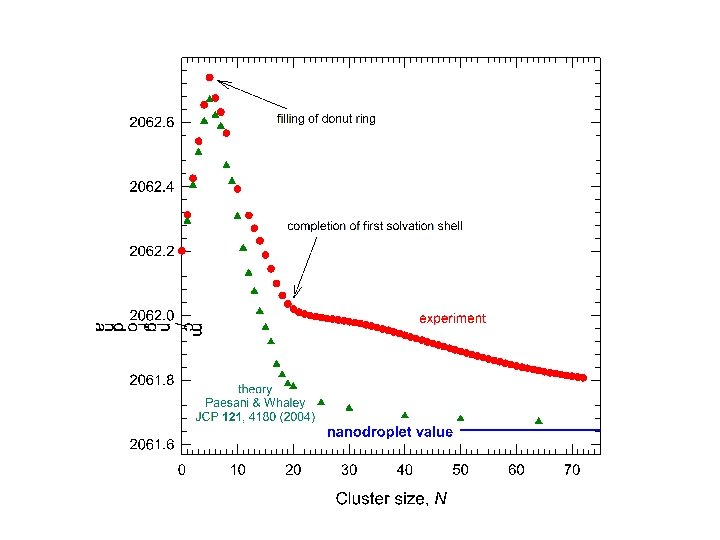
He. N-OCS clusters Increasing pressure Why does the series turn around at N = 5 ?
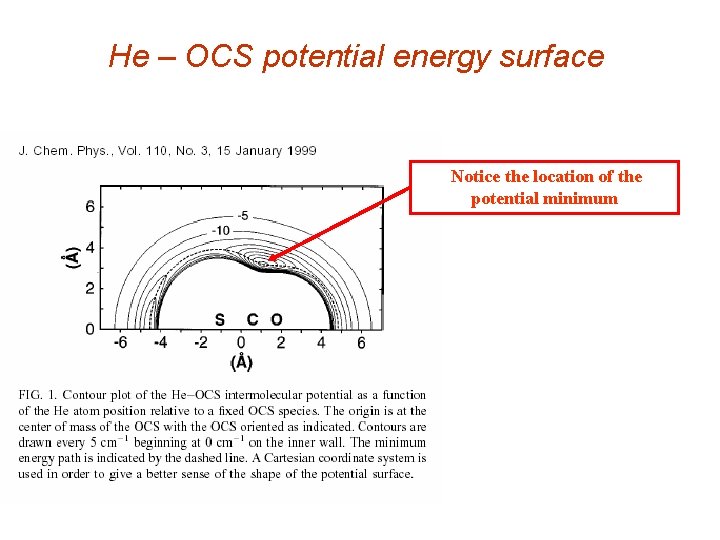
He – OCS potential energy surface Notice the location of the potential minimum
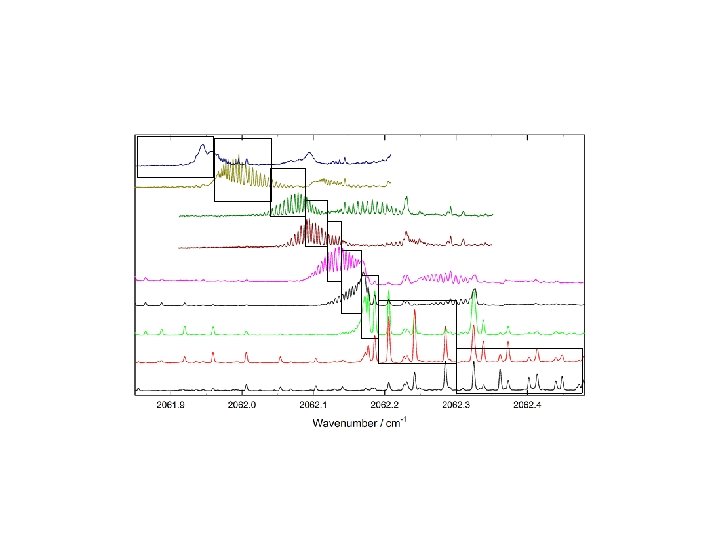
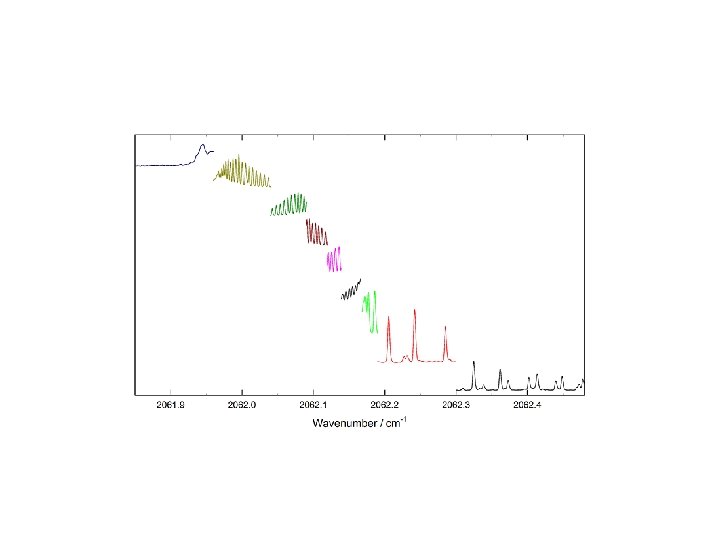
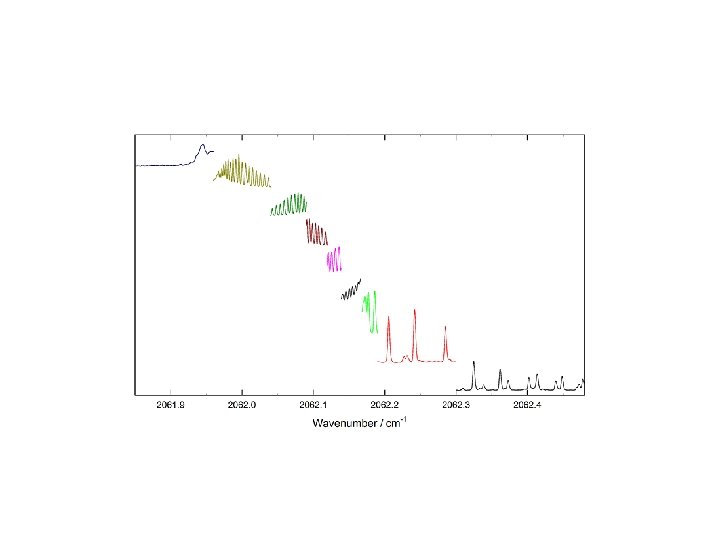
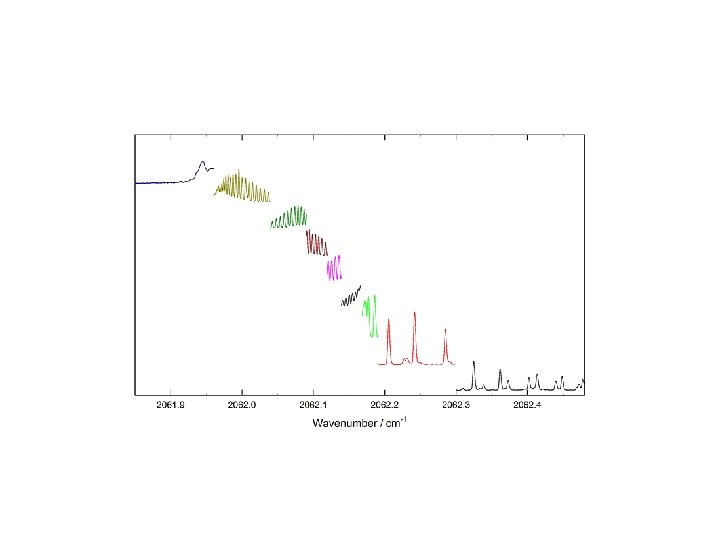
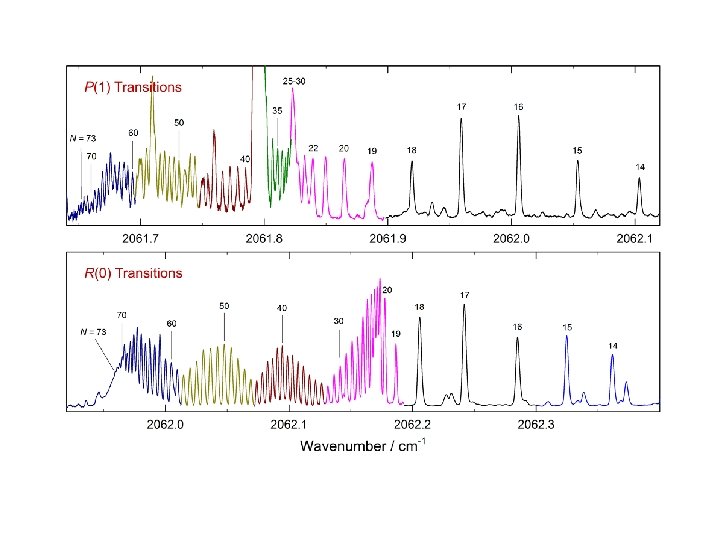
17 70 20 60 50 40 30 18 16 15 14 13 12
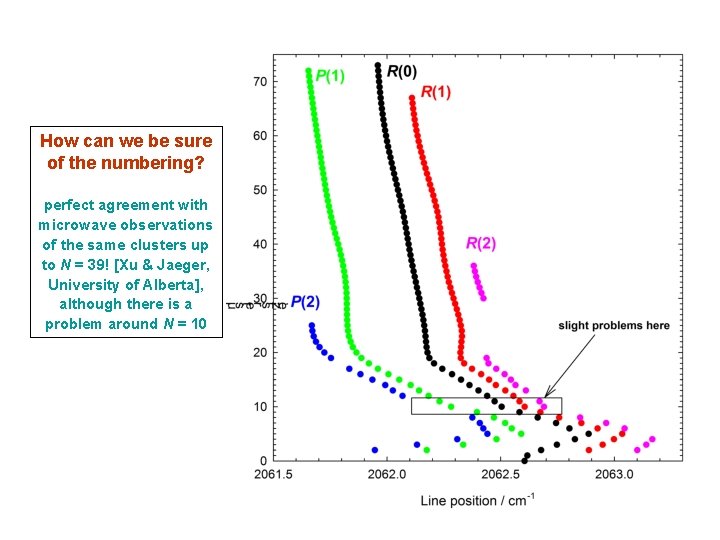
How can we be sure of the numbering? perfect agreement with microwave observations of the same clusters up to N = 39! [Xu & Jaeger, University of Alberta], although there is a problem around N = 10
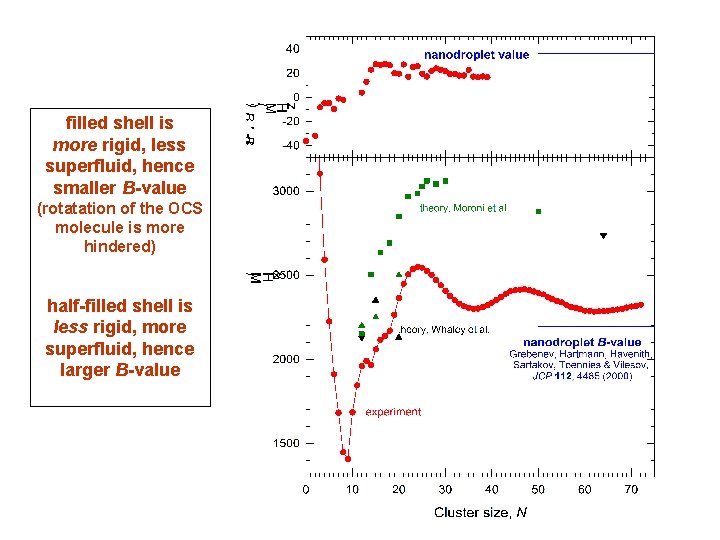
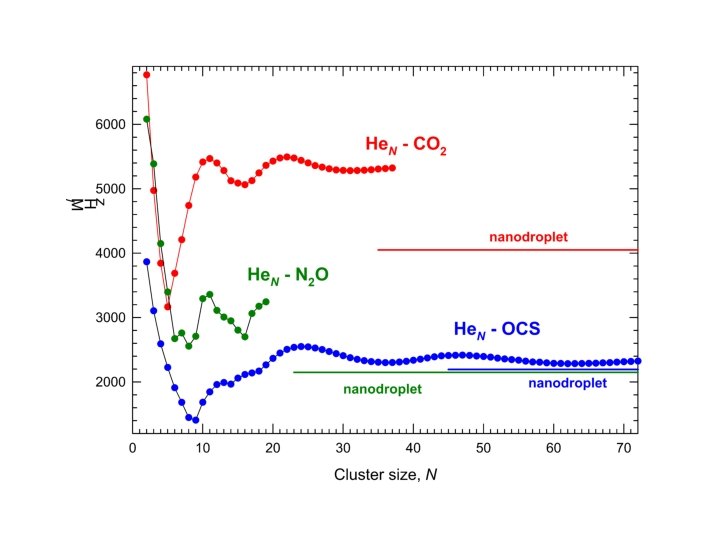
filled shell is more rigid, less superfluid, hence smaller B-value (rotatation of the OCS molecule is more hindered) half-filled shell is less rigid, more superfluid, hence larger B-value
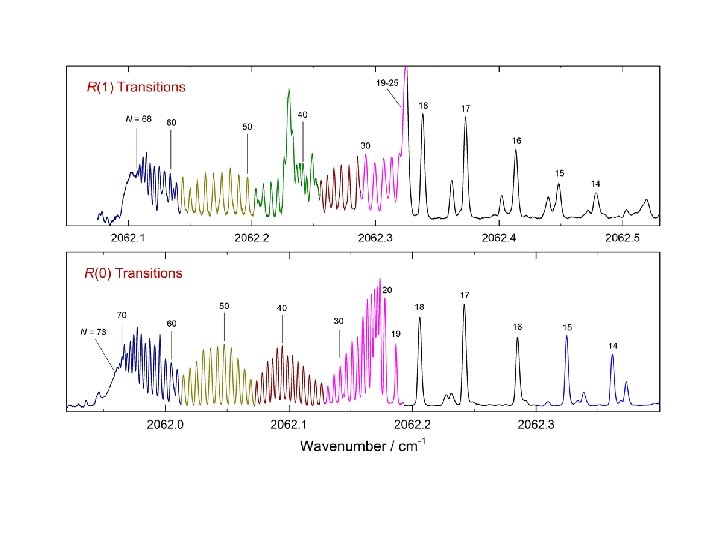
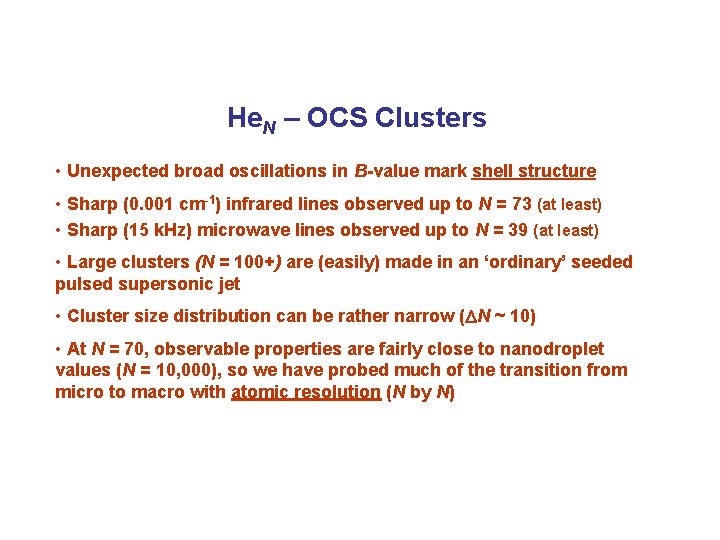
He. N – OCS Clusters • Unexpected broad oscillations in B-value mark shell structure • Sharp (0. 001 cm-1) infrared lines observed up to N = 73 (at least) • Sharp (15 k. Hz) microwave lines observed up to N = 39 (at least) • Large clusters (N = 100+) are (easily) made in an ‘ordinary’ seeded pulsed supersonic jet • Cluster size distribution can be rather narrow ( N ~ 10) • At N = 70, observable properties are fairly close to nanodroplet values (N = 10, 000), so we have probed much of the transition from micro to macro with atomic resolution (N by N)
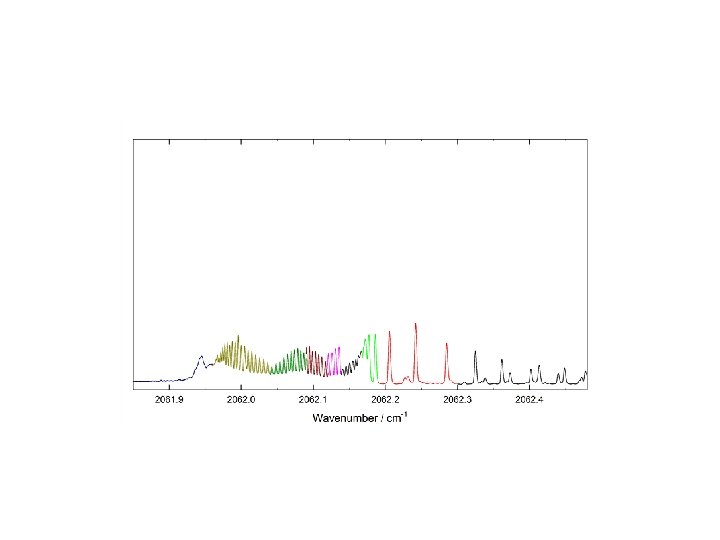
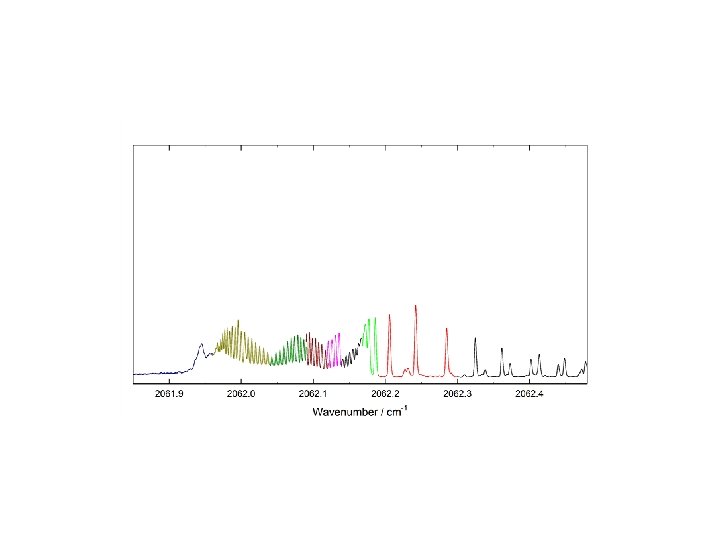
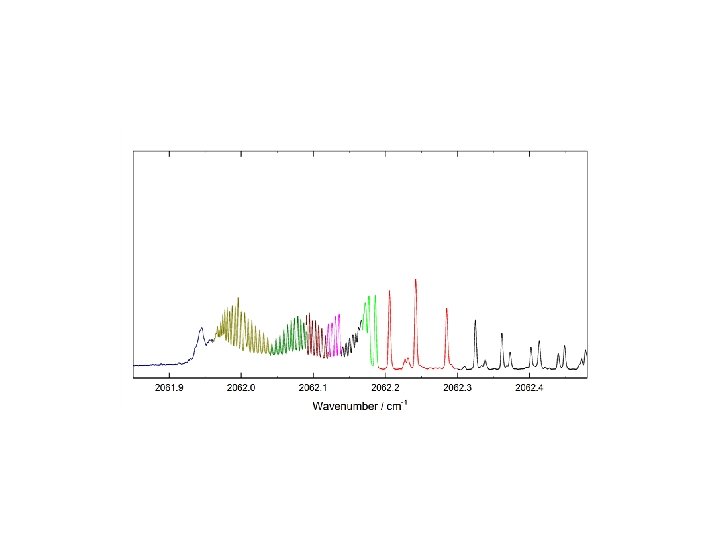
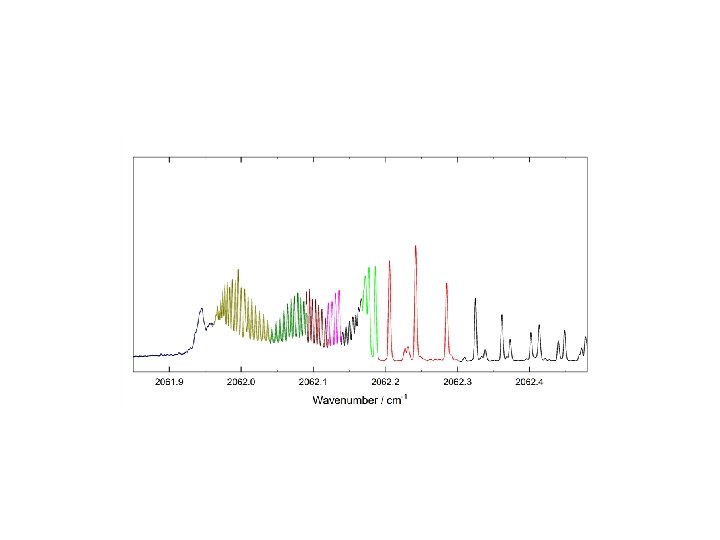
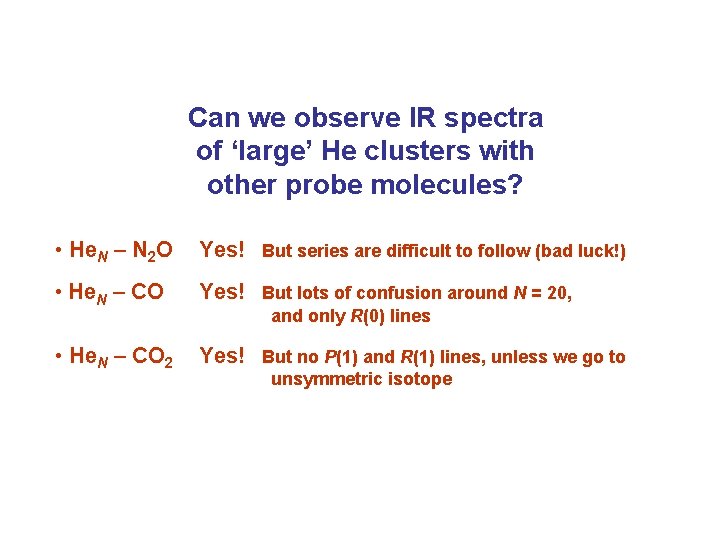
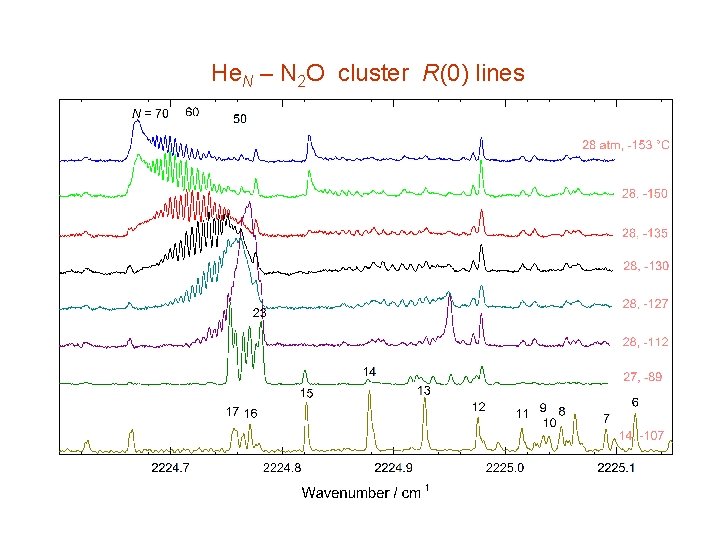
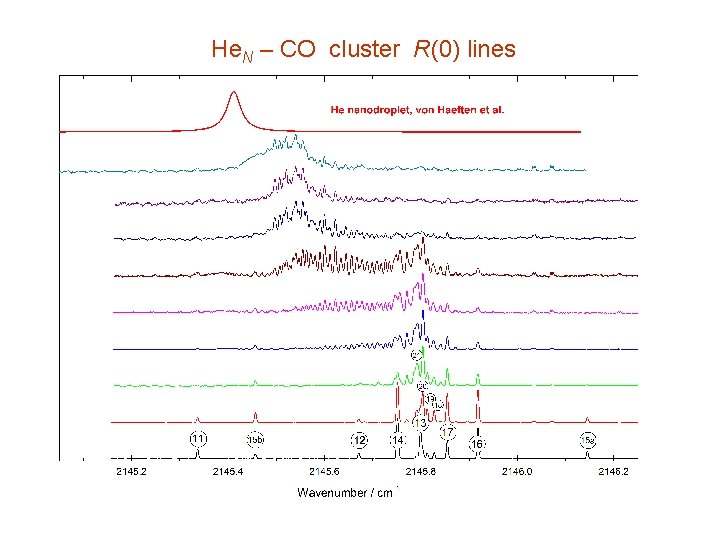
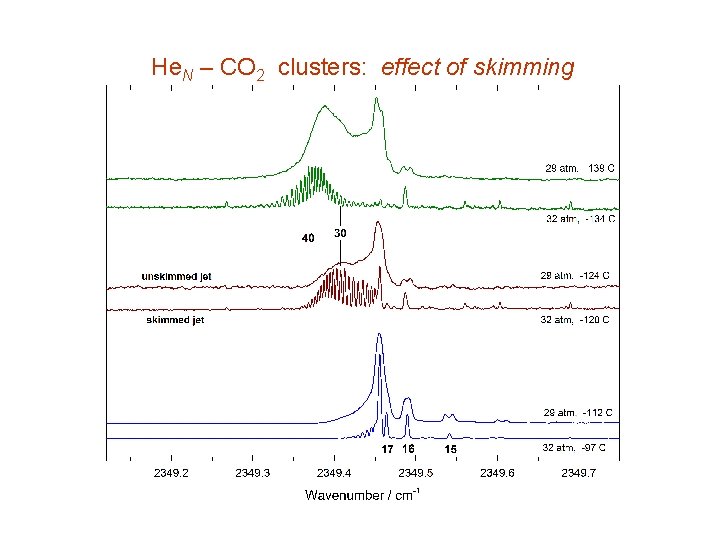
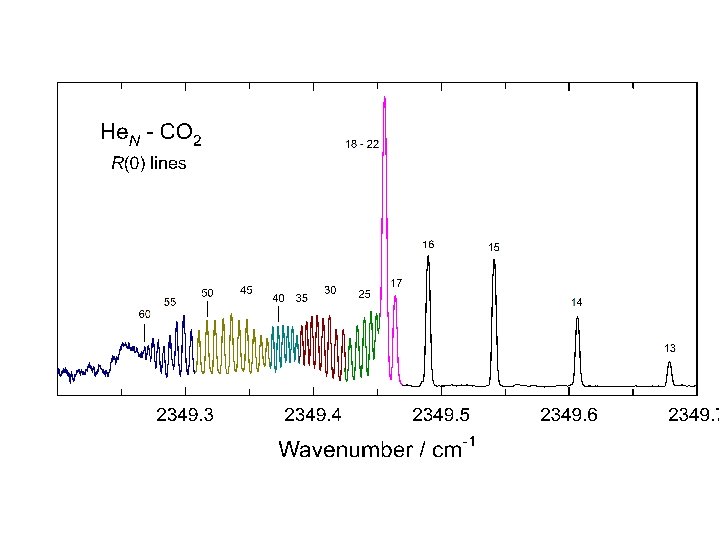
Can we observe IR spectra of ‘large’ He clusters with other probe molecules? • He. N – N 2 O Yes! But series are difficult to follow (bad luck!) • He. N – CO Yes! But lots of confusion around N = 20, • He. N – CO 2 Yes! But no P(1) and R(1) lines, unless we go to and only R(0) lines unsymmetric isotope
He. N – N 2 O cluster R(0) lines
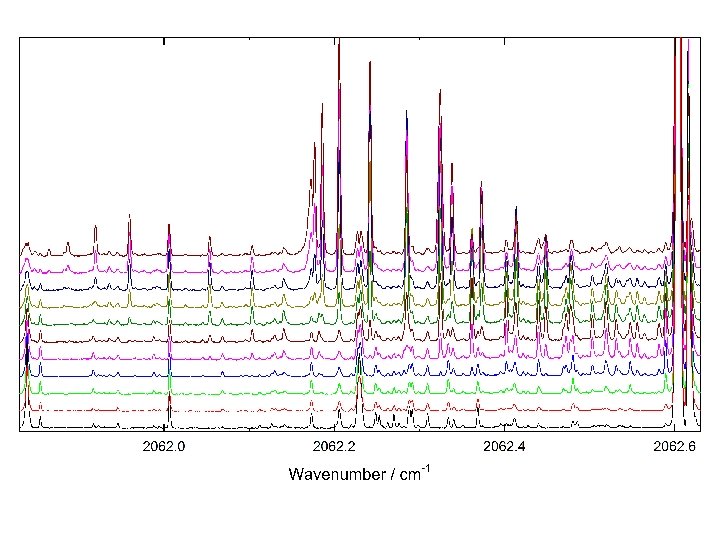
He. N – CO cluster R(0) lines
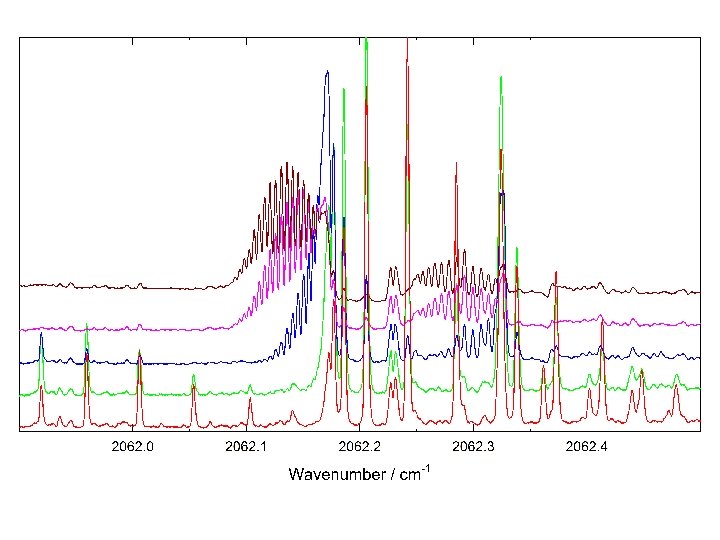
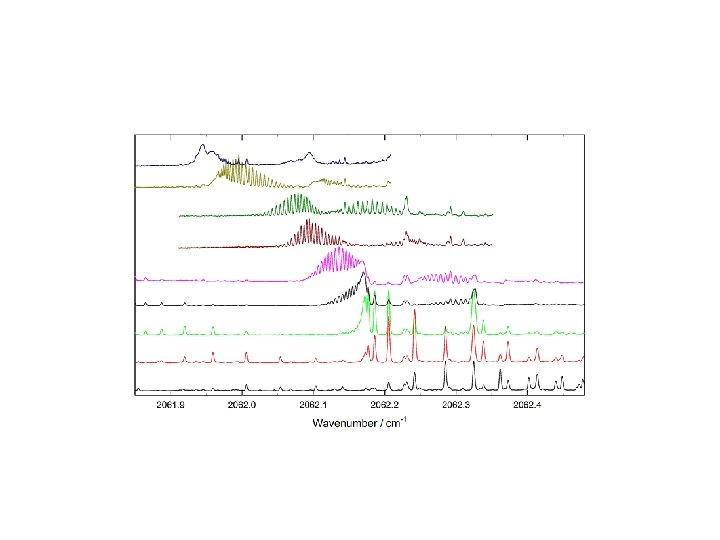
He. N – CO 2 clusters: effect of skimming
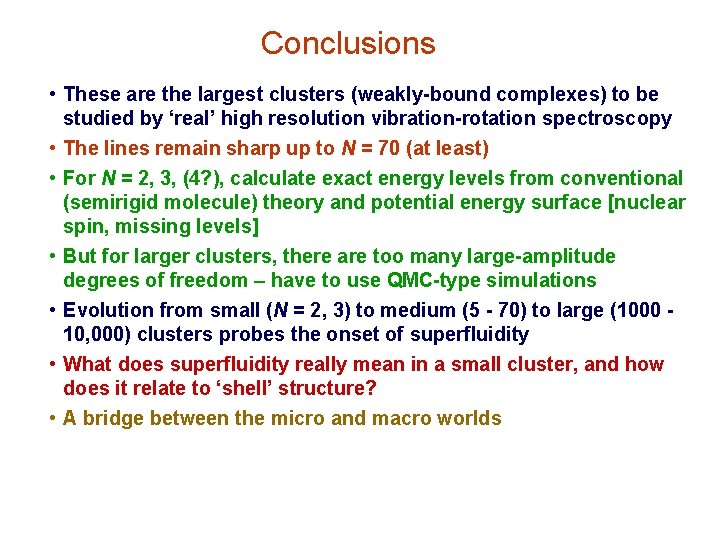
Conclusions • These are the largest clusters (weakly-bound complexes) to be studied by ‘real’ high resolution vibration-rotation spectroscopy • The lines remain sharp up to N = 70 (at least) • For N = 2, 3, (4? ), calculate exact energy levels from conventional (semirigid molecule) theory and potential energy surface [nuclear spin, missing levels] • But for larger clusters, there are too many large-amplitude degrees of freedom – have to use QMC-type simulations • Evolution from small (N = 2, 3) to medium (5 - 70) to large (1000 10, 000) clusters probes the onset of superfluidity • What does superfluidity really mean in a small cluster, and how does it relate to ‘shell’ structure? • A bridge between the micro and macro worlds
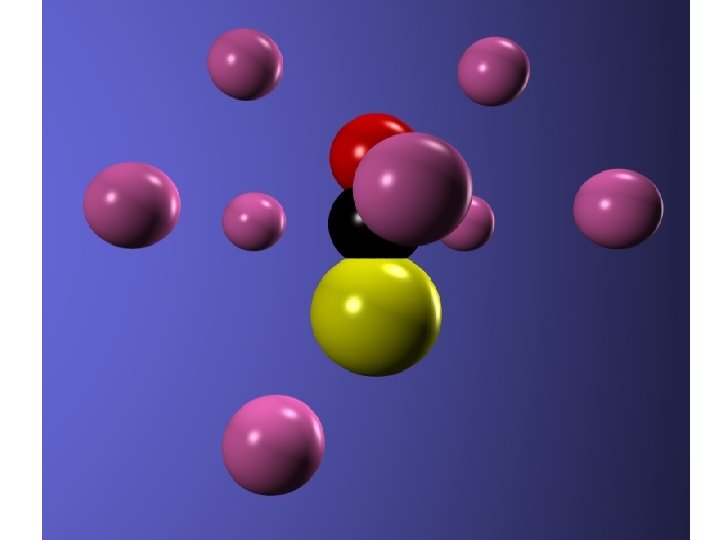
artist’s impression of He density distribution around an OCS molecule [Wolfgang Jäger, 2006]