
High Reliability Schools in Practice in Mason City
High Reliability Schools in Practice in Mason City: Connecting to the School Improvement Process Iowa ASCD Summer Conference 2015
T. J. Jumper Executive Director for Educator Quality and Leadership Mason City Community Schools Email: tjumper@masoncityschools. org Phone: 641 -421 -4400
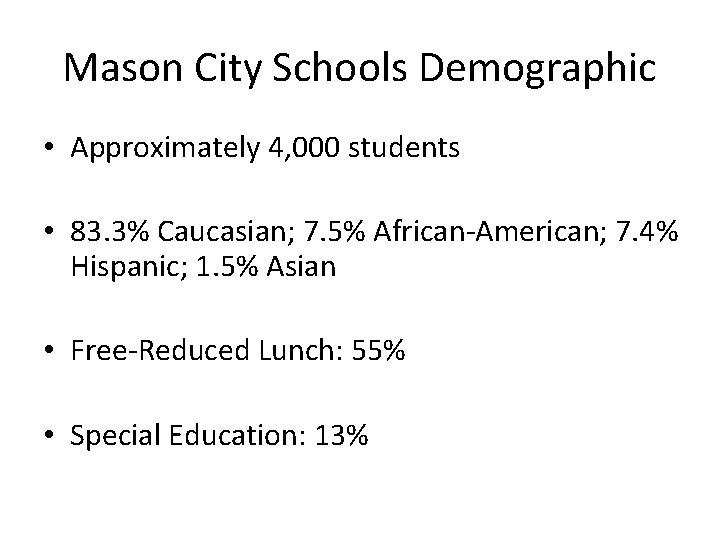
Mason City Schools Demographic • Approximately 4, 000 students • 83. 3% Caucasian; 7. 5% African-American; 7. 4% Hispanic; 1. 5% Asian • Free-Reduced Lunch: 55% • Special Education: 13%
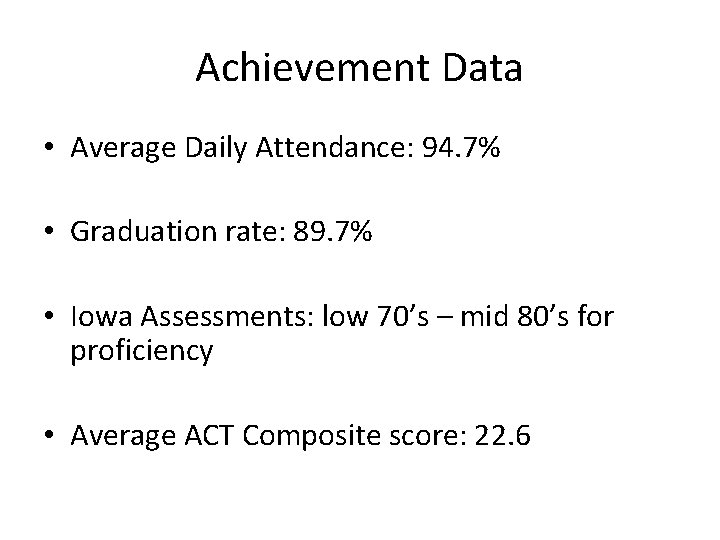
Achievement Data • Average Daily Attendance: 94. 7% • Graduation rate: 89. 7% • Iowa Assessments: low 70’s – mid 80’s for proficiency • Average ACT Composite score: 22. 6
Initiatives • PLC through Data team process (Leading and Learning Center) • Formative Assessments • Curriculum, Assessment and Instruction alignment to Iowa Core • Standards-based grading (K – 6) • MTSS & early literacy (K – 6) • PBIS (K – 8) • STEM education (5 – 12)
Why CBE? • • Rising Free/Reduced Lunch Population Over abundance of at-risk students Lower than desired student engagement Desire to raise graduation population Enhance learning transfer Experience use of 21 st Century Skills Employers need more skilled workers
CBE Principles • Students advance upon mastery • Competencies include explicit, measureable, and transferable learning that empowers the students • Assessment is meaningful and a positive experience • Students receive rapid, differentiated support based on their individual learning needs • Competencies emphasize application and creation of knowledge along with development of important skills and dispositions (Iowa Department of Education)
CBE Implementation • Member of the Iowa CBE Collaborative for two years *Meet once a month with District CBE team *Planned walk-throughs for community and business leaders *Developed rubric for learner goals (universal constructs) • Year 1 = Self-directed learner and personalized learning through blended learning • Year 2 = Competencies and student voice and choice
Why HRS • Researched-based by Marzano Research Lab • Focused on sustained excellence (high reliability) • “…framework and indicators, districts and schools can drive permanent, positive, and significant impacts on student achievement by synthesizing multiple complex initiatives into one harmonious system. ” (Marzano Research, 2015) • Allows for both qualitative and quantitative data • Input from stakeholders
Background Information of HRS • Five Levels 1. Safe and Collaborative Culture 2. Effective Teaching in Every Classroom 3. Guaranteed and Viable Curriculum 4. Standards-Referenced Reporting 5. Competency-Based Education *First three are foundational and the five levels match our vision for using CBE in grades 5 – 12.
HRS Process • Screening data from stakeholders utilizing research-linked survey questions • Analysis of data (HRS coach assist) • Develop plan for improvement • Check for improvement, re-survey and/or use (leading/lagging) data
Mason City School’s Use of HRS • Used introduction chapter in HRS handbook to introduce to building administrators • Reviewed survey for level 1 and then sent out to stakeholders • Received results by building and analyzed with the assistance of an HRS coach • Developed plans to improve areas noticed in the survey and how to reassess • Sent out level 2 surveys to stakeholders • Will review results at summer administrative retreat • Plan to send level 3 surveys to stakeholders mid-fall • Follow up with short survey/interviews and review leading/lagging indicators
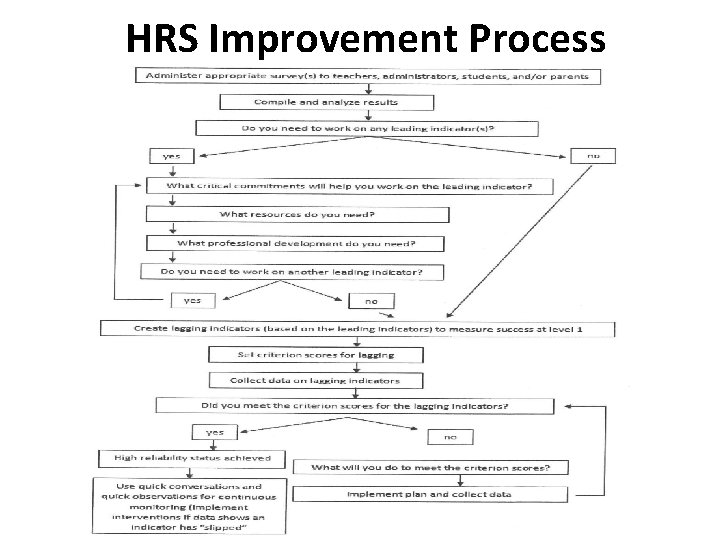
HRS Improvement Process
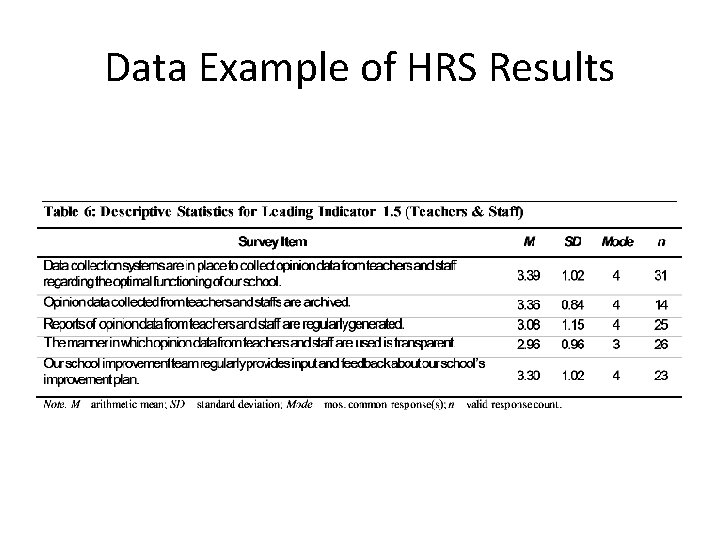
Data Example of HRS Results
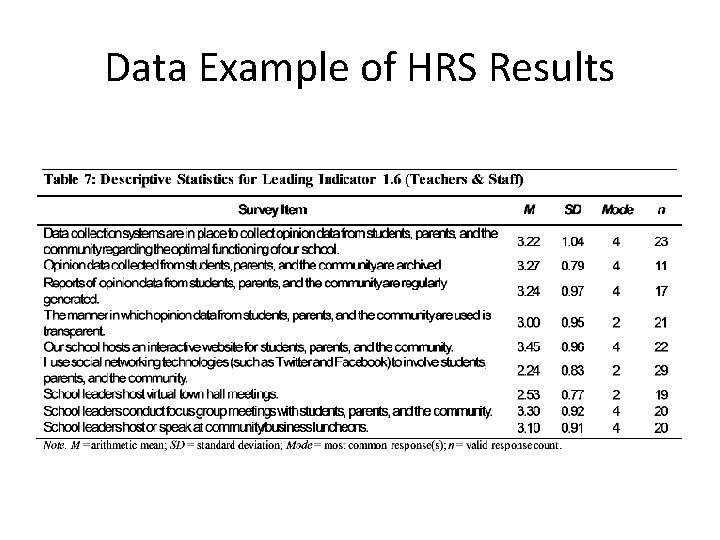
Data Example of HRS Results
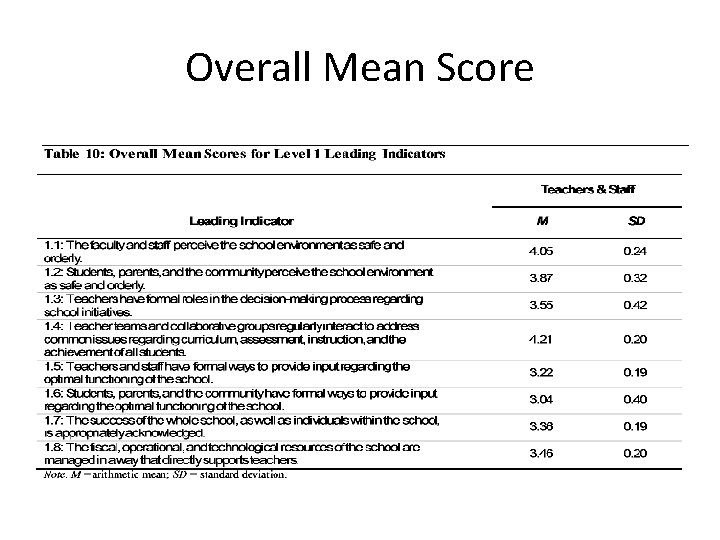
Overall Mean Score
School Improvement and HRS • What data/indicators are we collecting to measure accountability? Why are we collecting them? How and what will be measured to determine success? SMART goals • What initiatives do we have planned and how does it relate to accountability measures? • How do data/indicators and plans connect to HRS? • Make sure not only to use data to determine improvement plan for current reality, but also maintaining other successful areas • HRS helps create input from stakeholders assisting to bridge the gap
Effective School Improvement Plans • Developed with input and agreement with staff (develop ownership) • Use common form and language throughout district and buildings • Focus goals on improving teaching and learning • Use SMART goals designed for 3 – 5 year implementation • Monitor and implement process (accountability)
Effective School Improvement Plans • Building improvement plans are connected to district initiatives • Plans include professional development as a way to accomplish goals • Reviewed, at least, annually by building and district leadership team (recommend 2 – 3 times a year to analyze progress) • Improvement plan is the primary source for improving school’s achievement (Mooney & Mausback, 2008)
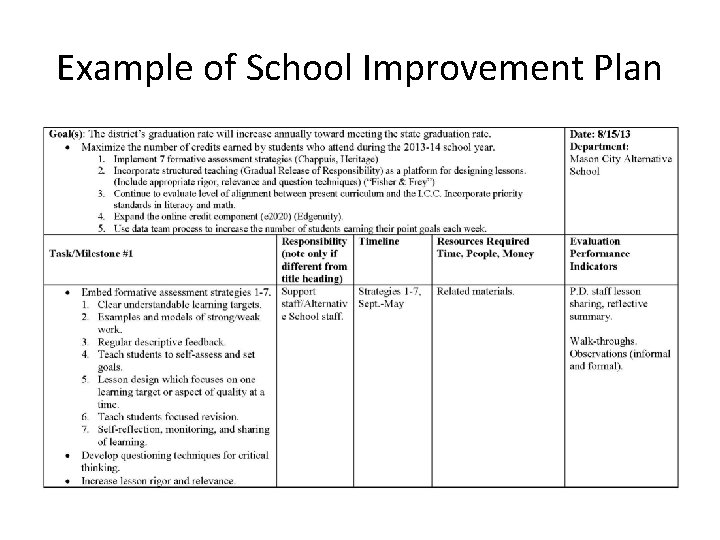
Example of School Improvement Plan
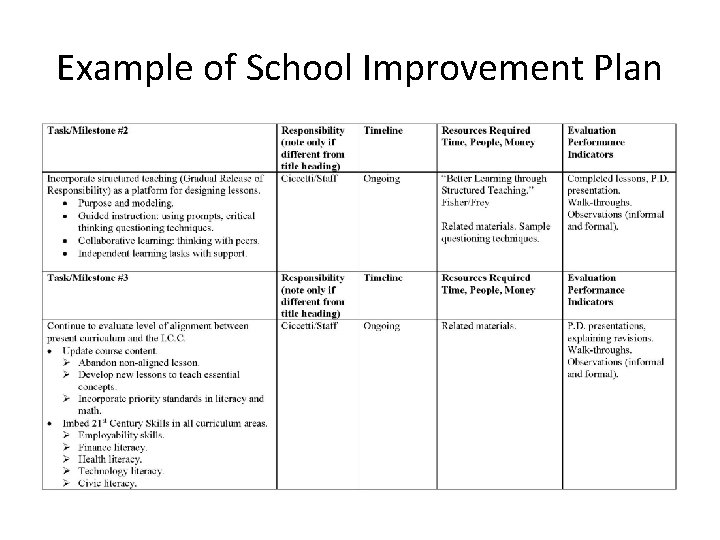
Example of School Improvement Plan
Questions
Resources • Marzano, R. J. , Warrick, P. , and Simms, J. A. (2014). A handbook for high reliability schools: The next step in school reform. Marzano Research Laboratory. Bloomington, IN. • Mooney, N. J. and Mausback, A. T. (2008). Align the Design: A blueprint for school improvement. ASCD. Alexandria, VA. • Reeves, Dr. D. B. (2005). Accountability in action: A blueprint for learning organizations. Lead and Learn Press. Englewood, CO.
- Slides: 23