
High quality early childhood education and care ECEC
- Slides: 14
High quality early childhood education and care (ECEC) on the European agenda DG Education and Culture October, 2014 Education and Training Date: in 12 pts
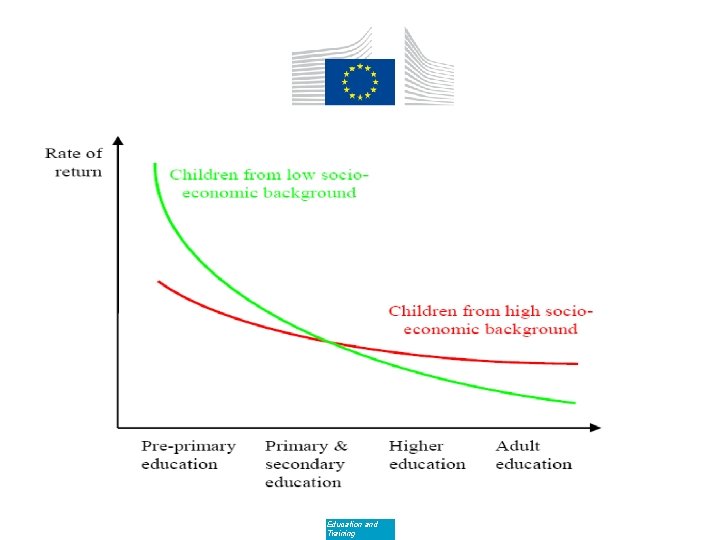
Why specifically target our youngest citizens? Different abilities are formed and shaped at different stages of the lifecycle. A number of particularly sensitive periods have been identified in early childhood. Date: in 12 pts
Education and Training Date: in 12 pts
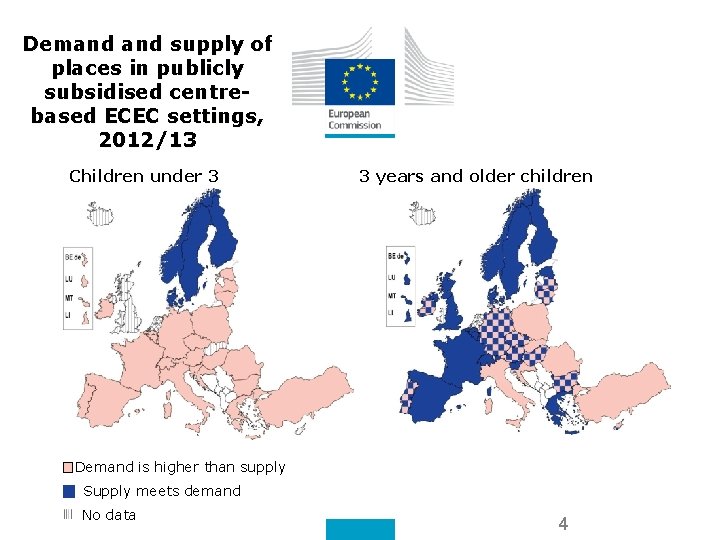
Demand supply of places in publicly subsidised centrebased ECEC settings, 2012/13 Children under 3 3 years and older children Demand is higher than supply Supply meets demand No data 4 Date: in 12 pts
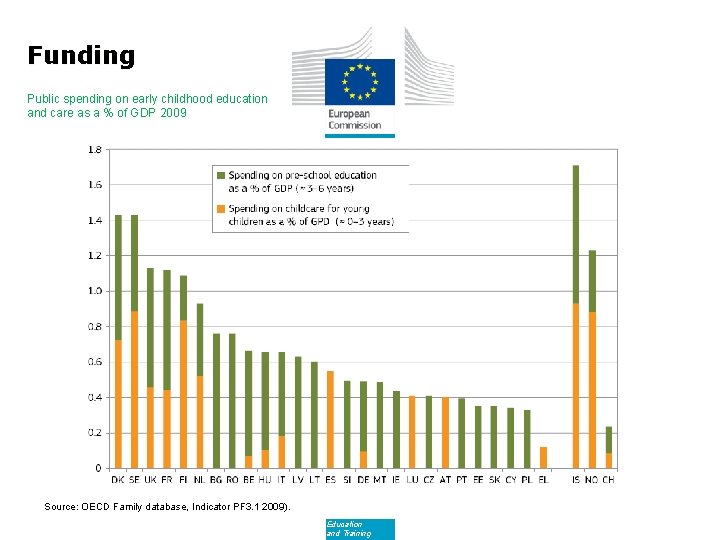
Funding Public spending on early childhood education and care as a % of GDP 2009 Source: OECD Family database, Indicator PF 3. 1 2009). Education and Training Date: in 12 pts
Communication and Council Conclusions on ECEC • Improving accessibility and quality • Holistic approach to children – from birth to compulsory school age Education and Training Date: in 12 pts
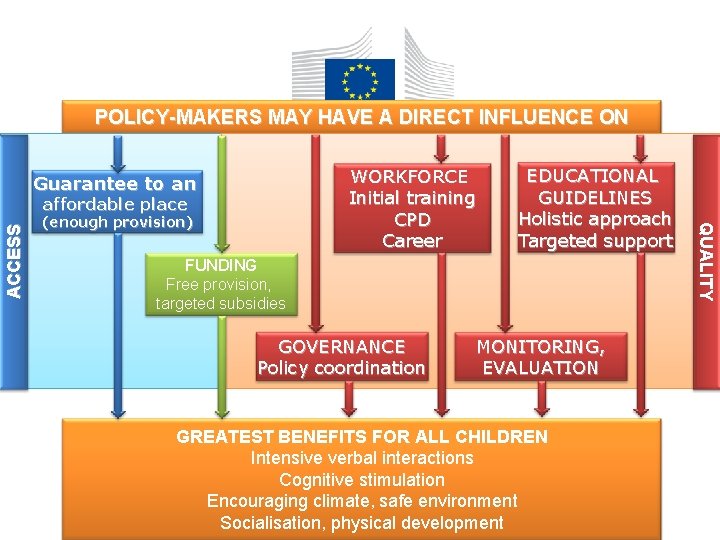
POLICY-MAKERS MAY HAVE A DIRECT INFLUENCE ON ACCESS affordable place (enough provision) EDUCATIONAL GUIDELINES Holistic approach Targeted support FUNDING Free provision, targeted subsidies GOVERNANCE Policy coordination MONITORING, EVALUATION GREATEST BENEFITS FOR ALL CHILDREN Intensive verbal interactions Cognitive stimulation Encouraging climate, safe environment Socialisation, physical development Date: in 12 pts QUALITY WORKFORCE Initial training CPD Career Guarantee to an
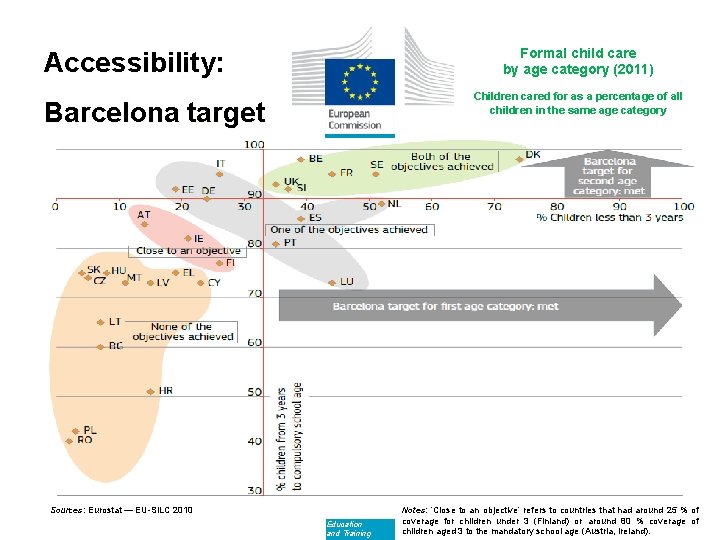
Formal child care by age category (2011) Accessibility: Children cared for as a percentage of all children in the same age category Barcelona target Sources: Eurostat — EU-SILC 2010 Education and Training Notes: ‘Close to an objective’ refers to countries that had around 25 % of coverage for children under 3 (Finland) or around 80 % coverage of children aged 3 to the mandatory school age (Austria, Ireland). Date: in 12 pts
Accessibility: Participation in ECEC at age 4 Date: in 12 pts
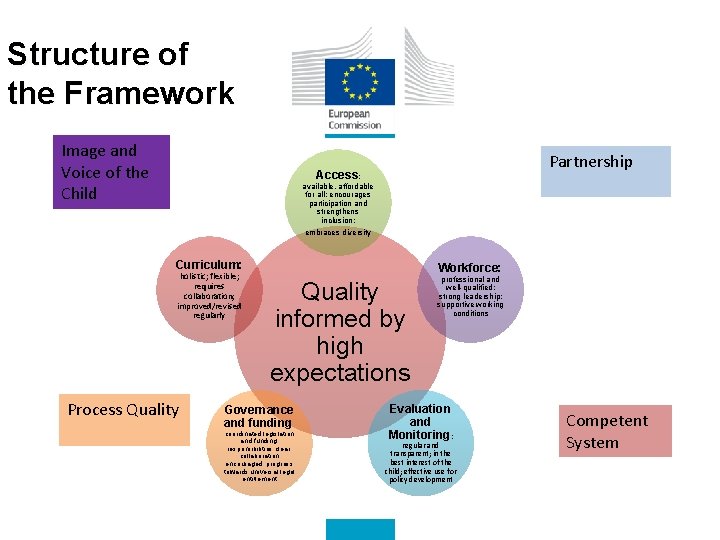
Structure of the Framework Image and Voice of the Child Partnership Access: available, affordable for all; encourages participation and strengthens inclusion; embraces diversity Curriculum: holistic; flexible; requires collaboration; improved/revised regularly Process Quality Workforce: Quality informed by high expectations Governance and funding : coordinated legislation and funding; responsibilities clear; collaboration encouraged; progress towards universal legal entitlement professional and well-qualified; strong leadership; supportive working conditions Evaluation and Monitoring: regular and transparent; in the best interest of the child; effective use for policy development Competent System Date: in 12 pts
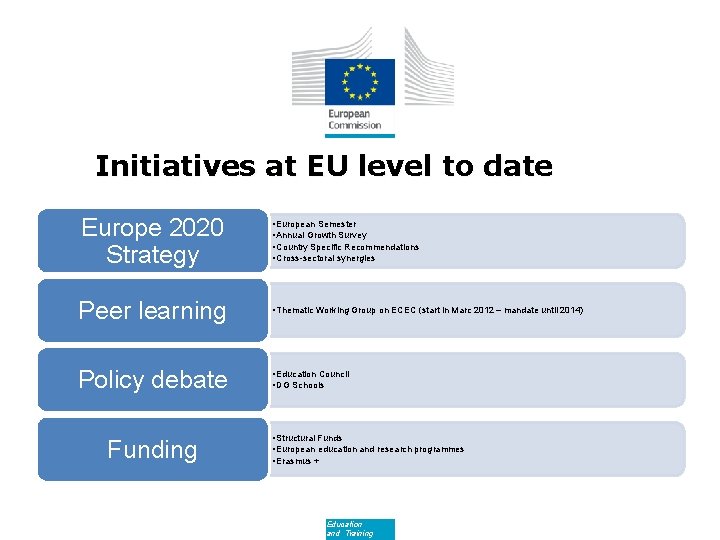
Initiatives at EU level to date Europe 2020 Strategy • European Semester • Annual Growth Survey • Country Specific Recommendations • Cross-sectoral synergies Peer learning • Thematic Working Group on ECEC (start in Marc 2012 – mandate until 2014) Policy debate • Education Council • DG Schools Funding • Structural Funds • European education and research programmes • Erasmus + Education and Training Date: in 12 pts
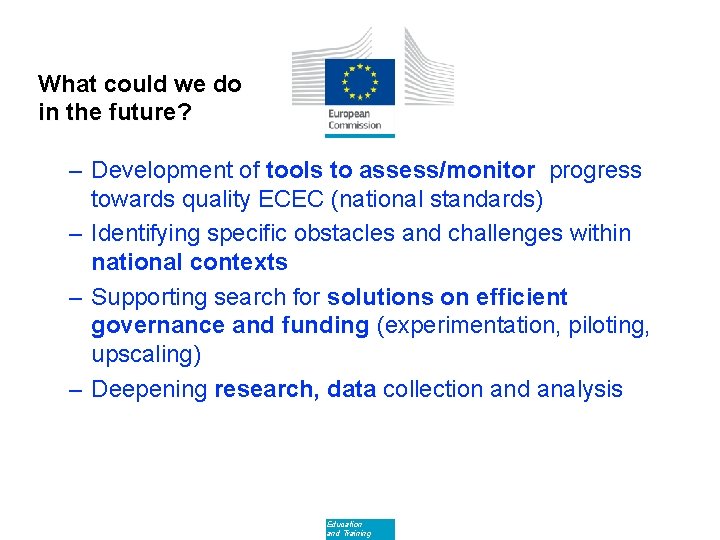
What could we do in the future? – Development of tools to assess/monitor progress towards quality ECEC (national standards) – Identifying specific obstacles and challenges within national contexts – Supporting search for solutions on efficient governance and funding (experimentation, piloting, upscaling) – Deepening research, data collection and analysis Education and Training Date: in 12 pts
Thank you for your attention. Education and training Date: in 12 pts
More information: http: //ec. europa. eu/education/policy/school/early-childhood_en. htm Education and training Date: in 12 pts