
High Power MultiBeam Klystrons Theory and Design Mohsen
High Power Multi-Beam Klystrons Theory and Design Mohsen Dayyani Kelisani 1. Institute For Research in Fundamental Science (IPM), Tehran, Iran
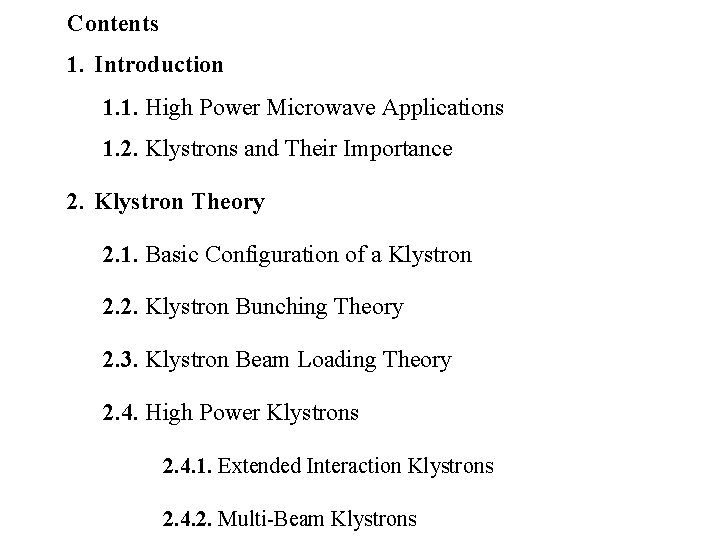
Contents 1. Introduction 1. 1. High Power Microwave Applications 1. 2. Klystrons and Their Importance 2. Klystron Theory 2. 1. Basic Configuration of a Klystron 2. 2. Klystron Bunching Theory 2. 3. Klystron Beam Loading Theory 2. 4. High Power Klystrons 2. 4. 1. Extended Interaction Klystrons 2. 4. 2. Multi-Beam Klystrons
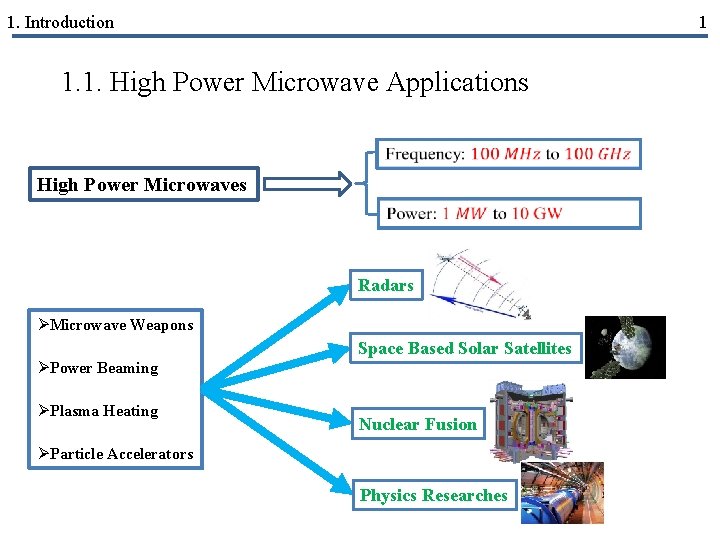
1. Introduction 1 1. 1. High Power Microwave Applications High Power Microwaves Radars ØMicrowave Weapons ØPower Beaming ØPlasma Heating Space Based Solar Satellites Nuclear Fusion ØParticle Accelerators Physics Researches
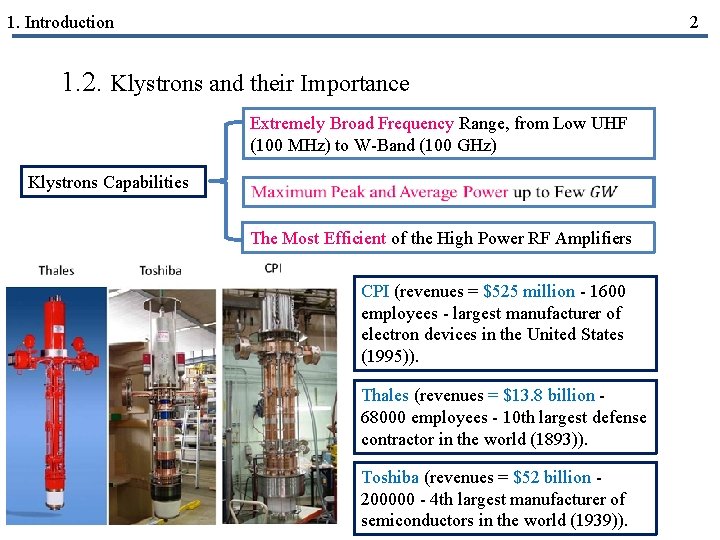
1. Introduction 2 1. 2. Klystrons and their Importance Extremely Broad Frequency Range, from Low UHF (100 MHz) to W-Band (100 GHz) Klystrons Capabilities The Most Efficient of the High Power RF Amplifiers CPI (revenues = $525 million - 1600 employees - largest manufacturer of electron devices in the United States (1995)). Thales (revenues = $13. 8 billion 68000 employees - 10 th largest defense contractor in the world (1893)). Toshiba (revenues = $52 billion 200000 - 4 th largest manufacturer of semiconductors in the world (1939)).

2. Klystron Theory 3 2. 1. Basic Configuration of a Klystrons Ø Thermionic Electron Gun DC Current Ø Bunching Cavities Input Cavity (Velocity Modulation) Intermediate Cavities (Enhance the Bunching) Ø Drift Sections Guide the Beam Prepare the Necessary Space for Bunching Ø Axial Magnetic Field Cancel the Space Charge Forces Ø Output Cavity Power Extraction Ø Beam collector Stop the Beam at the End
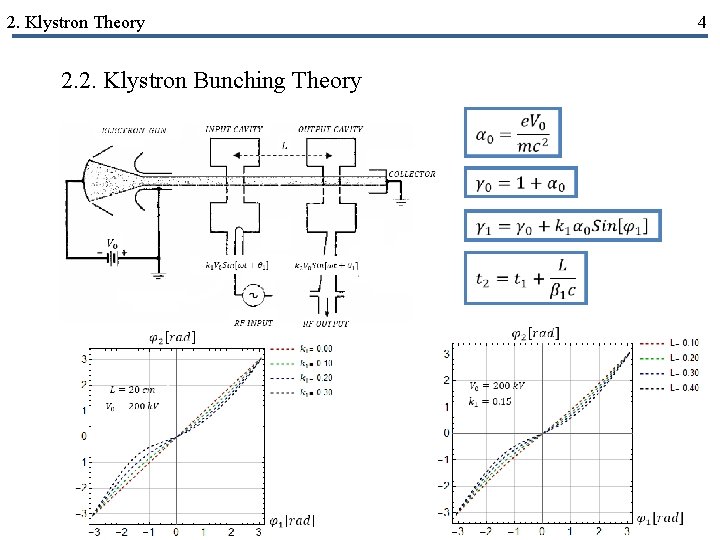
2. Klystron Theory 2. 2. Klystron Bunching Theory 4
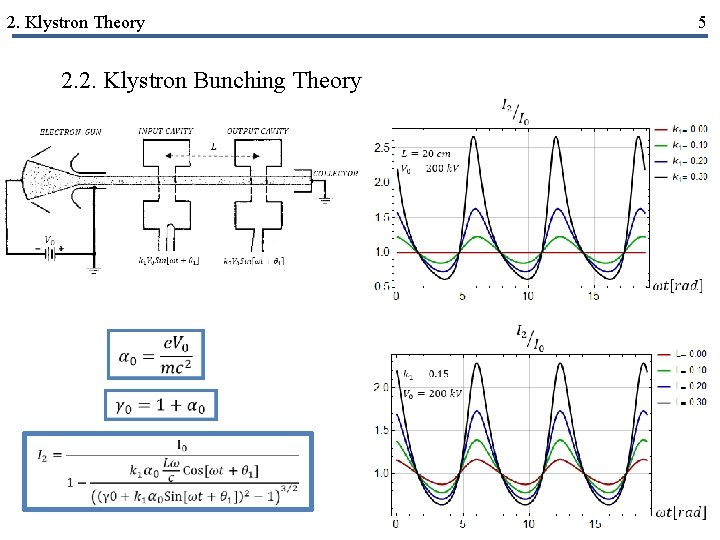
2. Klystron Theory 2. 2. Klystron Bunching Theory 5
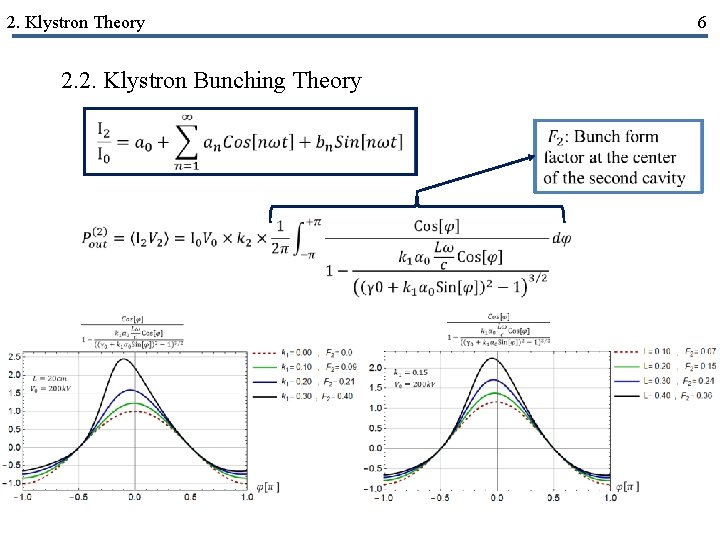
2. Klystron Theory 2. 2. Klystron Bunching Theory 6
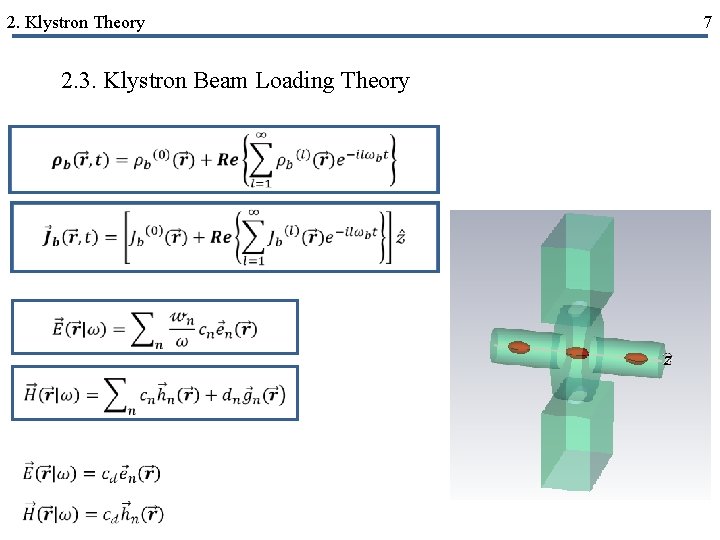
2. Klystron Theory 2. 3. Klystron Beam Loading Theory 7
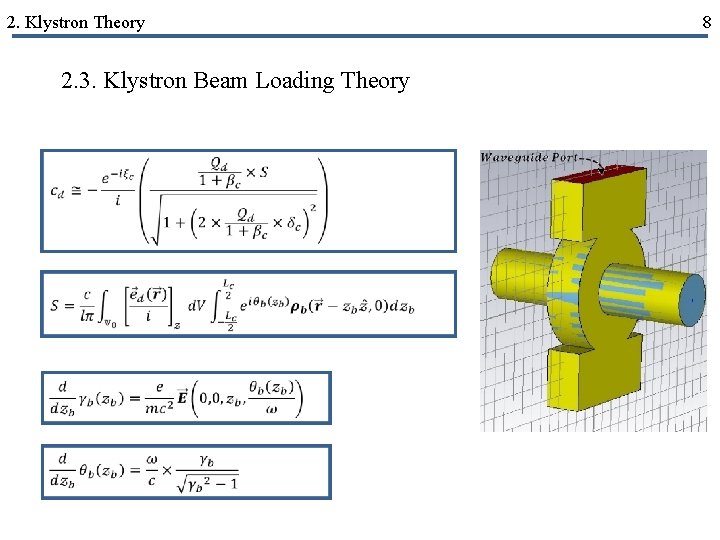
2. Klystron Theory 2. 3. Klystron Beam Loading Theory 8
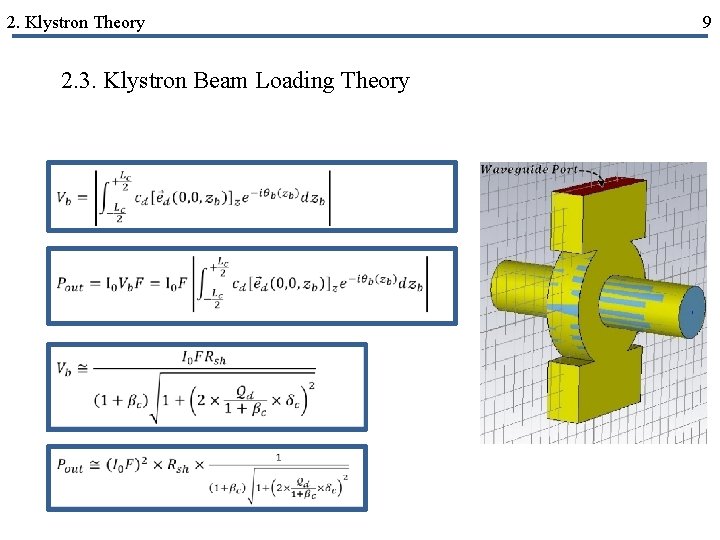
2. Klystron Theory 2. 3. Klystron Beam Loading Theory 9
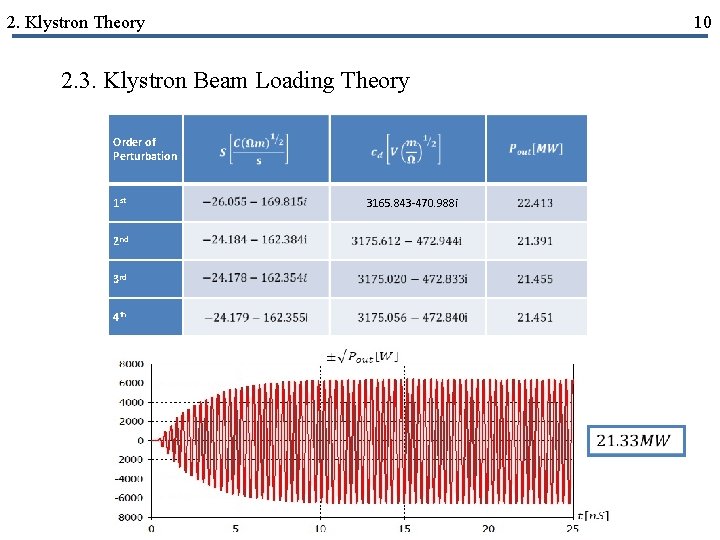
2. Klystron Theory 10 2. 3. Klystron Beam Loading Theory Order of Perturbation 1 st 2 nd 3 rd 4 th 3165. 843 -470. 988 i
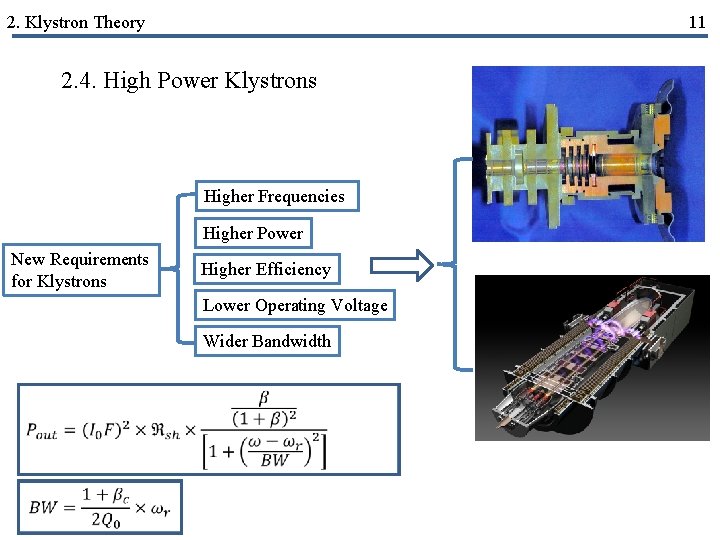
2. Klystron Theory 11 2. 4. High Power Klystrons Higher Frequencies Higher Power New Requirements for Klystrons Higher Efficiency Lower Operating Voltage Wider Bandwidth
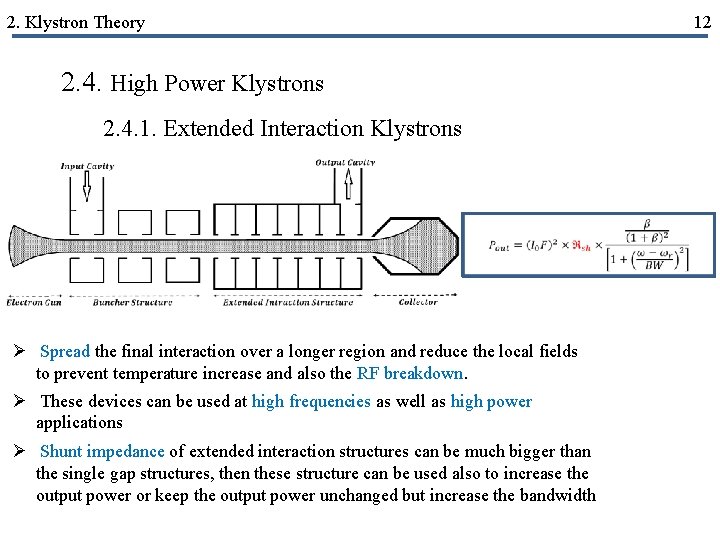
2. Klystron Theory 2. 4. High Power Klystrons 2. 4. 1. Extended Interaction Klystrons Ø Spread the final interaction over a longer region and reduce the local fields to prevent temperature increase and also the RF breakdown. Ø These devices can be used at high frequencies as well as high power applications Ø Shunt impedance of extended interaction structures can be much bigger than the single gap structures, then these structure can be used also to increase the output power or keep the output power unchanged but increase the bandwidth 12
2. Klystron Theory 2. 4. High Power Klystrons 2. 4. 2. Multi-Beam Klystrons 13
2. Klystron Theory 2. 4. High Power Klystrons 2. 4. 2. Multi-Beam Klystrons 14
2. Klystron Theory 2. 4. High Power Klystrons 2. 4. 2. Multi-Beam Klystrons 15
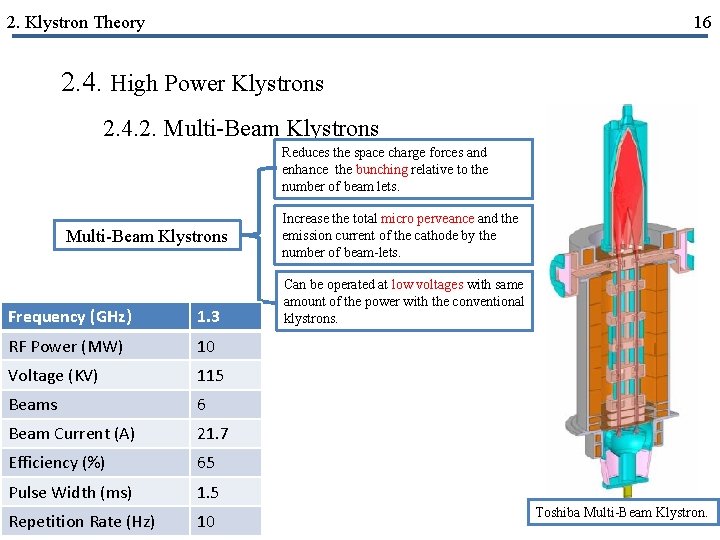
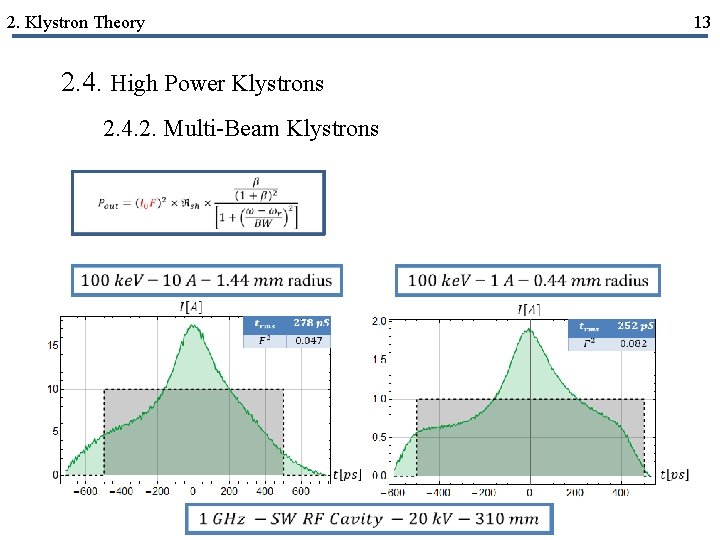
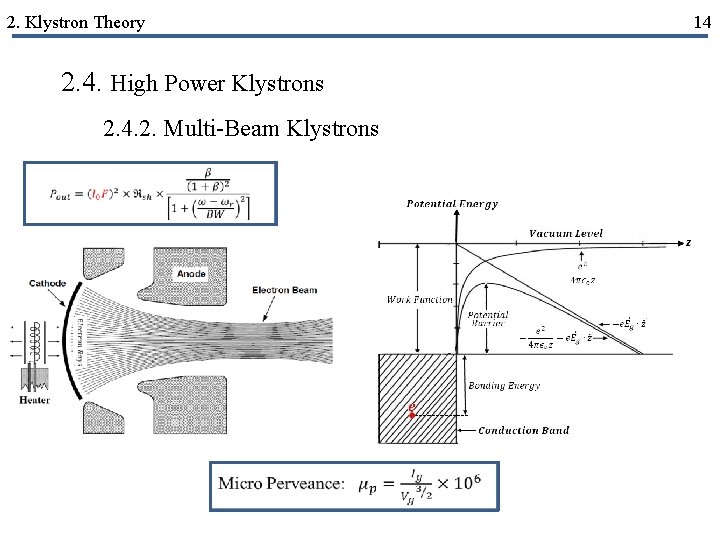
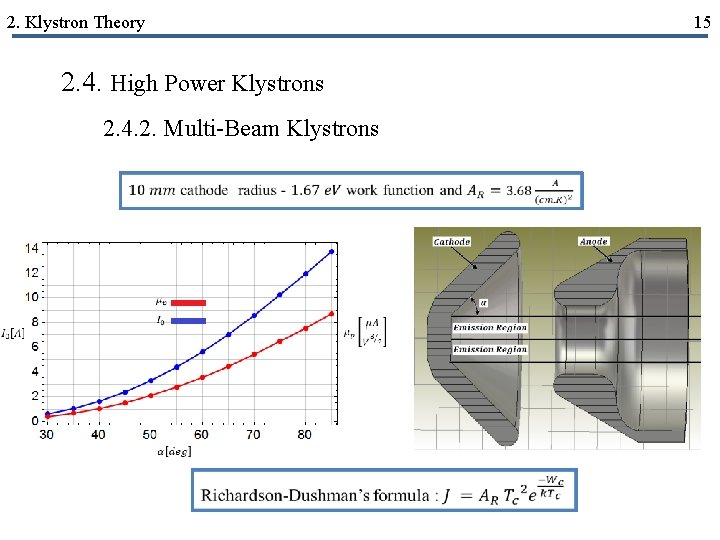
2. Klystron Theory 16 2. 4. High Power Klystrons 2. 4. 2. Multi-Beam Klystrons Reduces the space charge forces and enhance the bunching relative to the number of beam lets. Multi-Beam Klystrons Frequency (GHz) 1. 3 RF Power (MW) 10 Voltage (KV) 115 Beams 6 Beam Current (A) 21. 7 Efficiency (%) 65 Pulse Width (ms) 1. 5 Repetition Rate (Hz) 10 Increase the total micro perveance and the emission current of the cathode by the number of beam-lets. Can be operated at low voltages with same amount of the power with the conventional klystrons. Toshiba Multi-Beam Klystron.
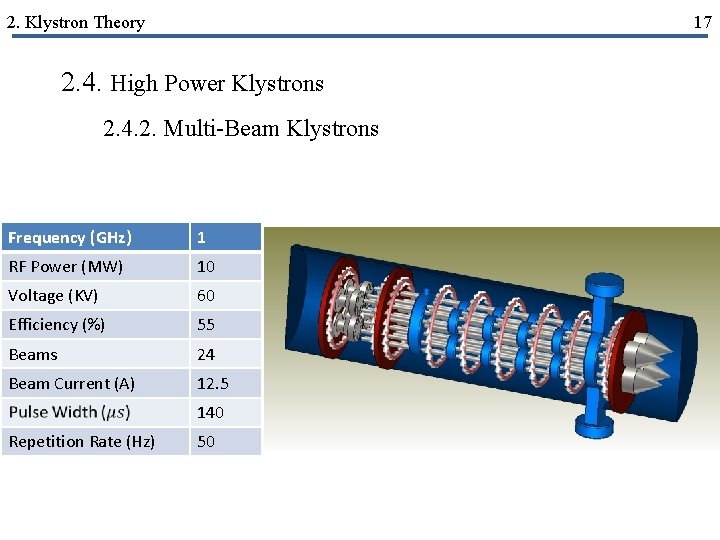
2. Klystron Theory 17 2. 4. High Power Klystrons 2. 4. 2. Multi-Beam Klystrons Frequency (GHz) 1 RF Power (MW) 10 Voltage (KV) 60 Efficiency (%) 55 Beams 24 Beam Current (A) 12. 5 140 Repetition Rate (Hz) 50

Thanks for Attention
- Slides: 20