
High Performing or Dysfunctional How Healthy is Your
- Slides: 20
High Performing or Dysfunctional: How Healthy is Your Team? September 2013
The Good, the Bad and the Ugly • Think about your best team experience – sports, school, social organization • What made it great? • Now think of the worst team • Why was it so bad?
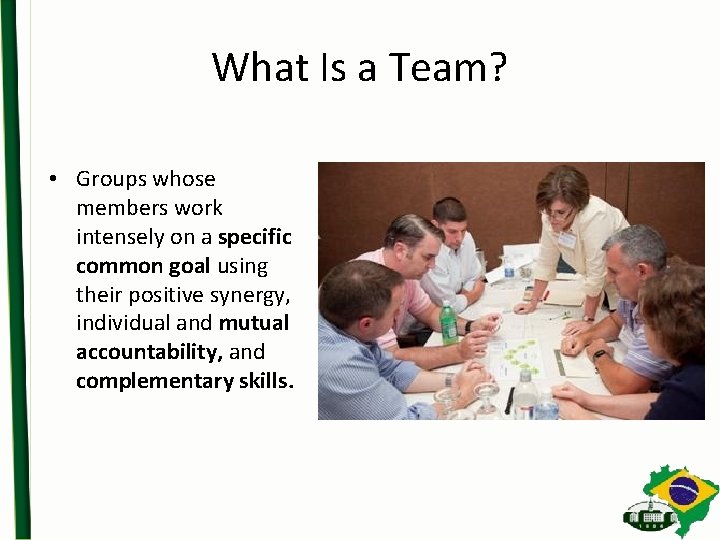
What Is a Team? • Groups whose members work intensely on a specific common goal using their positive synergy, individual and mutual accountability, and complementary skills.
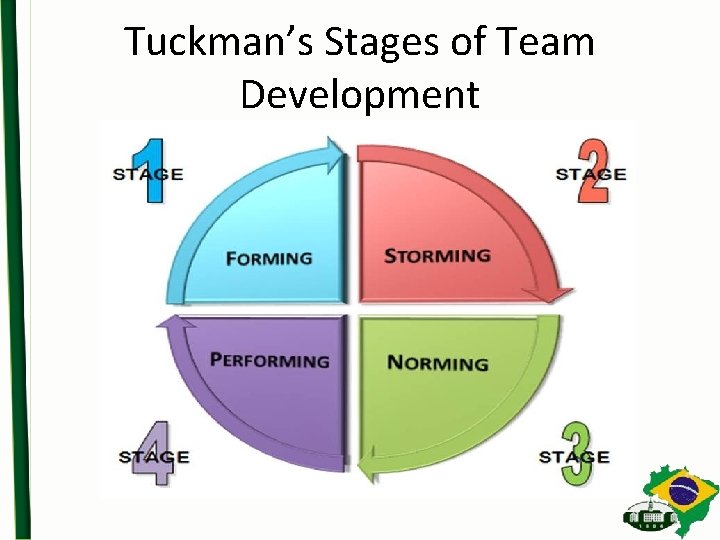
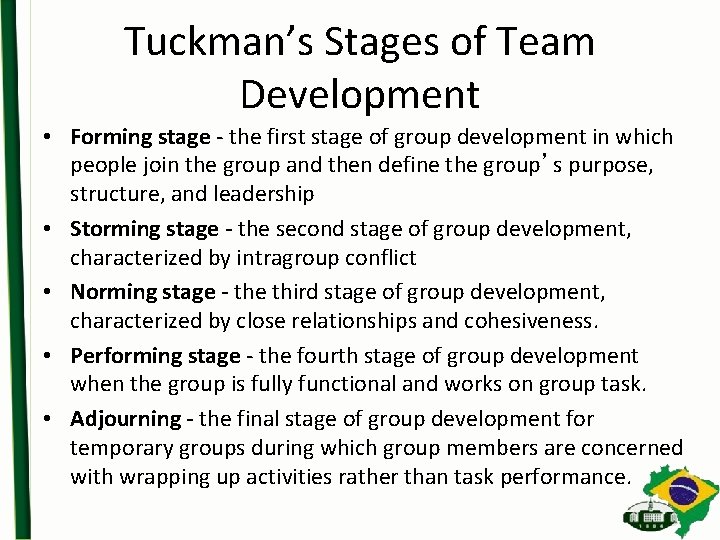
Tuckman’s Stages of Team Development
Tuckman’s Stages of Team Development • Forming stage - the first stage of group development in which people join the group and then define the group’s purpose, structure, and leadership • Storming stage - the second stage of group development, characterized by intragroup conflict • Norming stage - the third stage of group development, characterized by close relationships and cohesiveness. • Performing stage - the fourth stage of group development when the group is fully functional and works on group task. • Adjourning - the final stage of group development for temporary groups during which group members are concerned with wrapping up activities rather than task performance.
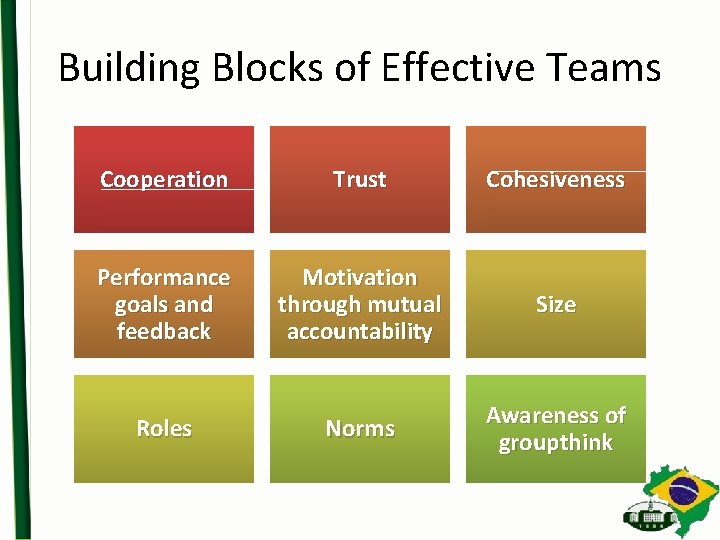
Building Blocks of Effective Teams Cooperation Trust Cohesiveness Performance goals and feedback Motivation through mutual accountability Size Norms Awareness of groupthink Roles
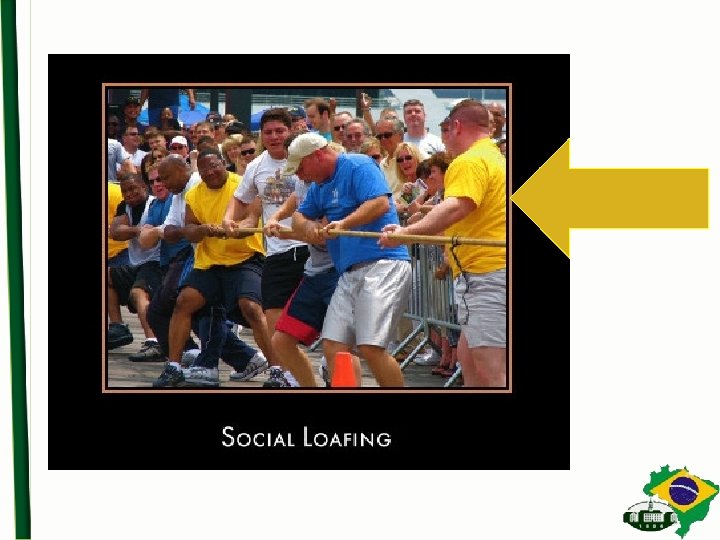
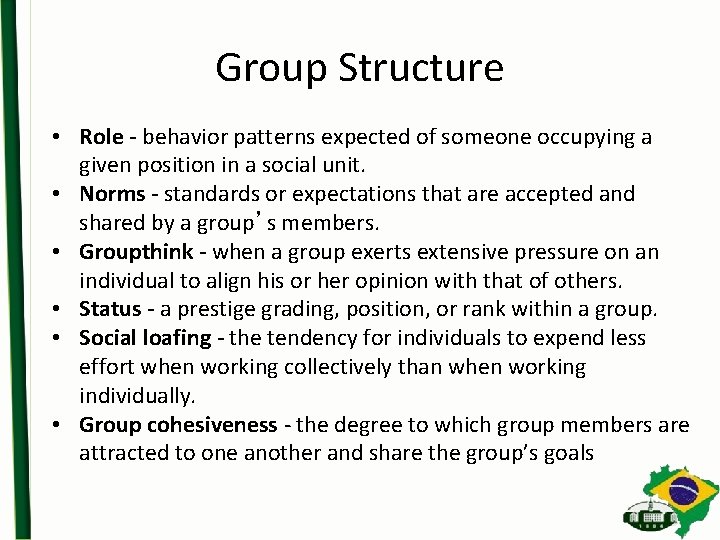
Group Structure • Role - behavior patterns expected of someone occupying a given position in a social unit. • Norms - standards or expectations that are accepted and shared by a group’s members. • Groupthink - when a group exerts extensive pressure on an individual to align his or her opinion with that of others. • Status - a prestige grading, position, or rank within a group. • Social loafing - the tendency for individuals to expend less effort when working collectively than when working individually. • Group cohesiveness - the degree to which group members are attracted to one another and share the group’s goals
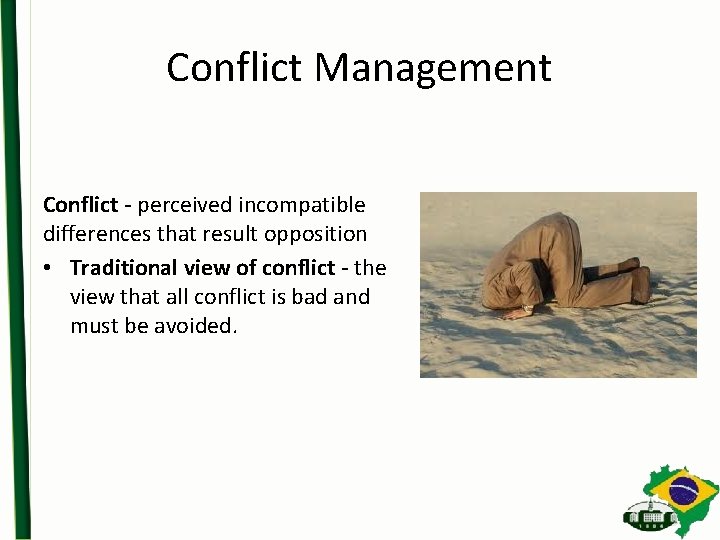
Conflict Management Conflict - perceived incompatible differences that result opposition • Traditional view of conflict - the view that all conflict is bad and must be avoided.
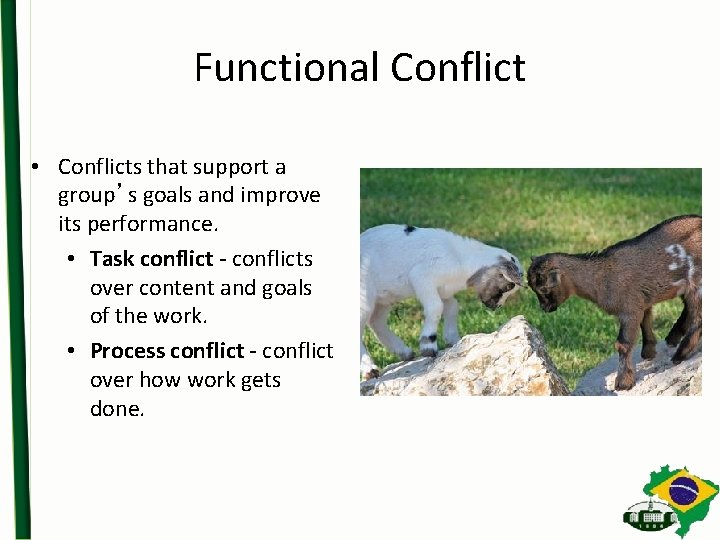
Functional Conflict • Conflicts that support a group’s goals and improve its performance. • Task conflict - conflicts over content and goals of the work. • Process conflict - conflict over how work gets done.
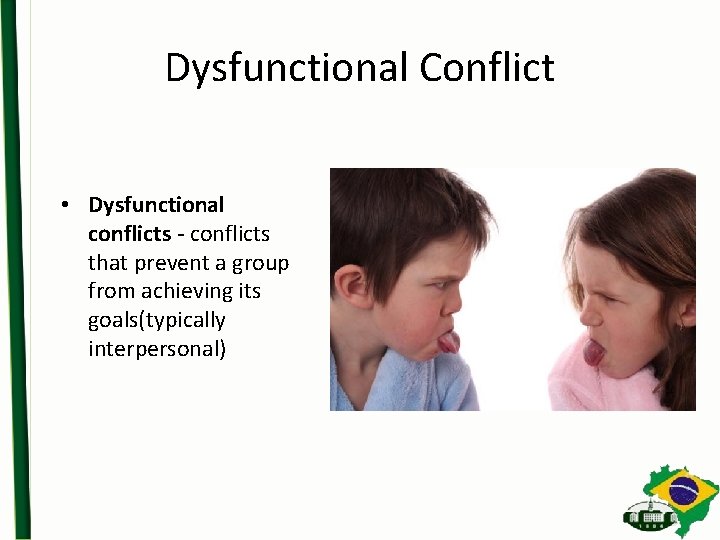
Dysfunctional Conflict • Dysfunctional conflicts - conflicts that prevent a group from achieving its goals(typically interpersonal)
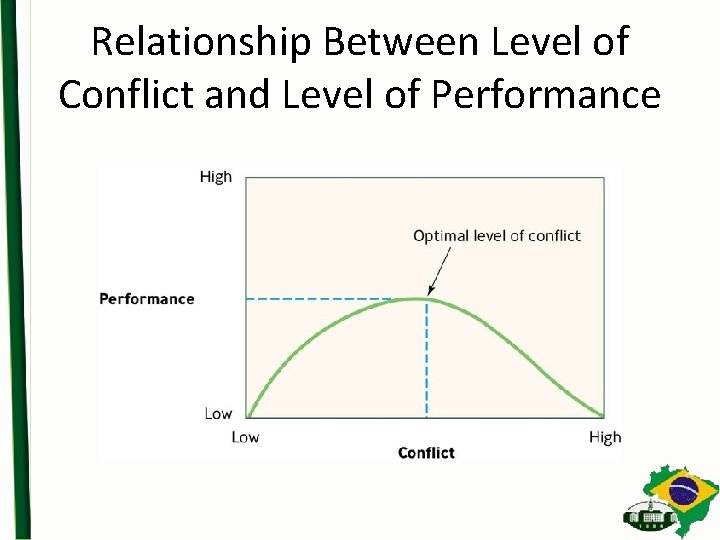
So, Is Conflict Always a Bad Thing? Clearly Not
Relationship Between Level of Conflict and Level of Performance
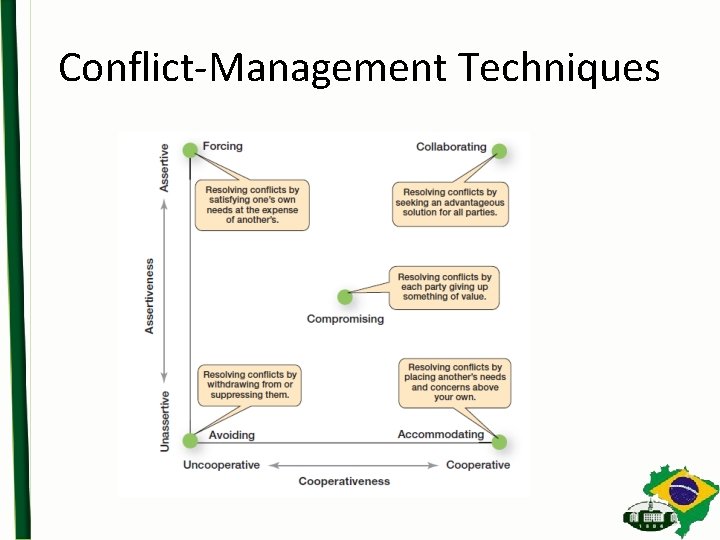
Conflict-Management Techniques
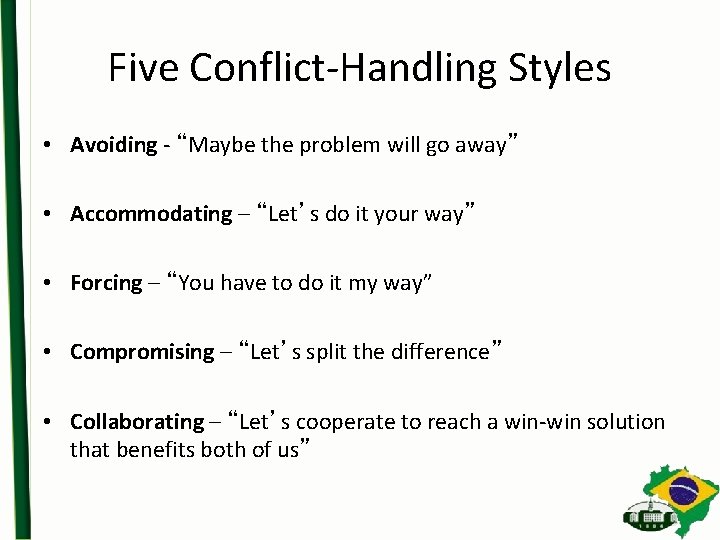
Five Conflict-Handling Styles • Avoiding - “Maybe the problem will go away” • Accommodating – “Let’s do it your way” • Forcing – “You have to do it my way” • Compromising – “Let’s split the difference” • Collaborating – “Let’s cooperate to reach a win-win solution that benefits both of us”
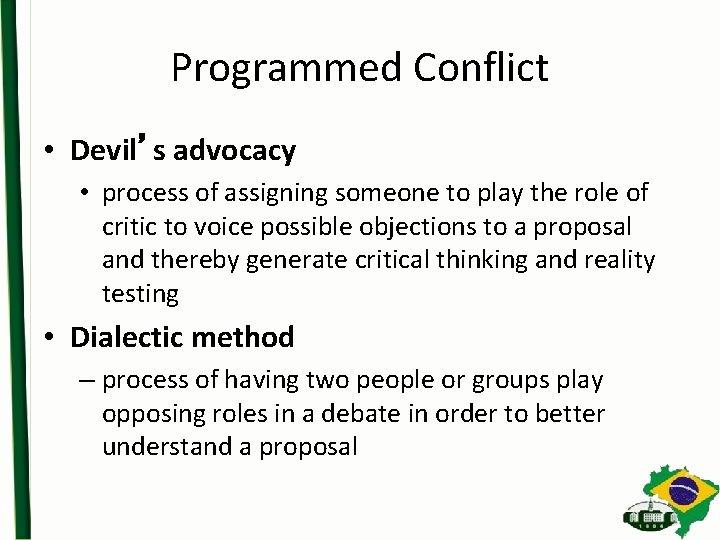
Programmed Conflict • Devil’s advocacy • process of assigning someone to play the role of critic to voice possible objections to a proposal and thereby generate critical thinking and reality testing • Dialectic method – process of having two people or groups play opposing roles in a debate in order to better understand a proposal
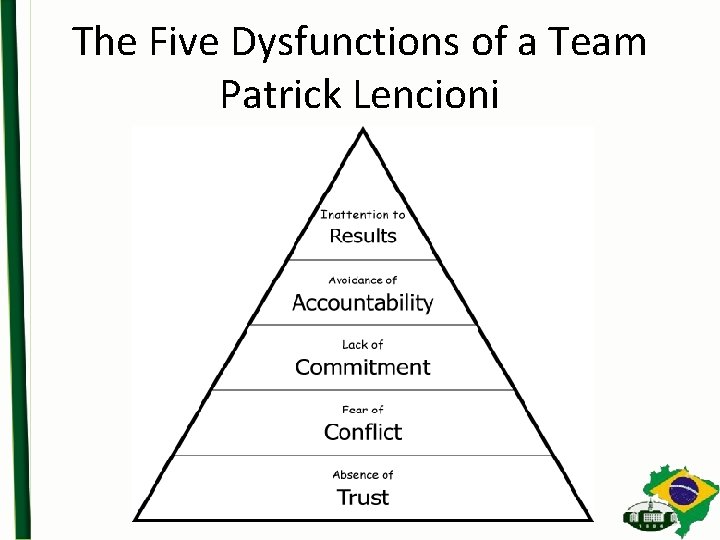
The Five Dysfunctions of a Team Patrick Lencioni
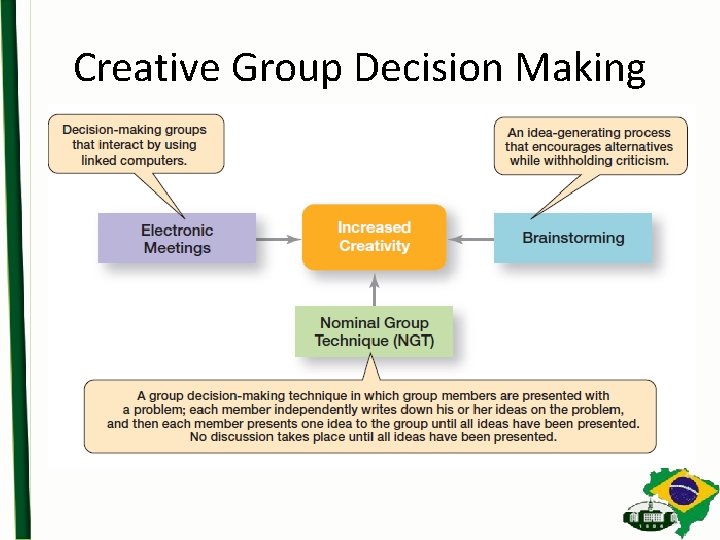
Creative Group Decision Making
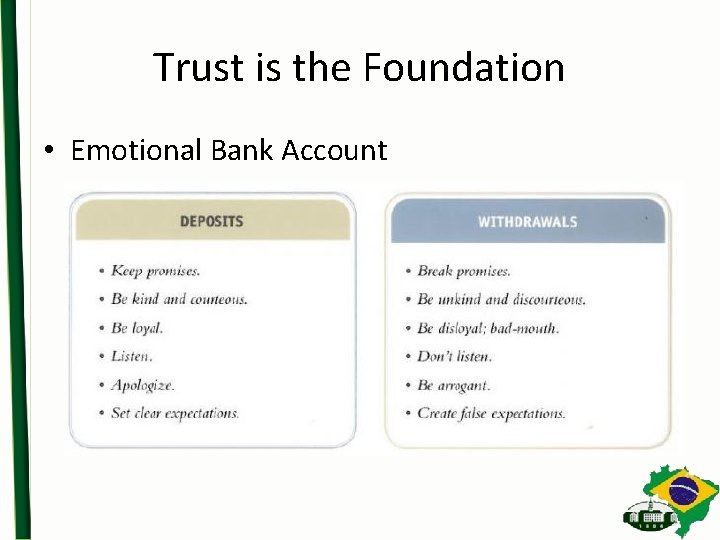
Trust is the Foundation • Emotional Bank Account
The Five Dysfunctions of a Team Patrick Lencioni