
High Performance MLI for Cryogenic Hardware Leslie Buchanan
High Performance MLI for Cryogenic Hardware Leslie Buchanan Steve Buerger March 13, 2003

Today’s Talk • • • The nature of MLI - theory vs practice Basic principles High performance MLI Results Conclusions 9/25/2020 2
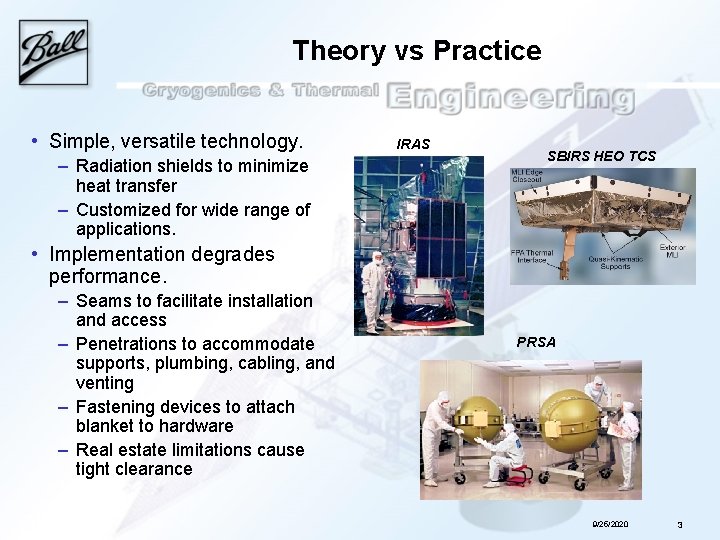
Theory vs Practice • Simple, versatile technology. – Radiation shields to minimize heat transfer – Customized for wide range of applications. IRAS SBIRS HEO TCS • Implementation degrades performance. – Seams to facilitate installation and access – Penetrations to accommodate supports, plumbing, cabling, and venting – Fastening devices to attach blanket to hardware – Real estate limitations cause tight clearance PRSA 9/25/2020 3

MLI (Multi-Layer Insulation) - A Versatile, Effective Technology • Purpose - Create Adiabatic Surface – Cryogenics-Insulate cold surface from warm electronics – S/C-Insulate warm electronics from space • Construction – Inner Layers • 10 min to 50 max • Double Aluminized Mylar, . 25 mil thick • Dacron Net Spacers – Outer Layers • Space Exposure – Maintain Temperature – Provide ESD prevention – Provide atomic oxygen and micrometeoroid protection • Protect inner layers during installation and handling 9/25/2020 4
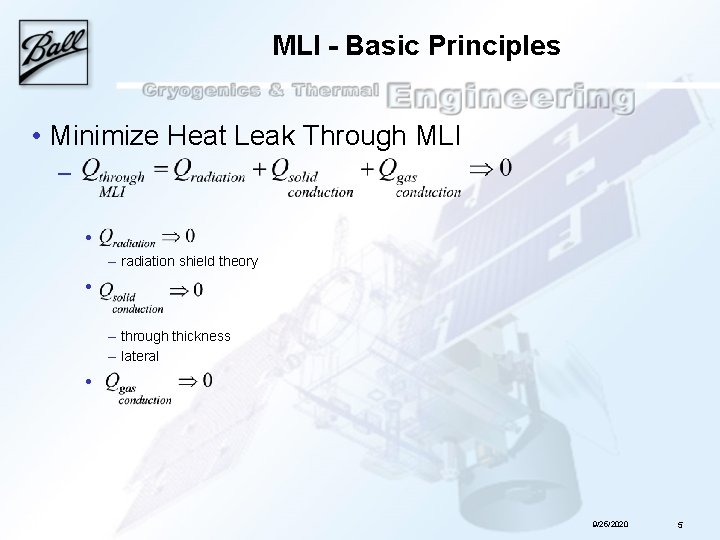
MLI - Basic Principles • Minimize Heat Leak Through MLI – • – radiation shield theory • – through thickness – lateral • 9/25/2020 5
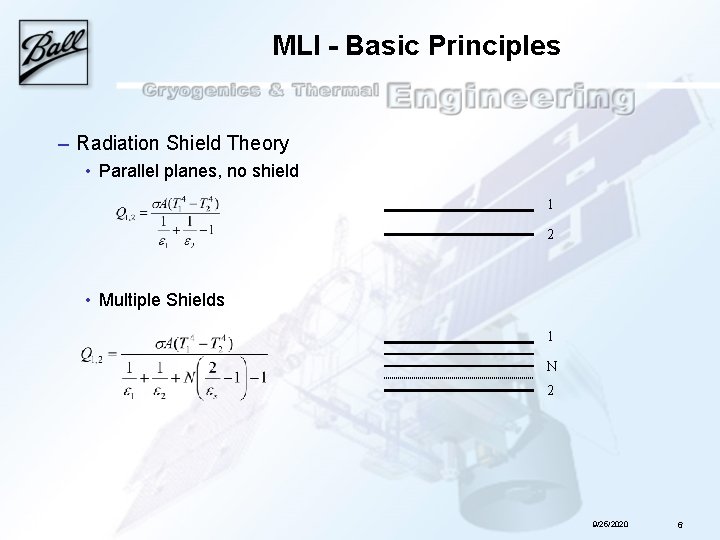
MLI - Basic Principles – Radiation Shield Theory • Parallel planes, no shield 1 2 • Multiple Shields 1 N 2 9/25/2020 6
MLI Best Practices Wherever Possible • High Performance MLI – Low emissivity surfaces on layers – Optimize number of layers – Maximize loft • adequate clearance • CTE considerations – Minimize effect of seams, gaps, and penetrations – Provide vent paths – Minimize temperature mismatches 9/25/2020 7
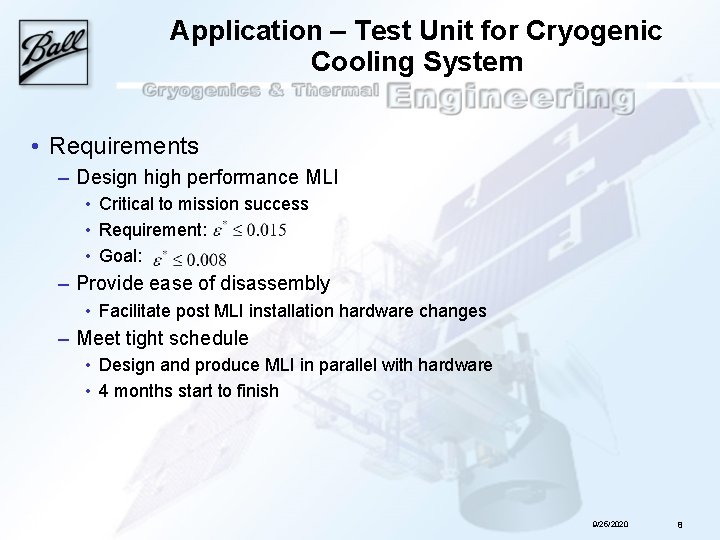
Application – Test Unit for Cryogenic Cooling System • Requirements – Design high performance MLI • Critical to mission success • Requirement: • Goal: – Provide ease of disassembly • Facilitate post MLI installation hardware changes – Meet tight schedule • Design and produce MLI in parallel with hardware • 4 months start to finish 9/25/2020 8
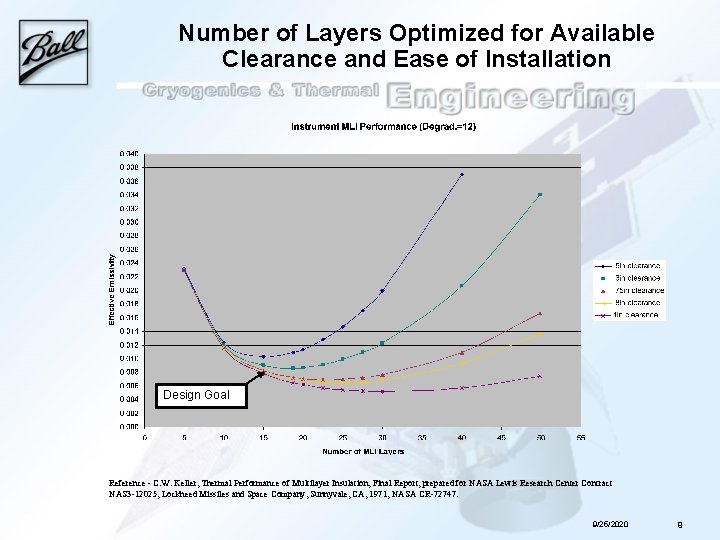
Number of Layers Optimized for Available Clearance and Ease of Installation Design Goal Reference - C. W. Keller, Thermal Performance of Multilayer Insulation, Final Report, prepared for NASA Lewis Research Center Contract NAS 3 -12025, Lockheed Missiles and Space Company, Sunnyvale, CA, 1971, NASA CR-72747. 9/25/2020 9
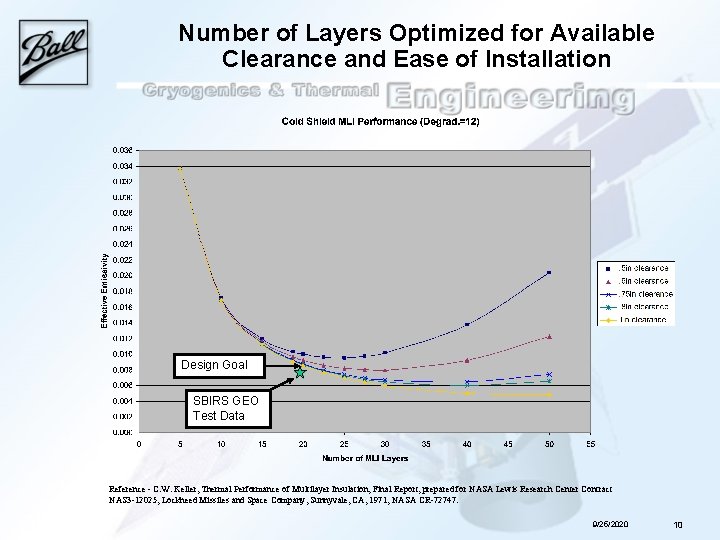
Number of Layers Optimized for Available Clearance and Ease of Installation Design Goal SBIRS GEO Test Data Reference - C. W. Keller, Thermal Performance of Multilayer Insulation, Final Report, prepared for NASA Lewis Research Center Contract NAS 3 -12025, Lockheed Missiles and Space Company, Sunnyvale, CA, 1971, NASA CR-72747. 9/25/2020 10
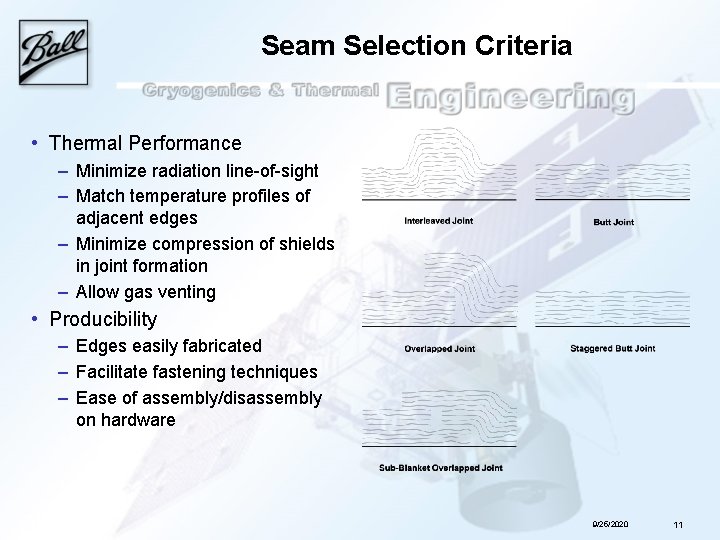
Seam Selection Criteria • Thermal Performance – Minimize radiation line-of-sight – Match temperature profiles of adjacent edges – Minimize compression of shields in joint formation – Allow gas venting • Producibility – Edges easily fabricated – Facilitate fastening techniques – Ease of assembly/disassembly on hardware 9/25/2020 11
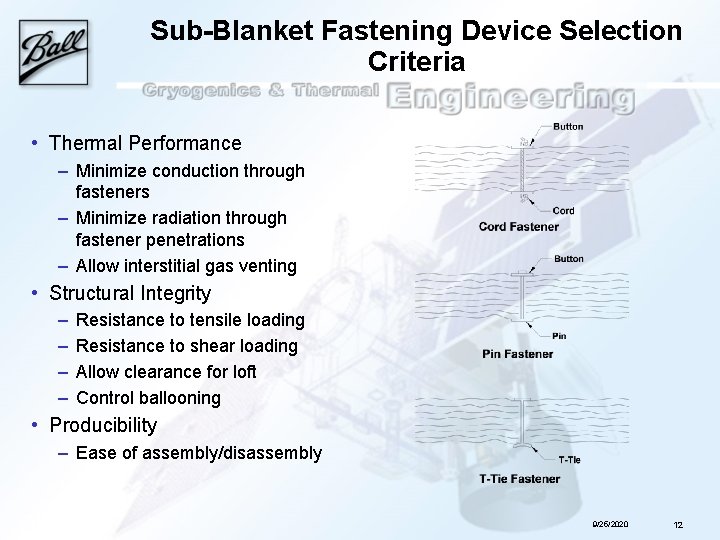
Sub-Blanket Fastening Device Selection Criteria • Thermal Performance – Minimize conduction through fasteners – Minimize radiation through fastener penetrations – Allow interstitial gas venting • Structural Integrity – – Resistance to tensile loading Resistance to shear loading Allow clearance for loft Control ballooning • Producibility – Ease of assembly/disassembly 9/25/2020 12
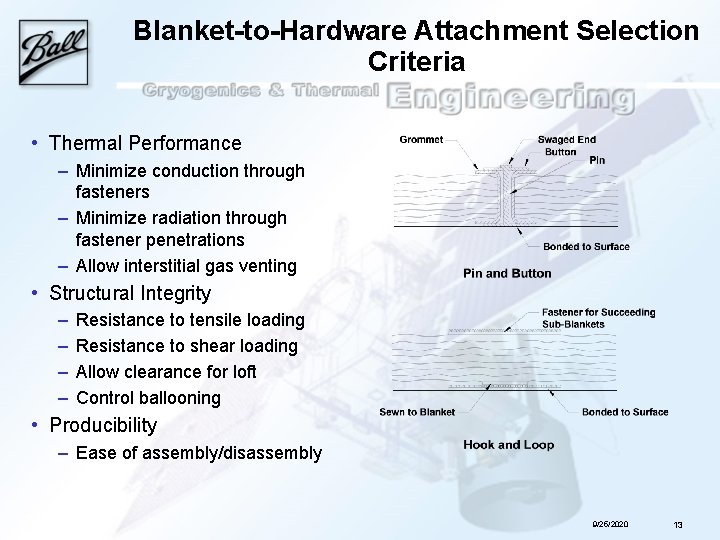
Blanket-to-Hardware Attachment Selection Criteria • Thermal Performance – Minimize conduction through fasteners – Minimize radiation through fastener penetrations – Allow interstitial gas venting • Structural Integrity – – Resistance to tensile loading Resistance to shear loading Allow clearance for loft Control ballooning • Producibility – Ease of assembly/disassembly 9/25/2020 13
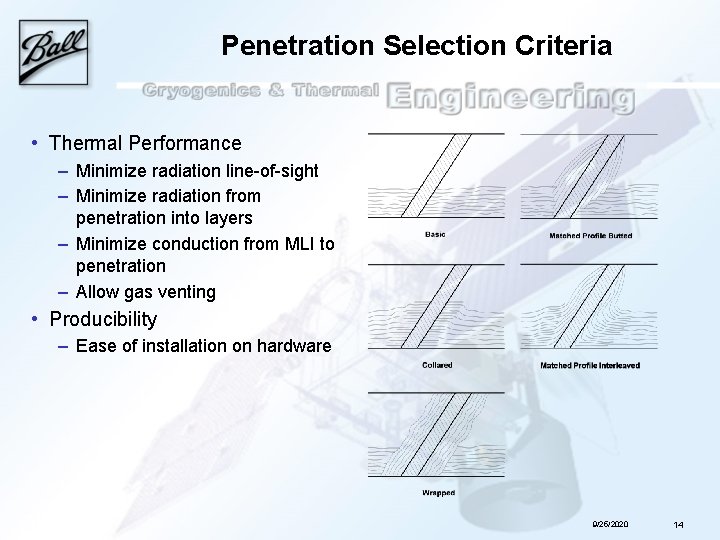
Penetration Selection Criteria • Thermal Performance – Minimize radiation line-of-sight – Minimize radiation from penetration into layers – Minimize conduction from MLI to penetration – Allow gas venting • Producibility – Ease of installation on hardware 9/25/2020 14
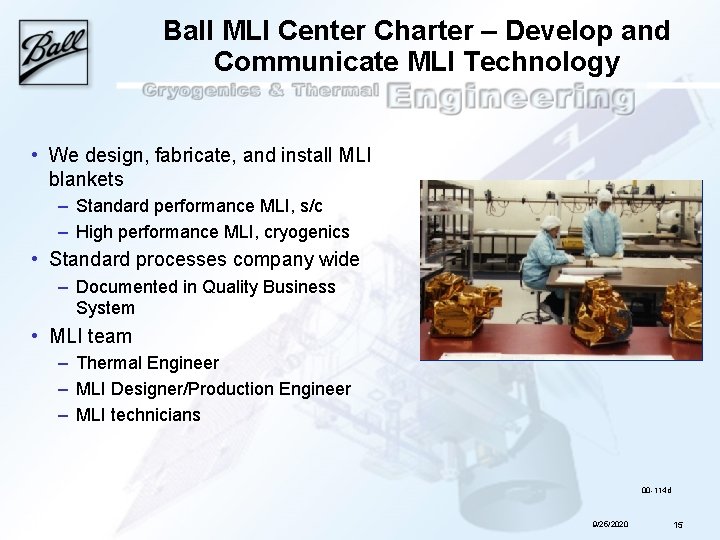
Ball MLI Center Charter – Develop and Communicate MLI Technology • We design, fabricate, and install MLI blankets – Standard performance MLI, s/c – High performance MLI, cryogenics • Standard processes company wide – Documented in Quality Business System • MLI team – Thermal Engineer – MLI Designer/Production Engineer – MLI technicians 00 -114 d 9/25/2020 15
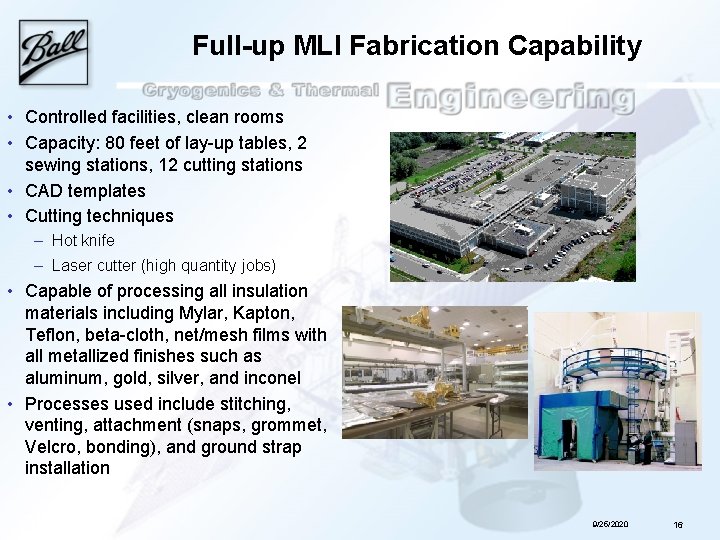
Full-up MLI Fabrication Capability • Controlled facilities, clean rooms • Capacity: 80 feet of lay-up tables, 2 sewing stations, 12 cutting stations • CAD templates • Cutting techniques – Hot knife – Laser cutter (high quantity jobs) • Capable of processing all insulation materials including Mylar, Kapton, Teflon, beta-cloth, net/mesh films with all metallized finishes such as aluminum, gold, silver, and inconel • Processes used include stitching, venting, attachment (snaps, grommet, Velcro, bonding), and ground strap installation 9/25/2020 16
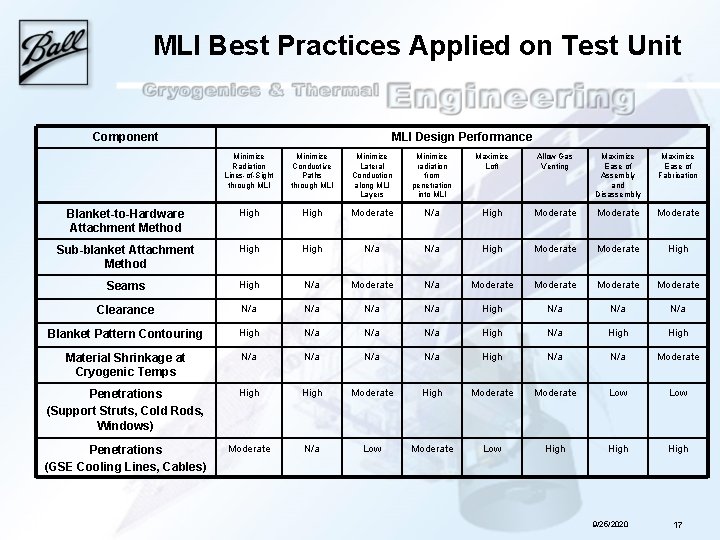
MLI Best Practices Applied on Test Unit Component MLI Design Performance Minimize Radiation Lines-of-Sight through MLI Minimize Conductive Paths through MLI Minimize Lateral Conduction along MLI Layers Minimize radiation from penetration into MLI Maximize Loft Allow Gas Venting Maximize Ease of Assembly and Disassembly Maximize Ease of Fabrication Blanket-to-Hardware Attachment Method High Moderate N/a High Moderate Sub-blanket Attachment Method High N/a High Moderate High Seams High N/a Moderate Moderate Clearance N/a N/a High N/a N/a Blanket Pattern Contouring High N/a N/a High Material Shrinkage at Cryogenic Temps N/a N/a High N/a Moderate Penetrations (Support Struts, Cold Rods, Windows) High Moderate Low Penetrations (GSE Cooling Lines, Cables) Moderate N/a Low Moderate Low High 9/25/2020 17
Tips and Tricks – Number of layers optimized using Lockheed correlations – Developed seam and penetration treatments to minimize performance degradation – Optimized seam locations • Facilitate ease of installation and disassembly • As few as possible – Layer temperature profiles matched at interfaces – Used streamlined design and production processes • company standard 9/25/2020 18
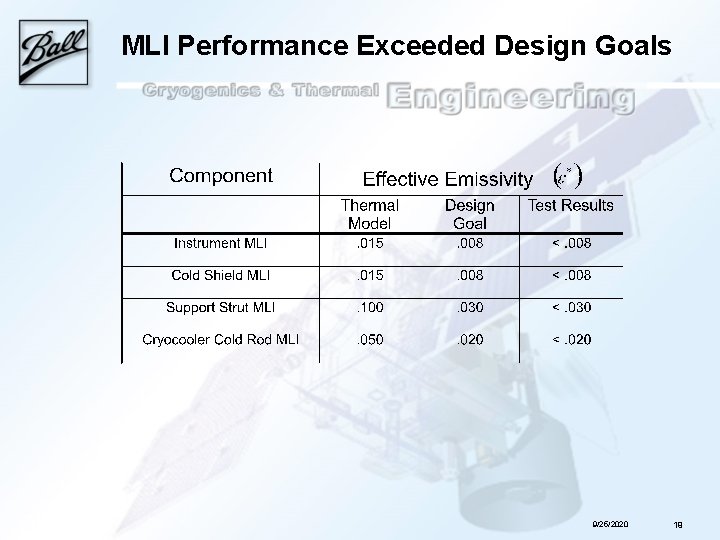
MLI Performance Exceeded Design Goals 9/25/2020 19
Conclusions • Best MLI practices wherever possible • Work concurrently with mechanical to develop “MLI friendly” configuration • Compromises made to simplify implementation, facilitate disassembly, and where high performance unnecessary • Test unit excellent opportunity to verify concepts 9/25/2020 20
- Slides: 20