
High Performance MEMS Mirrors for Beam Pointing Applications
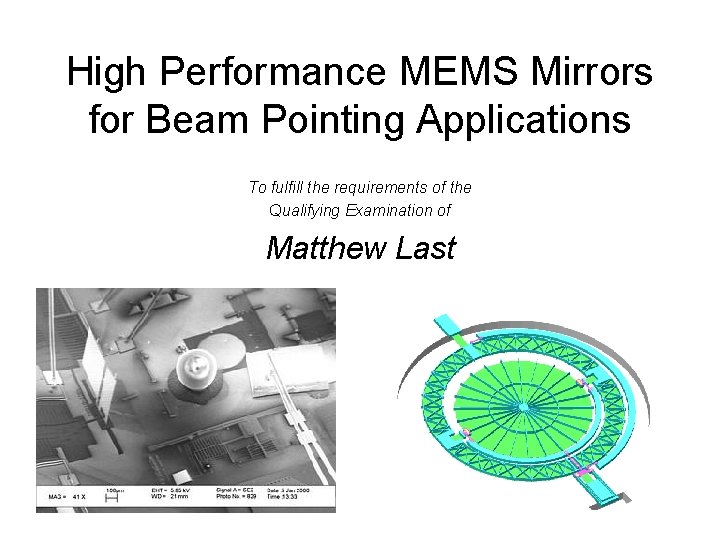
High Performance MEMS Mirrors for Beam Pointing Applications To fulfill the requirements of the Qualifying Examination of Matthew Last
Goal To Build Large Deflection, Fast MEMS Beamsteering Mirrors by optimizing the design and manufacturing process
Outline • Laser Communication – Advantages of laser communication – Example • • • Beamsteering Actuation Strategies Device Fabrication Performance Conclusion
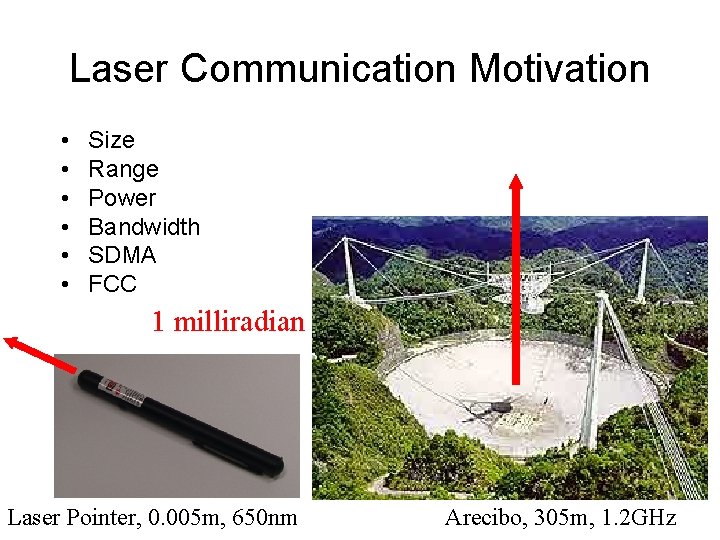
Laser Communication Motivation • • • Size Range Power Bandwidth SDMA FCC 1 milliradian Laser Pointer, 0. 005 m, 650 nm Arecibo, 305 m, 1. 2 GHz
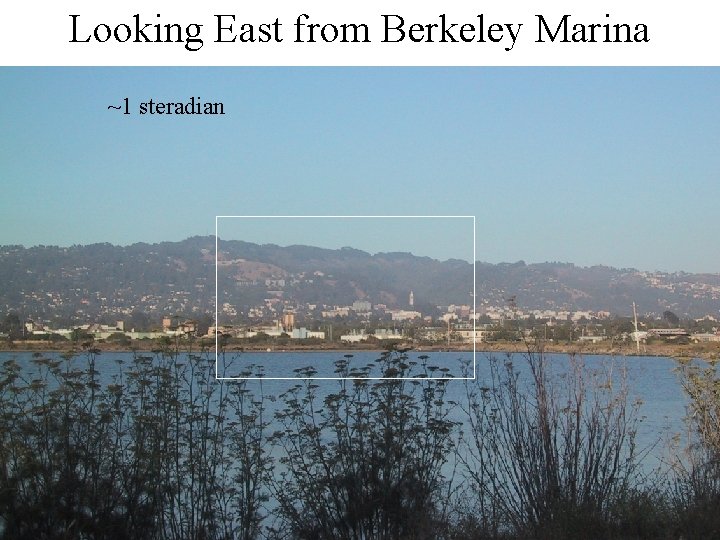
Looking East from Berkeley Marina ~1 steradian
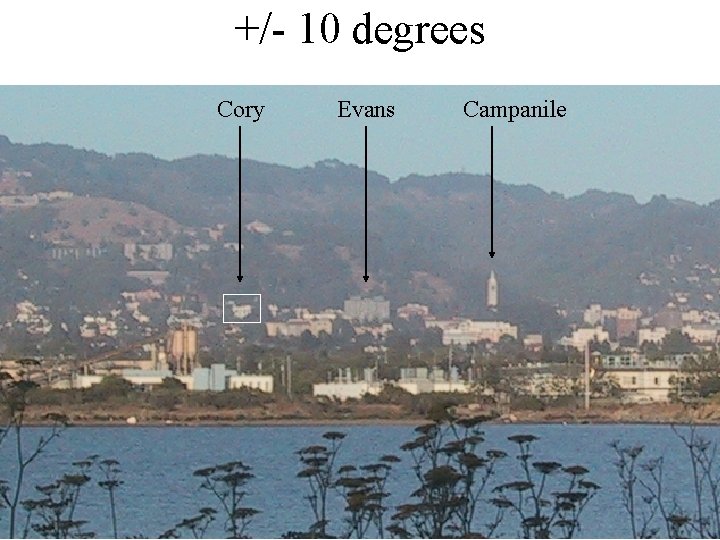
+/- 10 degrees Cory Evans Campanile
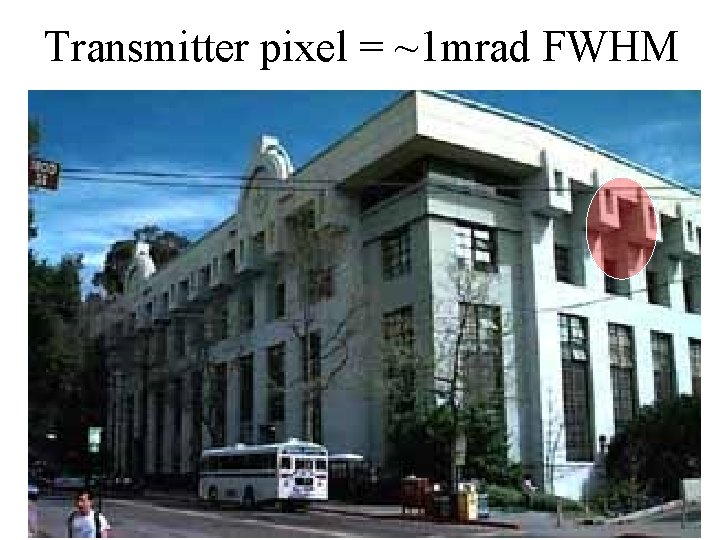
Transmitter pixel = ~1 mrad FWHM
Outline • Laser Communication • Beamsteering – Need automated method for aligning laser – Need mechanism for aiming laser • • Actuation Strategies Device Fabrication Performance Conclusion
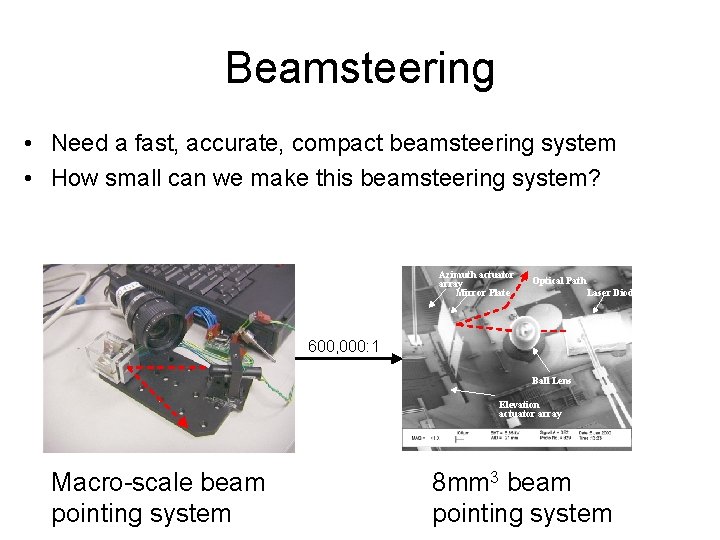
Beamsteering • Need a fast, accurate, compact beamsteering system • How small can we make this beamsteering system? Azimuth actuator array Mirror Plate Optical Path Laser Diode 600, 000: 1 Ball Lens Elevation actuator array Macro-scale beam pointing system 8 mm 3 beam pointing system

Beamsteering Candidates • Moving Lens • Source Array – DMD – VCSEL • Phased Array • Mirror – 2 1 -axis mirrors – 1 2 -axis mirror
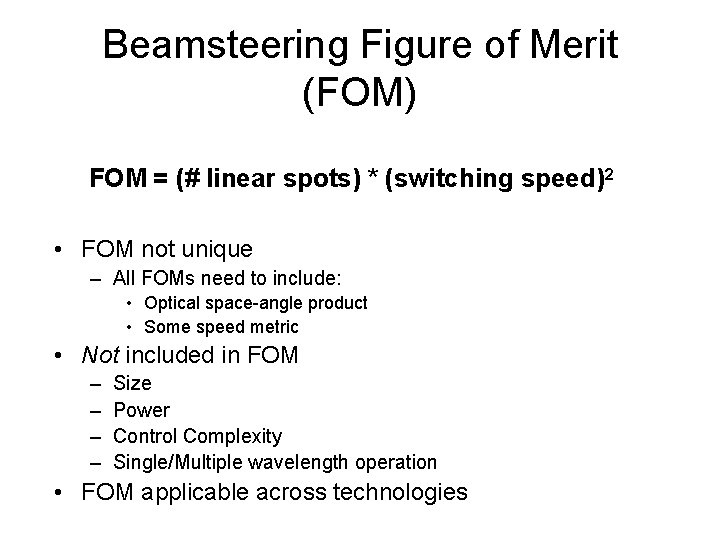
Beamsteering Figure of Merit (FOM) FOM = (# linear spots) * (switching speed)2 • FOM not unique – All FOMs need to include: • Optical space-angle product • Some speed metric • Not included in FOM – – Size Power Control Complexity Single/Multiple wavelength operation • FOM applicable across technologies
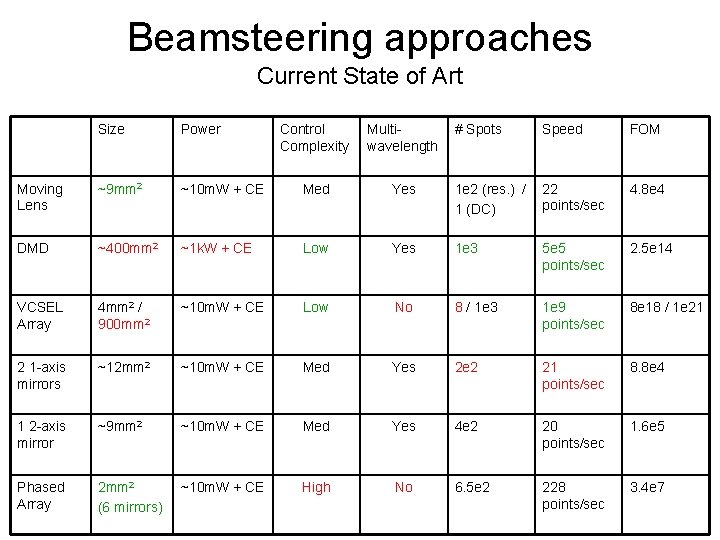
Beamsteering approaches Current State of Art Size Power Control Complexity Multiwavelength # Spots Speed FOM Moving Lens ~9 mm 2 ~10 m. W + CE Med Yes 1 e 2 (res. ) / 1 (DC) 22 points/sec 4. 8 e 4 DMD ~400 mm 2 ~1 k. W + CE Low Yes 1 e 3 5 e 5 points/sec 2. 5 e 14 VCSEL Array 4 mm 2 / 900 mm 2 ~10 m. W + CE Low No 8 / 1 e 3 1 e 9 points/sec 8 e 18 / 1 e 21 2 1 -axis mirrors ~12 mm 2 ~10 m. W + CE Med Yes 2 e 2 21 points/sec 8. 8 e 4 1 2 -axis mirror ~9 mm 2 ~10 m. W + CE Med Yes 4 e 2 20 points/sec 1. 6 e 5 Phased Array 2 mm 2 (6 mirrors) ~10 m. W + CE High No 6. 5 e 2 228 points/sec 3. 4 e 7
So why 2 -axis Mirrors? • Compact • Low Power • Weak wavelength dependence – Diffraction – Reflectivity • Limits useful in DMD, Phased array design • Good tradeoff between # spots, speed – How far can we push both?

Outline • Laser Communication • Beamsteering • Actuation Strategies – 2 -axis mirrors – Proposed mirror – SOI micromirror • Device Fabrication • Performance • Conclusion

Actuation Strategies for 2 -axis Mirrors • Under-mirror gap-closing Actuators • Vertical Comb Actuators • Lateral Comb Actuators Lucent Lambda. Router Adriatic Research Institute, from http: //www. adriaticresearch. org Milanovic, Last, Pister

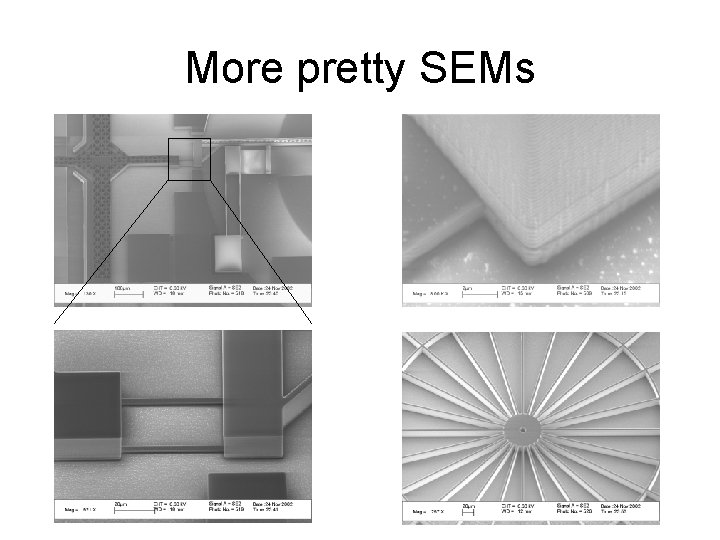
Proposed 2 -Axis Mirror • Low-power, high force lateral electrostatic actuators • Single-crystal silicon face sheet is flat (4 m Rc), <5 nm rms roughness. • Truss-based design yields low mass, high stiffness • No Assembly Required
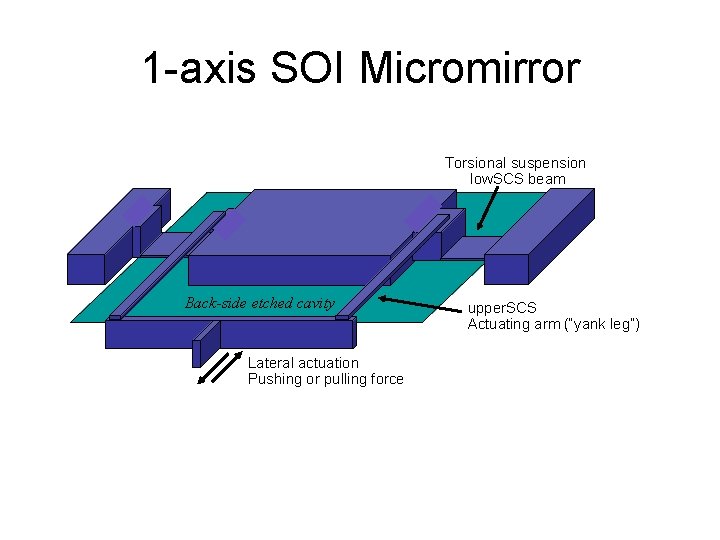
1 -axis SOI Micromirror Torsional suspension low. SCS beam Low-mass mirror Back-side etched cavity Lateral actuation Pushing or pulling force upper. SCS Actuating arm (“yank leg”)
Outline • • Laser Communication Beamsteering Actuation Strategies Device Fabrication – Timed Etch – Bonding – Etch Stops • Performance • Conclusion
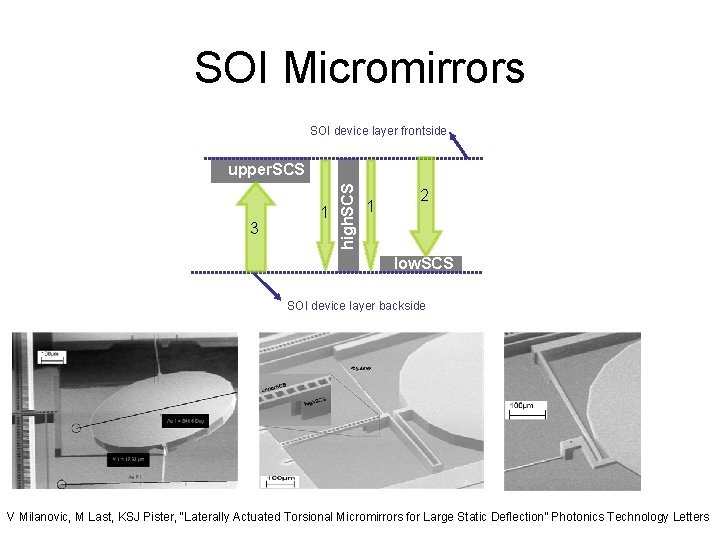
SOI Micromirrors SOI device layer frontside 3 1 high. SCS upper. SCS 1 2 low. SCS SOI device layer backside V Milanovic, M Last, KSJ Pister, “Laterally Actuated Torsional Micromirrors for Large Static Deflection” Photonics Technology Letters
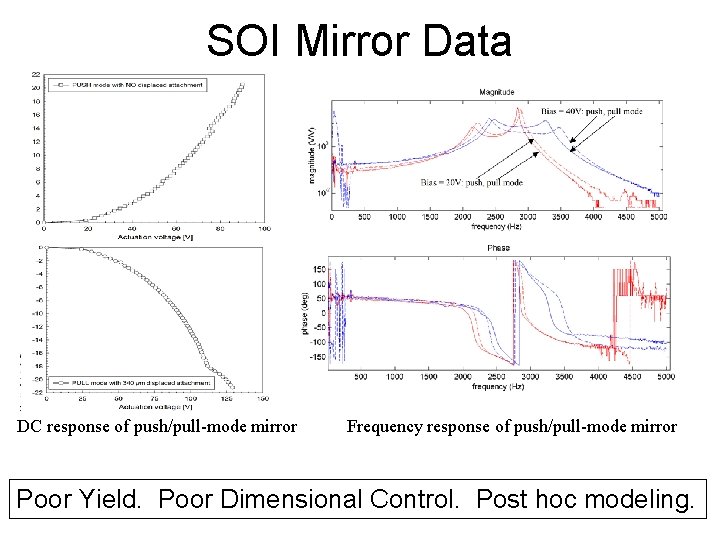
SOI Mirror Data DC response of push/pull-mode mirror Frequency response of push/pull-mode mirror Poor Yield. Poor Dimensional Control. Post hoc modeling.

Lixia Zhou’s Process: Patterned SOI alignment bonding Timed etch Credit: L. Zhou
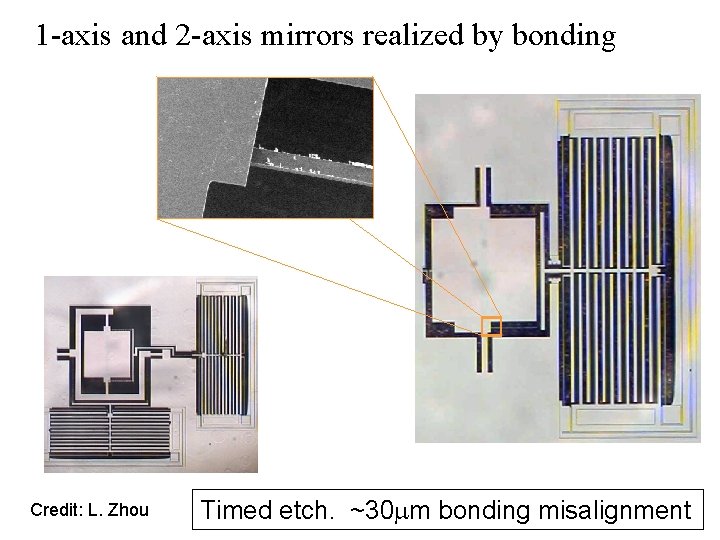
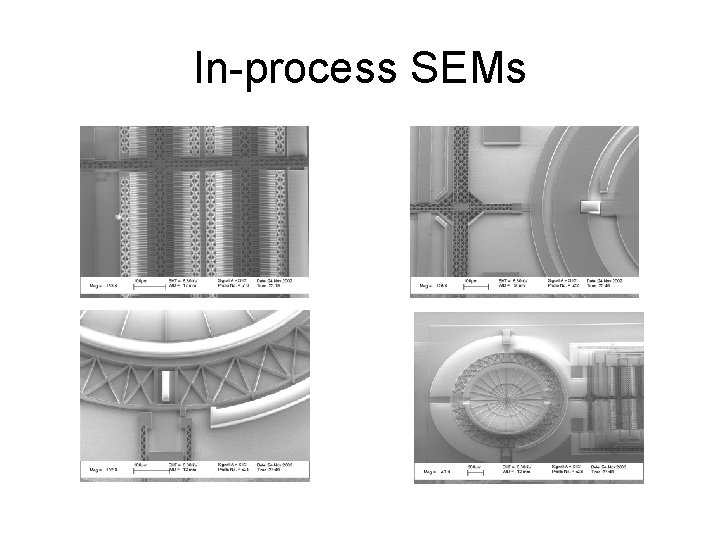
1 -axis and 2 -axis mirrors realized by bonding Credit: L. Zhou Timed etch. ~30 m bonding misalignment
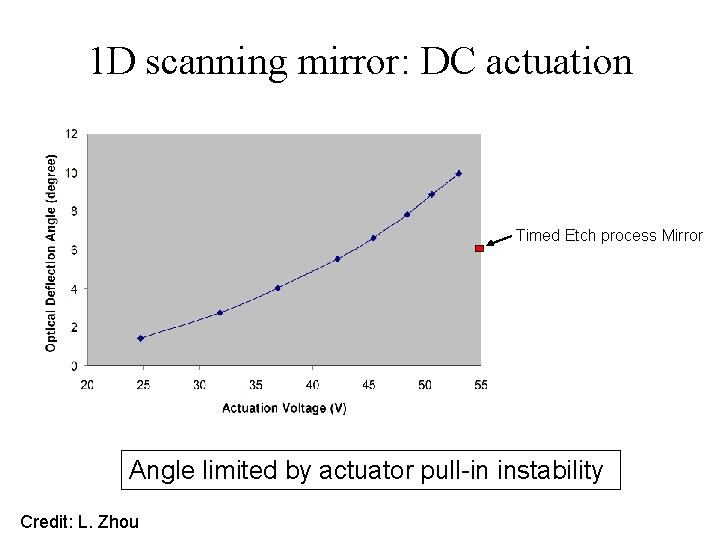
1 D scanning mirror: DC actuation Timed Etch process Mirror Angle limited by actuator pull-in instability Credit: L. Zhou
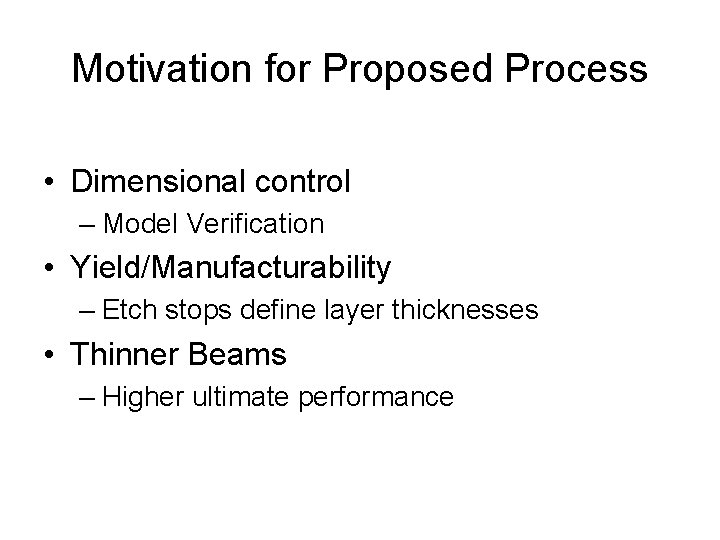
Motivation for Proposed Process • Dimensional control – Model Verification • Yield/Manufacturability – Etch stops define layer thicknesses • Thinner Beams – Higher ultimate performance
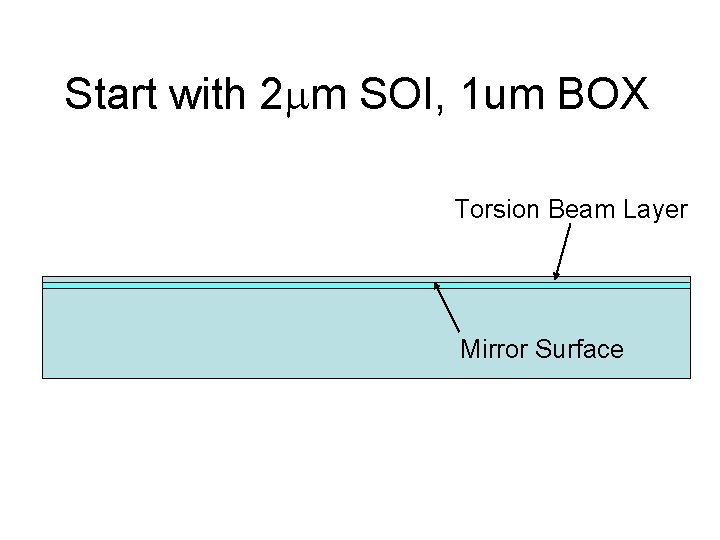
Start with 2 m SOI, 1 um BOX Torsion Beam Layer Mirror Surface
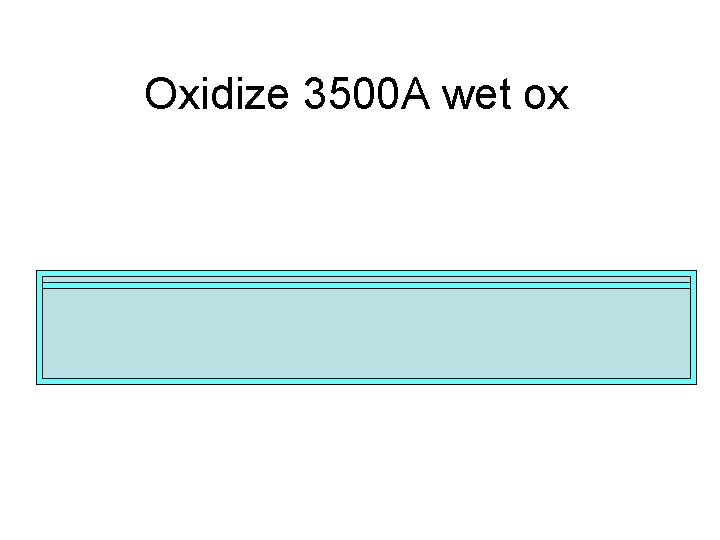
Oxidize 3500 A wet ox
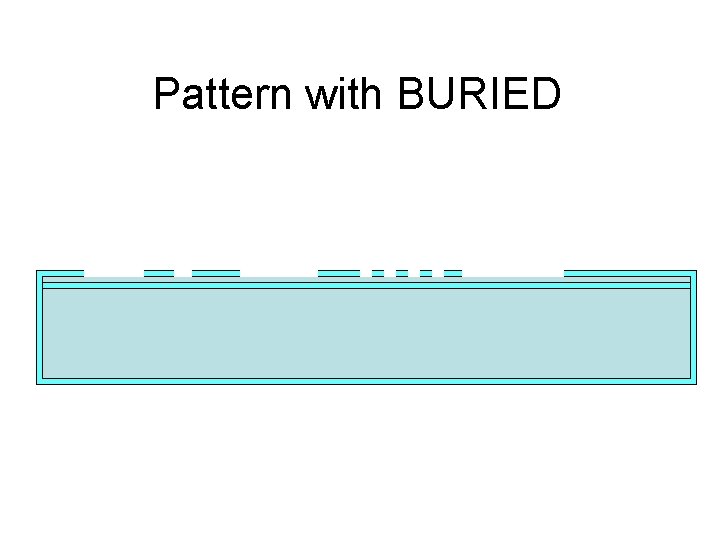
Pattern with BURIED
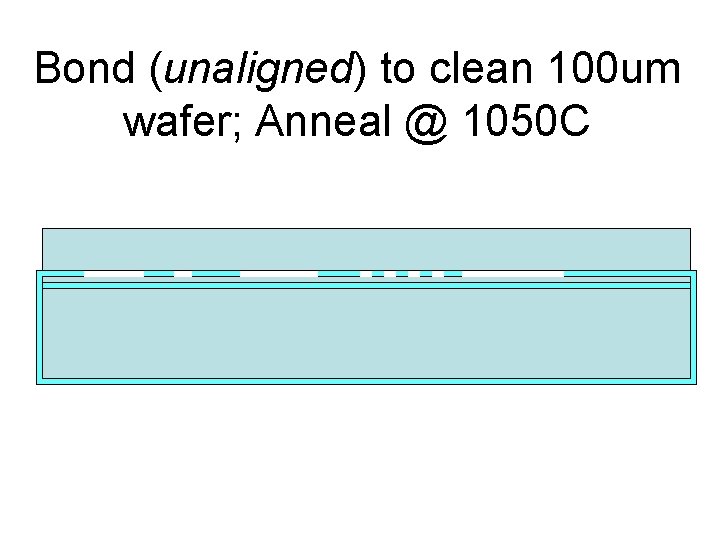
Bond (unaligned) to clean 100 um wafer; Anneal @ 1050 C
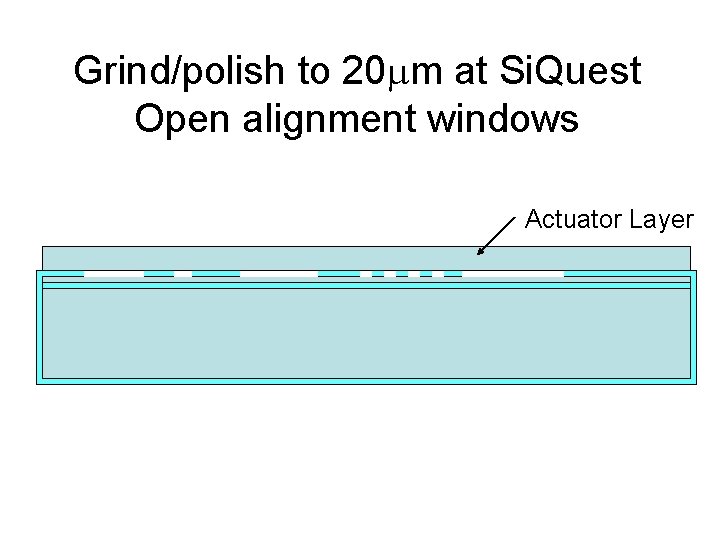
Grind/polish to 20 m at Si. Quest Open alignment windows Actuator Layer
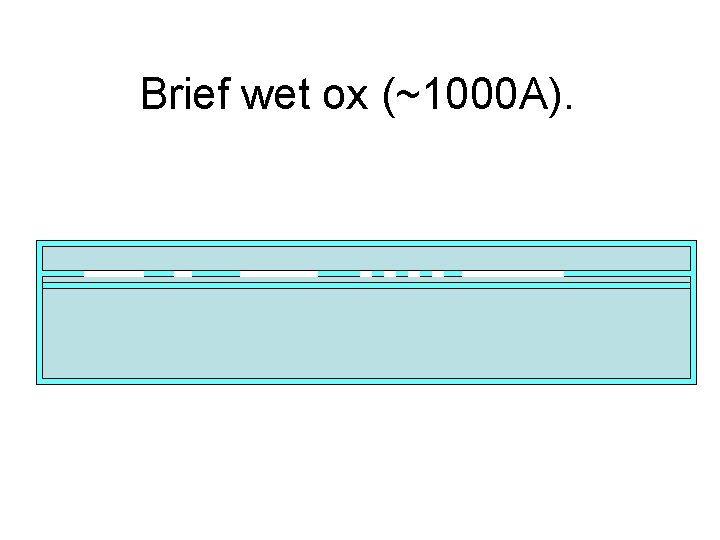
Brief wet ox (~1000 A).
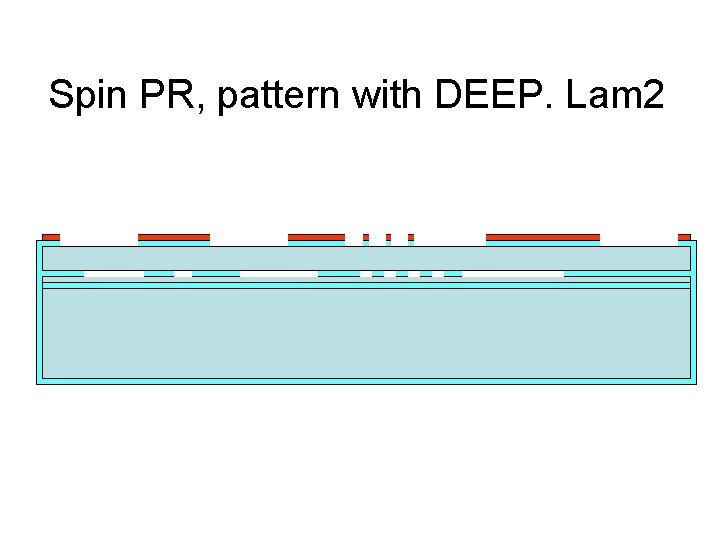
Spin PR, pattern with DEEP. Lam 2
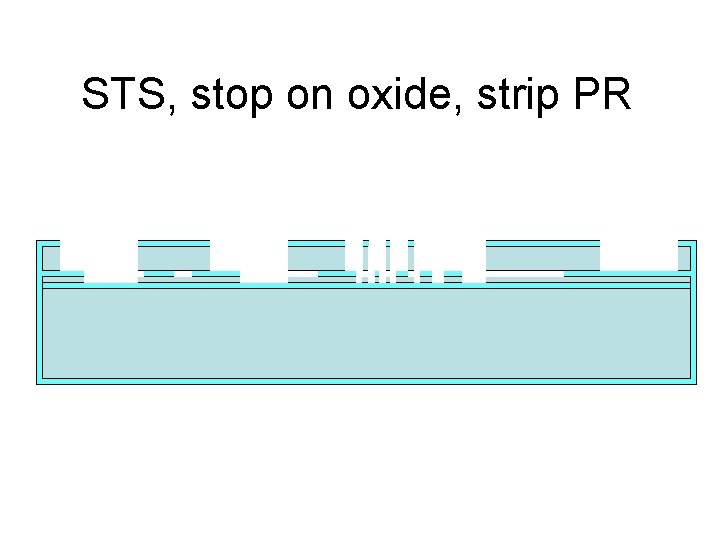
STS, stop on oxide, strip PR
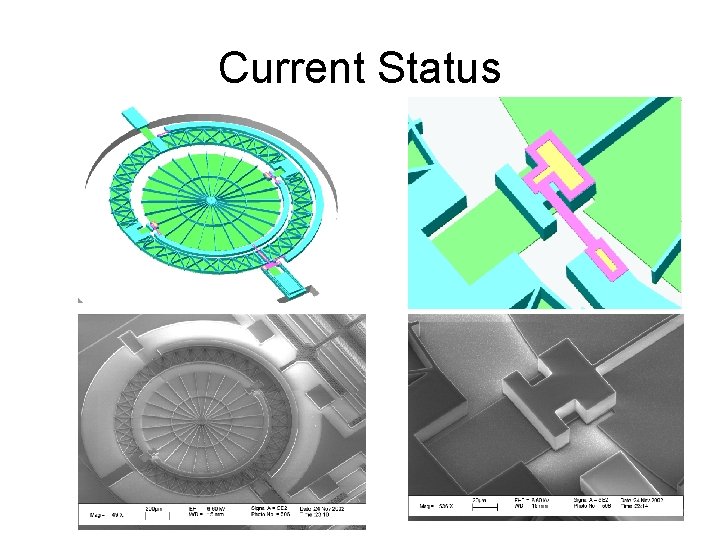
Current Status
In-process SEMs
More pretty SEMs
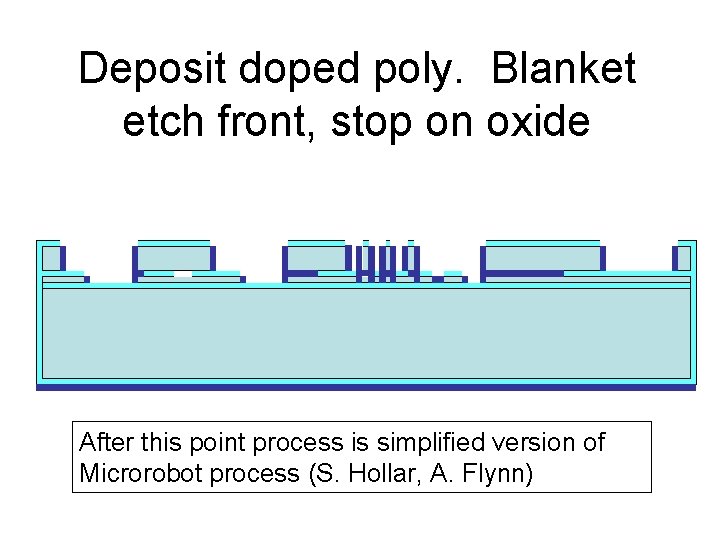
Deposit doped poly. Blanket etch front, stop on oxide After this point process is simplified version of Microrobot process (S. Hollar, A. Flynn)
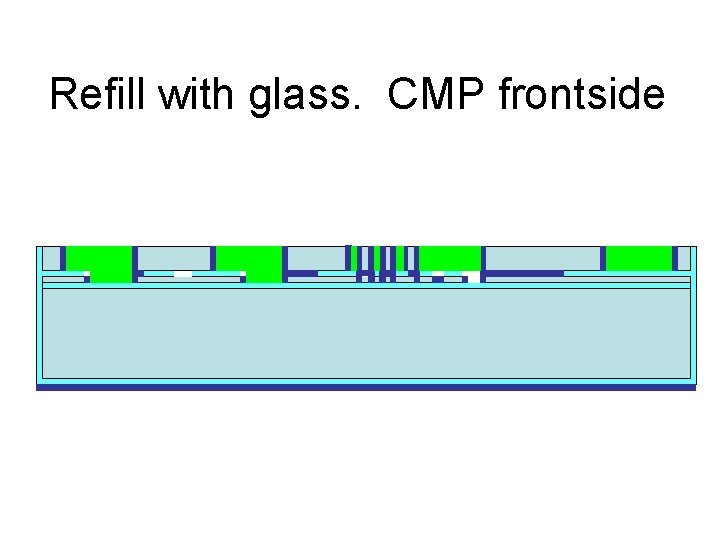
Refill with glass. CMP frontside
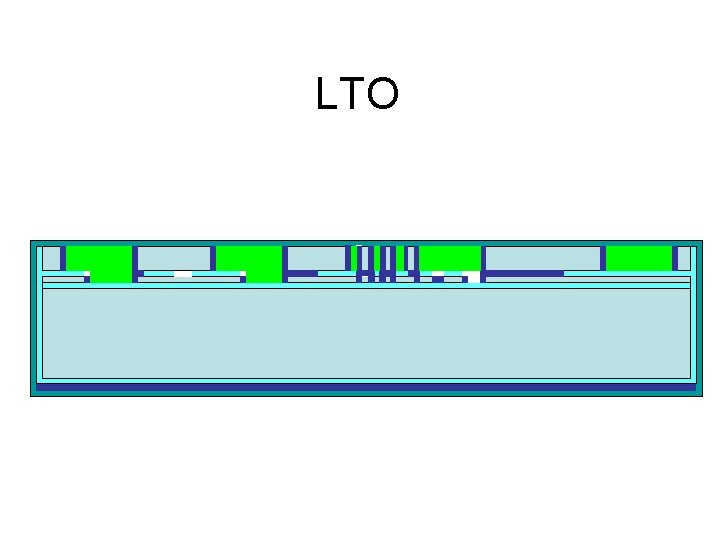
LTO
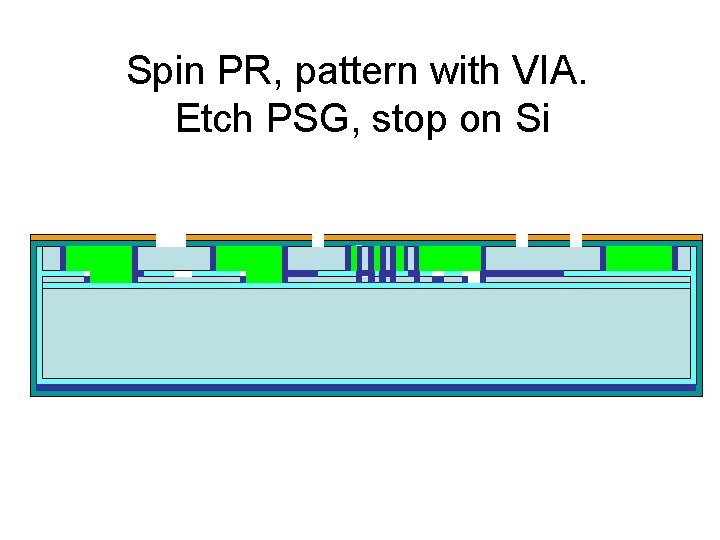
Spin PR, pattern with VIA. Etch PSG, stop on Si

Deposit poly Pattern with TOPMASK. Etch in STS, stop on oxide. Linkage Layer
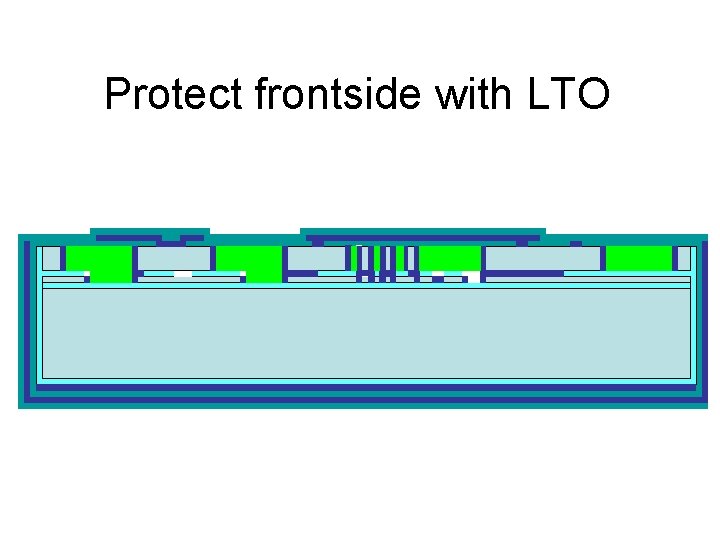
Protect frontside with LTO
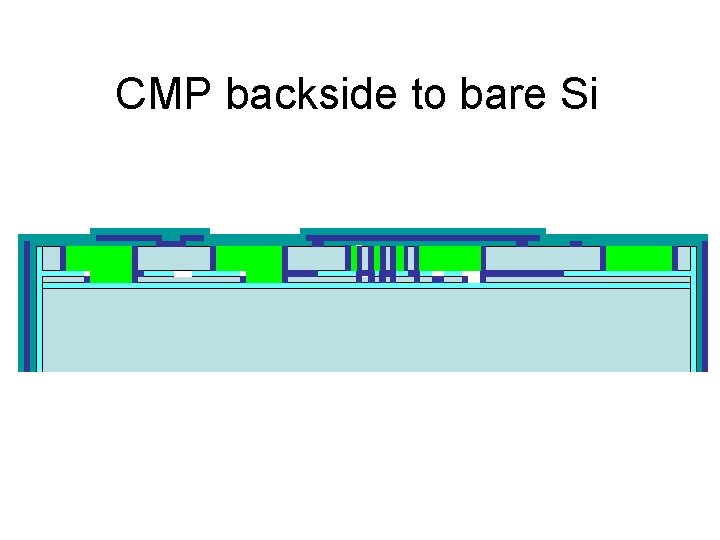
CMP backside to bare Si
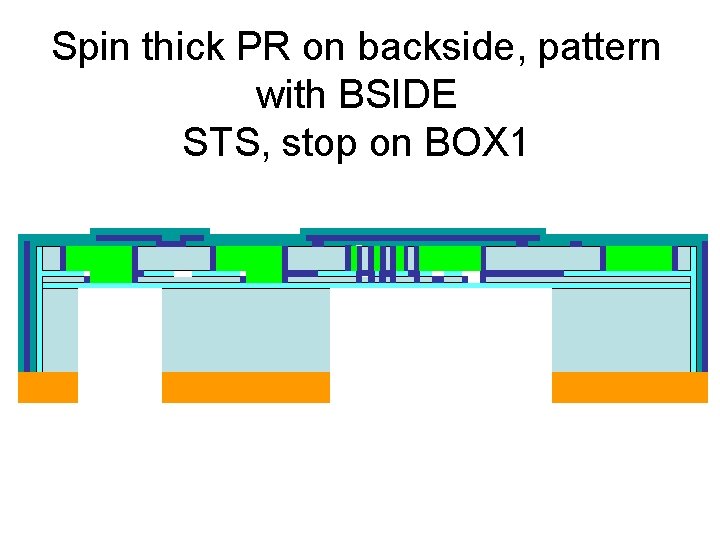
Spin thick PR on backside, pattern with BSIDE STS, stop on BOX 1
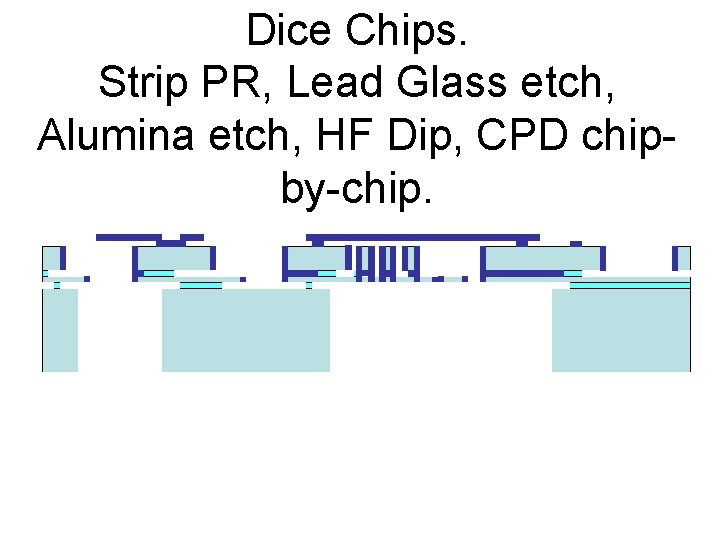
Dice Chips. Strip PR, Lead Glass etch, Alumina etch, HF Dip, CPD chipby-chip.
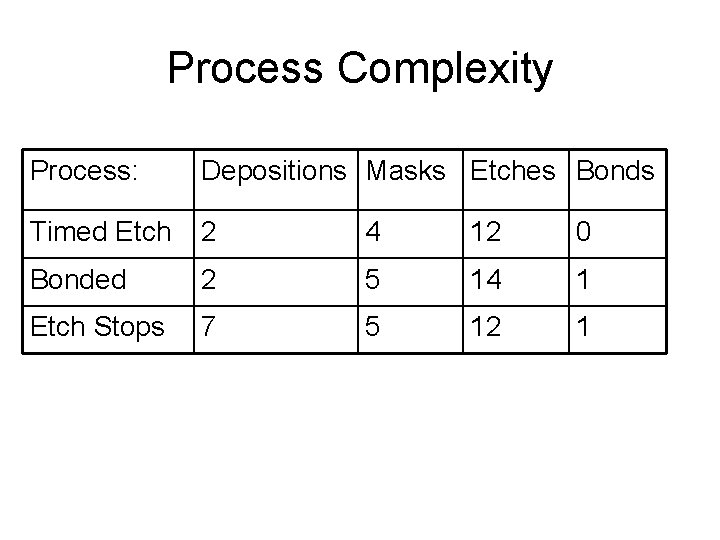
Process Complexity Process: Depositions Masks Etches Bonds Timed Etch 2 4 12 0 Bonded 2 5 14 1 Etch Stops 7 5 12 1

Which Process Will Be Best? • Thin mechanical beams mean more spots • Secondary Issues – Yield/Manufacturability – Dimensional Control – Process Simplicity – Design Flexibility • Feedthroughs • RIE Lag
Outline • • Laser Communication Beamsteering Lateral Actuation Technologies Performance – FOM – Limits – Process Comparison • Conclusion
FOM and Micromirrors Different Springs Determined by Damping | | Determined by Moment of Inertia n/10 0 o -90 o -180 o n 10 n Constant FOM: Trade off m and n 2 by modifying spring
Closed Loop Control • 2 nd order system – Collocated Sensors/Actuators – Compensation • Requires high force at high freq. – Force-limited operation • Little flexibility in pole placement • Switching speed proportional to n Andre Preumont, Vibration Control of Active Structures, 2 nd Ed. Kluwer Academic Publishers, 2002
Equations of Motion Itot = Moment of inertia = Im + Iact Btot = Damping = Bsqueeze+ Bcouette + Bdrag Jtot = Spring term = JTB + JYL+ Jact = Torque = Fact. Lmcos( ) Low-mass mirror
Torque Limits • Actuator force determined by: – – Array size (Nf) Electrode geometry Maximum Voltage (Vm) Geometry (Lmcos( )) F F
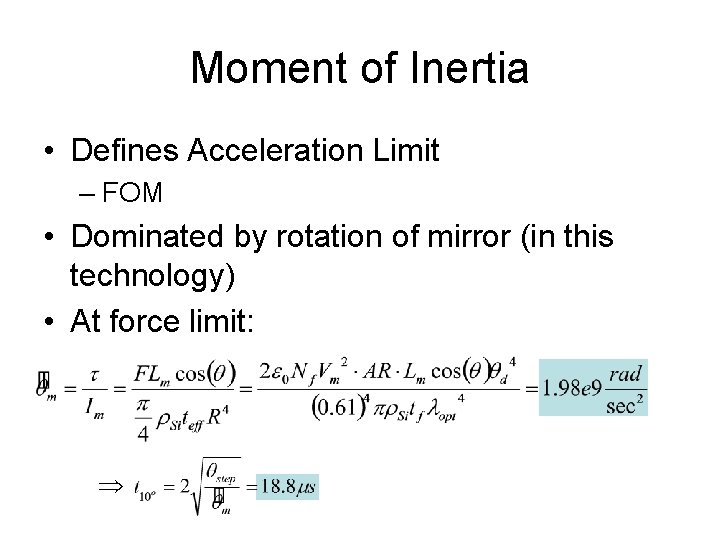
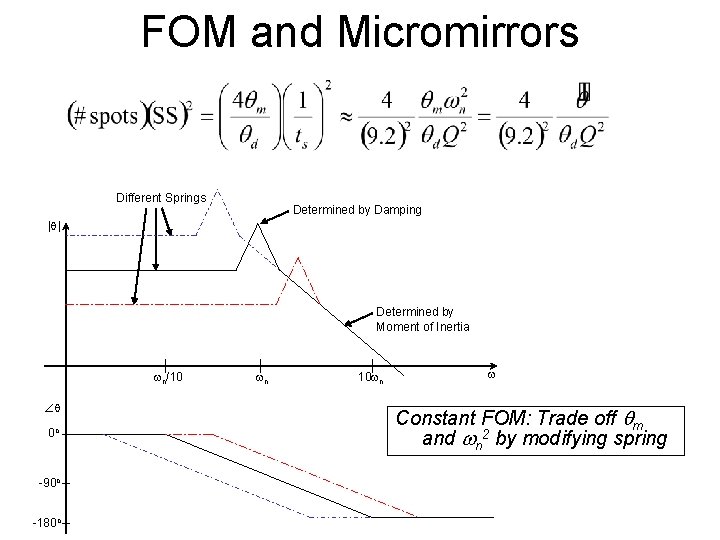
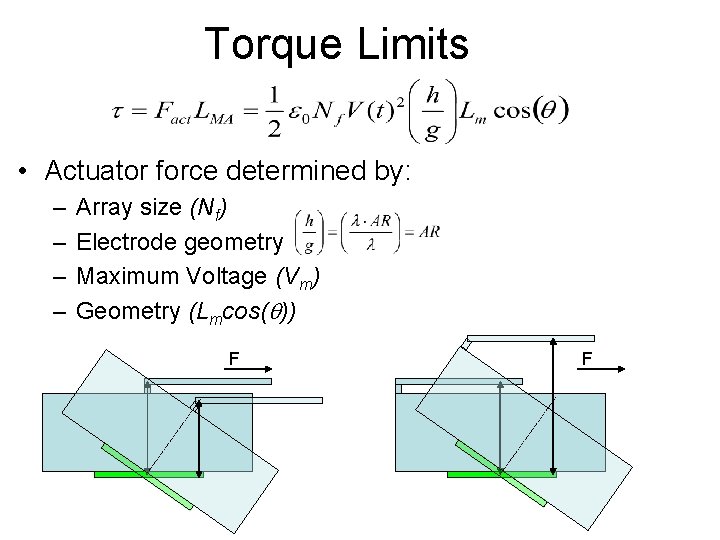
Moment of Inertia • Defines Acceleration Limit – FOM • Dominated by rotation of mirror (in this technology) • At force limit:
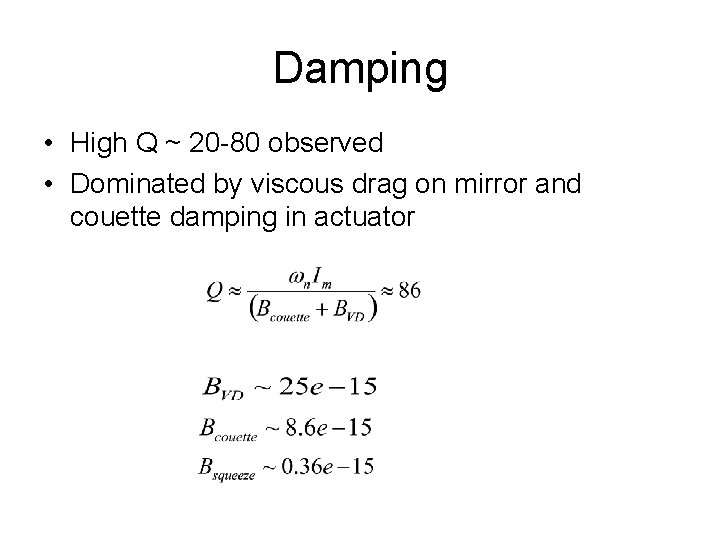
Damping • High Q ~ 20 -80 observed • Dominated by viscous drag on mirror and couette damping in actuator
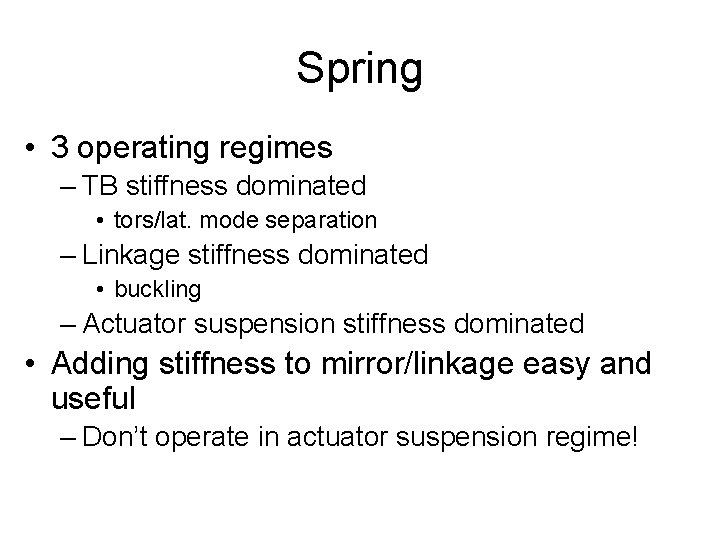
Spring • 3 operating regimes – TB stiffness dominated • tors/lat. mode separation – Linkage stiffness dominated • buckling – Actuator suspension stiffness dominated • Adding stiffness to mirror/linkage easy and useful – Don’t operate in actuator suspension regime!
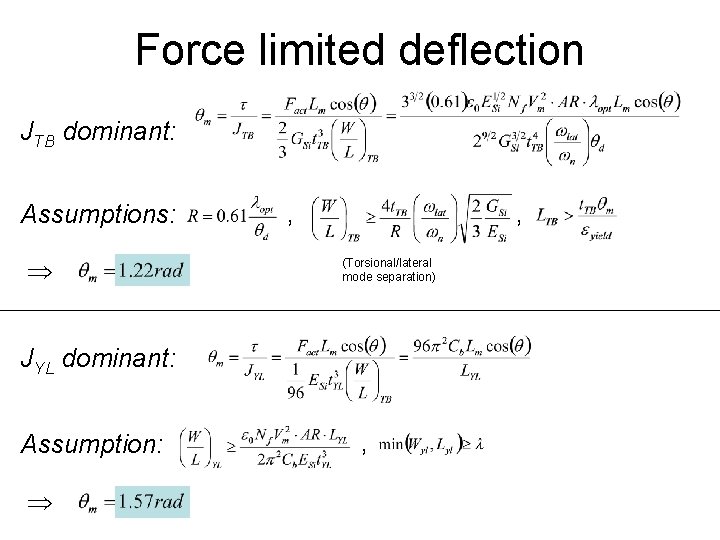
Force limited deflection JTB dominant: Assumptions: , , (Torsional/lateral mode separation) JYL dominant: Assumption: ,
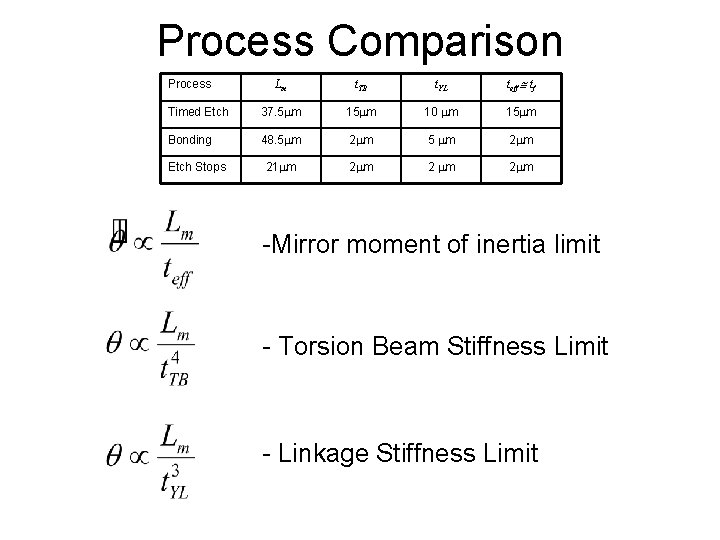
Process Comparison Lm t. TB t. YL teff tf Timed Etch 37. 5 m 10 m 15 m Bonding 48. 5 m 2 m 21 m 2 m 2 m Process Etch Stops -Mirror moment of inertia limit - Torsion Beam Stiffness Limit - Linkage Stiffness Limit
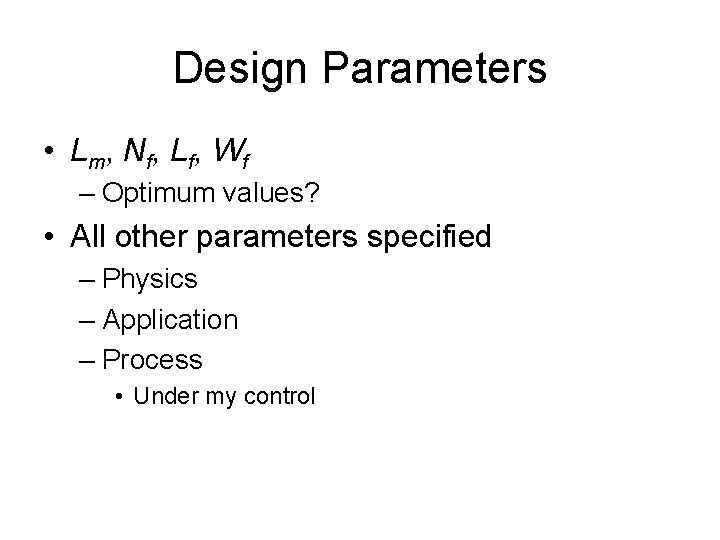
Design Parameters • L m, N f , L f , W f – Optimum values? • All other parameters specified – Physics – Application – Process • Under my control
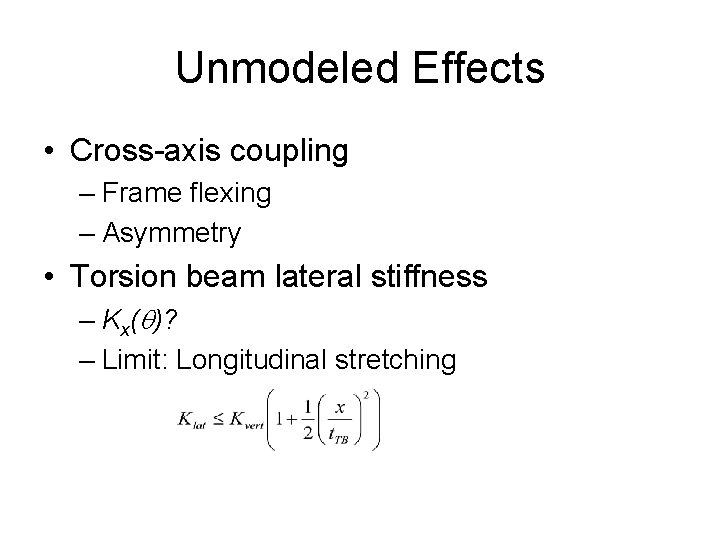
Unmodeled Effects • Cross-axis coupling – Frame flexing – Asymmetry • Torsion beam lateral stiffness – Kx( )? – Limit: Longitudinal stretching
Summary • Laser communication requires beamsteering • 2 -axis beamsteering mirrors – Low-power – Polychromatic – Fast • Proposed process – Submicron dimensional control • Model Verification – Thin mechanical beams for best performance • Speed & Angle limits
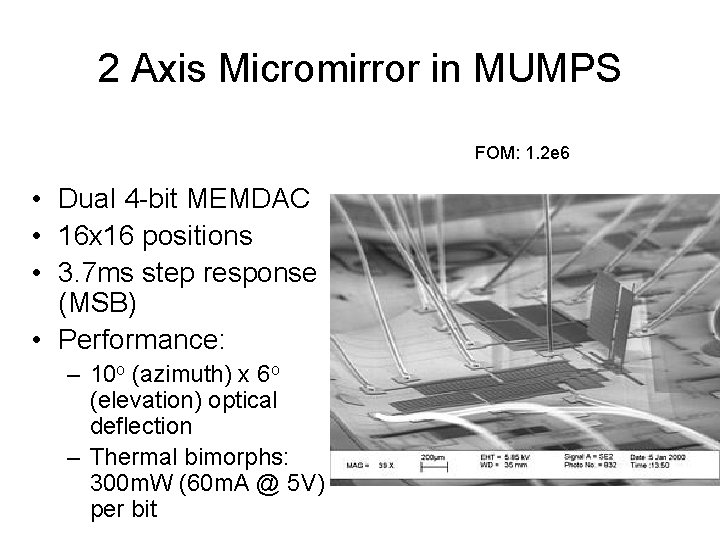
2 Axis Micromirror in MUMPS FOM: 1. 2 e 6 • Dual 4 -bit MEMDAC • 16 x 16 positions • 3. 7 ms step response (MSB) • Performance: – 10 o (azimuth) x 6 o (elevation) optical deflection – Thermal bimorphs: 300 m. W (60 m. A @ 5 V) per bit
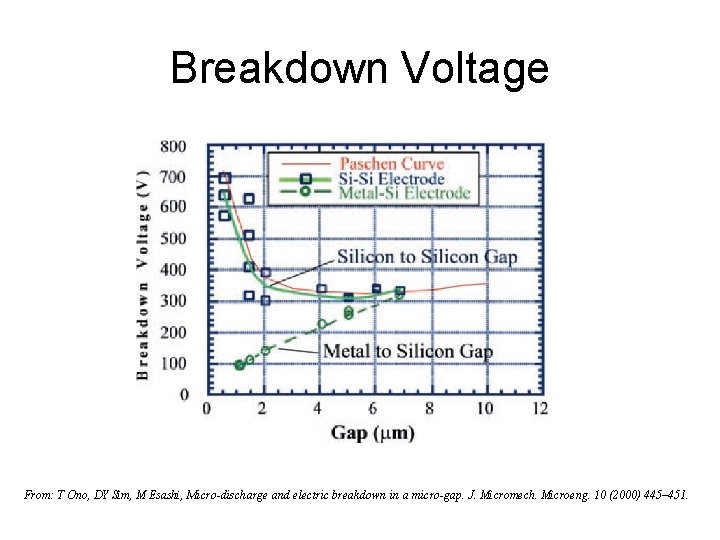
Breakdown Voltage From: T Ono, DY Sim, M Esashi, Micro-discharge and electric breakdown in a micro-gap. J. Micromech. Microeng. 10 (2000) 445– 451.
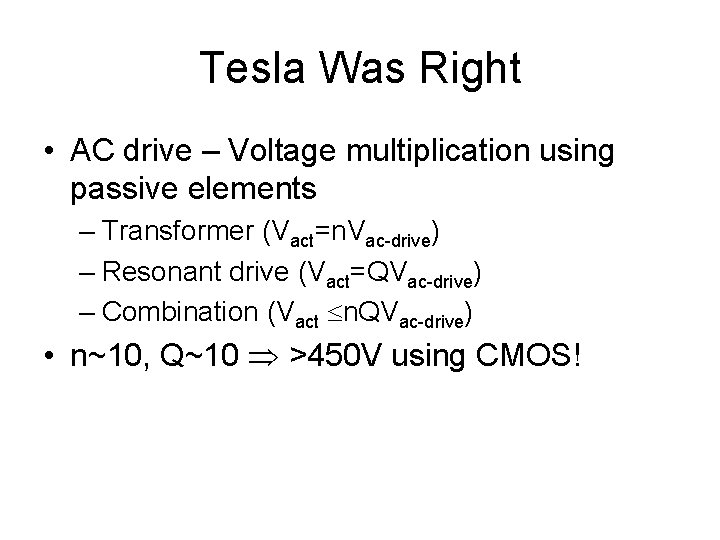
Tesla Was Right • AC drive – Voltage multiplication using passive elements – Transformer (Vact=n. Vac-drive) – Resonant drive (Vact=QVac-drive) – Combination (Vact n. QVac-drive) • n~10, Q~10 >450 V using CMOS!
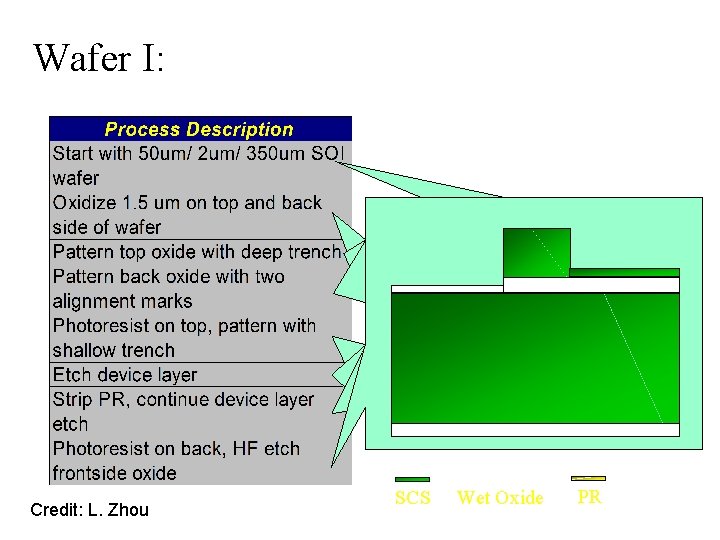
Wafer I: Credit: L. Zhou SCS Wet Oxide PR
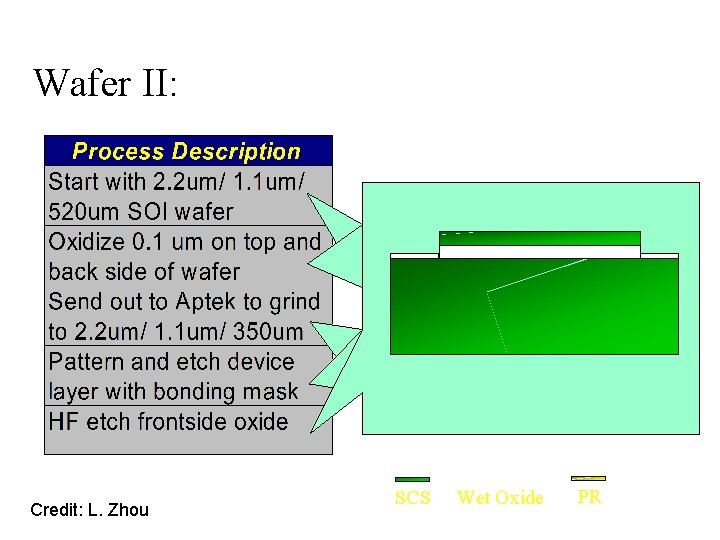
Wafer II: Credit: L. Zhou SCS Wet Oxide PR
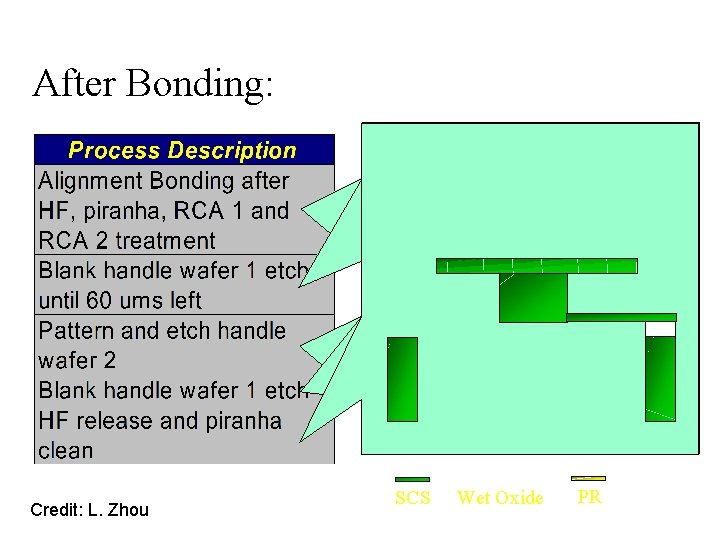
After Bonding: Credit: L. Zhou SCS Wet Oxide PR

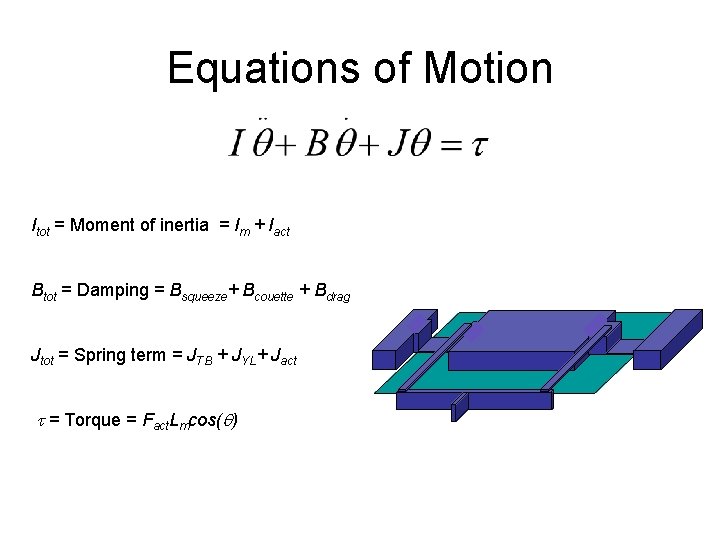
Itot= Im+ Iact Assumptions: , Mirror moment of inertia dominates until:
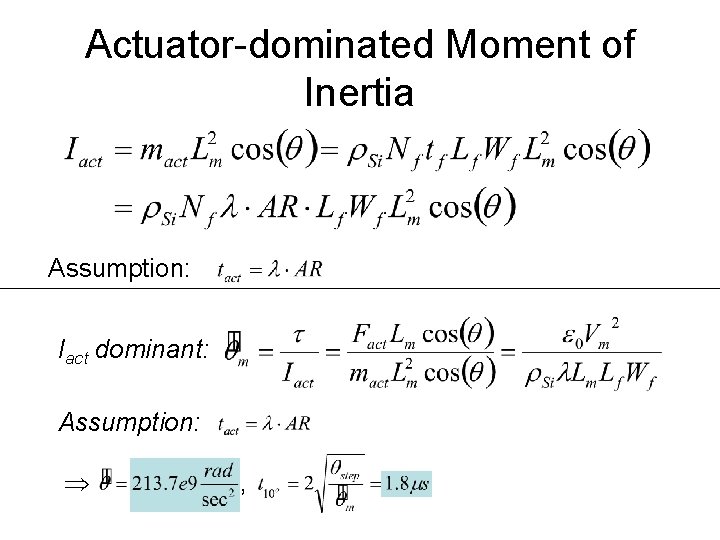
Actuator-dominated Moment of Inertia Assumption: Iact dominant: Assumption: ,
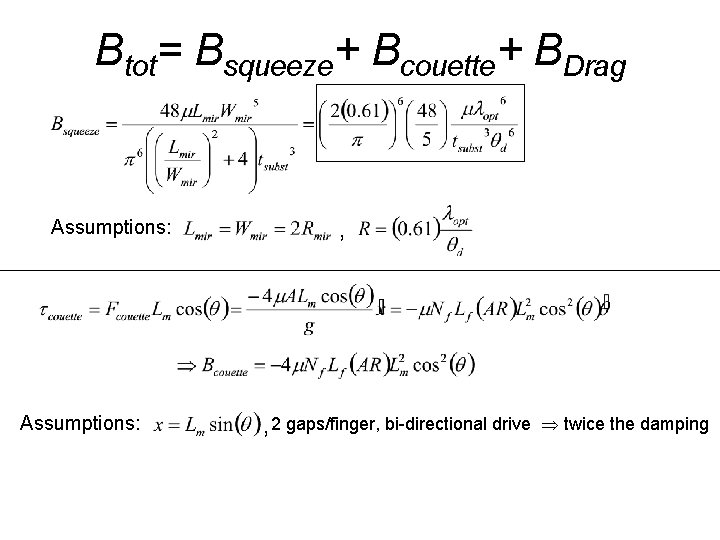
Btot= Bsqueeze+ Bcouette+ BDrag Assumptions: , , 2 gaps/finger, bi-directional drive twice the damping
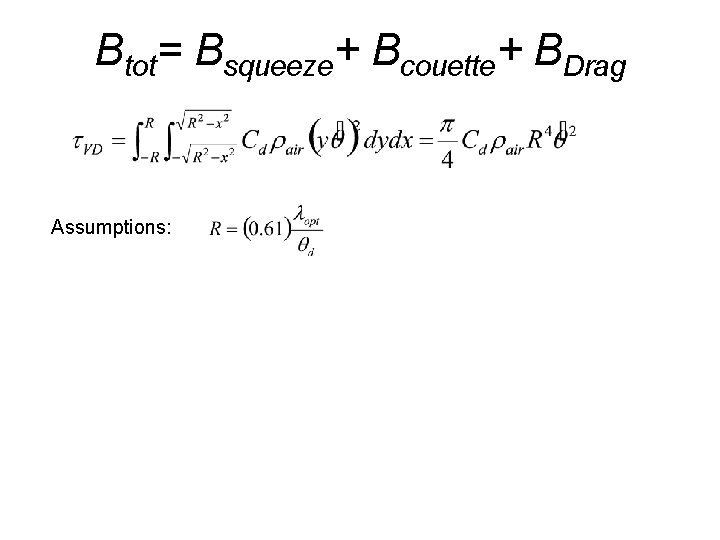
Btot= Bsqueeze+ Bcouette+ BDrag Assumptions:
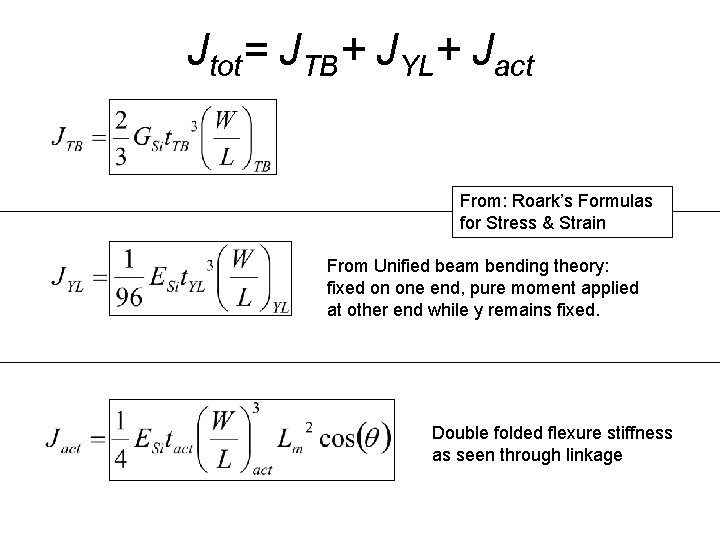
Jtot= JTB+ JYL+ Jact From: Roark’s Formulas for Stress & Strain From Unified beam bending theory: fixed on one end, pure moment applied at other end while y remains fixed. Double folded flexure stiffness as seen through linkage
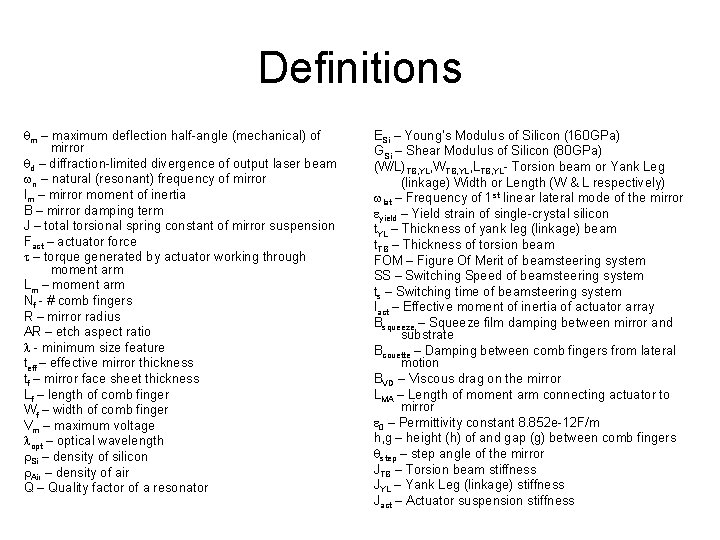
Definitions m – maximum deflection half-angle (mechanical) of mirror d – diffraction-limited divergence of output laser beam n – natural (resonant) frequency of mirror Im – mirror moment of inertia B – mirror damping term J – total torsional spring constant of mirror suspension Fact – actuator force – torque generated by actuator working through moment arm Lm – moment arm Nf - # comb fingers R – mirror radius AR – etch aspect ratio - minimum size feature teff – effective mirror thickness tf – mirror face sheet thickness Lf – length of comb finger Wf – width of comb finger Vm – maximum voltage opt – optical wavelength Si – density of silicon Air – density of air Q – Quality factor of a resonator ESi – Young’s Modulus of Silicon (160 GPa) GSi – Shear Modulus of Silicon (80 GPa) (W/L)TB, YL, WTB, YL, LTB, YL- Torsion beam or Yank Leg (linkage) Width or Length (W & L respectively) lat – Frequency of 1 st linear lateral mode of the mirror yield – Yield strain of single-crystal silicon t. YL – Thickness of yank leg (linkage) beam t. TB – Thickness of torsion beam FOM – Figure Of Merit of beamsteering system SS – Switching Speed of beamsteering system ts – Switching time of beamsteering system Iact – Effective moment of inertia of actuator array Bsqueeze – Squeeze film damping between mirror and substrate Bcouette – Damping between comb fingers from lateral motion BVD – Viscous drag on the mirror LMA – Length of moment arm connecting actuator to mirror 0 – Permittivity constant 8. 852 e-12 F/m h, g – height (h) of and gap (g) between comb fingers step – step angle of the mirror JTB – Torsion beam stiffness JYL – Yank Leg (linkage) stiffness Jact – Actuator suspension stiffness

A Pair of Firm, Large Breasts
Laser Communication Caveats • • Clouds/Obstructions Receiver sensitivity Acquisition time Beam stabilization
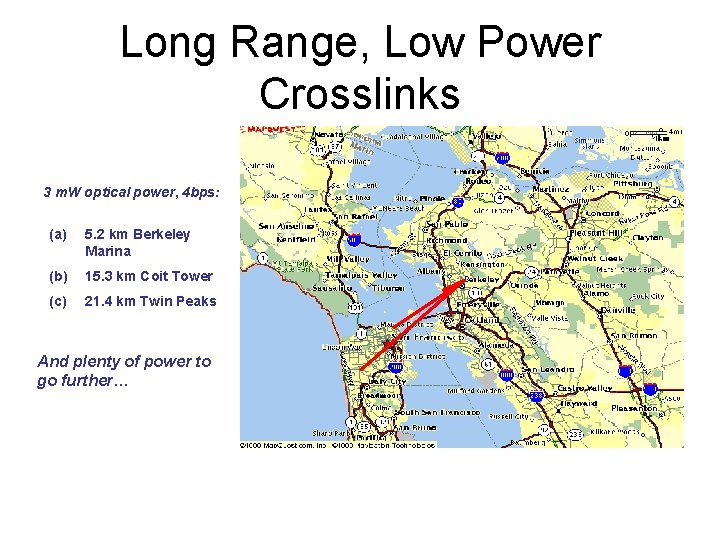
Long Range, Low Power Crosslinks 3 m. W optical power, 4 bps: (a) 5. 2 km Berkeley Marina (b) 15. 3 km Coit Tower (c) 21. 4 km Twin Peaks And plenty of power to go further…
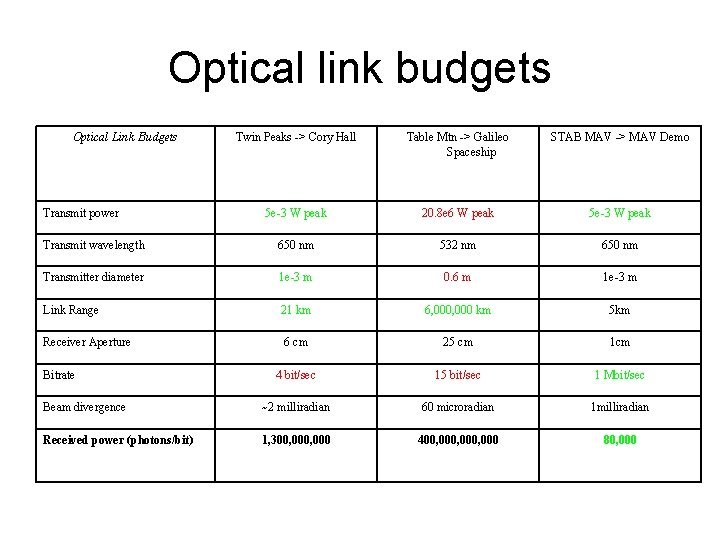
Optical link budgets Optical Link Budgets Twin Peaks -> Cory Hall Table Mtn -> Galileo Spaceship STAB MAV -> MAV Demo 5 e-3 W peak 20. 8 e 6 W peak 5 e-3 W peak Transmit wavelength 650 nm 532 nm 650 nm Transmitter diameter 1 e-3 m 0. 6 m 1 e-3 m Link Range 21 km 6, 000 km 5 km Receiver Aperture 6 cm 25 cm 1 cm 4 bit/sec 15 bit/sec 1 Mbit/sec Beam divergence ~2 milliradian 60 microradian 1 milliradian Received power (photons/bit) 1, 300, 000 400, 000, 000 80, 000 Transmit power Bitrate
- Slides: 75