
High Level Group on the Competitiveness of the
- Slides: 15
High Level Group on the Competitiveness of the European Chemicals Industry Sector Social Dialogue Committee Chemical Industry, Plenary meeting, 13 May 2009 René van Sloten: rvs@cefic. be 1
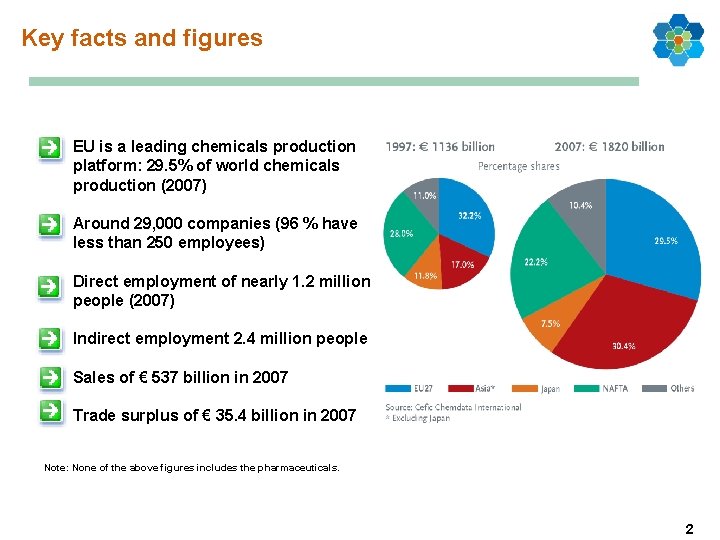
Key facts and figures EU is a leading chemicals production platform: 29. 5% of world chemicals production (2007) Around 29, 000 companies (96 % have less than 250 employees) Direct employment of nearly 1. 2 million people (2007) Indirect employment 2. 4 million people Sales of € 537 billion in 2007 Trade surplus of € 35. 4 billion in 2007 Note: None of the above figures includes the pharmaceuticals. 2
The main characteristics of the chemical industry strongly influence its competitiveness Ø The chemical industry has some unique characteristics which have to be taken into account in a competitiveness analysis üGlobalised industry üInnovation-driven and knowledge-intensive üIntegrated along the value chain into its downstream industries, or directly to consumers üCapital-intensive üEnergy intensive üLong product development time, requiring stable and predictable policy framework 3
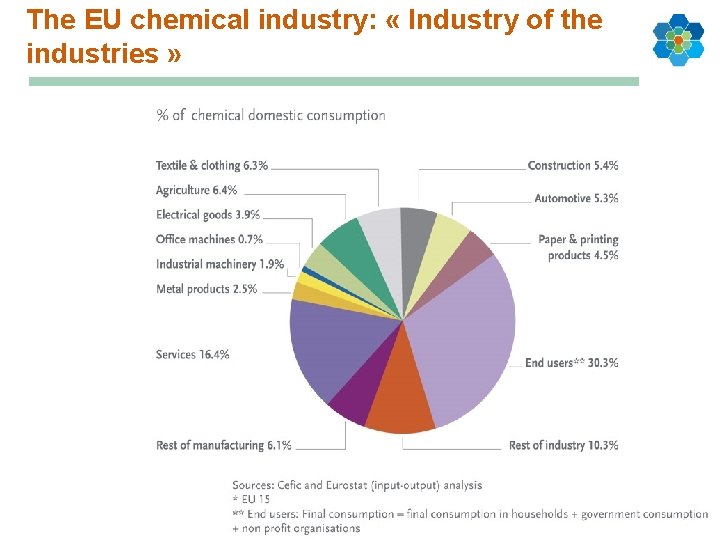
The EU chemical industry: « Industry of the industries » 4
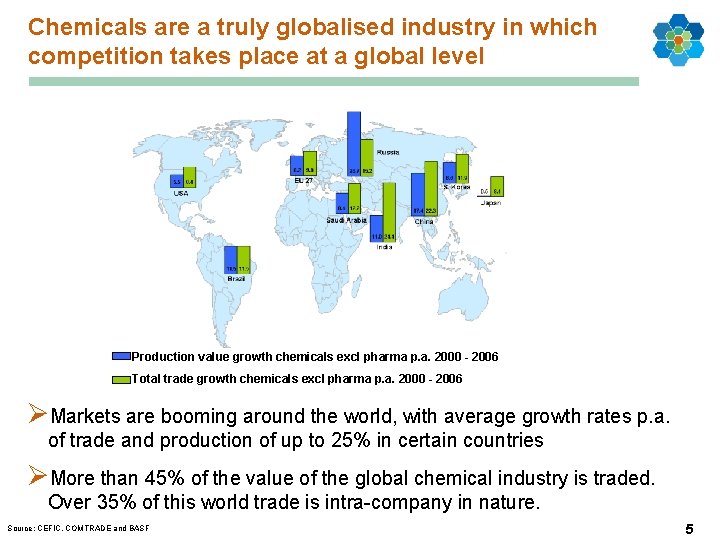
Chemicals are a truly globalised industry in which competition takes place at a global level Production value growth chemicals excl pharma p. a. 2000 - 2006 Total trade growth chemicals excl pharma p. a. 2000 - 2006 ØMarkets are booming around the world, with average growth rates p. a. of trade and production of up to 25% in certain countries ØMore than 45% of the value of the global chemical industry is traded. Over 35% of this world trade is intra-company in nature. Source: CEFIC, COMTRADE and BASF 5
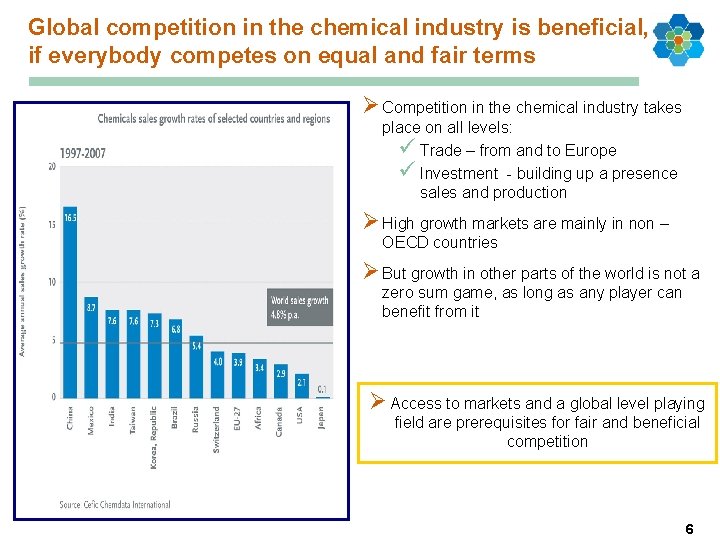
Global competition in the chemical industry is beneficial, if everybody competes on equal and fair terms Ø Competition in the chemical industry takes place on all levels: ü Trade – from and to Europe ü Investment - building up a presence sales and production Ø High growth markets are mainly in non – OECD countries Ø But growth in other parts of the world is not a zero sum game, as long as any player can benefit from it Ø Access to markets and a global level playing field are prerequisites for fair and beneficial competition 6
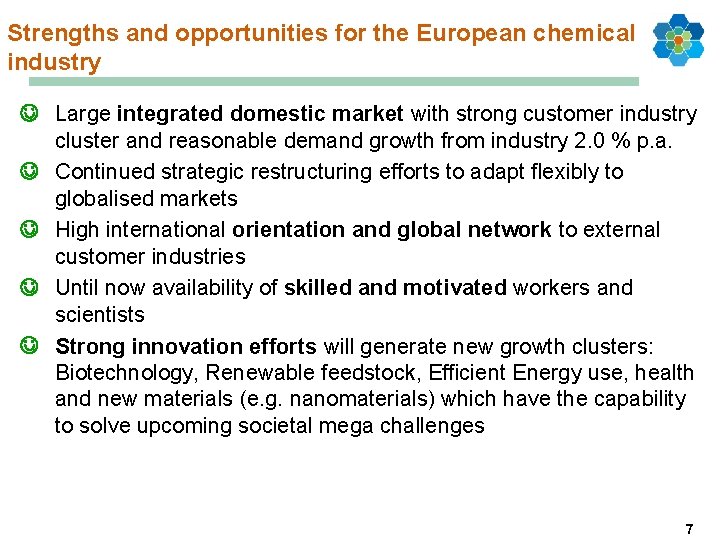
Strengths and opportunities for the European chemical industry J Large integrated domestic market with strong customer industry cluster and reasonable demand growth from industry 2. 0 % p. a. J Continued strategic restructuring efforts to adapt flexibly to globalised markets J High international orientation and global network to external customer industries J Until now availability of skilled and motivated workers and scientists J Strong innovation efforts will generate new growth clusters: Biotechnology, Renewable feedstock, Efficient Energy use, health and new materials (e. g. nanomaterials) which have the capability to solve upcoming societal mega challenges 7
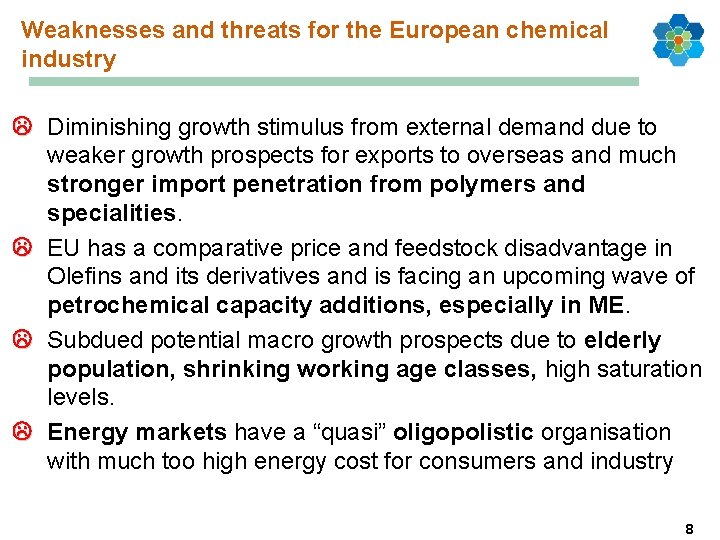
Weaknesses and threats for the European chemical industry Diminishing growth stimulus from external demand due to weaker growth prospects for exports to overseas and much stronger import penetration from polymers and specialities. EU has a comparative price and feedstock disadvantage in Olefins and its derivatives and is facing an upcoming wave of petrochemical capacity additions, especially in ME. Subdued potential macro growth prospects due to elderly population, shrinking working age classes, high saturation levels. Energy markets have a “quasi” oligopolistic organisation with much too high energy cost for consumers and industry 8
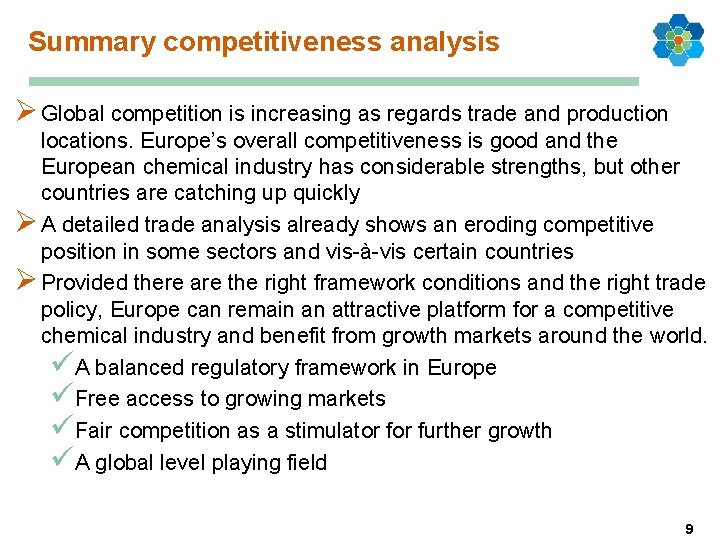
Summary competitiveness analysis Ø Global competition is increasing as regards trade and production locations. Europe’s overall competitiveness is good and the European chemical industry has considerable strengths, but other countries are catching up quickly Ø A detailed trade analysis already shows an eroding competitive position in some sectors and vis-à-vis certain countries Ø Provided there are the right framework conditions and the right trade policy, Europe can remain an attractive platform for a competitive chemical industry and benefit from growth markets around the world. üA balanced regulatory framework in Europe üFree access to growing markets üFair competition as a stimulator further growth üA global level playing field 9
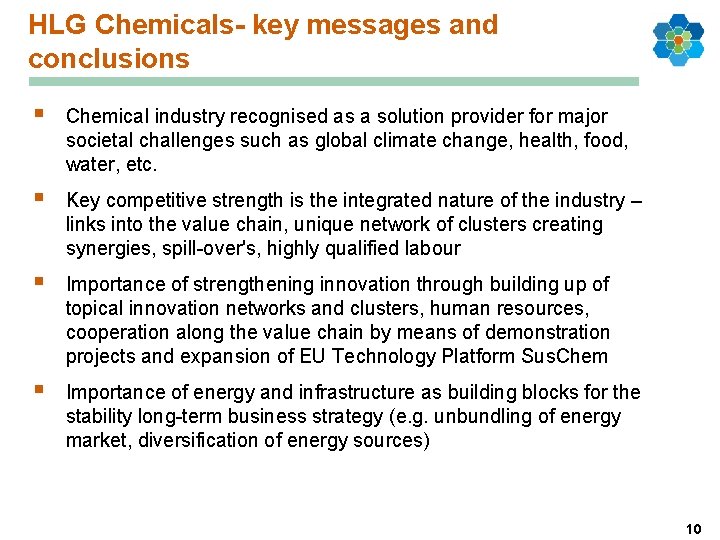
HLG Chemicals- key messages and conclusions § Chemical industry recognised as a solution provider for major societal challenges such as global climate change, health, food, water, etc. § Key competitive strength is the integrated nature of the industry – links into the value chain, unique network of clusters creating synergies, spill-over's, highly qualified labour § Importance of strengthening innovation through building up of topical innovation networks and clusters, human resources, cooperation along the value chain by means of demonstration projects and expansion of EU Technology Platform Sus. Chem § Importance of energy and infrastructure as building blocks for the stability long-term business strategy (e. g. unbundling of energy market, diversification of energy sources) 10
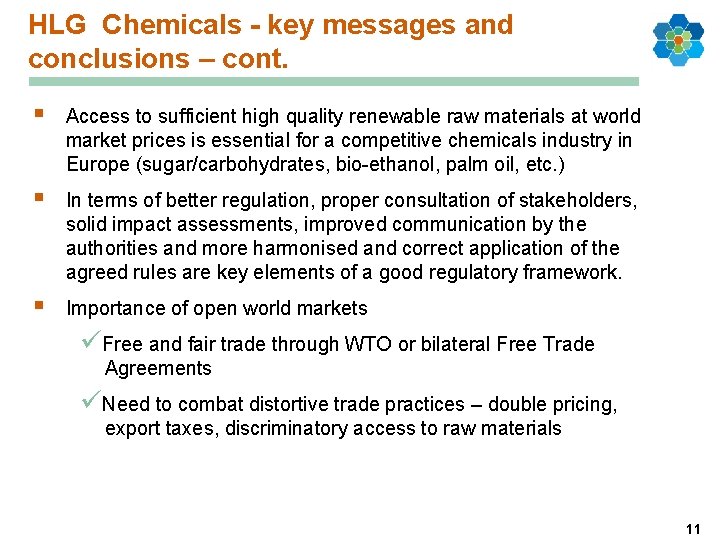
HLG Chemicals - key messages and conclusions – cont. § Access to sufficient high quality renewable raw materials at world market prices is essential for a competitive chemicals industry in Europe (sugar/carbohydrates, bio-ethanol, palm oil, etc. ) § In terms of better regulation, proper consultation of stakeholders, solid impact assessments, improved communication by the authorities and more harmonised and correct application of the agreed rules are key elements of a good regulatory framework. § Importance of open world markets üFree and fair trade through WTO or bilateral Free Trade Agreements üNeed to combat distortive trade practices – double pricing, export taxes, discriminatory access to raw materials 11
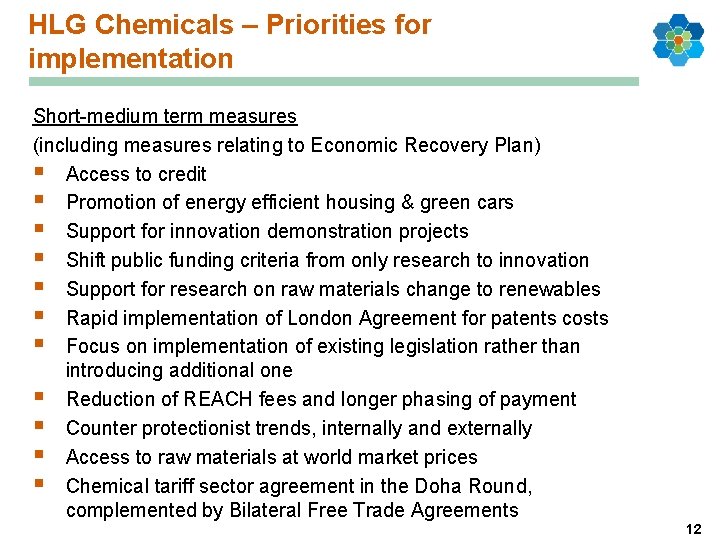
HLG Chemicals – Priorities for implementation Short-medium term measures (including measures relating to Economic Recovery Plan) § Access to credit § Promotion of energy efficient housing & green cars § Support for innovation demonstration projects § Shift public funding criteria from only research to innovation § Support for research on raw materials change to renewables § Rapid implementation of London Agreement for patents costs § Focus on implementation of existing legislation rather than introducing additional one § Reduction of REACH fees and longer phasing of payment § Counter protectionist trends, internally and externally § Access to raw materials at world market prices § Chemical tariff sector agreement in the Doha Round, complemented by Bilateral Free Trade Agreements 12
HLG Chemicals – Priorities for implementation Longer term measures needing an early decision § Improve transport infrastructure, e. g. - connections between ports and hinterland - between chemical clusters - closing of missing links in olefins pipeline network - investment in energy feedstock pipelines - promoting industrial CCS large scale demonstration projects § Improvement of human resources (skills and numbers) § Cooperation between EU and Member States to foster innovation by joint projects 13
Conclusions and follow-up § HLG provided a long term strategic vision for the chemical industry as a basis for the competitiveness and sustainability of the European region as a whole § High quality report with 39 unanimously agreed policy recommendations providing a strategic agenda for the next years jointly defined by some Member States, European Commission, Industry and other stakeholders § § Comprehensive approach, no actions missing § Industry already started implementation of a number of innovation related recommendations and relating to stakeholder dialogue Medium to long term vision but expedient implementation is a must for addressing the economic crisis 14
Conclusions and follow-up § Strong support from the Member States and regions essential for the implementation of the recommendations § Successful follow-up conference held in Usti with all stakeholders on 1617 April § Competitiveness Council of end May 2009 is expected to invite: the Commission, Member States and industry to implement the conclusions of the High Level Group and to consider these recommendations as a roadmap for concrete and deliverable activities to be elaborated; the Commission to pro-actively follow this up and to closely and regularly monitor the competitiveness of the industry and progress made in the implementation of the abovementioned conclusions. the Commission to present the first report evaluating the results by the end 2010, in close consultation with stakeholders; 15