
High Impact Targeting HIT Applying Conservation Tools to
- Slides: 27
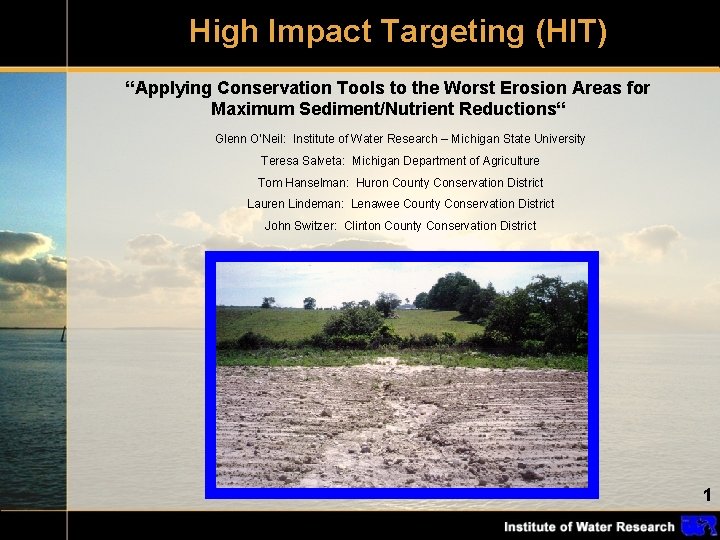
High Impact Targeting (HIT) “Applying Conservation Tools to the Worst Erosion Areas for Maximum Sediment/Nutrient Reductions“ Glenn O’Neil: Institute of Water Research – Michigan State University Teresa Salveta: Michigan Department of Agriculture Tom Hanselman: Huron County Conservation District Lauren Lindeman: Lenawee County Conservation District John Switzer: Clinton County Conservation District 1
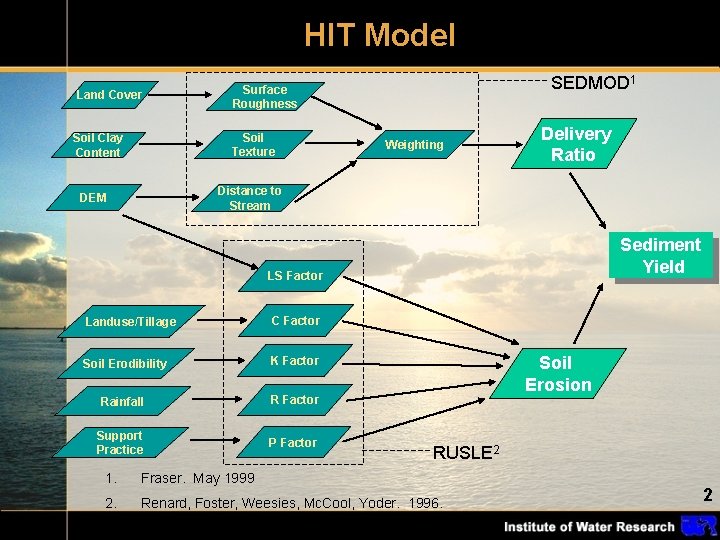
HIT Model Land Cover Soil Texture Soil Clay Content SEDMOD 1 Surface Roughness Weighting Delivery Ratio Distance to Stream DEM Sediment Yield LS Factor Landuse/Tillage C Factor Soil Erodibility K Factor Rainfall R Factor Support Practice P Factor Soil Erosion RUSLE 2 1. Fraser. May 1999 2. Renard, Foster, Weesies, Mc. Cool, Yoder. 1996. 2
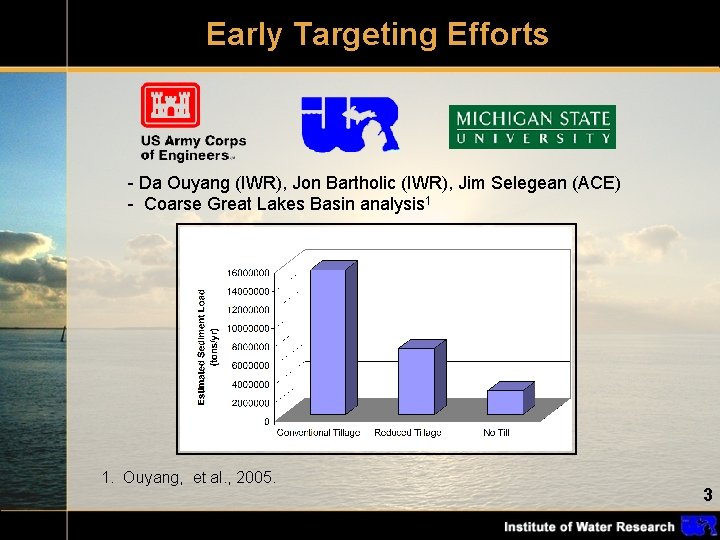
Early Targeting Efforts - Da Ouyang (IWR), Jon Bartholic (IWR), Jim Selegean (ACE) - Coarse Great Lakes Basin analysis 1 1. Ouyang, et al. , 2005. 3
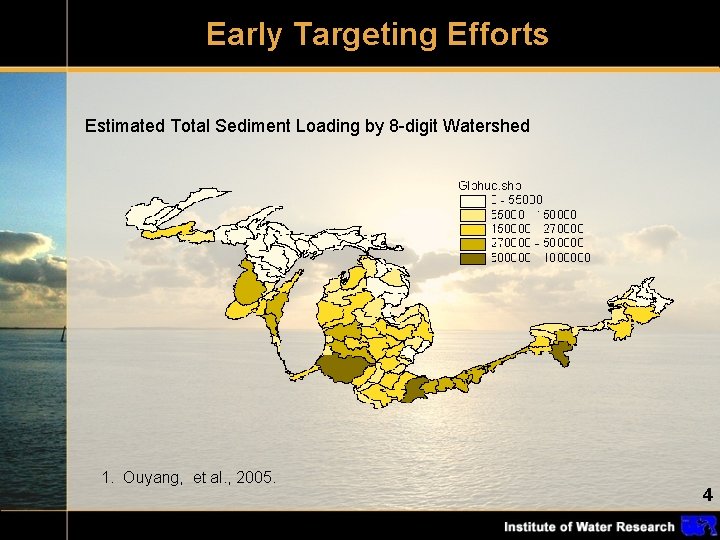
Early Targeting Efforts Estimated Total Sediment Loading by 8 -digit Watershed 1. Ouyang, et al. , 2005. 4
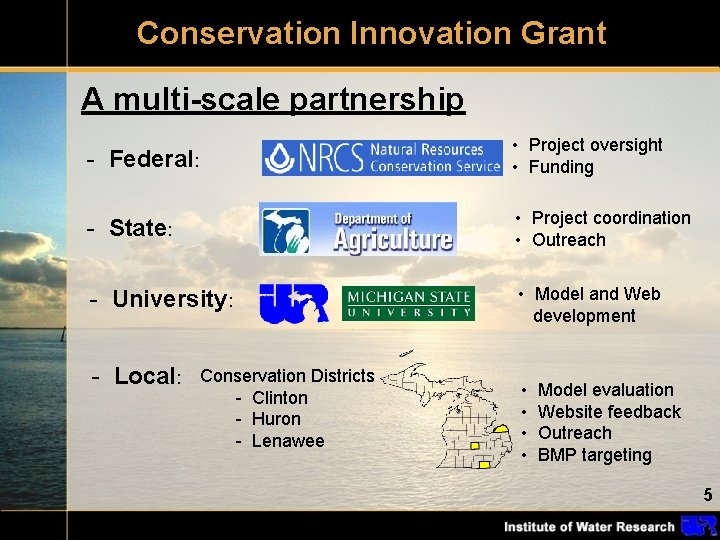
Conservation Innovation Grant A multi-scale partnership - Federal: • Project oversight • Funding - State: • Project coordination • Outreach - University: • Model and Web development - Local: Conservation Districts - Clinton - Huron - Lenawee • • Model evaluation Website feedback Outreach BMP targeting 5
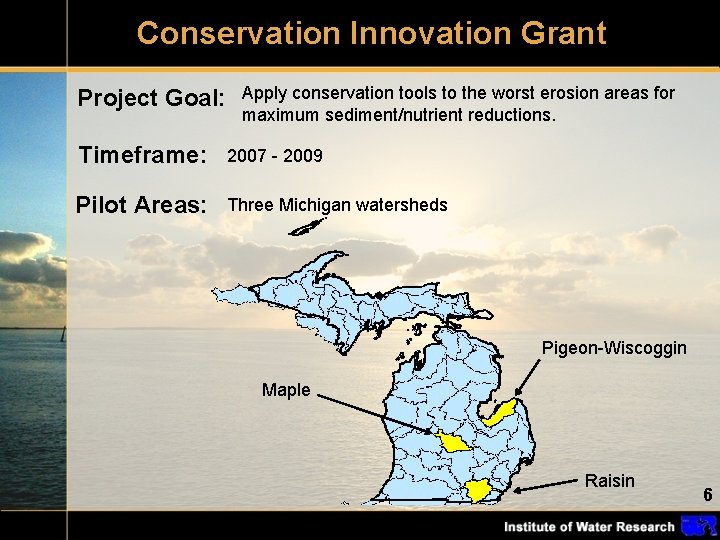
Conservation Innovation Grant Project Goal: Apply conservation tools to the worst erosion areas for maximum sediment/nutrient reductions. Timeframe: 2007 - 2009 Pilot Areas: Three Michigan watersheds Pigeon-Wiscoggin Maple Raisin 6
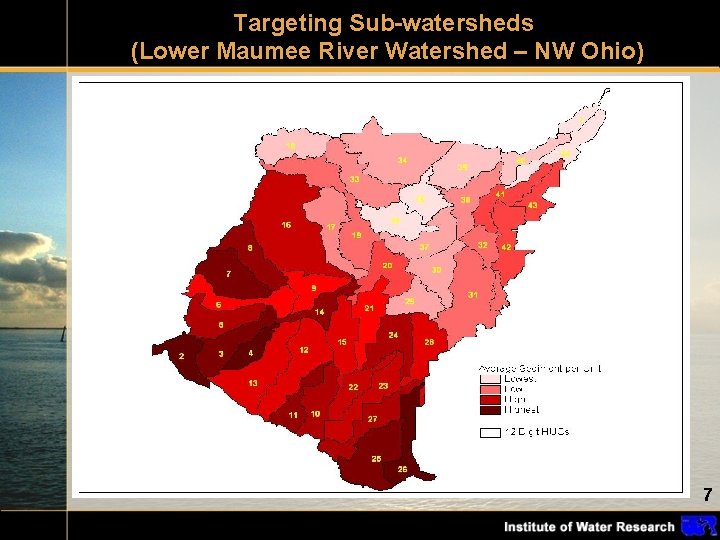
Targeting Sub-watersheds (Lower Maumee River Watershed – NW Ohio) 7
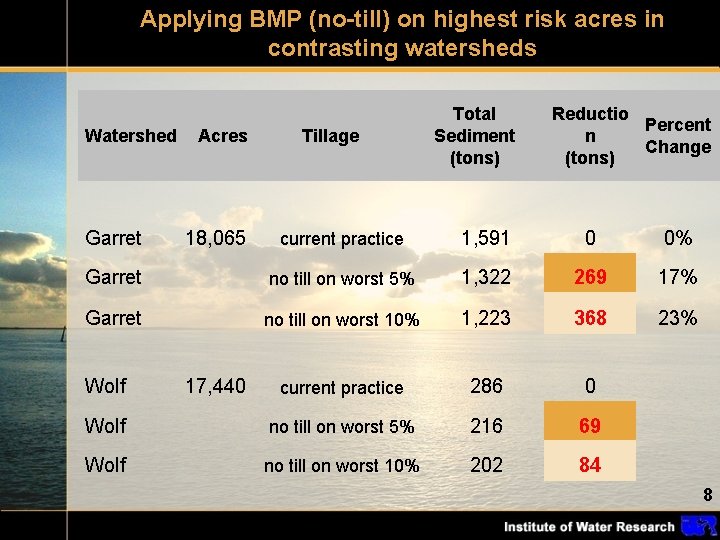
Applying BMP (no-till) on highest risk acres in contrasting watersheds Watershed Garret Acres Reductio Percent n Change (tons) current practice 1, 591 0 0% Garret no till on worst 5% 1, 322 269 17% Garret no till on worst 10% 1, 223 368 23% current practice 286 0 Wolf no till on worst 5% 216 69 Wolf no till on worst 10% 202 84 Wolf 18, 065 Tillage Total Sediment (tons) 17, 440 8
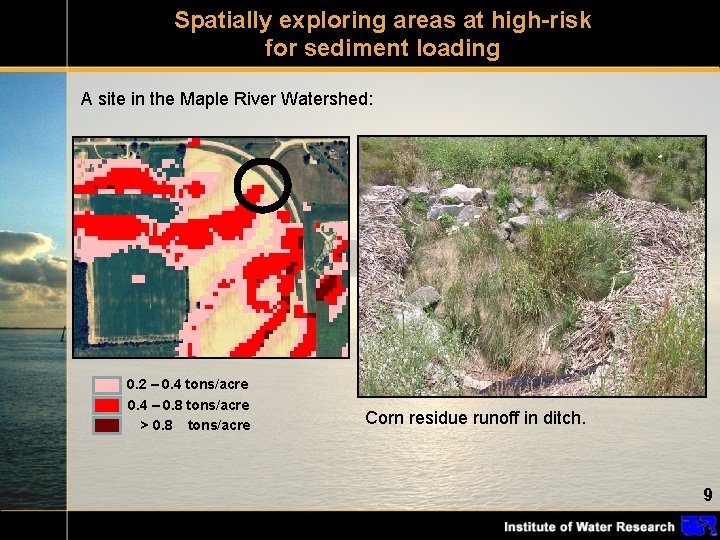
Spatially exploring areas at high-risk for sediment loading A site in the Maple River Watershed: 0. 2 – 0. 4 tons/acre 0. 4 – 0. 8 tons/acre > 0. 8 tons/acre Corn residue runoff in ditch. 9
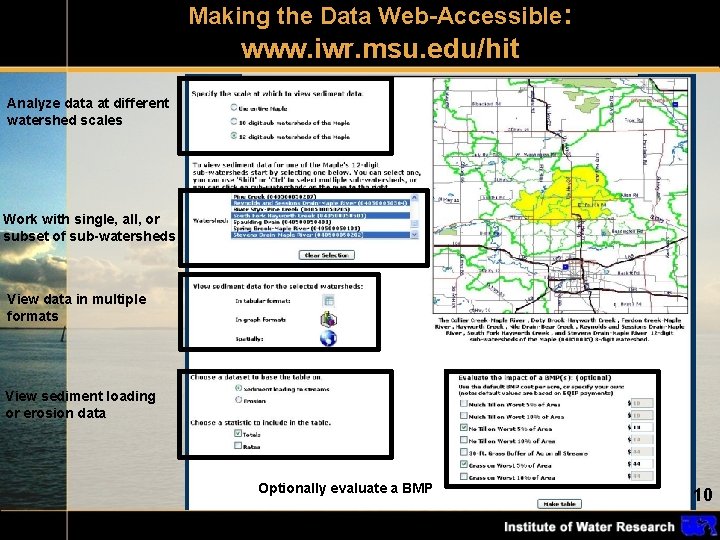
Making the Data Web-Accessible: www. iwr. msu. edu/hit Analyze data at different watershed scales Work with single, all, or subset of sub-watersheds View data in multiple formats View sediment loading or erosion data Optionally evaluate a BMP 10
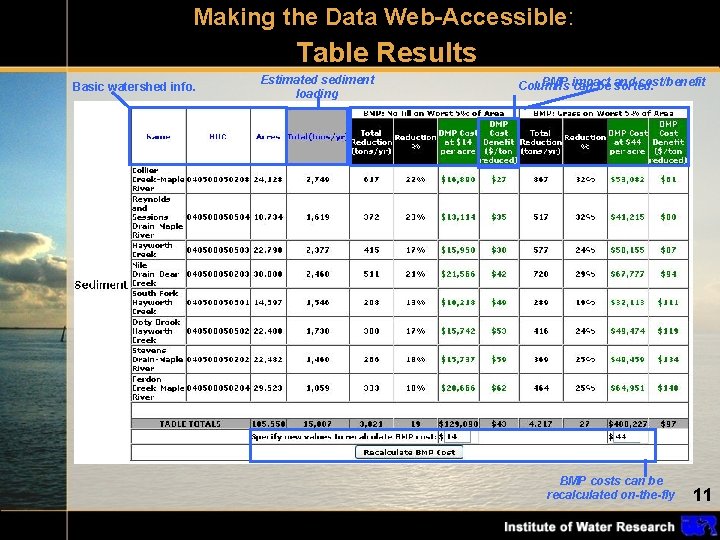
Making the Data Web-Accessible: Table Results Basic watershed info. Estimated sediment loading BMP impact cost/benefit Columns can be and sorted. BMP costs can be recalculated on-the-fly 11
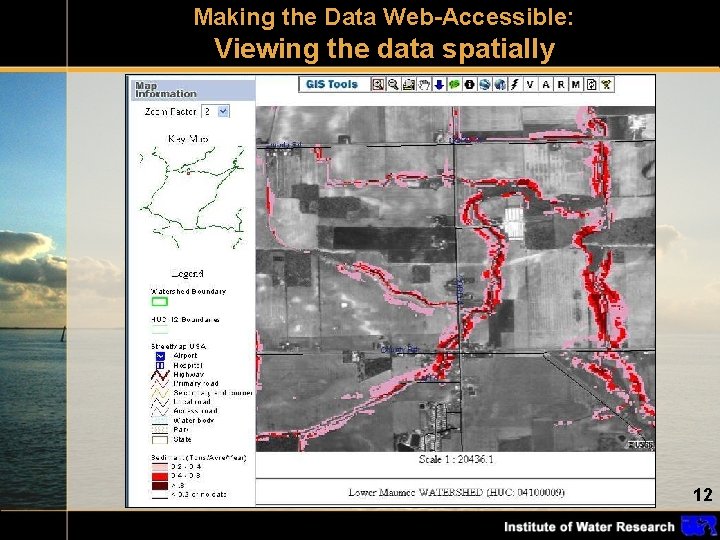
Making the Data Web-Accessible: Viewing the data spatially 12
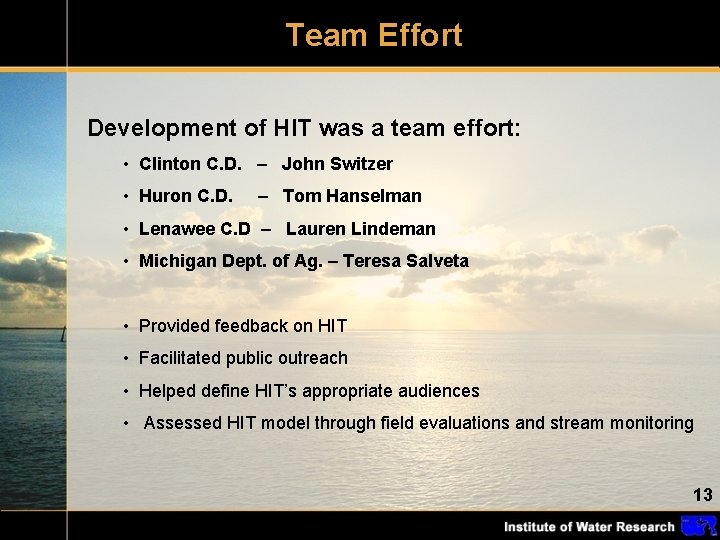
Team Effort Development of HIT was a team effort: • Clinton C. D. – John Switzer • Huron C. D. – Tom Hanselman • Lenawee C. D – Lauren Lindeman • Michigan Dept. of Ag. – Teresa Salveta • Provided feedback on HIT • Facilitated public outreach • Helped define HIT’s appropriate audiences • Assessed HIT model through field evaluations and stream monitoring 13
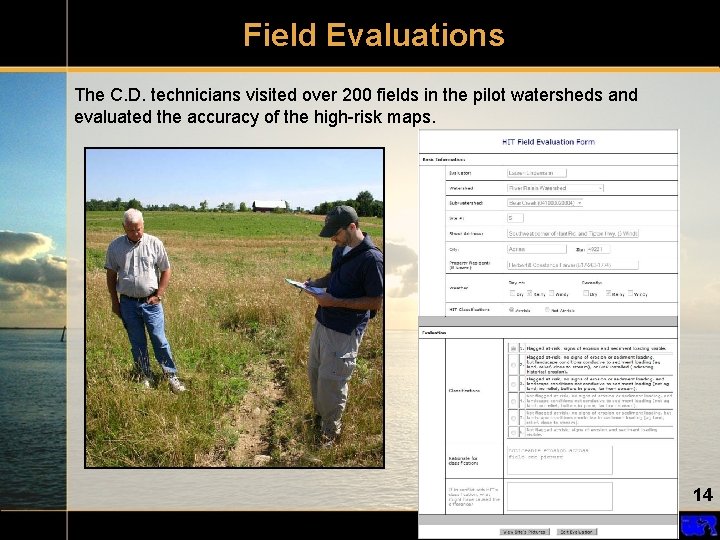
Field Evaluations The C. D. technicians visited over 200 fields in the pilot watersheds and evaluated the accuracy of the high-risk maps. 14
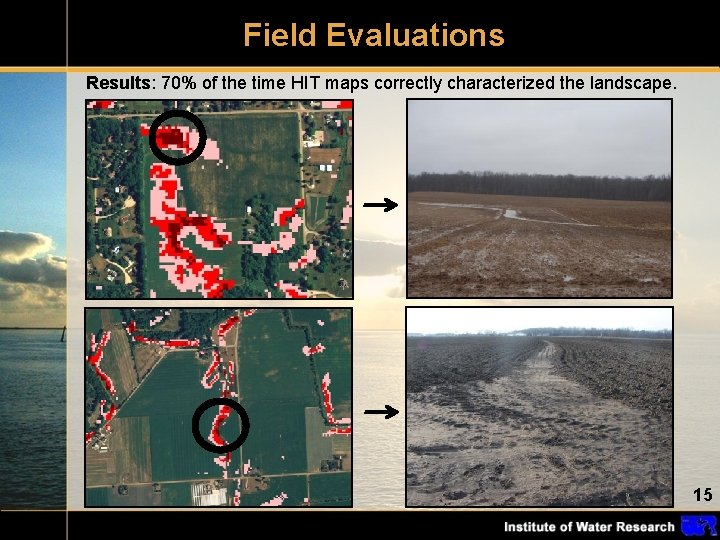
Field Evaluations Results: 70% of the time HIT maps correctly characterized the landscape. locations. 15
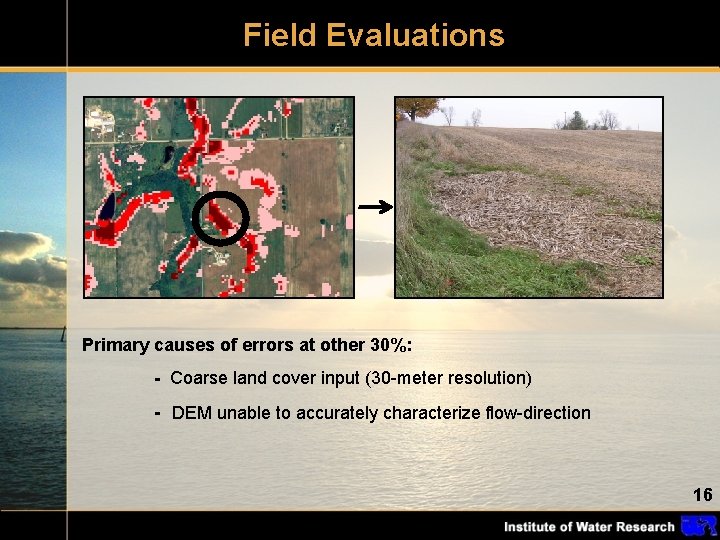
Field Evaluations Primary causes of errors at other 30%: - Coarse land cover input (30 -meter resolution) - DEM unable to accurately characterize flow-direction 16
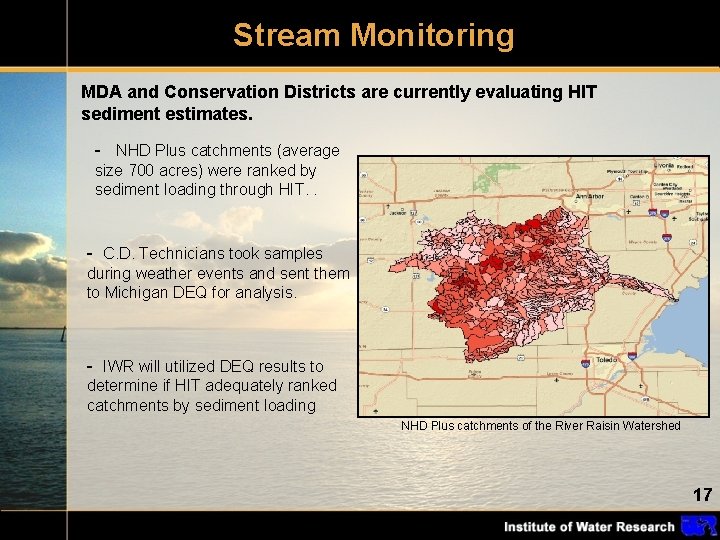
Stream Monitoring MDA and Conservation Districts are currently evaluating HIT sediment estimates. - NHD Plus catchments (average size 700 acres) were ranked by sediment loading through HIT. . - C. D. Technicians took samples during weather events and sent them to Michigan DEQ for analysis. - IWR will utilized DEQ results to determine if HIT adequately ranked catchments by sediment loading NHD Plus catchments of the River Raisin Watershed 17
HIT Highlights • Conservation districts are using HIT to prioritize efforts. • HIT data is being viewed within the NRCS Toolkit, integrating HIT into the workflow of conservation technicians. • Michigan DEQ is promoting HIT in the development of 319 plans. Clinton C. D. and consultants have used it in Maple River 319 plan. 18
HIT Limitations • Focused primarily on agricultural lands, not suitable for urban analysis. • Focused on sheet erosion (RUSLE), not gully, bank, or wind. • Estimates of erosion and sediment loadings are for relative comparisons of watersheds, are not precise. 19
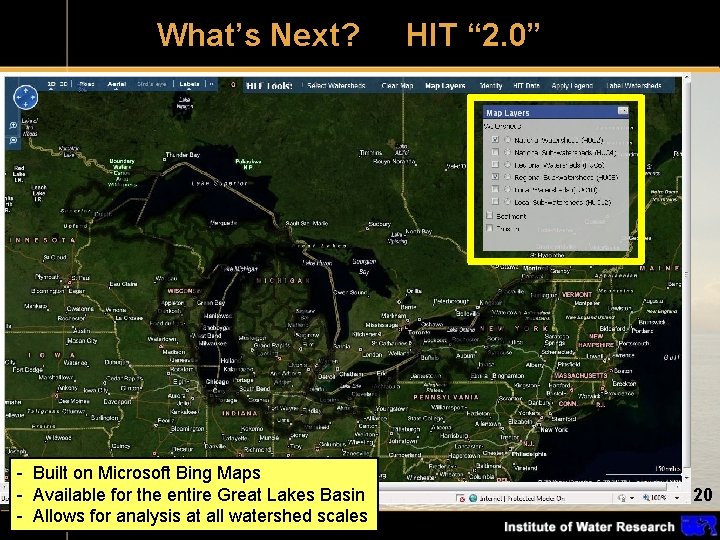
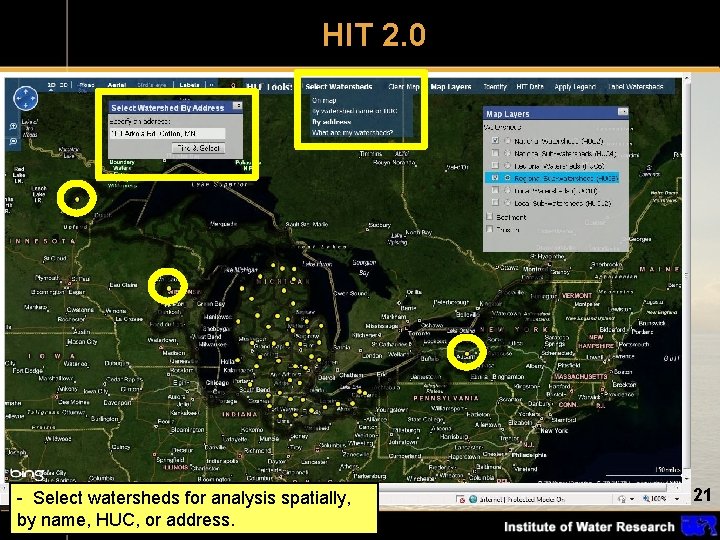
What’s Next? - Built on Microsoft Bing Maps - Available for the entire Great Lakes Basin - Allows for analysis at all watershed scales HIT “ 2. 0” 20
HIT 2. 0 - Select watersheds for analysis spatially, by name, HUC, or address. 21
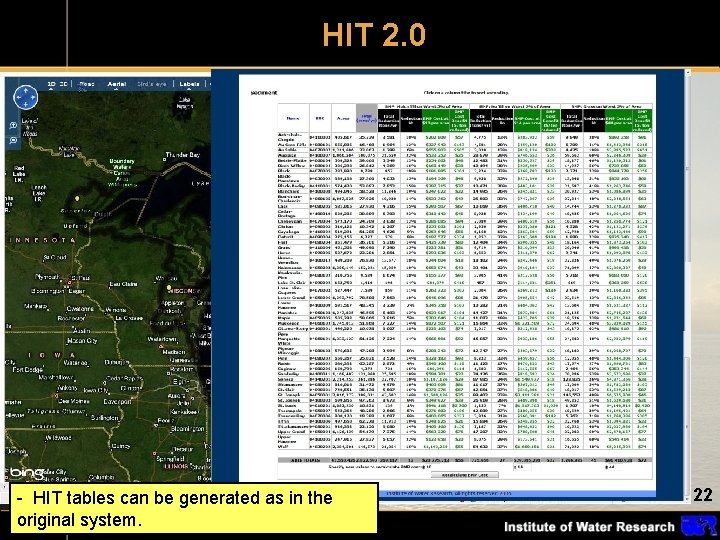
HIT 2. 0 - HIT tables can be generated as in the original system. 22
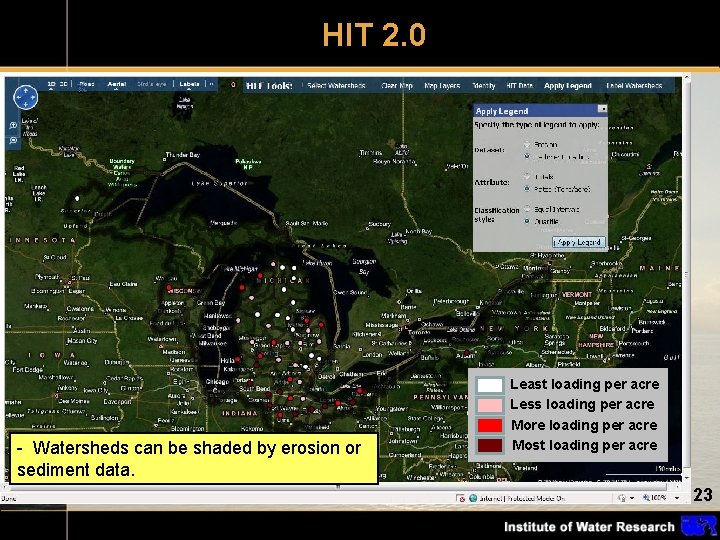
HIT 2. 0 - Watersheds can be shaded by erosion or sediment data. Least loading per acre Less loading per acre More loading per acre Most loading per acre 23
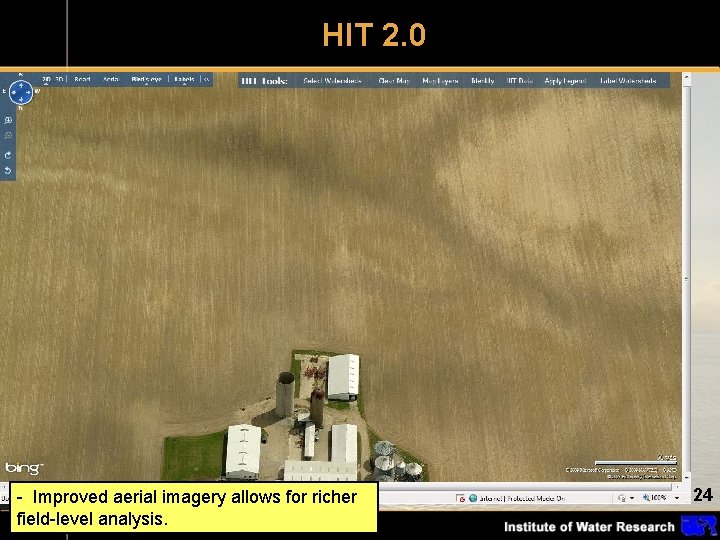
HIT 2. 0 - Improved aerial imagery allows for richer field-level analysis. 24
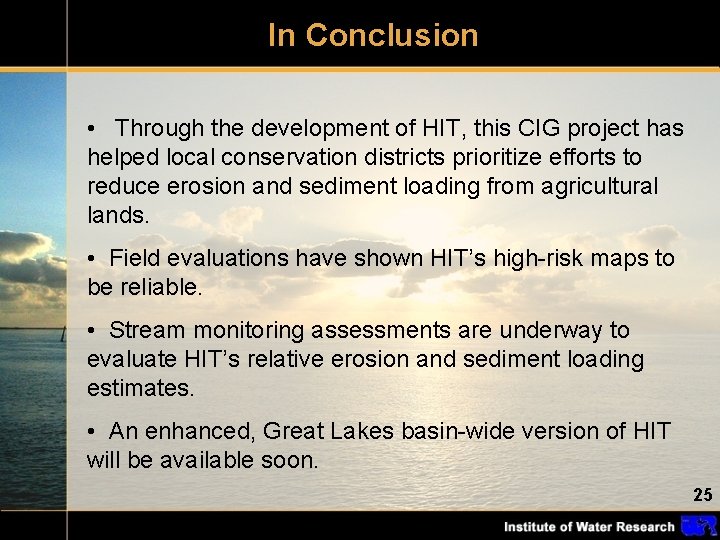
In Conclusion • Through the development of HIT, this CIG project has helped local conservation districts prioritize efforts to reduce erosion and sediment loading from agricultural lands. • Field evaluations have shown HIT’s high-risk maps to be reliable. • Stream monitoring assessments are underway to evaluate HIT’s relative erosion and sediment loading estimates. • An enhanced, Great Lakes basin-wide version of HIT will be available soon. 25
References Fraser, R. SEDMOD: A GIS-based Delivery Model for Diffuse Sources Pollutants (doctoral dissertation). Yale University. May 1999. Ouyang, D. ; Bartholic, J. ; Selegean, J. "Assessing Sediment Loading from Agricultural Croplands in the Great Lakes The Journal of American Science. Vol. 1, No. 2, 2005. Basin. " Renard, K. ; Foster, G. ; Weesies, G. ; Mc. Cool, D. ; Yoder, D. Predicting Soil Erosion by Water: A Guide to Conservation Planning with the Revised Universal Soil Loss Equation (RUSLE). USDA, Agriculture Handbook Number 703. 1996. 26
Thank You oneilg@msu. edu 27