
High Flow Nasal Cannula Basic physiology optimal setting

High Flow Nasal Cannula -Basic physiology & optimal setting Hannah Lee Department of Anesthesia and Pain Medicine Seoul National University Hospital
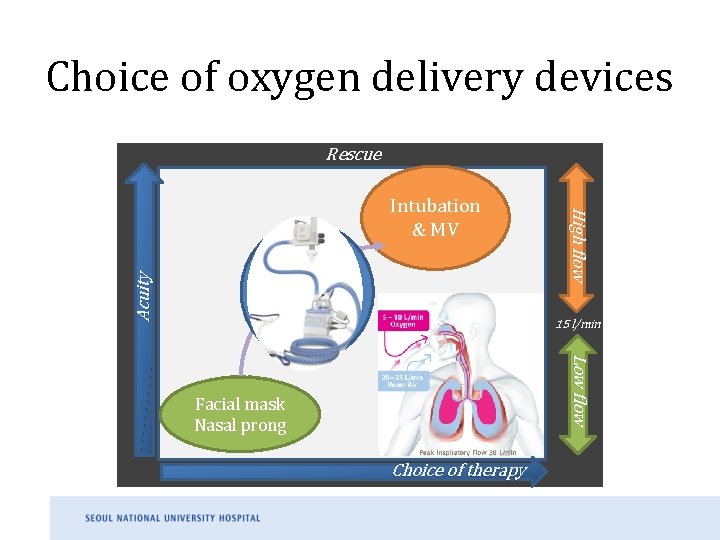
Choice of oxygen delivery devices Rescue Acuity High flow Intubation & MV 15 l/min Low flow Facial mask Nasal prong Choice of therapy
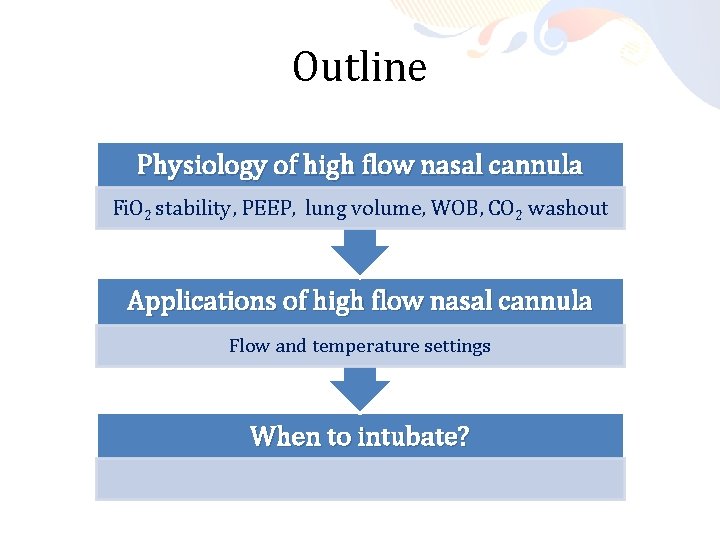
Outline Physiology of high flow nasal cannula Fi. O 2 stability, PEEP, lung volume, WOB, CO 2 washout Applications of high flow nasal cannula Flow and temperature settings When to intubate?
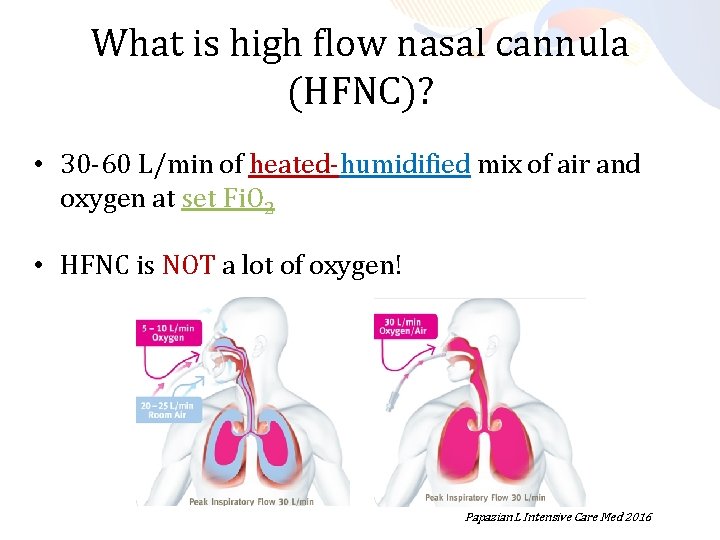
What is high flow nasal cannula (HFNC)? • 30 -60 L/min of heated-humidified mix of air and oxygen at set Fi. O 2 • HFNC is NOT a lot of oxygen! Papazian L Intensive Care Med 2016
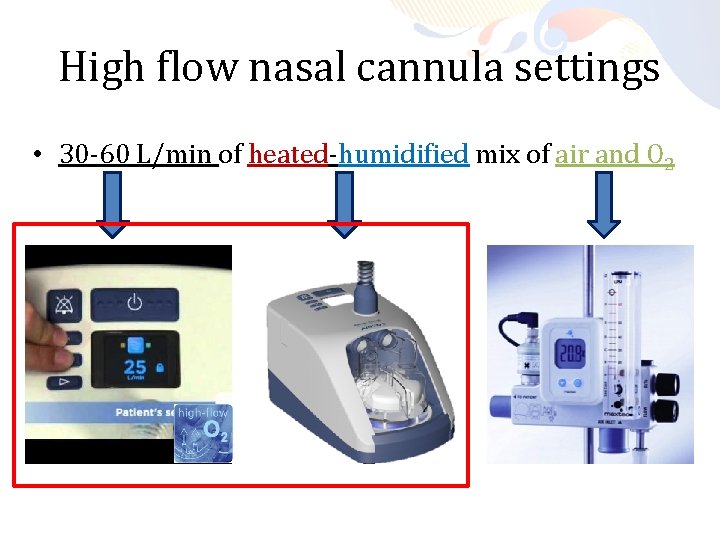
High flow nasal cannula settings • 30 -60 L/min of heated-humidified mix of air and O 2
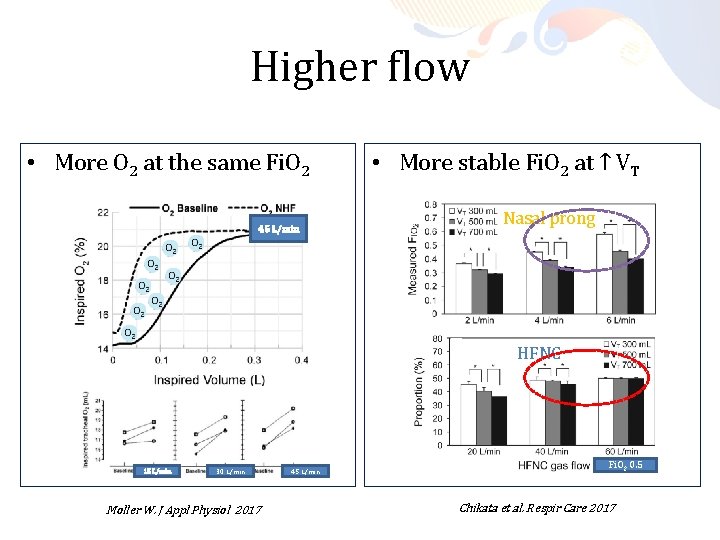
Higher flow • More O 2 at the same Fi. O 2 45 L/min • More stable Fi. O 2 at ↑ VT Nasal prong HFNC 15 L/min 30 L/min Moller W. J Appl Physiol 2017 45 L/min Fi. O 2 0. 5 Chikata et al. Respir Care 2017
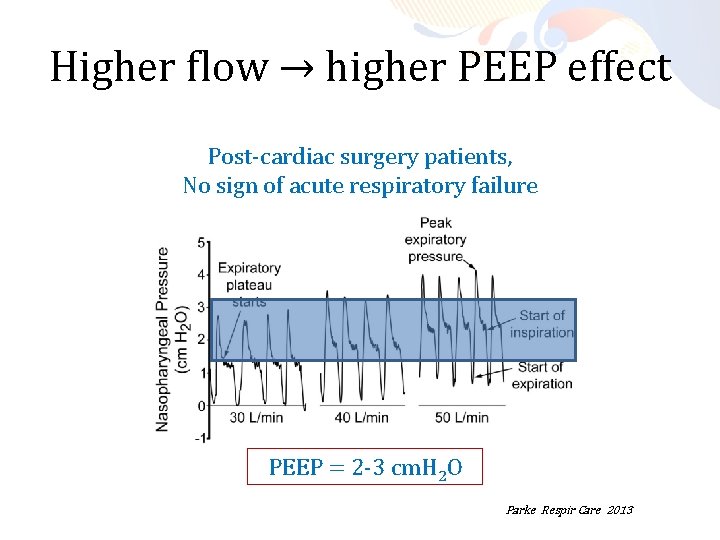
Higher flow → higher PEEP effect Post-cardiac surgery patients, No sign of acute respiratory failure PEEP = 2 -3 cm. H 2 O Parke Respir Care 2013

Higher flow → larger EELV Acute hypoxemic respiratory failure patients Mauri T Intensive Care Med 2017
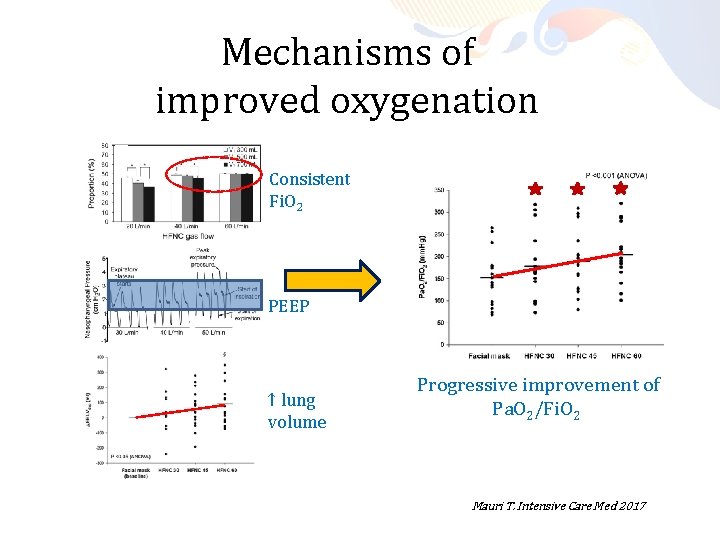
Mechanisms of improved oxygenation Consistent Fi. O 2 PEEP ↑ lung volume Progressive improvement of Pa. O 2/Fi. O 2 Mauri T. Intensive Care Med 2017
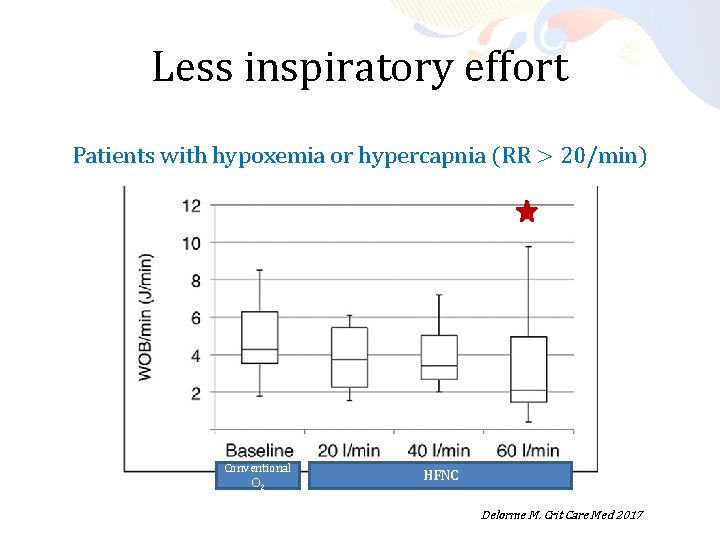
Less inspiratory effort Patients with hypoxemia or hypercapnia (RR > 20/min) Conventional O 2 HFNC Delorme M. Crit Care Med 2017
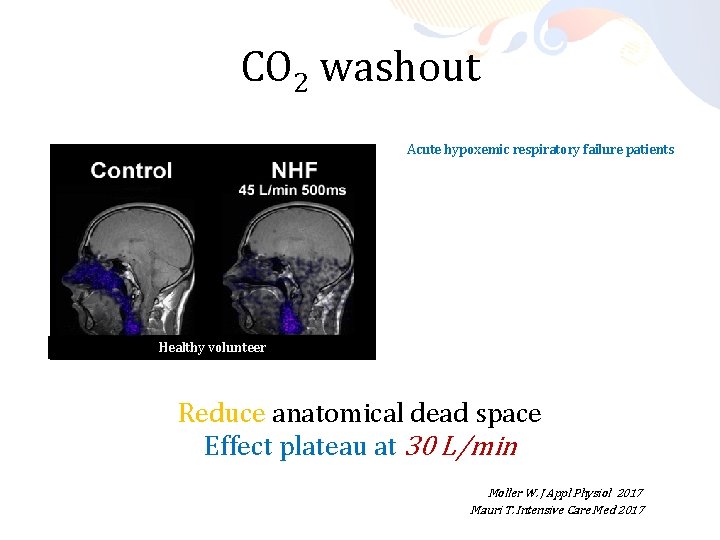
CO 2 washout Acute hypoxemic respiratory failure patients Healthy volunteer Reduce anatomical dead space Effect plateau at 30 L/min Moller W. J Appl Physiol 2017 Mauri T. Intensive Care Med 2017
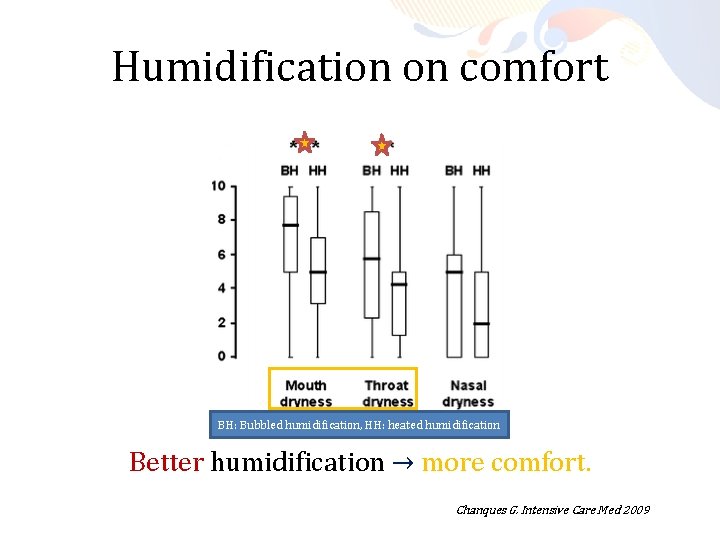
Humidification on comfort BH: Bubbled humidification, HH: heated humidification Better humidification → more comfort. Chanques G. Intensive Care Med 2009
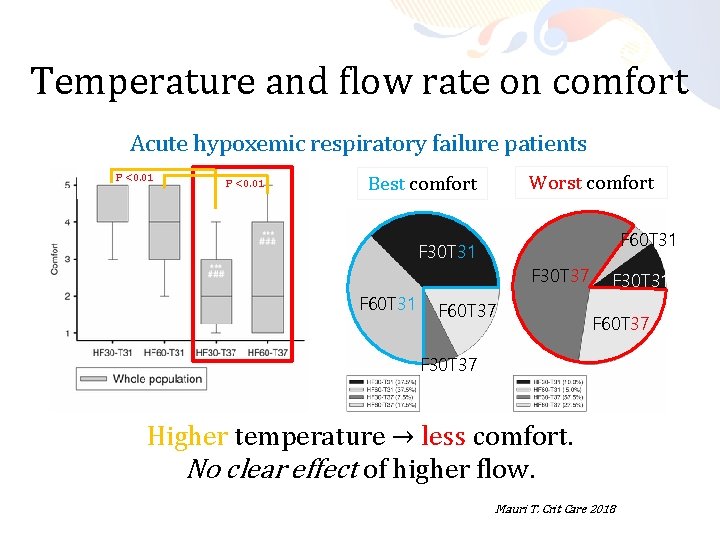
Temperature and flow rate on comfort Acute hypoxemic respiratory failure patients P <0. 01 Worst comfort Best comfort F 60 T 31 F 30 T 31 F 60 T 31 F 30 T 37 F 60 T 37 F 30 T 31 F 60 T 37 F 30 T 37 Higher temperature → less comfort. No clear effect of higher flow. Mauri T. Crit Care 2018
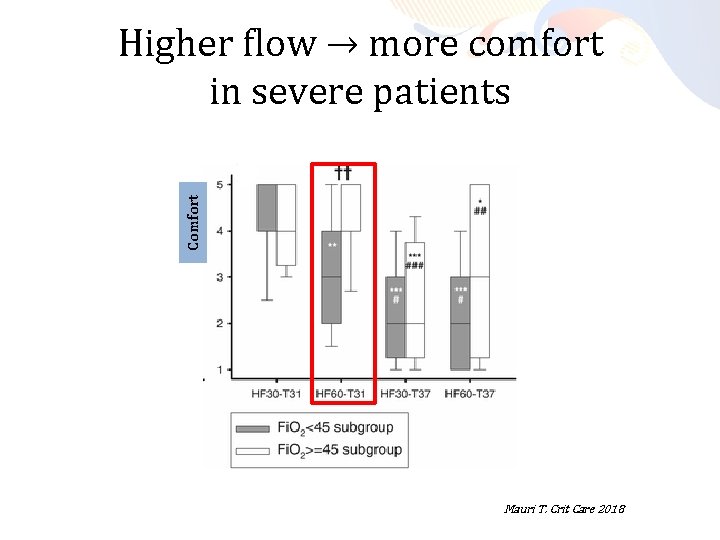
Comfort Higher flow → more comfort in severe patients Mauri T. Crit Care 2018
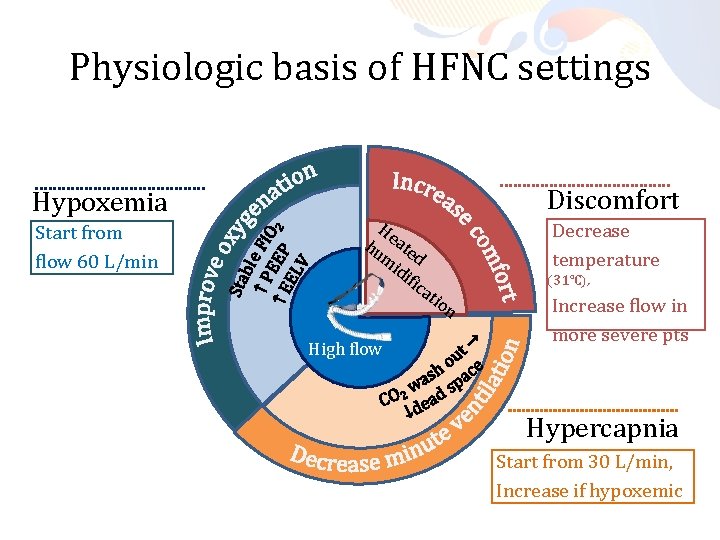
Physiologic basis of HFNC settings Discomfort Hypoxemia Start from flow 60 L/min He hu ate m d id ifi ca Decrease temperature tio (31℃), n High flow Increase flow in more severe pts Hypercapnia Start from 30 L/min, Increase if hypoxemic

Late failure → worse outcome Intensive Care Med 2015; 41: 623 • 175 pts /w HFNC failure: 130 early (≤ 48 h), 45 late (>48 h) Early intubation associated with - ↓ ICU mortality (39. 2 vs. 66. 7%) - ↑ extubation success (37. 7 vs. 15. 6%) - ↑ ventilator weaning (55. 4 vs. 28. 9%) - ↑ ventilator-free days (8. 6 vs. 3. 6)
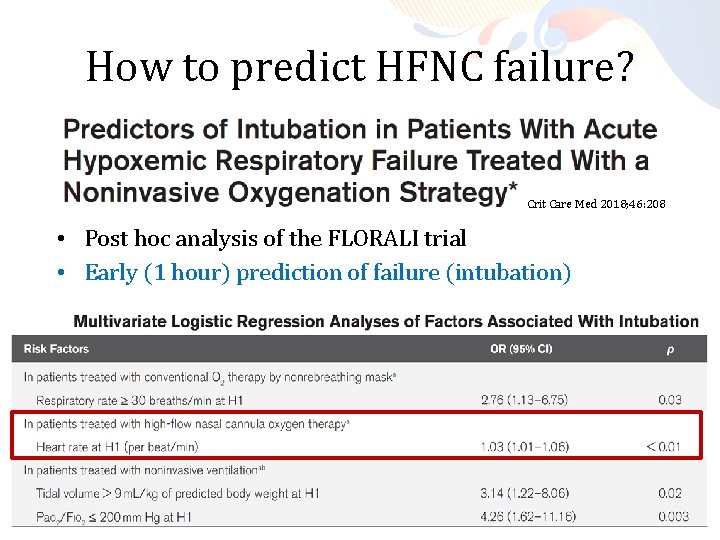
How to predict HFNC failure? Crit Care Med 2018; 46: 208 • Post hoc analysis of the FLORALI trial • Early (1 hour) prediction of failure (intubation)
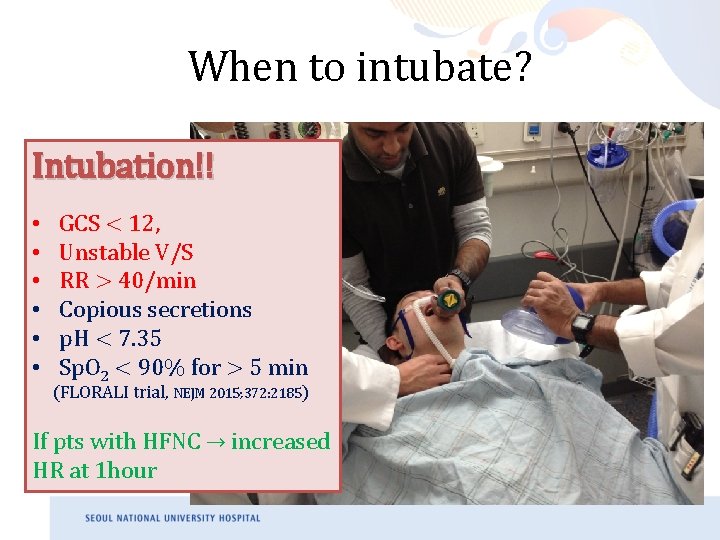
When to intubate? Intubation!! Hypoxemia • Start GCS < 12, He from hu ate • flow Unstable V/S m d 60 L/min id ifi • RR > 40/min ca tio n • Copious secretions • p. H < 7. 35 High flow • Sp. O 2 < 90% for > 5 min Discomfort Decrease temperature, Increase flow in more severe pts (FLORALI trial, NEJM 2015; 372: 2185) If pts with HFNC → increased HR at 1 hour Hypercapnia Start from 30 L/min, Increase if hypoxemic

- Slides: 19