
High Energy Bio GasDiesel Steve Briggs UCSD Try
High Energy Bio. Gas/Diesel Steve Briggs UCSD
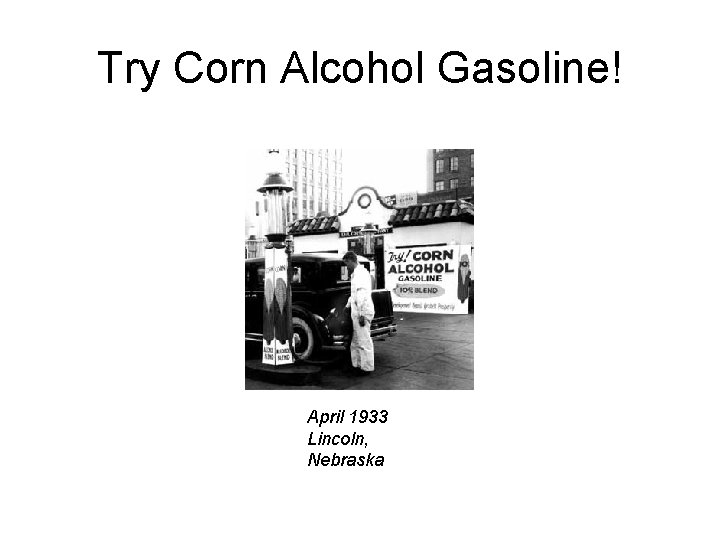
Try Corn Alcohol Gasoline! April 1933 Lincoln, Nebraska
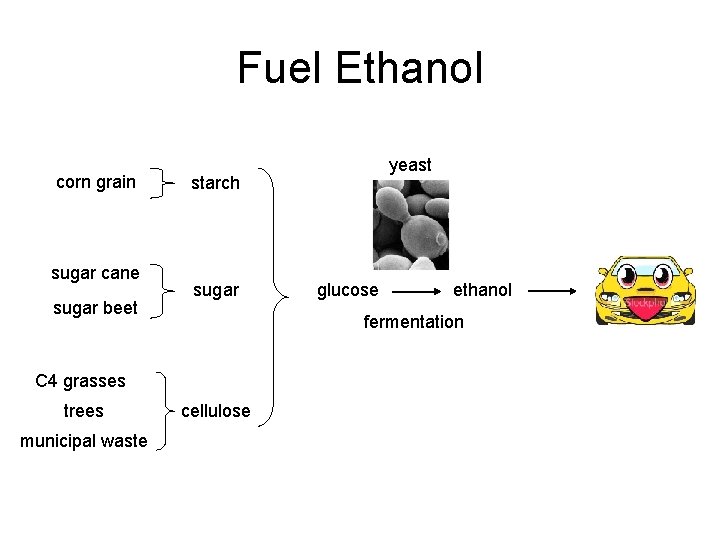
Fuel Ethanol corn grain sugar cane sugar beet starch sugar municipal waste glucose ethanol fermentation C 4 grasses trees yeast cellulose
Ethanol fuel qualities • Good – Easy to make using existing technology from the brewing industry • Bad – Low energy density (70% gasoline) – Corrosive – Low product yield from fermentation (12% v/v)
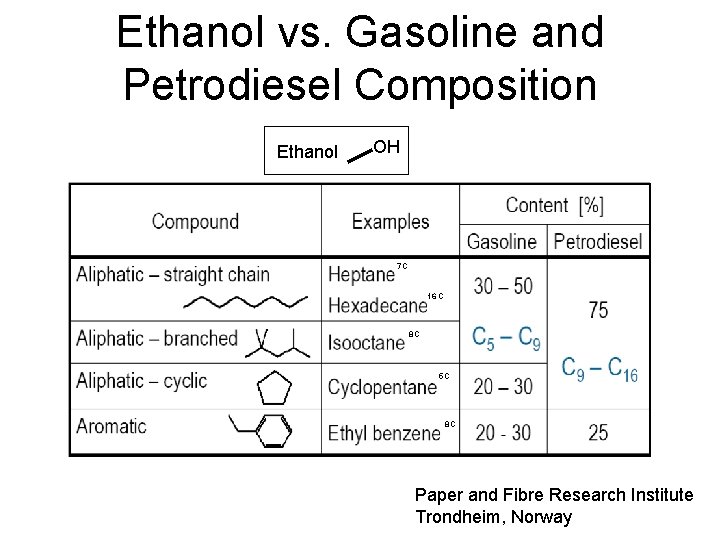
Ethanol vs. Gasoline and Petrodiesel Composition Ethanol OH 7 C 16 C 8 C 5 C 8 C Paper and Fibre Research Institute Trondheim, Norway
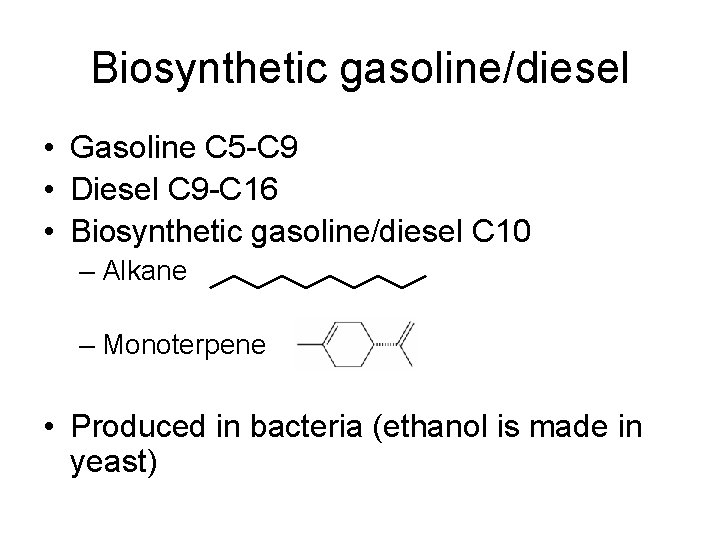
Biosynthetic gasoline/diesel • Gasoline C 5 -C 9 • Diesel C 9 -C 16 • Biosynthetic gasoline/diesel C 10 – Alkane – Monoterpene • Produced in bacteria (ethanol is made in yeast)
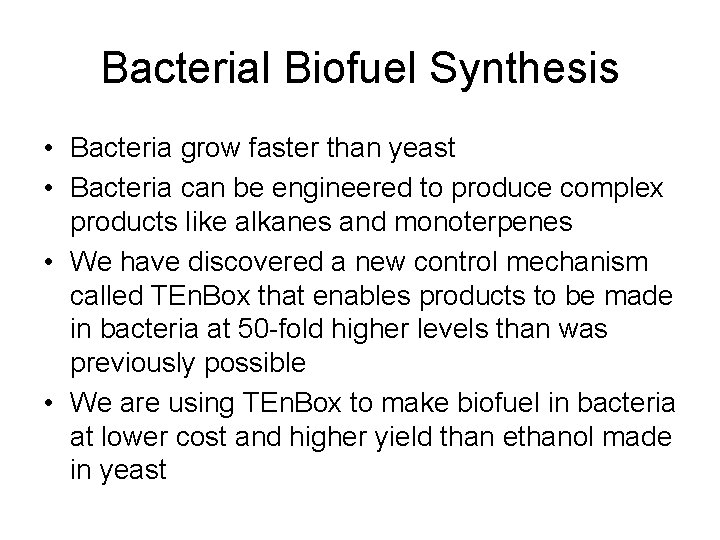
Bacterial Biofuel Synthesis • Bacteria grow faster than yeast • Bacteria can be engineered to produce complex products like alkanes and monoterpenes • We have discovered a new control mechanism called TEn. Box that enables products to be made in bacteria at 50 -fold higher levels than was previously possible • We are using TEn. Box to make biofuel in bacteria at lower cost and higher yield than ethanol made in yeast
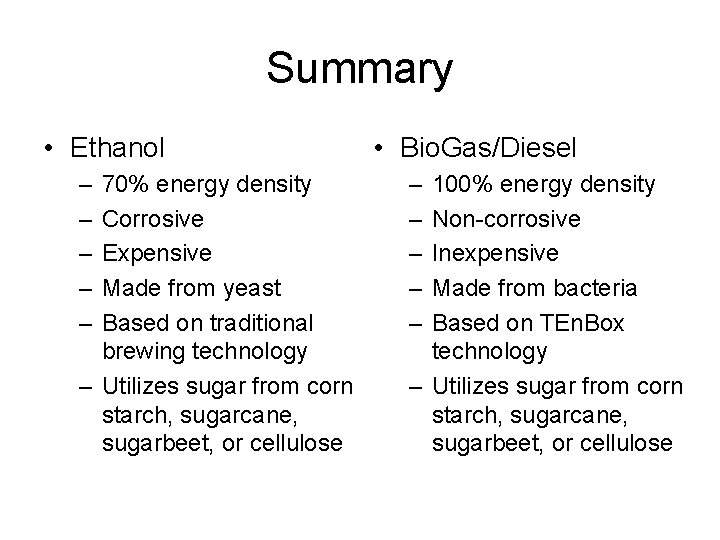
Summary • Ethanol – – – 70% energy density Corrosive Expensive Made from yeast Based on traditional brewing technology – Utilizes sugar from corn starch, sugarcane, sugarbeet, or cellulose • Bio. Gas/Diesel – – – 100% energy density Non-corrosive Inexpensive Made from bacteria Based on TEn. Box technology – Utilizes sugar from corn starch, sugarcane, sugarbeet, or cellulose
- Slides: 8