
Higgs Boson Dark Matter and Black Holes Revolutionizing
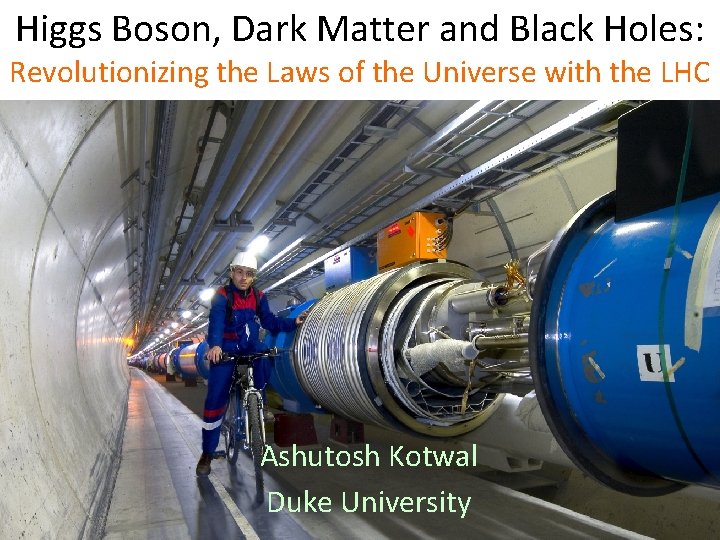
Higgs Boson, Dark Matter and Black Holes: Revolutionizing the Laws of the Universe with the LHC Ashutosh Kotwal Duke University

Egyptian Pyramids: Monument for Glory

Great Wall of China: Monument for Defense
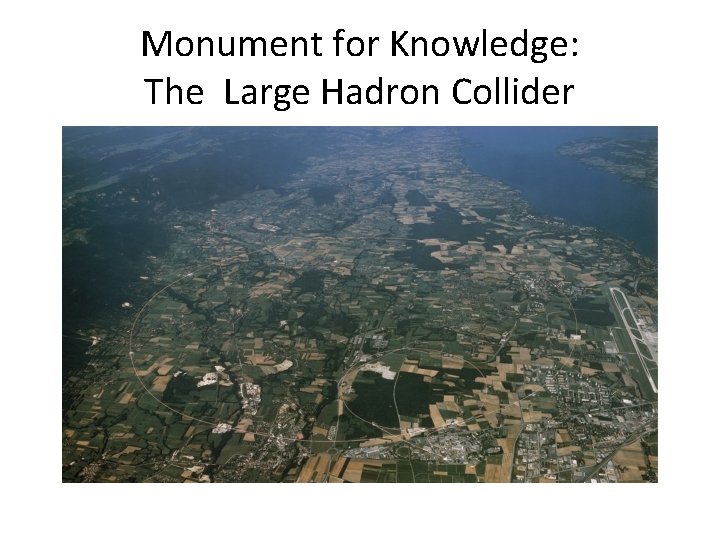
Monument for Knowledge: The Large Hadron Collider
20 th Century Built on Quantum Mechanics • The scientific advances of the 20 th century have transformed our lifestyle • Impact of Quantum Mechanics – All electronics devices, computers and communication – Nuclear power – Atomic and molecular manipulation of materials for chemical and biological applications
Conceptual Problem in Quantum Mechanics • In spite of its success, a self-consistent quantum mechanical theory of matter and forces has a huge missing link – theory requires all fundamental particles to have exactly zero mass • The non-zero electron mass cannot be understood – and yet the electron mass defines the size of the atom and physical and chemical properties of all substances
Knowledge from the LHC • Why do fundamental particles have mass? – the Higgs hypothesis • The mystery of Dark Matter – – Could Dark Matter particles be produced at the LHC? • Could we discover a more fundamental theory of space and gravity than Einstein’s theory?
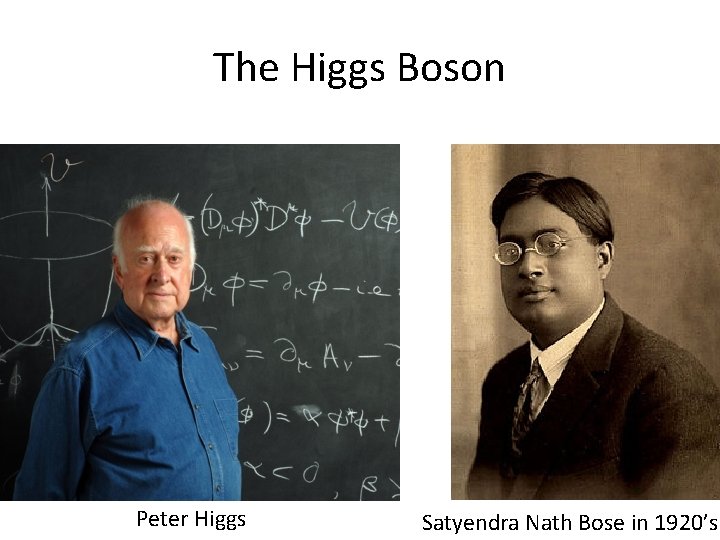
The Higgs Boson Peter Higgs Satyendra Nath Bose in 1920’s
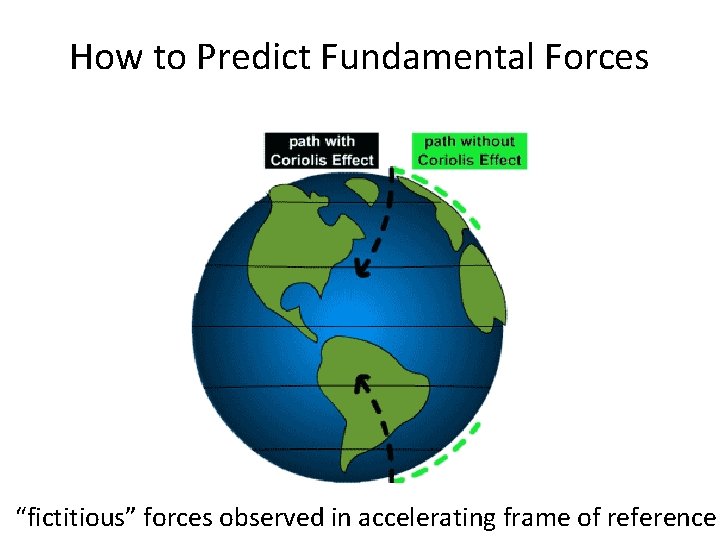
How to Predict Fundamental Forces “fictitious” forces observed in accelerating frame of reference
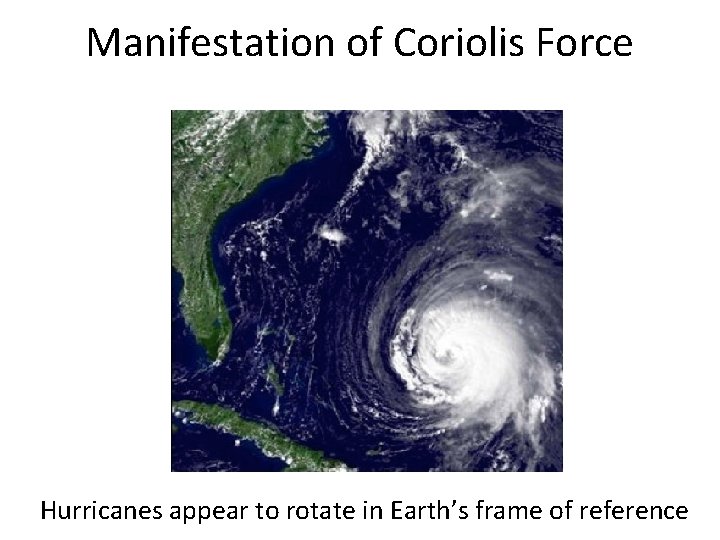
Manifestation of Coriolis Force Hurricanes appear to rotate in Earth’s frame of reference
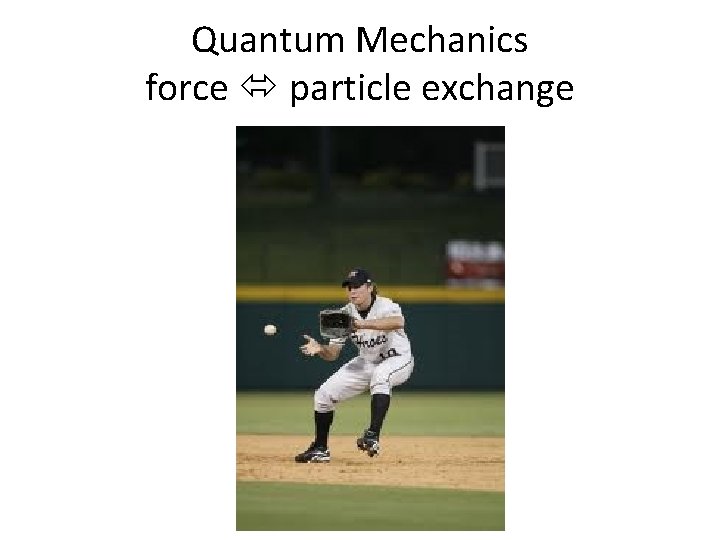
Quantum Mechanics force particle exchange
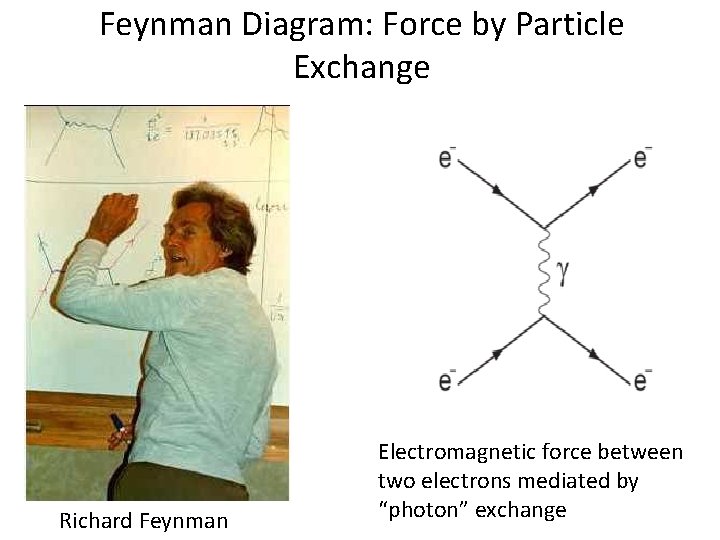
Feynman Diagram: Force by Particle Exchange Richard Feynman Electromagnetic force between two electrons mediated by “photon” exchange
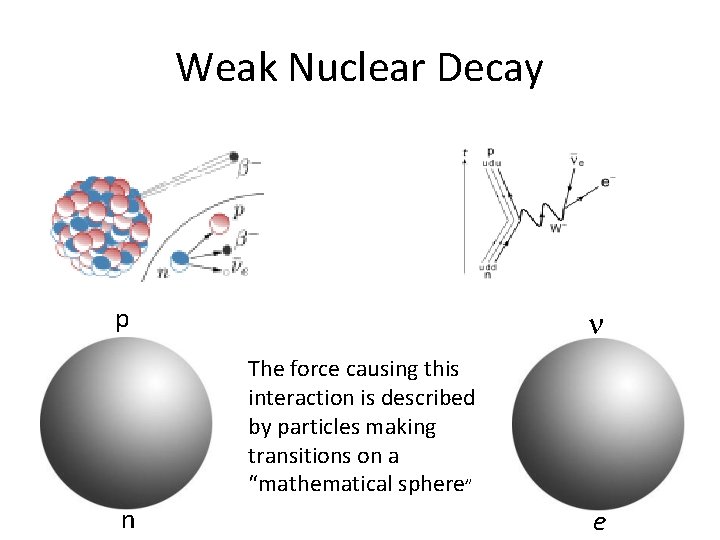
Weak Nuclear Decay p n The force causing this interaction is described by particles making transitions on a “mathematical sphere” n e
Success and Problem of Quantum Mechanics • Success: correct mathematical description of all properties of electromagnetic force and the weak nuclear force • Another prediction: force-mediating particles must be massless • Correct prediction for photon – mediator particle of electric and magnetic forces and all electromagnetic waves: radio, light, microwave, x-rays described by massless photons • Problem: for the weak nuclear force causing nuclear betadecay, the mediator particle, “W boson” is very heavy • Question: How can we preserve the original theory and simultaneously impart mass to the W boson?
Solution to the Problem of W Boson Mass • Fill all of space with “Higgs” field • W boson propagating through “empty space” actually propagating though Higgs field • Interaction of W boson with Higgs field slows down the W boson imparting the property of mass to it

The “Sticky” Higgs Field
Implications of Higgs Hypothesis • Empty space is not really empty • Filled with the Higgs • All fundamental particles interacting with the Higgs become massive
Detecting the Higgs • Why don’t we see and feel the Higgs? • Our senses and instruments detect electrical charge • Higgs is electrically neutral – has no electric and magnetic interaction!
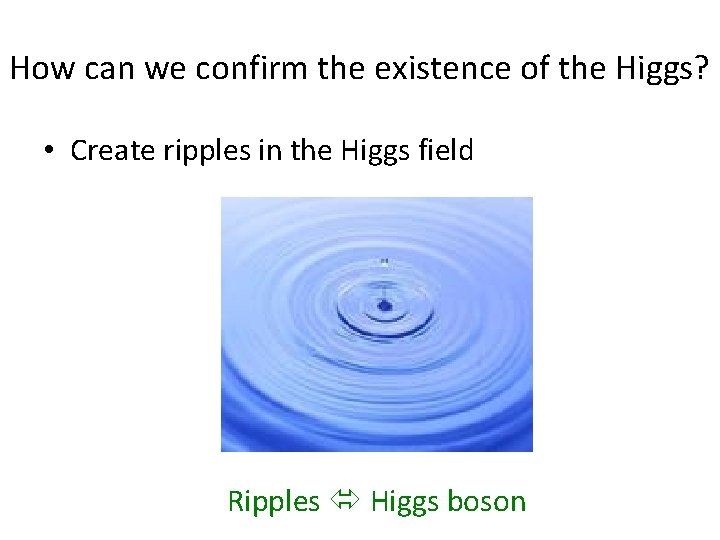
How can we confirm the existence of the Higgs? • Create ripples in the Higgs field Ripples Higgs boson
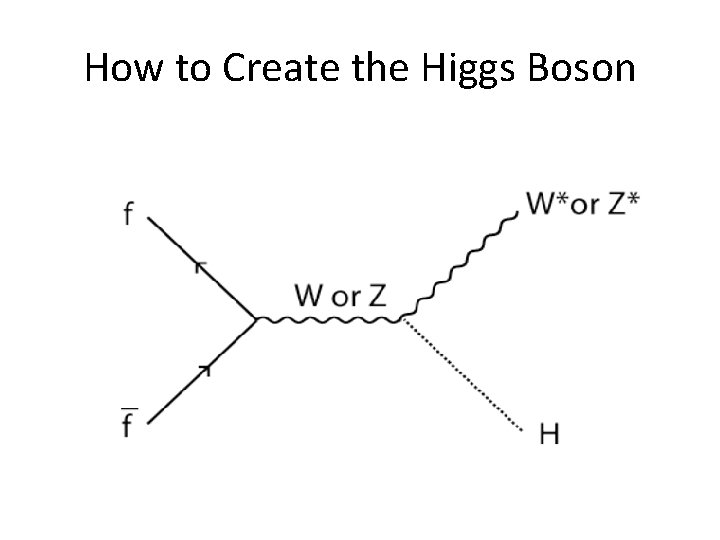
How to Create the Higgs Boson
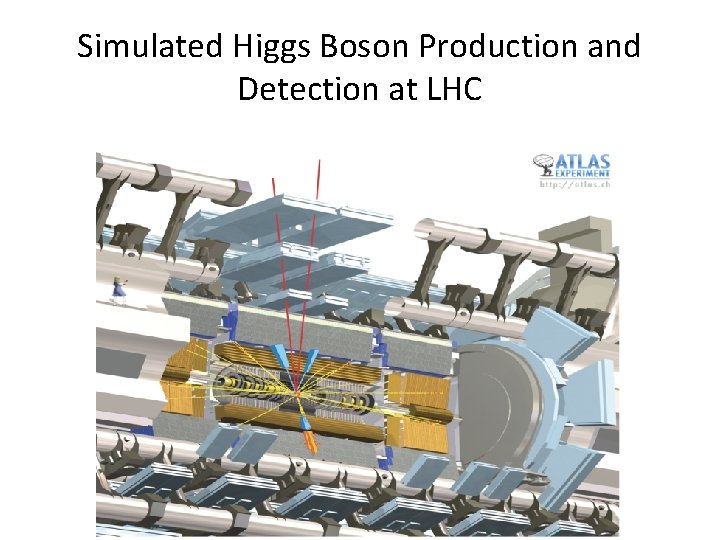
Simulated Higgs Boson Production and Detection at LHC
Higgs Discovery Implications • Provide an understanding of all masses of fundamental particles • Revolutionizes our understanding of empty space filled with Higgs • Further studies of the properties of the Higgs will be of tremendous importance

The Mystery of Dark Matter

Centripetal Force
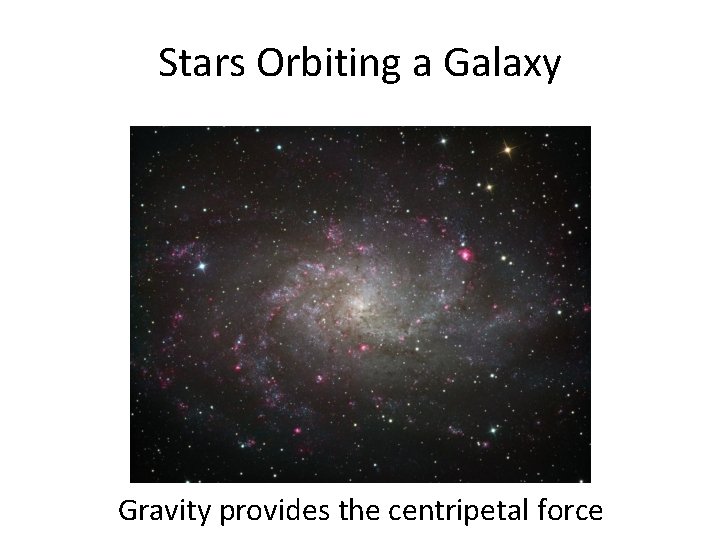
Stars Orbiting a Galaxy Gravity provides the centripetal force
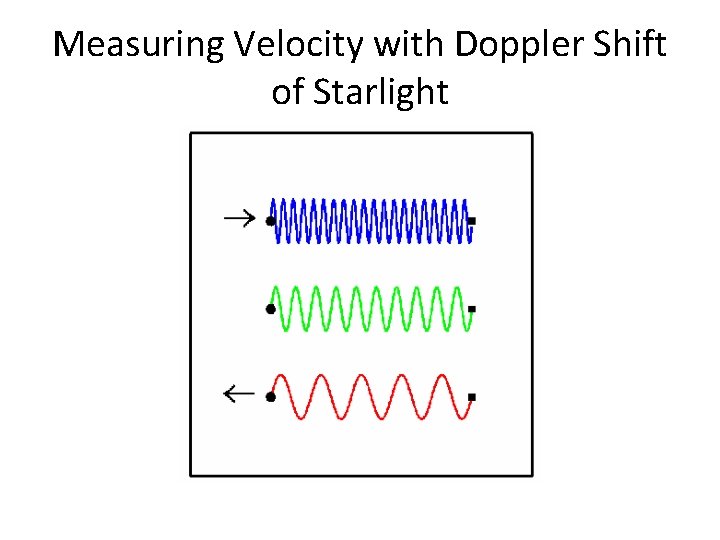
Measuring Velocity with Doppler Shift of Starlight
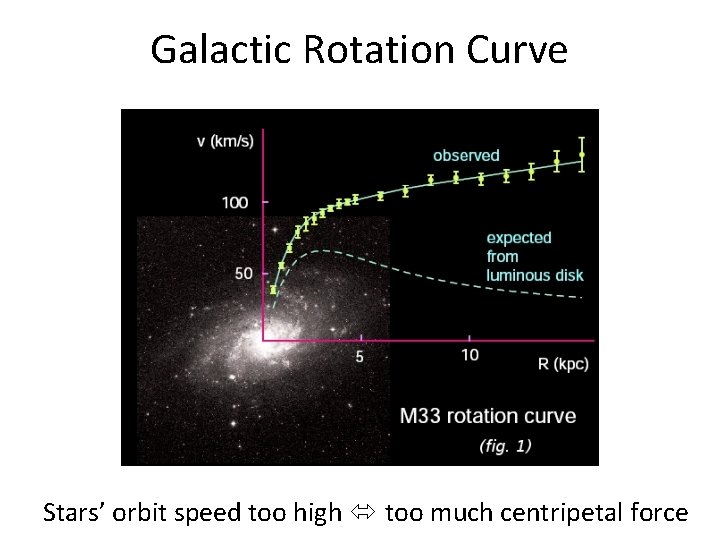
Galactic Rotation Curve Stars’ orbit speed too high too much centripetal force
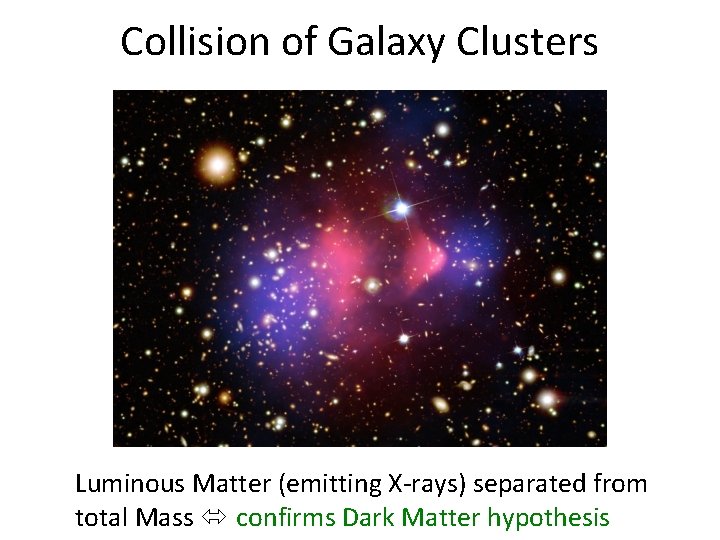
Collision of Galaxy Clusters Luminous Matter (emitting X-rays) separated from total Mass confirms Dark Matter hypothesis
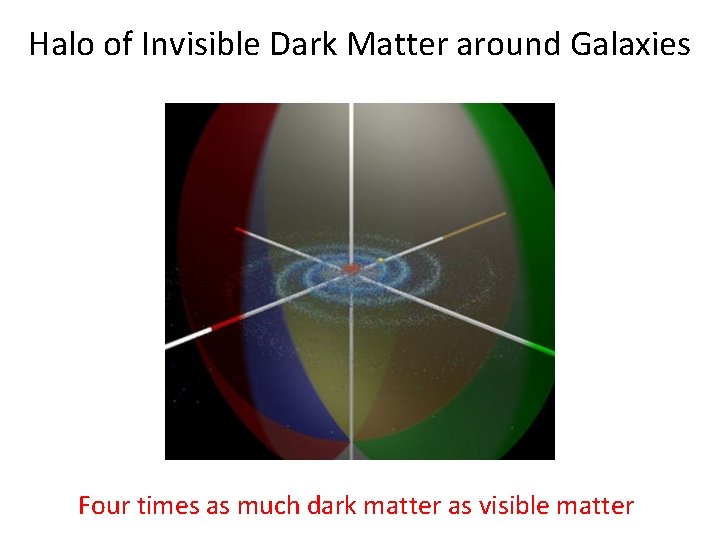
Halo of Invisible Dark Matter around Galaxies Four times as much dark matter as visible matter
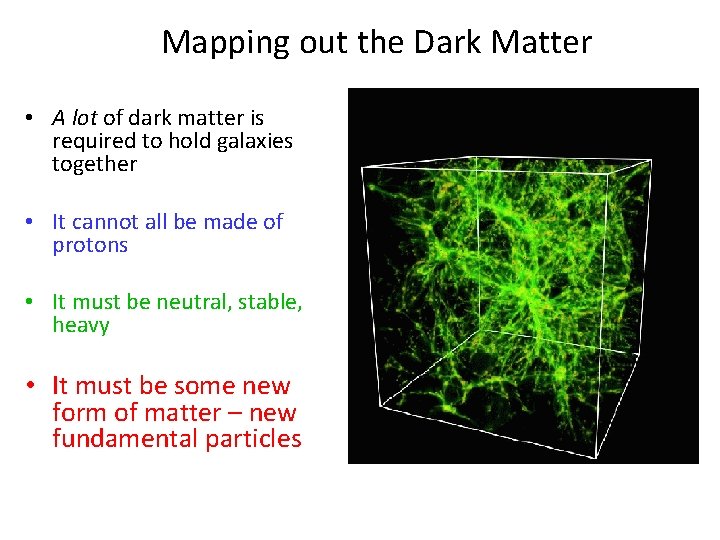
Mapping out the Dark Matter • A lot of dark matter is required to hold galaxies together • It cannot all be made of protons • It must be neutral, stable, heavy • It must be some new form of matter – new fundamental particles
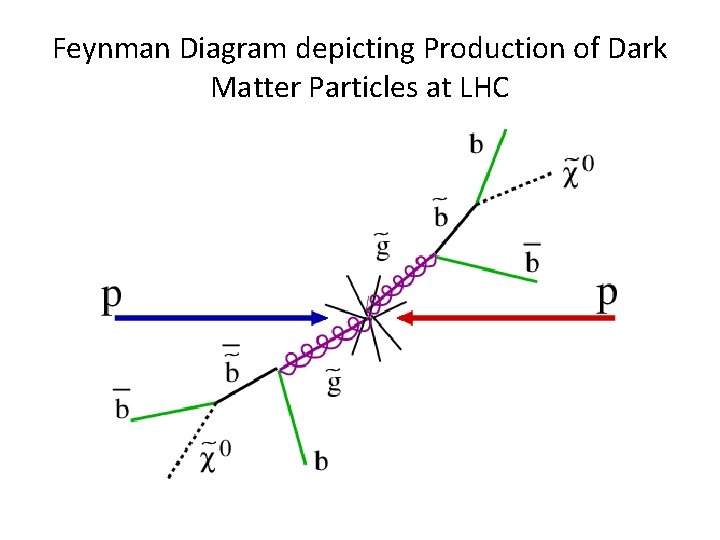
Feynman Diagram depicting Production of Dark Matter Particles at LHC
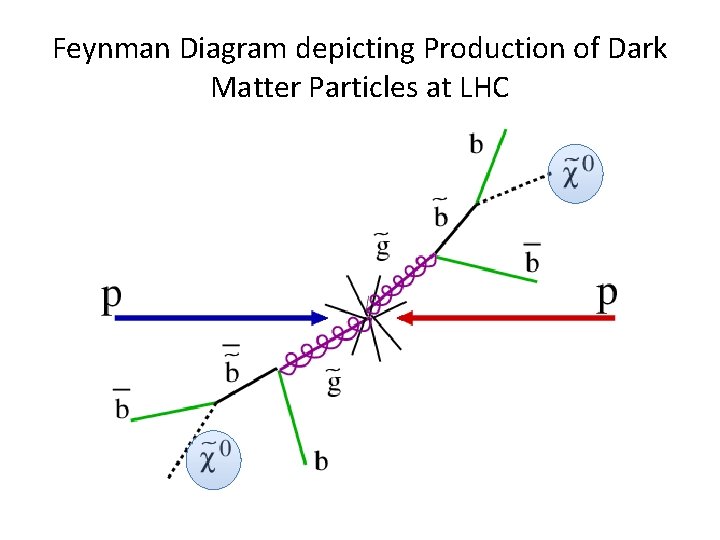
Feynman Diagram depicting Production of Dark Matter Particles at LHC
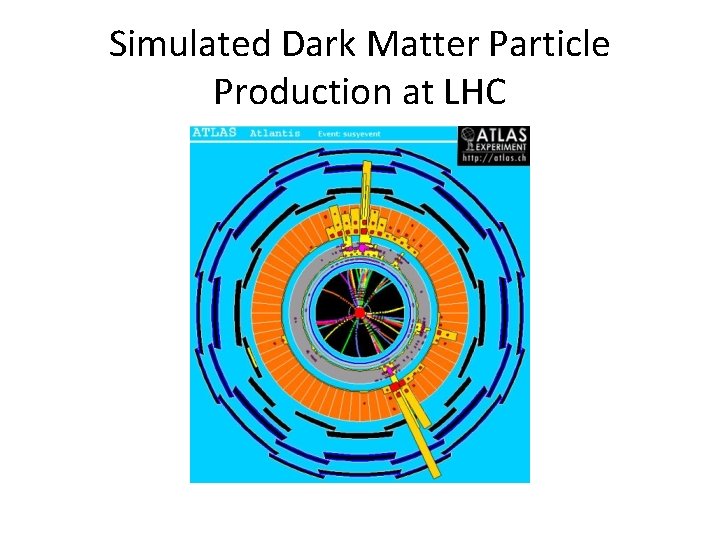
Simulated Dark Matter Particle Production at LHC
Dark Matter Particles • Bridge between cosmology, astrophysics and particle physics • “Supersymmetry” theory predicts dark matter particles • Supersymmetry quantum properties of space dawn of a “new quantum mechanics”
Black Holes at the LHC The Possibility and the Myth
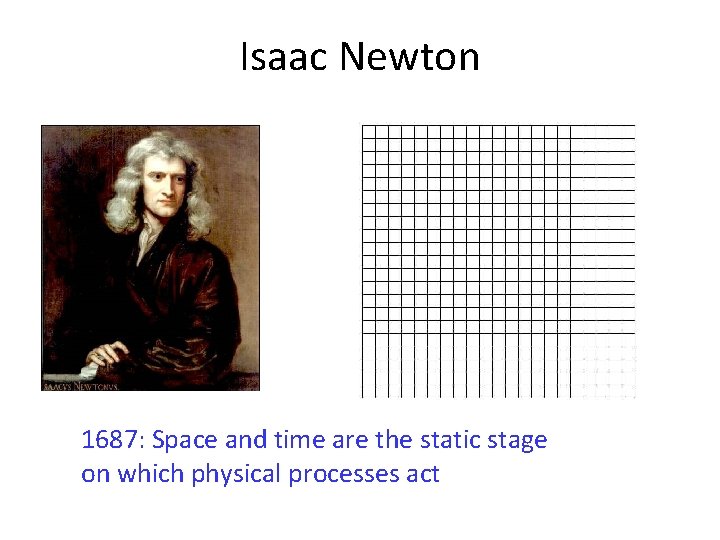
Isaac Newton 1687: Space and time are the static stage on which physical processes act
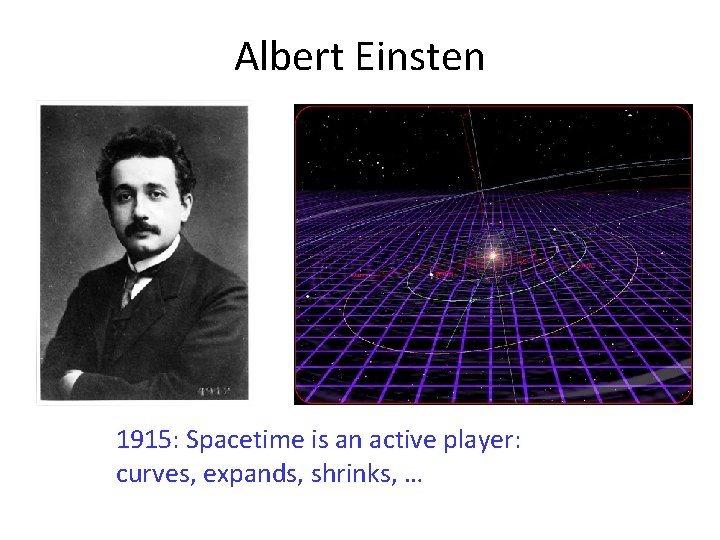
Albert Einsten 1915: Spacetime is an active player: curves, expands, shrinks, …
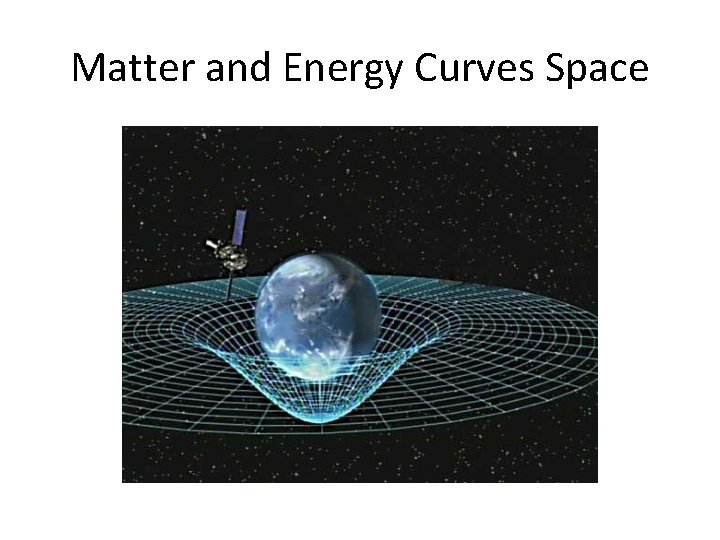
Matter and Energy Curves Space
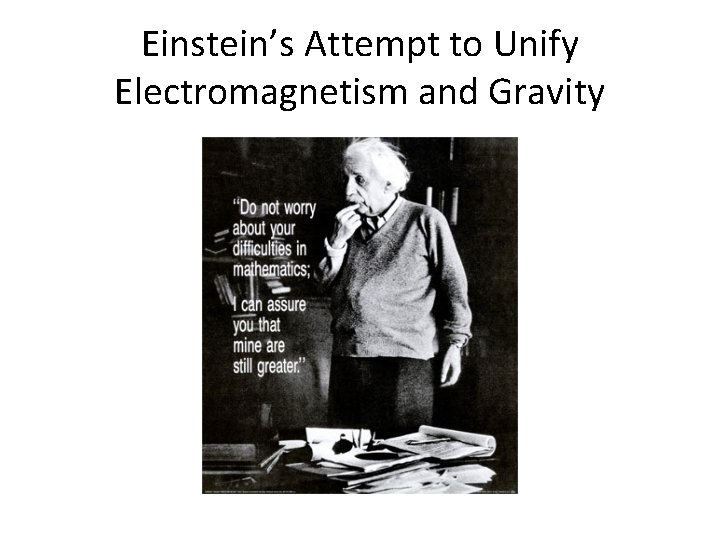
Einstein’s Attempt to Unify Electromagnetism and Gravity
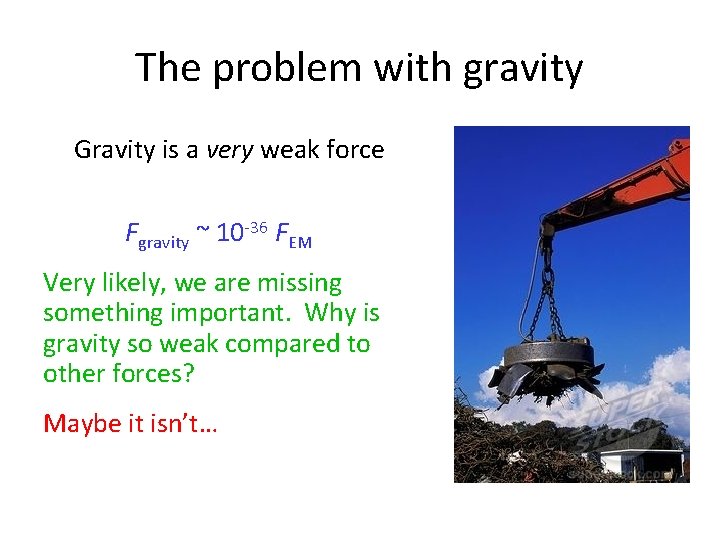
The problem with gravity Gravity is a very weak force Fgravity ~ 10 -36 FEM Very likely, we are missing something important. Why is gravity so weak compared to other forces? Maybe it isn’t…
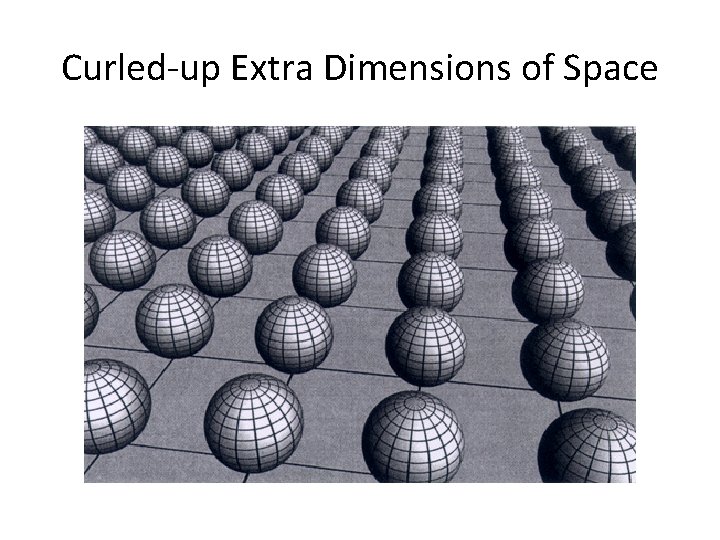
Curled-up Extra Dimensions of Space
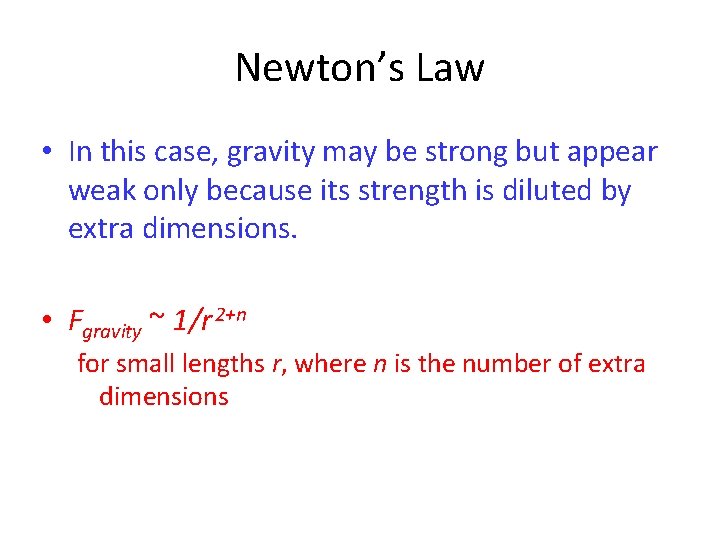
Newton’s Law • In this case, gravity may be strong but appear weak only because its strength is diluted by extra dimensions. • Fgravity ~ 1/r 2+n for small lengths r, where n is the number of extra dimensions
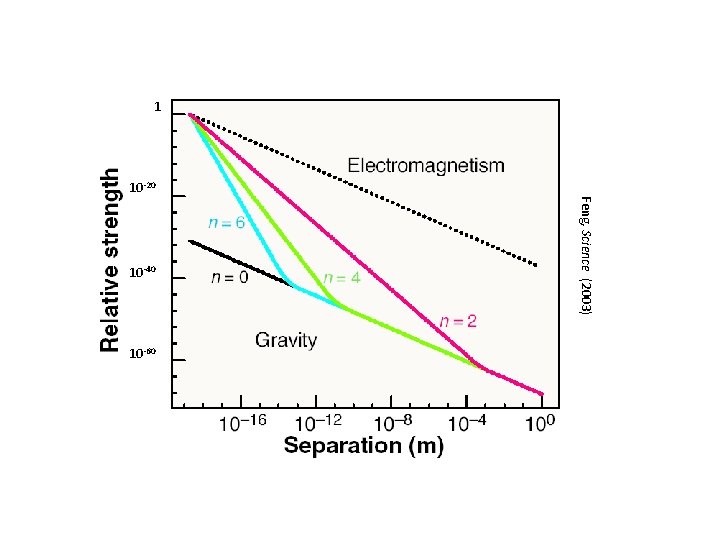
1 10 -20 10 -60 Feng, Science (2003) 10 -40
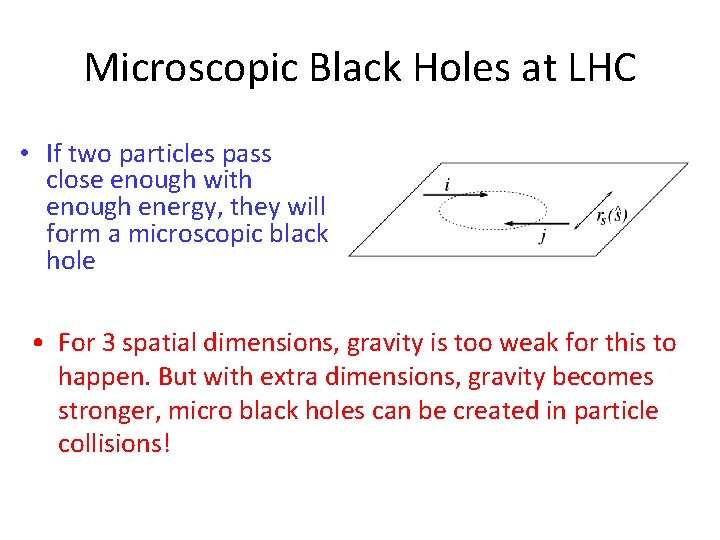
Microscopic Black Holes at LHC • If two particles pass close enough with enough energy, they will form a microscopic black hole • For 3 spatial dimensions, gravity is too weak for this to happen. But with extra dimensions, gravity becomes stronger, micro black holes can be created in particle collisions!
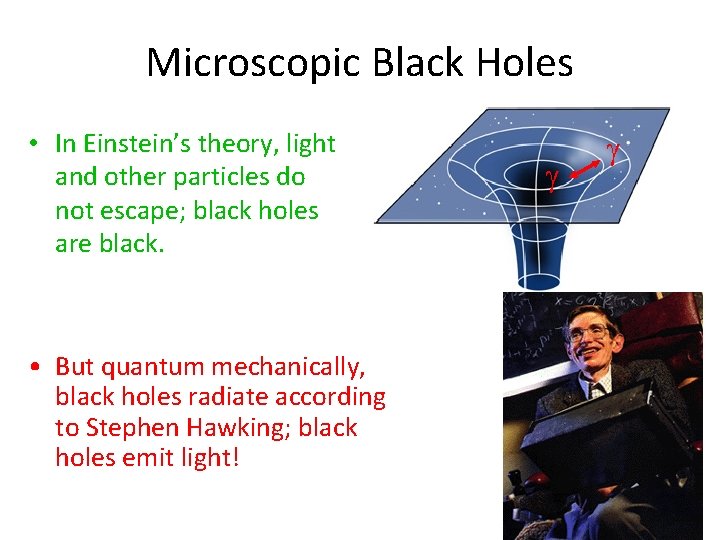
Microscopic Black Holes • In Einstein’s theory, light and other particles do not escape; black holes are black. • But quantum mechanically, black holes radiate according to Stephen Hawking; black holes emit light! g g
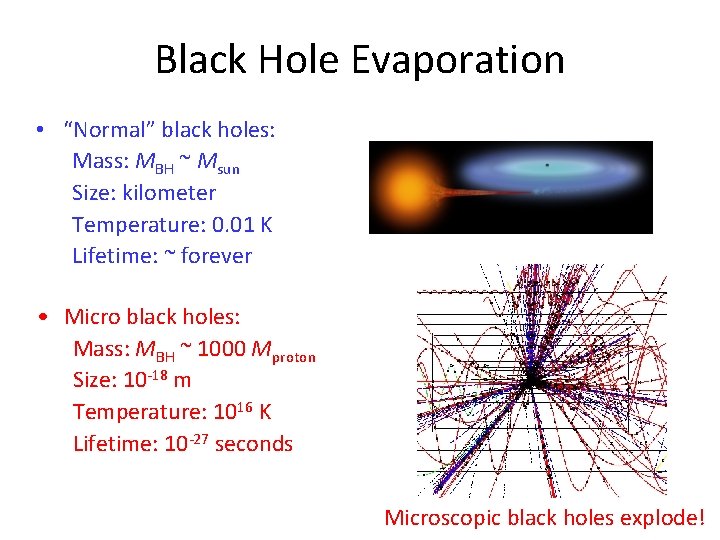
Black Hole Evaporation • “Normal” black holes: Mass: MBH ~ Msun Size: kilometer Temperature: 0. 01 K Lifetime: ~ forever • Micro black holes: Mass: MBH ~ 1000 Mproton Size: 10 -18 m Temperature: 1016 K Lifetime: 10 -27 seconds Microscopic black holes explode!
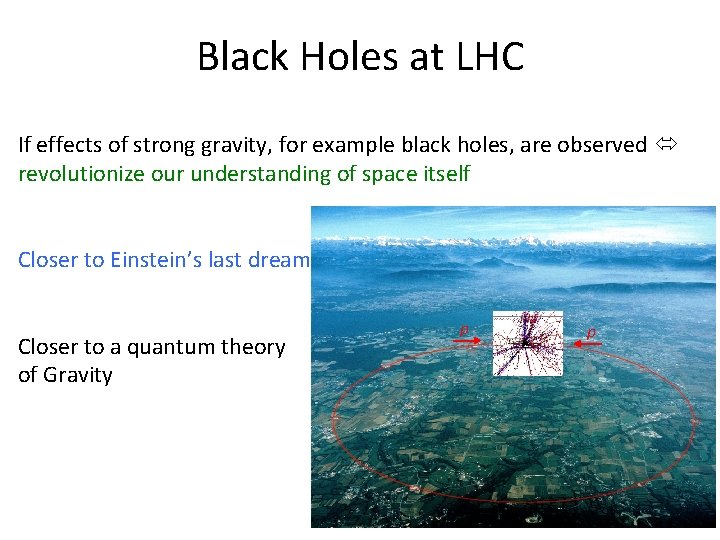
Black Holes at LHC If effects of strong gravity, for example black holes, are observed revolutionize our understanding of space itself Closer to Einstein’s last dream Closer to a quantum theory of Gravity p p

How does LHC work?
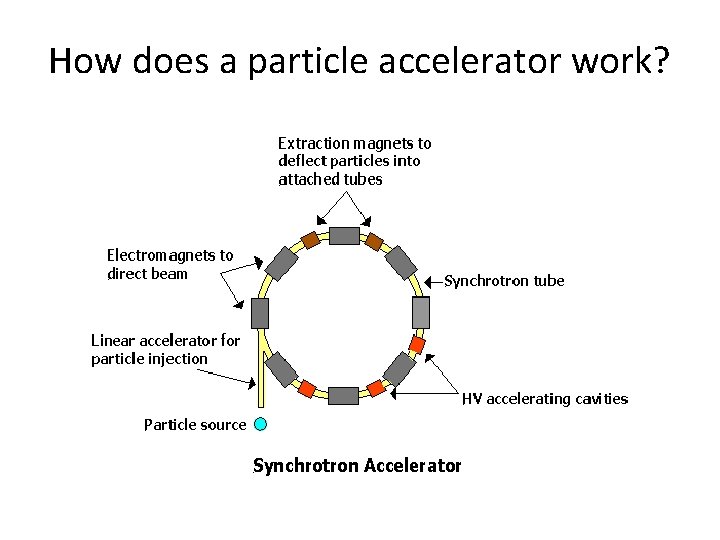
How does a particle accelerator work?
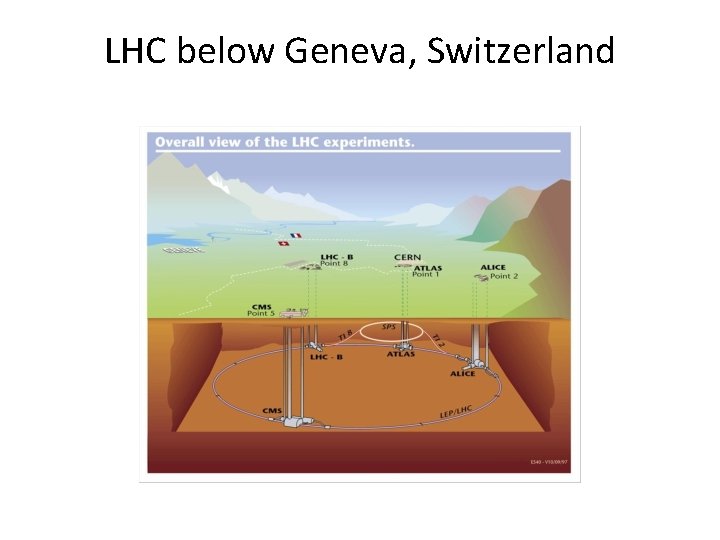
LHC below Geneva, Switzerland
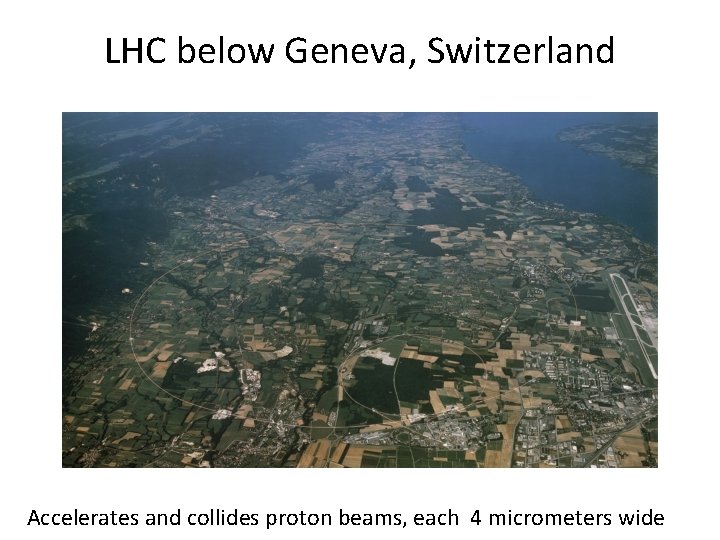
LHC below Geneva, Switzerland Accelerates and collides proton beams, each 4 micrometers wide
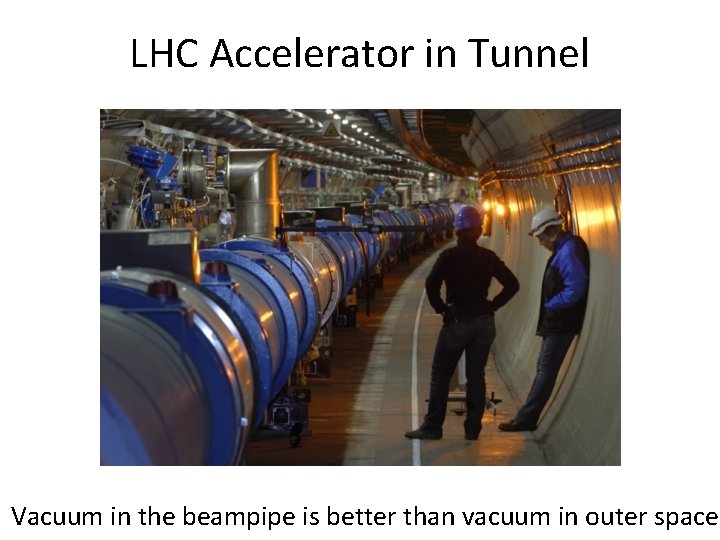
LHC Accelerator in Tunnel Vacuum in the beampipe is better than vacuum in outer space
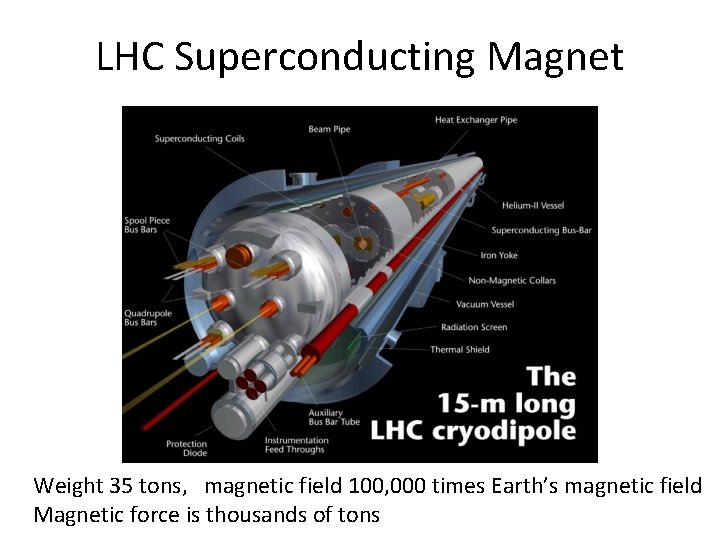
LHC Superconducting Magnet Weight 35 tons, magnetic field 100, 000 times Earth’s magnetic field Magnetic force is thousands of tons
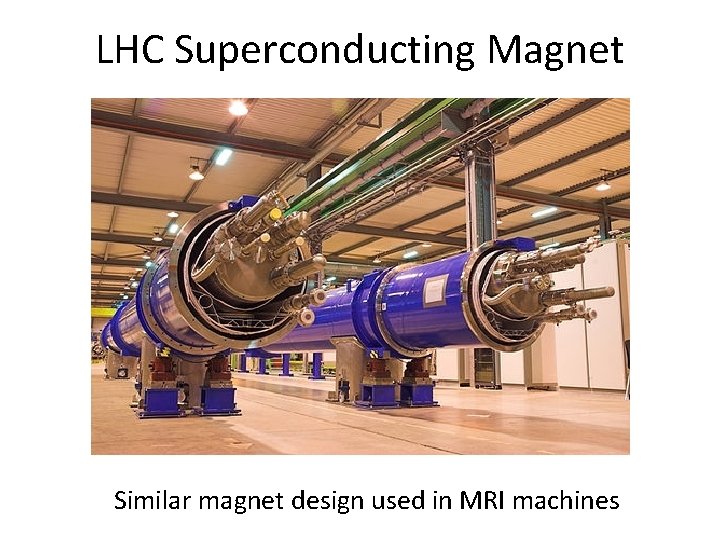
LHC Superconducting Magnet Similar magnet design used in MRI machines
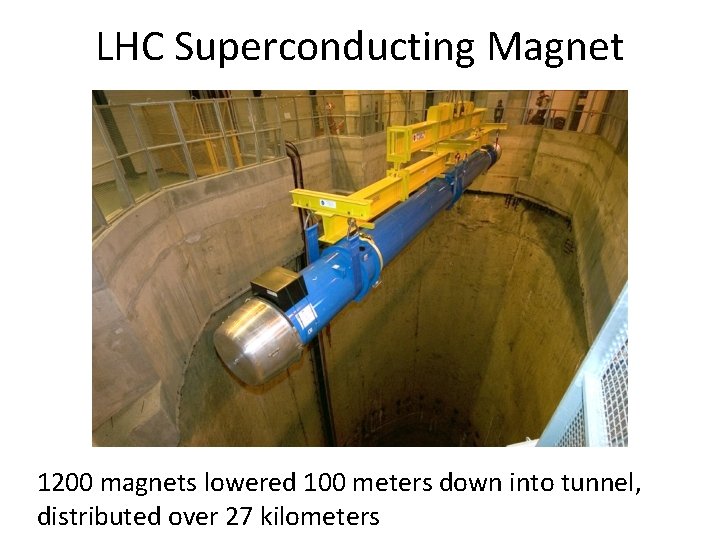
LHC Superconducting Magnet 1200 magnets lowered 100 meters down into tunnel, distributed over 27 kilometers
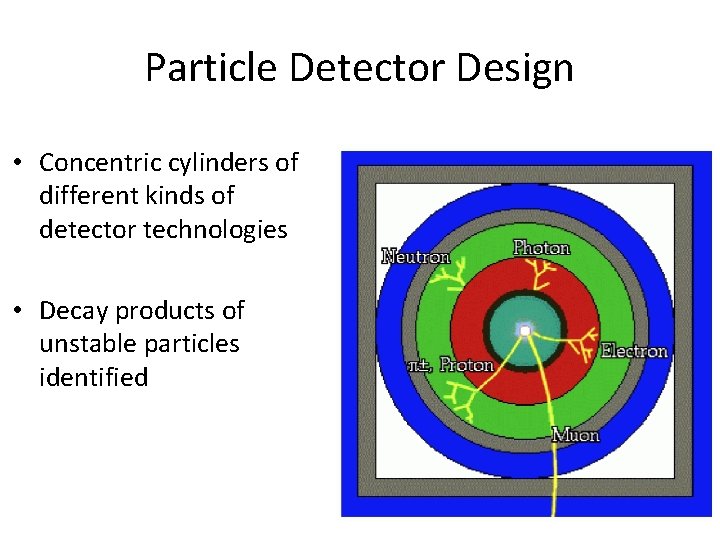
Particle Detector Design • Concentric cylinders of different kinds of detector technologies • Decay products of unstable particles identified
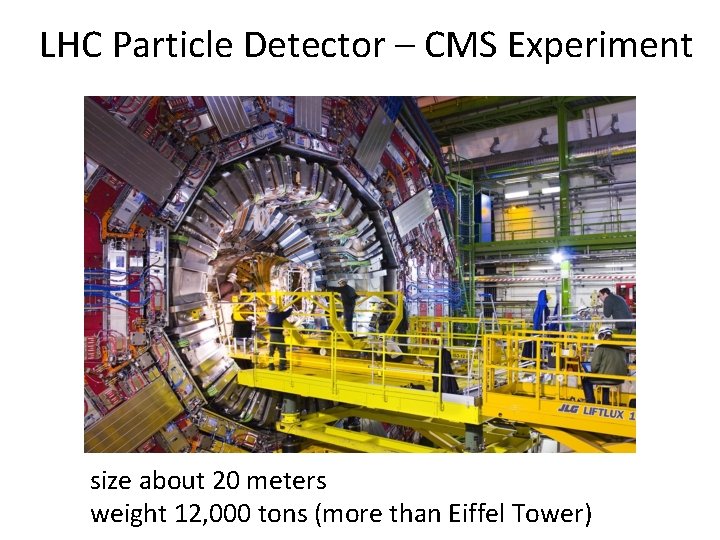
LHC Particle Detector – CMS Experiment size about 20 meters weight 12, 000 tons (more than Eiffel Tower)
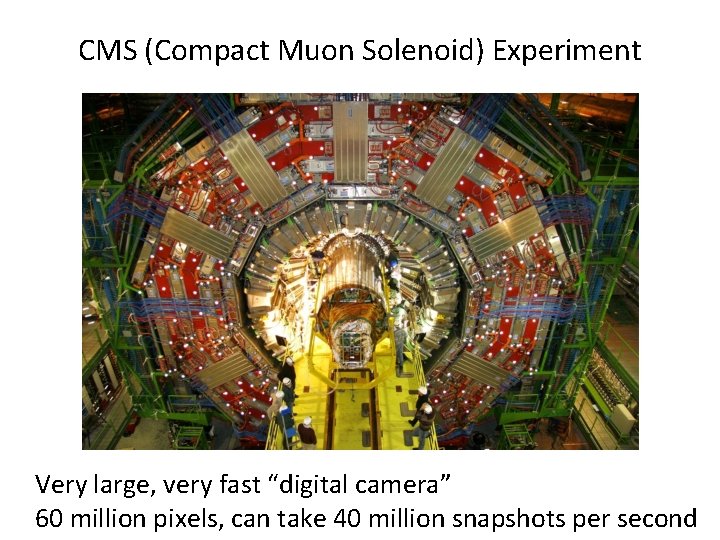
CMS (Compact Muon Solenoid) Experiment Very large, very fast “digital camera” 60 million pixels, can take 40 million snapshots per second
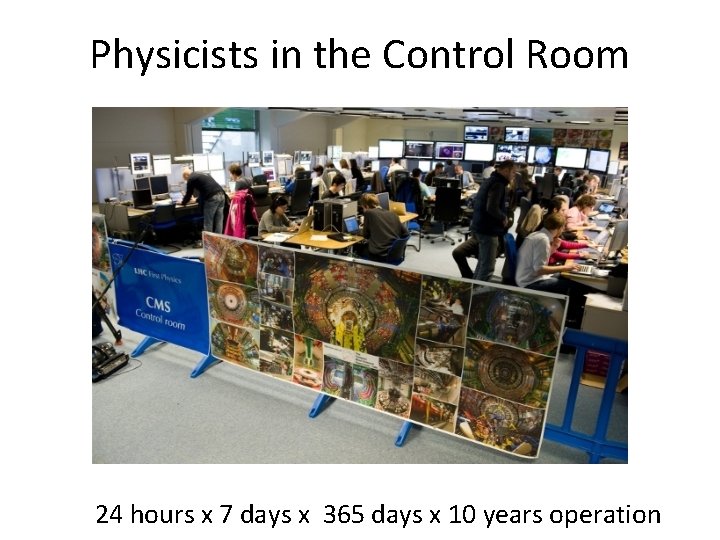
Physicists in the Control Room 24 hours x 7 days x 365 days x 10 years operation

Why LHC Works
Conclusion • LHC is operating successfully – a great achievement of science and engineering and of international cooperation • LHC data being collected analyzed round the clock • We are waiting with bated breaths for discoveries that could start a new revolution in physics – As grand as the revolution started by quantum mechanics and theories of relativity a century ago
- Slides: 61