
Hierarchical Levels of Motor Control Cortex Directional intentional

- Slides: 45
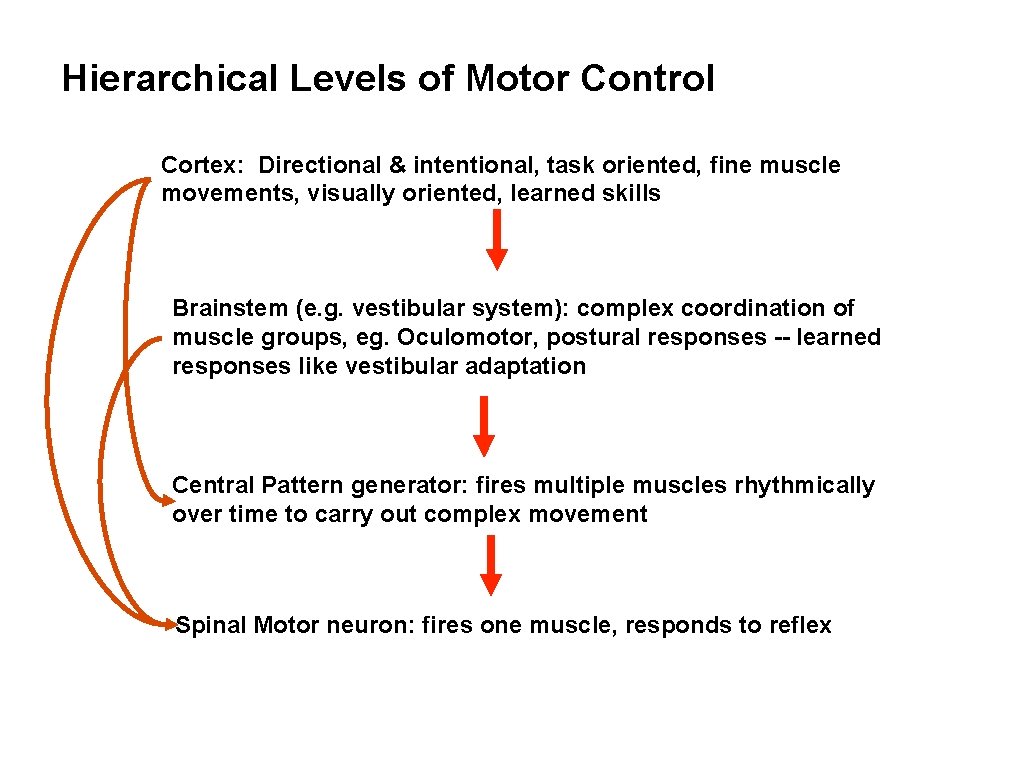
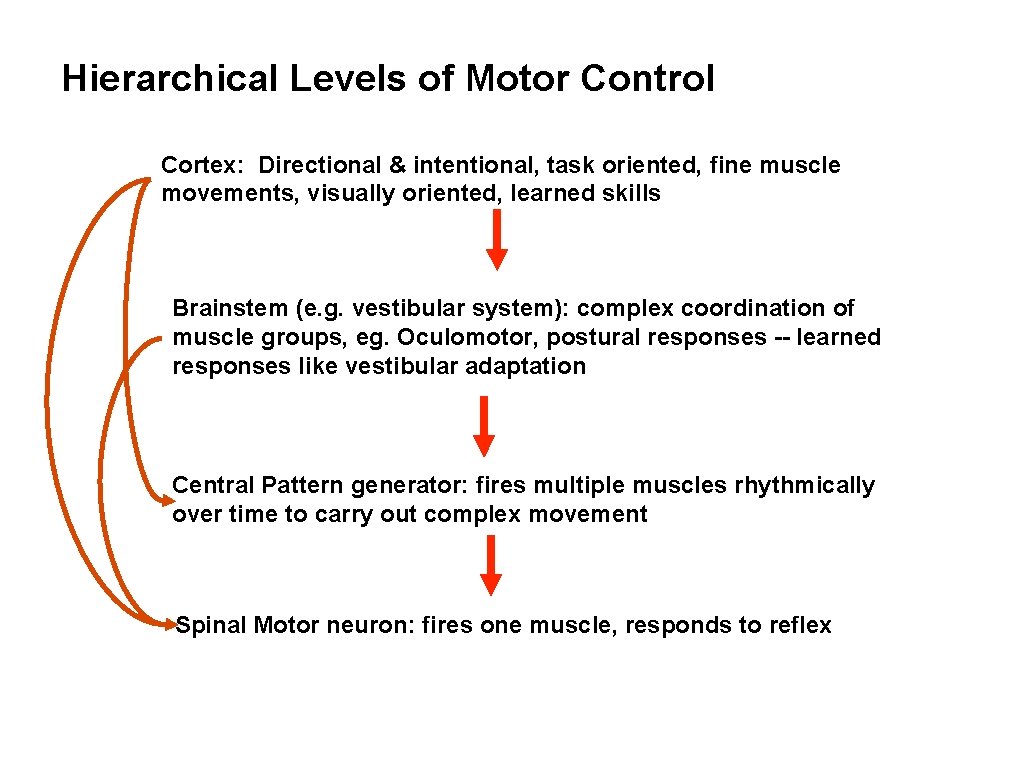
Hierarchical Levels of Motor Control Cortex: Directional & intentional, task oriented, fine muscle movements, visually oriented, learned skills Brainstem (e. g. vestibular system): complex coordination of muscle groups, eg. Oculomotor, postural responses -- learned responses like vestibular adaptation Central Pattern generator: fires multiple muscles rhythmically over time to carry out complex movement Spinal Motor neuron: fires one muscle, responds to reflex
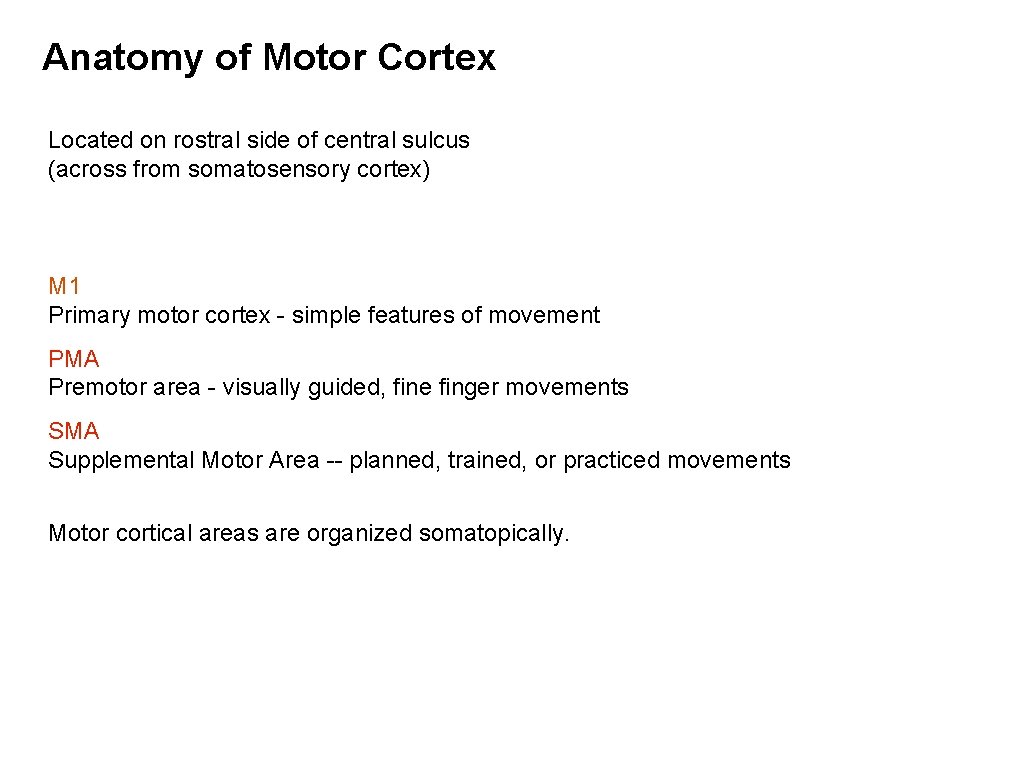
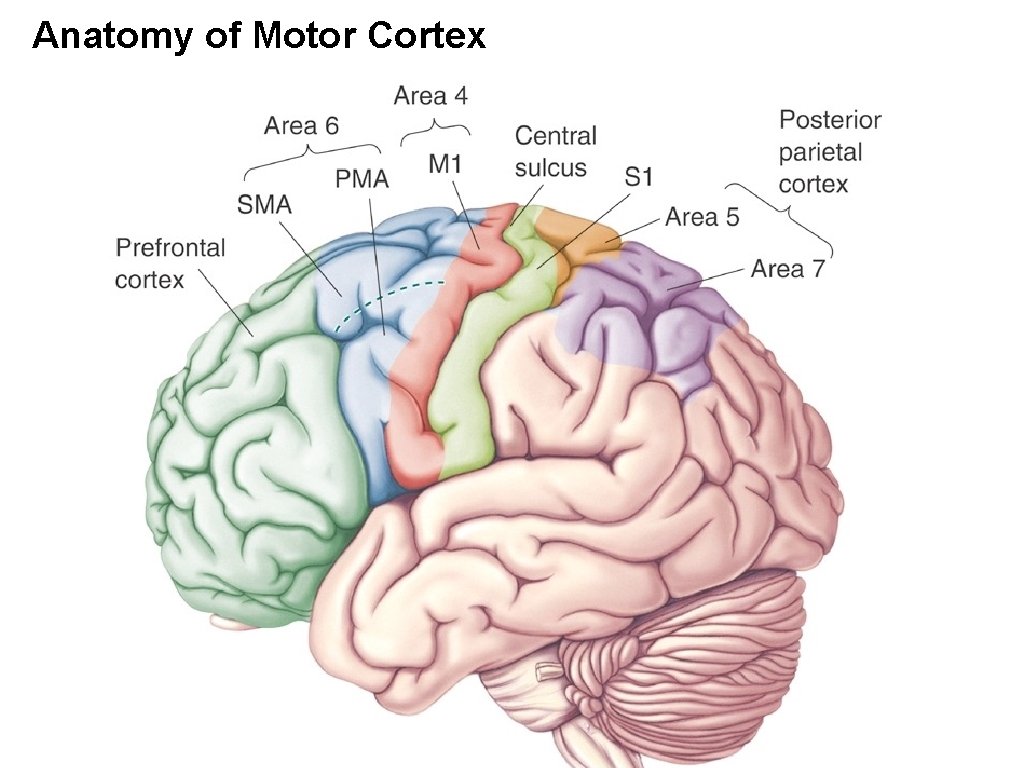
Anatomy of Motor Cortex Located on rostral side of central sulcus (across from somatosensory cortex) M 1 Primary motor cortex - simple features of movement PMA Premotor area - visually guided, fine finger movements SMA Supplemental Motor Area -- planned, trained, or practiced movements Motor cortical areas are organized somatopically.
Anatomy of Motor Cortex
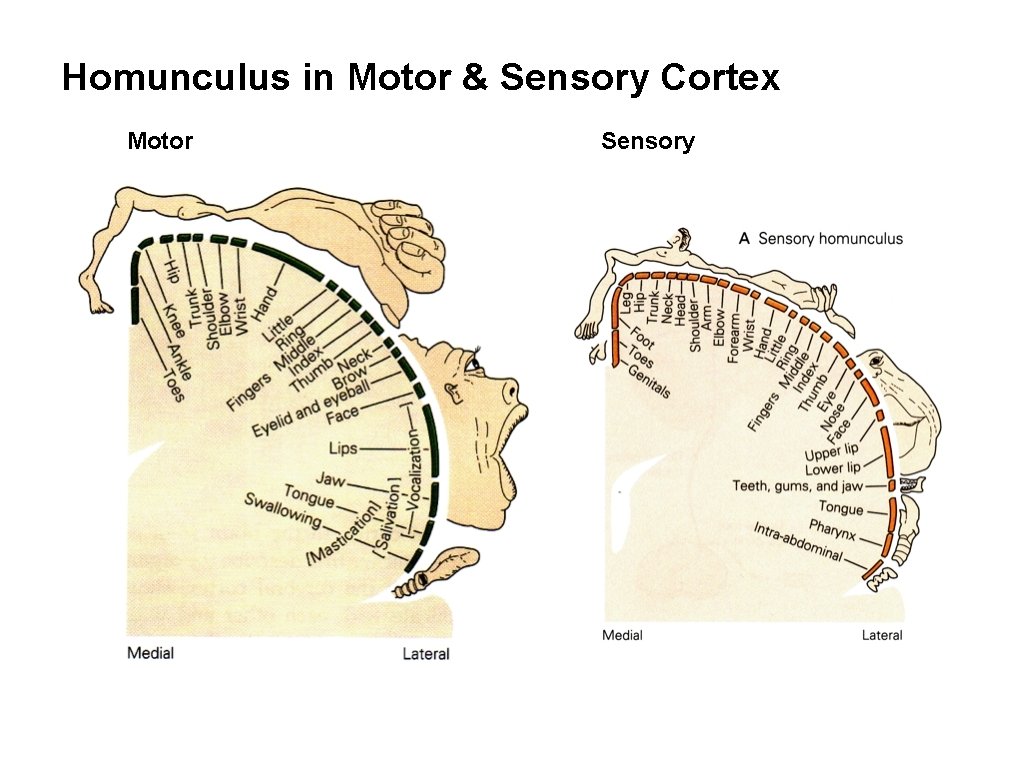
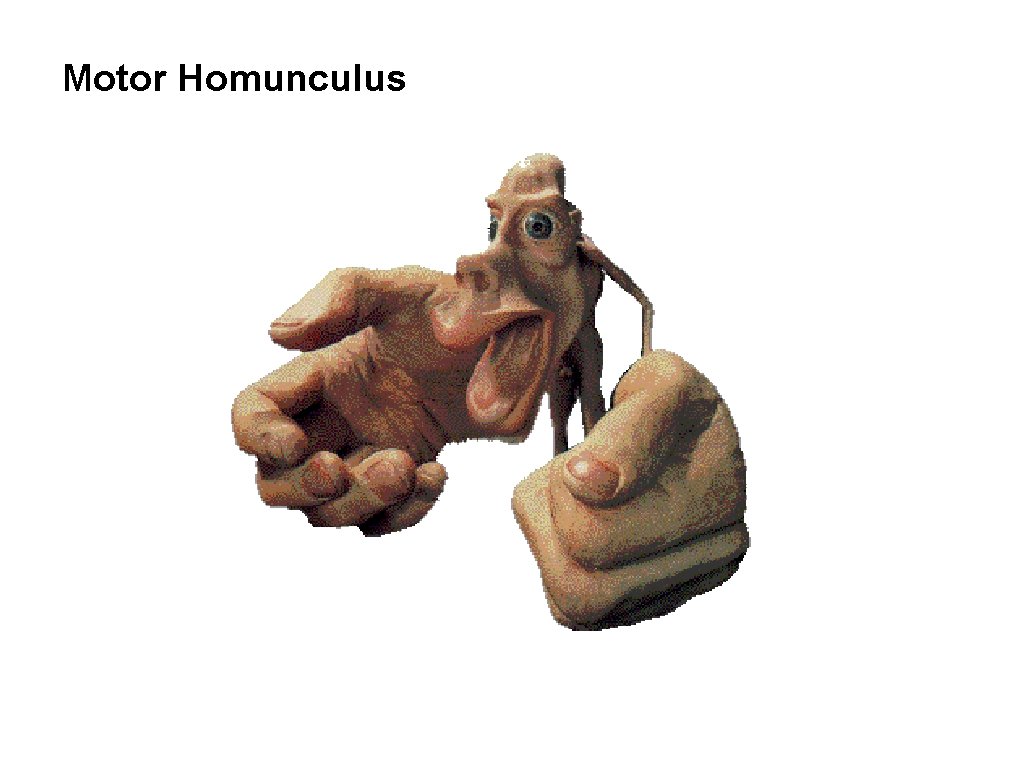
Homunculus in Motor & Sensory Cortex Motor Sensory
Motor Homunculus
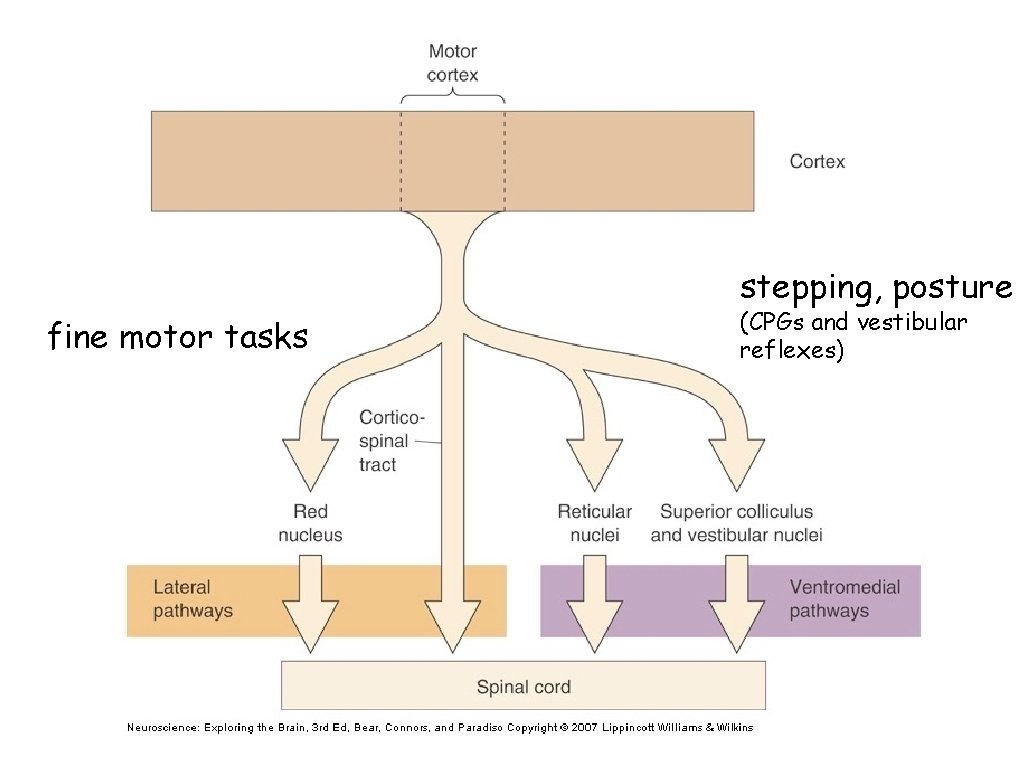
stepping, posture fine motor tasks (CPGs and vestibular reflexes) 6
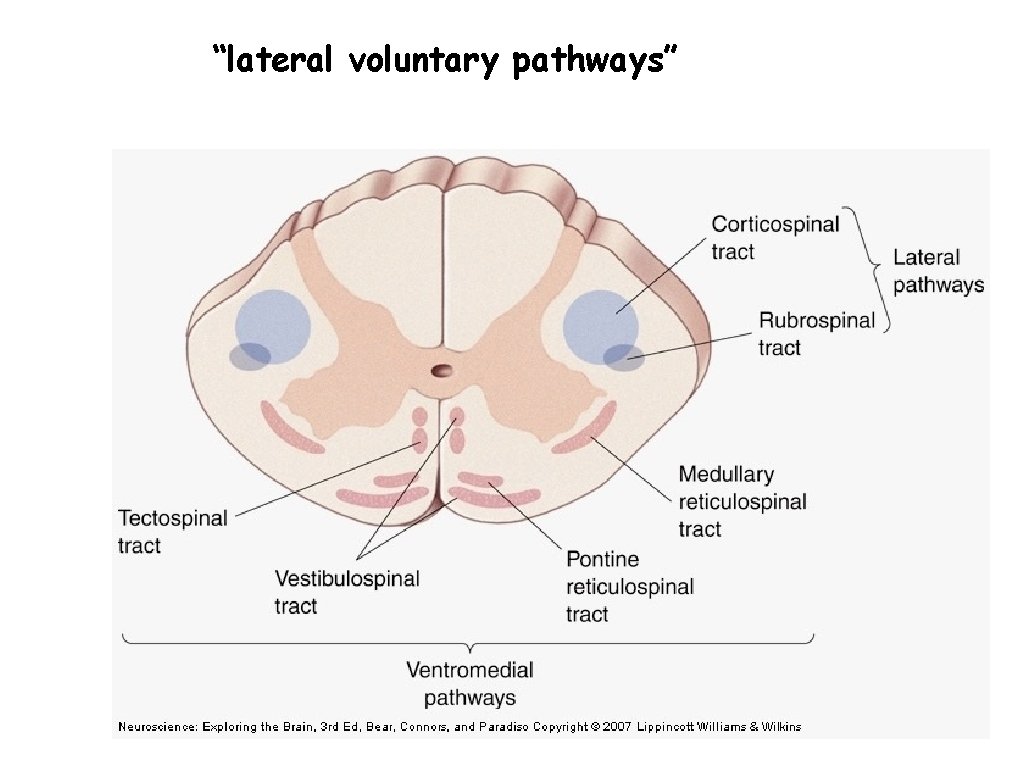
“lateral voluntary pathways”
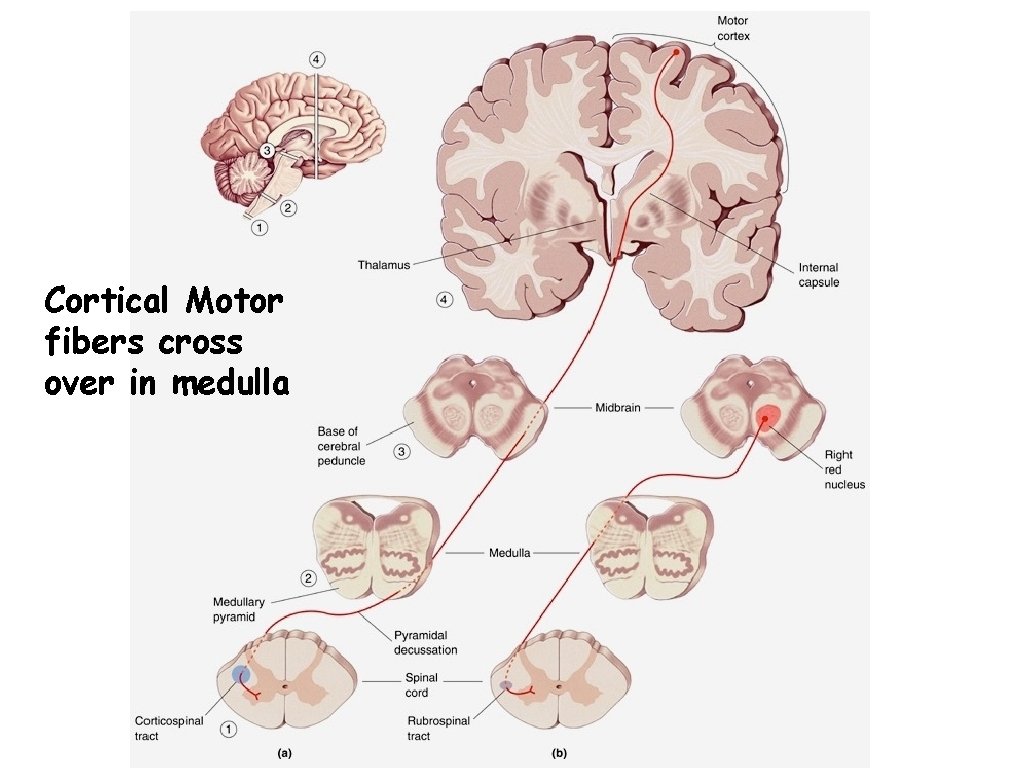
Cortical Motor fibers cross over in medulla
Stimulation of Primary Cortex Fritsch & Hitzig Electical stimulation of motor cortex of dogs (and wounded soldiers) Hughlings Jacksonian march of focal seizures -- random neural activity sweeping the surface of the motor cortex M 1 stimulation: easy to stimulate, large simple limb movements Premotor stimulation: takes more juice, fine multi-jointed motor responses
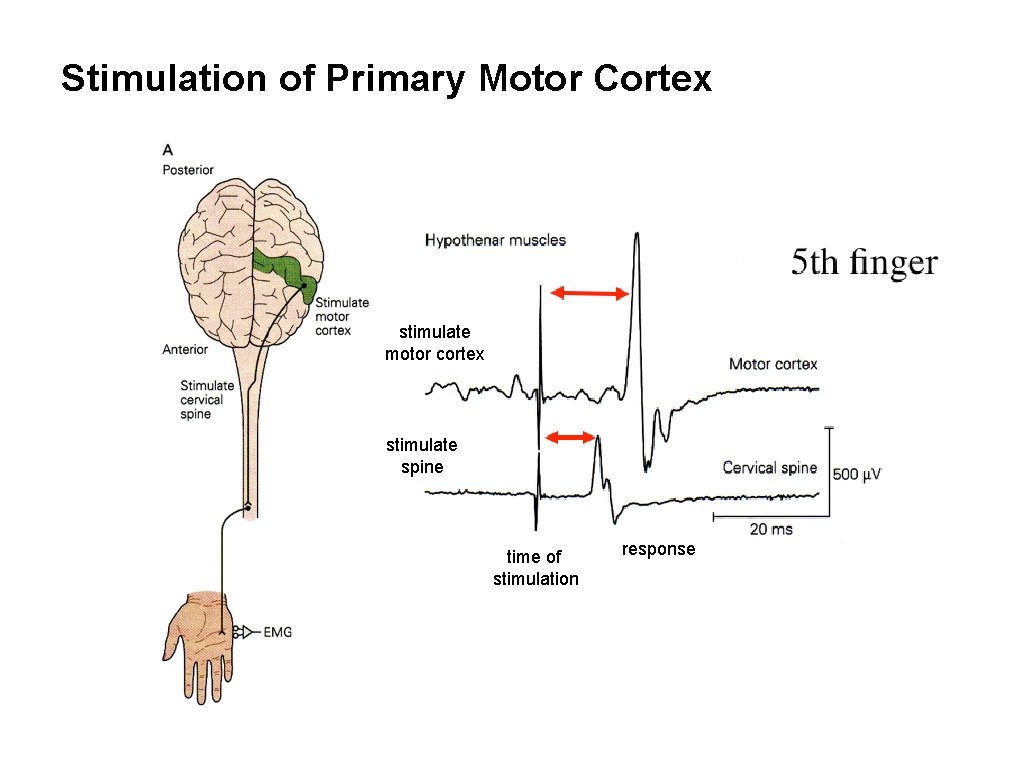
Stimulation of Primary Motor Cortex stimulate motor cortex stimulate spine time of stimulation response
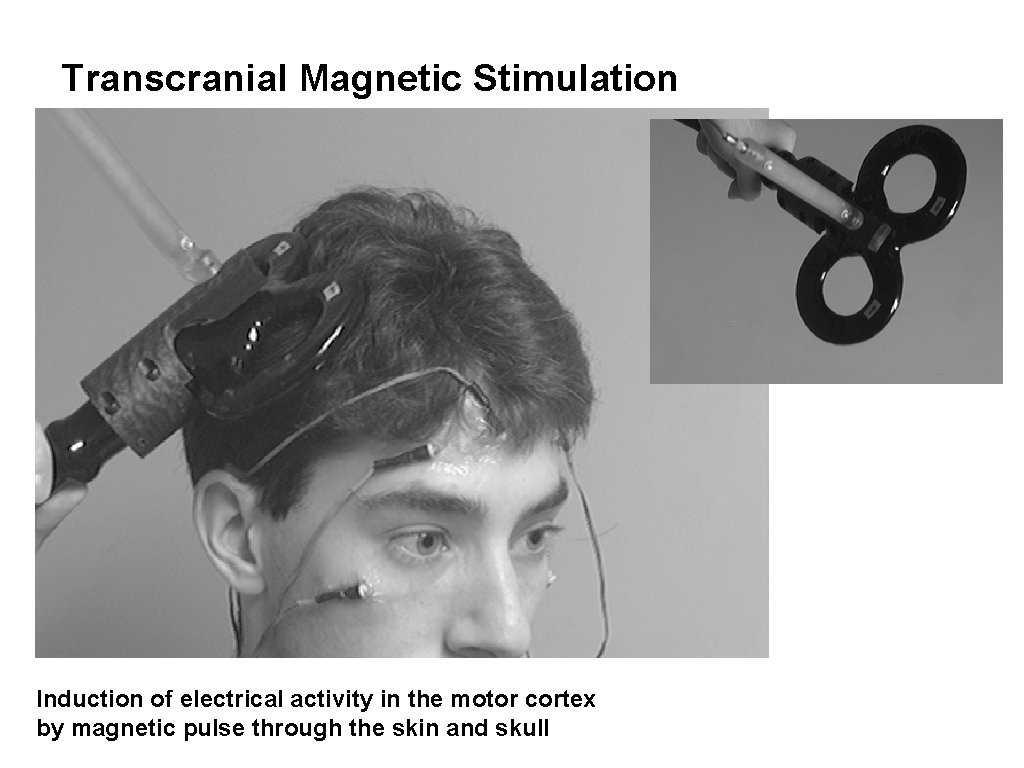
Transcranial Magnetic Stimulation Induction of electrical activity in the motor cortex by magnetic pulse through the skin and skull
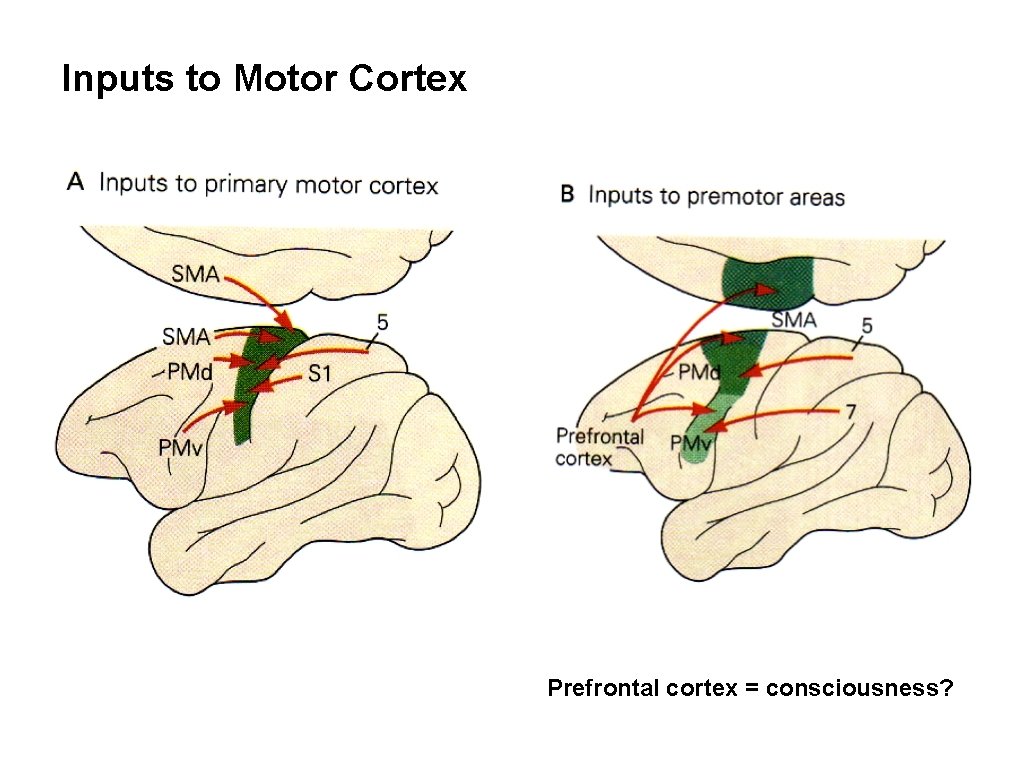
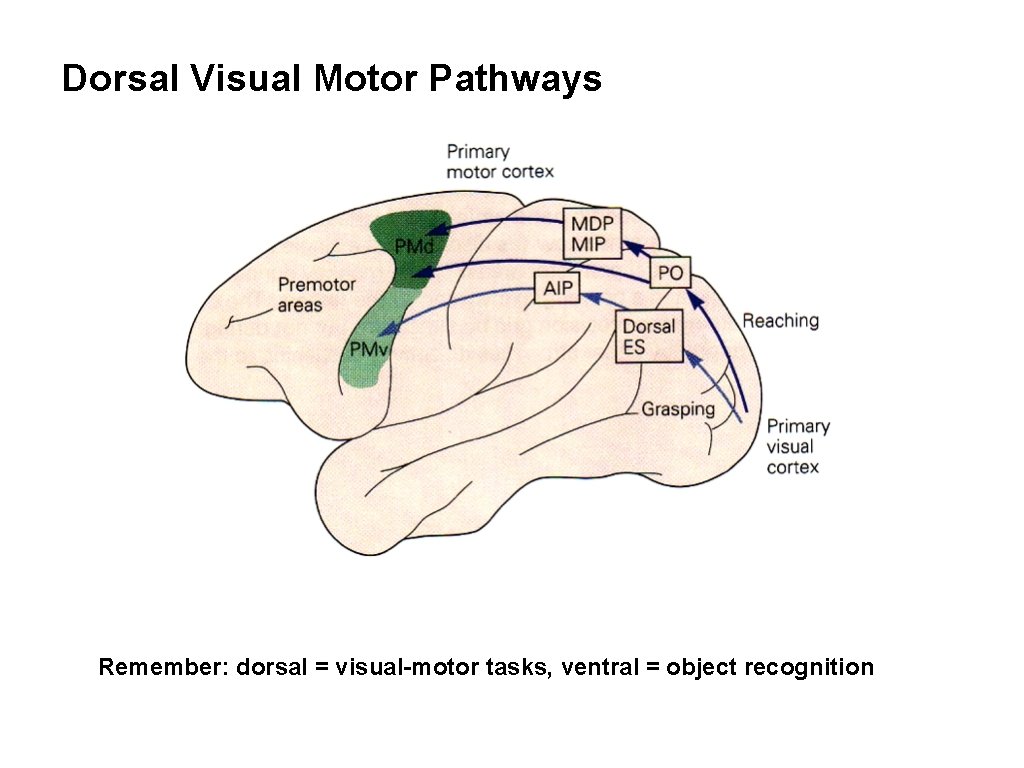
Inputs & Outputs of Motor Cortex Primary Motor Cortex M 1 Input: Primary Somatosensory Cortex (so M 1 cells have receptive fields) Input: Premotor Cortex Output: spinal cord, subcortical areas Premotor Cortex Input: Prefrontal cortex, Dorsal visual-motor pathway for reaching & grasping Output: spinal cord, M 1 cortex, subcortical areas
Inputs to Motor Cortex Prefrontal cortex = consciousness?
Dorsal Visual Motor Pathways Remember: dorsal = visual-motor tasks, ventral = object recognition
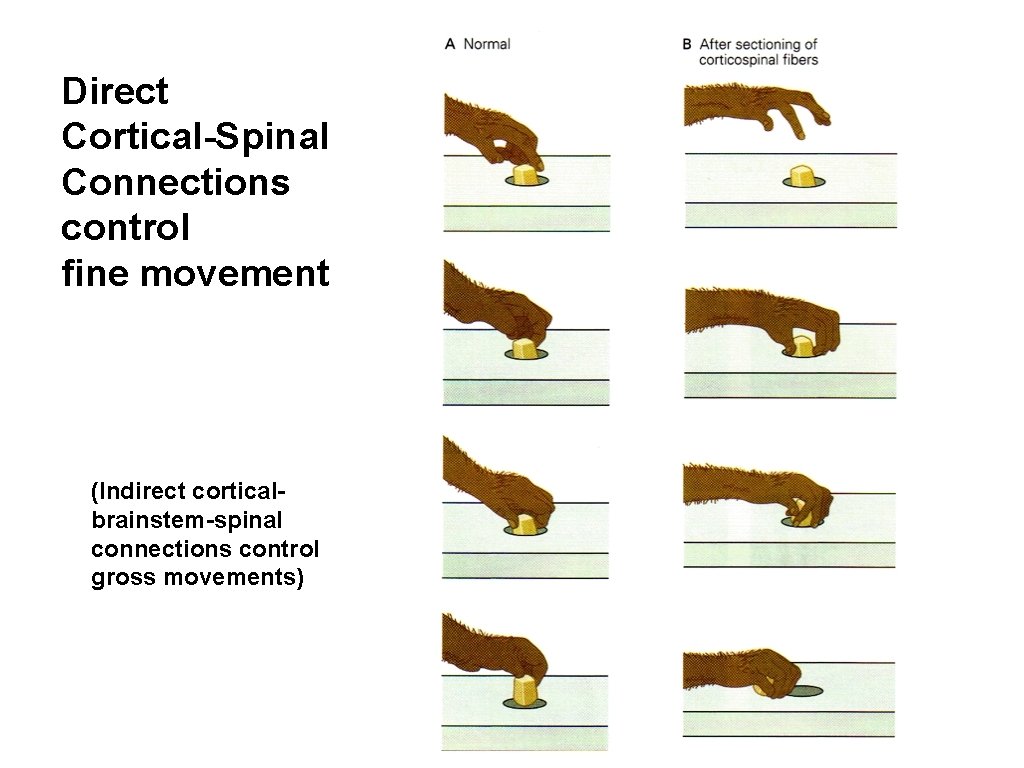
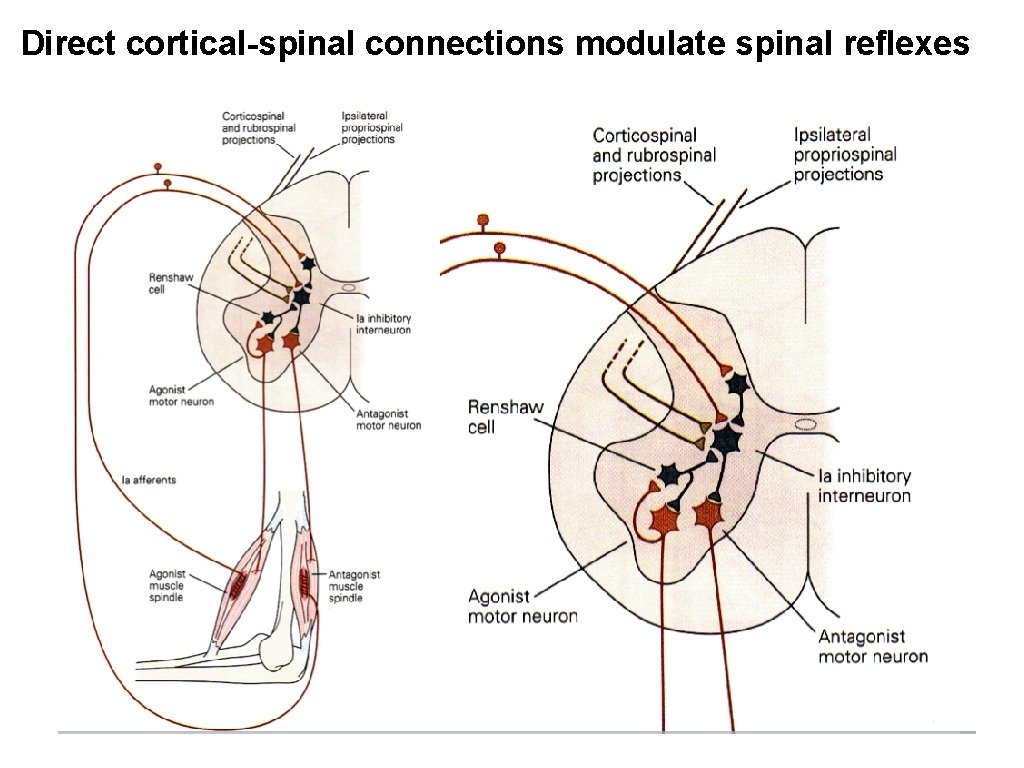
Direct Cortical-Spinal Connections control fine movement (Indirect corticalbrainstem-spinal connections control gross movements)
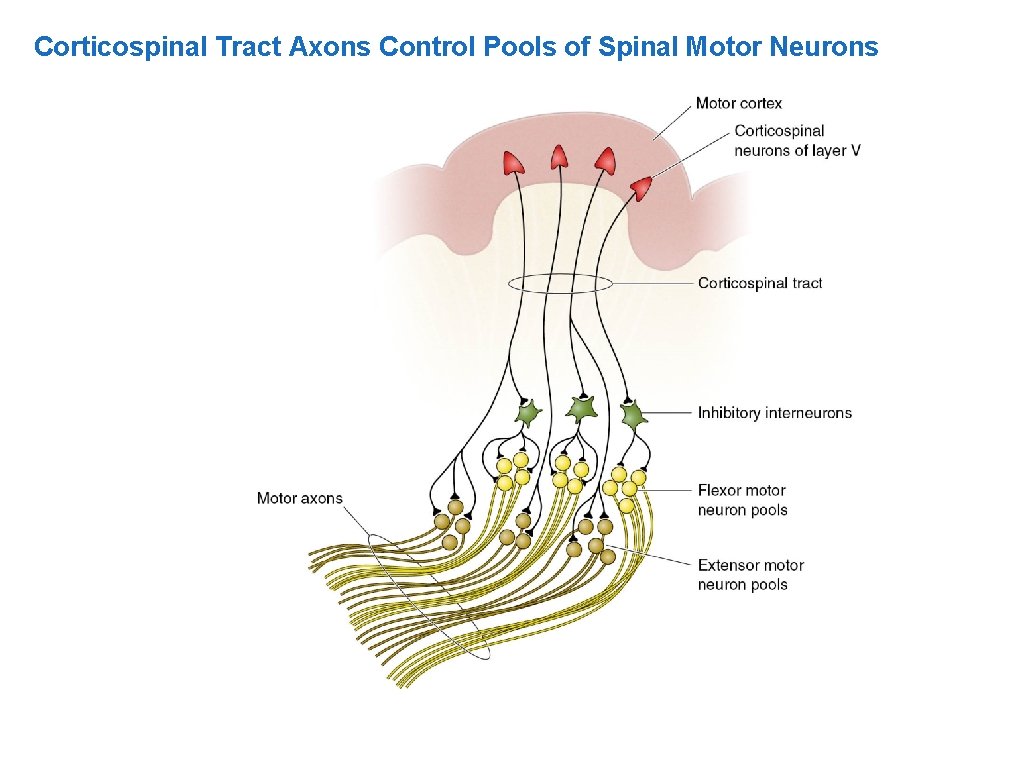
Corticospinal Tract Axons Control Pools of Spinal Motor Neurons
Direct cortical-spinal connections modulate spinal reflexes
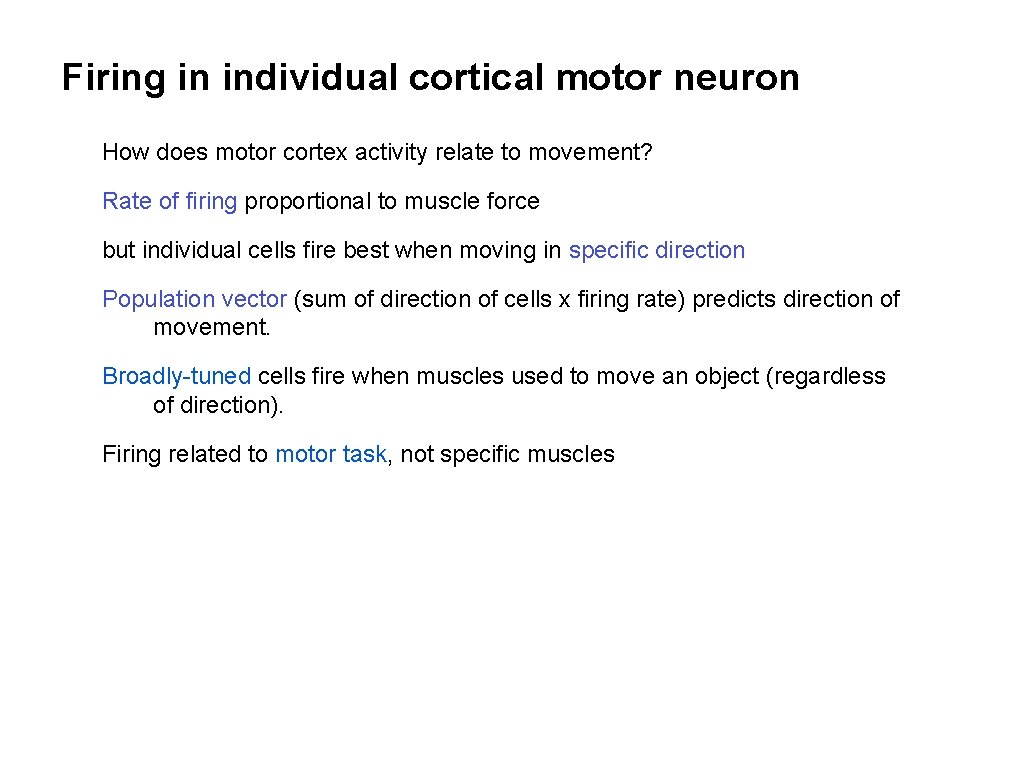
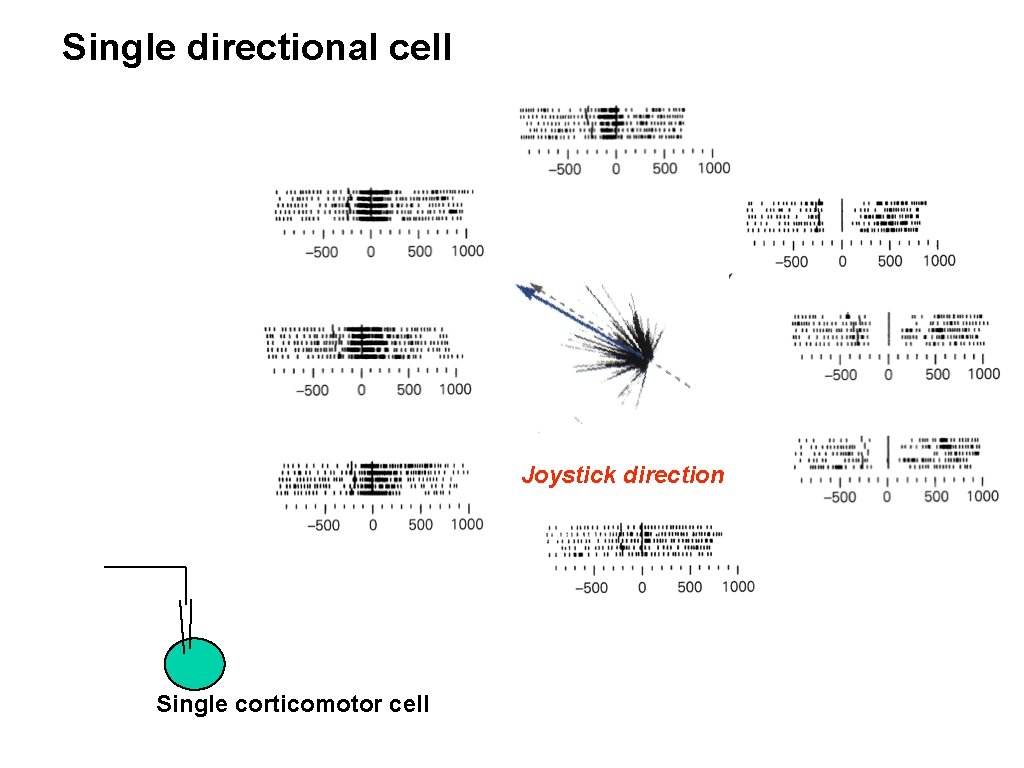
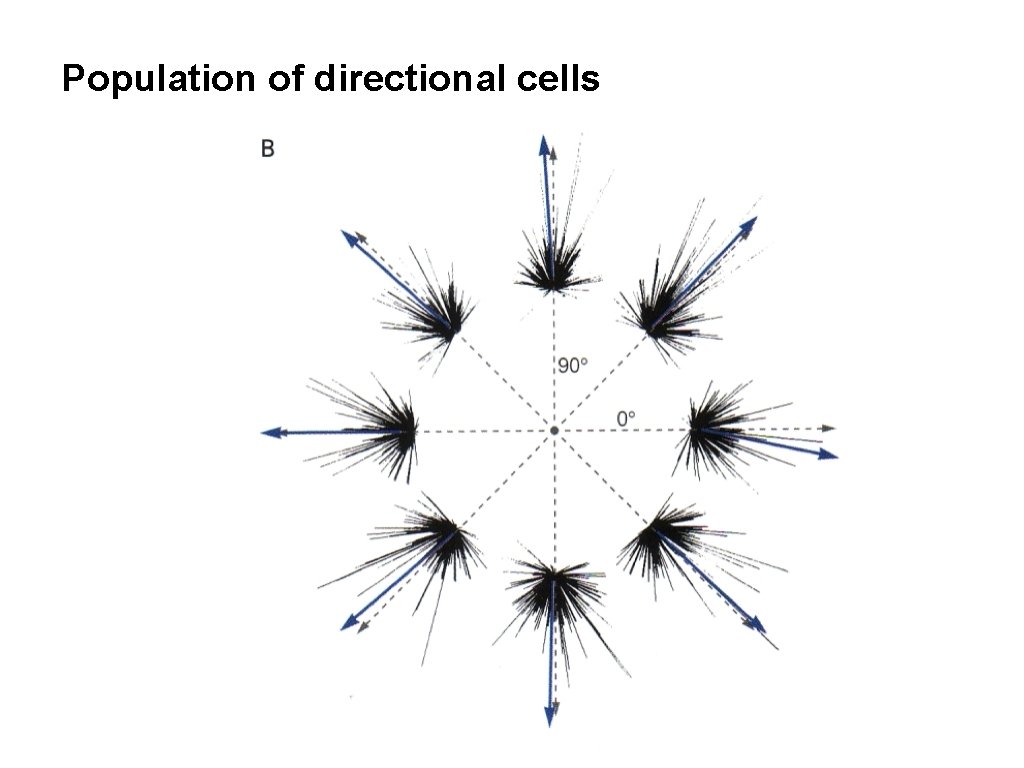
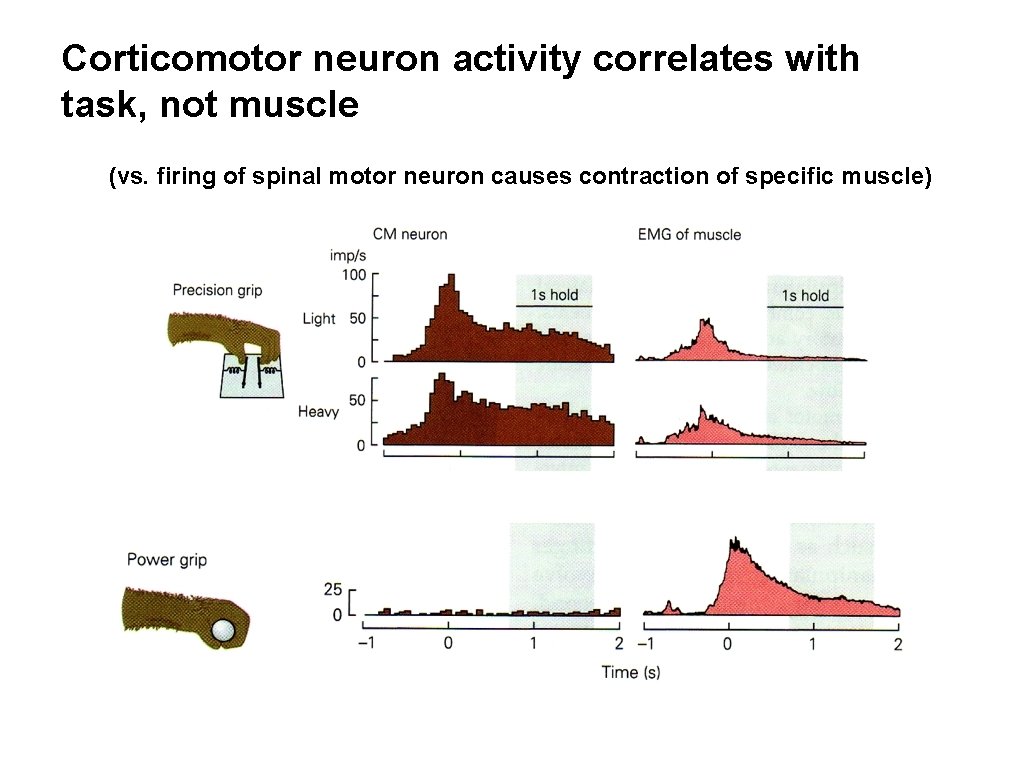
Firing in individual cortical motor neuron How does motor cortex activity relate to movement? Rate of firing proportional to muscle force but individual cells fire best when moving in specific direction Population vector (sum of direction of cells x firing rate) predicts direction of movement. Broadly-tuned cells fire when muscles used to move an object (regardless of direction). Firing related to motor task, not specific muscles
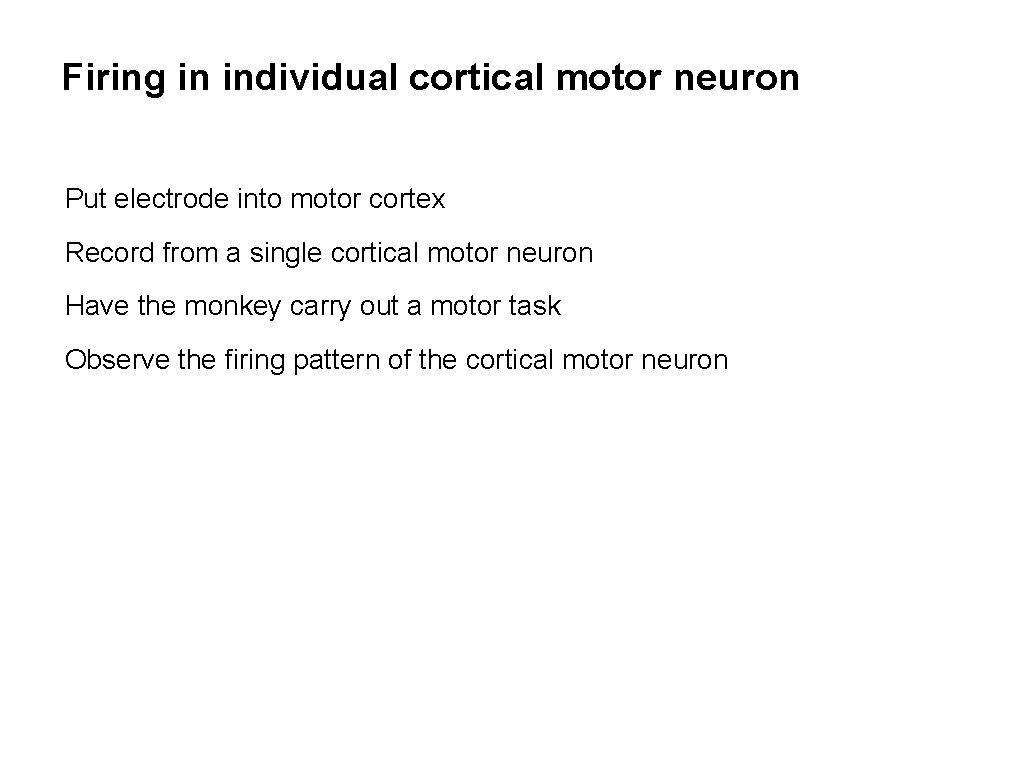
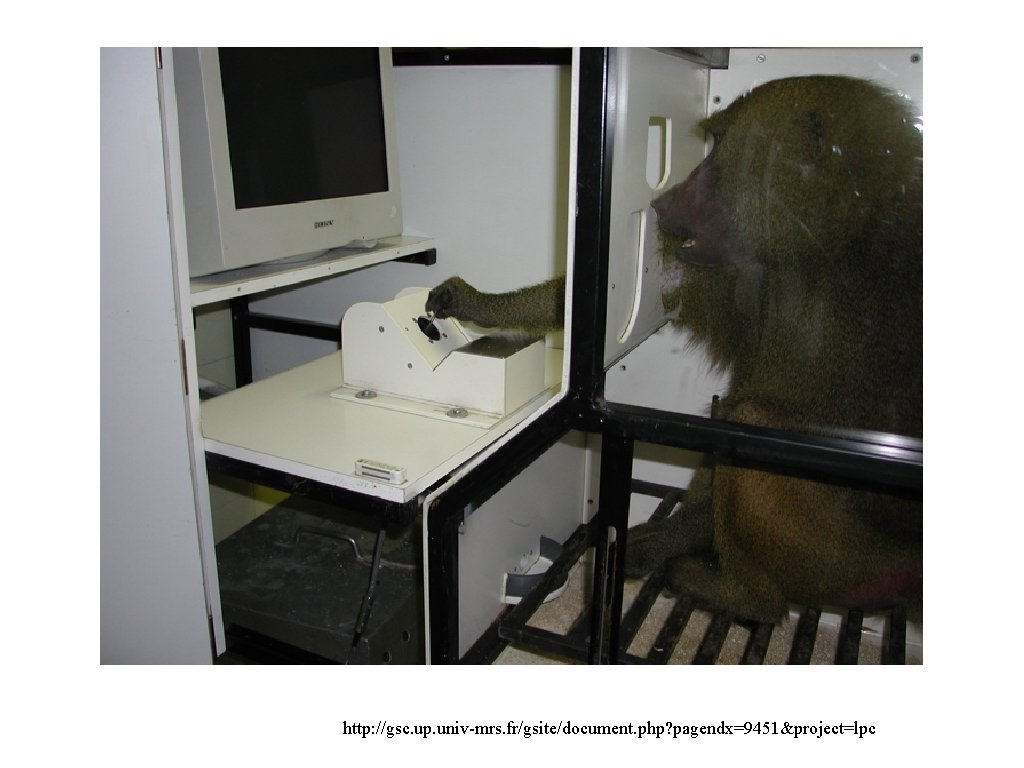
Firing in individual cortical motor neuron Put electrode into motor cortex Record from a single cortical motor neuron Have the monkey carry out a motor task Observe the firing pattern of the cortical motor neuron
http: //gsc. up. univ-mrs. fr/gsite/document. php? pagendx=9451&project=lpc
Single directional cell Joystick direction Single corticomotor cell
Population of directional cells
Corticomotor neuron activity correlates with task, not muscle (vs. firing of spinal motor neuron causes contraction of specific muscle)
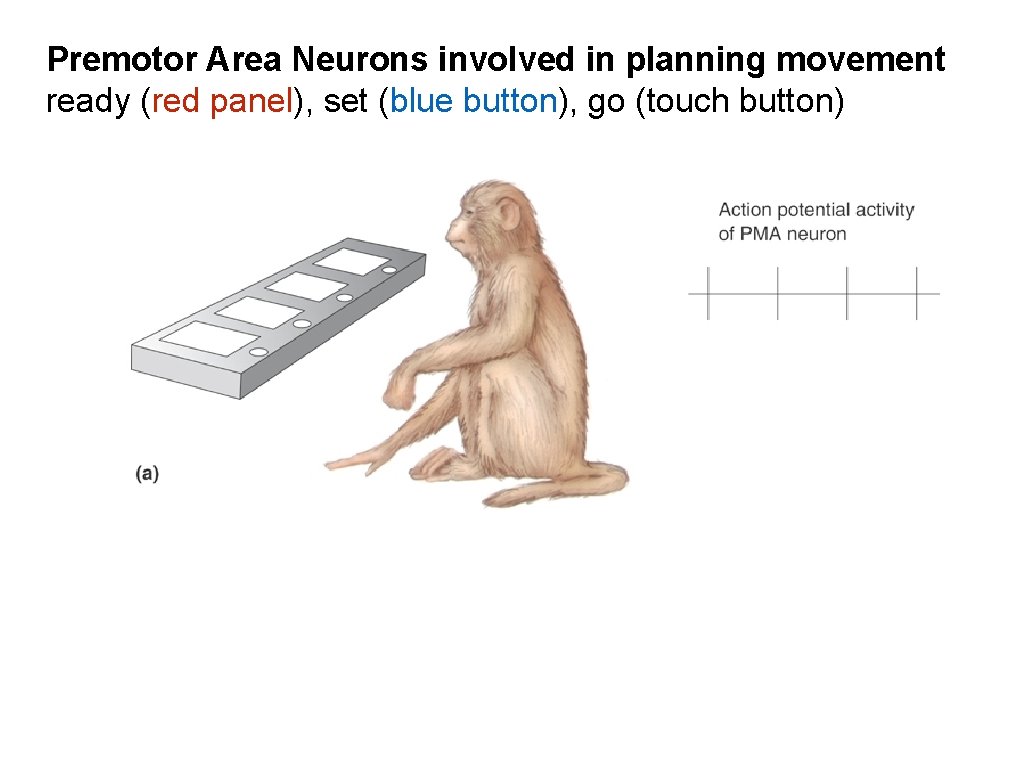
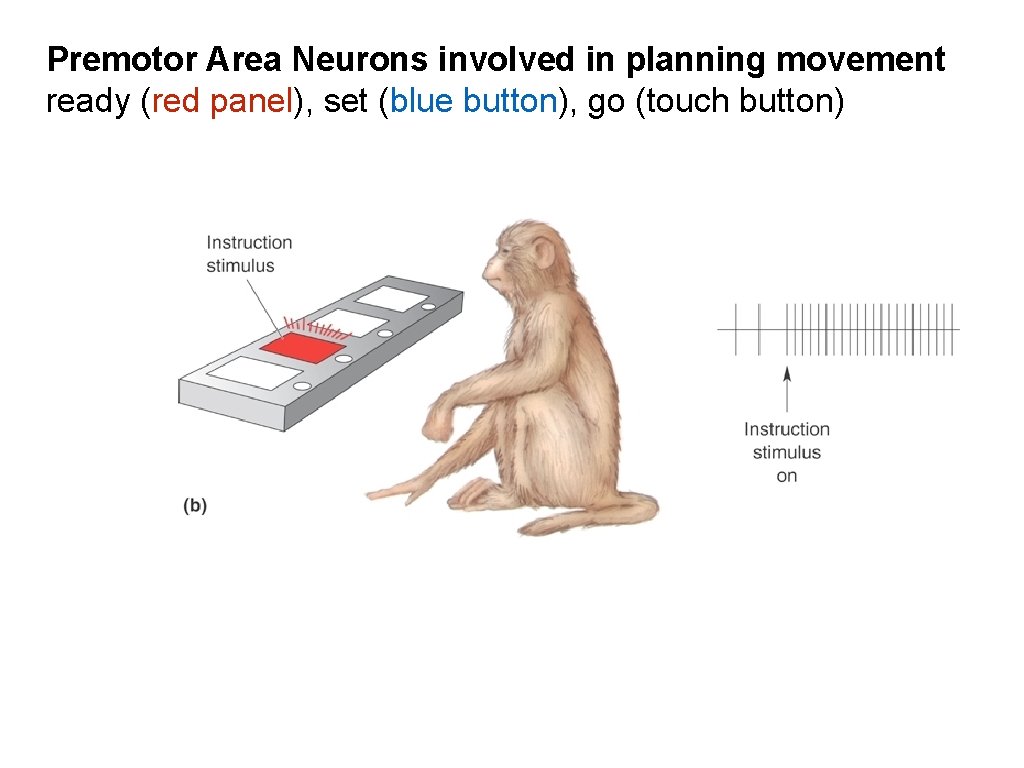
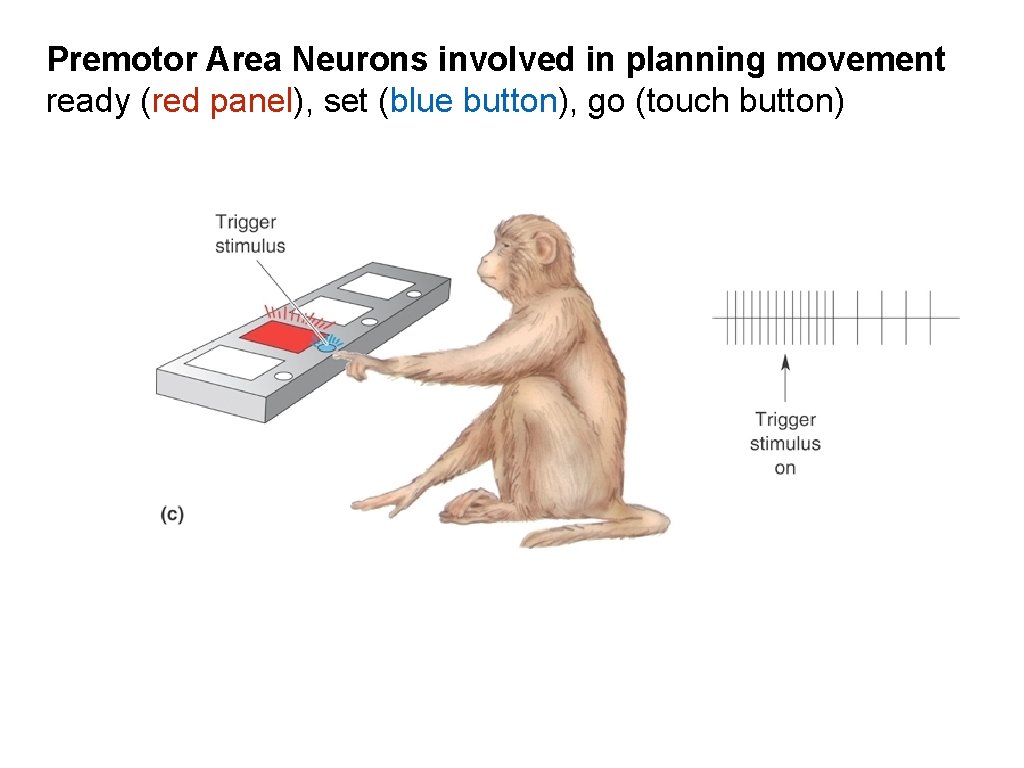
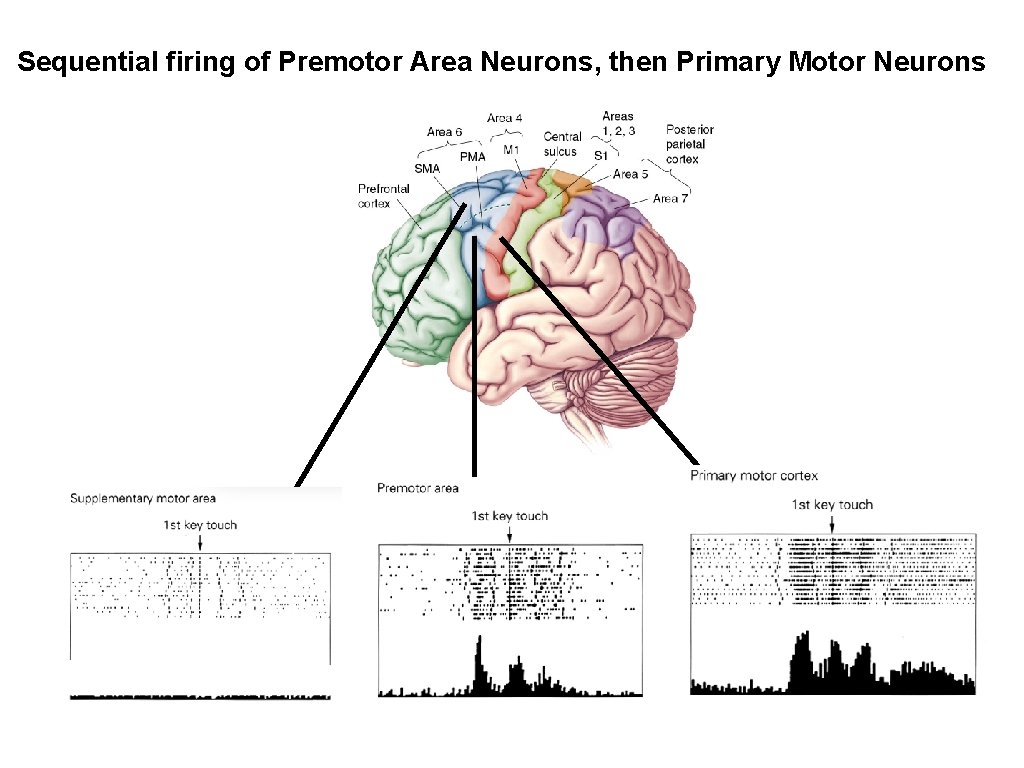
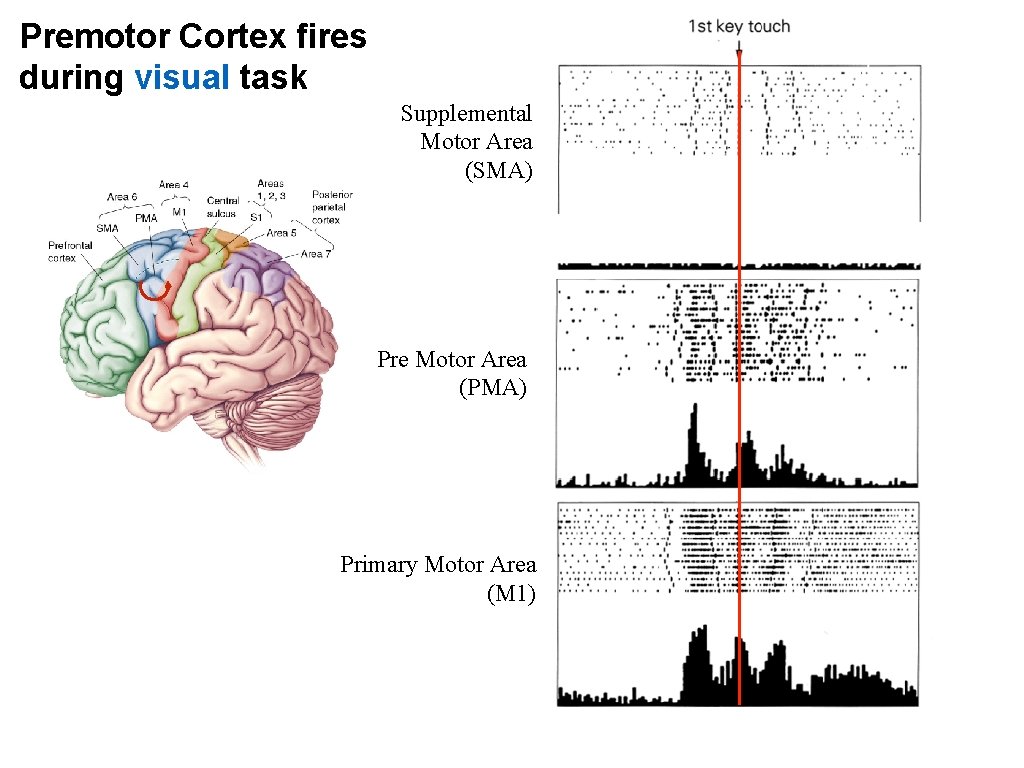
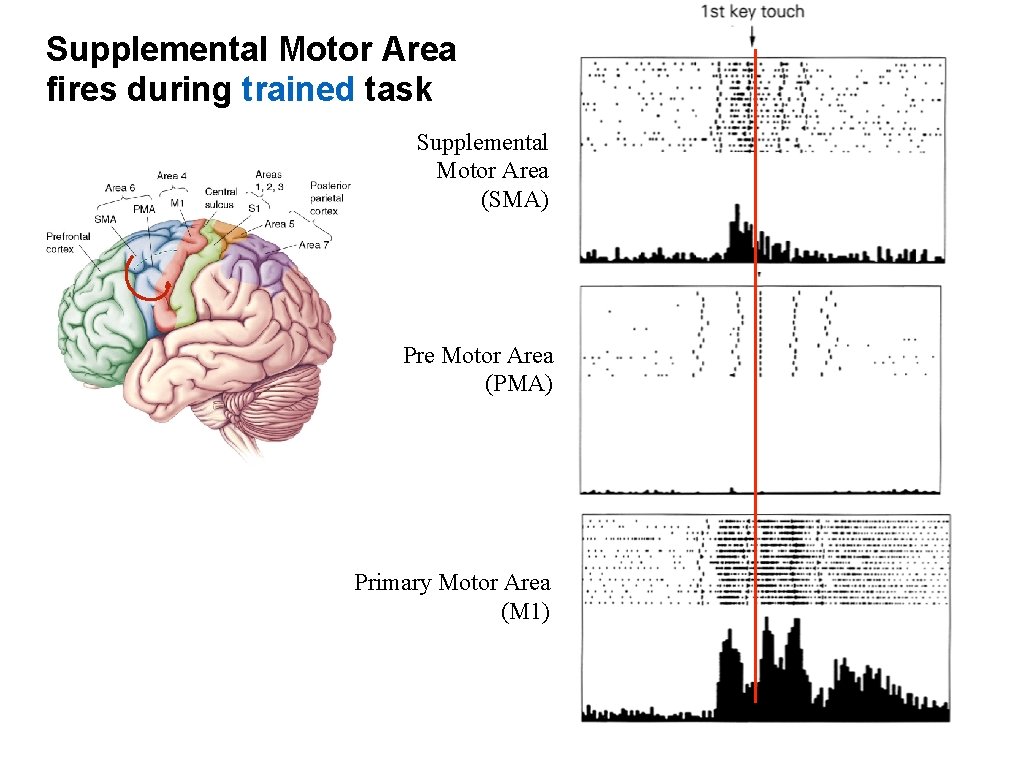
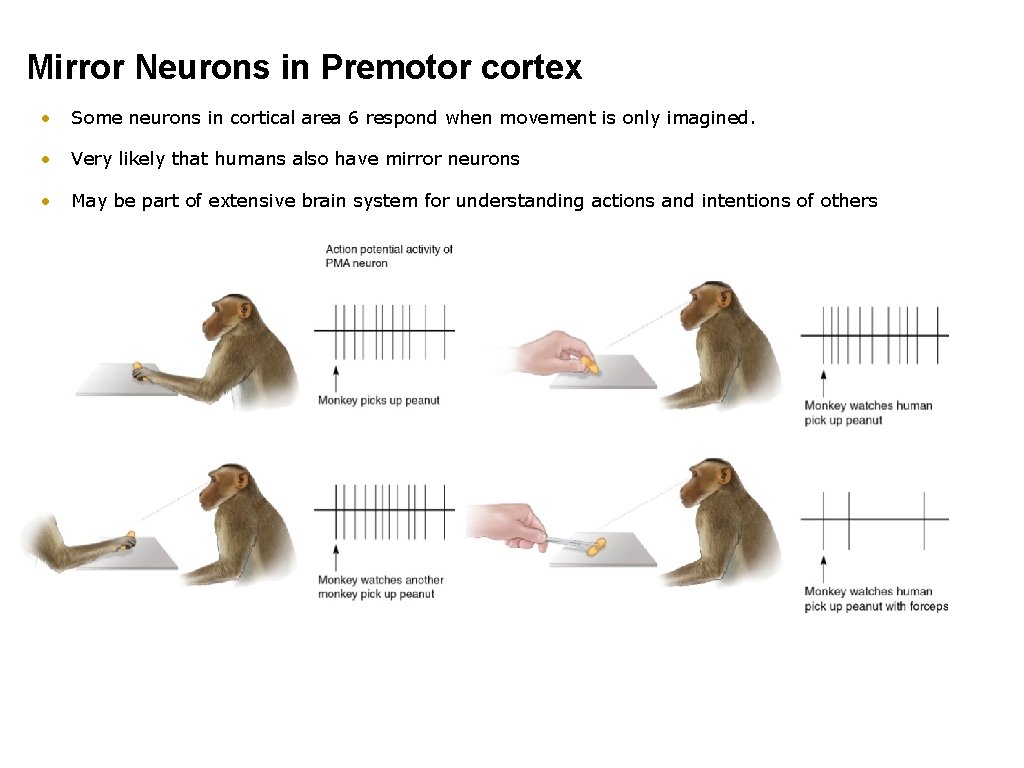
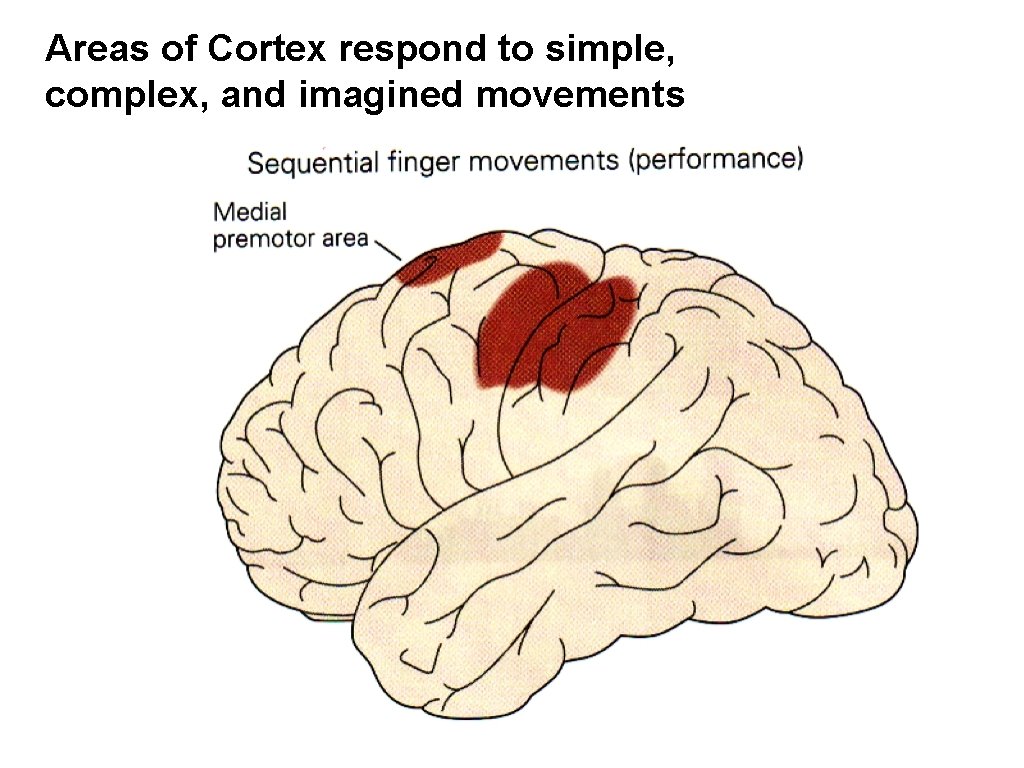
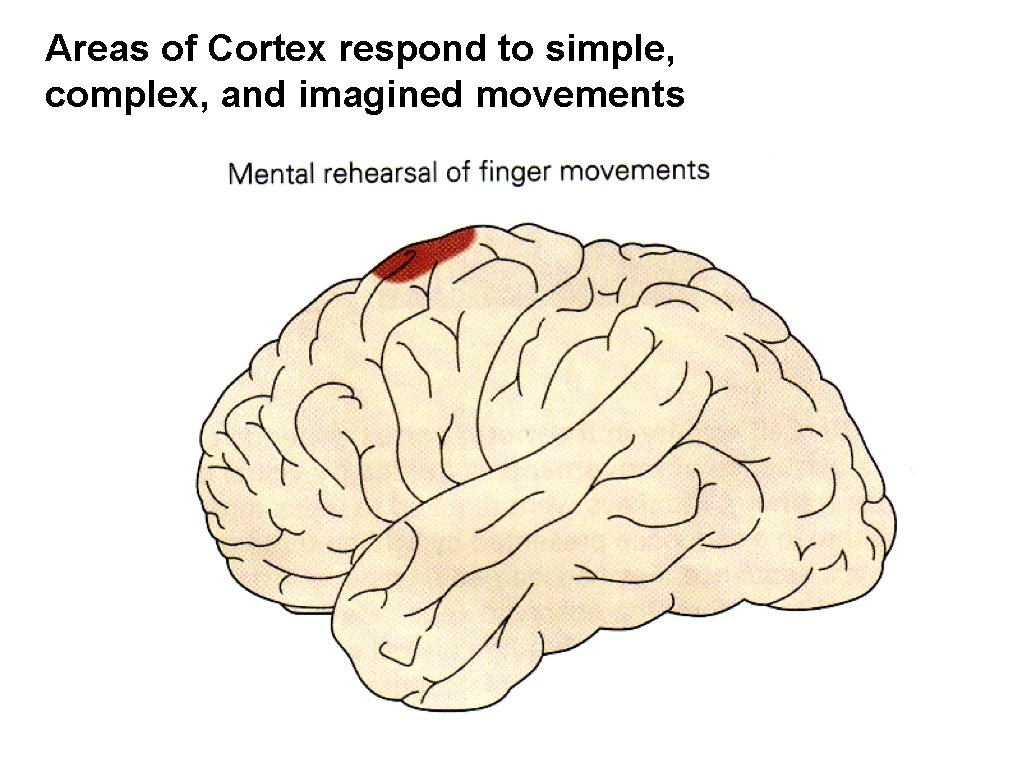
Firing in premotor cortical neuron Record from a single premotor cortical neuron and a single primary cortical neuron Have the monkey carry out a motor task Observe the timing of the firing of premotor vs motor cortical neurons Sequential firing of PMA and SMA prior to motor neuron PMA = visual task, SMA = trained (learned repetition) task Some PMA neurons fire when task is only imagined or observed (mirror neurons)
Premotor Area Neurons involved in planning movement ready (red panel), set (blue button), go (touch button)
Premotor Area Neurons involved in planning movement ready (red panel), set (blue button), go (touch button)
Premotor Area Neurons involved in planning movement ready (red panel), set (blue button), go (touch button)
Sequential firing of Premotor Area Neurons, then Primary Motor Neurons
Premotor Cortex fires during visual task Supplemental Motor Area (SMA) Pre Motor Area (PMA) Primary Motor Area (M 1)
Supplemental Motor Area fires during trained task Supplemental Motor Area (SMA) Pre Motor Area (PMA) Primary Motor Area (M 1)
Mirror Neurons in Premotor cortex • Some neurons in cortical area 6 respond when movement is only imagined. • Very likely that humans also have mirror neurons • May be part of extensive brain system for understanding actions and intentions of others
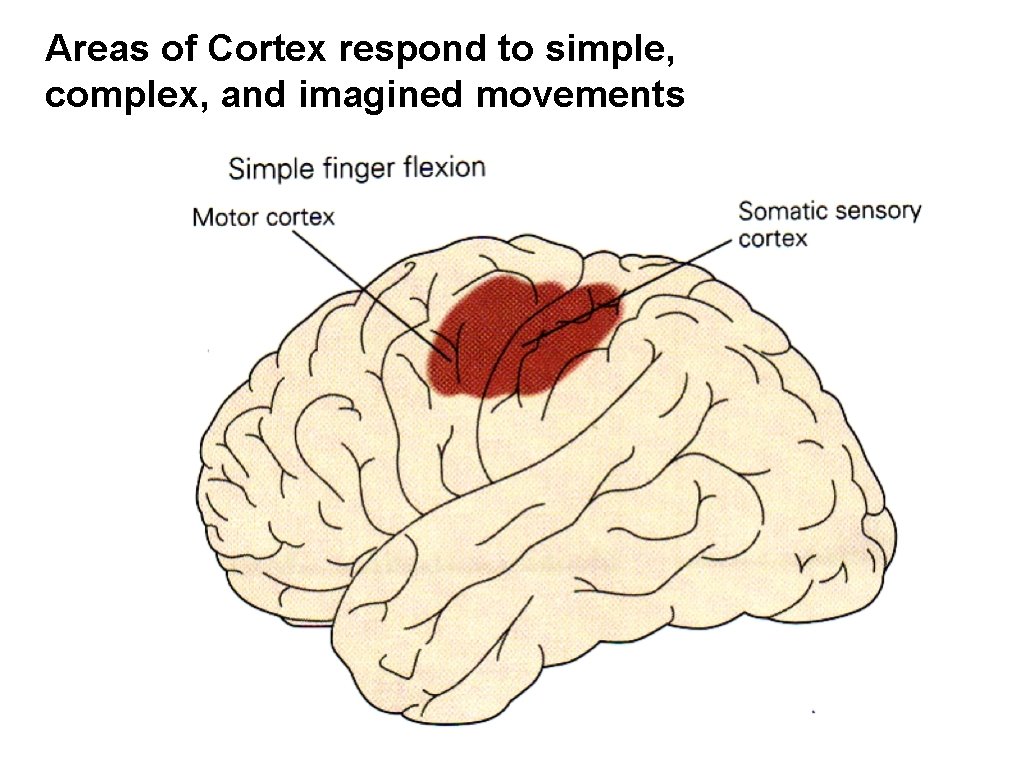
Areas of Cortex respond to simple, complex, and imagined movements
Areas of Cortex respond to simple, complex, and imagined movements
Areas of Cortex respond to simple, complex, and imagined movements
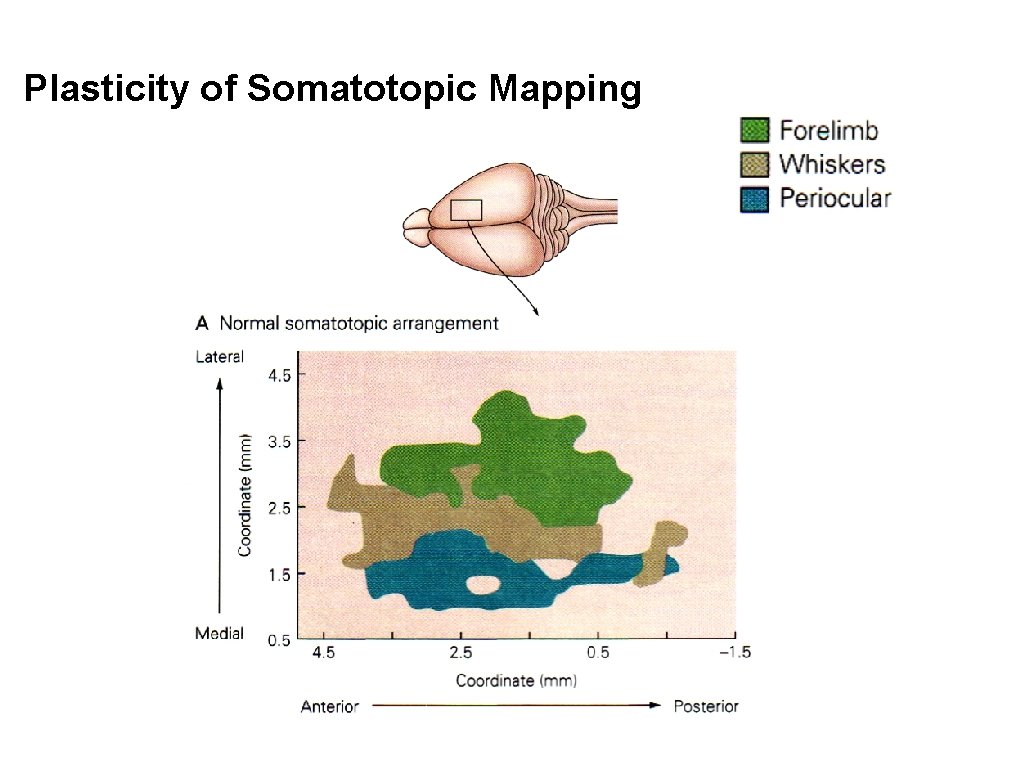
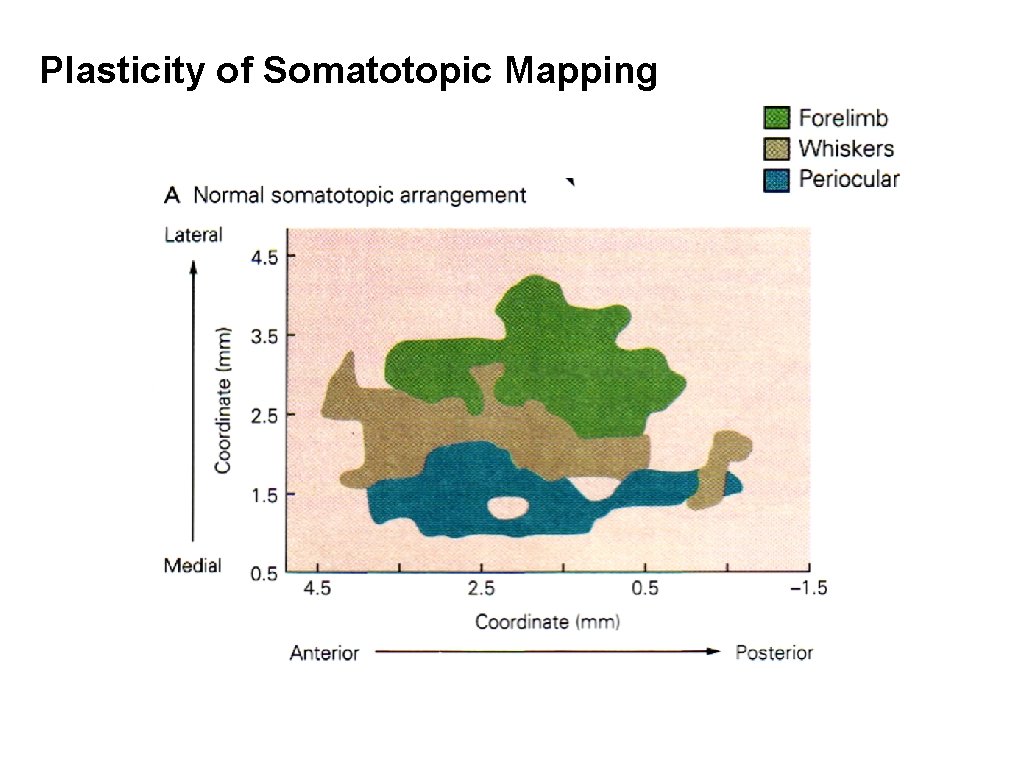
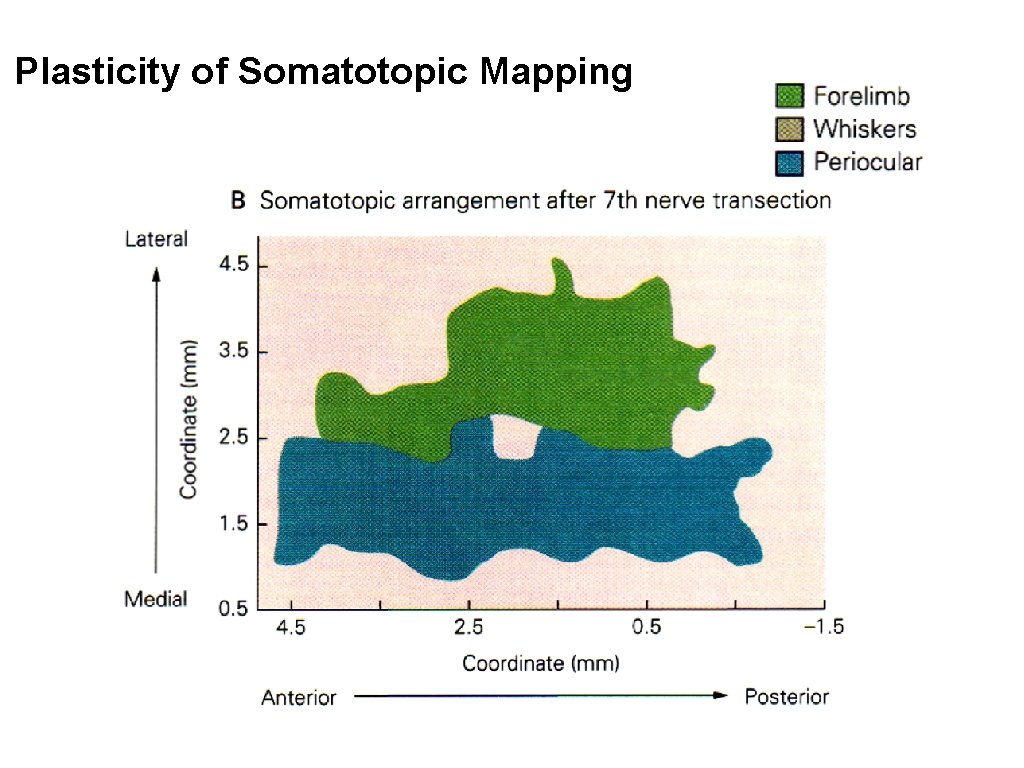
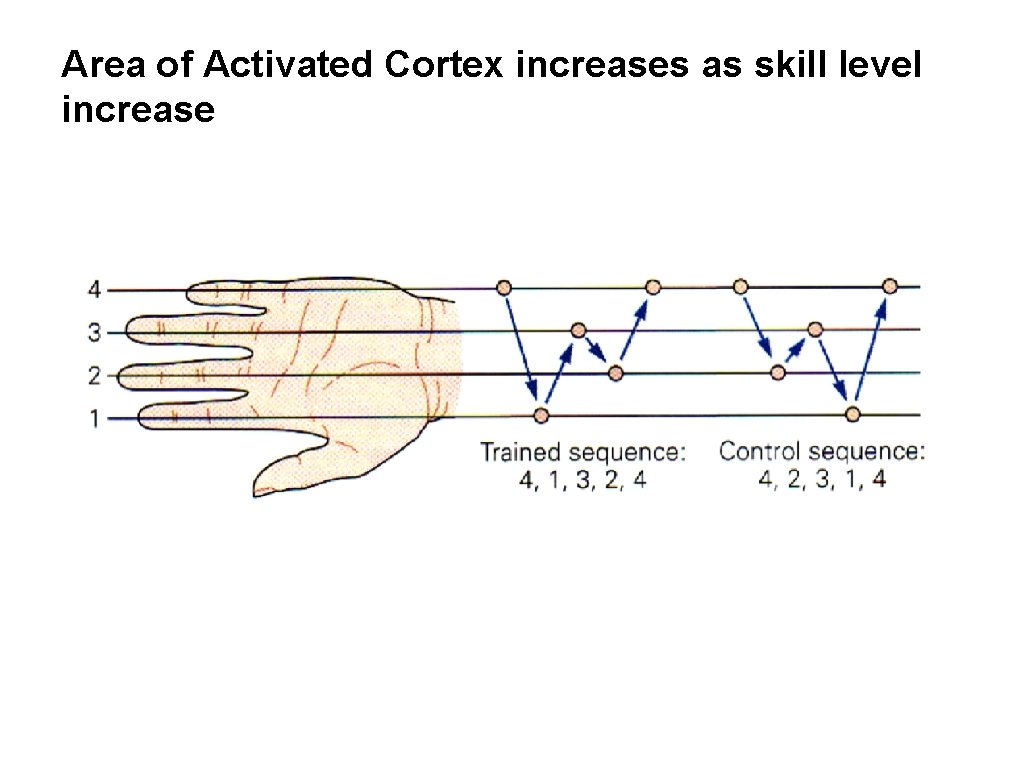
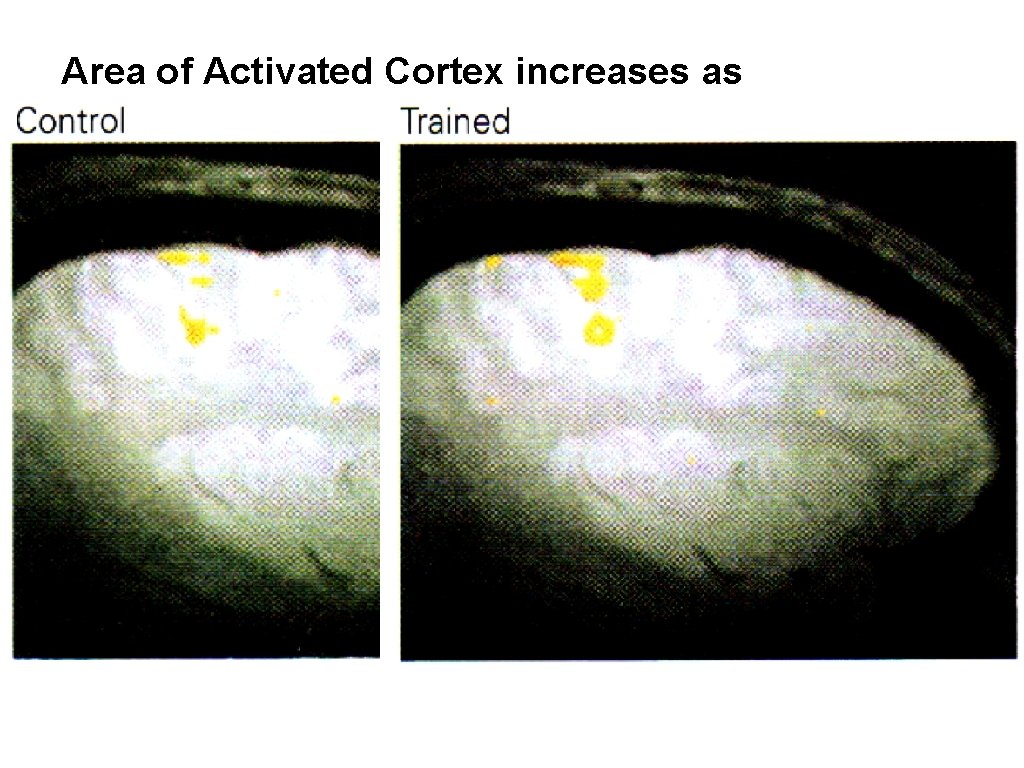
Plasticity of Motor Cortex Cutting sensory input from a body region causes reorganization of somatotopic map within a few hours (adjacent motor cortex appears to spread into denervated area -- probably revealing pre-existing overlapping neurons) Practice enlarges the area of motor cortex involved in a task
Plasticity of Somatotopic Mapping
Plasticity of Somatotopic Mapping
Plasticity of Somatotopic Mapping
Area of Activated Cortex increases as skill level increase
Area of Activated Cortex increases as skill level increase
Hierarchical Levels of Motor Control Cortex: Directional & intentional, task oriented, fine muscle movements, visually oriented, learned skills Brainstem (e. g. vestibular system): complex coordination of muscle groups, eg. Oculomotor, postural responses -- learned responses like vestibular adaptation Central Pattern generator: fires multiple muscles rhythmically over time to carry out complex movement Spinal Motor neuron: fires one muscle, responds to reflex
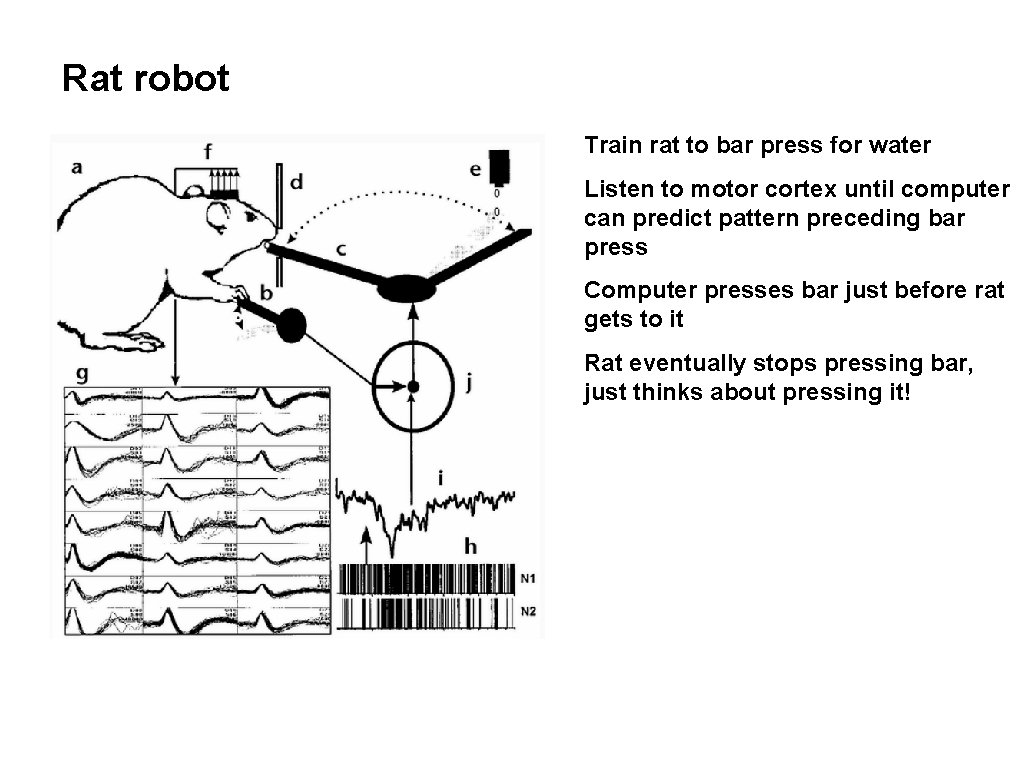
Rat robot Train rat to bar press for water Listen to motor cortex until computer can predict pattern preceding bar press Computer presses bar just before rat gets to it Rat eventually stops pressing bar, just thinks about pressing it!
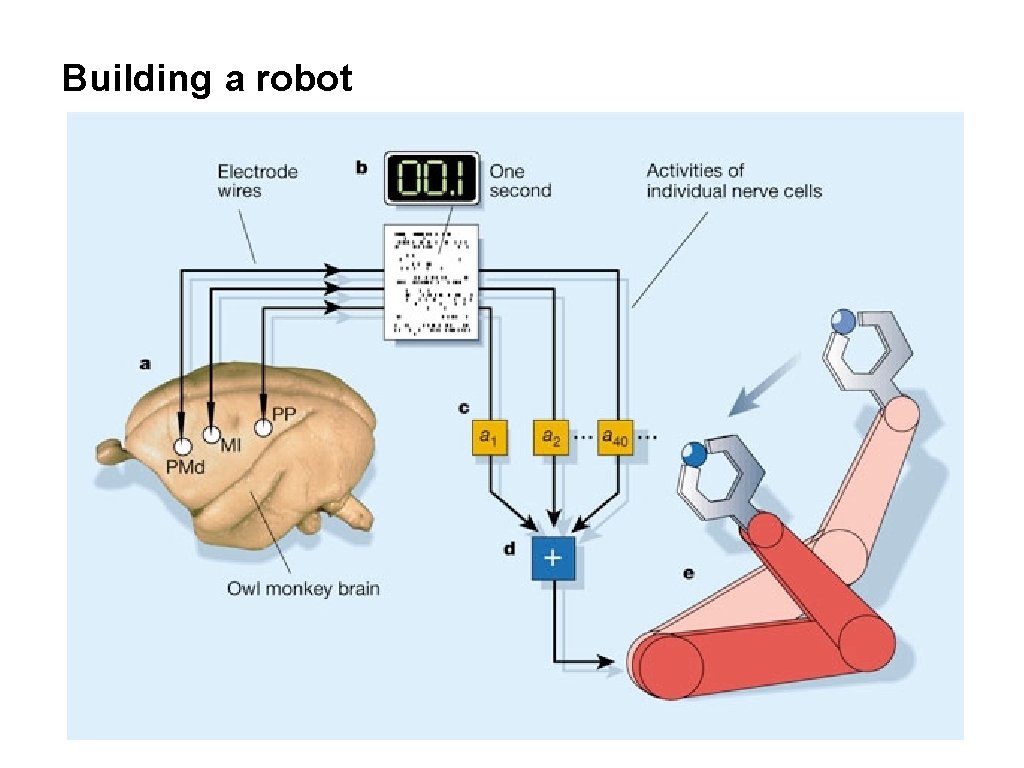
Building a robot
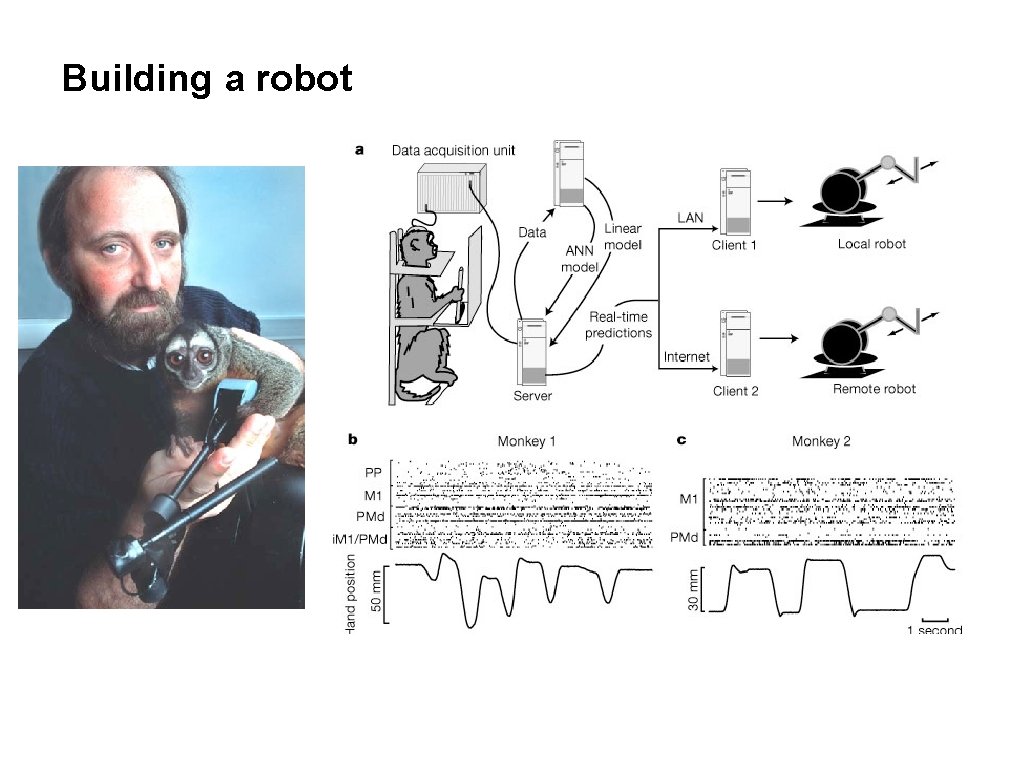
Building a robot
https: //www. youtube. com/watch? v=ZIIff. TH 5 D-E