
Hierarchical Levels of Anatomy There are six hierarchical

- Slides: 33
Hierarchical Levels of Anatomy ◦ There are six hierarchical levels of anatomy and physiology. ◦ (1) Chemical level ◦ (2) Cellular level ◦ (3) Tissue level ◦ (4) Organ level ◦ (5) Organ system level ◦ (6) Organism level
The Chemical Level ◦ The story of biology begins in chemistry. We must have a basic understanding of chemistry to understand biology. ◦ This is because, everything that is made up of matter (from rocks to human beings) is made up of atoms. ◦ The Chemical Level Includes: ◦ Atoms ◦ Molecules
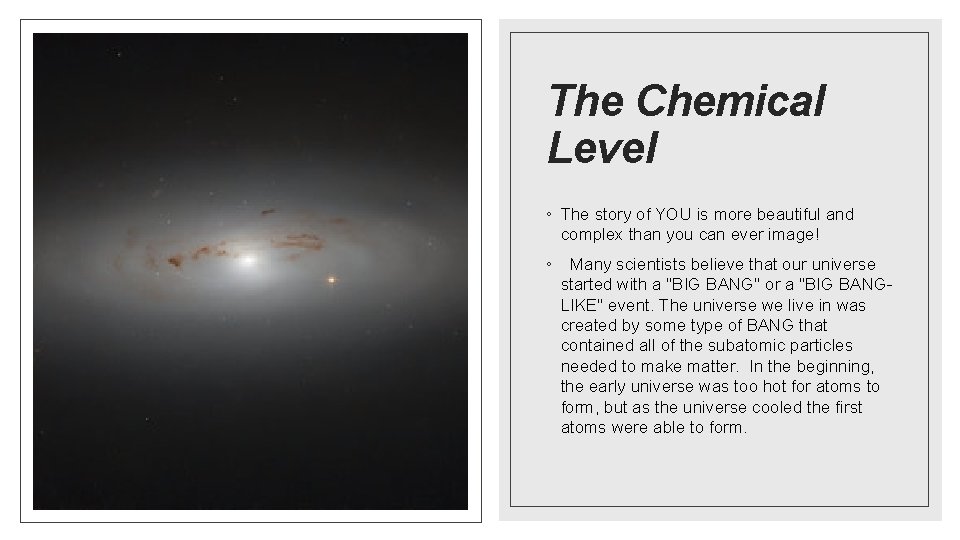
The Chemical Level ◦ The story of YOU is more beautiful and complex than you can ever image! ◦ Many scientists believe that our universe started with a "BIG BANG" or a "BIG BANGLIKE" event. The universe we live in was created by some type of BANG that contained all of the subatomic particles needed to make matter. In the beginning, the early universe was too hot for atoms to form, but as the universe cooled the first atoms were able to form.
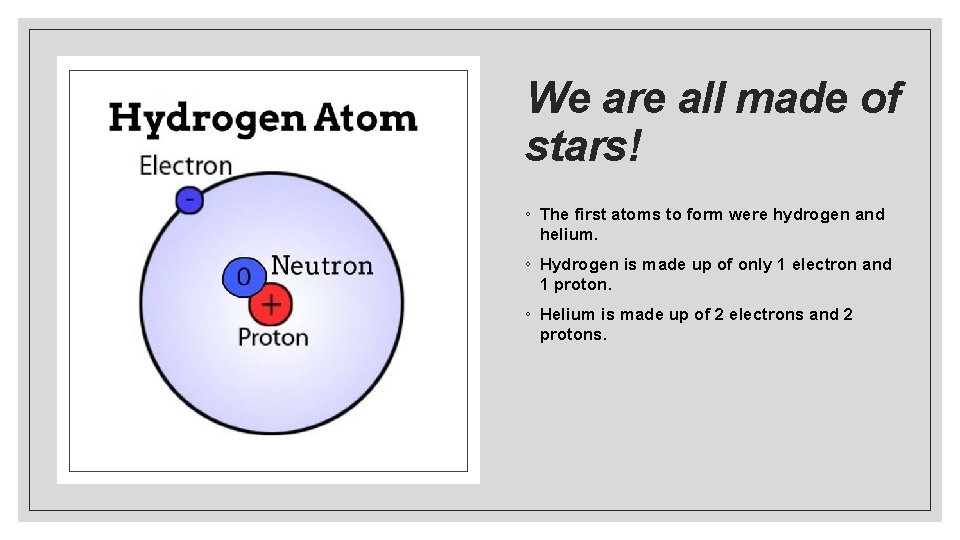
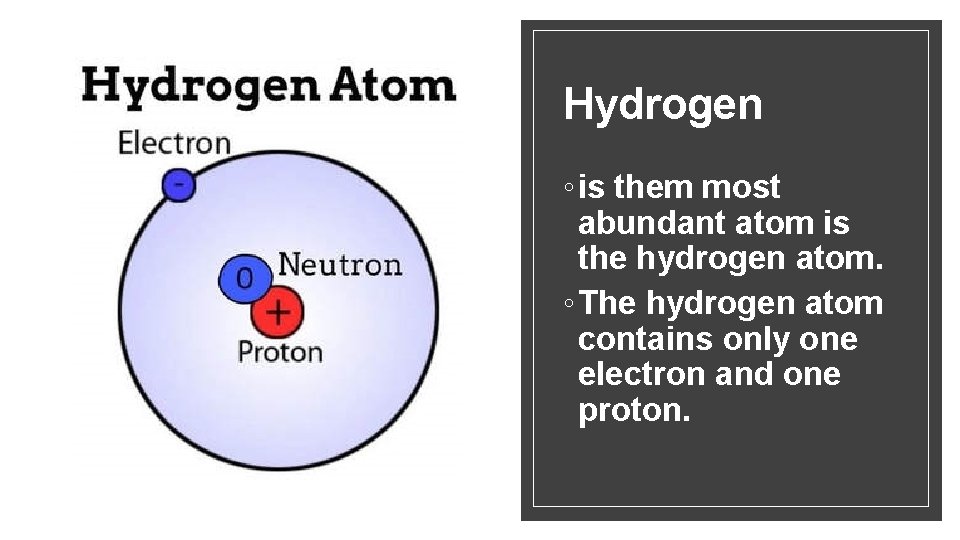
We are all made of stars! ◦ The first atoms to form were hydrogen and helium. ◦ Hydrogen is made up of only 1 electron and 1 proton. ◦ Helium is made up of 2 electrons and 2 protons.
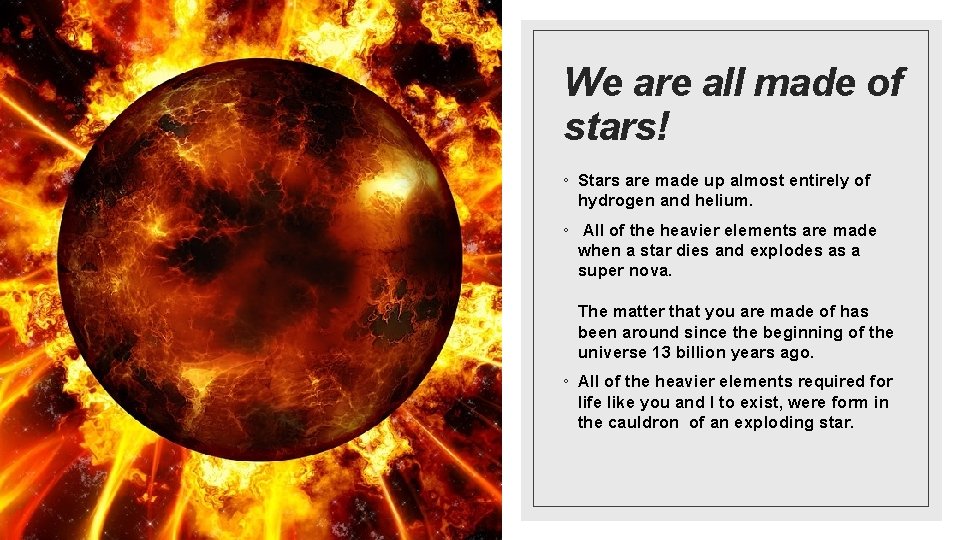
We are all made of stars! ◦ Stars are made up almost entirely of hydrogen and helium. ◦ All of the heavier elements are made when a star dies and explodes as a super nova. The matter that you are made of has been around since the beginning of the universe 13 billion years ago. ◦ All of the heavier elements required for life like you and I to exist, were form in the cauldron of an exploding star.
Chemical Level: ATOMS ARE THE FUNDAMENTAL UNIT OF MATTER. THE ATOM ALL MATTER IS COMPOSED ENTIRELY OF ATOMS ARE MADE UP OF A COMBINATION OF SUBATOMIC PARTICLES, WHICH ARE PROTONS, ELECTRONS AND NEUTRONS.
Chemical Level: PROTONS ARE POSITIVELY CHARGED AND ARE FOUND AT THE NUCLEUS (CENTER) OF THE ATOM ELECTRONS ARE NEGATIVELY CHARGED AND ARE FOUND ON THE OUTER PORTIONS OF THE ATOM. NEUTRONS HAVE NO CHARGE AND ARE FOUND IN THE NUCLEUS OF THE ATOM.
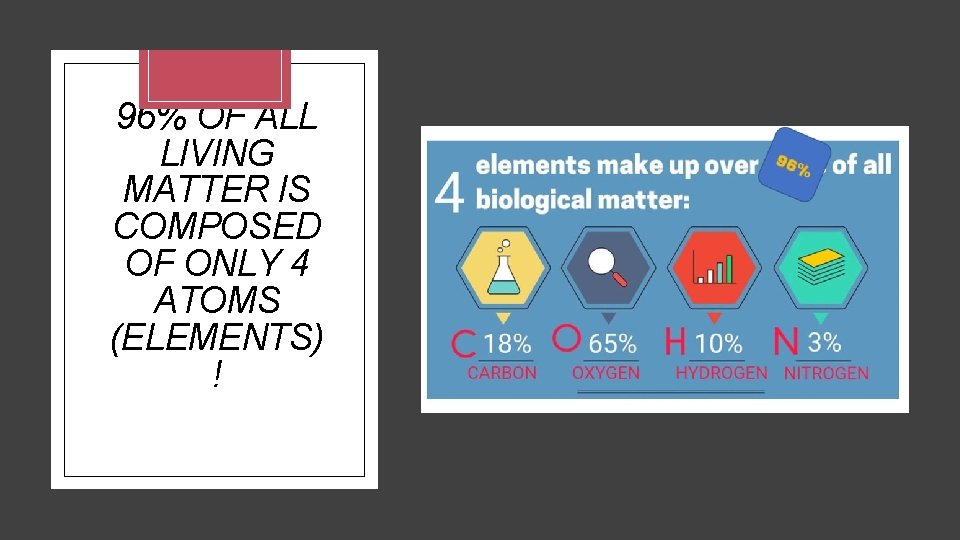
96% OF ALL LIVING MATTER IS COMPOSED OF ONLY 4 ATOMS (ELEMENTS) !
Hydrogen ◦ is them most abundant atom is the hydrogen atom. ◦ The hydrogen atom contains only one electron and one proton.
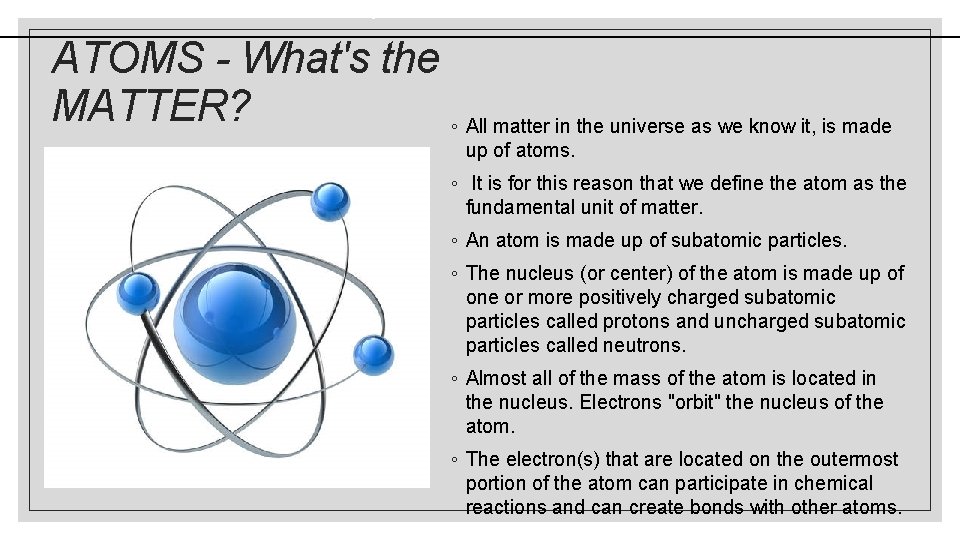
will equal the number of electrons. ATOMS - What's the MATTER? ◦ All matter in the universe as we know it, is made up of atoms. ◦ It is for this reason that we define the atom as the fundamental unit of matter. ◦ An atom is made up of subatomic particles. ◦ The nucleus (or center) of the atom is made up of one or more positively charged subatomic particles called protons and uncharged subatomic particles called neutrons. ◦ Almost all of the mass of the atom is located in the nucleus. Electrons "orbit" the nucleus of the atom. ◦ The electron(s) that are located on the outermost portion of the atom can participate in chemical reactions and can create bonds with other atoms.
WHAT IS A MOLECULE? When an atom forms a bond with one or more other atoms, it is called a molecule. A molecule is made up of one or more atoms. Sometimes these molecules are small and simple. We can take oxygen as an example. Oxygen is a gas that is made up of simply 2 oxygen molecules that are bound together (02). Some molecules consist of thousands of atoms (macromolecules) like DNA and proteins.
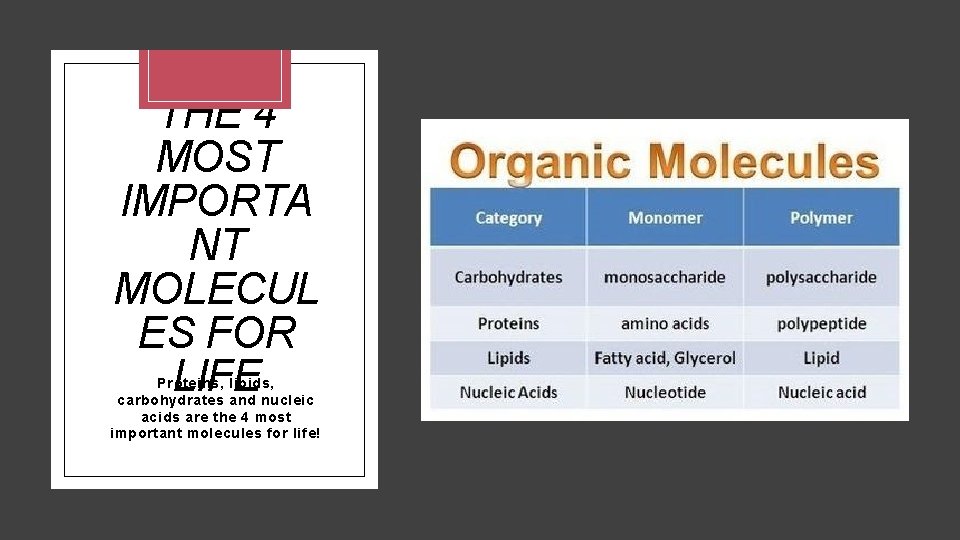
THE 4 MOST IMPORTA NT MOLECUL ES FOR LIFE Proteins, lipids, carbohydrates and nucleic acids are the 4 most important molecules for life!
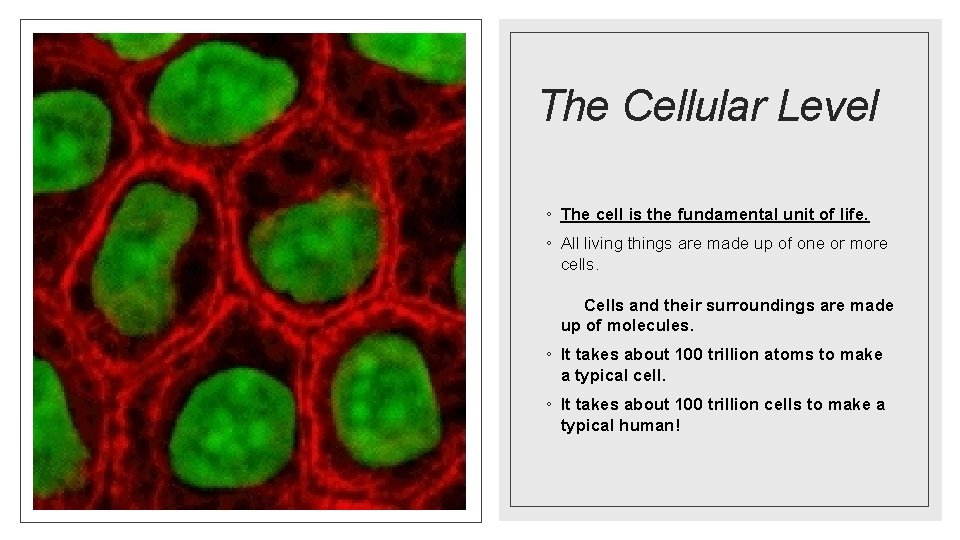
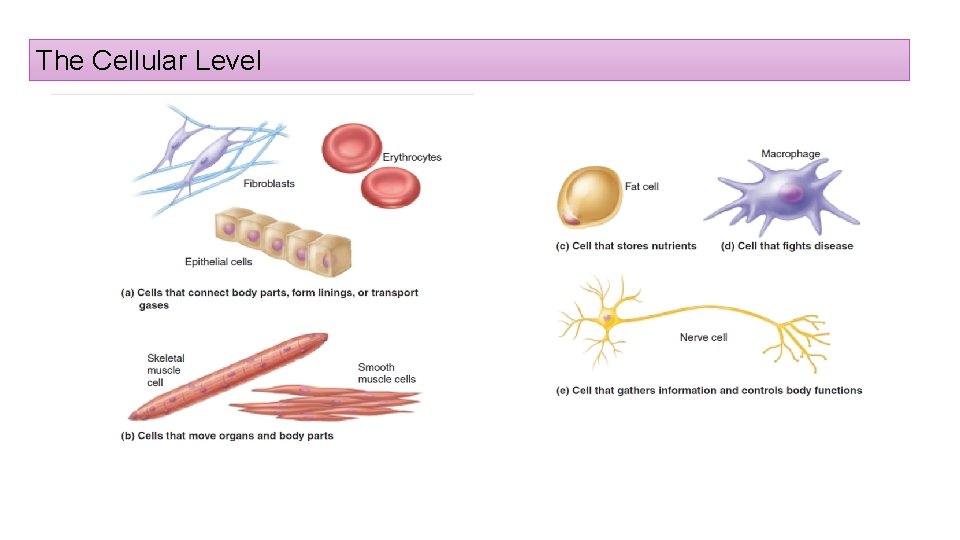
The Cellular Level ◦ The cell is the fundamental unit of life. ◦ All living things are made up of one or more cells. Cells and their surroundings are made up of molecules. ◦ It takes about 100 trillion atoms to make a typical cell. ◦ It takes about 100 trillion cells to make a typical human!
The Cellular Level
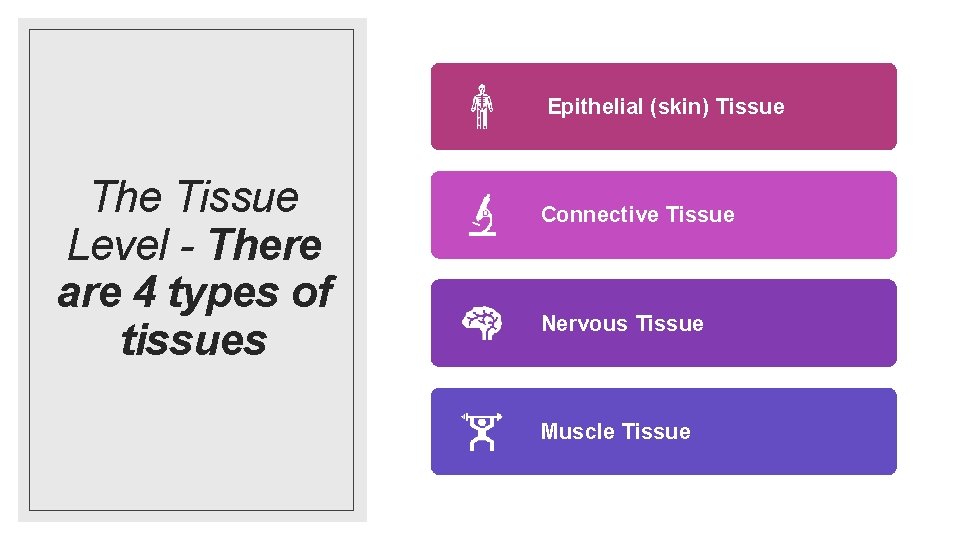
Epithelial (skin) Tissue The Tissue Level - There are 4 types of tissues Connective Tissue Nervous Tissue Muscle Tissue
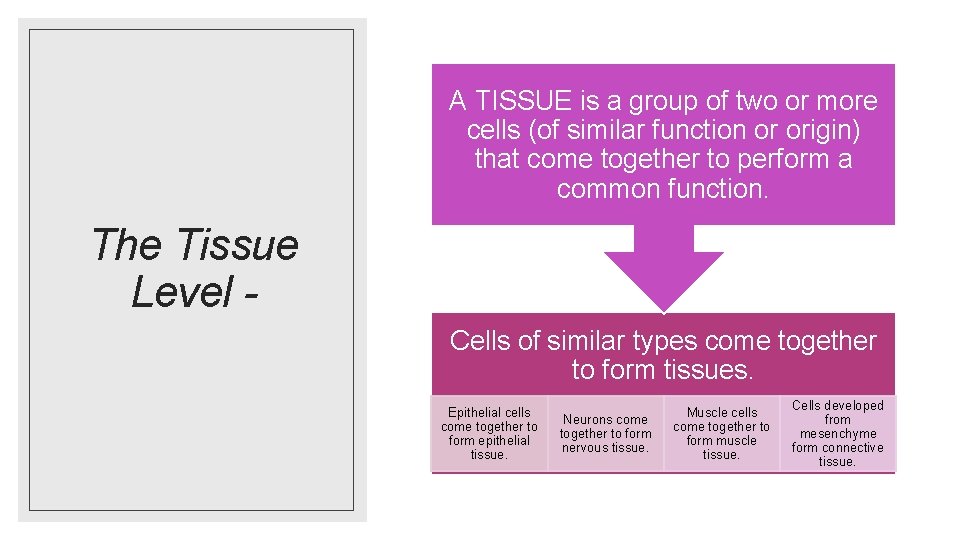
A TISSUE is a group of two or more cells (of similar function or origin) that come together to perform a common function. The Tissue Level Cells of similar types come together to form tissues. Epithelial cells come together to form epithelial tissue. Neurons come together to form nervous tissue. Muscle cells come together to form muscle tissue. Cells developed from mesenchyme form connective tissue.
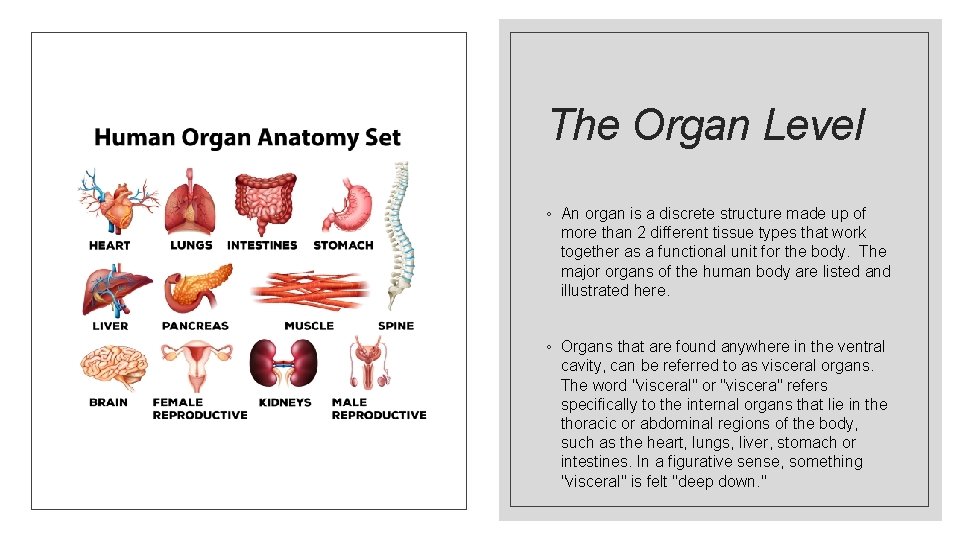
The Organ Level ◦ An organ is a discrete structure made up of more than 2 different tissue types that work together as a functional unit for the body. The major organs of the human body are listed and illustrated here. ◦ Organs that are found anywhere in the ventral cavity, can be referred to as visceral organs. The word "visceral" or "viscera" refers specifically to the internal organs that lie in the thoracic or abdominal regions of the body, such as the heart, lungs, liver, stomach or intestines. In a figurative sense, something "visceral" is felt "deep down. "
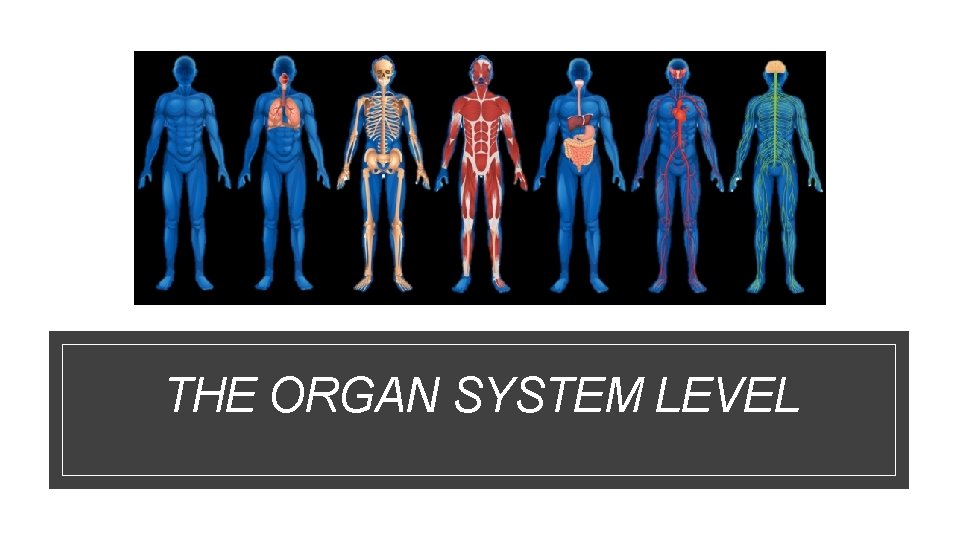
THE ORGAN SYSTEM LEVEL
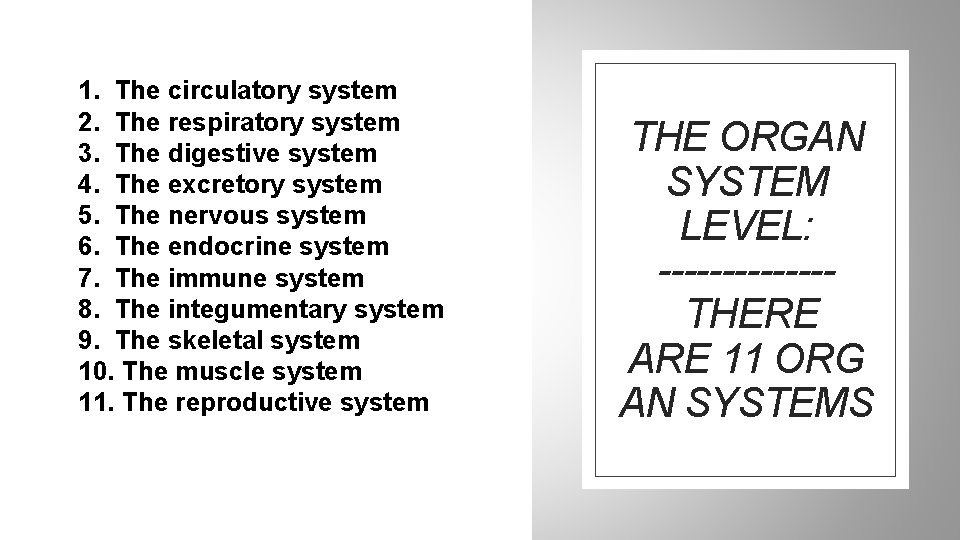
1. The circulatory system 2. The respiratory system 3. The digestive system 4. The excretory system 5. The nervous system 6. The endocrine system 7. The immune system 8. The integumentary system 9. The skeletal system 10. The muscle system 11. The reproductive system THE ORGAN SYSTEM LEVEL: -------THERE ARE 11 ORG AN SYSTEMS
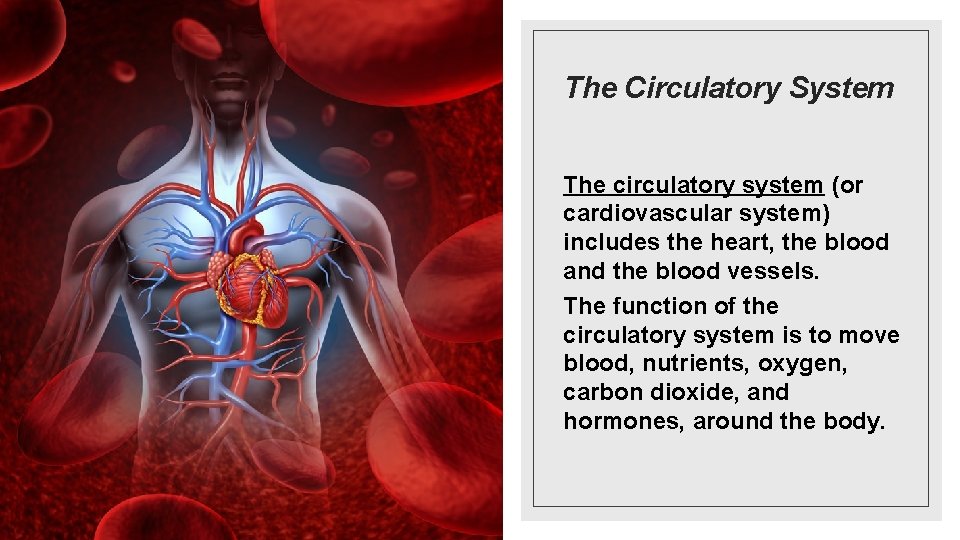
The Circulatory System The circulatory system (or cardiovascular system) includes the heart, the blood and the blood vessels. The function of the circulatory system is to move blood, nutrients, oxygen, carbon dioxide, and hormones, around the body.
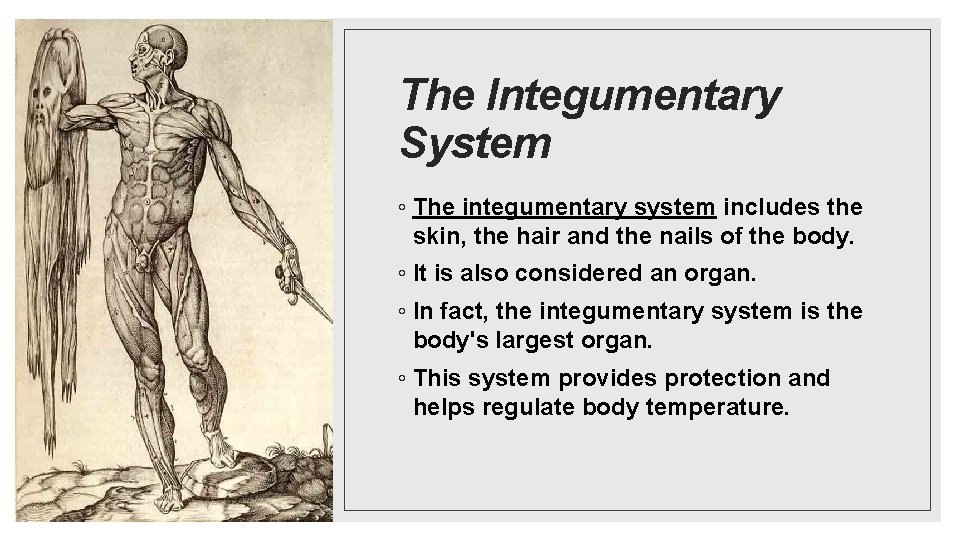
The Integumentary System ◦ The integumentary system includes the skin, the hair and the nails of the body. ◦ It is also considered an organ. ◦ In fact, the integumentary system is the body's largest organ. ◦ This system provides protection and helps regulate body temperature.
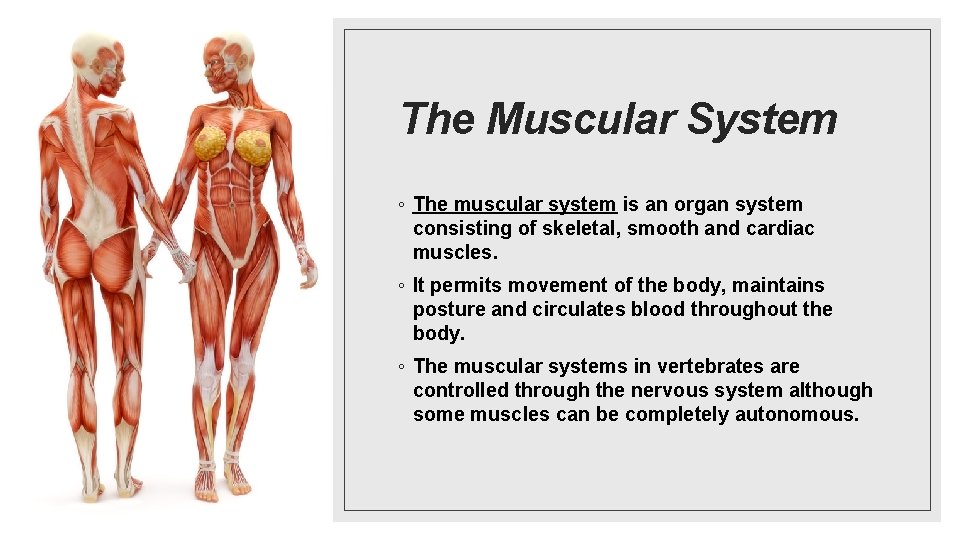
The Muscular System ◦ The muscular system is an organ system consisting of skeletal, smooth and cardiac muscles. ◦ It permits movement of the body, maintains posture and circulates blood throughout the body. ◦ The muscular systems in vertebrates are controlled through the nervous system although some muscles can be completely autonomous.
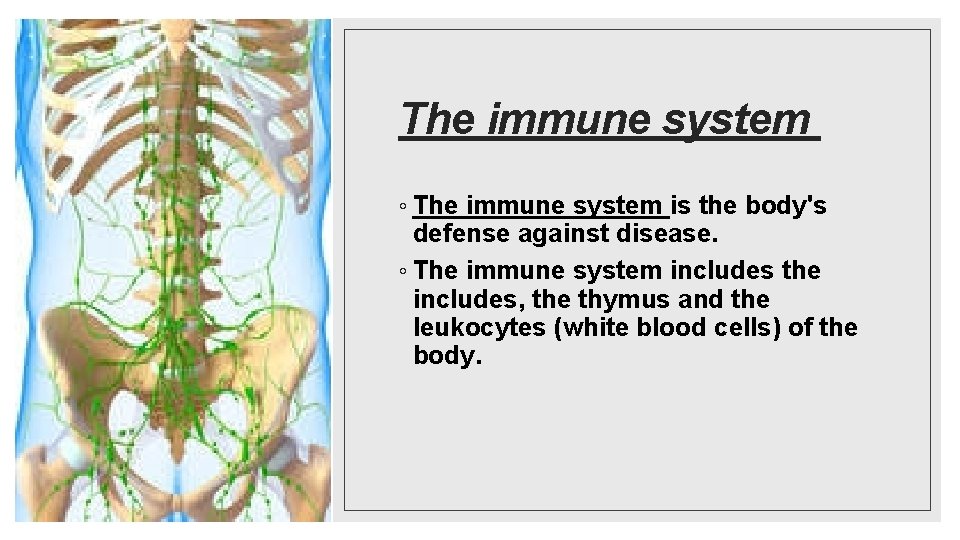
The immune system ◦ The immune system is the body's defense against disease. ◦ The immune system includes the includes, the thymus and the leukocytes (white blood cells) of the body.
The lymphatic system is a component of the immune system. The immune system : The lymphatic system includes lymph nodes, lymph ducts and lymph vessels, and also plays a role in the body's defenses. Its main job is to make and move lymph, a clear fluid that contains white blood cells, which help the body fight infection. The lymphatic system also removes excess lymph fluid from bodily tissues, and returns it to the blood.
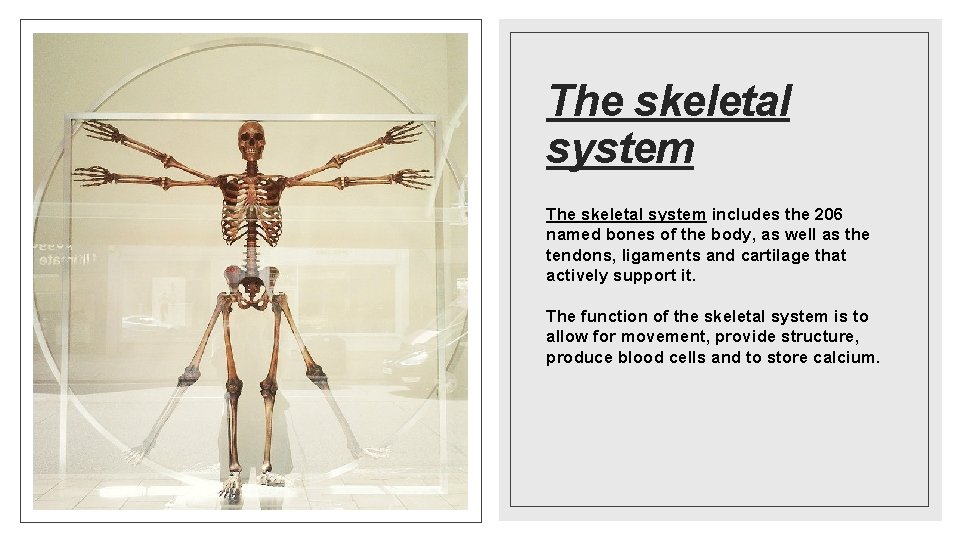
The skeletal system includes the 206 named bones of the body, as well as the tendons, ligaments and cartilage that actively support it. The function of the skeletal system is to allow for movement, provide structure, produce blood cells and to store calcium.
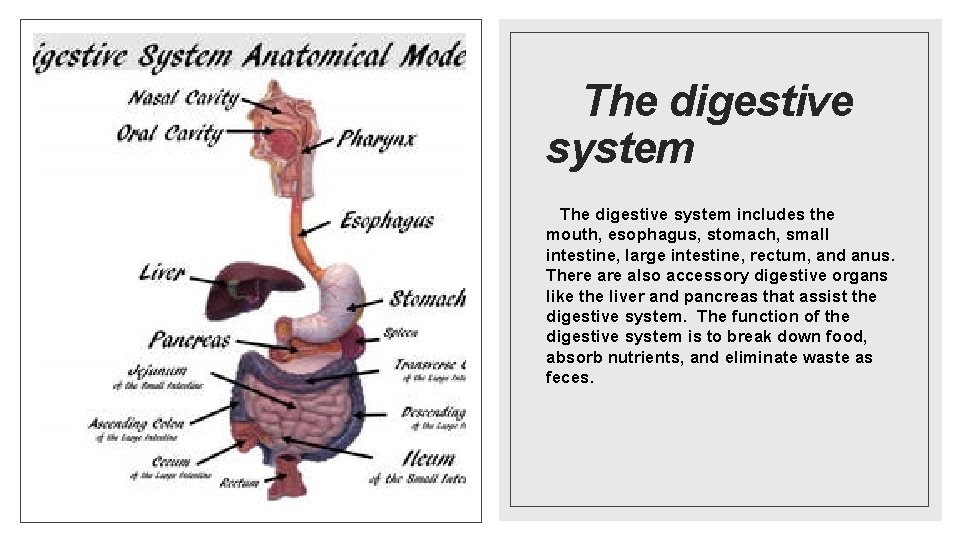
The digestive system includes the mouth, esophagus, stomach, small intestine, large intestine, rectum, and anus. There also accessory digestive organs like the liver and pancreas that assist the digestive system. The function of the digestive system is to break down food, absorb nutrients, and eliminate waste as feces.
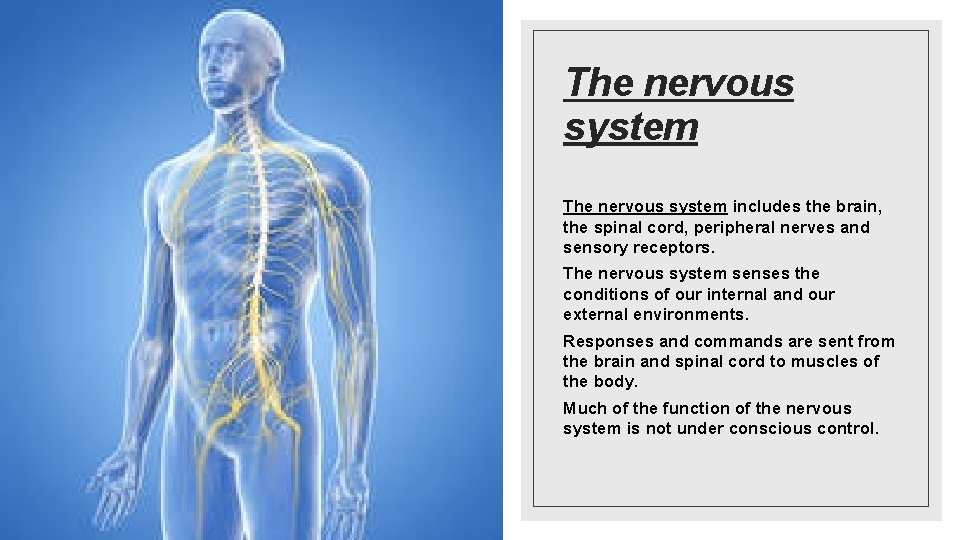
The nervous system includes the brain, the spinal cord, peripheral nerves and sensory receptors. The nervous system senses the conditions of our internal and our external environments. Responses and commands are sent from the brain and spinal cord to muscles of the body. Much of the function of the nervous system is not under conscious control.
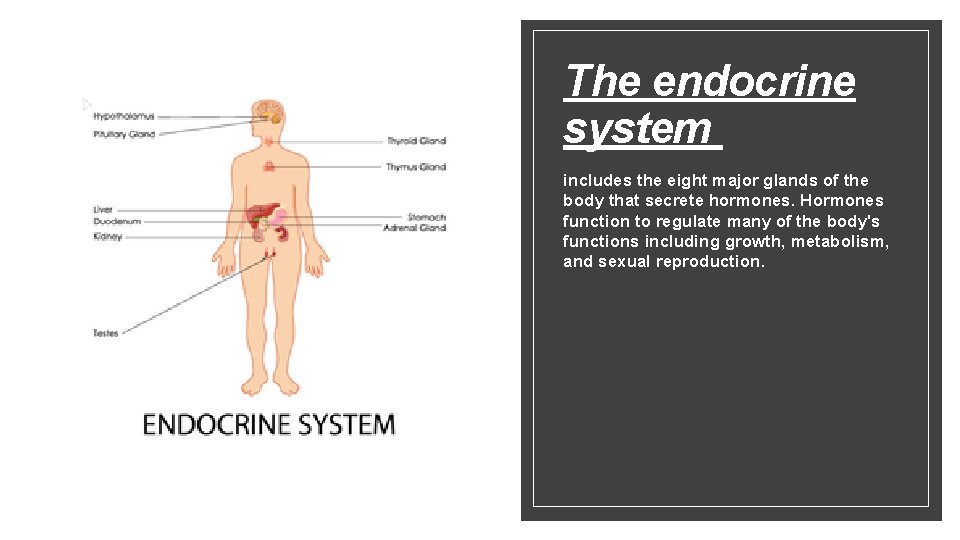
The endocrine system includes the eight major glands of the body that secrete hormones. Hormones function to regulate many of the body's functions including growth, metabolism, and sexual reproduction.
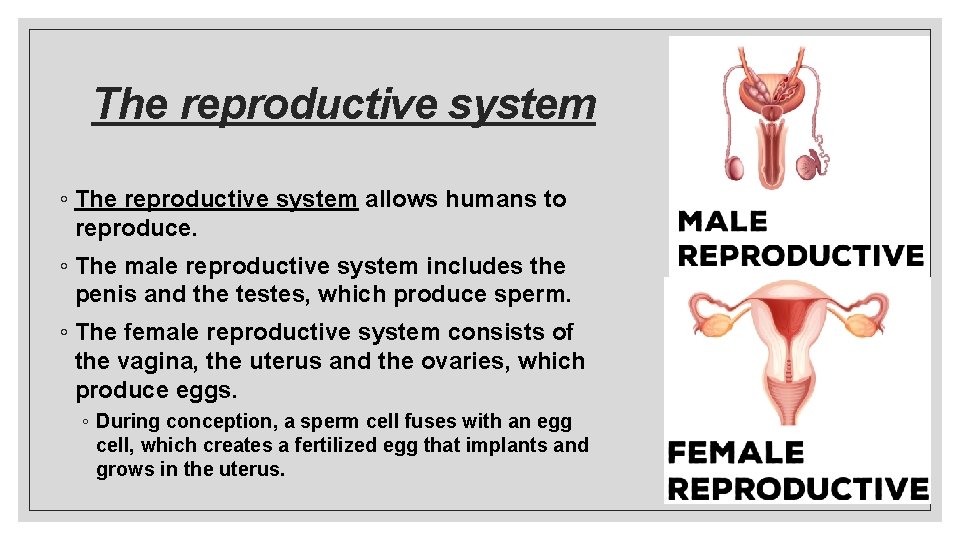
The reproductive system ◦ The reproductive system allows humans to reproduce. ◦ The male reproductive system includes the penis and the testes, which produce sperm. ◦ The female reproductive system consists of the vagina, the uterus and the ovaries, which produce eggs. ◦ During conception, a sperm cell fuses with an egg cell, which creates a fertilized egg that implants and grows in the uterus.
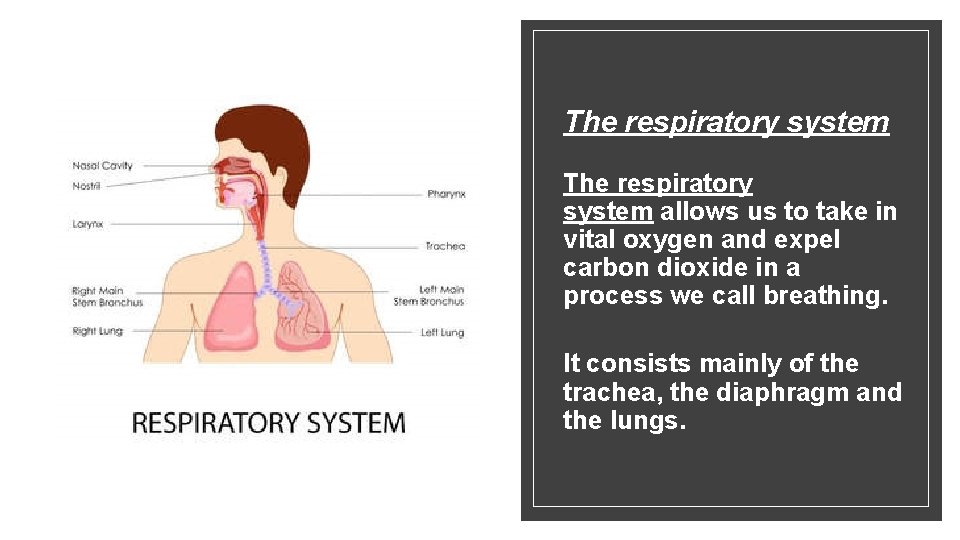
The respiratory system allows us to take in vital oxygen and expel carbon dioxide in a process we call breathing. It consists mainly of the trachea, the diaphragm and the lungs.
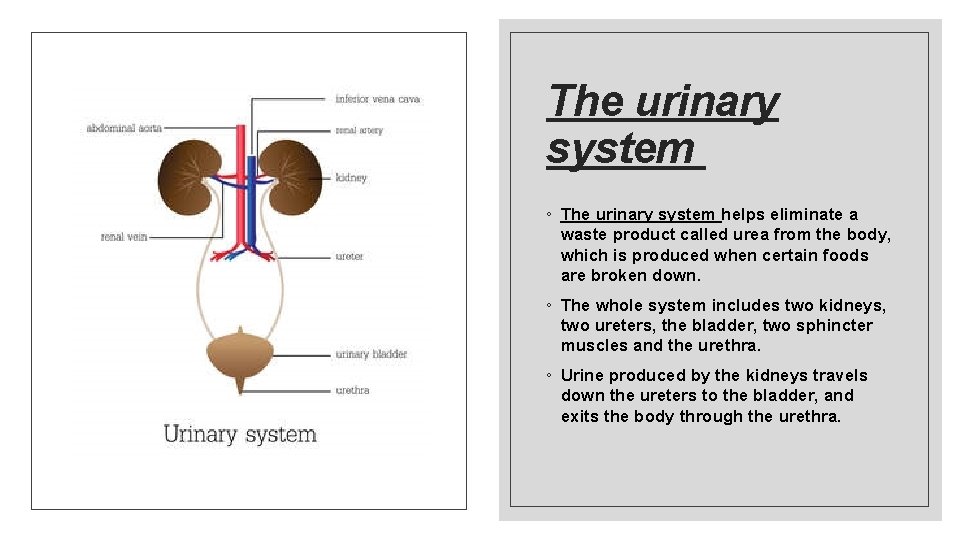
The urinary system ◦ The urinary system helps eliminate a waste product called urea from the body, which is produced when certain foods are broken down. ◦ The whole system includes two kidneys, two ureters, the bladder, two sphincter muscles and the urethra. ◦ Urine produced by the kidneys travels down the ureters to the bladder, and exits the body through the urethra.
The Organism Level This Photo by Unknown Author is licensed under CC BY-SA-NC ◦ The level of the organism looks at how all of the anatomical structure of body work together to provide all of the necessary function for life.