
Hierarchical Clustering Topic Models Sampath Jayarathna Cal Poly
- Slides: 35
Hierarchical Clustering & Topic Models Sampath Jayarathna Cal Poly Pomona
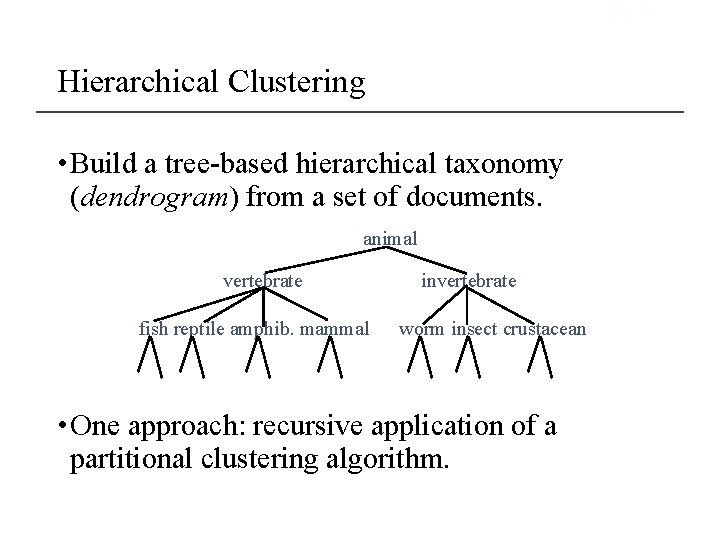
Ch. 17 Hierarchical Clustering • Build a tree-based hierarchical taxonomy (dendrogram) from a set of documents. animal vertebrate fish reptile amphib. mammal invertebrate worm insect crustacean • One approach: recursive application of a partitional clustering algorithm.
Hierarchical agglomerative clustering (HAC) • Start with each document in a separate cluster • Then repeatedly merge the two clusters that are most similar • Until there is only one cluster • The history of merging is a hierarchy in the form of a binary tree. • The standard way of depicting this history is a dendrogram.
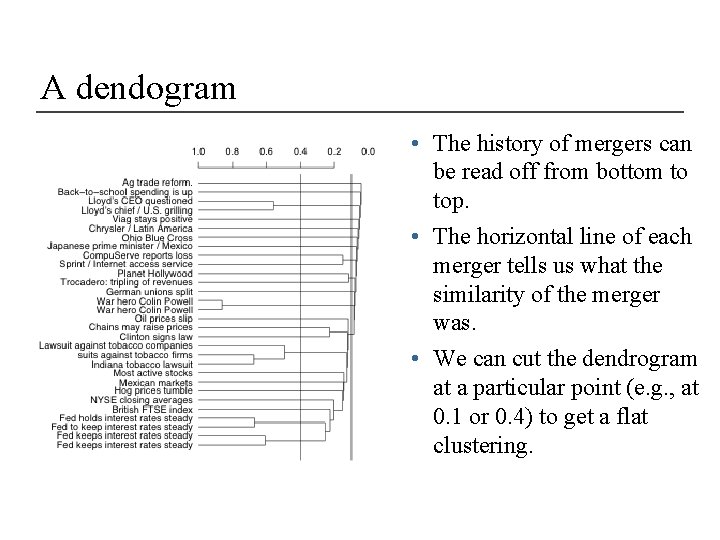
A dendogram • The history of mergers can be read off from bottom to top. • The horizontal line of each merger tells us what the similarity of the merger was. • We can cut the dendrogram at a particular point (e. g. , at 0. 1 or 0. 4) to get a flat clustering.
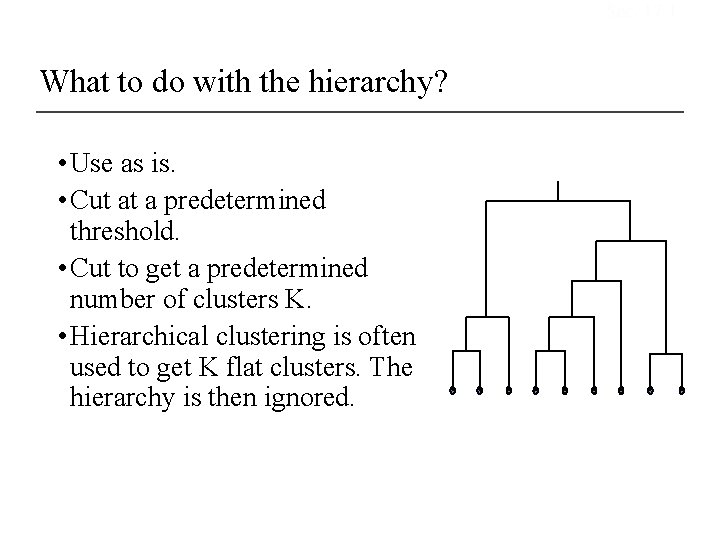
Sec. 17. 1 What to do with the hierarchy? • Use as is. • Cut at a predetermined threshold. • Cut to get a predetermined number of clusters K. • Hierarchical clustering is often used to get K flat clusters. The hierarchy is then ignored.
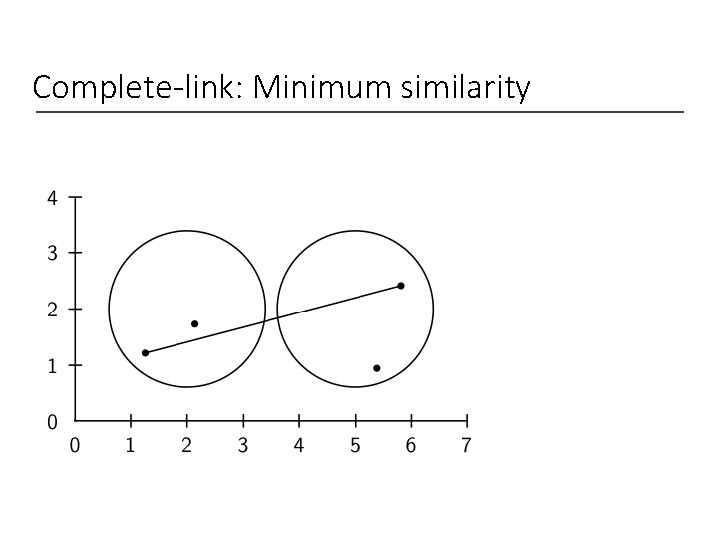
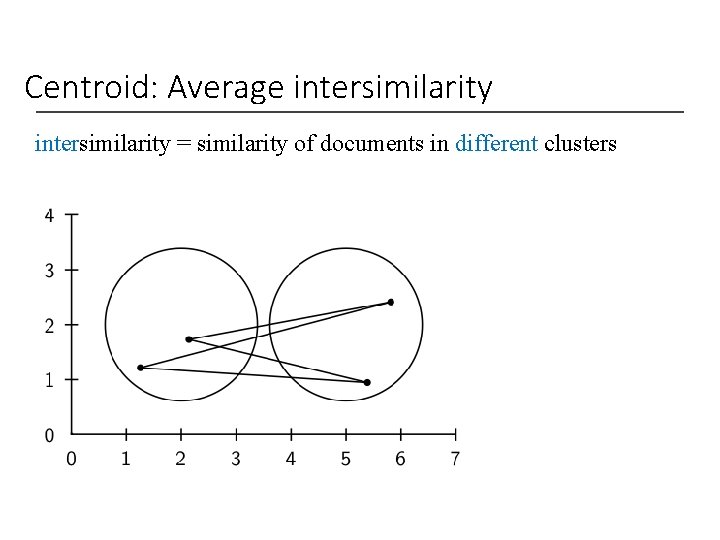
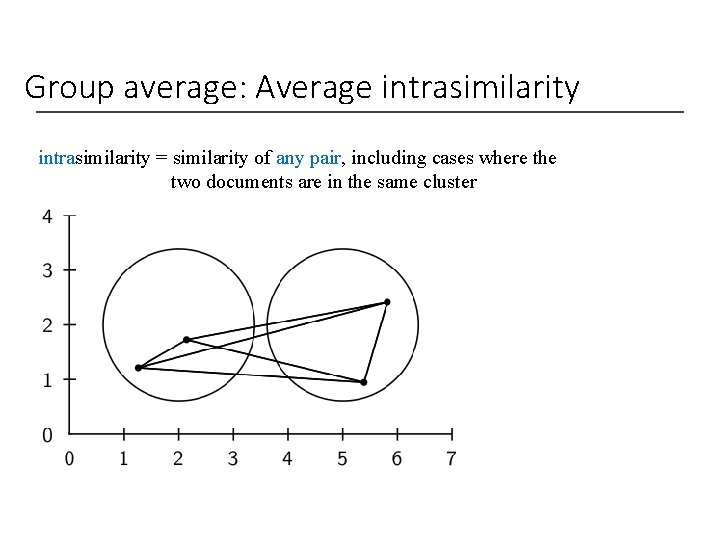
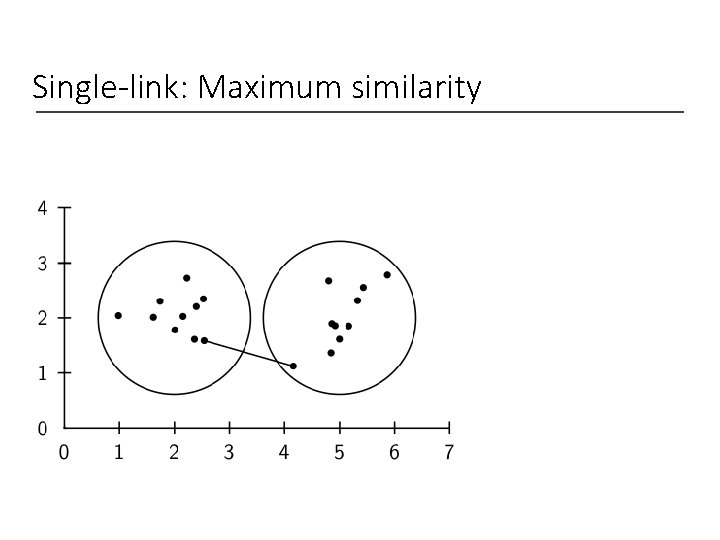
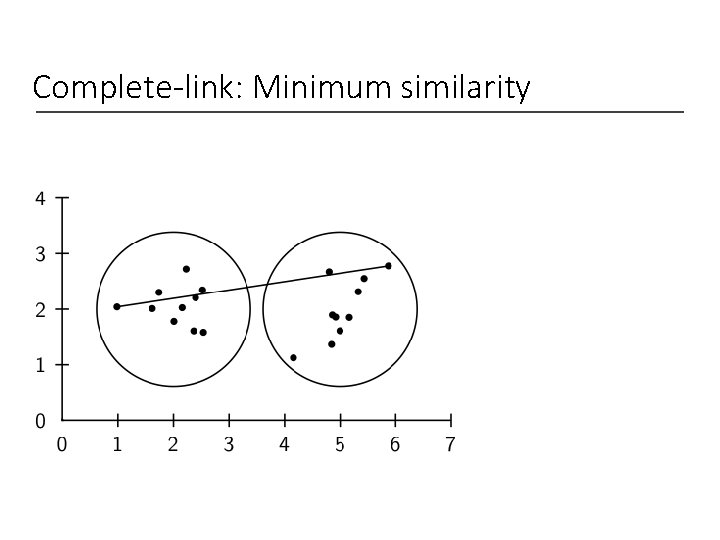
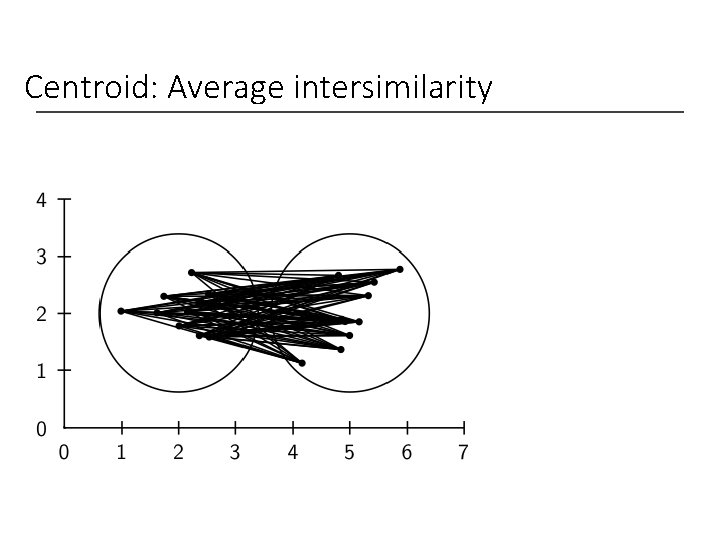
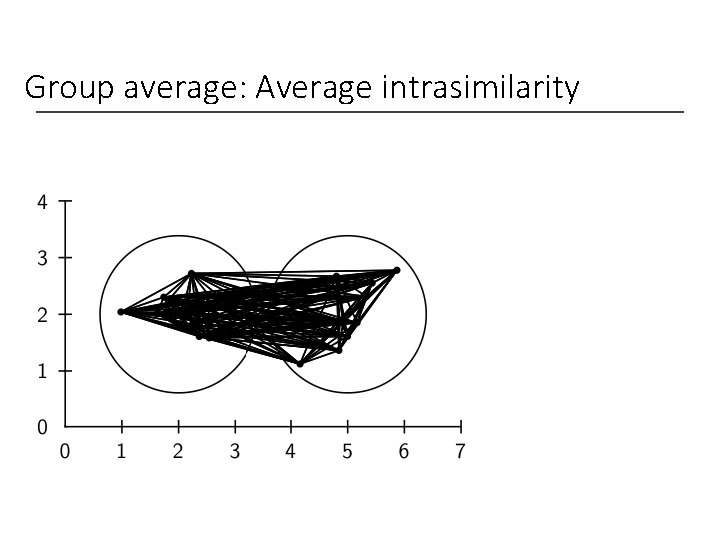
Sec. 17. 2 Closest pair of clusters • Many variants to defining closest pair of clusters • Single-link • Similarity of the most cosine-similar (single-link) • Complete-link • Similarity of the “furthest” points, the least cosine-similar • Centroid • Clusters whose centroids (centers of gravity) are the most cosine-similar • Average-link • Average cosine between pairs of elements
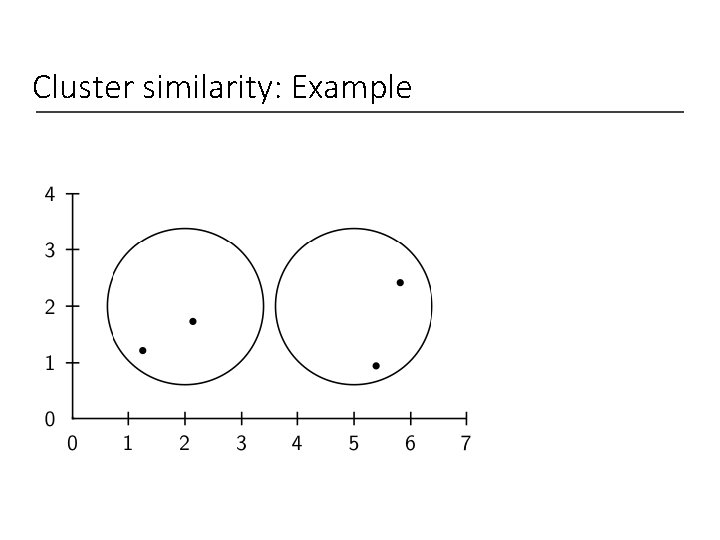
Cluster similarity: Example
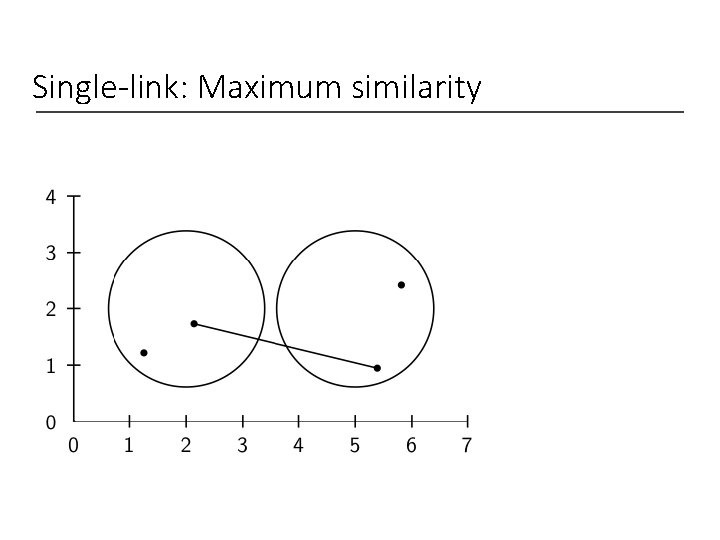
Single-link: Maximum similarity
Complete-link: Minimum similarity
Centroid: Average intersimilarity = similarity of documents in different clusters
Group average: Average intrasimilarity = similarity of any pair, including cases where the two documents are in the same cluster
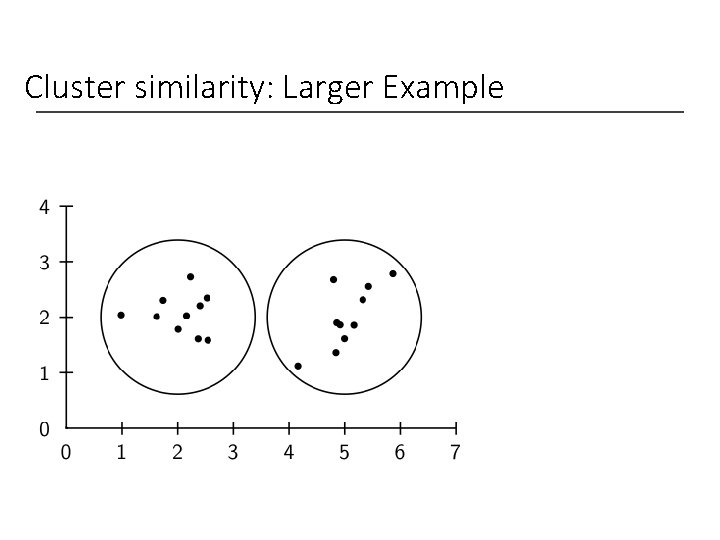
Cluster similarity: Larger Example
Single-link: Maximum similarity
Complete-link: Minimum similarity
Centroid: Average intersimilarity
Group average: Average intrasimilarity
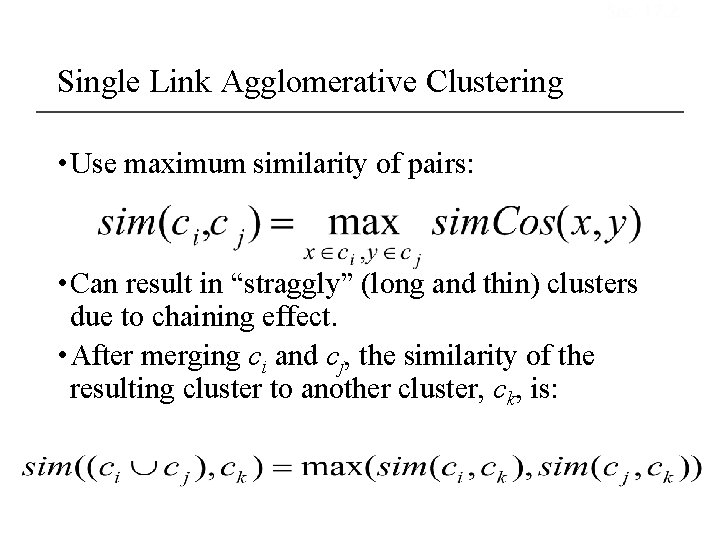
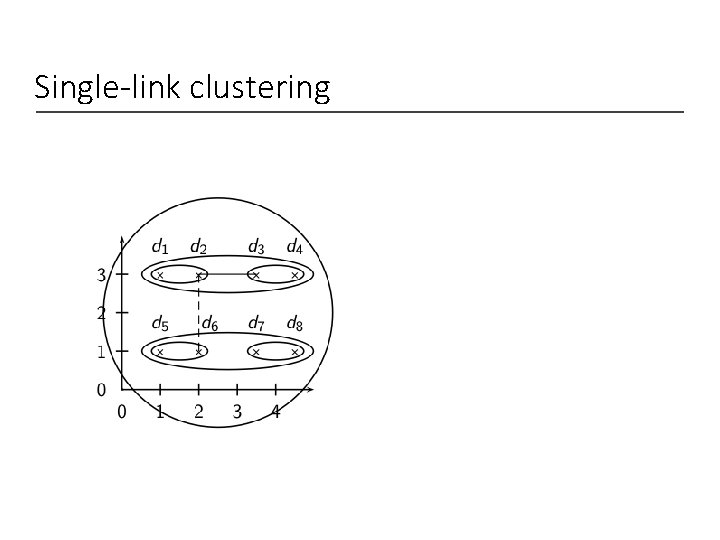
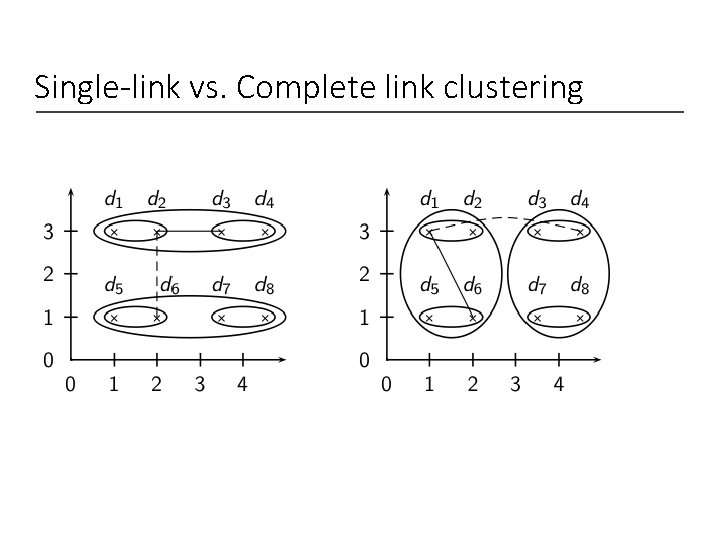
Sec. 17. 2 Single Link Agglomerative Clustering • Use maximum similarity of pairs: • Can result in “straggly” (long and thin) clusters due to chaining effect. • After merging ci and cj, the similarity of the resulting cluster to another cluster, ck, is:
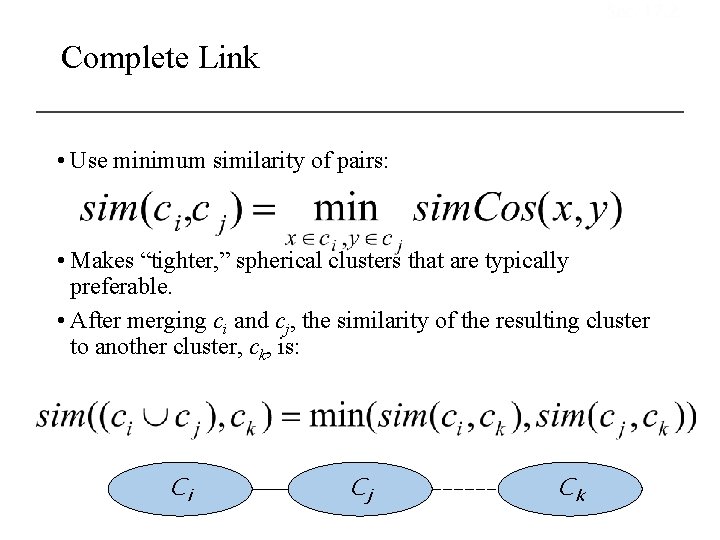
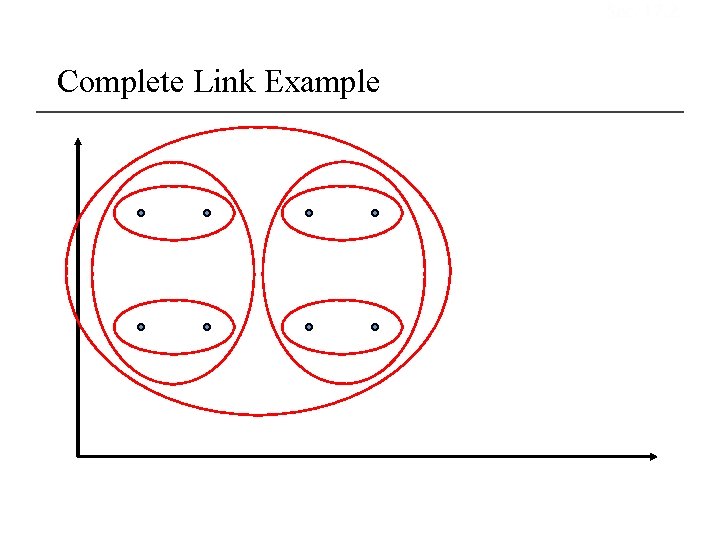
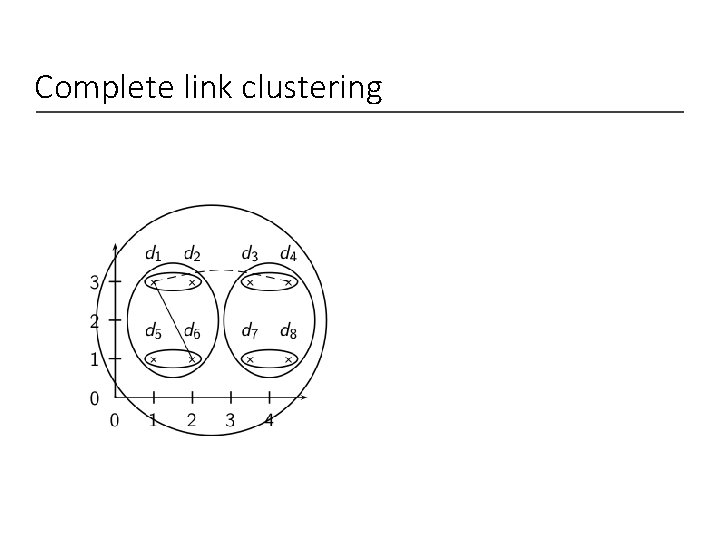
Sec. 17. 2 Complete Link • Use minimum similarity of pairs: • Makes “tighter, ” spherical clusters that are typically preferable. • After merging ci and cj, the similarity of the resulting cluster to another cluster, ck, is: Ci Cj Ck
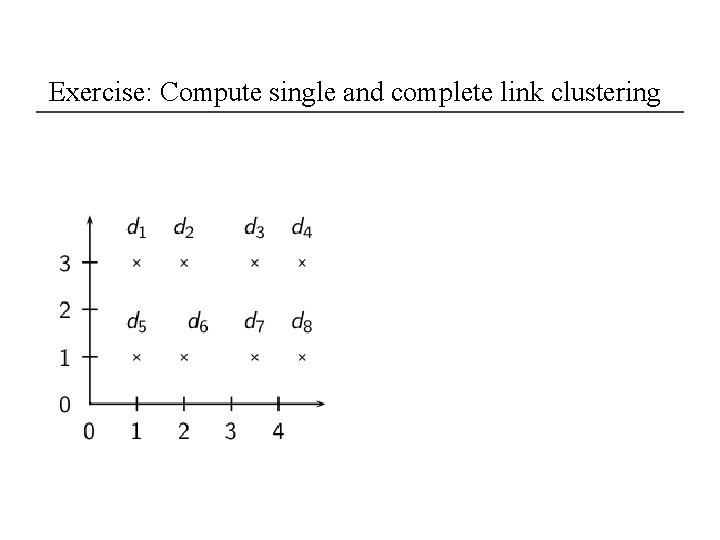
Exercise: Compute single and complete link clustering
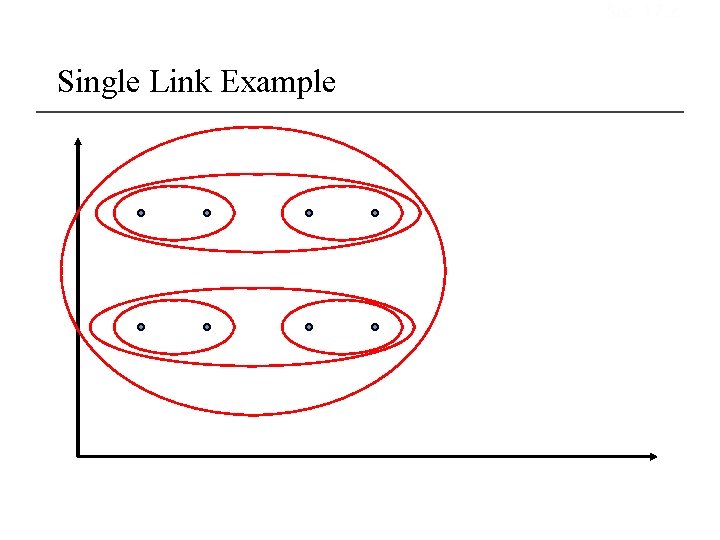
Sec. 17. 2 Single Link Example
Single-link clustering
Sec. 17. 2 Complete Link Example
Complete link clustering
Single-link vs. Complete link clustering
Flat or hierarchical clustering? • For high efficiency, use flat clustering (k-means) • When a hierarchical structure is desired: hierarchical algorithm • HAC also can be applied if K cannot be predetermined (can start without knowing K)
Major issue in clustering – labeling • After a clustering algorithm finds a set of clusters: how can they be useful to the end user? • Need simple label for each cluster. • For example, in search result clustering for “jaguar”, The labels of the clusters could be “animal”, and “car” • Topic of this section: How can we automatically find good labels for clusters? • Often done by hand • Use metadata like Titles • Use the medoid (documents) itself • Top-terms (most frequent) • Most distinguishing terms
Topic Models in Text Processing
Overview • Motivation: • Model the topic/subtopics in text collections • Basic Assumptions: • There are k topics in the whole collection • Each topic is represented by a multinomial distribution over the vocabulary (language model) • Each document can cover multiple topics • Applications • Summarizing topics • Predict topic coverage for documents • Model the topic correlations • Classification, Clustering
Basic Topic Models • Unigram model • Mixture of unigrams • Probabilistic LSI • Latent Dirichlet Allocation (LDA) • Correlated Topic Models
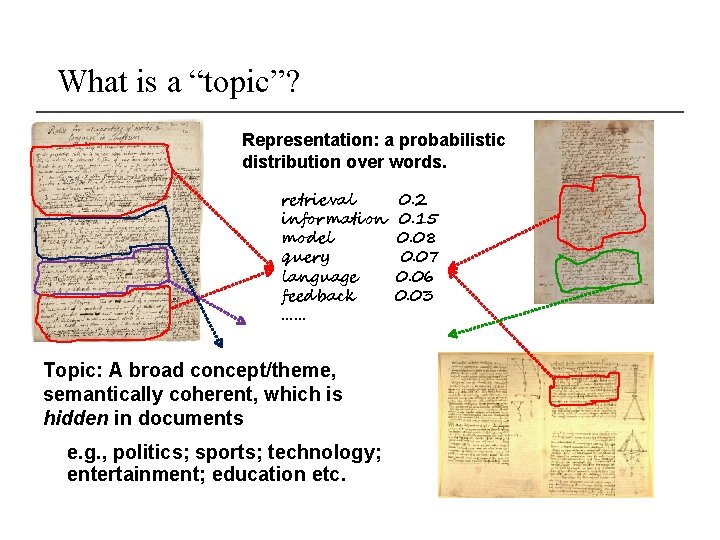
What is a “topic”? Representation: a probabilistic distribution over words. retrieval information model query language feedback …… Topic: A broad concept/theme, semantically coherent, which is hidden in documents e. g. , politics; sports; technology; entertainment; education etc. 0. 2 0. 15 0. 08 0. 07 0. 06 0. 03
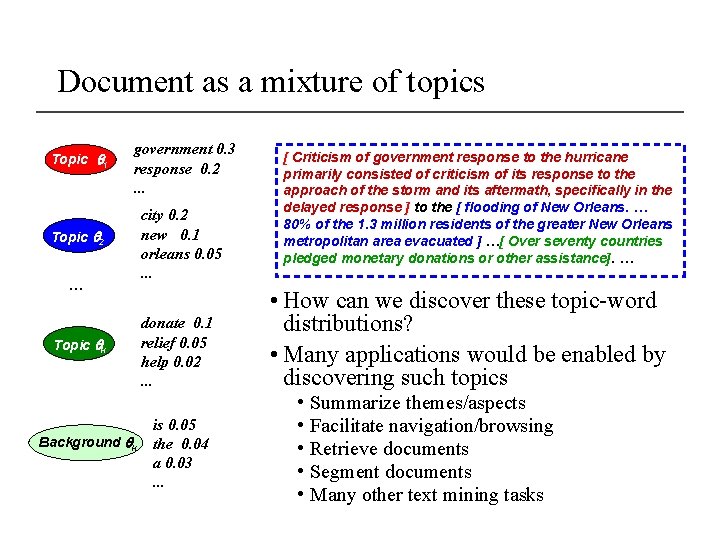
Document as a mixture of topics Topic 1 government 0. 3 response 0. 2. . . Topic 2 … Topic k Background k city 0. 2 new 0. 1 orleans 0. 05. . . donate 0. 1 relief 0. 05 help 0. 02. . . is 0. 05 the 0. 04 a 0. 03. . . [ Criticism of government response to the hurricane primarily consisted of criticism of its response to the approach of the storm and its aftermath, specifically in the delayed response ] to the [ flooding of New Orleans. … 80% of the 1. 3 million residents of the greater New Orleans metropolitan area evacuated ] …[ Over seventy countries pledged monetary donations or other assistance]. … • How can we discover these topic-word distributions? • Many applications would be enabled by discovering such topics • • • Summarize themes/aspects Facilitate navigation/browsing Retrieve documents Segment documents Many other text mining tasks
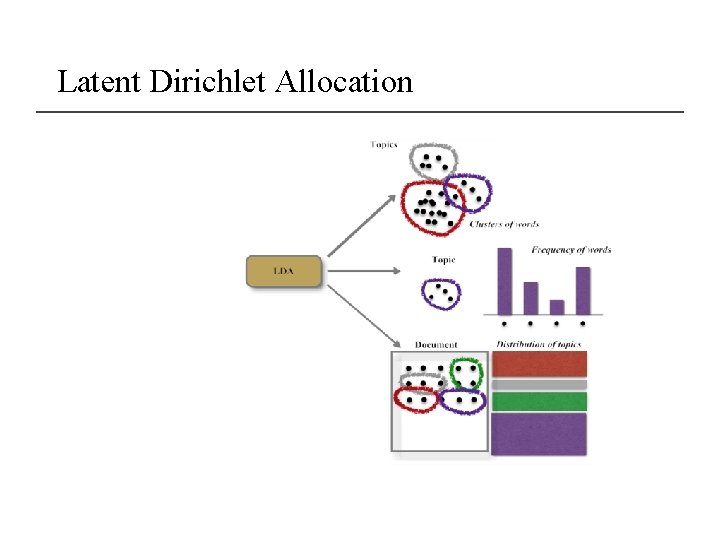
Latent Dirichlet Allocation
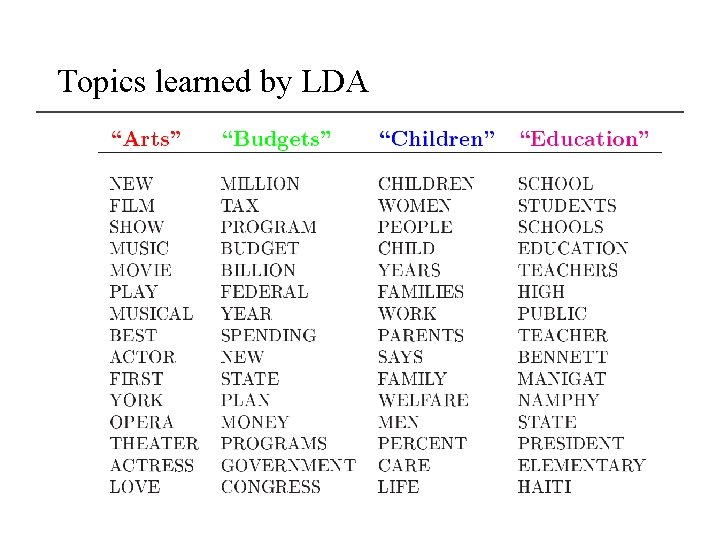
Topics learned by LDA
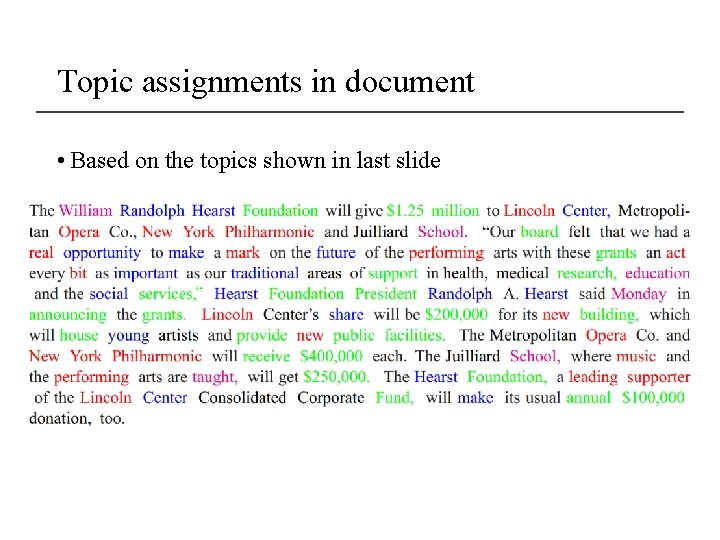
Topic assignments in document • Based on the topics shown in last slide
Final word • In clustering, clusters are inferred from the data without human input (unsupervised learning) • However, in practice, it’s a bit less clear: there are many ways of influencing the outcome of clustering: number of clusters, similarity measure, representation of documents.