
Hidden Markov Models for Speech Recognition by B

“Hidden Markov Models for Speech Recognition” by B. H. Juang and L. R. Rabiner Papers We Love Bucharest Stefan Alexandru Adam 9 st of November 2015 Tech. Hub
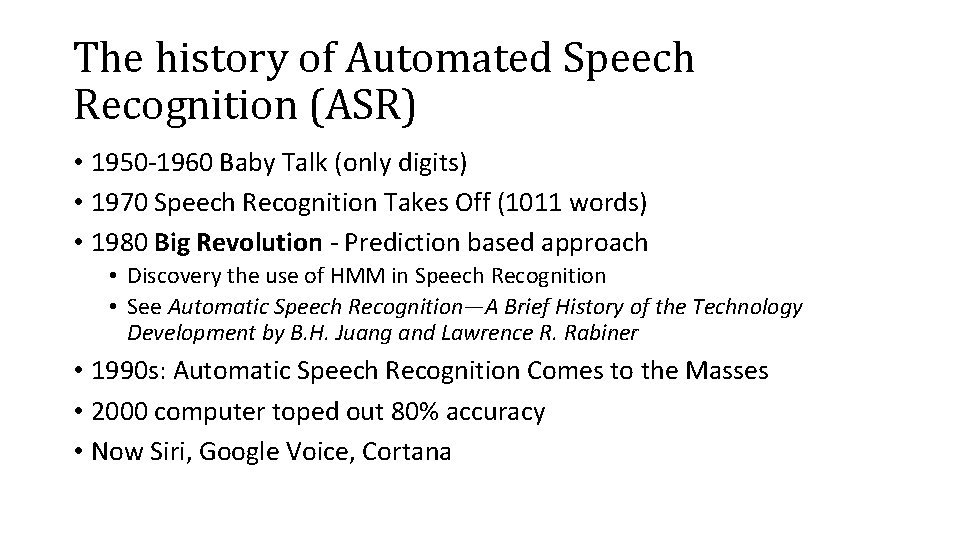
The history of Automated Speech Recognition (ASR) • 1950 -1960 Baby Talk (only digits) • 1970 Speech Recognition Takes Off (1011 words) • 1980 Big Revolution - Prediction based approach • Discovery the use of HMM in Speech Recognition • See Automatic Speech Recognition—A Brief History of the Technology Development by B. H. Juang and Lawrence R. Rabiner • 1990 s: Automatic Speech Recognition Comes to the Masses • 2000 computer toped out 80% accuracy • Now Siri, Google Voice, Cortana
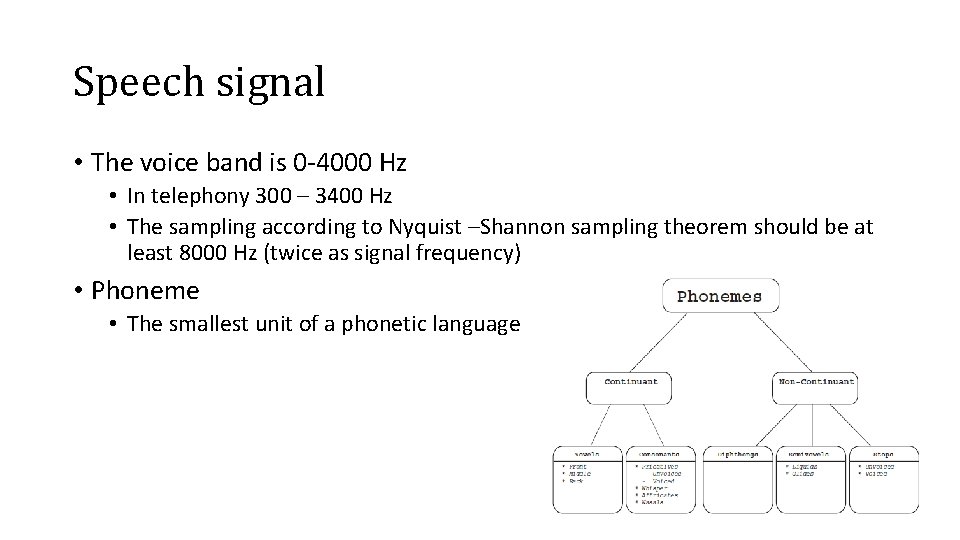
Speech signal • The voice band is 0 -4000 Hz • In telephony 300 – 3400 Hz • The sampling according to Nyquist –Shannon sampling theorem should be at least 8000 Hz (twice as signal frequency) • Phoneme • The smallest unit of a phonetic language
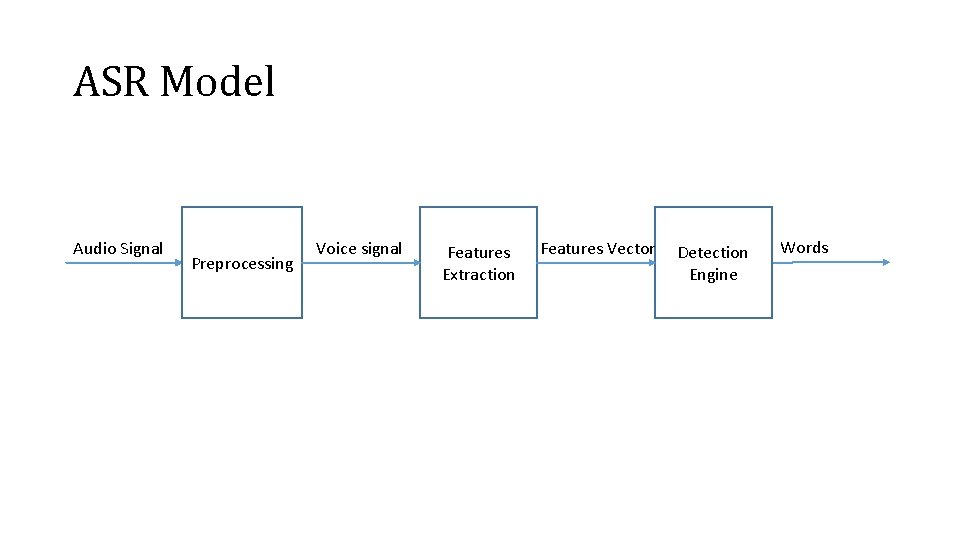
ASR Model Audio Signal Preprocessing Voice signal Features Extraction Features Vector Detection Engine Words
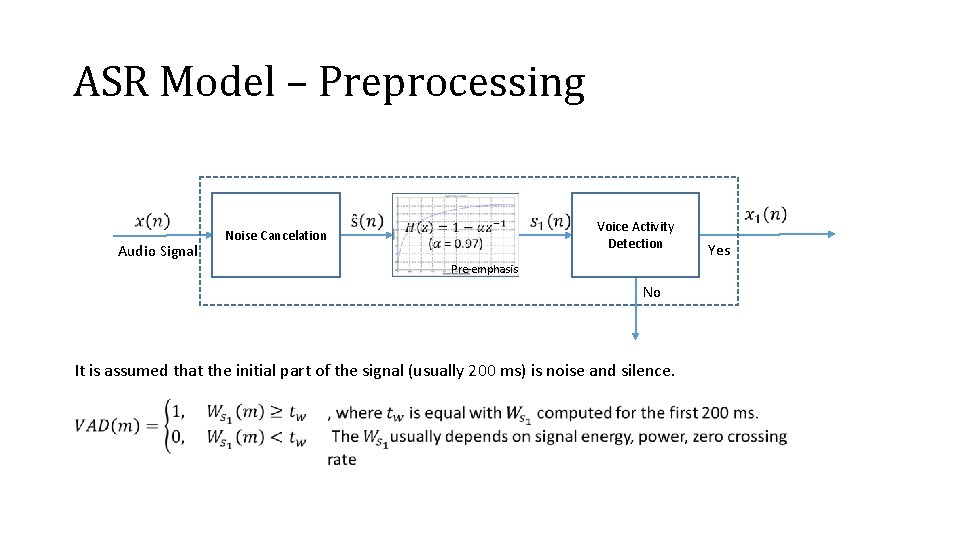
ASR Model – Preprocessing Audio Signal Voice Activity Detection Noise Cancelation Pre-emphasis No It is assumed that the initial part of the signal (usually 200 ms) is noise and silence. Yes
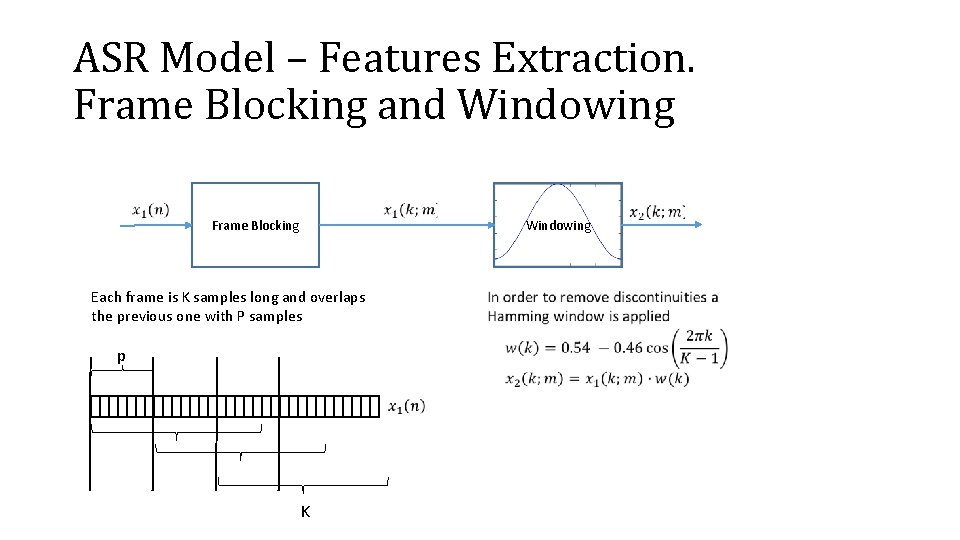
ASR Model – Features Extraction. Frame Blocking and Windowing Frame Blocking Windowing Each frame is K samples long and overlaps the previous one with P samples p K
ASR – Model – Features Extraction Extract the sensitive information from the signal • This information is presented as a double vector There are three main approaches • Linear Prediction Coding (LPC) • Mel Frequency Cepstral Coefficient (MFCC) • Perceptual Linear Prediction (PLP)
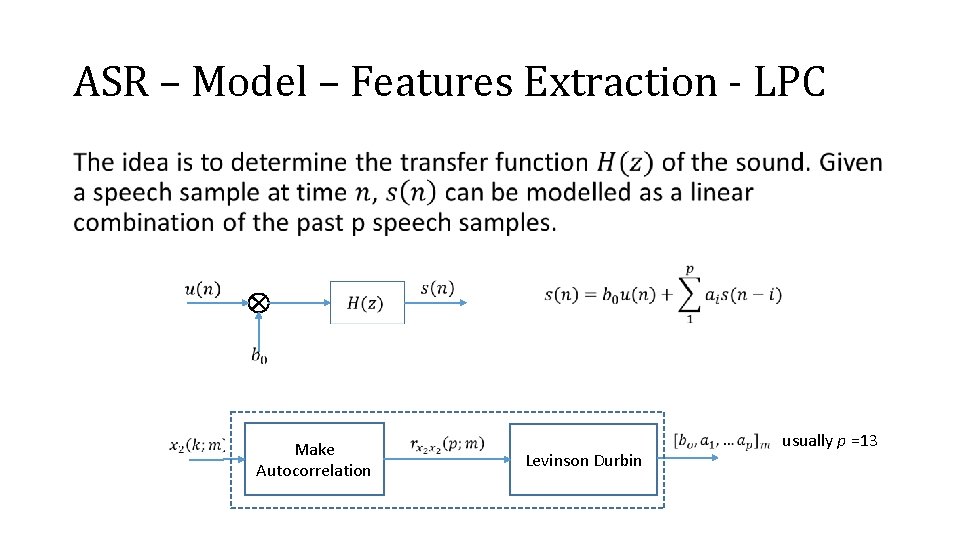
ASR – Model – Features Extraction - LPC • Make Autocorrelation Levinson Durbin usually p =13
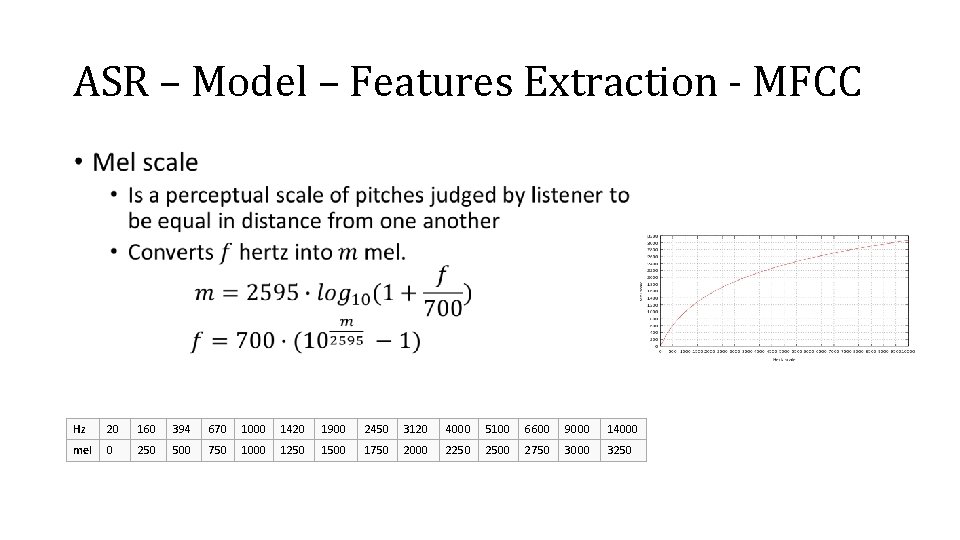
ASR – Model – Features Extraction - MFCC • Hz 20 160 394 670 1000 1420 1900 2450 3120 4000 5100 6600 9000 14000 mel 0 250 500 750 1000 1250 1500 1750 2000 2250 2500 2750 3000 3250
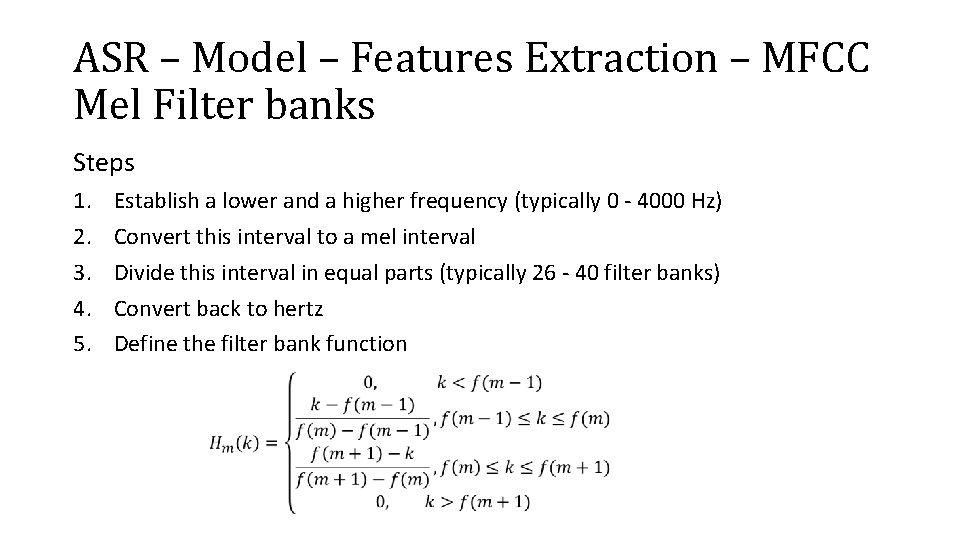
ASR – Model – Features Extraction – MFCC Mel Filter banks Steps 1. 2. 3. 4. 5. Establish a lower and a higher frequency (typically 0 - 4000 Hz) Convert this interval to a mel interval Divide this interval in equal parts (typically 26 - 40 filter banks) Convert back to hertz Define the filter bank function
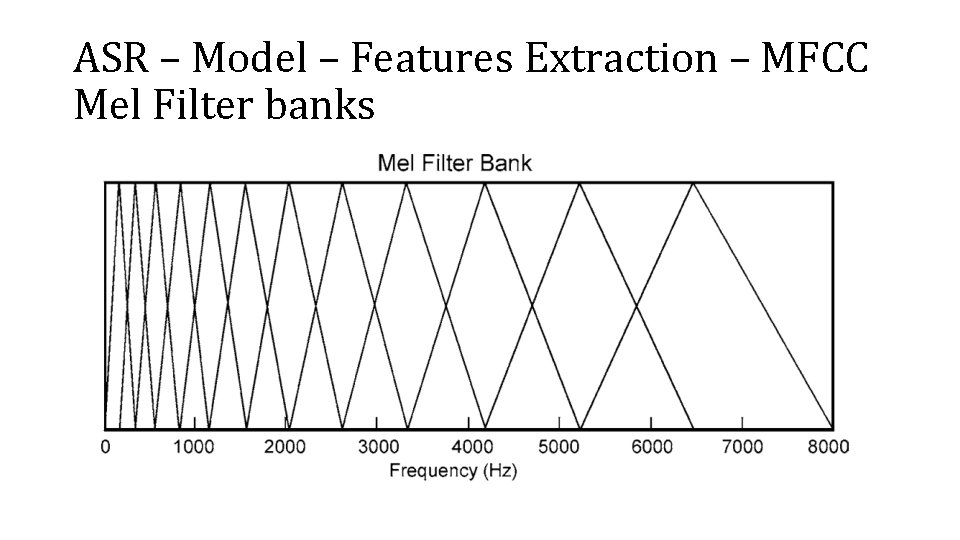
ASR – Model – Features Extraction – MFCC Mel Filter banks
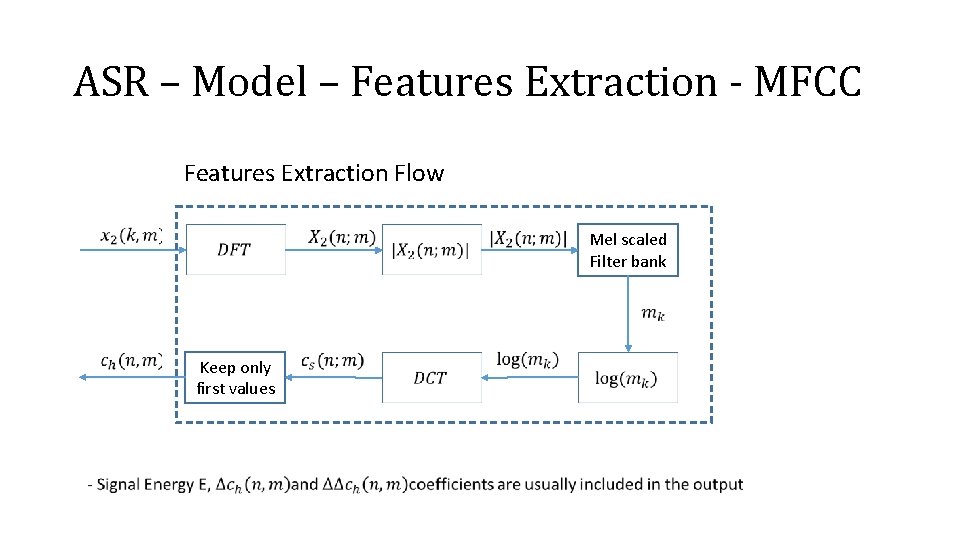
ASR – Model – Features Extraction - MFCC Features Extraction Flow Mel scaled Filter bank Keep only first values
ASR – Model – Detection Engine • Pattern matching • Hidden Markov Models • Neural Networks
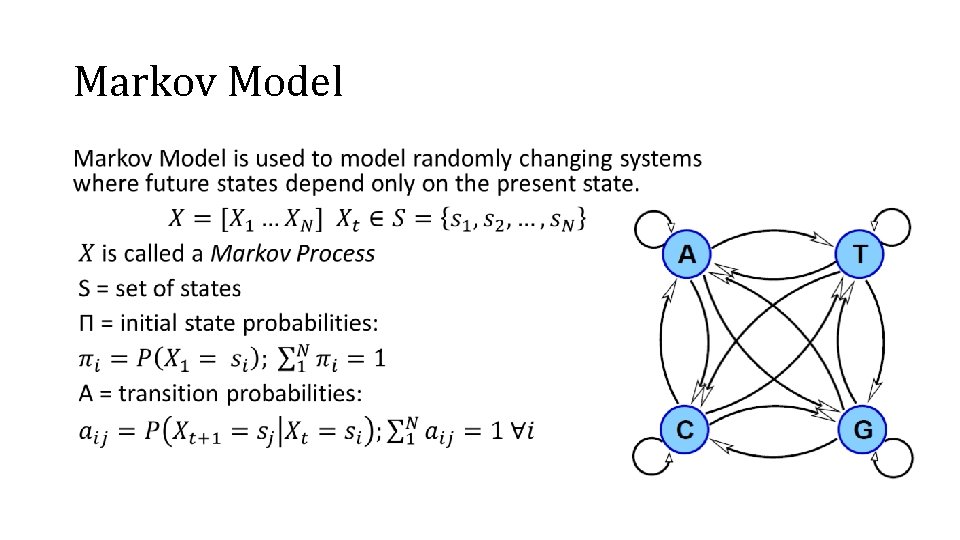
Markov Model •
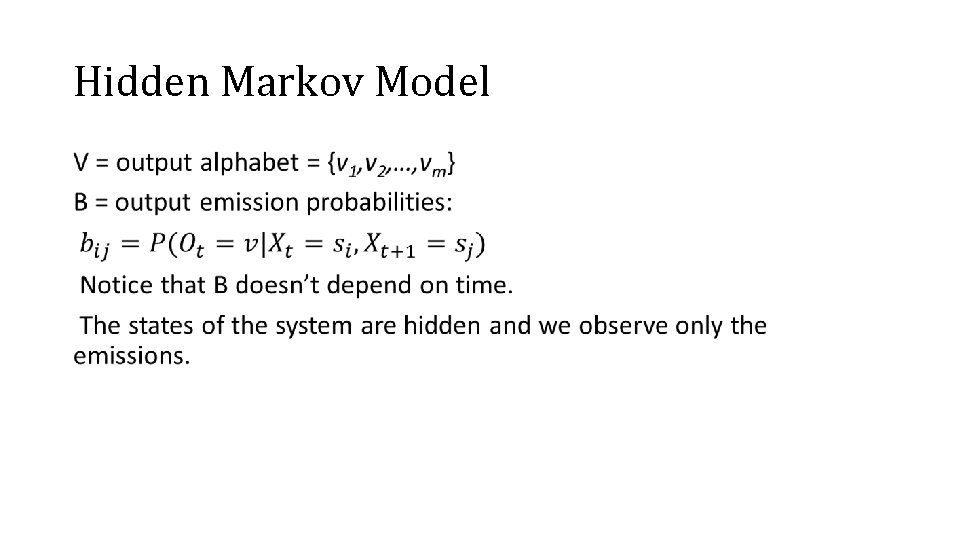
Hidden Markov Model •
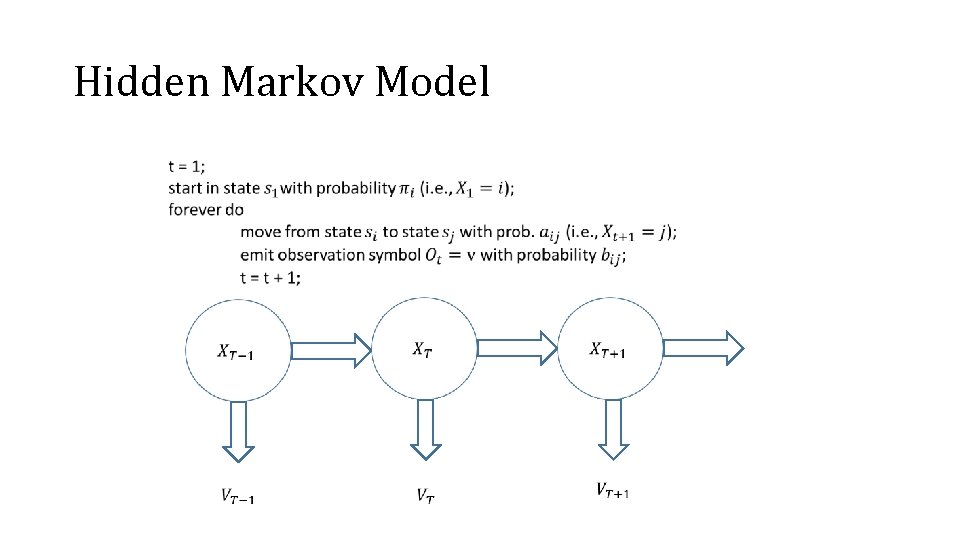
Hidden Markov Model
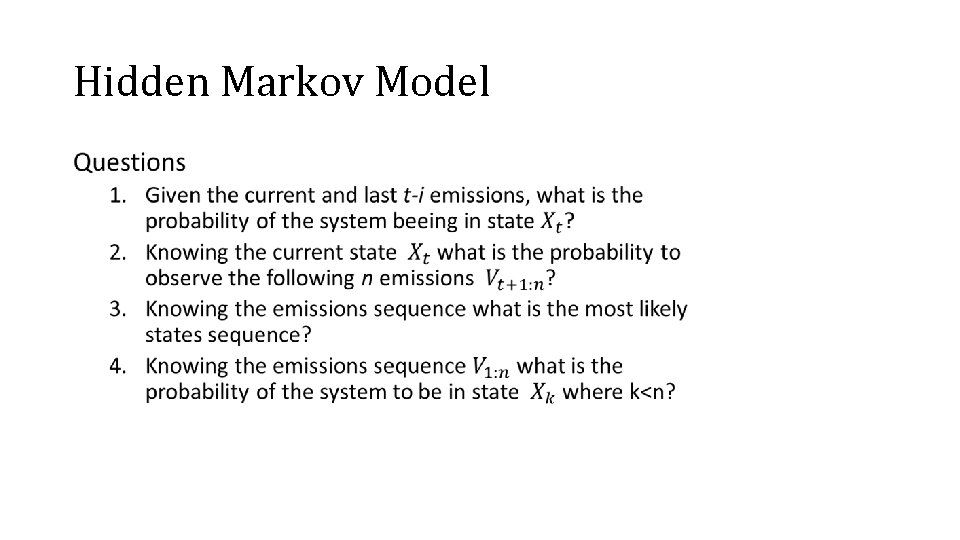
Hidden Markov Model •
Hidden Markov Model For each question there is a separated dynamic programming algorithm. 1. 2. 3. 4. 5. Forward Algorithm (recursive computation) Backward Algorithm (recursive computation) Viterbi algorithm Forward – Backward Algorithm based on 1 and 2 Baum-Welch Algorithm based on 4
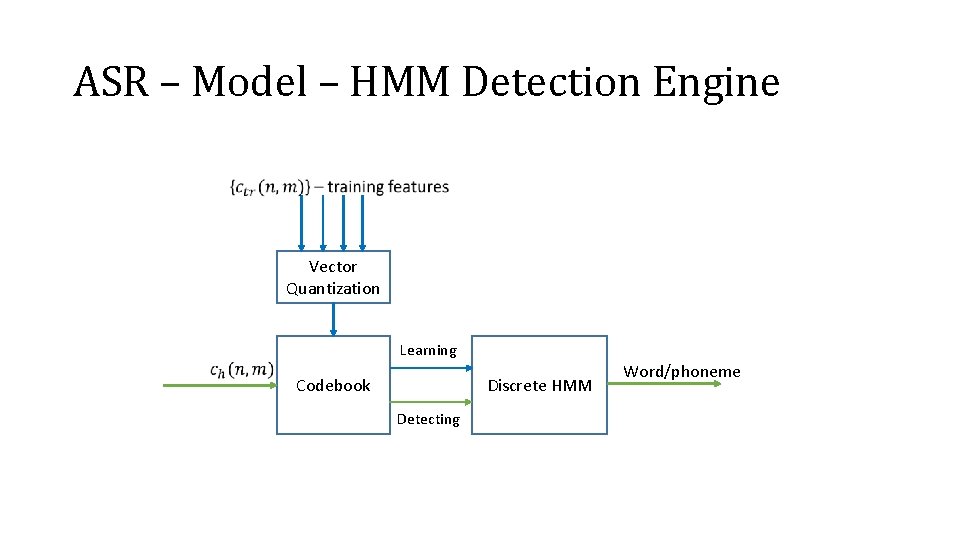
ASR – Model – HMM Detection Engine Vector Quantization Learning Discrete HMM Codebook Detecting Word/phoneme
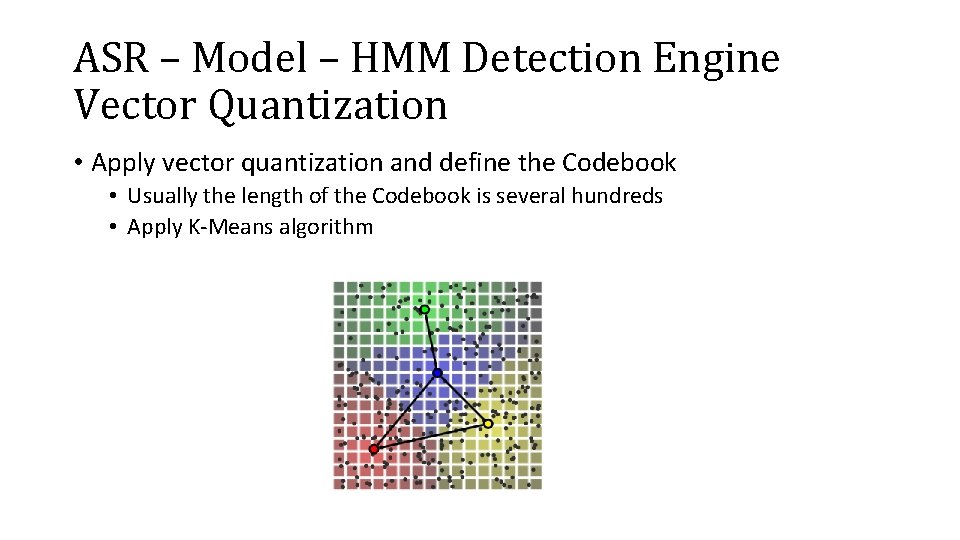
ASR – Model – HMM Detection Engine Vector Quantization • Apply vector quantization and define the Codebook • Usually the length of the Codebook is several hundreds • Apply K-Means algorithm
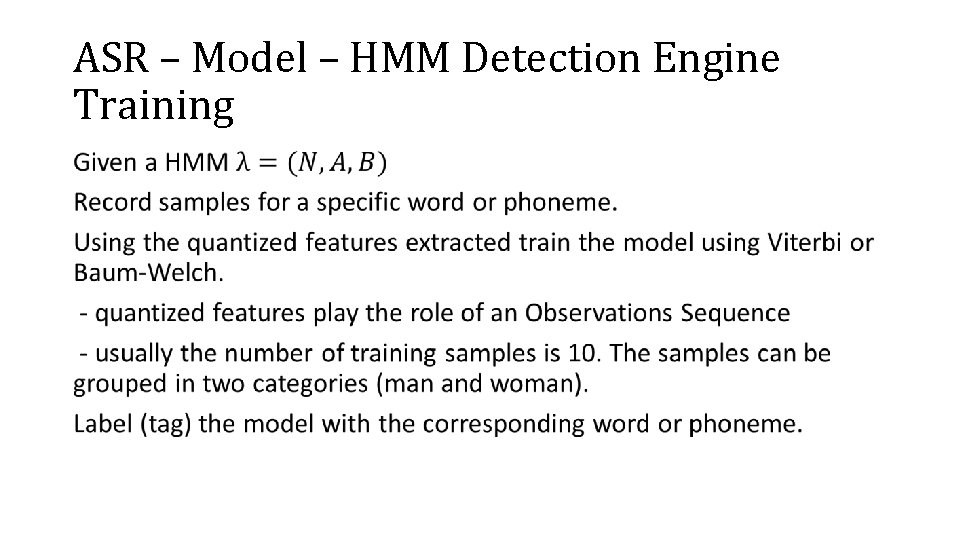
ASR – Model – HMM Detection Engine Training •
ASR – Model – HMM Detection Engine Detection Given a quantized features sequence iterates throw each existing HMM and find out which has the maximum probability. Detection properties - Detection is very fast (also easy to parallelize) - Accuracy 80 % in the base implementation - Limitations – doesn’t take in consideration observation duration
ASR – Model – HMM Detection Engine Demo • https: //github. com/Adam. Stefan/Speech-Recognition
- Slides: 23