
Hickory Several species are common Alternate compound leaves
- Slides: 38
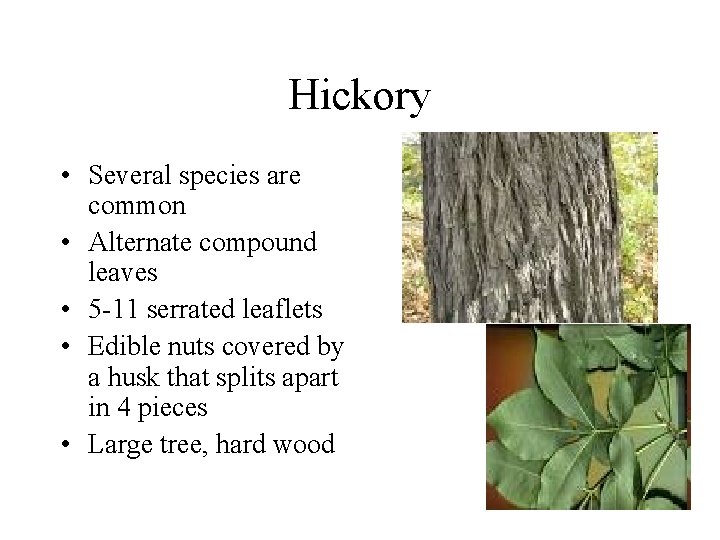
Hickory • Several species are common • Alternate compound leaves • 5 -11 serrated leaflets • Edible nuts covered by a husk that splits apart in 4 pieces • Large tree, hard wood
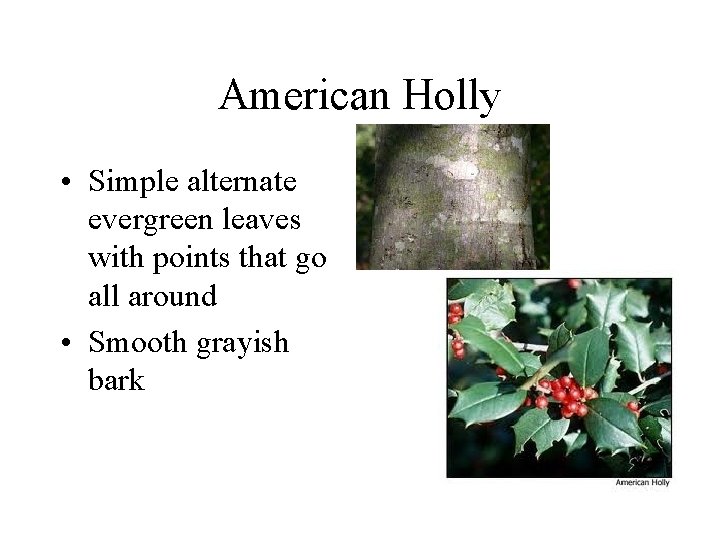
American Holly • Simple alternate evergreen leaves with points that go all around • Smooth grayish bark
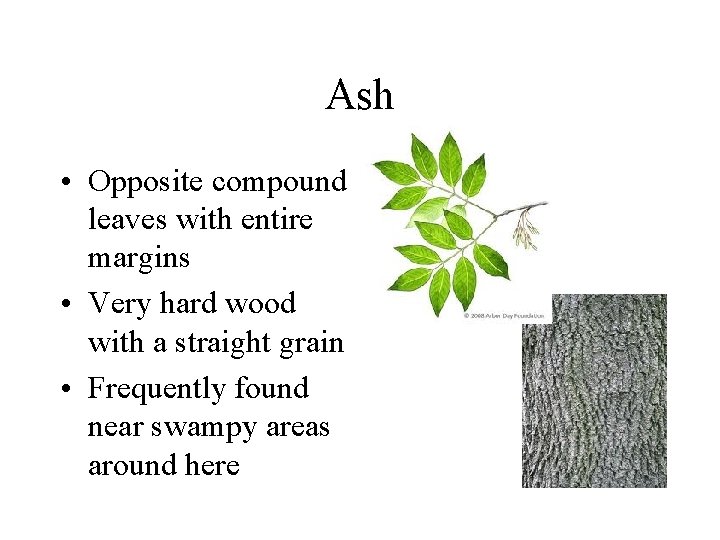
Ash • Opposite compound leaves with entire margins • Very hard wood with a straight grain • Frequently found near swampy areas around here
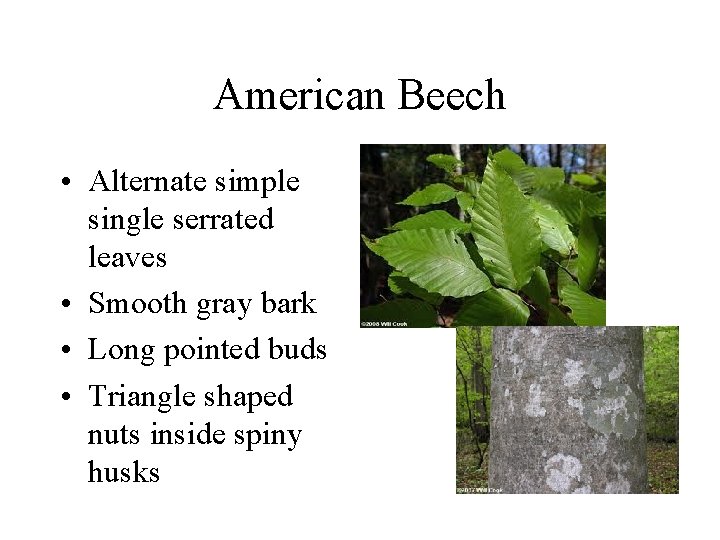
American Beech • Alternate simple single serrated leaves • Smooth gray bark • Long pointed buds • Triangle shaped nuts inside spiny husks
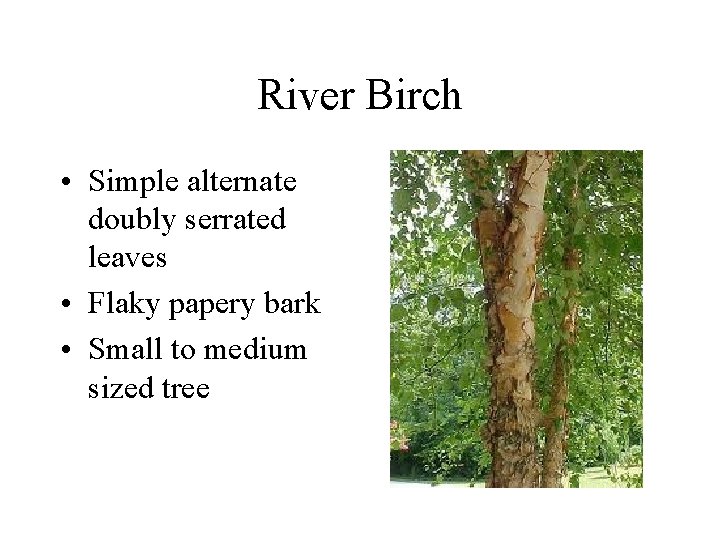
River Birch • Simple alternate doubly serrated leaves • Flaky papery bark • Small to medium sized tree
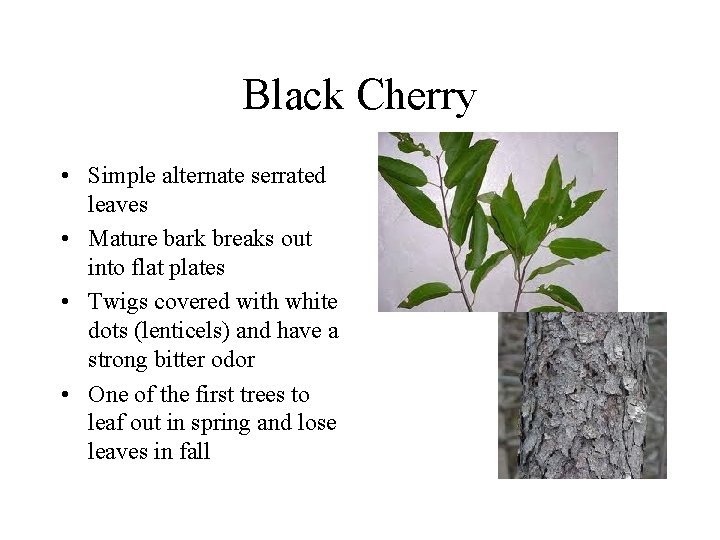
Black Cherry • Simple alternate serrated leaves • Mature bark breaks out into flat plates • Twigs covered with white dots (lenticels) and have a strong bitter odor • One of the first trees to leaf out in spring and lose leaves in fall
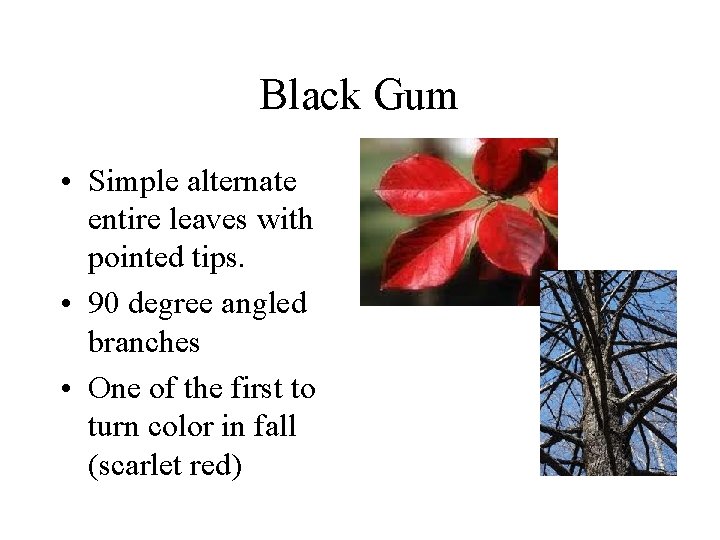
Black Gum • Simple alternate entire leaves with pointed tips. • 90 degree angled branches • One of the first to turn color in fall (scarlet red)
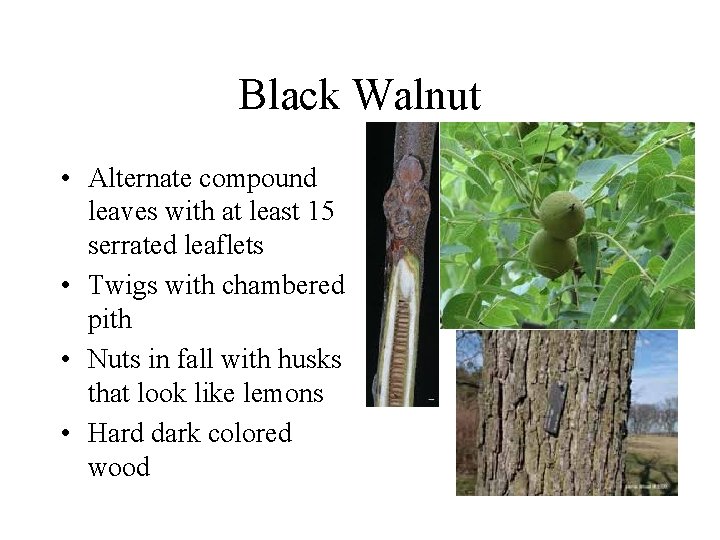
Black Walnut • Alternate compound leaves with at least 15 serrated leaflets • Twigs with chambered pith • Nuts in fall with husks that look like lemons • Hard dark colored wood
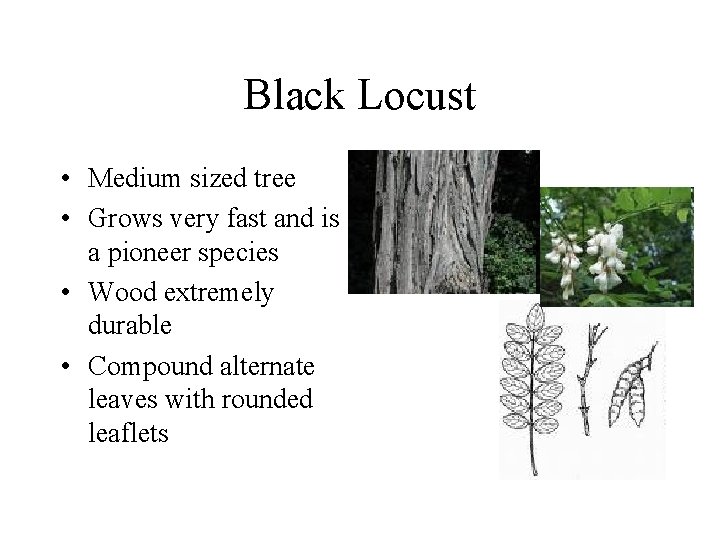
Black Locust • Medium sized tree • Grows very fast and is a pioneer species • Wood extremely durable • Compound alternate leaves with rounded leaflets
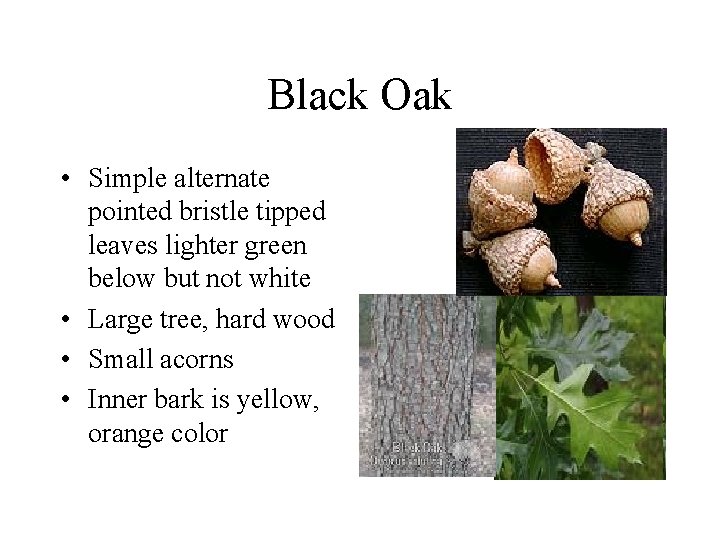
Black Oak • Simple alternate pointed bristle tipped leaves lighter green below but not white • Large tree, hard wood • Small acorns • Inner bark is yellow, orange color
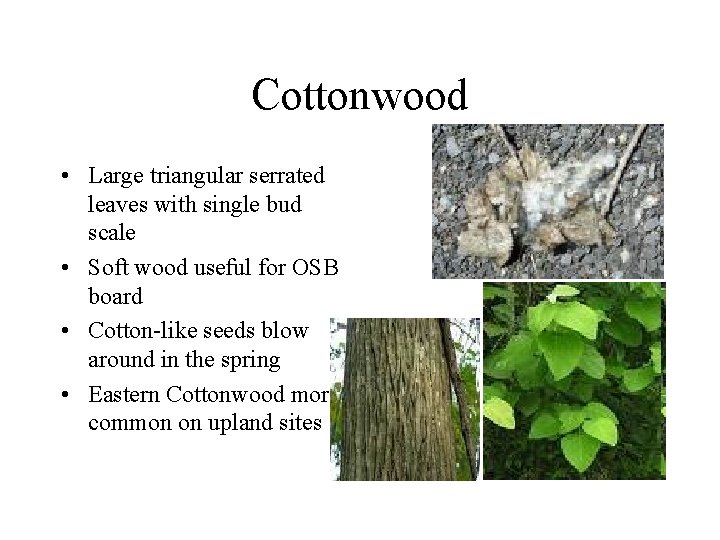
Cottonwood • Large triangular serrated leaves with single bud scale • Soft wood useful for OSB board • Cotton-like seeds blow around in the spring • Eastern Cottonwood more common on upland sites
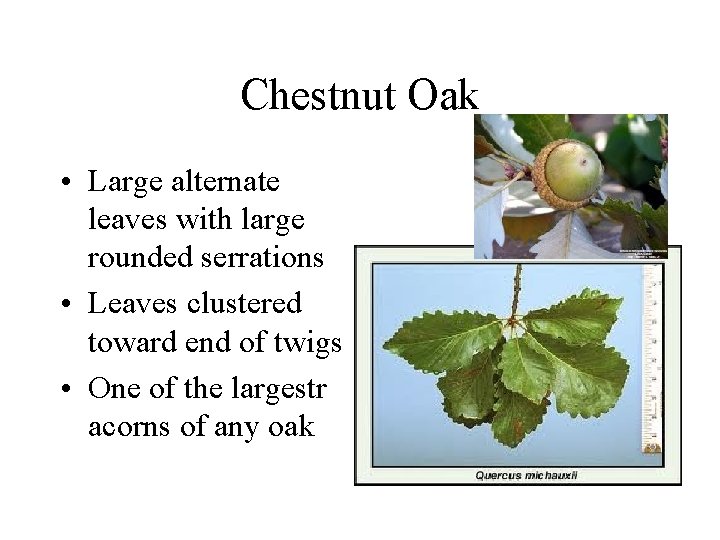
Chestnut Oak • Large alternate leaves with large rounded serrations • Leaves clustered toward end of twigs • One of the largestr acorns of any oak
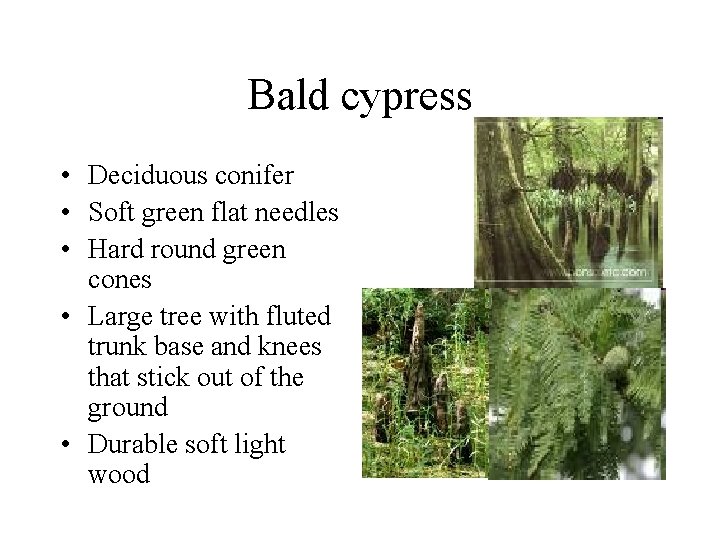
Bald cypress • Deciduous conifer • Soft green flat needles • Hard round green cones • Large tree with fluted trunk base and knees that stick out of the ground • Durable soft light wood
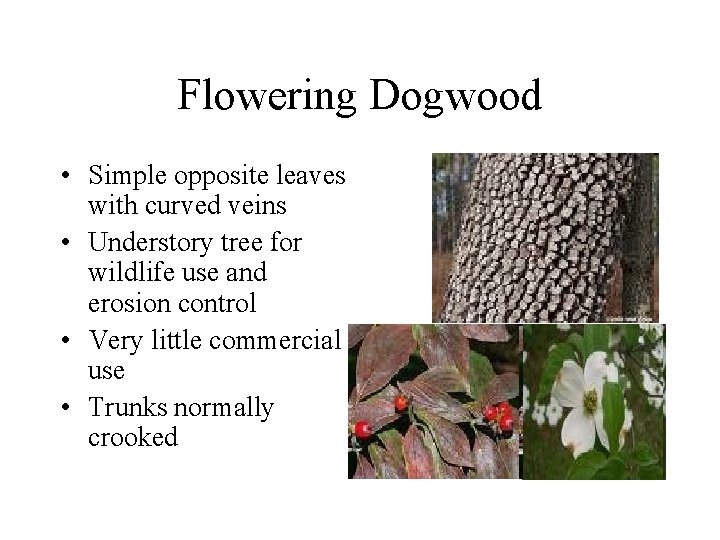
Flowering Dogwood • Simple opposite leaves with curved veins • Understory tree for wildlife use and erosion control • Very little commercial use • Trunks normally crooked
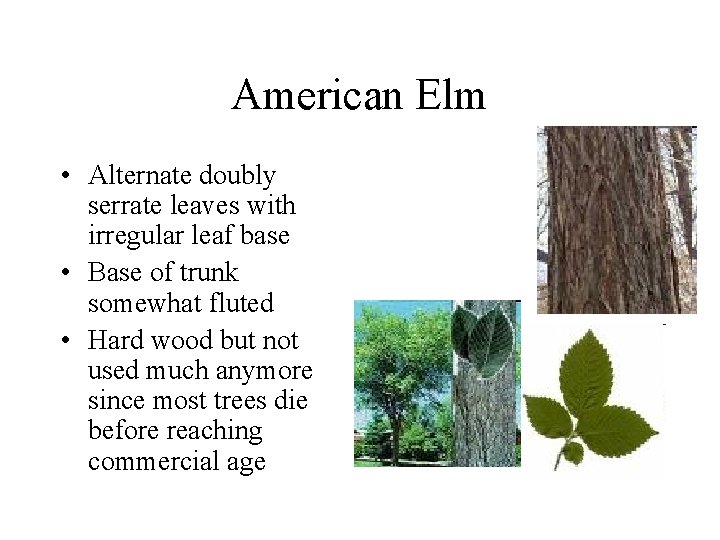
American Elm • Alternate doubly serrate leaves with irregular leaf base • Base of trunk somewhat fluted • Hard wood but not used much anymore since most trees die before reaching commercial age
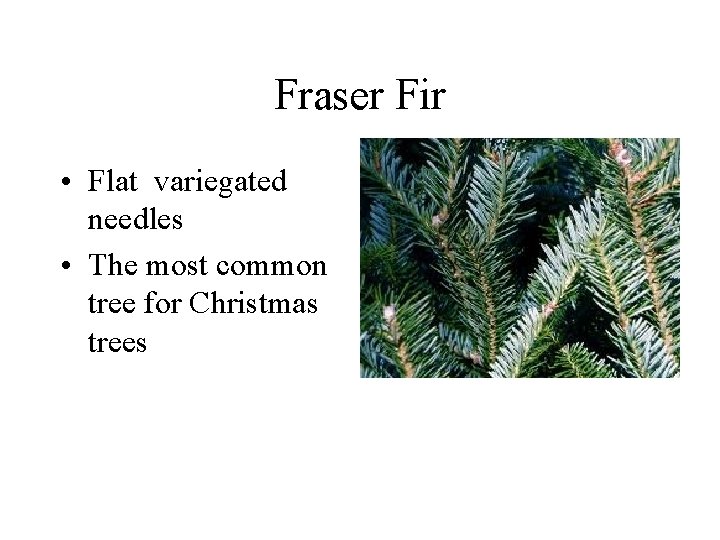
Fraser Fir • Flat variegated needles • The most common tree for Christmas trees
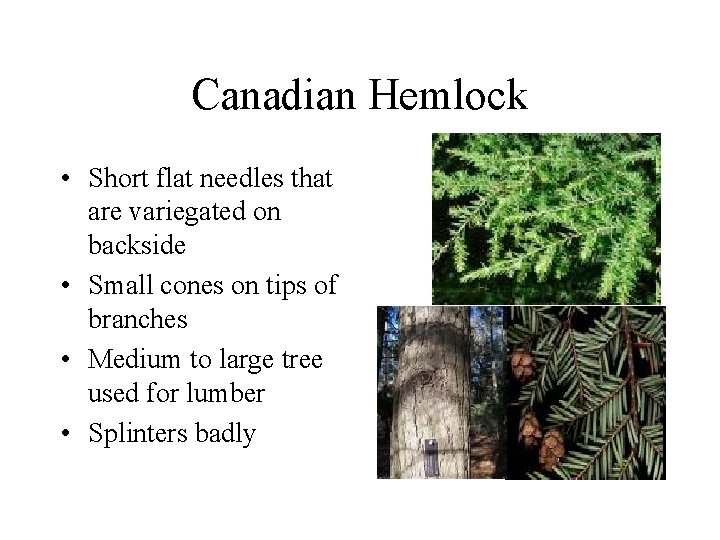
Canadian Hemlock • Short flat needles that are variegated on backside • Small cones on tips of branches • Medium to large tree used for lumber • Splinters badly
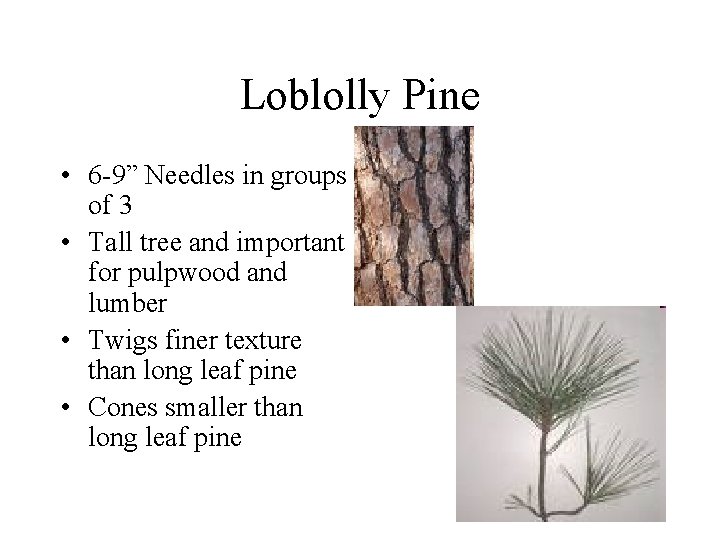
Loblolly Pine • 6 -9” Needles in groups of 3 • Tall tree and important for pulpwood and lumber • Twigs finer texture than long leaf pine • Cones smaller than long leaf pine
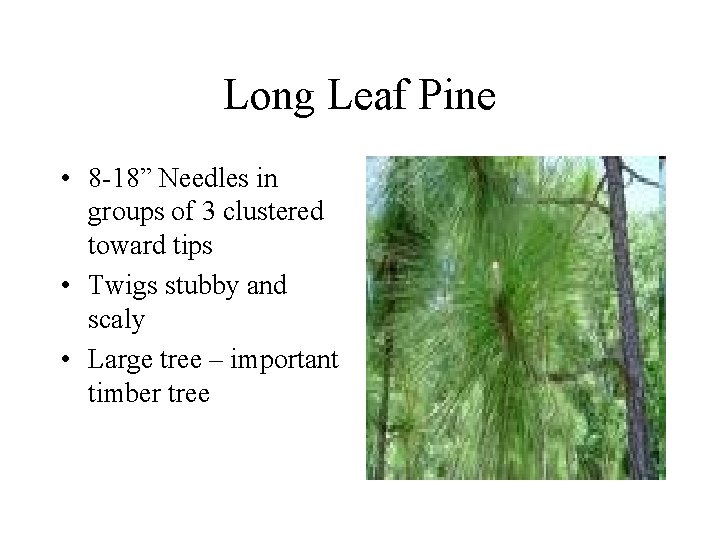
Long Leaf Pine • 8 -18” Needles in groups of 3 clustered toward tips • Twigs stubby and scaly • Large tree – important timber tree
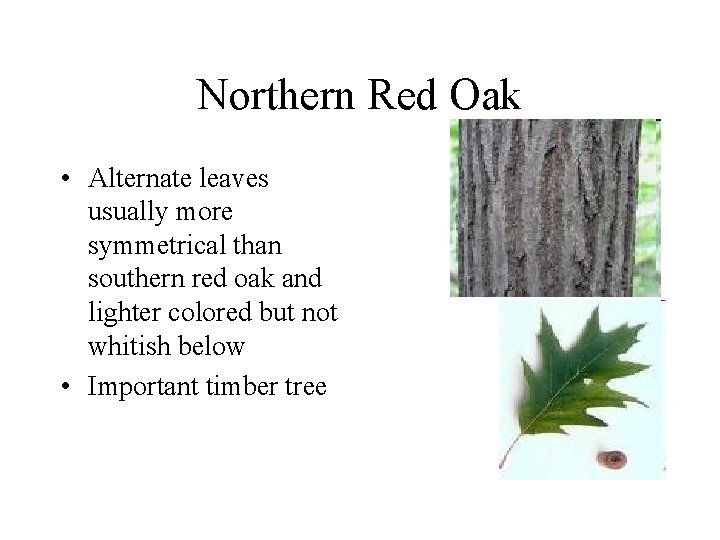
Northern Red Oak • Alternate leaves usually more symmetrical than southern red oak and lighter colored but not whitish below • Important timber tree
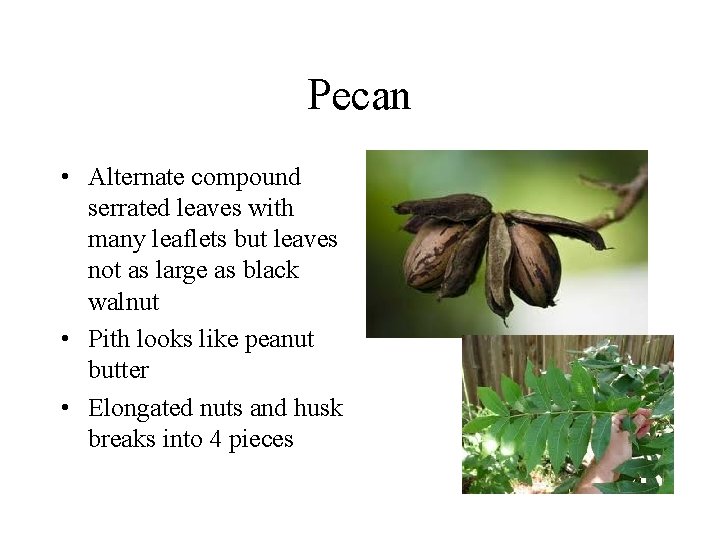
Pecan • Alternate compound serrated leaves with many leaflets but leaves not as large as black walnut • Pith looks like peanut butter • Elongated nuts and husk breaks into 4 pieces
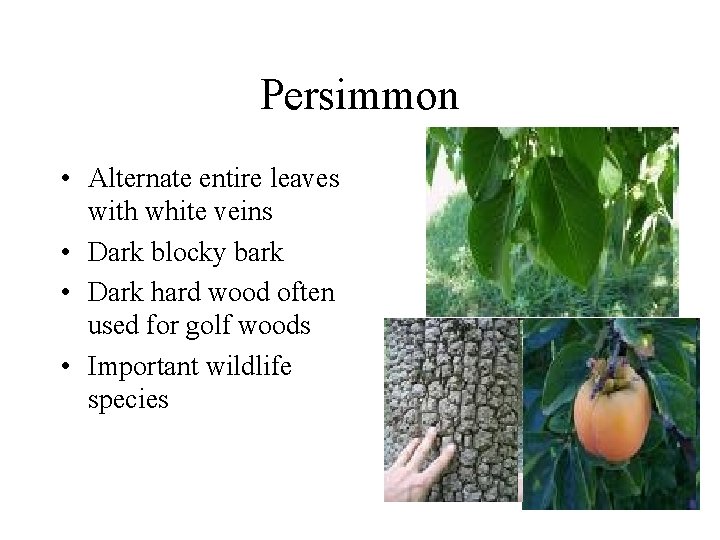
Persimmon • Alternate entire leaves with white veins • Dark blocky bark • Dark hard wood often used for golf woods • Important wildlife species
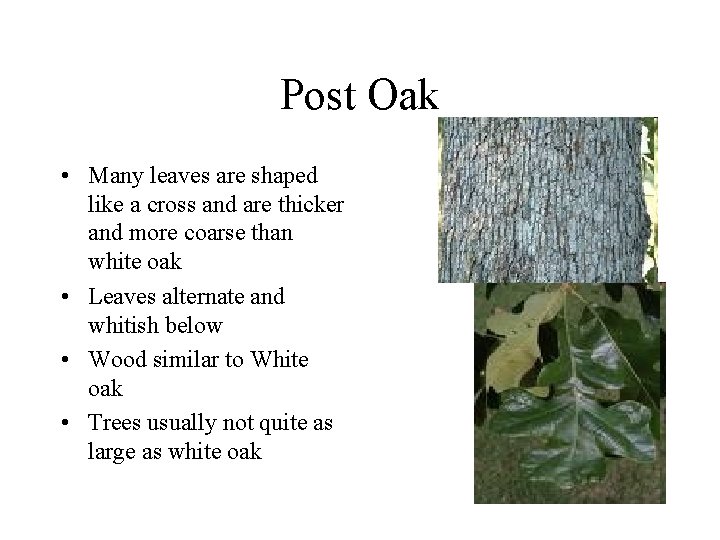
Post Oak • Many leaves are shaped like a cross and are thicker and more coarse than white oak • Leaves alternate and whitish below • Wood similar to White oak • Trees usually not quite as large as white oak
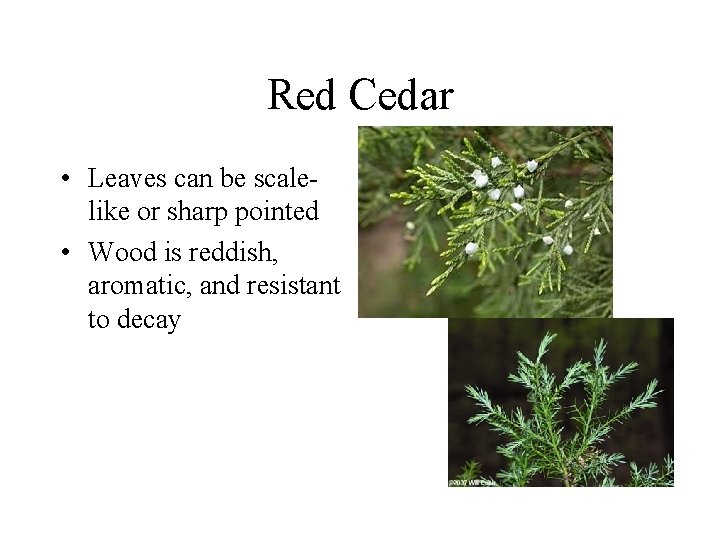
Red Cedar • Leaves can be scalelike or sharp pointed • Wood is reddish, aromatic, and resistant to decay
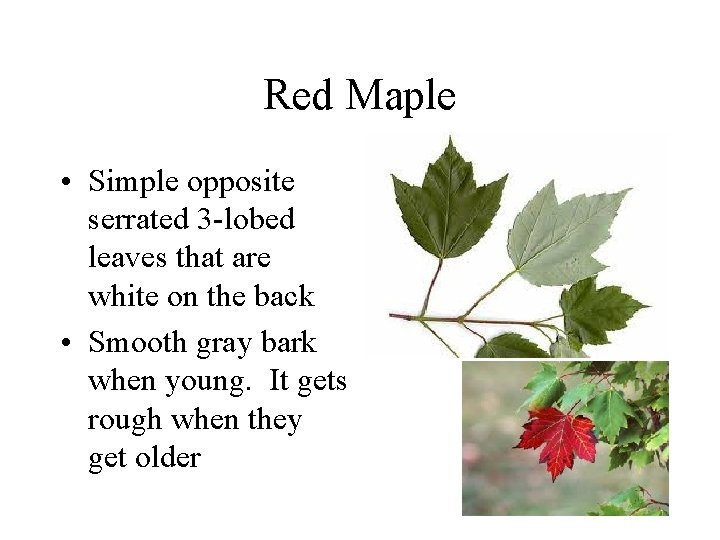
Red Maple • Simple opposite serrated 3 -lobed leaves that are white on the back • Smooth gray bark when young. It gets rough when they get older
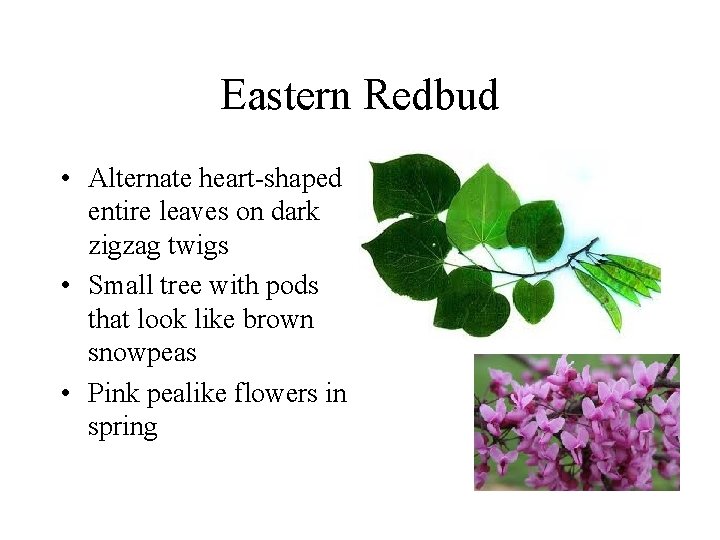
Eastern Redbud • Alternate heart-shaped entire leaves on dark zigzag twigs • Small tree with pods that look like brown snowpeas • Pink pealike flowers in spring
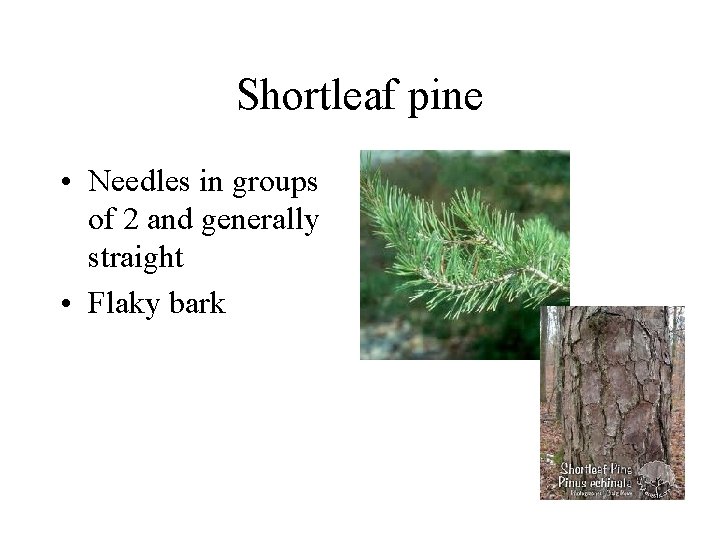
Shortleaf pine • Needles in groups of 2 and generally straight • Flaky bark
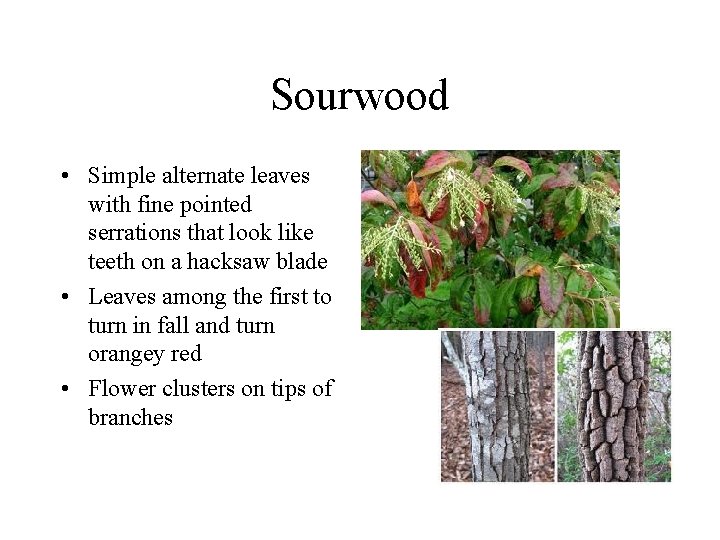
Sourwood • Simple alternate leaves with fine pointed serrations that look like teeth on a hacksaw blade • Leaves among the first to turn in fall and turn orangey red • Flower clusters on tips of branches
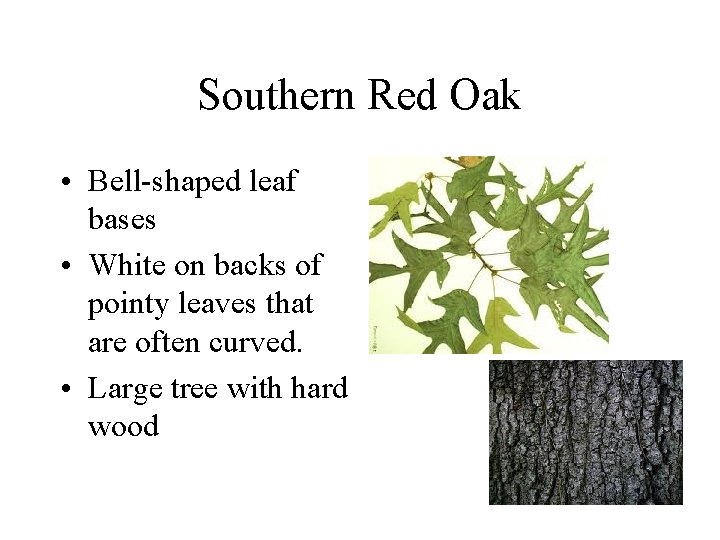
Southern Red Oak • Bell-shaped leaf bases • White on backs of pointy leaves that are often curved. • Large tree with hard wood
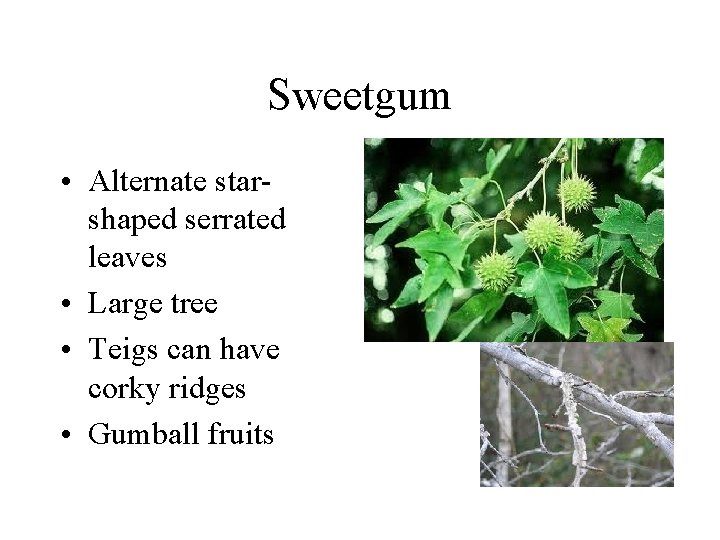
Sweetgum • Alternate starshaped serrated leaves • Large tree • Teigs can have corky ridges • Gumball fruits
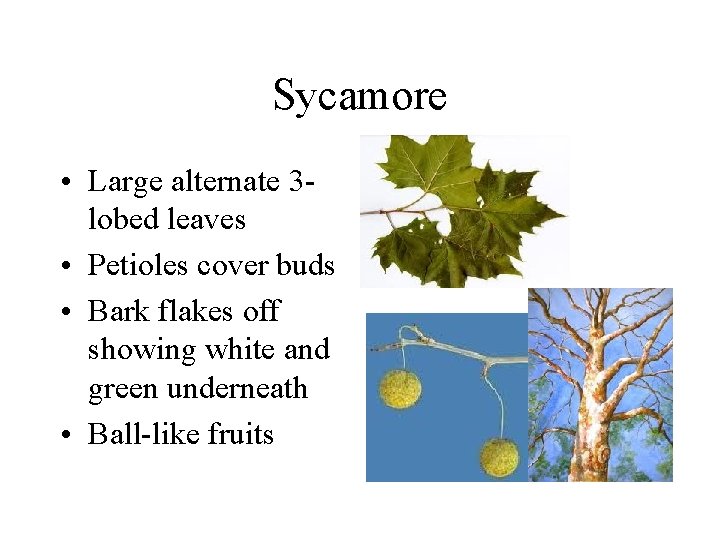
Sycamore • Large alternate 3 lobed leaves • Petioles cover buds • Bark flakes off showing white and green underneath • Ball-like fruits
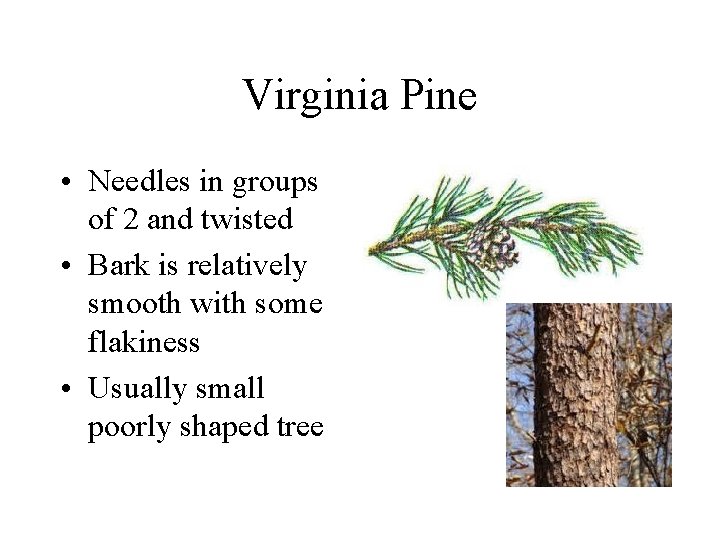
Virginia Pine • Needles in groups of 2 and twisted • Bark is relatively smooth with some flakiness • Usually small poorly shaped tree
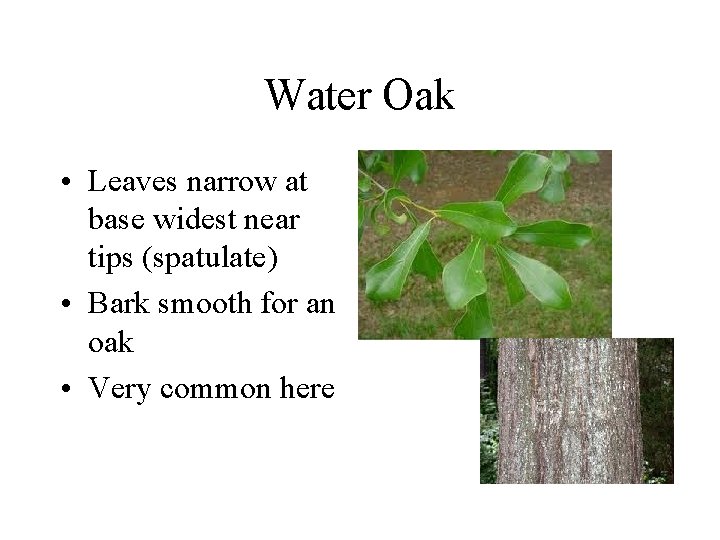
Water Oak • Leaves narrow at base widest near tips (spatulate) • Bark smooth for an oak • Very common here
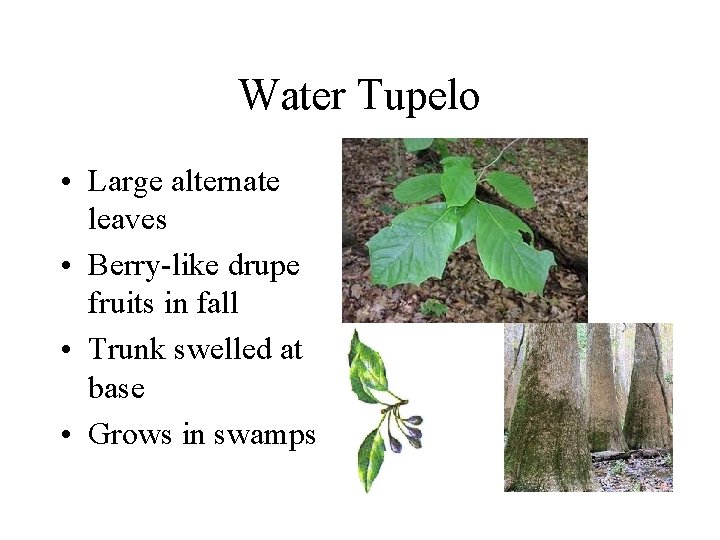
Water Tupelo • Large alternate leaves • Berry-like drupe fruits in fall • Trunk swelled at base • Grows in swamps
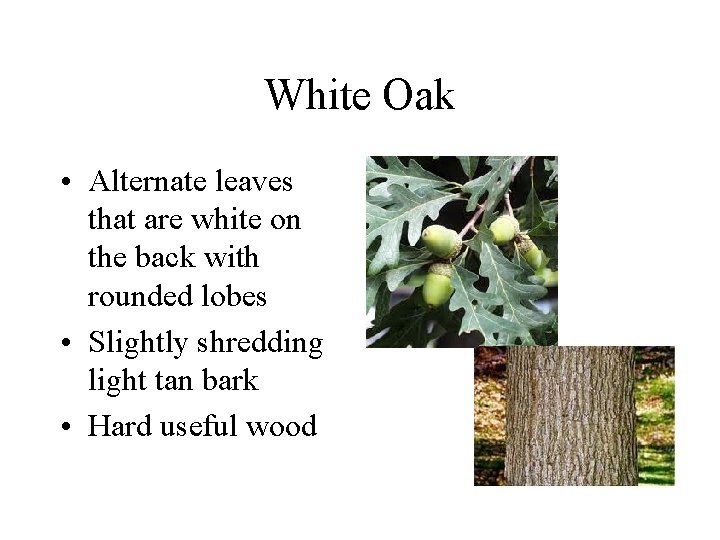
White Oak • Alternate leaves that are white on the back with rounded lobes • Slightly shredding light tan bark • Hard useful wood
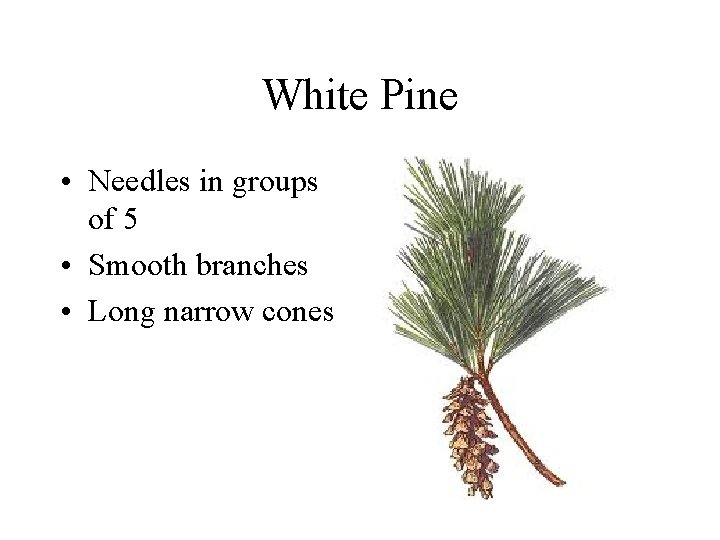
White Pine • Needles in groups of 5 • Smooth branches • Long narrow cones
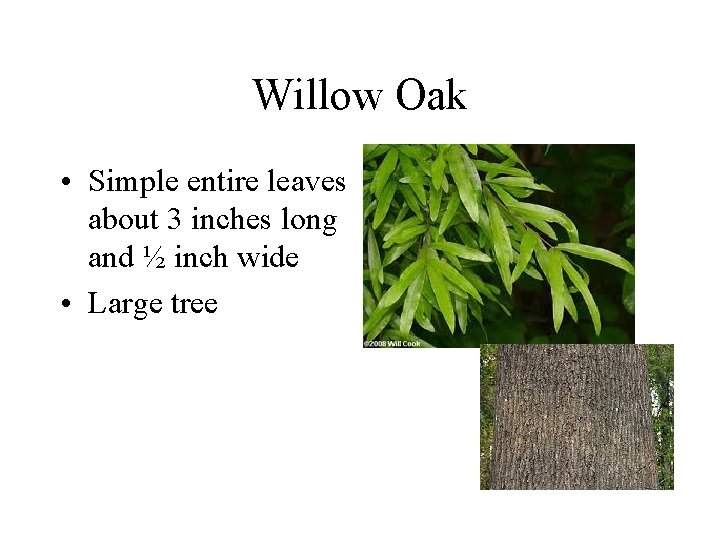
Willow Oak • Simple entire leaves about 3 inches long and ½ inch wide • Large tree
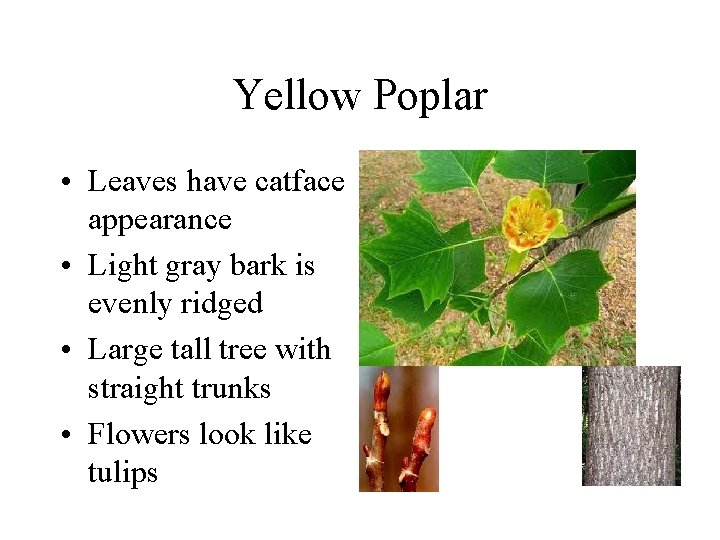
Yellow Poplar • Leaves have catface appearance • Light gray bark is evenly ridged • Large tall tree with straight trunks • Flowers look like tulips