
Hialeah Sr High Science Department BENCHMARK REVIEW QUESTIONS

Hialeah Sr. High Science Department BENCHMARK REVIEW QUESTIONS FOCUS II
Nature of Science (SC. 912. N. 1. 1)
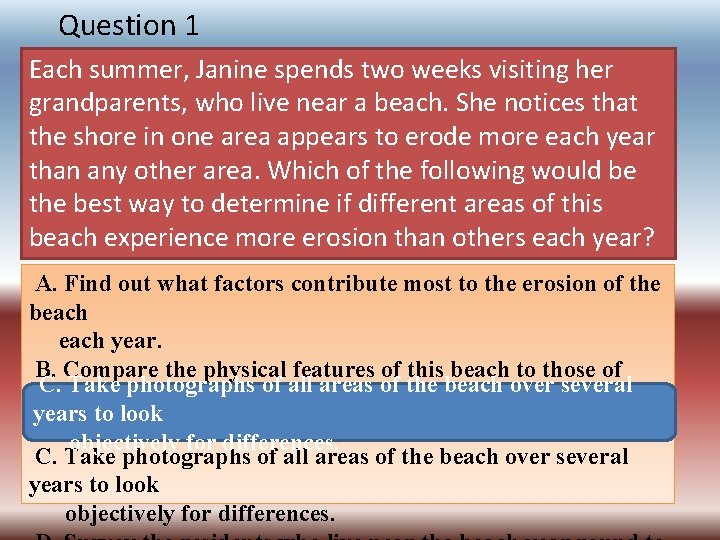
Question 1 Each summer, Janine spends two weeks visiting her grandparents, who live near a beach. She notices that the shore in one area appears to erode more each year than any other area. Which of the following would be the best way to determine if different areas of this beach experience more erosion than others each year? A. Find out what factors contribute most to the erosion of the beach year. B. Compare the physical features of this beach to those of C. Take photographs of all areas of the beach over several beaches in years to look other towns. objectively for differences. C. Take photographs of all areas of the beach over several years to look objectively for differences.
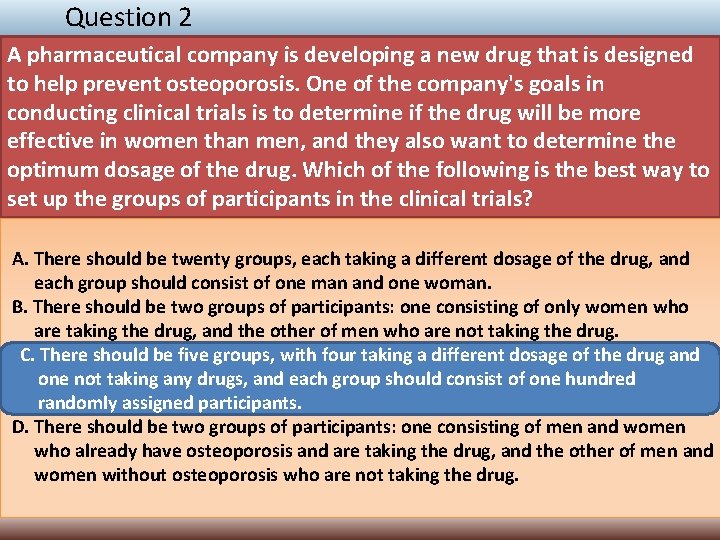
Question 2 A pharmaceutical company is developing a new drug that is designed to help prevent osteoporosis. One of the company's goals in conducting clinical trials is to determine if the drug will be more effective in women than men, and they also want to determine the optimum dosage of the drug. Which of the following is the best way to set up the groups of participants in the clinical trials? A. There should be twenty groups, each taking a different dosage of the drug, and each group should consist of one man and one woman. B. There should be two groups of participants: one consisting of only women who are taking the drug, and the other of men who are not taking the drug. Thereshouldbe befivegroups, withfourtakingaadifferentdosageofofthe thedrugand C. C. There one not taking any drugs, and each group should consist of of one hundred one randomly assigned participants. randomly D. There should be two groups of participants: one consisting of men and women who already have osteoporosis and are taking the drug, and the other of men and women without osteoporosis who are not taking the drug.
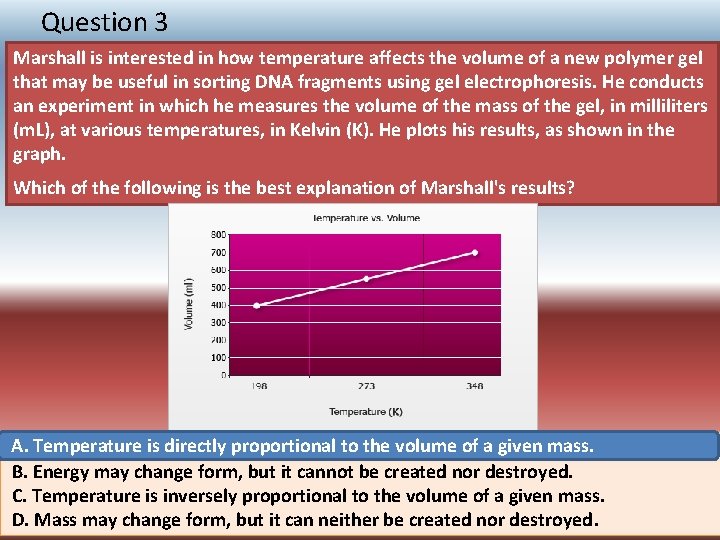
Question 3 Marshall is interested in how temperature affects the volume of a new polymer gel that may be useful in sorting DNA fragments using gel electrophoresis. He conducts an experiment in which he measures the volume of the mass of the gel, in milliliters (m. L), at various temperatures, in Kelvin (K). He plots his results, as shown in the graph. Which of the following is the best explanation of Marshall's results? A. Temperature is directly proportional to the volume of a given mass. B. Energy may change form, but it cannot be created nor destroyed. C. Temperature is inversely proportional to the volume of a given mass. D. Mass may change form, but it can neither be created nor destroyed.
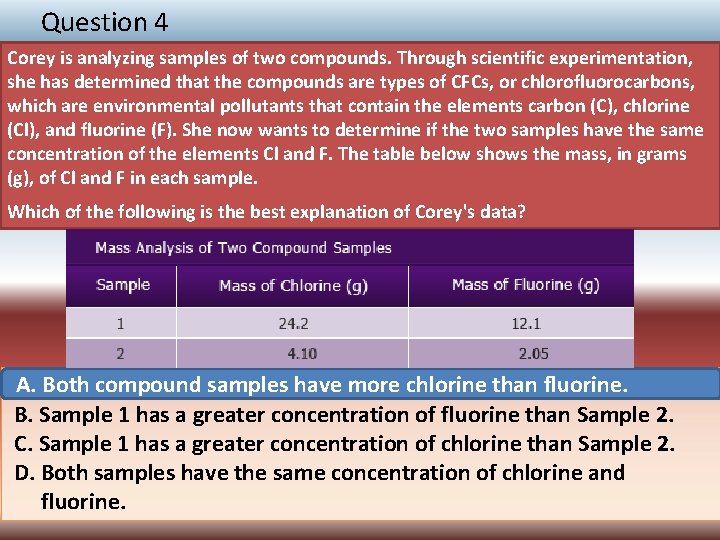
Question 4 Corey is analyzing samples of two compounds. Through scientific experimentation, she has determined that the compounds are types of CFCs, or chlorofluorocarbons, which are environmental pollutants that contain the elements carbon (C), chlorine (Cl), and fluorine (F). She now wants to determine if the two samples have the same concentration of the elements Cl and F. The table below shows the mass, in grams (g), of Cl and F in each sample. Which of the following is the best explanation of Corey's data? A. Both compound samples have more chlorine than fluorine. B. Sample 1 has a greater concentration of fluorine than Sample 2. C. Sample 1 has a greater concentration of chlorine than Sample 2. D. Both samples have the same concentration of chlorine and fluorine.
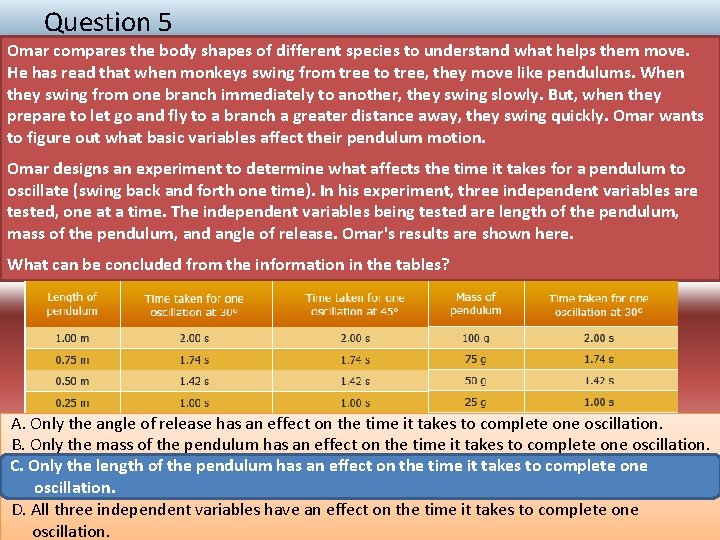
Question 5 Omar compares the body shapes of different species to understand what helps them move. He has read that when monkeys swing from tree to tree, they move like pendulums. When they swing from one branch immediately to another, they swing slowly. But, when they prepare to let go and fly to a branch a greater distance away, they swing quickly. Omar wants to figure out what basic variables affect their pendulum motion. Omar designs an experiment to determine what affects the time it takes for a pendulum to oscillate (swing back and forth one time). In his experiment, three independent variables are tested, one at a time. The independent variables being tested are length of the pendulum, mass of the pendulum, and angle of release. Omar's results are shown here. What can be concluded from the information in the tables? A. Only the angle of release has an effect on the time it takes to complete one oscillation. B. Only the mass of the pendulum has an effect on the time it takes to complete one oscillation. C. Only the length of of the pendulumhas hasan aneffecton onthe thetimeitittakestotocompleteone oscillation. D. All three independent variables have an effect on the time it takes to complete one oscillation.
(SC. 912. L. 14. 1)
Question 1 According to cell theory, which of the following best describes the role of cells in living organisms? A. Cells join together to form multicellular B. Cells are the basic operating units of living organisms. C. Cells make up the soft portions of tissues in living organisms. D. Cells are responsible for coordinating activities in multicellular organisms.
Question 2 Which of the following best describes a way in which all living organisms are similar? A. They all need oxygen to survive. B. They are all made of at least one cell. B. of atto least one cell. C. Theyare areallallmade adapted survive in their environment. D. They all need energy from other organisms to survive.
Question 3 According to modern cell theory, how do new cells develop? A. Cells come from preexisting cells through cell division. B. The original cell dies and leaves a new one in its place. C. Cells form by free-cell formation, similar to how crystals are formed. D. A membrane forms around DNA that is released from a parent cell, and the DNA contains the information needed to produce organelles.
Question 4 Robert Hooke saw the first cork cells under a microscope in 1665, but it wasn't until 1839 that cell theory gained the support it needed to be accepted. Why did it take 174 years for cell theory to become widely accepted? A. Microscopes were very primitive in 1665, and no real progress was made on improving them until modern microscopes appeared in the early 1830 s. B. B. AAgreatmultitudeof oforganismshad hadto tobe beexaminedand andfound to to be bemadeof ofcellsbeforethe thestatementthatall alllivingthingsare madeof ofcellscouldbe betrusted. C. When Hooke first proposed that all living things are made of cells, the public was so opposed to the idea that no one dared bring it up again for several generations. D. Scientists at the time were divided on whether or not cells were living things, and it took generations of debate after the evidence was gathered for a majority to win the fight.
Question 5 When scientists set out to test a hypothesis, it is often most practical to try to prove the hypothesis false rather than to prove it is true in all cases. Scientists place great confidence in cell theory, yet it has not been tested in every living thing on the planet. What piece of evidence would cause scientists to decide that cell theory would need to be revised? A. A. An An organism was found with tissues made of of something other than cells. B. A cell was found that could continue to divide and reproduce indefinitely. C. An animal cell was found that could harness solar energy as plant cells do. D. Cells were found that used something other than DNA as hereditary material.

(SC. 912. L. 14. 26)
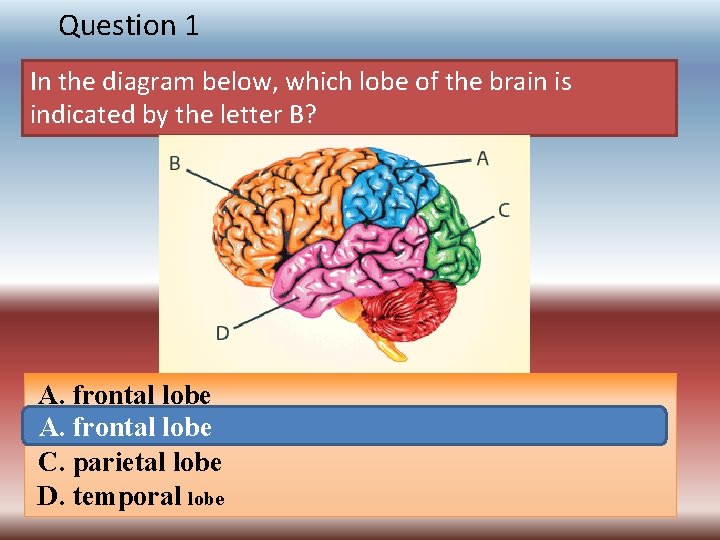
Question 1 In the diagram below, which lobe of the brain is indicated by the letter B? A. frontal lobe A. occipital frontal lobe B. lobe C. parietal lobe D. temporal lobe
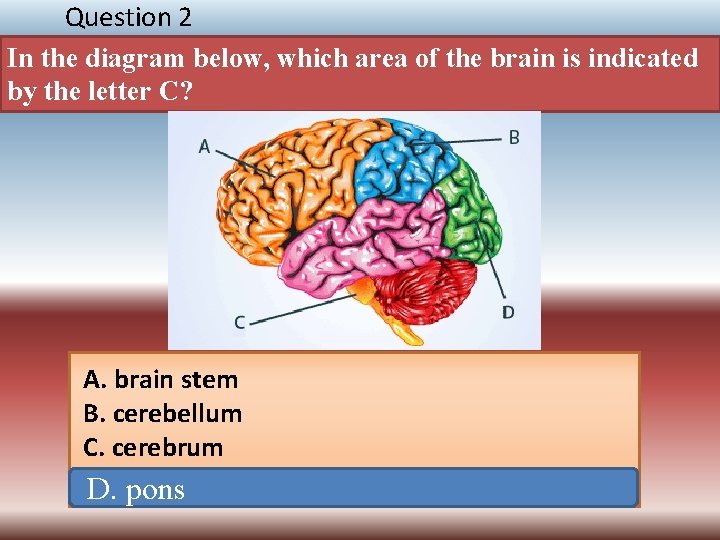
Question 2 In the diagram below, which area of the brain is indicated by the letter C? A. brain stem B. cerebellum C. cerebrum D. D. pons
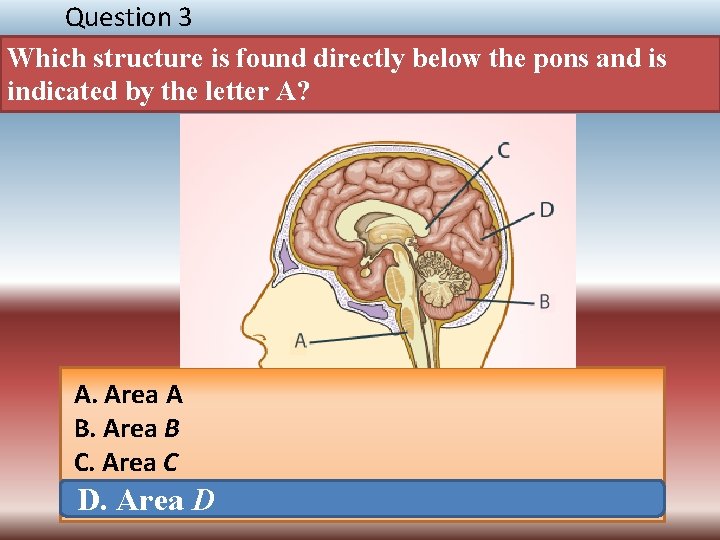
Question 3 Which structure is found directly below the pons and is indicated by the letter A? A. Area A B. Area B C. Area C D. DD D. Area
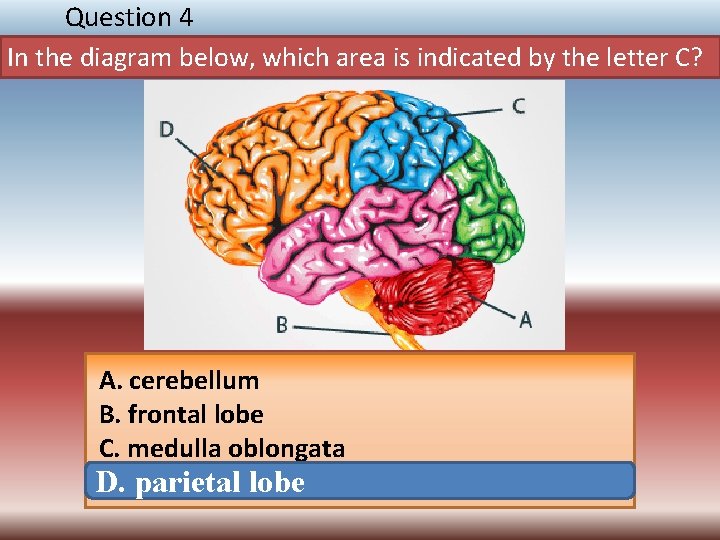
Question 4 In the diagram below, which area is indicated by the letter C? A. cerebellum B. frontal lobe C. medulla oblongata D. Parietal D. parietallobe
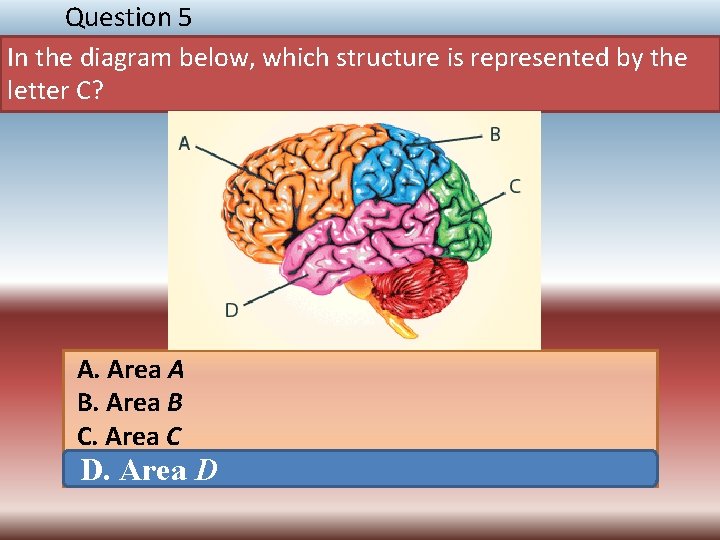
Question 5 In the diagram below, which structure is represented by the letter C? A. Area A B. Area B C. Area C D. DD D. Area
Cells (SC. 912. L. 14. 3)
Question 1 Which of the following statements best describes the nucleus of a cell? A. The nucleus has aa membrane that allows for active A. transport of of RNA and proteins. transport B. The nucleus exports lysosomes which direct amino acid production within the cell. C. The nucleus is responsible for supplying the cell with chemical energy in the form of ATP. D. The nucleus contains some of the genetic material in a cell; the majority is contained in the cytoplasm.
Question 2 Which of the following is a structure that is present in both eukaryotic and prokaryotic cells? A. Golgi complex B. plasma membrane C. nucleus D. vacuole
Question 3 Which of the following statements best describes the function of the lipid bilayer in the cell membrane? A. Lipids attract water on both sides of the bilayer. B. Lipid-soluble material cannot pass through a lipid bilayer. C. Proteins can only transport uncharged particles through the lipid bilayer. D. Proteins distributed along the bilayer can allow water to pass through the membrane.
Question 4 Which of the following statements correctly explains the function of the Golgi apparatus within a cell? A. The Golgi apparatus uses oxygen to convert sugar into chemical energy and also controls the metabolism of the cell. B. The Golgi apparatus contains most of the genetic material within the cell and is responsible for gene expression and DNA replication when the cell divides. C. The Golgi apparatus prepares new macromolecules such as fats and lipids by sorting and encasing them before sending them to the correct destination within a cell. D. The Golgi apparatus breaks down molecules that are not needed within the cell, and returns some of the products of digestion to the cell for use in building new cell parts.
Question 5 Which of the following is a characteristic shared by both plant and animal cells? A. chloroplasts B. large central vacuole C. mitochondria D. rigid cell walls

Blood Flow (SC. 912. L. 14. 36)
Question 1 In a patient experiencing hypothermia, blood viscosity may increase. What effect would this have on the circulation of blood in the patient's body? A. Blood pressure would decrease. B. The overall volume of blood would decrease. C. The resistance to blood flow would increase. D. Blood flow to the extremities would increase.
Question 2 Which of the following statements best describes what happens during exercise? A. Bloodvessels in the muscles to increase A. in the muscles dilate to increase blood flow. B. Blood vessels in the heart dilate to increase blood pressure. C. Blood vessels in the organs dilate to increase blood oxygen. D. Blood vessels in the lungs dilate to increase blood volume.
Question 3 Which of the following would result in an increase in blood flow? A. an increase in vein length B. an increase in blood viscosity in in blood pressure C. an anincrease blood pressure D. a decrease in blood vessel diameter
Question 4 Atherosclerosis is a disorder in which substances like fat and cholesterol form plaques that can block arteries. Decreasing the radius of an artery would have which of the following effects? A. decreasing blood pressure B. decreasing red blood cell size C. increasing blood oxygen levels D. D. increasingresistancetotobloodflow
Question 5 Which of the following factors has the greatest effect on blood pressure? A. blood p. H B. blood oxygen C. blood glucose D. blood volume

Immune System(SC. 912. L. 14. 52)
Question 1 Rheumatoid arthritis is an autoimmune disease in which the immune system becomes overactive and attacks the body's own tissues. Which of the following would you expect to be one of the treatments for rheumatoid arthritis? A. antibiotic ointments B. anti-inflammatory medications C. blood transfusions D. vaccine injections
Question 2 The common cold, most often caused by the rhinovirus, causes fever, sore throat, coughing, and nasal congestion. Why is treatment with antibiotics not recommended for the common cold? A. They are only effective in treating the fever. B. They are ineffective against viral infections. C. They increase the susceptibility to future colds. D. They require a dosage that most people would not tolerate
Question 3 Jeremy is currently healthy, but has a family history of high blood pressure, high cholesterol, and stroke. What would be the best way for Jeremy to prevent these diseases? A. A. maintainaahealthylifestyleand anddiet B. research new treatment and surgery options C. get a genetic test to determine whether he's at risk D. start taking medications before he has any symptoms
Question 4 Which of the following practices is the best way to prevent the spread of the flu virus? A. eating healthy food B. avoiding public places C. washinghands frequently D. taking large doses of vitamins
Question 5 Which of the following best describes a difference between the nonspecific and specific immune responses? A. The nonspecific response provides an an immediate response, while A. thethe specific response involves a delay between exposure andand specific response involves a delay between exposure response. B. The nonspecific response is based only on physical barriers, while the specific response includes both physical and chemical barriers. C. The nonspecific response provides a lasting immunity from previously encountered pathogens, while the specific response does not. D. The nonspecific response relies on the recognition of pathogens to combat infections, while the specific response relies on inflammation.
Plant Tissues (SC. 912. L. 14. 7)
Question 1 Which of the following would be most likely to encourage side branches to begin growing along the main stem of a plant? A. Pinching off the top bud to remove the apical meristem. B. Watering the plant heavily to increase the rate of photosynthesis. C. Adding root hormone to encourage root growth and nutrient absorption. D. Removing all the leaves along the main stem to give the side branches more light.
Question 2 When grass is cut with a lawn mower, it gives off a distinct aroma. Why does newly-mowed grass smell a little bit sweet? A. Sugars are produced when the cut leaves of grass begin to decay in sunlight. B. Sugars stored in the roots are sent to repair the damage to the grass leaves. C. When the grass leaves are damaged, some of the sugar produced in the leaves escapes. D. When grass leaves are cut, a small amount of sugar is produced at the site of injury to plug the phloem.
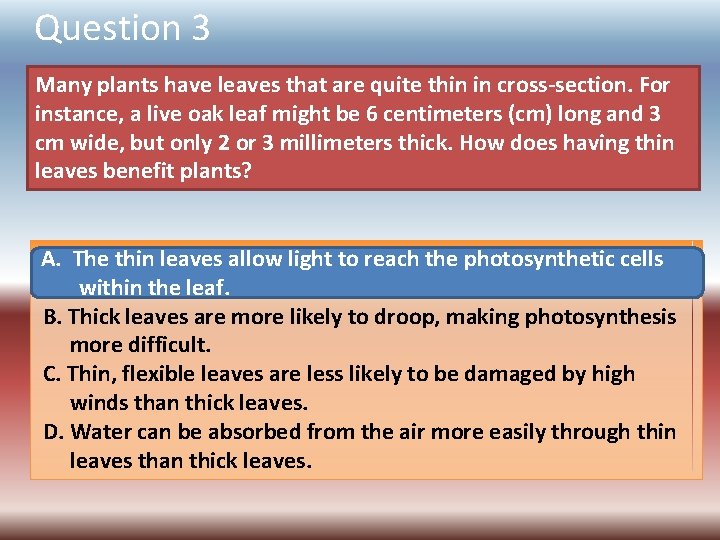
Question 3 Many plants have leaves that are quite thin in cross-section. For instance, a live oak leaf might be 6 centimeters (cm) long and 3 cm wide, but only 2 or 3 millimeters thick. How does having thin leaves benefit plants? A. A. The thin leaves allow light to reach the photosynthetic cells within the leaf. B. Thick leaves are more likely to droop, making photosynthesis more difficult. C. Thin, flexible leaves are less likely to be damaged by high winds than thick leaves. D. Water can be absorbed from the air more easily through thin leaves than thick leaves.
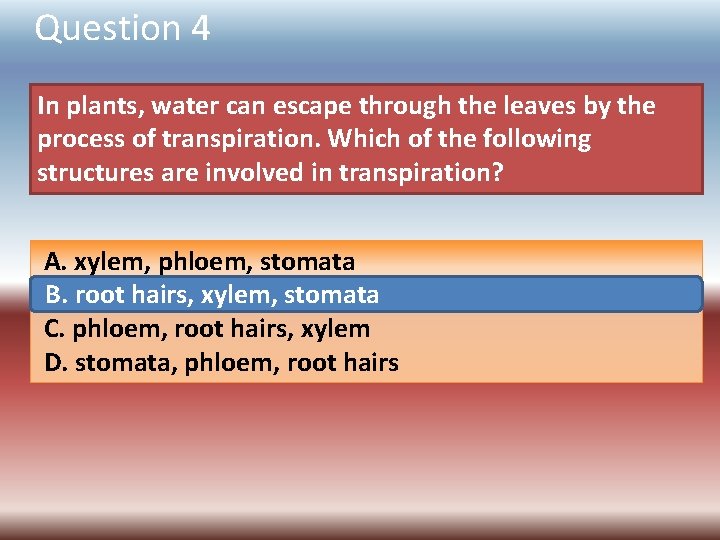
Question 4 In plants, water can escape through the leaves by the process of transpiration. Which of the following structures are involved in transpiration? A. xylem, phloem, stomata B. root hairs, xylem, stomata C. phloem, root hairs, xylem D. stomata, phloem, root hairs
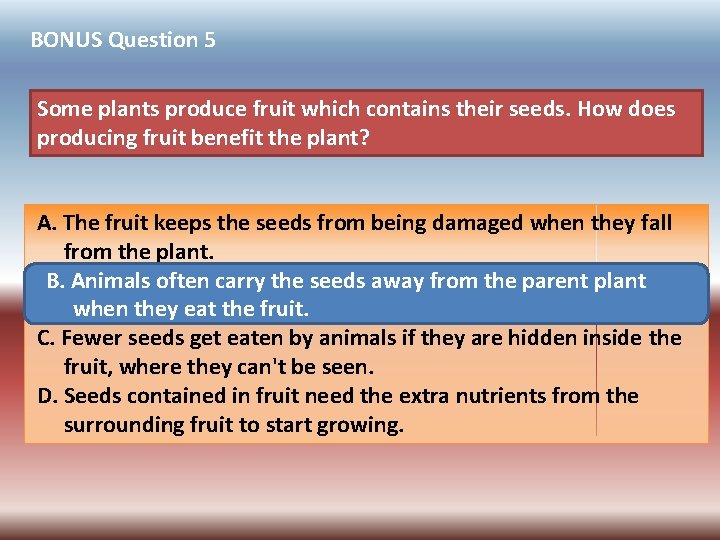
BONUS Question 5 Some plants produce fruit which contains their seeds. How does producing fruit benefit the plant? A. The fruit keeps the seeds from being damaged when they fall from the plant. Animalsoftencarrythe theseedsawayfromthe theparentplantwhen B. B. Animals when they the fruit. they eat theeat fruit. C. Fewer seeds get eaten by animals if they are hidden inside the fruit, where they can't be seen. D. Seeds contained in fruit need the extra nutrients from the surrounding fruit to start growing.

(SC. 912. L. 15. 1)
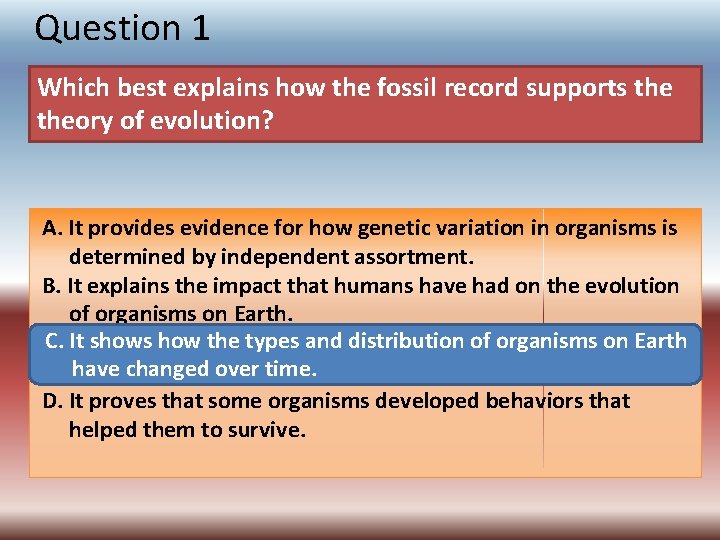
Question 1 Which best explains how the fossil record supports theory of evolution? A. It provides evidence for how genetic variation in organisms is determined by independent assortment. B. It explains the impact that humans have had on the evolution of organisms on Earth. C. It shows how the types and distribution of of organisms on on Earth C. have changed over time. have D. It proves that some organisms developed behaviors that helped them to survive.
Question 2 Many whales have tiny, unused hip and pelvis bones on their torsos. How does this evidence support theories about animal evolution? A. It shows that many animals, including whales, evolved to have unused body parts. B. It shows that whales may have evolved from land-dwelling B. animals. C. It shows that whales evolved at the same time as other nonmarine animals. D. It shows that marine animals, like whales, evolved much more slowly than land-dwelling animals.
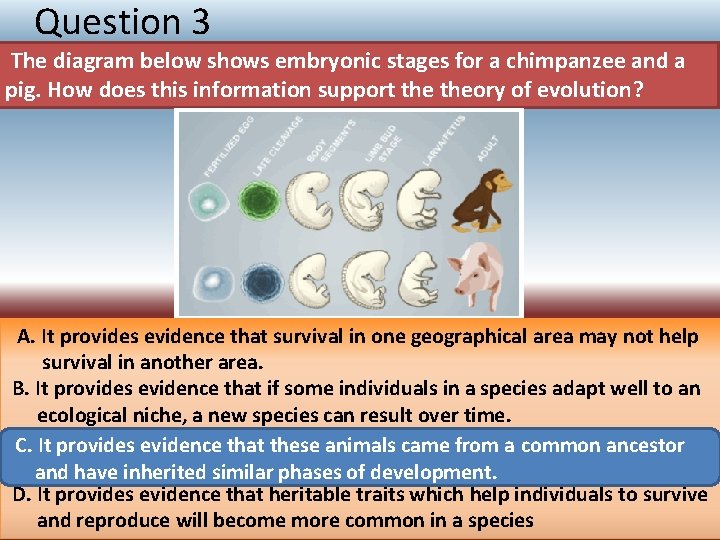
Question 3 The diagram below shows embryonic stages for a chimpanzee and a pig. How does this information support theory of evolution? A. It provides evidence that survival in one geographical area may not help survival in another area. B. It provides evidence that if some individuals in a species adapt well to an ecological niche, a new species can result over time. C. C. It provides evidence that these animals came from aa common ancestor and have inherited similar phases of of development. and D. It provides evidence that heritable traits which help individuals to survive and reproduce will become more common in a species
Question 4 Which of the following does NOT describe observable trends in hominid evolution? A. changes in hair and skin color B. development of tool use and language C. changes in jaw size and cranial capacity D. development of bipedal locomotion and increase in brain mass
Question 5 Which statement best explains how theory of evolution is supported by comparative embryology? A. All vertebrate embryos have a biological mother and father. B. All vertebrate embryos need oxygen, water, and food to survive. C. All vertebrate embryos have blood, organs, and the same kinds of cells. D. D. All vertebrate embryos have similar genes and follow aa similar developmental path.

(SC. 912. L. 15. 13)
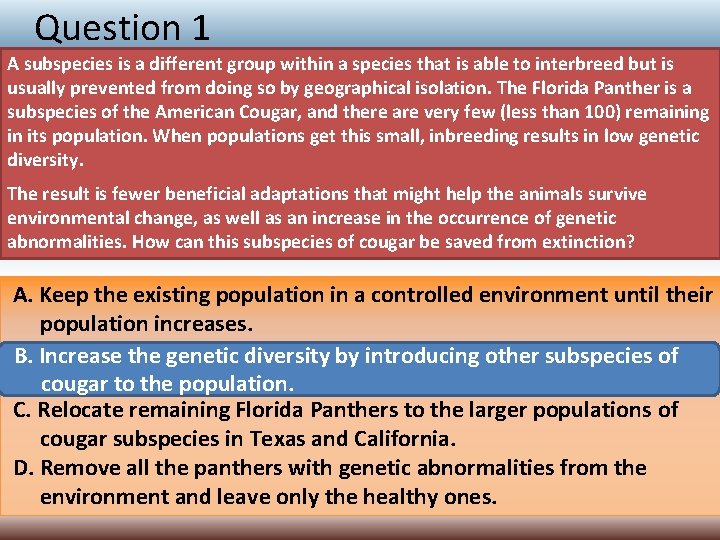
Question 1 A subspecies is a different group within a species that is able to interbreed but is usually prevented from doing so by geographical isolation. The Florida Panther is a subspecies of the American Cougar, and there are very few (less than 100) remaining in its population. When populations get this small, inbreeding results in low genetic diversity. The result is fewer beneficial adaptations that might help the animals survive environmental change, as well as an increase in the occurrence of genetic abnormalities. How can this subspecies of cougar be saved from extinction? A. Keep the existing population in a controlled environment until their population increases. B. Increase the genetic diversity by introducing other subspecies of cougar to the population. C. Relocate remaining Florida Panthers to the larger populations of cougar subspecies in Texas and California. D. Remove all the panthers with genetic abnormalities from the environment and leave only the healthy ones.
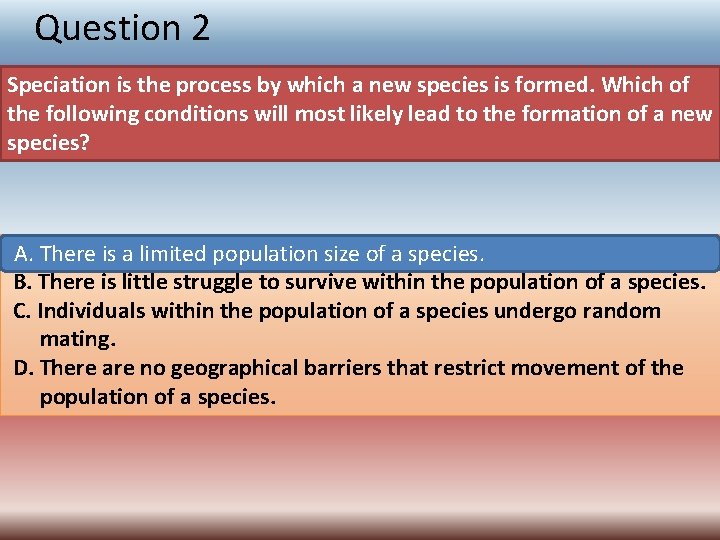
Question 2 Speciation is the process by which a new species is formed. Which of the following conditions will most likely lead to the formation of a new species? A. There is a limited populationsizeof ofaaspecies. B. There is little struggle to survive within the population of a species. C. Individuals within the population of a species undergo random mating. D. There are no geographical barriers that restrict movement of the population of a species.
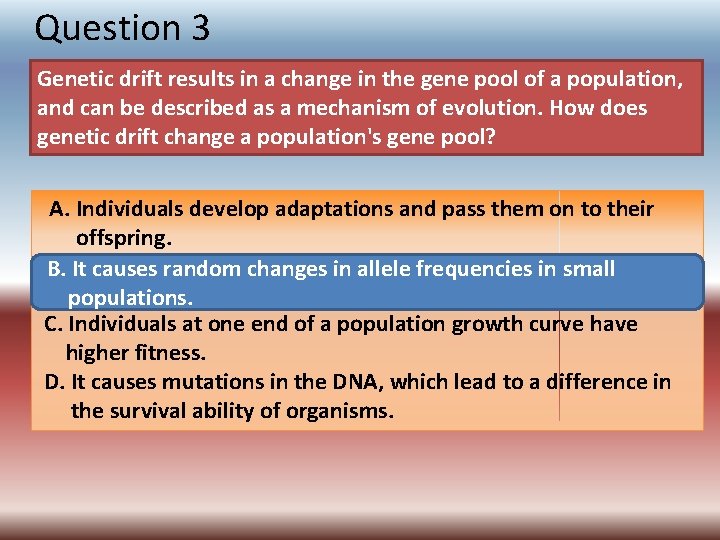
Question 3 Genetic drift results in a change in the gene pool of a population, and can be described as a mechanism of evolution. How does genetic drift change a population's gene pool? A. Individuals develop adaptations and pass them on to their offspring. B. B. It It causes random changes in in allele frequencies in in small populations. C. Individuals at one end of a population growth curve have higher fitness. D. It causes mutations in the DNA, which lead to a difference in the survival ability of organisms.
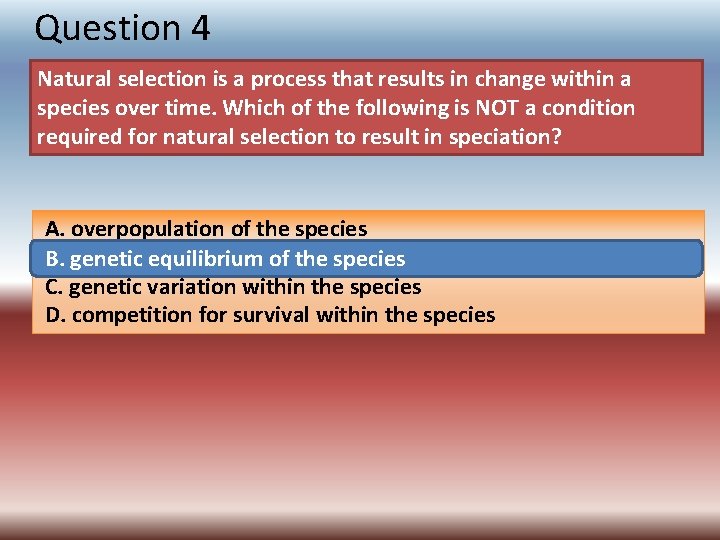
Question 4 Natural selection is a process that results in change within a species over time. Which of the following is NOT a condition required for natural selection to result in speciation? A. overpopulation of the species B. genetic equilibrium of the species C. genetic variation within the species D. competition for survival within the species
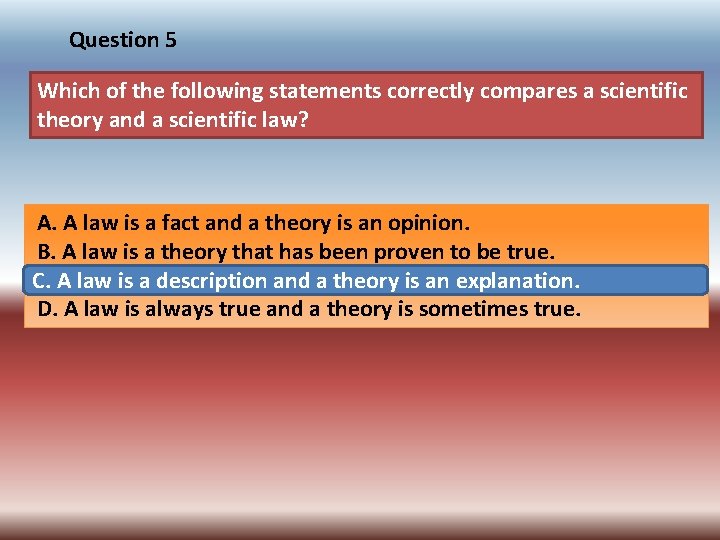
Question 5 Which of the following statements correctly compares a scientific theory and a scientific law? A. A law is a fact and a theory is an opinion. B. A law is a theory that has been proven to be true. C. AA law isis aa description and aa theory isis an an explanation. C. D. A law is always true and a theory is sometimes true.

Taxomony (SC. 912. L. 15. 6)
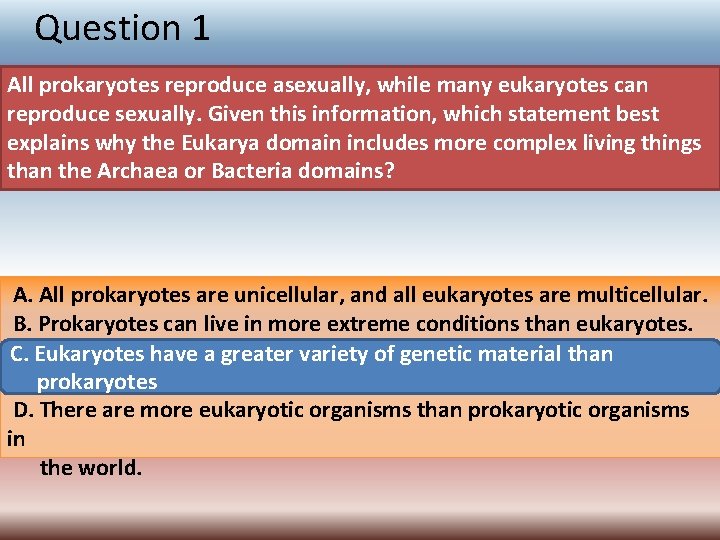
Question 1 All prokaryotes reproduce asexually, while many eukaryotes can reproduce sexually. Given this information, which statement best explains why the Eukarya domain includes more complex living things than the Archaea or Bacteria domains? A. All prokaryotes are unicellular, and all eukaryotes are multicellular. B. Prokaryotes can live in more extreme conditions than eukaryotes. C. Eukaryotes have aa greater variety of of genetic material than C. prokaryotes D. There are more eukaryotic organisms than prokaryotic organisms in the world.
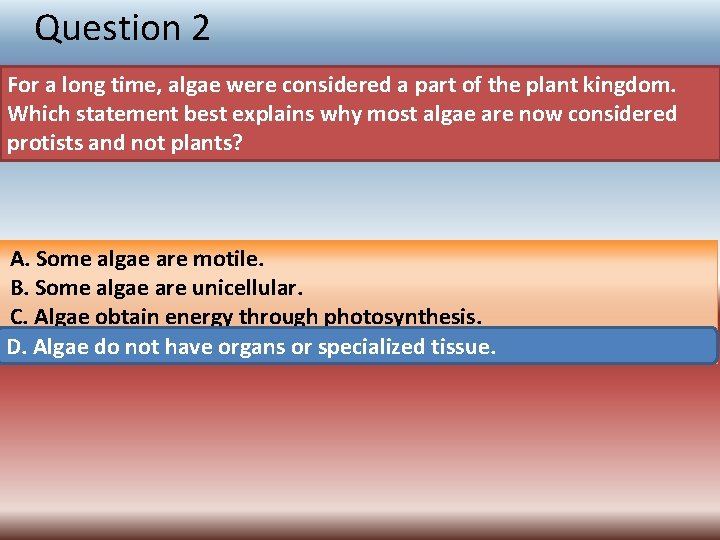
Question 2 For a long time, algae were considered a part of the plant kingdom. Which statement best explains why most algae are now considered protists and not plants? A. Some algae are motile. B. Some algae are unicellular. C. Algae obtain energy through photosynthesis. D. Algae do do not have organs or or specialized tissue. D.
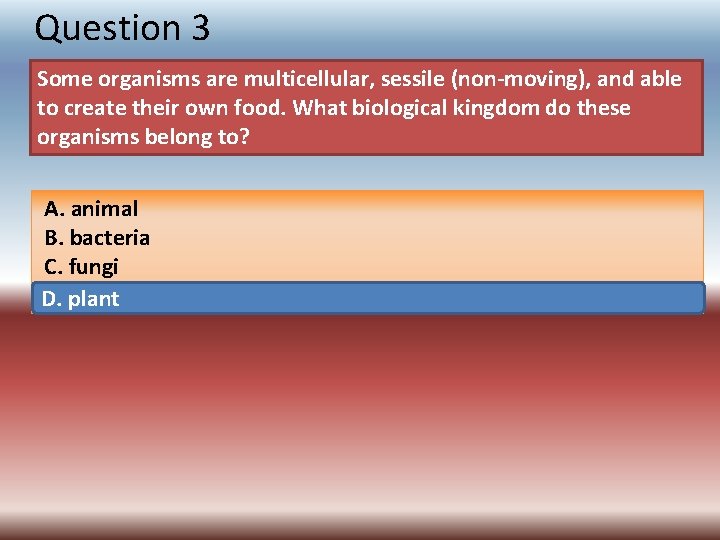
Question 3 Some organisms are multicellular, sessile (non-moving), and able to create their own food. What biological kingdom do these organisms belong to? A. animal B. bacteria C. fungi D. plant D.
Question 4 Organisms are classified into kingdoms based on their defining characteristics. Which of the following statements correctly compares the animal and plant kingdoms? A. Animal cells have chromosomes; plant cells do not. B. Animal cells are eukaryotic; plant cells are prokaryotic. C. Animal cells lack a cell wall; plant cells have a cell wall. D. Animals give off oxygen; plants give off carbon dioxide.
Question 5 Many protists are single-celled organisms, as are all bacteria. However, protists and bacteria are in different biological kingdoms. Which of the following comparisons of protists and bacteria is NOT true? A. Both protists and bacteria can be motile. B. Both protists and bacteria are microorganisms. C. Protists are eukaryotes, while bacteria are prokaryotes. D. D. Protists may be be photosynthetic, but bacteria cannot be be photosynthetic.
Origins of Life (SC. 912. L. 15. 8)
Question 1 Geological evidence indicates that Earth is approximately 4. 6 billion years old. For scientists to be able to explain the origin of life on Earth, they must be able to accurately date organisms. One method that scientists use to date samples is called radioactive dating. A. Radioactivedatingisisaamethodof ofabsolutedating. A. B. Radioactive dating is a method of relative dating. C. Radioactive dating uses index fossils to date rocks. D. Radioactive dating is the use of a geological time scale.
Question 2 The endosymbiotic theory proposes that eukaryotic cells arose from living communities formed by the merging of prokaryotic organisms and their hosts. A. Mitochondriaand andchloroplastscontain. DNAsimilarto tobacterial DNA. B. Both prokaryotic and eukaryotic organisms require oxygen in order to use energy. C. Bacteria, mitochondria, and chloroplasts all divide by mitosis, while the cells containing them divide by binary fission. D. Bacteria and mitochondria contain many features that are similar to each other but different from those of chloroplasts.
Question 3 According the hypothesis of Oparin and the subsequent experiments of Miller and Urey, which of the following situations contributed to the origin of life on Earth? A. Organic compounds formed from meteorites that had fallen to Earth. B. Cells evolved in an environment lacking oxygen. C. C. Organic compounds formed from gases available in in the atmosphere. D. Cells evolved from large prokaryotic cells that engulfed smaller prokaryotic cells.
Question 4 Science explains that different forms of life on Earth developed over a long period of time from a common ancestor. The process by which unrelated organisms come to resemble one another (e. g. , birds, bats, and butterflies all having wings) is known as which term? A. adaptive radiation B. B. convergent evolution C. genetic drift D. punctuated equilibrium
Question 5 Biologists have considered two different explanations to the rate of evolution: gradualism and punctuated equilibrium. How would the fossil record indicate that an organism had evolved via punctuated equilibrium? A. The fossil record would show a slow, steady rate of change from a common ancestor. B. The fossil record would be incomplete, and numerous holes would exist within the ancestral record. C. The fossil record would show rapid change over an extended period of time, with occasional periods of little change. D. The fossil record would show little change over long periods of of D. time, followed by by aa sudden, brief period of of rapid change. time,
Genetics (SC. 912. L. 16. 1)
Question 1 Colorblindness is a recessive, sex-linked trait located on the X chromosome. Gaspar is a colorblind man, and his wife Stephanie is a carrier for colorblindness. If they have a male child, what is the probability that their son will be colorblind? A. 0% B. 25% C. 50% D. 100%
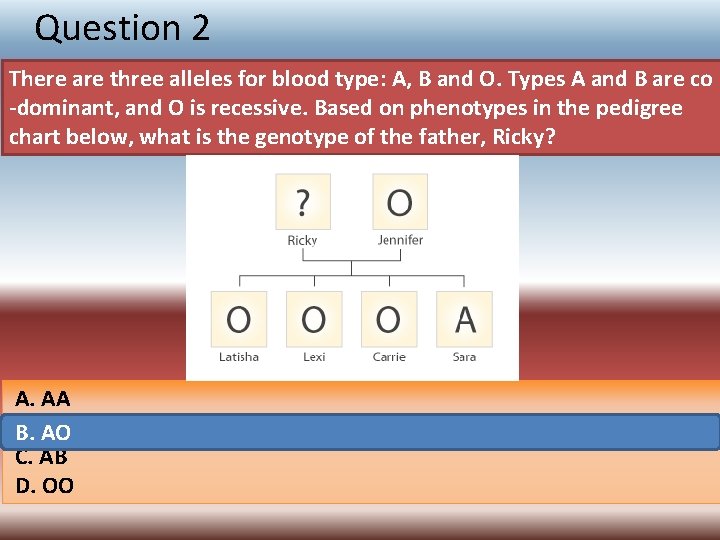
Question 2 There are three alleles for blood type: A, B and O. Types A and B are co -dominant, and O is recessive. Based on phenotypes in the pedigree chart below, what is the genotype of the father, Ricky? A. AA B. AO C. AB D. OO
Question 3 Gregor Mendel collected data on more than 28, 000 pea plants in his research. Two traits he studied were seed color (yellow or green) and flower color (red or white). He found that the dominant traits are yellow seeds (Y) and red flowers (R). If Mendel crossed plants heterozygous for yellow seeds (Yy) and heterozygous for red flowers (Rr) with plants homozygous for green seeds (yy) and heterozygous for red flowers (Rr), what fraction of their offspring will have both white flowers and green seeds? A. B. C. D. 1/8 1/4 1/2 3/4
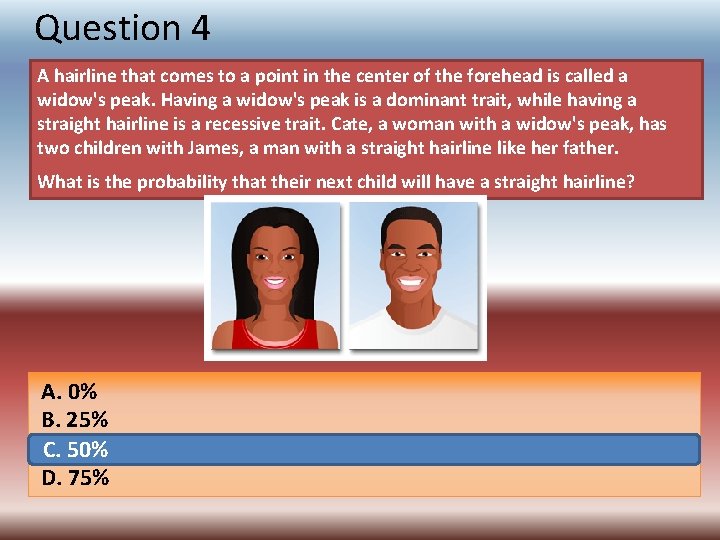
Question 4 A hairline that comes to a point in the center of the forehead is called a widow's peak. Having a widow's peak is a dominant trait, while having a straight hairline is a recessive trait. Cate, a woman with a widow's peak, has two children with James, a man with a straight hairline like her father. What is the probability that their next child will have a straight hairline? A. 0% B. 25% C. 50% D. 75%
Question 5 Some traits are determined by a single gene; for example, presence of freckles (F) is a dominant trait, and lack of freckles (f) is recessive. Having detached earlobes (D) is a dominant trait, and having attached earlobes (d) is recessive. Pedro and his wife Rosa have detached earlobes, but Rosa has freckles and Pedro does not. Their daughter Jessica has attached earlobes and does not have freckles. Which of the following genotypes must Rosa have? A. FFDD B. FFDd C. Ff. DD D. D. Ff. Dd

Genetics and Biotechnology (SC. 912. L. 16. 10)
Question 1 The Human Genome Project began in 1989 with the purpose of identifying the thousands of genes of the human genome. The first draft of the genome was released in 2000 and was completed in 2003. Which of the following describes the main benefit of mapping the human genome? A. the ability to clone humans B. the ability to design new human genes C. the ability to easily identify genetically-based diseases D. the ability to patent specific human genes
Question 2 About one-sixth of the world's population does not have access to clean drinking water. Biotechnology-based tests and filters for drinking water are being developed to help alleviate this problem. What is the most direct effect of the lack of clean drinking water on this portion of our population? A. Lack of clean water can lead to an increase in poverty and malnutrition. B. Crops grown with unsanitary water will likely spread disease when eaten. C. C. The risk of of contracting water-borne diseases, such as as cholera, increases. D. Without access to clean water, the risk of dehydration, increases.
Question 3 Several years ago, some crop plants were genetically modified to be immune to the effects of glyphosate, a weed killer that worked well on weeds. As a result, the crop could be sprayed with glyphosate, and the weeds would be killed, but the crop would survive. From an ecological point of view, which of the following is most important to determine prior to planting the resistant crop in farm fields? A. What effect does the presence of glyphosate-resistant crops have on insect populations in adjacent fields? B. Is it possible for the gene for resistance to glyphosate to pass from the crop fromtothe cropunder plantsnatural to weeds under natural conditions? plants weeds conditions? C. Does the genetically modified crop produce yields that are better in quality and quantity than those of unmodified varieties? D. Is the gene for resistance stable enough in the crop plant that it will be passed to the next generation when the crop plant reproduces?
Question 4 Great strides are being made in identifying genetic markers for disease within the human genome. Which of the following would be considered an ethical misuse of this information? A. hospitals using genetic information about specific patients in order to develop treatments for those individuals B. individuals deciding not to have children based on the results of genetic testing showing they carry the allele for a fatal disease C. insurancecompaniesrefusingto toinsureaapersonbasedon on C. informationtheyrequiredaboutthe theperson'sgenome information indicatingaahighriskfor foraacertaindisease indicating D. doctors informing their patients that they are likely to develop a debilitating illness for which there is no treatment based on patient-requested genetic tests
Question 5 What do all forms of biotechnology have in common? A. They all involve modifying an organism's genetic makeup. B. They all create intense public debate when they are first introduced. C. They all make use of of living organisms to to do do aa job or or provide aa C. service. D. They all combine the use of machines with living organisms in some way.
Reproduction (SC. 912. L. 16. 13)
Question 1 Folate is a crucial vitamin for proper development of the neural tube, which eventually becomes the brain and spinal cord. Which of the following might explain why neural tube defects occur more frequently than other types of birth defects? A. Folate is rarely found in common foods and must be supplemented. B. Since the nervous system forms so late, defects go undetected by early ultrasounds. C. The neural tube forms in in the first three weeks, before most women C. know they are pregnant. know D. The first and second trimesters of pregnancy use most of the mother's folate supply, leaving a limited amount for neural tube formation.
Question 2 Sperm cells are mobile and must travel through the female reproductive tract to fertilize an egg. Which of the following structures enables sperm cells to swim? A. cilia B. flagella C. pseudopods D. ribosomes
Question 3 Which of the following sequences correctly describes prenatal development? A. blastocyst implants in uterus, zygote forms, heart begins beating, lungs can breathe air, sex organs become visible B. blastocyst implants in the uterus, zygote forms, heart begins beating, sex organs become visible, lungs can breathe air C. C. zygote forms, blastocyst implants in in the uterus, heart begins beating, sex organs become visible, lungs can breathe air D. zygote forms, blastocyst implants in the uterus, sex organs become visible, heart begins beating, lungs can breathe air
Question 4 Which of the following is NOT a structure of the male reproductive system? A. fallopian tubes B. seminal vesicles C. urethra D. vas deferens
Question 5 Which of the following correctly describes the function of amniotic fluid as it relates to the development of a human fetus? A. A. It provides protection and moisture for the fetus. B. It carries blood between the fetus and the mother. C. It is where the first fetal blood cells originate. D. It provides nutrition and oxygen for the fetus.

Reproduction Sexual and Asexual (SC. 912. L. 16. 13)
Question 1 Some organisms are capable of reproducing asexually through processes such as budding or parthenogenesis. What is an advantage of asexual production for an organism? A. A. Itallowsorganismsto toincreasepopulationrapidly. B. It allows haploid cells to unite to produce a zygote. C. It allows for greater genetic diversity within a species. D. It allows crossing over to take place during replication.
Question 2 Mitosis and meiosis are processes that occur in an organism during reproduction. Which of the following is a result of mitosis? A. A. two identical daughter cells B. four haploid cells that have genetic variation C. uncontrolled cell division in the form of cancer cells D. a single diploid cell that is genetically identical to the parent cell
Question 3 Which of the following sequences correctly describes prenatal development? A. Mitosis and meiosis both produce genetic variation within their daughter cells. B. Mitosis results in in the production of of two genetically identical B. diploid cells and meiosis produces four haploid cells. C. Mitosis and meiosis are both divided into only four distinct phases: prophase, metaphase, and interphase. D. Mitosis results in the production of two genetically identical diploid cells and meiosis produces four genetically identical haploid cells.
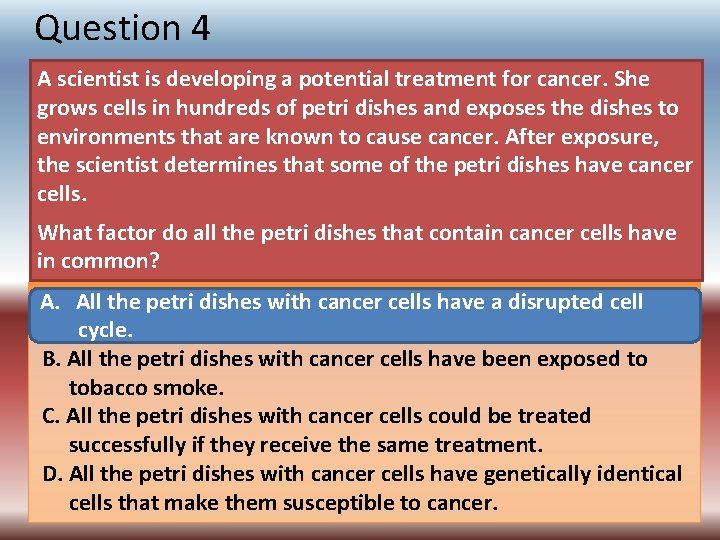
Question 4 A scientist is developing a potential treatment for cancer. She grows cells in hundreds of petri dishes and exposes the dishes to environments that are known to cause cancer. After exposure, the scientist determines that some of the petri dishes have cancer cells. What factor do all the petri dishes that contain cancer cells have in common? A. Allthe thepetridisheswithcancercellshaveaadisruptedcell cycle. B. All the petri dishes with cancer cells have been exposed to tobacco smoke. C. All the petri dishes with cancer cells could be treated successfully if they receive the same treatment. D. All the petri dishes with cancer cells have genetically identical cells that make them susceptible to cancer.
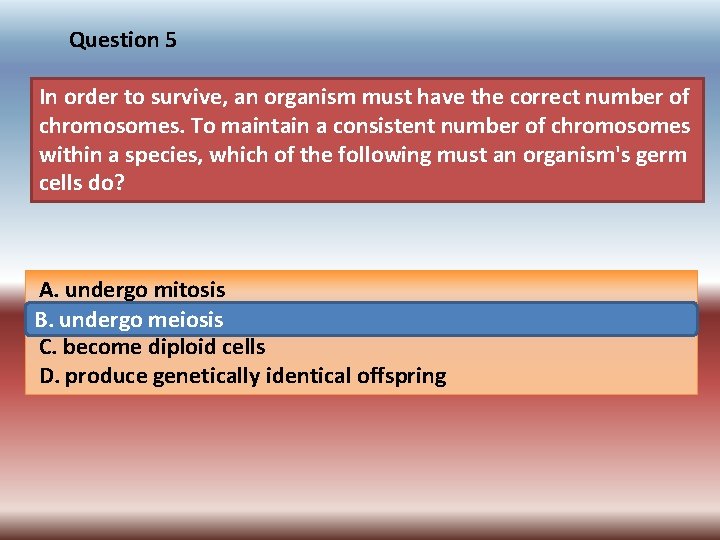
Question 5 In order to survive, an organism must have the correct number of chromosomes. To maintain a consistent number of chromosomes within a species, which of the following must an organism's germ cells do? A. undergo mitosis B. undergo meiosis B. C. become diploid cells D. produce genetically identical offspring
DNA and Protein Synthesis(SC. 912. L. 16. 3)
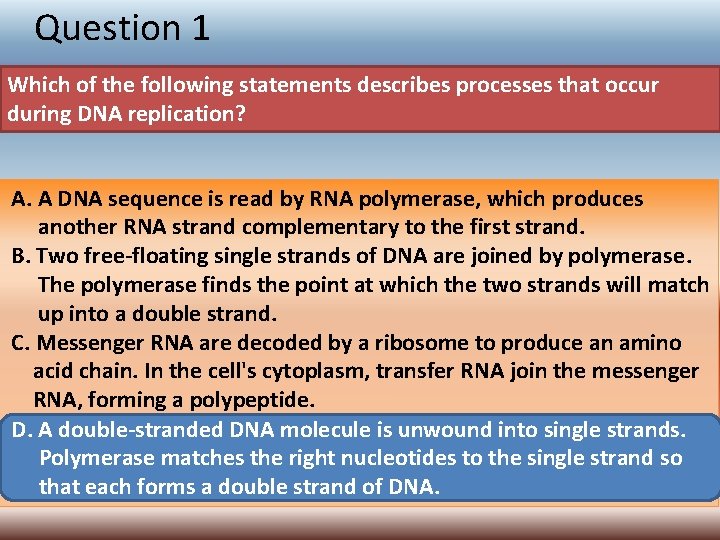
Question 1 Which of the following statements describes processes that occur during DNA replication? A. A DNA sequence is read by RNA polymerase, which produces another RNA strand complementary to the first strand. B. Two free-floating single strands of DNA are joined by polymerase. The polymerase finds the point at which the two strands will match up into a double strand. C. Messenger RNA are decoded by a ribosome to produce an amino acid chain. In the cell's cytoplasm, transfer RNA join the messenger RNA, forming a polypeptide. D. A double-stranded DNA molecule is unwound into single strands. Polymerase matches the right nucleotides to the single strand so that each forms a double strand of DNA.
Question 2 The genetic code is nearly universal, meaning that almost all organisms use the same genetic code. Which statement does NOT help explain why the genetic code is nearly universal? A. All organisms encode their genes using DNA or RNA. B. All organisms can grow, respond to to stimuli, and reproduce. B. C. All organisms use the same codon for the same amino acid. D. All organisms are genetically related to all other organisms.
Question 3 DNA mutations can be present in a gene for many reasons. Which of the following does NOT describe a reason genetic mutations may exist in a gene? A. When aa cell dies, the DNA in in the cell's nucleus can mutate. A. B. Exposure to chemicals or radiation cause mutation in DNA. C. Mutations in DNA can be passed down from a parent to a child. D. Polymerase can make a mistake in matching nucleotides during replication.
Question 4 Mutations in an organism's DNA may be either beneficial or harmful. Which of the following statements best describes the concept of DNA mutation? A. DNA mutation is an alteration in DNA replication that always results in phenotypic change. Mutations are usually due to radiation or other environmental factors. B. DNA mutation is a change in the way that genes reproduce themselves, which may or may not affect phenotypic characteristics. Mutations are usually due to environmental factors or heredity. C. DNA mutation is a change in the gene sequence, which sometimes resultsin inphenotypicchange. Mutationscan canbe bedue dueto to results environmentalfactors, heredity, or oraamistakein in. DNAreplication. environmental D. DNA mutation is an alteration in the nucleus of a cell that makes certain genes unable to be copied, and they result in phenotypic change. Mutations are usually due to viruses and environmental
Question 5 Which of the following accurately describes the difference between transcription and translation? A. In transcription, the genetic code of a DNA molecule is first encoded. Translation is the process of converting the DNA code into code that RNA can use. B. In transcription, an amino acid chain is encoded in a DNA molecule. Translation is the process of turning the amino acids into nucleic acids in an RNA molecule. C. C. In Intranscription, the thegeneticcodeof ofaa. DNAmoleculeisis transferredto toaamessenger. RNAmolecule. Translationisisthe processof ofcreatingan anaminoacidchainusingthe theencoded messenger RNA. D. In transcription, a double helix DNA molecule is split into two separate single strands. Translation is the process of joining each single DNA strand with a single strand of matching RNA.

Human Impact (SC. 912. L. 17. 20)
Question 1 Most deforestation occurs for agricultural purposes as farmers cut and burn forests to grow crops. On a local scale, animals living in the forested area will either die or be forced from their habitat. On a larger scale, many plant and animal species may become extinct. What is another global effect of deforestation? A. Production of fossil fuels will decrease as foliage is destroyed. B. Soil erosion will decrease as ash covers and protects the topsoil. C. Herbivore populations will increase as more plants become available for food. D. Greenhouse gases will increase as carbon dioxide is released into the atmosphere.
Question 2 The Marianas flying fox is a species of bat found in the Pacific islands that plays an important role in pollination and seed dispersal. Hunting and habitat destruction have contributed to a drastic decline in their population. If this continues, what would be a consequence of the extinction of the Marianas flying fox? A. Organisms dependent on the flying fox would adapt to other organisms. B. Plant populations would flourish due to lack of competition for resources. C. The region would experience more extreme climatic conditions due to instability of plant and animal species. D. D. Other animal and plant populations dependent on on the flying fox would also decrease and may become extinct.
Question 3 A lake that has been affected by acid rain may have an altered p. H level. Although the p. H may be lower than normal, the lake may still appear blue and clear. Which of the following best explains why this may occur? A. Acid rain may promote the growth of organisms that consume lake algae. B. Acid rain may introduce invasive species that compete with ] algae for resources. C. Acid rain may neutralize the lake's natural alkalinity which would decrease any cloudiness. D. D. Acid rain may affect the whole lake ecosystem by by first killing algae that cause cloudiness.
Question 4 Human activities affect the quality and supply of natural resources for future generations. Since the Industrial Revolution, the use of fossil fuels has greatly increased industrial productivity, but it has also caused environmental issues. Which of the following is least likely to be caused by the burning of fossil fuels? A. DNA mutation is an alteration in DNA replication that always B. global warming C. an increase in smog D. holes in the ozone layer
Question 5 Some farmers have begun using biological pest controls to manage their crops. Which of the following is an example of using biological pest controls to contribute to sustainability? A. A. addingladybugsto tothe thefieldsof ofcrops B. cutting down only selected trees in a field C. spraying pesticides that target only some insect species D. using modern machinery that is more environmentally friendly

Energy Flow in Ecosystem (SC. 912. L. 17. 5)
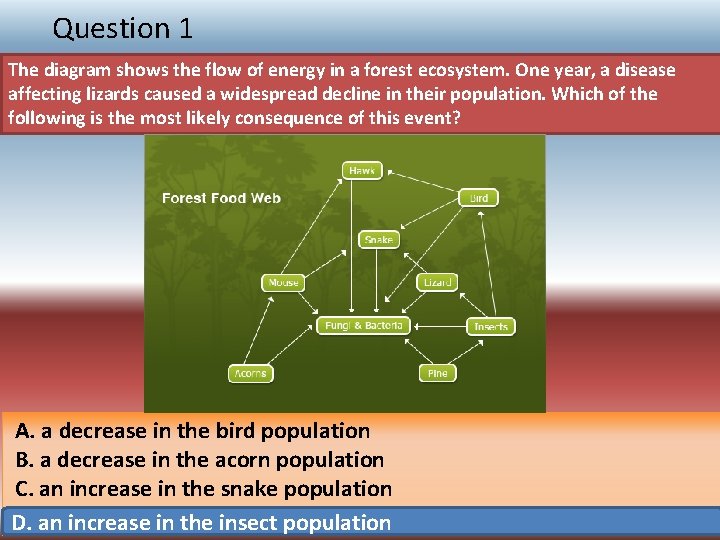
Question 1 The diagram shows the flow of energy in a forest ecosystem. One year, a disease affecting lizards caused a widespread decline in their population. Which of the following is the most likely consequence of this event? A. a decrease in the bird population B. a decrease in the acorn population C. an increase in the snake population D. an an increase in in the insect population D.
Question 2 In a marsh ecosystem, alligators, woodstorks, muskrats, cattails, ferns, and grasses make up a food web. If a disease eliminates the fern population, which of the following is the most likely consequence? A. The herbivores would consume the decomposers. B. The carnivores would adapt to become herbivores. C. The animals relying solely on ferns for food would die out. D. All trophic levels would be affected except the top consumers.
Question 3 In the 1930 s, the Red Imported Fire Ant was accidentally introduced into the United States. This species is native to South America, but has thrived in the United States because of a lack of natural enemies here. Which of the following best explains how the Red Imported Fire Ant has affected native ant species in the U. S. that do have predators? A. Native ant species preyed on the Red Imported Fire Ant and increased in population. B. Native ant species interbred with the Red Imported Fire Ant, creating new ant species. C. The Red Imported Fire Ant caused native ant species to become more susceptible to predators. D. The Red Imported Fire Ant caused aa decline in in native ant D. species by by competing for their resources. species
Question 4 Scientists that study the effects of global warming predict that a change in Earth's average temperature of even a few degrees will have dramatic effects. One consequence of global warming is the melting of the polar ice caps, which will in turn affect polar bears that use sea ice as a platform for hunting seals. What will most likely happen to the population of polar bears as a result of global warming? A. It will increase as polar bears adapt to other habitats. B. It will increase because polar bears will have fewer predators. C. It will decrease as the habitat suitable for polar bears decreases. D. It will decrease because polar bears will become easier to hunt.
Question 5 The carrying capacity of an ecosystem is the maximum number of individuals of a particular species that can be supported on a long -term basis in a given amount of land. For example, the carrying capacity of the Florida Panther may be 50 panthers per 10, 000 square kilometers of habitat in the Everglades ecosystem. Which of the following determines the carrying capacity of an ecosystem? A. the average daily temperature of the ecosystem B. the most limited resources required for survival B. C. the number of predators found in the ecosystem D. the amount of disease affecting organisms in the ecosystem

Energy Flow – Food Webs (SC. 912. L. 17. 9)
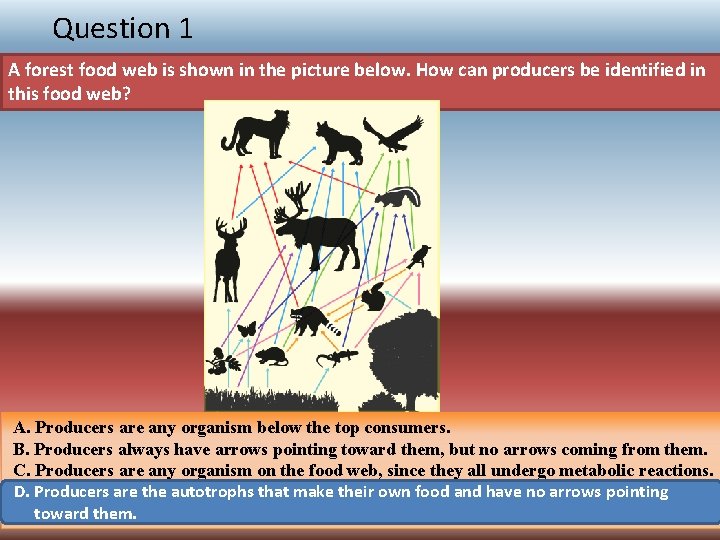
Question 1 A forest food web is shown in the picture below. How can producers be identified in this food web? A. Producers are any organism below the top consumers. B. Producers always have arrows pointing toward them, but no arrows coming from them. C. Producers are any organism on the food web, since they all undergo metabolic reactions. D. Producersare arethe theautotrophsthatmaketheirown ownfoodand andhavenonoarrowspointing toward them.
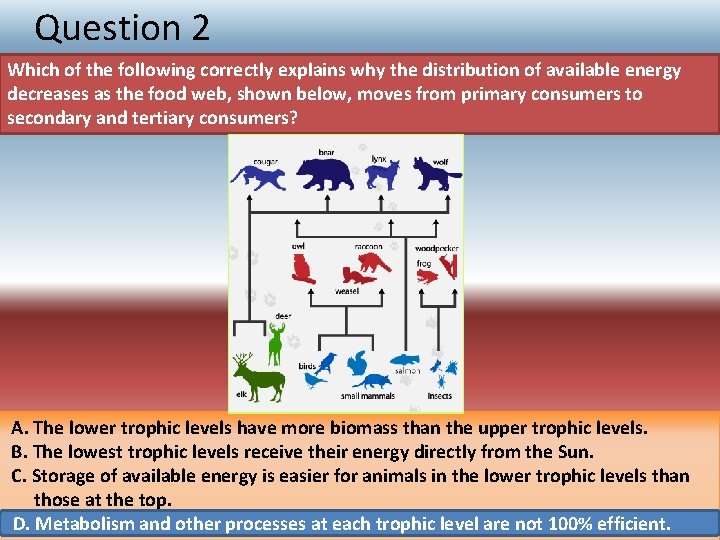
Question 2 Which of the following correctly explains why the distribution of available energy decreases as the food web, shown below, moves from primary consumers to secondary and tertiary consumers? A. The lower trophic levels have more biomass than the upper trophic levels. B. The lowest trophic levels receive their energy directly from the Sun. C. Storage of available energy is easier for animals in the lower trophic levels than those at the top. D. Metabolism and other processes at each trophic level are not 100% efficient.
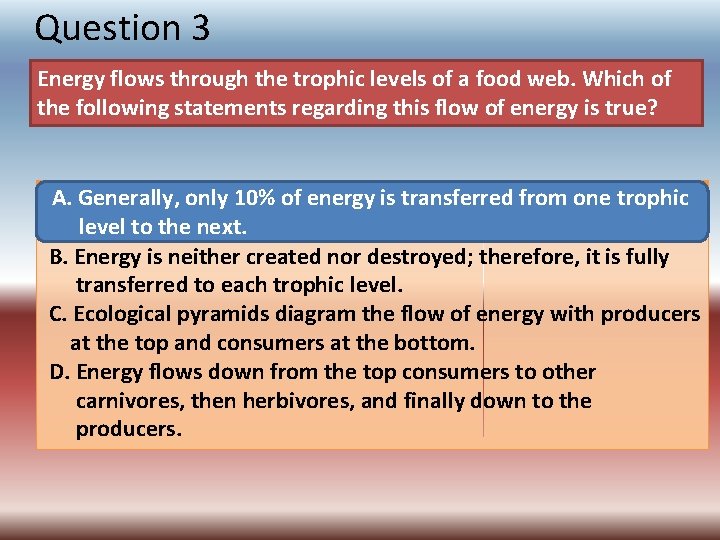
Question 3 Energy flows through the trophic levels of a food web. Which of the following statements regarding this flow of energy is true? A. Generally, only 10% of of energy is is transferred from one trophic A. level to to the next. level B. Energy is neither created nor destroyed; therefore, it is fully transferred to each trophic level. C. Ecological pyramids diagram the flow of energy with producers at the top and consumers at the bottom. D. Energy flows down from the top consumers to other carnivores, then herbivores, and finally down to the producers.
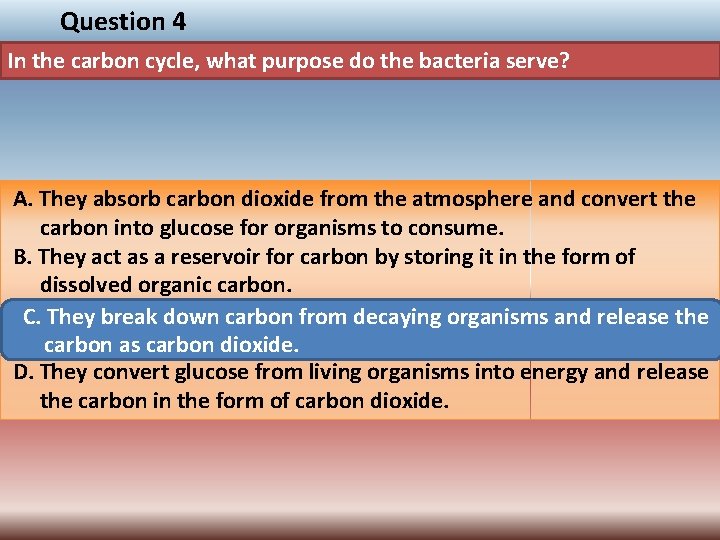
Question 4 In the carbon cycle, what purpose do the bacteria serve? A. They absorb carbon dioxide from the atmosphere and convert the carbon into glucose for organisms to consume. B. They act as a reservoir for carbon by storing it in the form of dissolved organic carbon. C. C. Theybreakdowncarbonfromdecayingorganismsand andreleasethe carbon as as carbon dioxide. D. They convert glucose from living organisms into energy and release the carbon in the form of carbon dioxide.
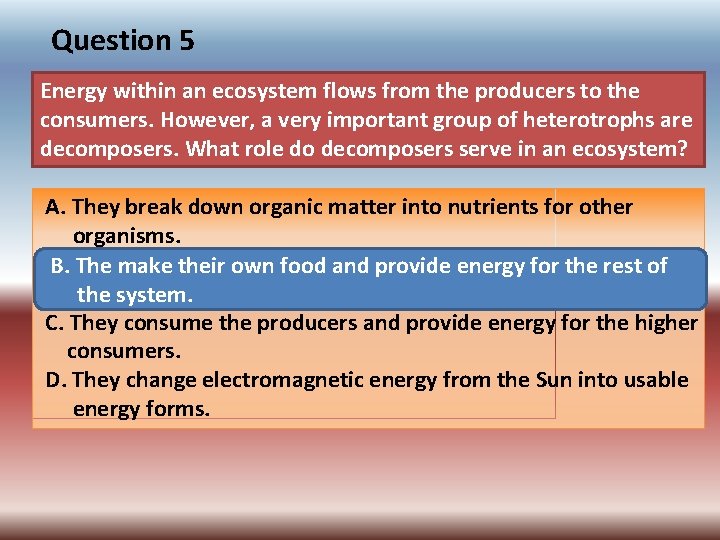
Question 5 Energy within an ecosystem flows from the producers to the consumers. However, a very important group of heterotrophs are decomposers. What role do decomposers serve in an ecosystem? A. They break down organic matter into nutrients for other organisms. B. B. Themaketheirown ownfoodand andprovideenergyfor forthe therest of of thesystem. C. They consume the producers and provide energy for the higher consumers. D. They change electromagnetic energy from the Sun into usable energy forms.
Macromolecules (SC. 912. L. 18. 1)
Question 1 A carbohydrate is an organic compound that is composed of carbon, hydrogen, and oxygen. The unique structure of carbohydrates makes them useful material for building cell walls in plants. Which of the following is a function of carbohydrates in animals? A. digesting food B. fighting disease C. storing short-term energy D. transmitting nerve impulses
Question 2 A scientist analyzing an unknown substance has determined that it consists of carbon, hydrogen and oxygen. During experimentation, she determines that the substance is soluble in oil but not in water. Which of the following macromolecules is the unknown substance most likely to be? A. carbohydrate B. lipid C. nucleic acid D. protein
Question 3 Carbohydrates are a type of biological macromolecule required to carry out life functions. Which of the following is NOT true regarding carbohydrates? A. Monomers of starch are sugars such as glucose. B. Living things store extra sugars as complex carbohydrates. C. They contain carbon, hydrogen and oxygen, usually in the ratio of 1: 2: 1. D. Carbohydrates are the main substance that makes up D. biological membranes. biological
Question 4 Proteins are one of four classes of biological macromolecules. Which of the following statements regarding proteins is NOT true? A. Amino acids are the monomers of proteins. B. Proteins contain nitrogen as well as carbon, hydrogen, and oxygen. C. Proteins have only one specific role - to regulate the rate of of biochemical reactions. biochemical D. Protein monomers have a carboxyl group on one end an amino acid on the other.
Question 5 Enzymes are a special type of protein that speeds up biological reactions. How do they accomplish this task? A. They are able to operate at any p. H value. B. They lower the activation energy of of reactions. B. C. They form peptide bonds between amino acids. D. They decrease the number of collisions in the reacting substances.
Properties of Water (SC. 912. L. 18. 12)
Question 1 When water in a lake freezes, the ice that forms floats on top of any water that is still liquid. Why does the ice float? A. A. Iceisislessdensethanliquidwater, so soititfloats. B. Air bubbles trapped in the ice cause the ice to float. C. Ice crystals are polar, and they float on top of non-polar water. D. The ice forms at the top of the water, so it stays there and floats.
Question 2 When the oxygen atom in one water molecule is close to a hydrogen atom in another water molecule, what is most likely to happen? A. The water molecules will draw toward each other. B. The two water molecules will form a larger molecule. C. The like charges of the water molecules will repel each other. D. The two water molecules will gain energy and vaporize, becoming water vapor.
Question 3 When trees pull water in through their roots, they must then move the water up to their leaves in order to carry out photosynthesis. Since the water molecules cling to each other and to the inner surface of the xylem, the water can pull itself up through the tree by capillary action. Which property of water molecules allows them to cling together? A. Water molecules are small molecules. B. B. Water molecules are polar molecules. C. Water molecules have an odd number of atoms. D. Water molecules have covalent bonds between atoms.
Question 4 When salt is mixed with water and stirred, the salt will dissolve, forming a solution. When sand is mixed with water, the sand will not dissolve. Why will salt form a solution with water but sand will not? A. Sand is much harder than salt and so it will not form a solution with water. B. Saltisispulledapartintotwo twoionsby bythe thepolarwatermolecules, and B. sand is not. C. Salt consists of only 2 atoms and is small enough to dissolve, while sand is too large. D. Sand forms complex crystals which dissolve much more slowly than non-crystalline salt.
Question 5 In Florida, daytime and nighttime temperatures usually only differ by 5 to 10°C, while temperatures in the desert often differ by as much as 40°C. What role does water play in keeping temperatures in Florida from fluctuating dramatically? A. A. Bodies of of water store heat during the day and release itit at at night. B. Humid air releases heat as it rises, keeping temperatures constant. C. Evening rain brings heat from the upper atmosphere back to Earth. D. Water cools the land around it so that it never gets as hot as a desert.
Photosynthesis & Cell Respiration (SC. 912. L. 18. 9)
Question 1 Which equation best describes a method of anaerobic respiration? A. Glucose yields energy and lactic acid. B. Glucose and oxygen yield lactic acid and water. C. Glucose and lactic acid yield energy and carbon dioxide. D. Glucose and oxygen yield energy, carbon dioxide, and water.
Question 2 Which statement best describes the way that an adenosine diphosphate (ADP) molecule becomes an adenosine triphosphate (ATP) molecule in the human body? A. Protein causes phosphate molecules to bind to sugars and form ATP. B. Food energy is used to attach a phosphate molecule to an ADP molecule. C. Ionized oxygen in cells causes sugars and phosphate molecules to form ATP. D. Water breaks down ADP molecules which form into ATP molecules over time.
Question 3 Which reactants of aerobic cellular respiration are the byproducts of photosynthesis? A. glucose and water B. oxygen and glucose C. carbon dioxide and water D. oxygen and carbon dioxide
Question 4 Which of the following does NOT describe a similarity between photosynthesis and cellular respiration? A. Both transform food into energy. B. Both are transformations of energy. C. Both involve the exchange of gases. D. Both are necessary for life on Earth.
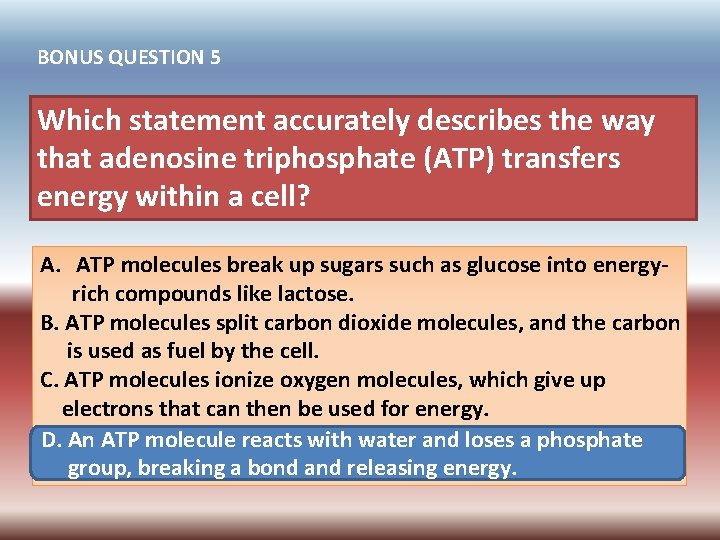
BONUS QUESTION 5 Which statement accurately describes the way that adenosine triphosphate (ATP) transfers energy within a cell? A. ATP molecules break up sugars such as glucose into energyrich compounds like lactose. B. ATP molecules split carbon dioxide molecules, and the carbon is used as fuel by the cell. C. ATP molecules ionize oxygen molecules, which give up electrons that can then be used for energy. D. An ATP molecule reacts with water and loses a phosphate group, breaking a bond and releasing energy.
- Slides: 133