
HFIP Hurricane Forecast Improvement Project NOAAs Project to

- Slides: 12
HFIP: Hurricane Forecast Improvement Project NOAA's Project to Improve the Accuracy of Hurricane Guidance Dr. Robert Atlas Atlantic Oceanographic & Meteorological Laboratory 4301 Rickenbacker Causeway, Miami, Florida 33149
HFIP Goals NOAA’s hurricane program came together after Hurricane Katrina to identify the best ways to accelerate the improvement of hurricane forecasts and increase community resiliency. HFIP set ambitious goals of reducing track and intensity forecast errors from 2009 to improve community response to warnings: ü Reduce forecast errors by 20% in five years q Reduce forecast errors by 50% in ten years q Increase forecast period out to 7 days
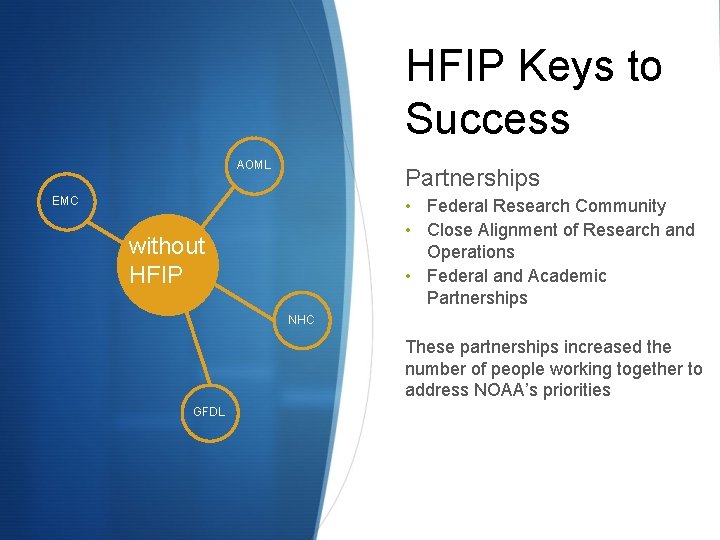
HFIP Keys to Success AOML Partnerships EMC • Federal Research Community • Close Alignment of Research and without HFIP Operations • Federal and Academic Partnerships NHC These partnerships increased the number of people working together to address NOAA’s priorities GFDL
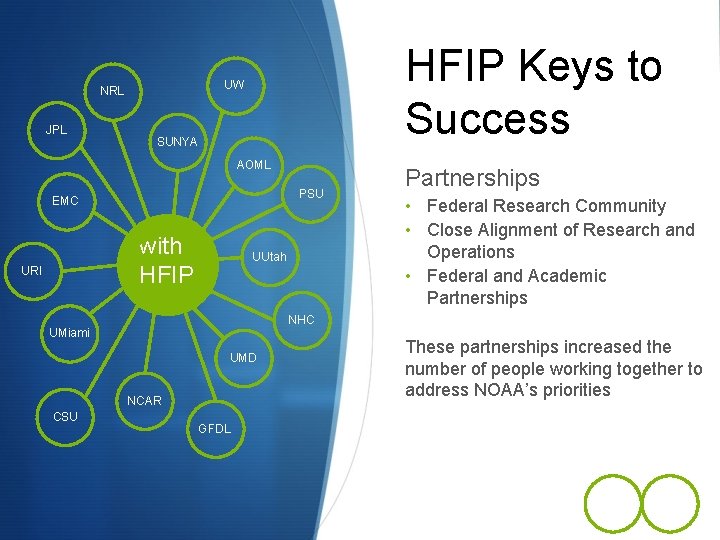
JPL HFIP Keys to Success UW NRL SUNYA AOML PSU EMC with HFIP URI • Federal Research Community • Close Alignment of Research and Operations • Federal and Academic Partnerships UUtah NHC UMiami UMD NCAR CSU Partnerships These partnerships increased the number of people working together to address NOAA’s priorities GFDL AOML
HFIP Keys to Success NOAA leveraged the Developmental Testbed Center to make the operational hurricane models, the data that goes into the models, and computational resources accessible to the broader research community. • Research results are incorporated into actual forecasts • Observational expertise in NOAA Research is leveraged to improve model physics • Research community working closely with the Operational forecast community The result has accelerated the development of NOAA models.
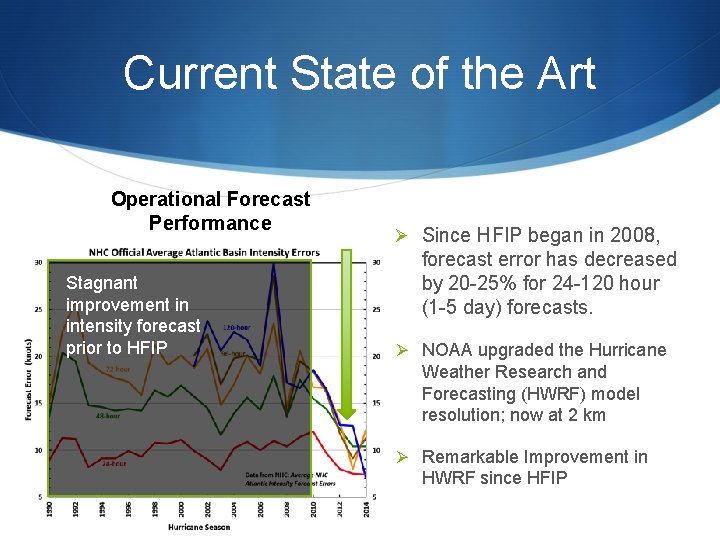
Current State of the Art Operational Forecast Performance Stagnant improvement in intensity forecast prior to HFIP Ø Since HFIP began in 2008, forecast error has decreased by 20 -25% for 24 -120 hour (1 -5 day) forecasts. Ø NOAA upgraded the Hurricane Weather Research and Forecasting (HWRF) model resolution; now at 2 km Ø Remarkable Improvement in HWRF since HFIP
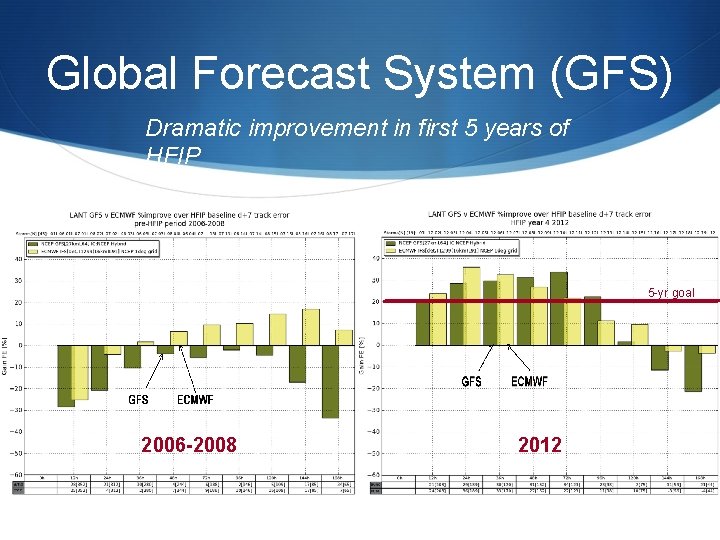
Global Forecast System (GFS) Dramatic improvement in first 5 years of HFIP 5 -yr goal 2006 -2008 2012
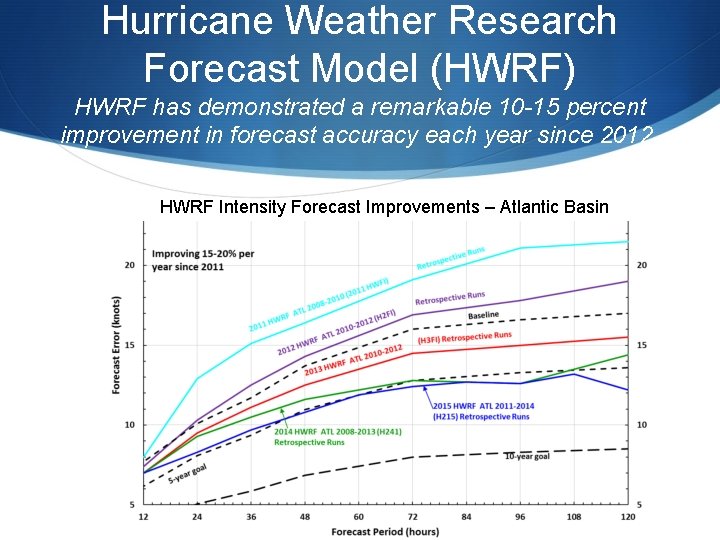
Hurricane Weather Research Forecast Model (HWRF) HWRF has demonstrated a remarkable 10 -15 percent improvement in forecast accuracy each year since 2012. HWRF Intensity Forecast Improvements – Atlantic Basin
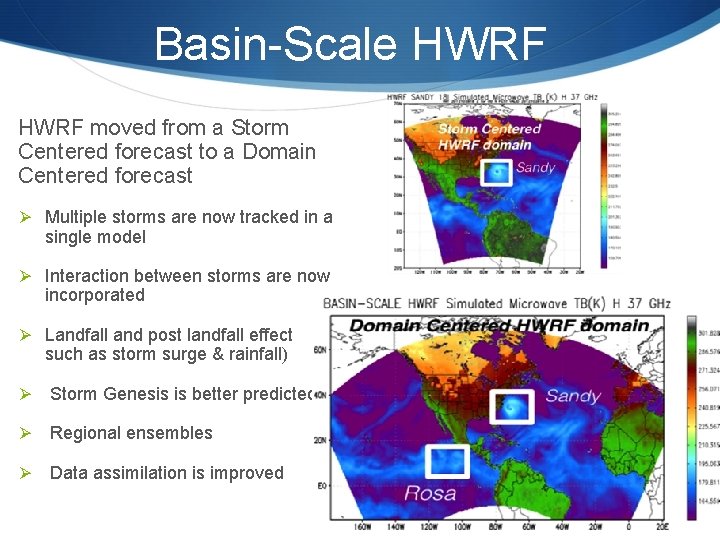
Basin-Scale HWRF moved from a Storm Centered forecast to a Domain Centered forecast Ø Multiple storms are now tracked in a single model Ø Interaction between storms are now incorporated Ø Landfall and post landfall effect such as storm surge & rainfall) Ø Storm Genesis is better predicted Ø Regional ensembles Ø Data assimilation is improved
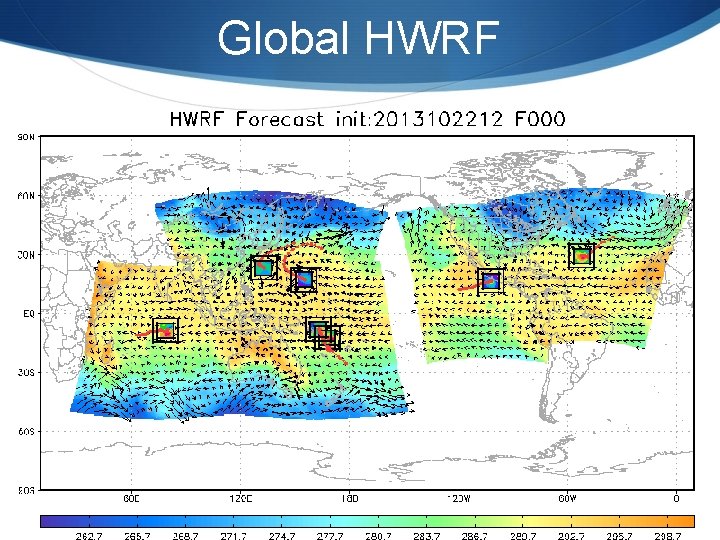
Global HWRF
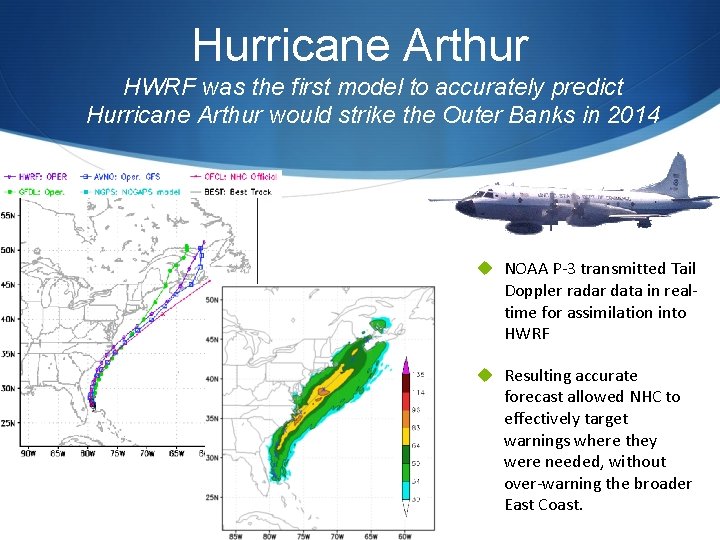
Hurricane Arthur HWRF was the first model to accurately predict Hurricane Arthur would strike the Outer Banks in 2014 u NOAA P-3 transmitted Tail Doppler radar data in realtime for assimilation into HWRF u Resulting accurate forecast allowed NHC to effectively target warnings where they were needed, without over-warning the broader East Coast.
Thank you http: //www. hfip. org/