
HF Vertical Antenna Ground Systems Some Experiments Rudy

![configuration number |S 21| [d. B] Zi [Ohms] configuration h=33. 5’ 1 0 39+j](https://slidetodoc.com/presentation_image_h/9ebede4a810827d7fe941439dc5c3435/image-57.jpg "configuration number |S 21| [d. B] Zi [Ohms] configuration h=33. 5’ 1 0 39+j")
- Slides: 61
HF Vertical Antenna Ground Systems Some Experiments Rudy Severns N 6 LF antennasbyn 6 lf. com
• We’ve been using verticals for over 100 years. • Is there really anything new to be said about ground systems for verticals? • Yes! • Little attention has been given to HF (2 -30 MHz) ground systems like those used by amateurs. • Soil behavior at HF is different from BC.
• Typical amateur antennas use: –radials lying on the ground surface, –or elevated radials, –and/or small numbers of radials, –short loaded verticals
Some typical questions • How much of ground system is it worth putting down? • What will I gain (in d. B) by adding more radials? • Does it matter if I lay the radials on the ground surface? • Are a few long radials useful? • Are four elevated radials really as good as lots of buried radials? • How well do “gullwing” elevated radials work?
• We can use modeling or calculations to answer these questions but most people don’t have a lot confidence in mathematical exercises. • High quality field measurements on real antennas are more likely to be believed. • Over the past year I have done a series of experiments on HF verticals with different ground systems. • That is the subject of today’s talk.
• What’s the purpose of the ground system? – It’s there to reduce the power absorbed by the soil close to the antenna (within a ¼-wave or so). – The ground system increases your signal by reducing the power dissipated in the soil and maximizing the radiated power. – Any practical ground system will not affect the radiation angle or far-field pattern!
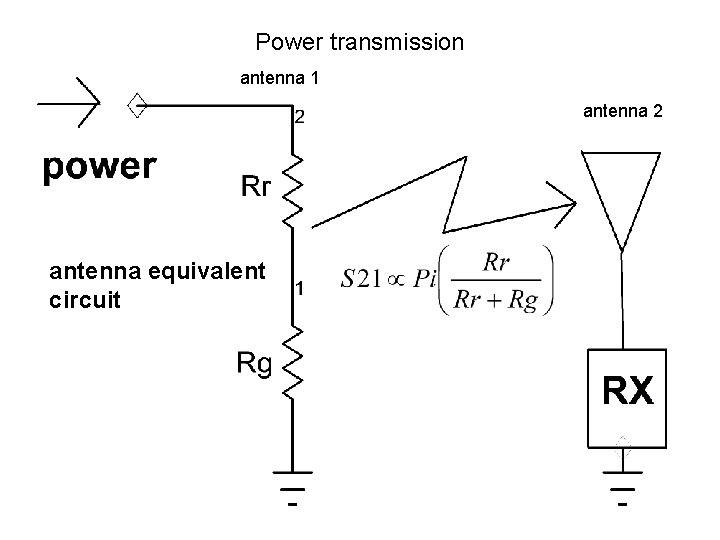
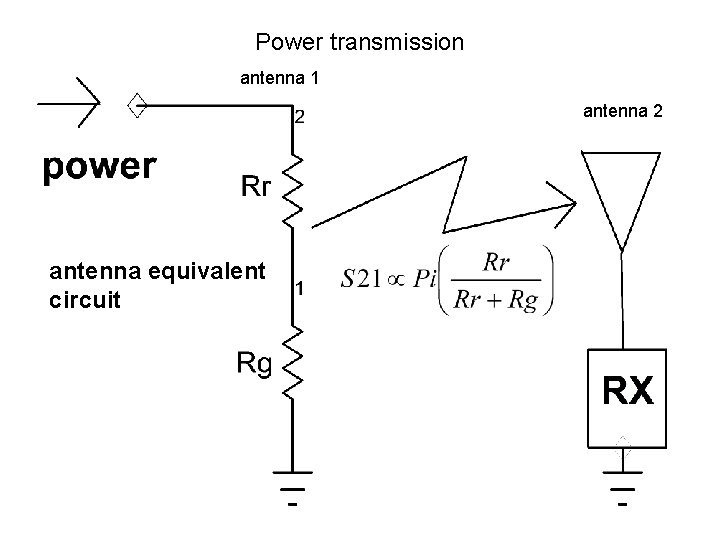
Power transmission antenna 1 antenna 2 antenna equivalent circuit
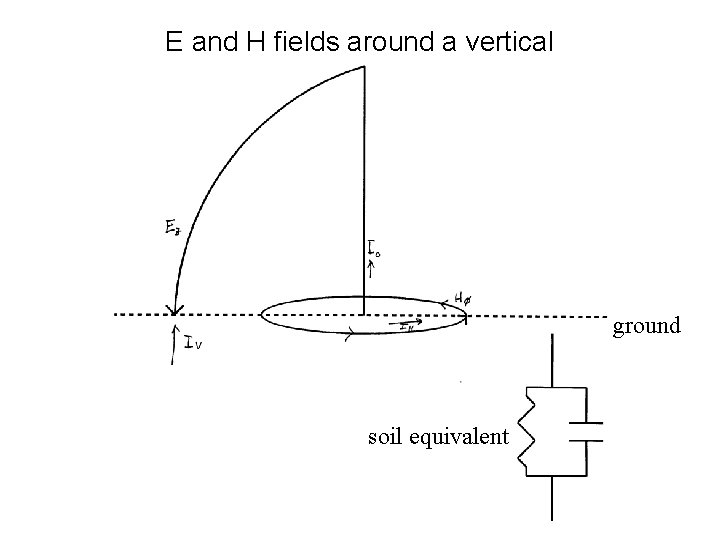
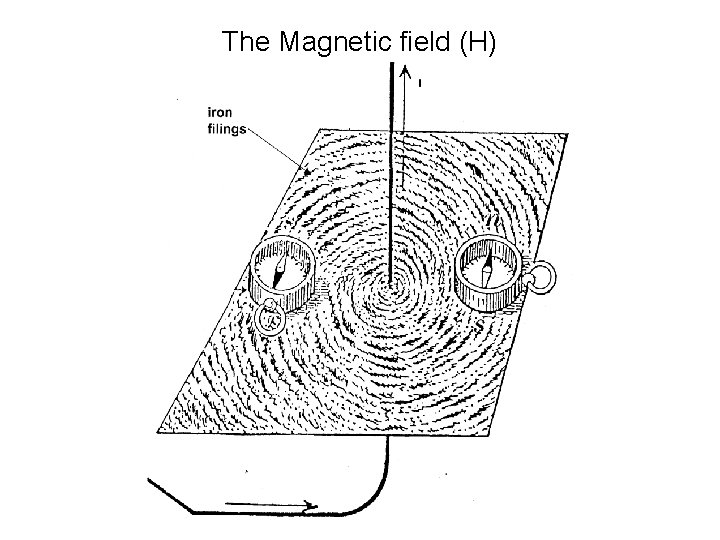
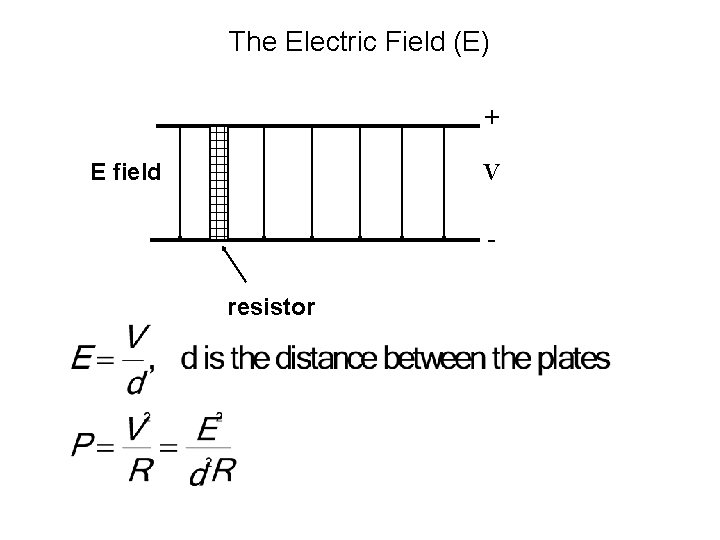
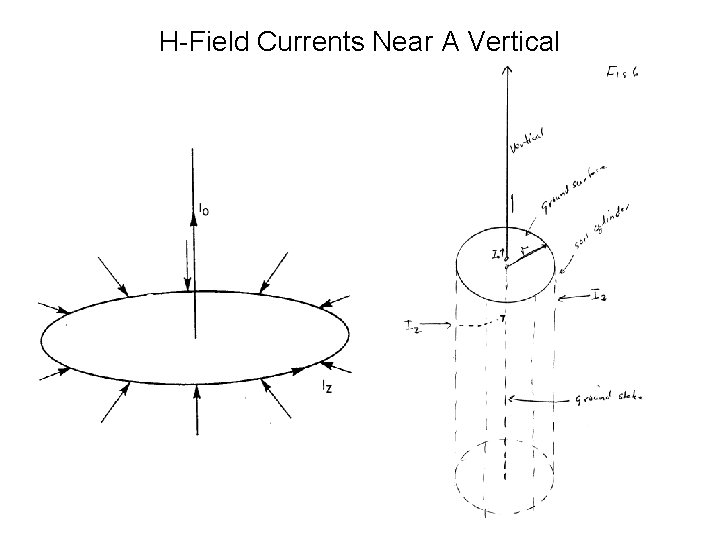
E and H fields around a vertical ground soil equivalent
The Magnetic field (H)
The Electric Field (E) + E field V resistor
H-Field Currents Near A Vertical
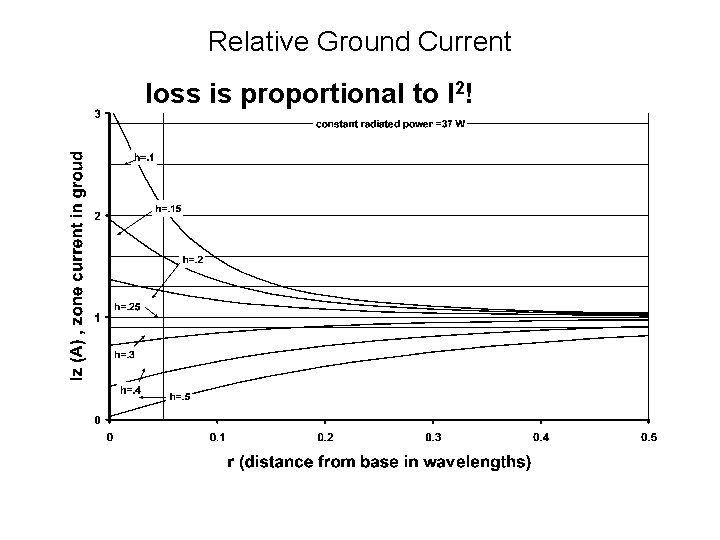
Relative Ground Current loss is proportional to I 2!
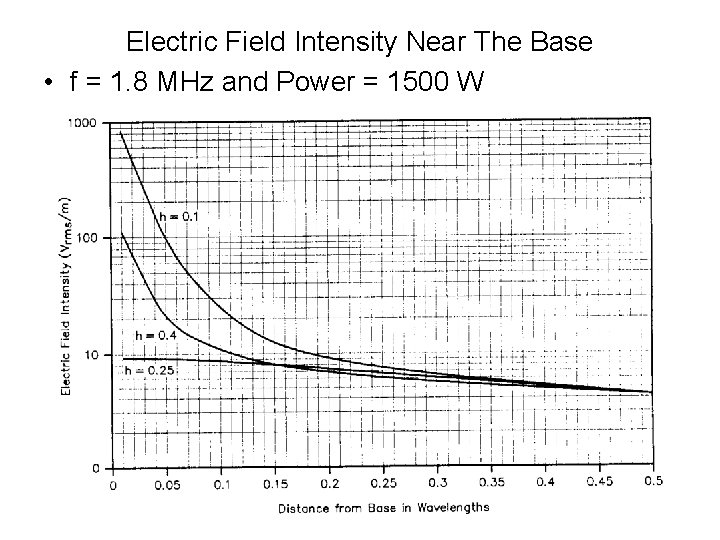
Electric Field Intensity Near The Base • f = 1. 8 MHz and Power = 1500 W
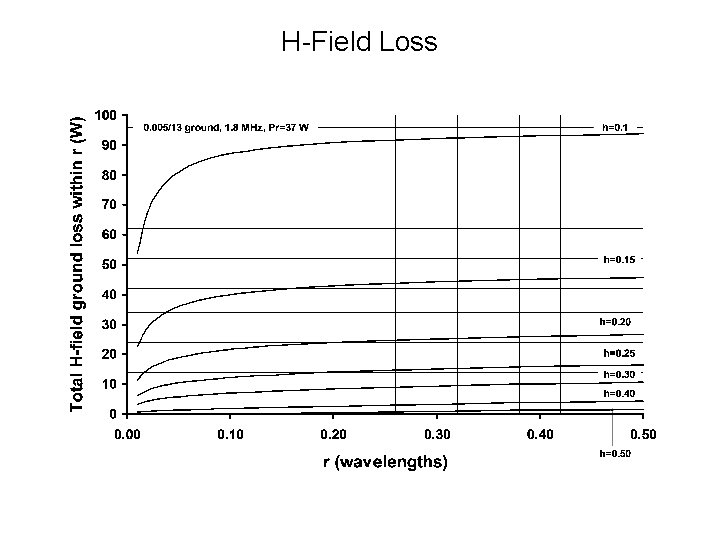
H-Field Loss
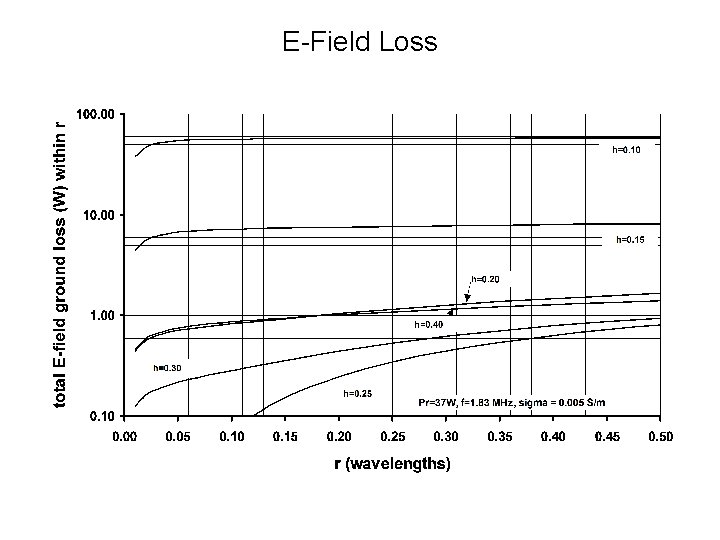
E-Field Loss
Power transmission antenna 1 antenna 2 antenna equivalent circuit
Measurement schemes • The classical technique is to excite the test antenna with a known power and measure the resulting signal strength at some point in the far field (>2. 5 wavelengths for 1/4 wave vertical). • This approach takes great care and good equipment to make accurate measurements.
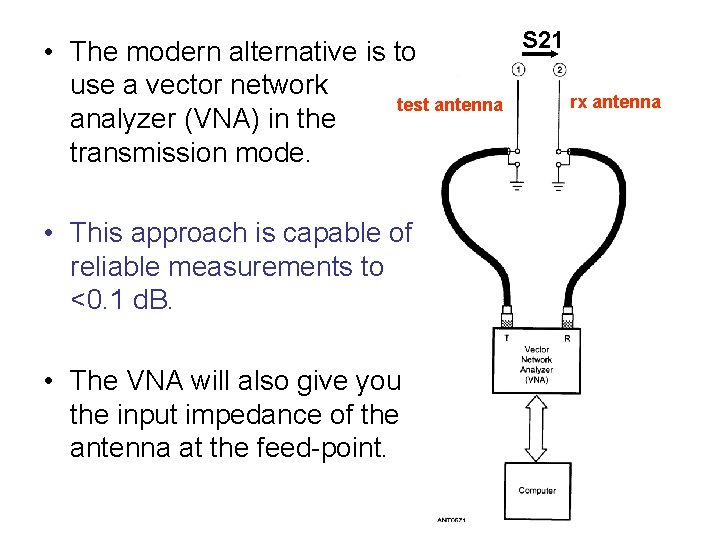
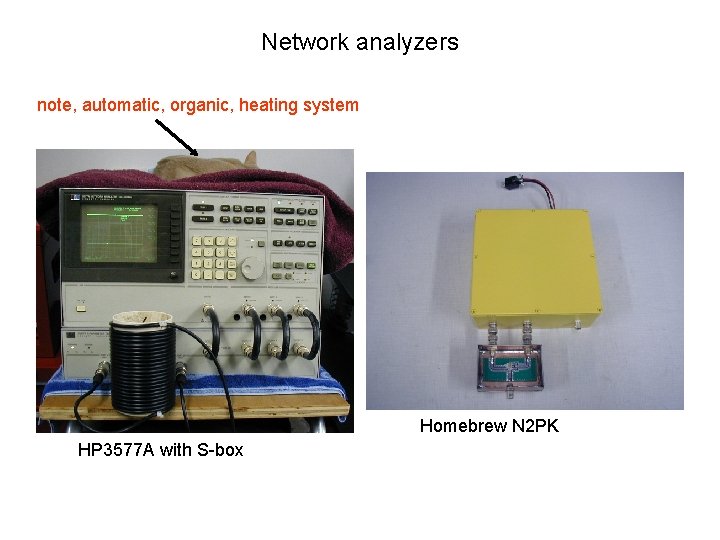
S 21 • The modern alternative is to use a vector network rx antenna test antenna analyzer (VNA) in the transmission mode. • This approach is capable of reliable measurements to <0. 1 d. B. • The VNA will also give you the input impedance of the antenna at the feed-point.
Some experimental results
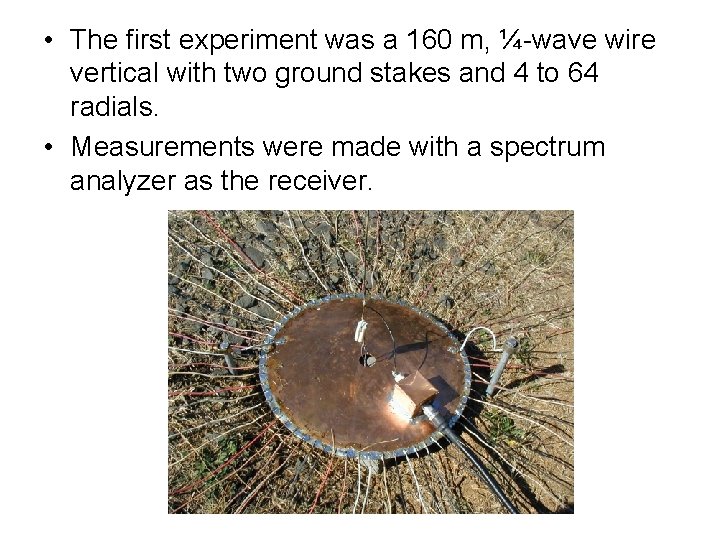
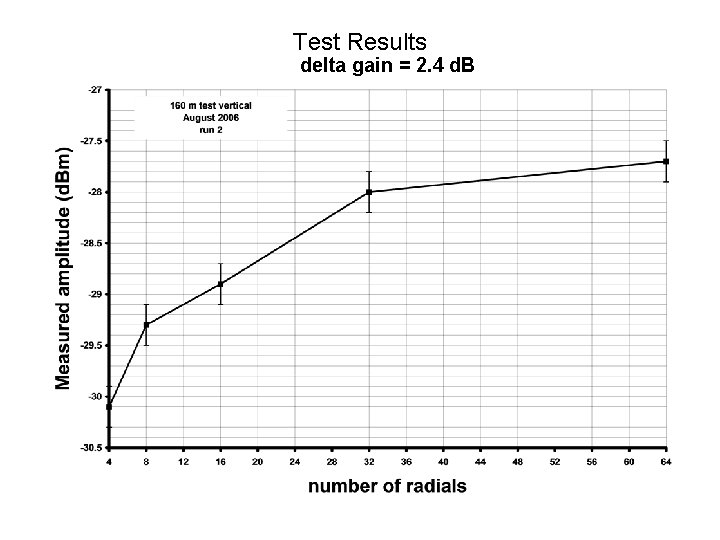
• The first experiment was a 160 m, ¼-wave wire vertical with two ground stakes and 4 to 64 radials. • Measurements were made with a spectrum analyzer as the receiver.
Test Results delta gain = 2. 4 d. B
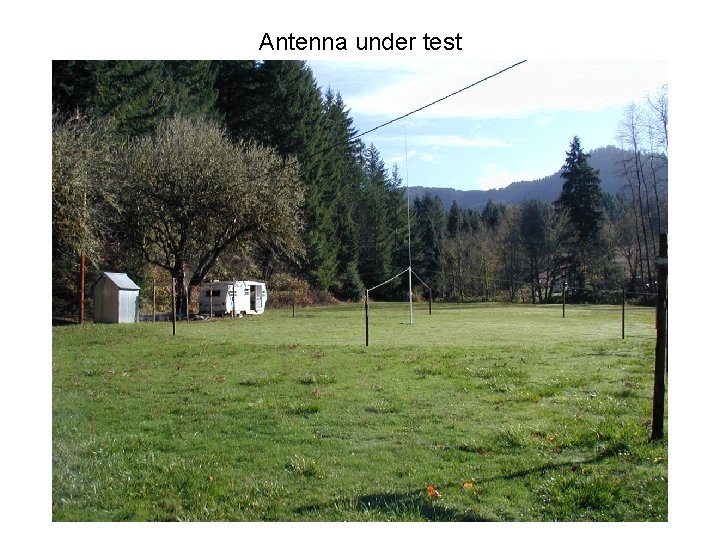
A new antenna test range
Antenna under test
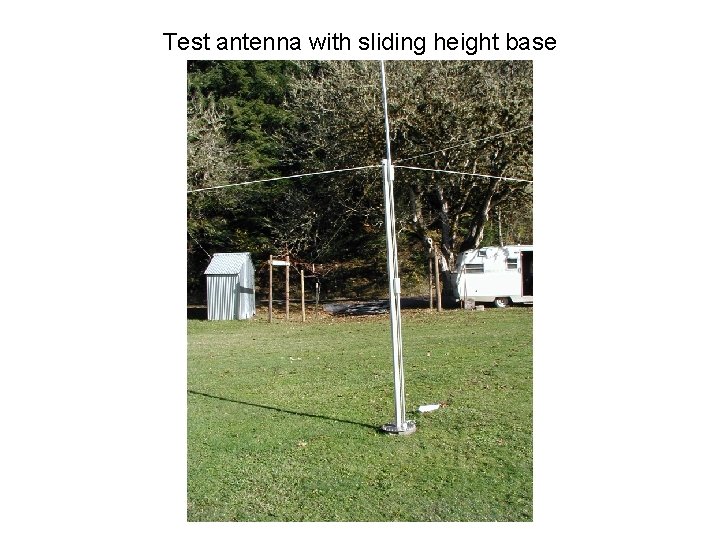
Test antenna with sliding height base
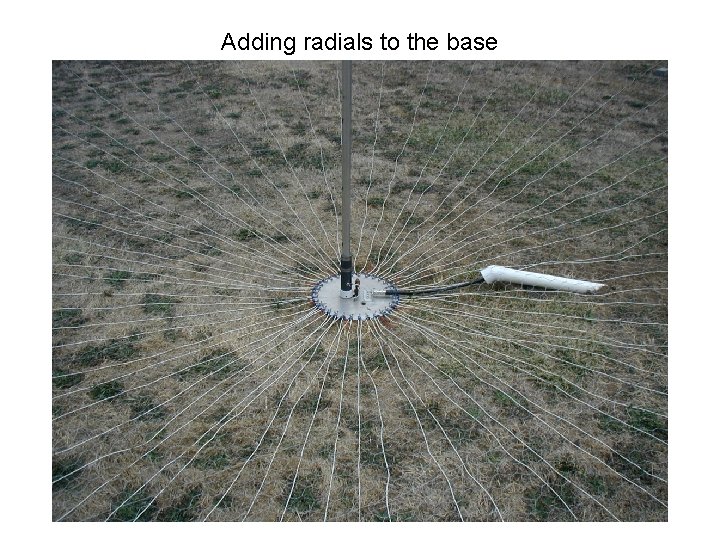
Adding radials to the base
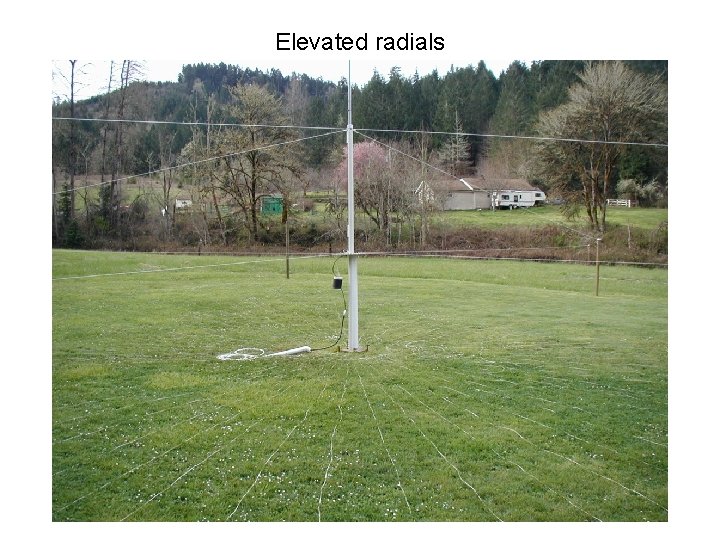
Elevated radials
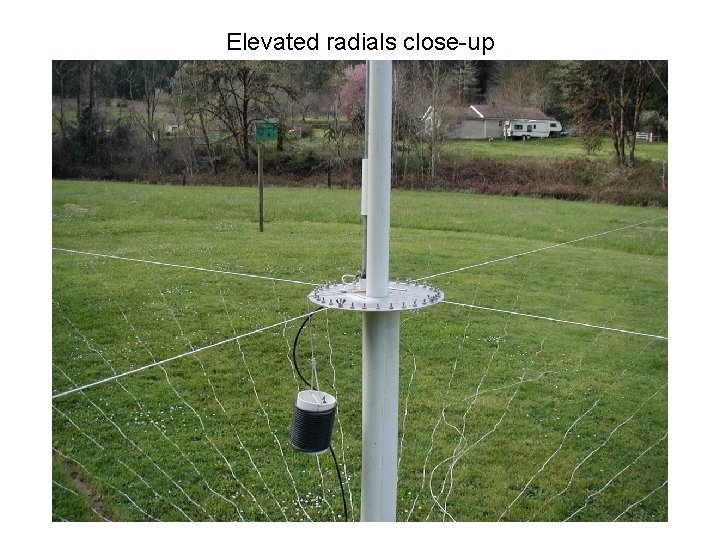
Elevated radials close-up
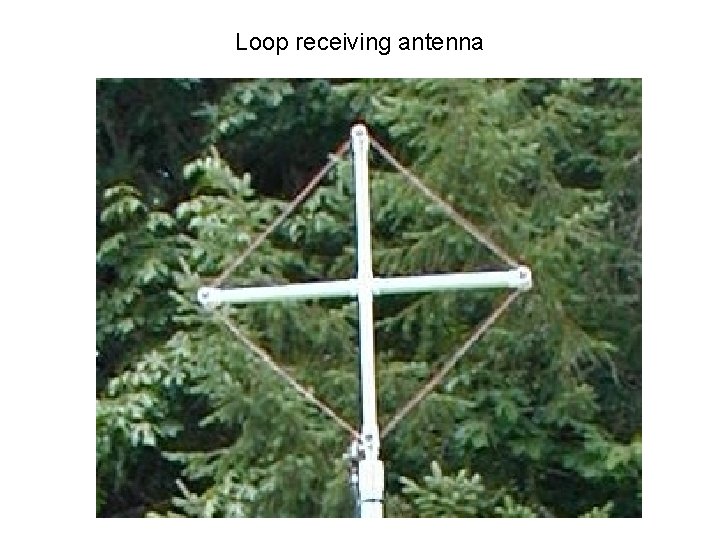
Loop receiving antenna
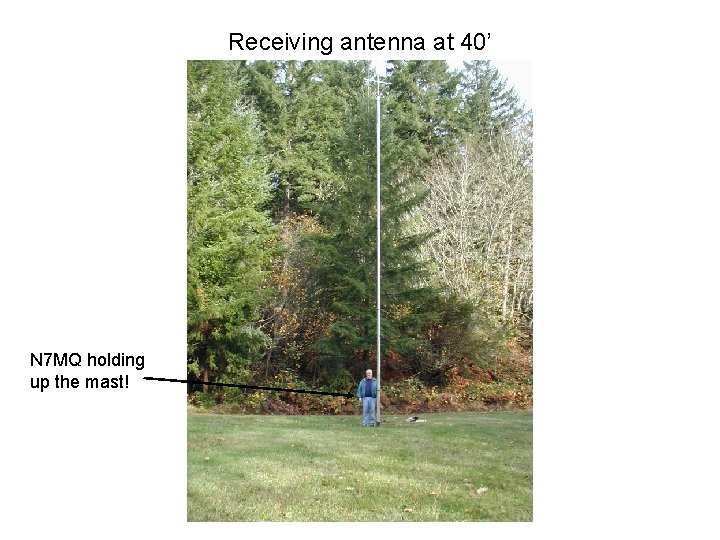
Receiving antenna at 40’ N 7 MQ holding up the mast!
Network analyzers note, automatic, organic, heating system Homebrew N 2 PK HP 3577 A with S-box
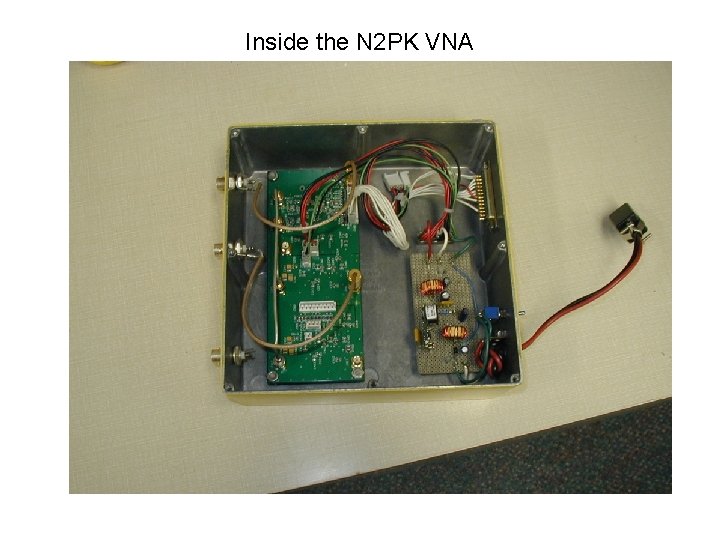
Inside the N 2 PK VNA
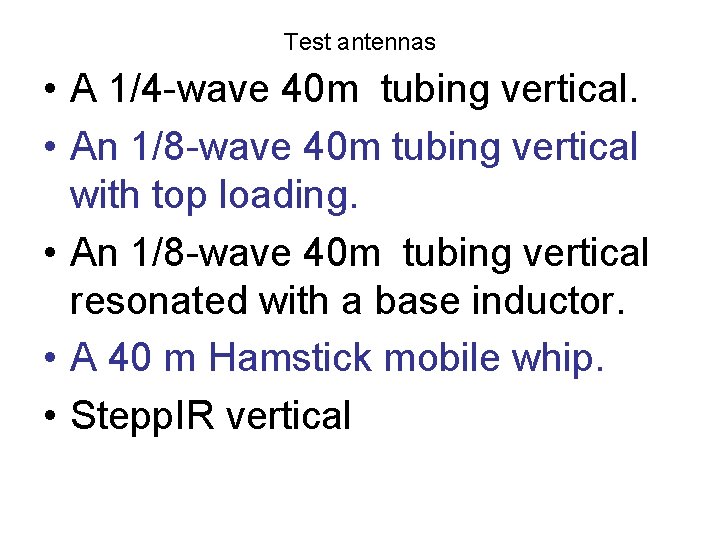
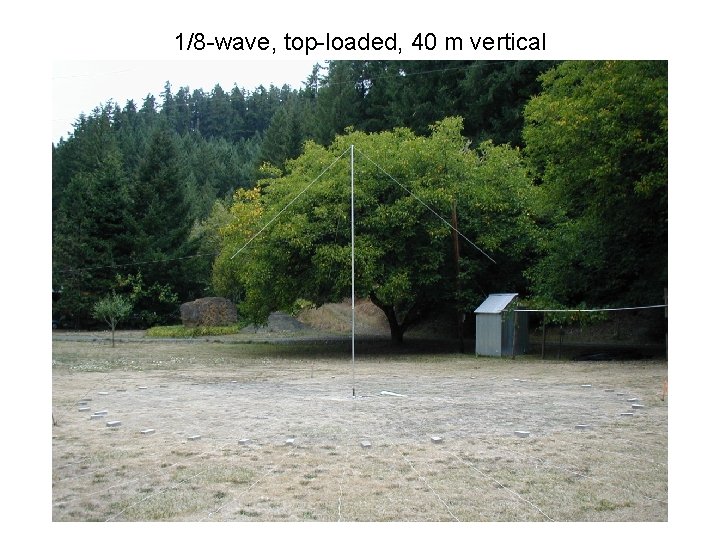
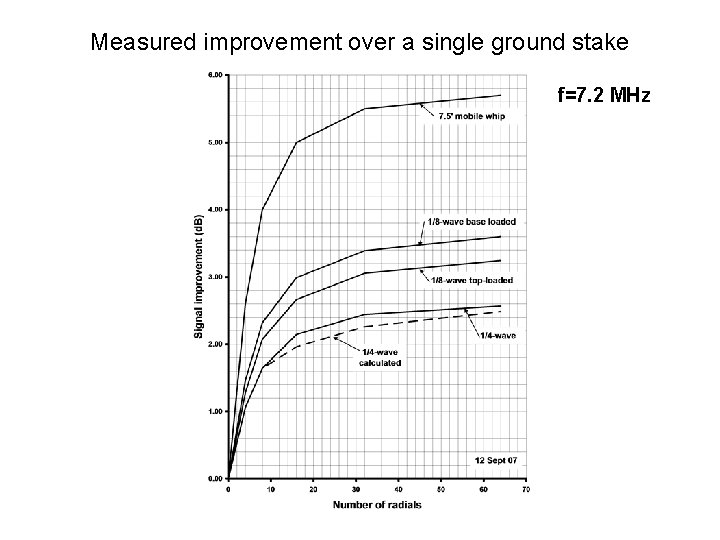
Test antennas • A 1/4 -wave 40 m tubing vertical. • An 1/8 -wave 40 m tubing vertical with top loading. • An 1/8 -wave 40 m tubing vertical resonated with a base inductor. • A 40 m Hamstick mobile whip. • Stepp. IR vertical
1/8 -wave, top-loaded, 40 m vertical
Measured improvement over a single ground stake f=7. 2 MHz
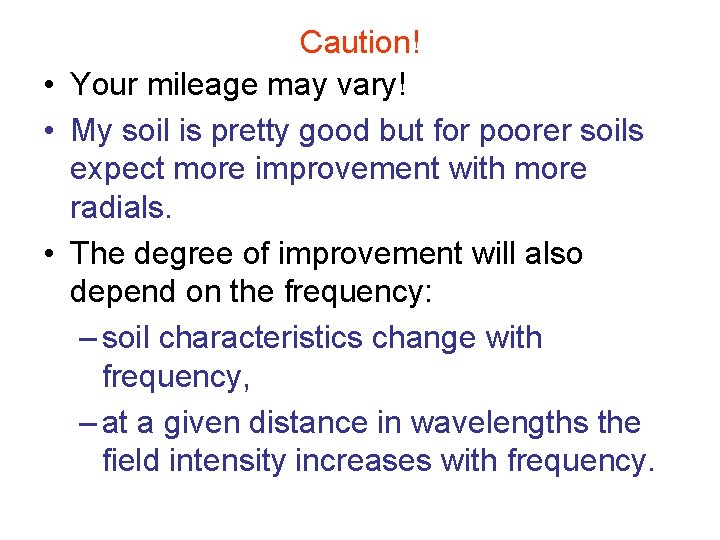
Caution! • Your mileage may vary! • My soil is pretty good but for poorer soils expect more improvement with more radials. • The degree of improvement will also depend on the frequency: – soil characteristics change with frequency, – at a given distance in wavelengths the field intensity increases with frequency.
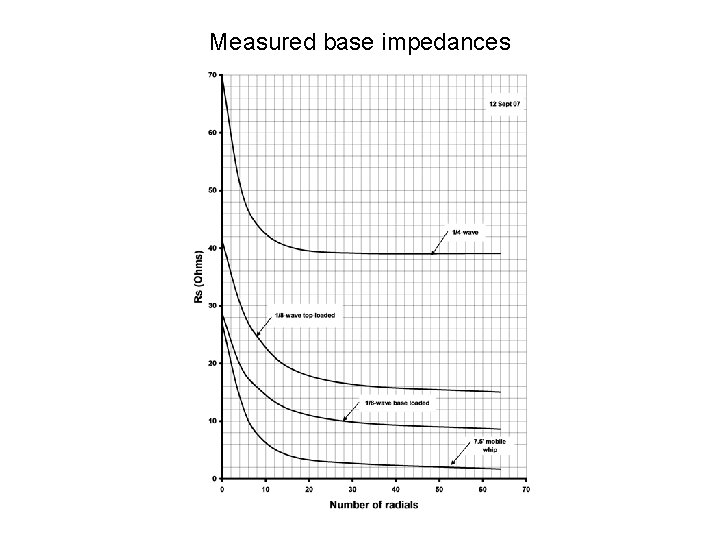
Measured base impedances
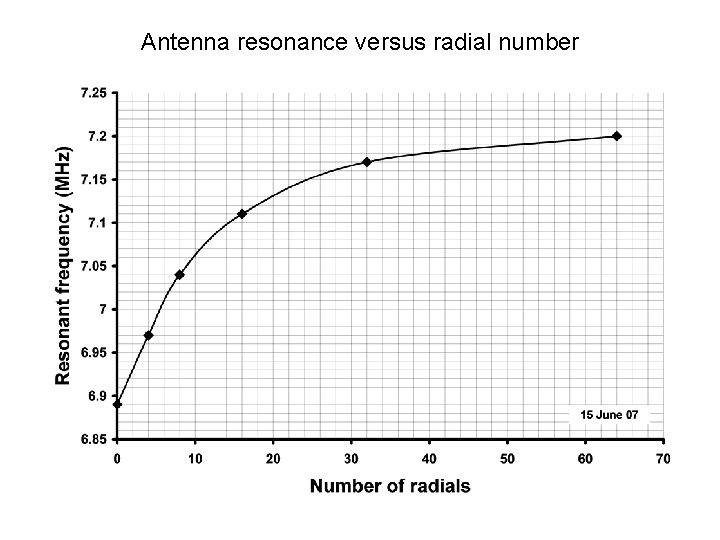
Antenna resonance versus radial number
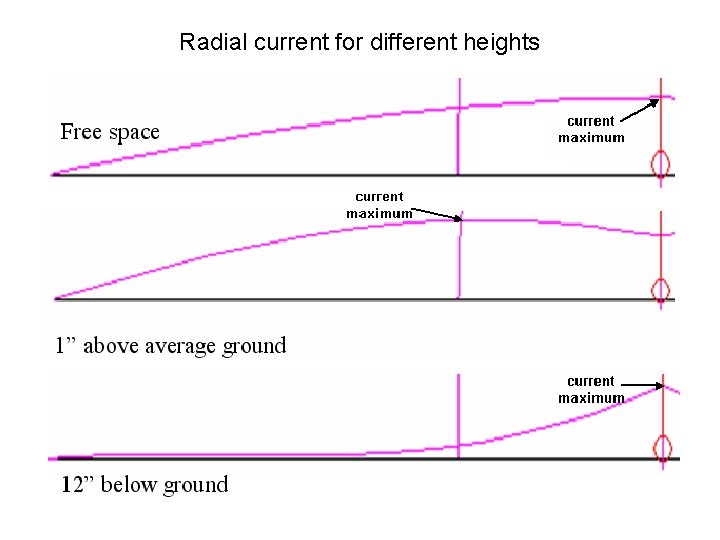
Radial current for different heights
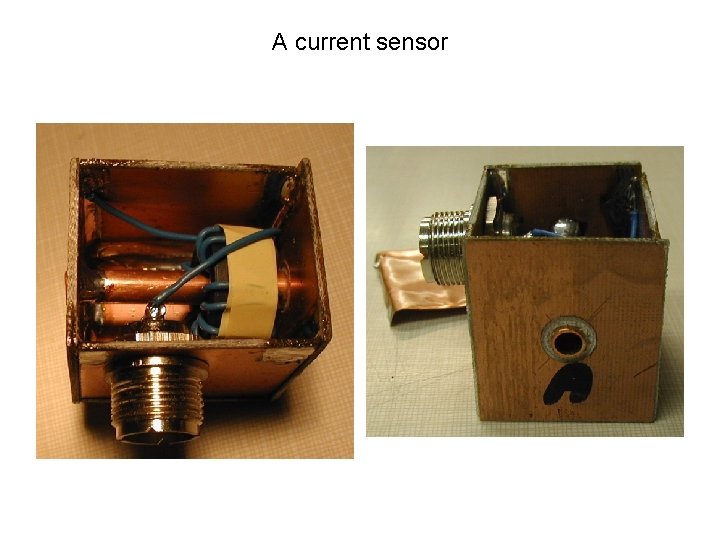
A current sensor
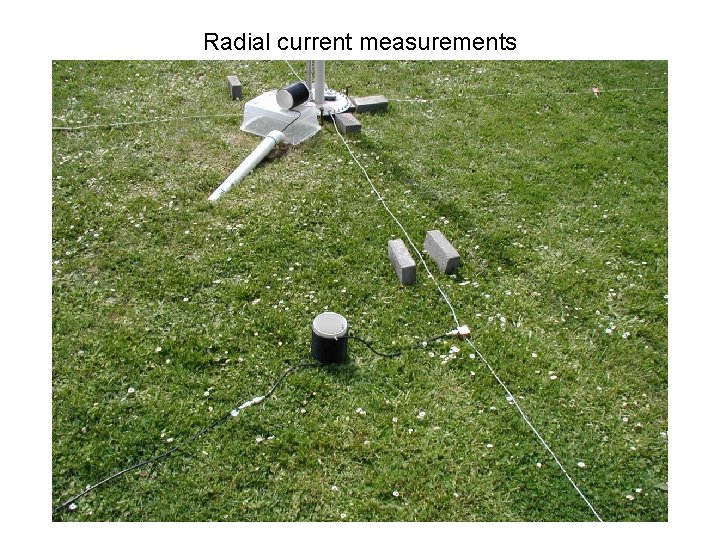
Radial current measurements
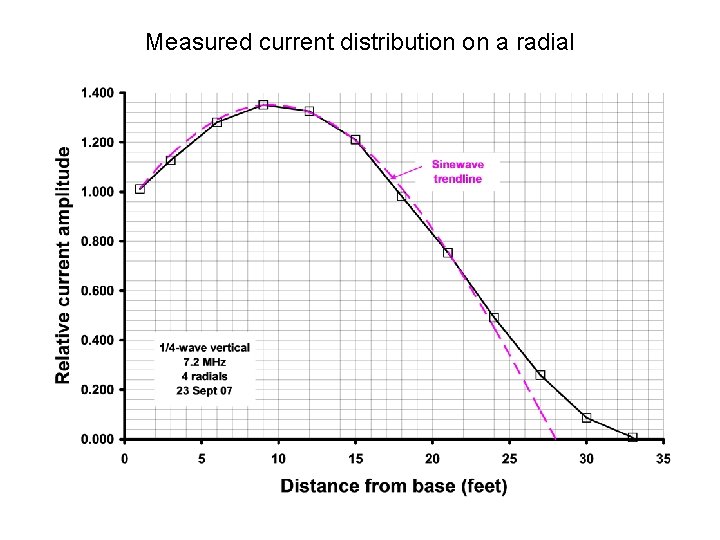
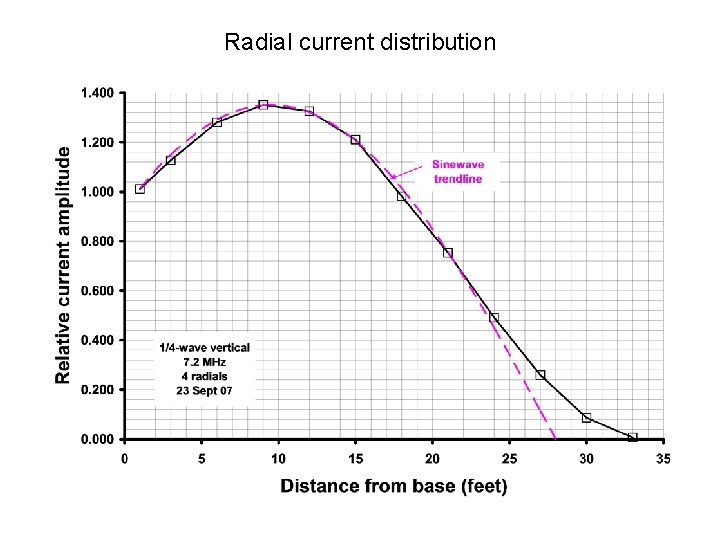
Measured current distribution on a radial
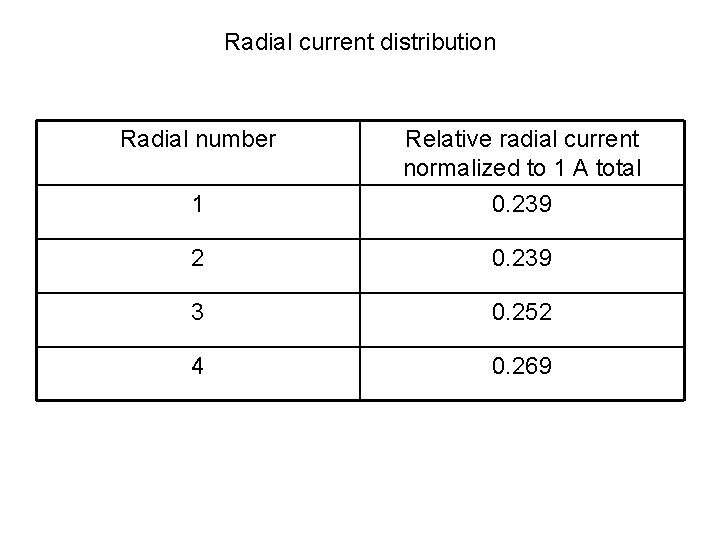
Radial current distribution Radial number 1 Relative radial current normalized to 1 A total 0. 239 2 0. 239 3 0. 252 4 0. 269
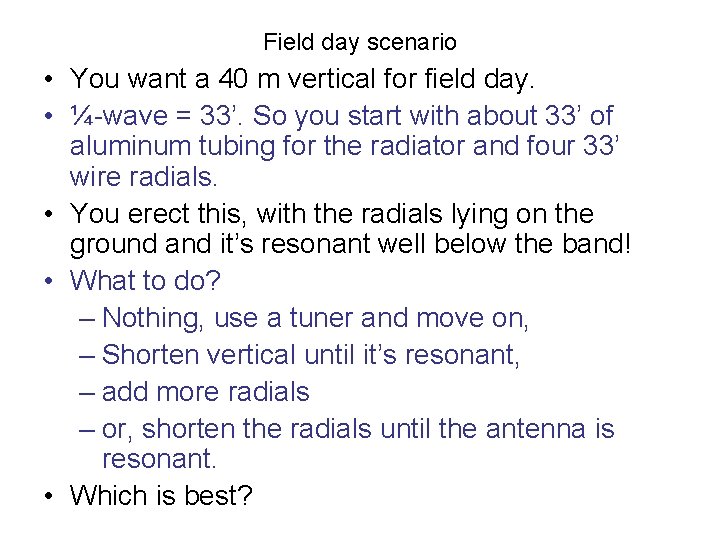
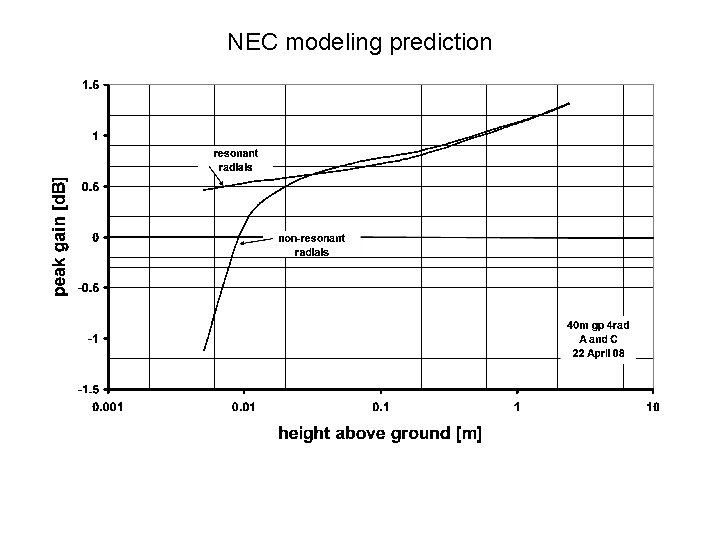
Field day scenario • You want a 40 m vertical for field day. • ¼-wave = 33’. So you start with about 33’ of aluminum tubing for the radiator and four 33’ wire radials. • You erect this, with the radials lying on the ground and it’s resonant well below the band! • What to do? – Nothing, use a tuner and move on, – Shorten vertical until it’s resonant, – add more radials – or, shorten the radials until the antenna is resonant. • Which is best?
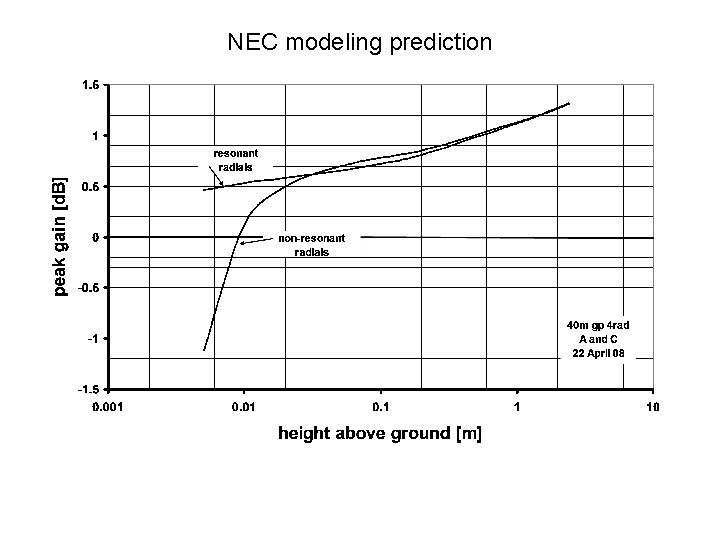
NEC modeling prediction
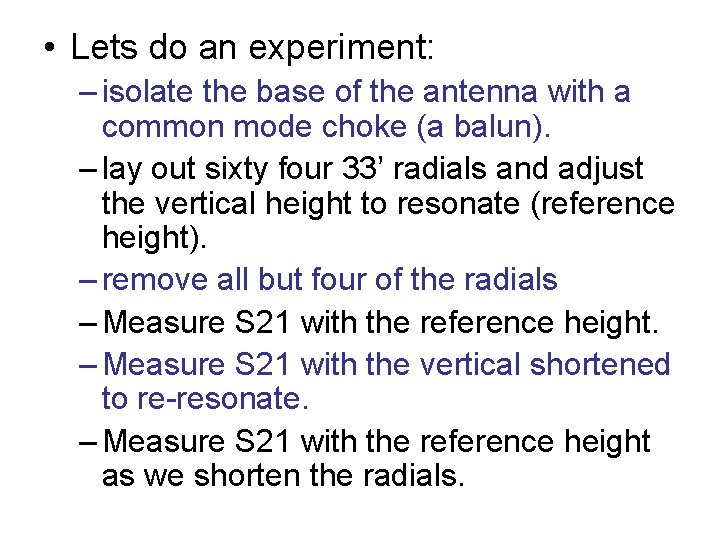
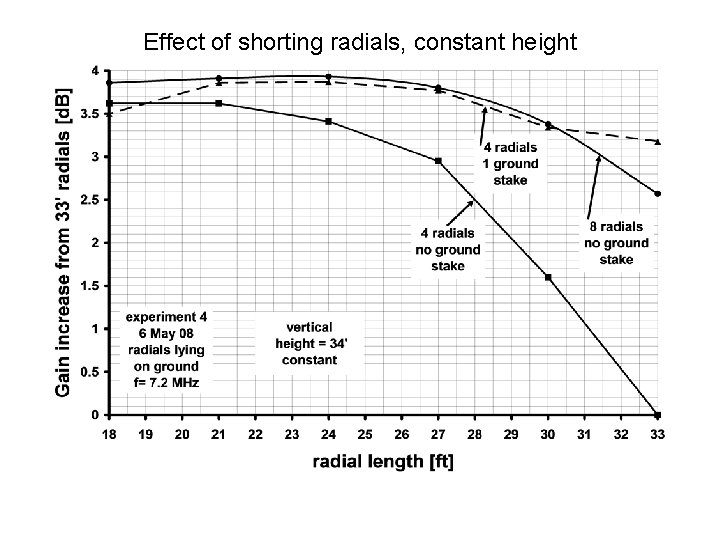
• Lets do an experiment: – isolate the base of the antenna with a common mode choke (a balun). – lay out sixty four 33’ radials and adjust the vertical height to resonate (reference height). – remove all but four of the radials – Measure S 21 with the reference height. – Measure S 21 with the vertical shortened to re-resonate. – Measure S 21 with the reference height as we shorten the radials.
Effect of shorting radials, constant height
Radial current distribution
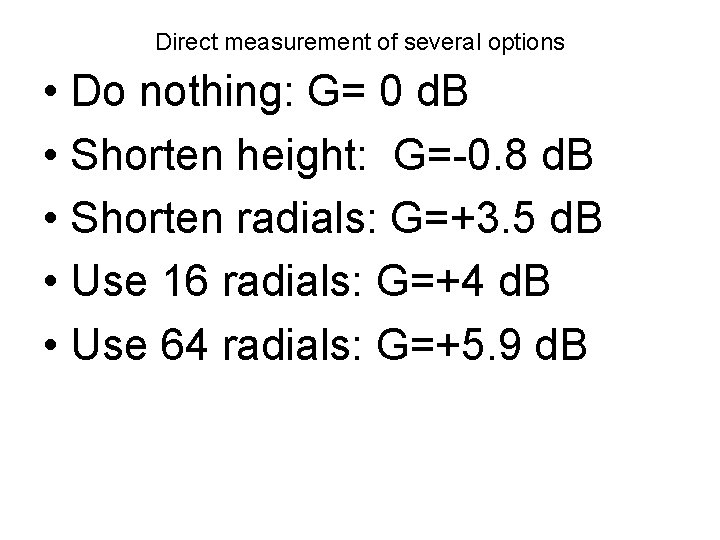
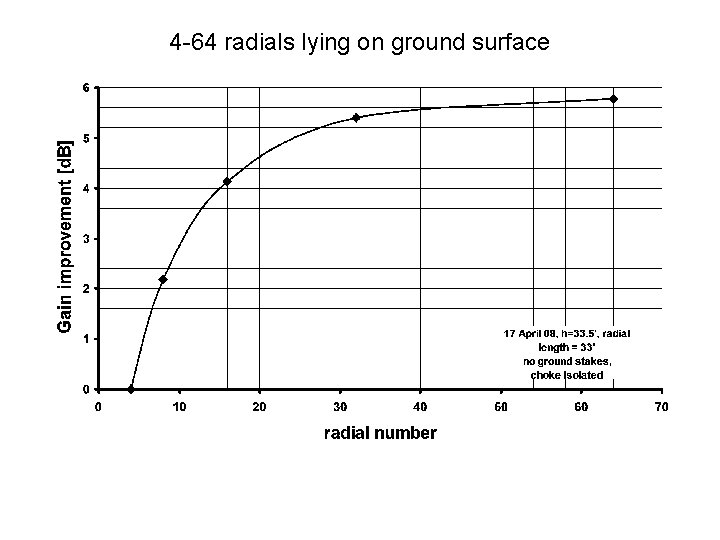
Direct measurement of several options • Do nothing: G= 0 d. B • Shorten height: G=-0. 8 d. B • Shorten radials: G=+3. 5 d. B • Use 16 radials: G=+4 d. B • Use 64 radials: G=+5. 9 d. B
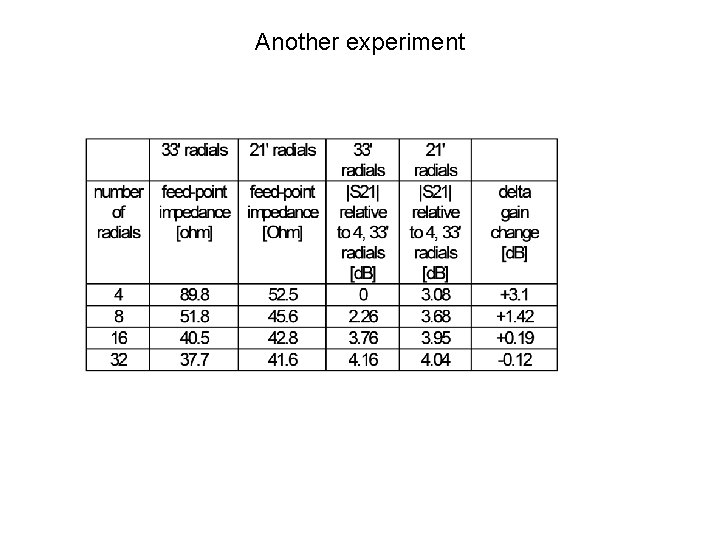
Another experiment
An observation • When you have only four radials the test results are always a bit squirrelly: – small variations in radial layout, – coupling to other conductors, – like the feed-line, – all effect the measurements making close repeatability difficult between experiments. – The whole system is very sensitive to everything! • This nonsense goes away as the number of radials increases!
What about a few elevated radials versus a large number of surface radials?
NEC modeling prediction
4 -64 radials lying on ground surface
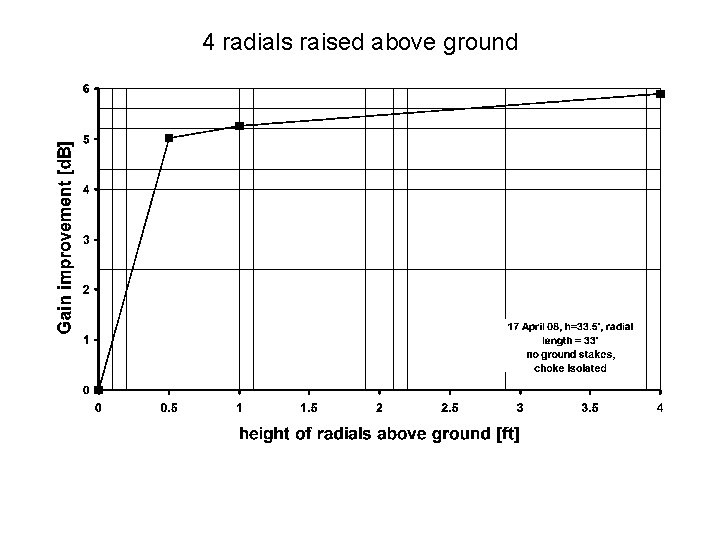
4 radials raised above ground
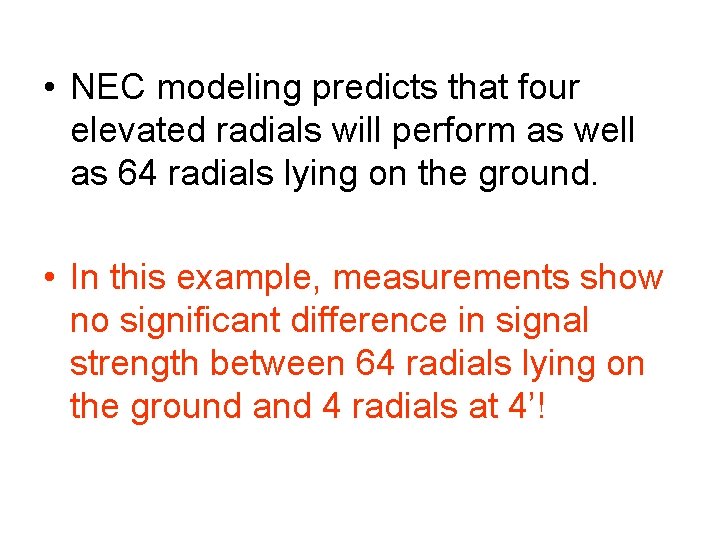
• NEC modeling predicts that four elevated radials will perform as well as 64 radials lying on the ground. • In this example, measurements show no significant difference in signal strength between 64 radials lying on the ground and 4 radials at 4’!
Some more elevated radial experiments
configuration number |S 21| [d. B] Zi [Ohms] configuration h=33. 5’ 1 0 39+j 6. 3 base & 4 radials elevated 48” 2 -0. 47 36+j 6. 2 base at ground level radial ends at 48” 3 -0. 65 29 -j 11 gullwing, base at ground level ends at 48” 4 -0. 36 39+j 0. 9 base & radials at 48” four 17. 5’ radials, 2. 2 u. H L 5 -5. 19 132+j 22 base & radials at ground level 6 -1. 79 51+j 1. 0 base & radials at ground level four 21’ radials 7 -0. 1 40 -j 1. 2 base & radials at ground level 64, 33’ radials
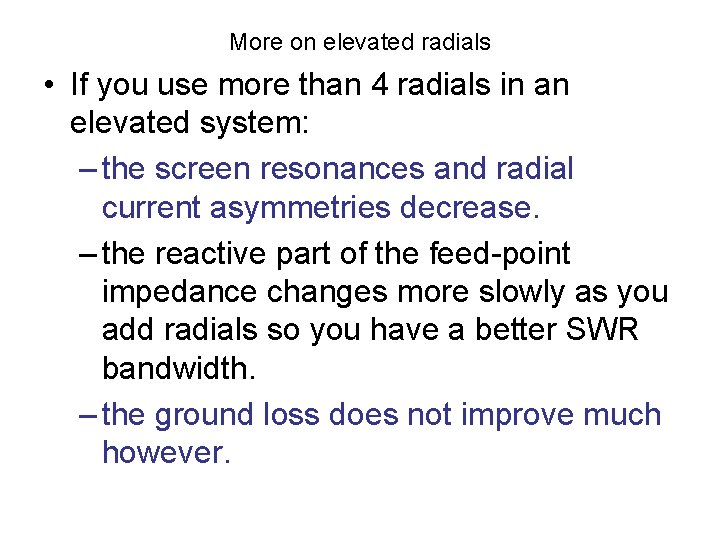
More on elevated radials • If you use more than 4 radials in an elevated system: – the screen resonances and radial current asymmetries decrease. – the reactive part of the feed-point impedance changes more slowly as you add radials so you have a better SWR bandwidth. – the ground loss does not improve much however.
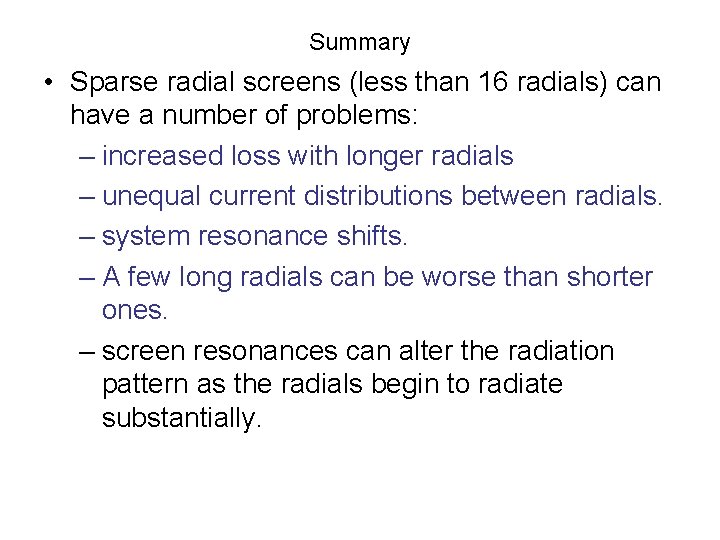
Summary • Sparse radial screens (less than 16 radials) can have a number of problems: – increased loss with longer radials – unequal current distributions between radials. – system resonance shifts. – A few long radials can be worse than shorter ones. – screen resonances can alter the radiation pattern as the radials begin to radiate substantially.
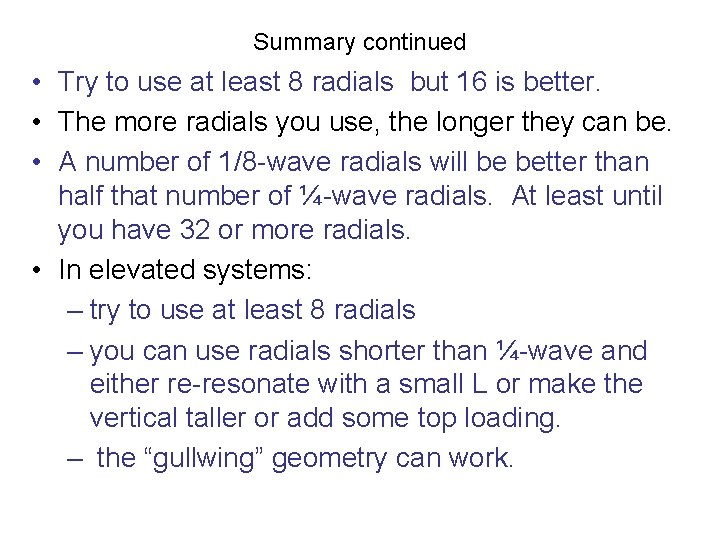
Summary continued • Try to use at least 8 radials but 16 is better. • The more radials you use, the longer they can be. • A number of 1/8 -wave radials will be better than half that number of ¼-wave radials. At least until you have 32 or more radials. • In elevated systems: – try to use at least 8 radials – you can use radials shorter than ¼-wave and either re-resonate with a small L or make the vertical taller or add some top loading. – the “gullwing” geometry can work.
Some advice • Try to use more radials. • Four is just not enough. • All the funny business goes away with more radials! • 16 radials are a good compromise.