
HF Signal Propagation Bill Leonard N 0 CU
HF Signal Propagation Bill Leonard N 0 CU 1 June 2019
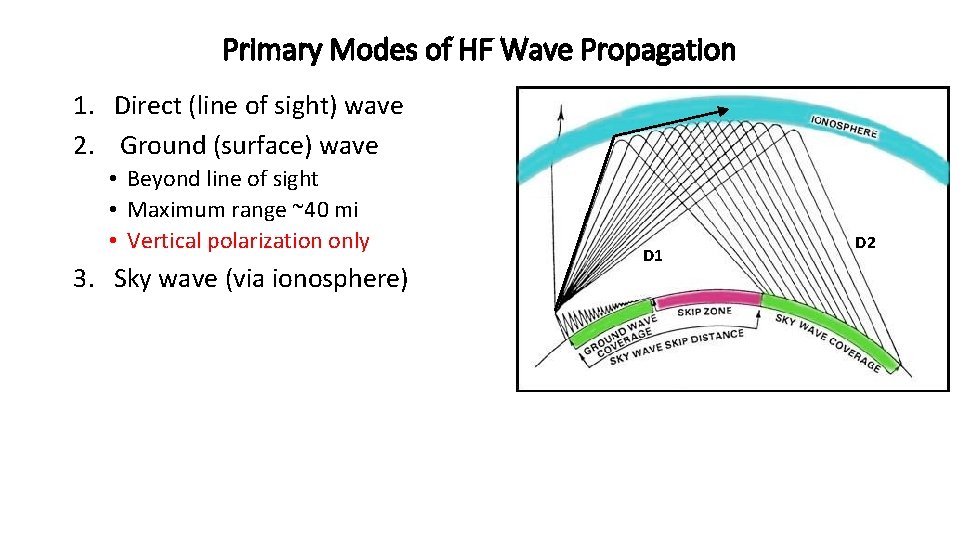
Primary Modes of HF Wave Propagation 1. Direct (line of sight) wave 2. Ground (surface) wave • Beyond line of sight • Maximum range ~40 mi • Vertical polarization only 3. Sky wave (via ionosphere) D 1 D 2
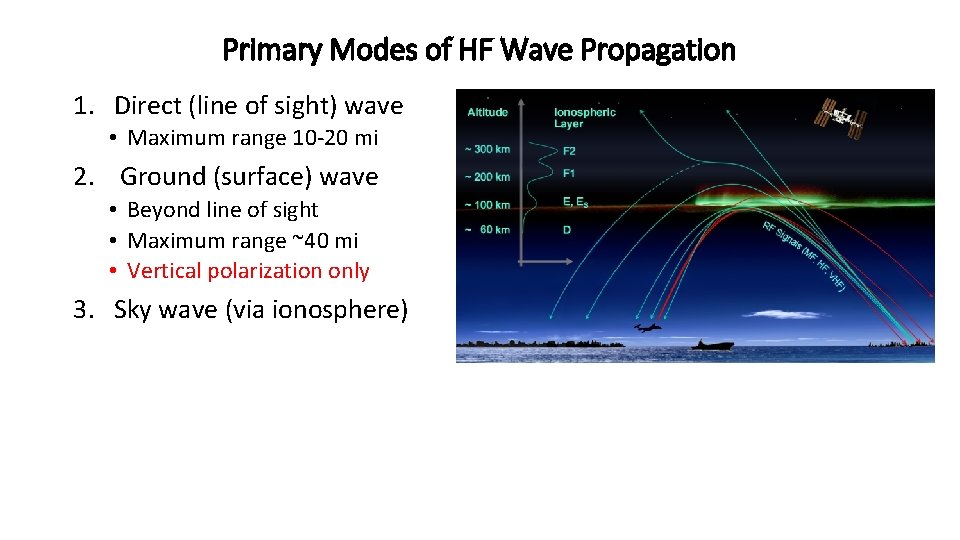
Primary Modes of HF Wave Propagation 1. Direct (line of sight) wave • Maximum range 10 -20 mi 2. Ground (surface) wave • Beyond line of sight • Maximum range ~40 mi • Vertical polarization only 3. Sky wave (via ionosphere)
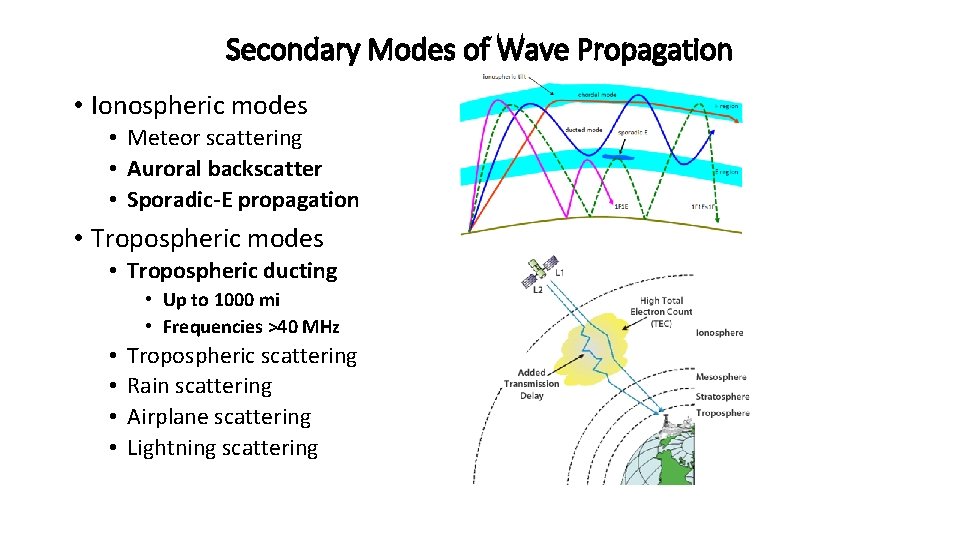
Secondary Modes of Wave Propagation • Ionospheric modes • Meteor scattering • Auroral backscatter • Sporadic-E propagation • Tropospheric modes • Tropospheric ducting • Up to 1000 mi • Frequencies >40 MHz • • Tropospheric scattering Rain scattering Airplane scattering Lightning scattering

Why Are Ground Waves Vertically Polarized? • Polarization of a linear EM wave is defined by the E field • Horizontally polarized wave has the E field in contact with the Earth • A conductive surface will act like a short to an E field Ex: Dipole antenna laying on highly conductive ground plane • Magnetic fields are unaffected by conductive materials • Magnetic fields are affected by ferromagnetic materials Ex: Magnetic loop antenna near ground Vertically polarized wave + V h Eart d un Gro Short has no effect on magnetic field rth nd a E u o Gr
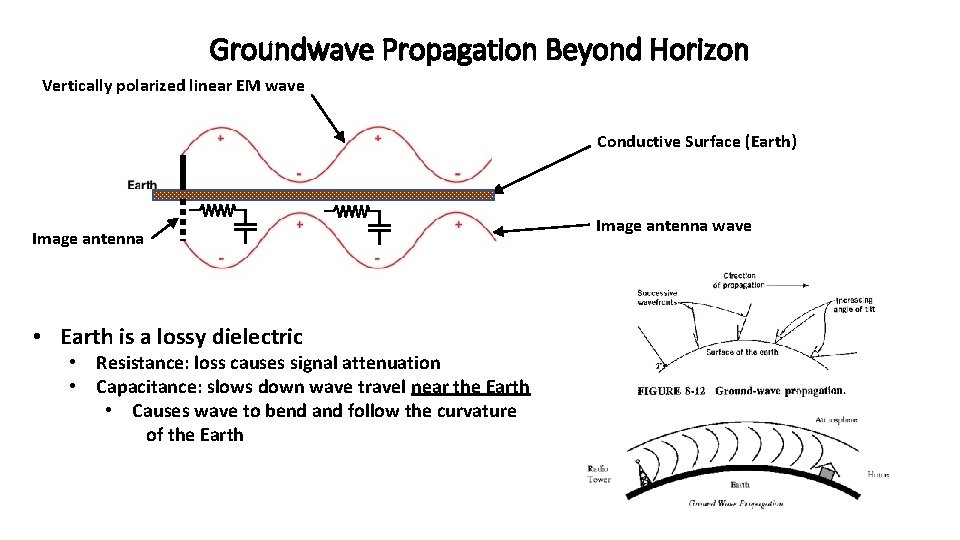
Groundwave Propagation Beyond Horizon Vertically polarized linear EM wave Conductive Surface (Earth) Image antenna • Earth is a lossy dielectric • Resistance: loss causes signal attenuation • Capacitance: slows down wave travel near the Earth • Causes wave to bend and follow the curvature of the Earth Image antenna wave
Polarization Of A Reflected Wave You are receiving a European DX station on 14 MHz via the North Pole. He is using a horizontally polarized antenna. • Question: What is the polarization of the signal at your antenna 1. 2. 3. 4. Horizontal Vertical Can’t tell because of Faraday rotation None of the above
Polarization Of A Reflected Wave You are receiving a European DX station on 14 MHz via the North Pole. He is using a horizontally polarized antenna. • Question: What is the polarization of the signal at your antenna 1. 2. 3. 4. Horizontal Vertical Can’t tell because of Faraday rotation None of the above • Answer: None of the above • Why: All ionospherically refracted (reflected) signals are elliptically polarized
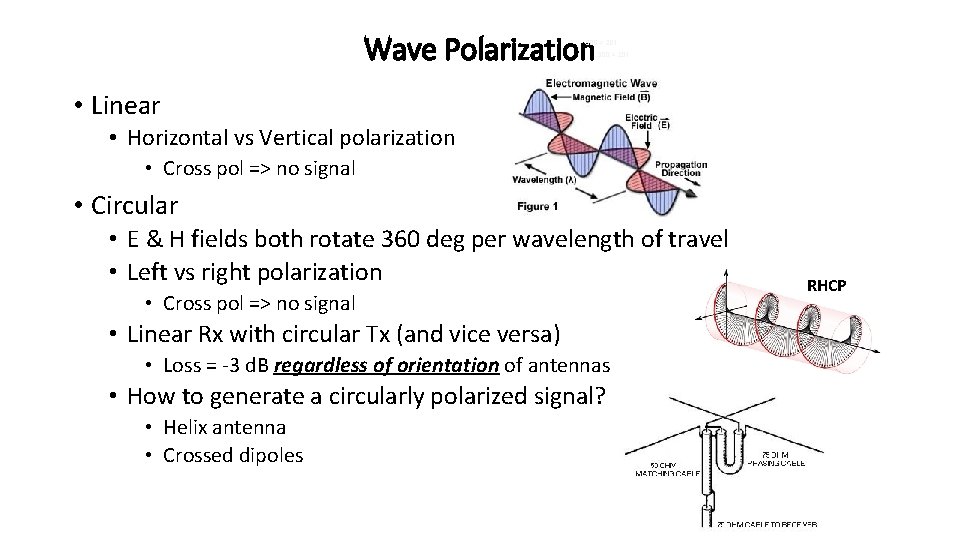
Wave Polarization 300 × 201 • Linear • Horizontal vs Vertical polarization • Cross pol => no signal • Circular • E & H fields both rotate 360 deg per wavelength of travel • Left vs right polarization • Cross pol => no signal • Linear Rx with circular Tx (and vice versa) • Loss = -3 d. B regardless of orientation of antennas • How to generate a circularly polarized signal? • Helix antenna • Crossed dipoles RHCP
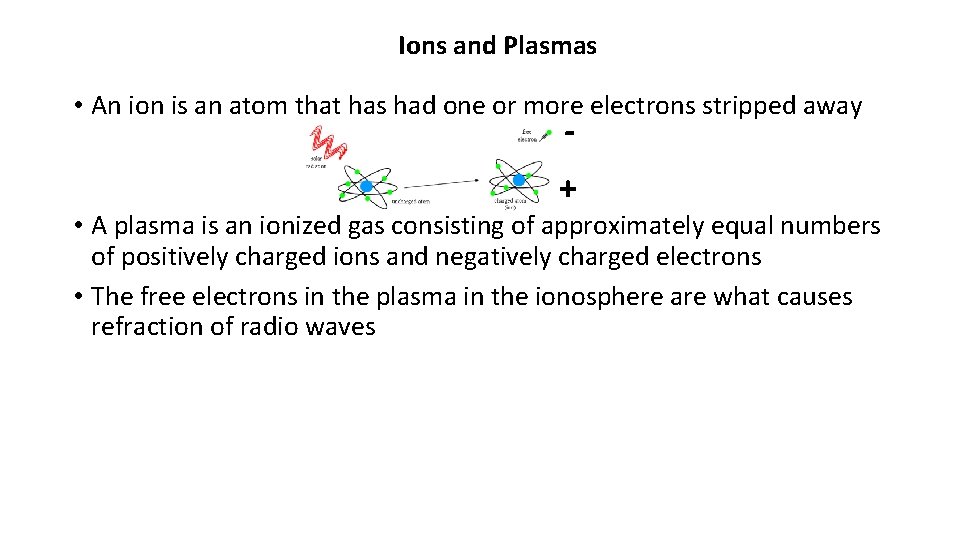
Ions and Plasmas • An ion is an atom that has had one or more electrons stripped away - + • A plasma is an ionized gas consisting of approximately equal numbers of positively charged ions and negatively charged electrons • The free electrons in the plasma in the ionosphere are what causes refraction of radio waves
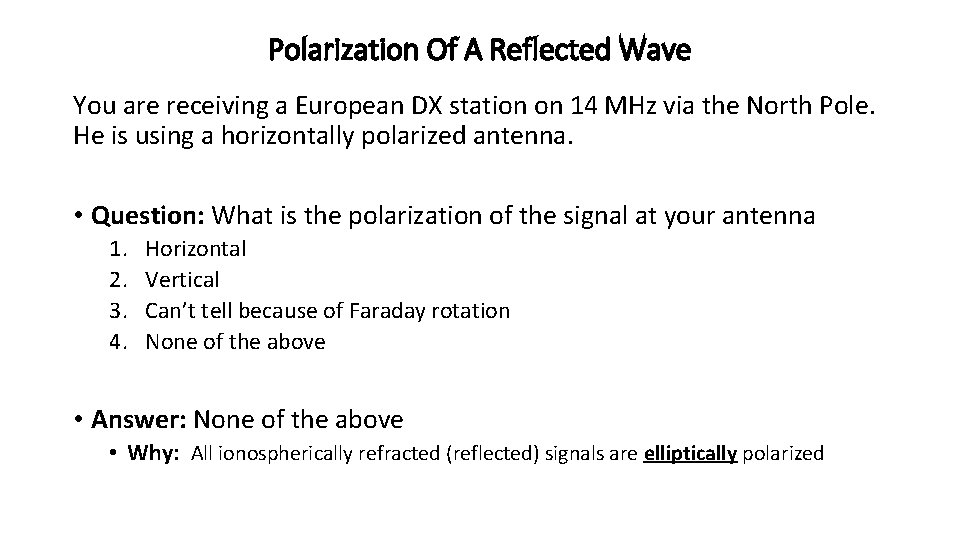
Why Are All Ionospherically Refracted Signals Elliptically Polarized? • The ionosphere is a magnetized plasma (ionized gas) • Magnetized plasmas are birefringent • A “Birefringent” medium is a medium with two refractive indices • A linearly polarized EM wave passing thru a magnetized plasma splits into two separate, counter rotating circularly polarized waves: 1. Ordinary (O-mode) wave 2. Extraordinary (X-mode) wave • The O-mode wave follows the magnetic field lines • Propagation path is close to what would occur in a non-magnetized plasma • The X-mode wave goes perpendicular to the magnetic field lines • Higher path loss • More susceptible to ducting (can go farther than the O-mode)
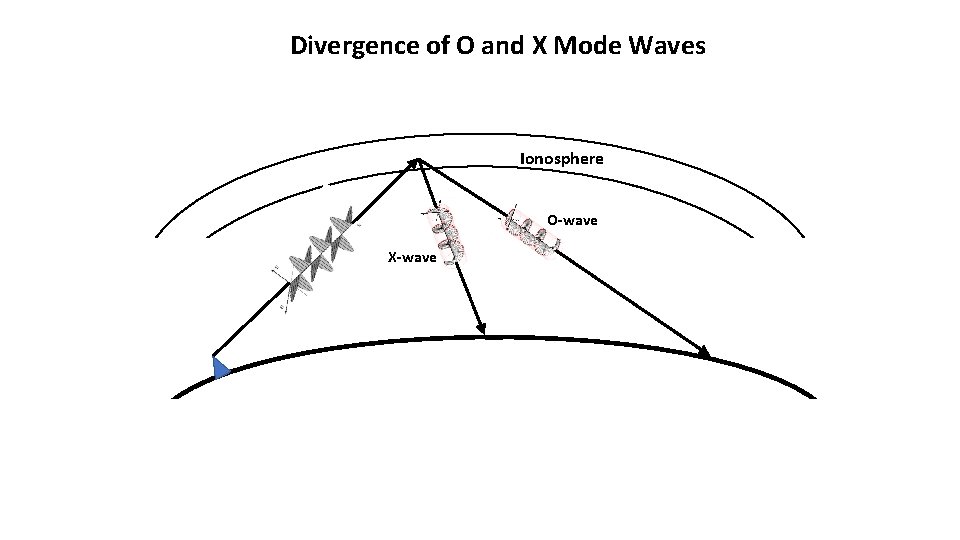
Divergence of O and X Mode Waves Ionosphere O-wave X-wave
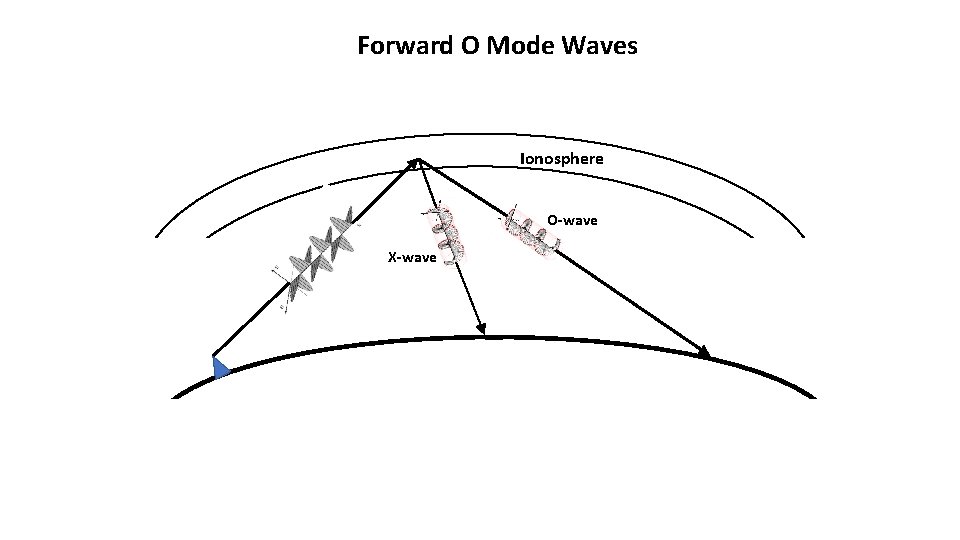
Forward O Mode Waves Ionosphere O-wave X-wave
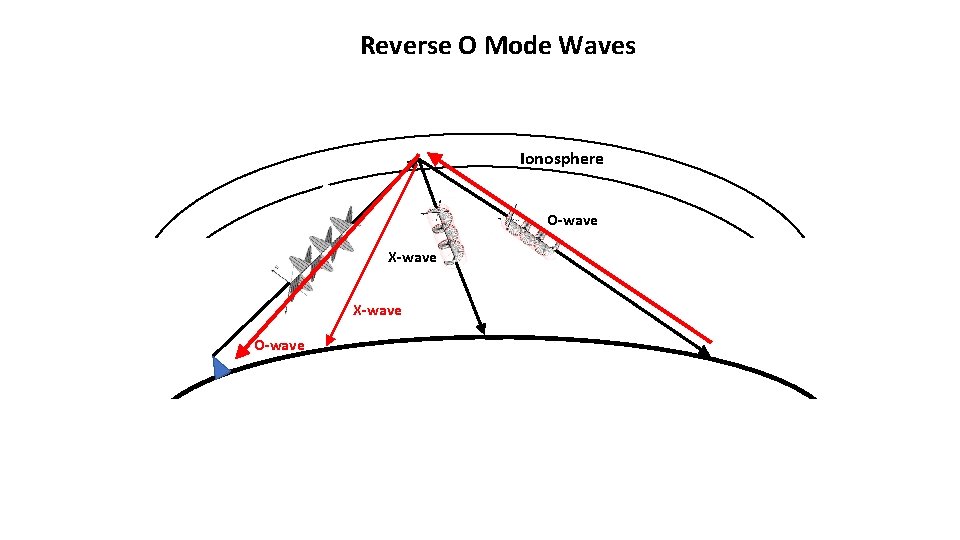
Reverse O Mode Waves Ionosphere O-wave X-wave O-wave
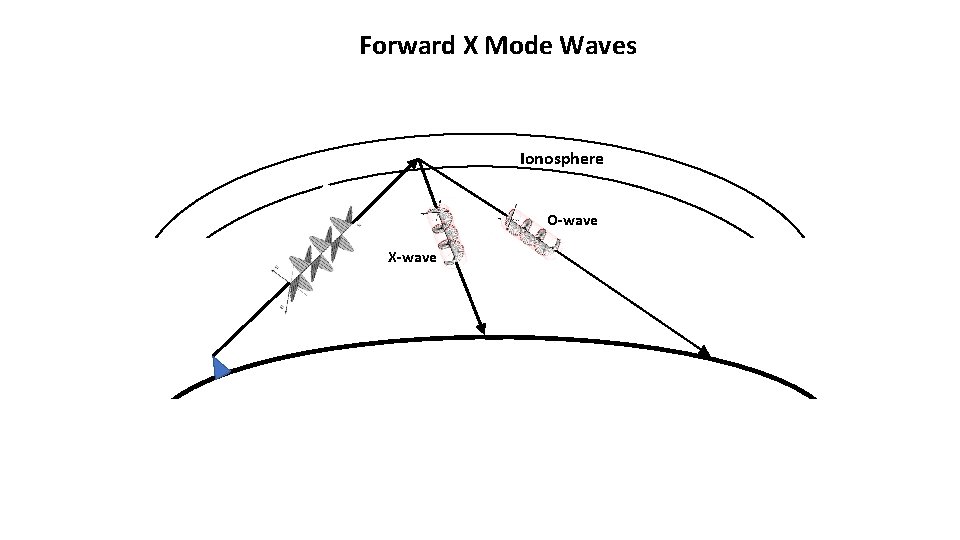
Forward X Mode Waves Ionosphere O-wave X-wave
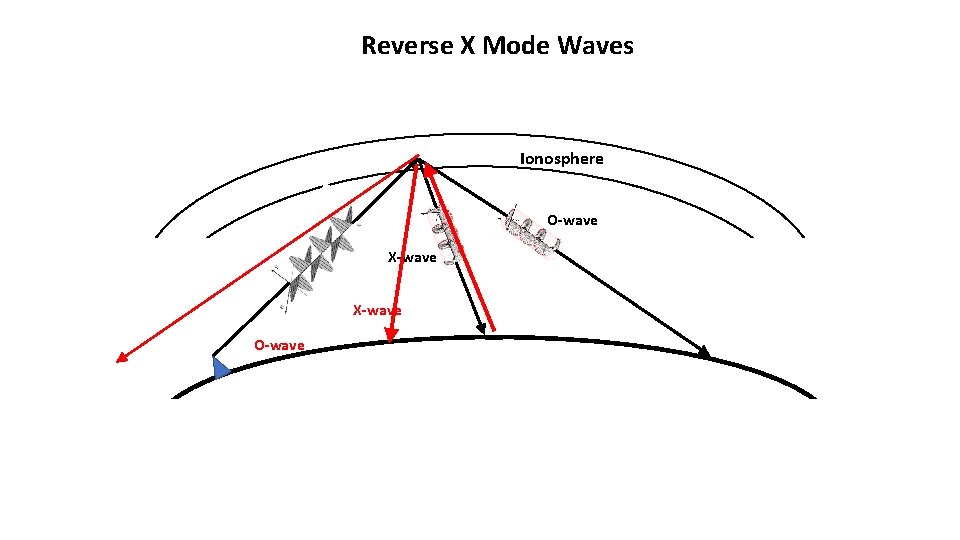
Reverse X Mode Waves Ionosphere O-wave X-wave O-wave
Why Is Birefringence Important? • Ionosphere is no longer reciprocal • One way propagation is the norm • The two paths for a QSO are different • X and O waves: • May, or may not have equal powers • Can take radically different paths exiting the ionosphere • Beam headings may not follow Great Circle routes • Up to 90 deg different at the poles • Have different MUFs, skip distances, propagation velocities, & attenuation • Degree of divergence of X and O waves: • Varies with location, frequency, take off angle, state of the ionosphere, … • Worst at low frequencies and at the Poles • Least along the Magnetic Equator • Most propagation programs only deal with O-mode • Proplab Pro Ver 3 shows both
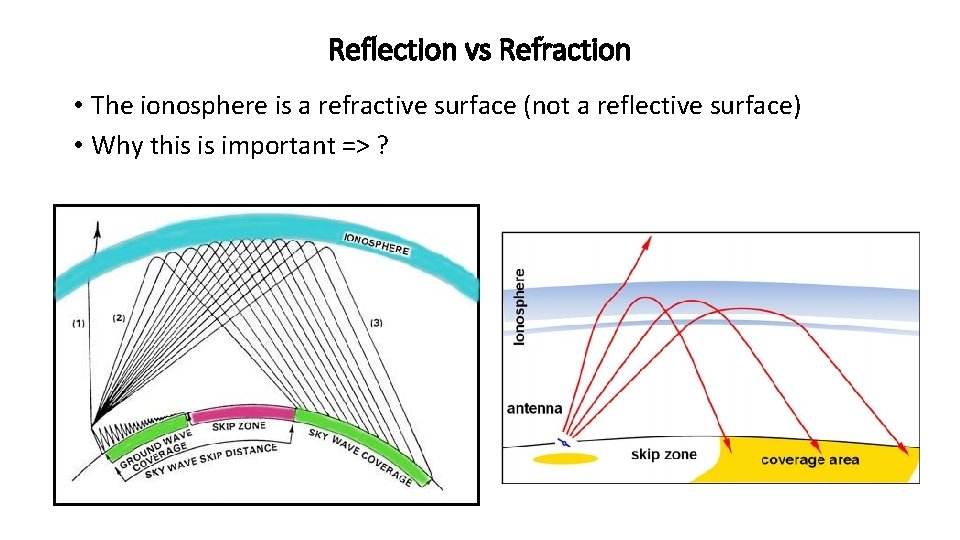
Reflection vs Refraction • The ionosphere is a refractive surface (not a reflective surface) • Why this is important => ?
- Slides: 18