
Hexominoes are made by joining six squares along

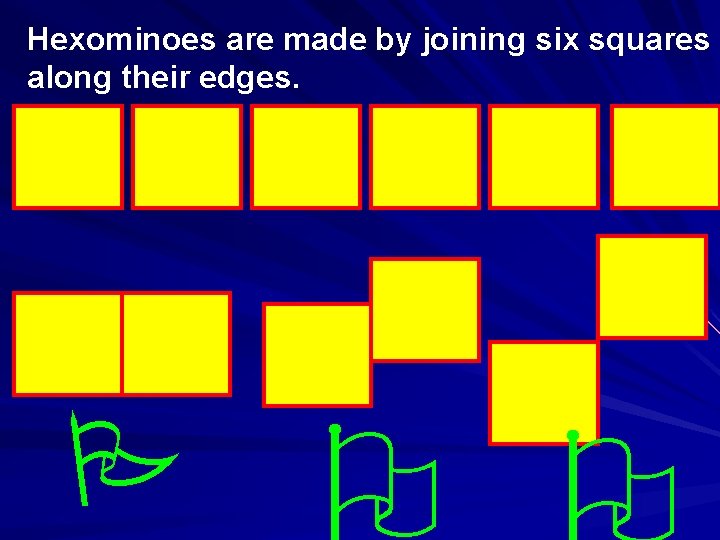
Hexominoes are made by joining six squares along their edges.
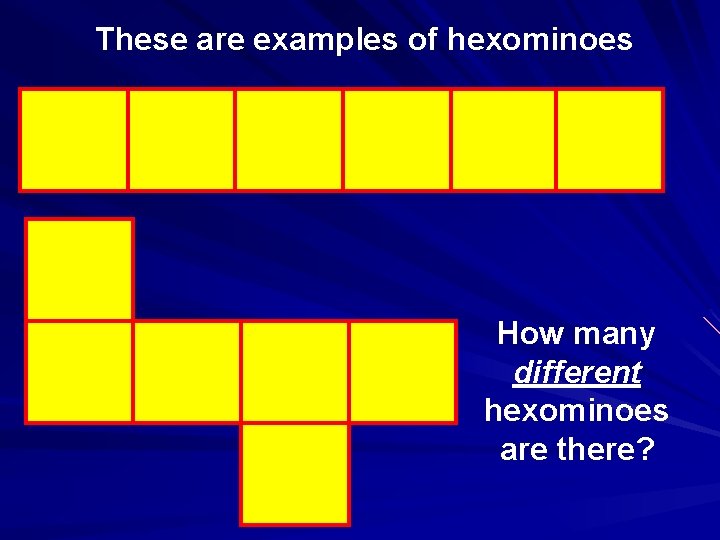
These are examples of hexominoes How many different hexominoes are there?
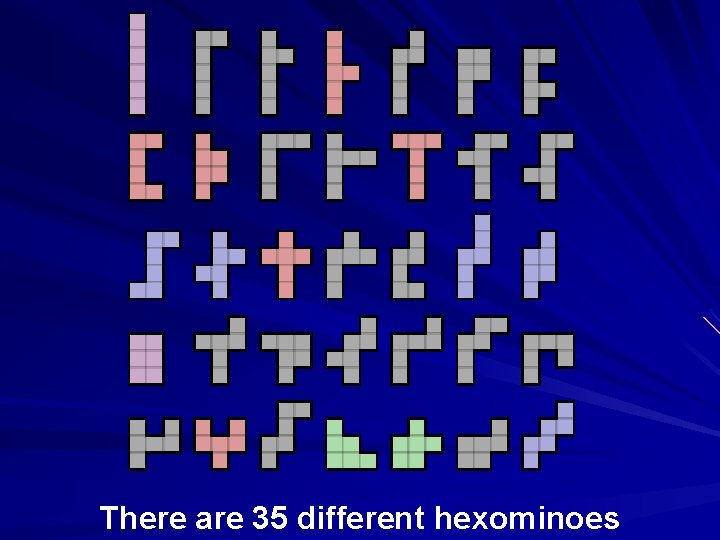
There are 35 different hexominoes
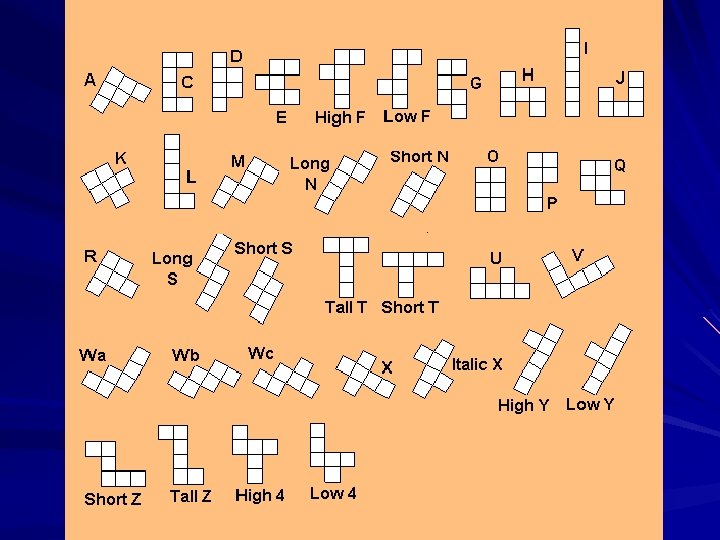
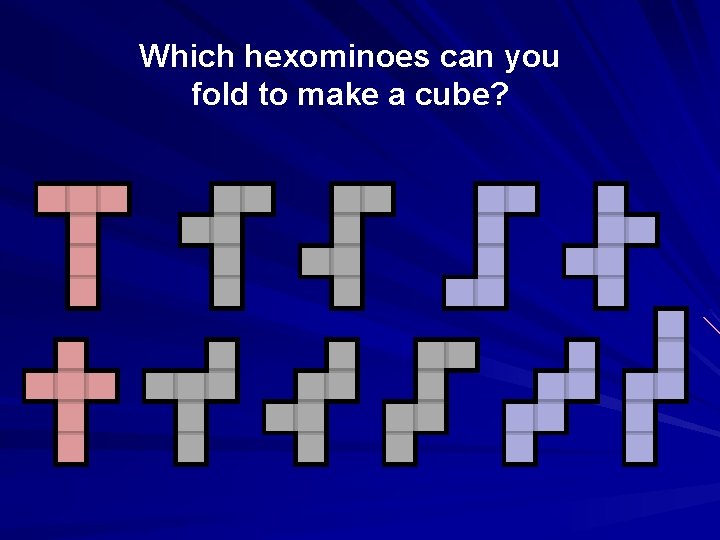
Which hexominoes can you fold to make a cube?
Puzzle in a box Many small gifts, games and puzzles are produced to appeal to a particular age group or type of person, eg 'Kinder Eggs' contain a surprise gift for young children inside a chocolate egg. The 'BB Box Company' has asked you to make a box of a maximum size 100 mm × 100 mm. They would also like you to design an interesting gift to fit inside the box. Decorate the box to suit the design of the gift and finish it in a suitable way.
Design and technology at Key Stage 3 (Year 7) Unit 07 bii: Designing and making for yourself Focus: resistant materials Objective Children should learn: to design, make and evaluate a prototype before starting a production run, by applying the knowledge, skills and understanding they developed during the product evaluation activities and focused practical tasks
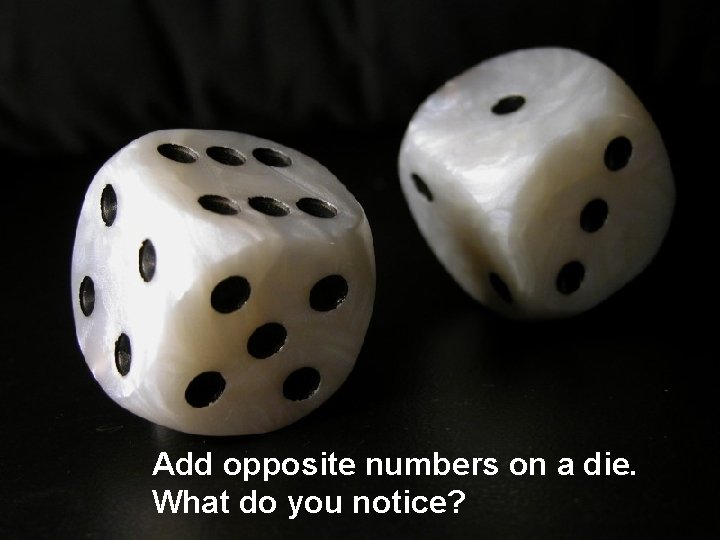
Add opposite numbers on a die. What do you notice?
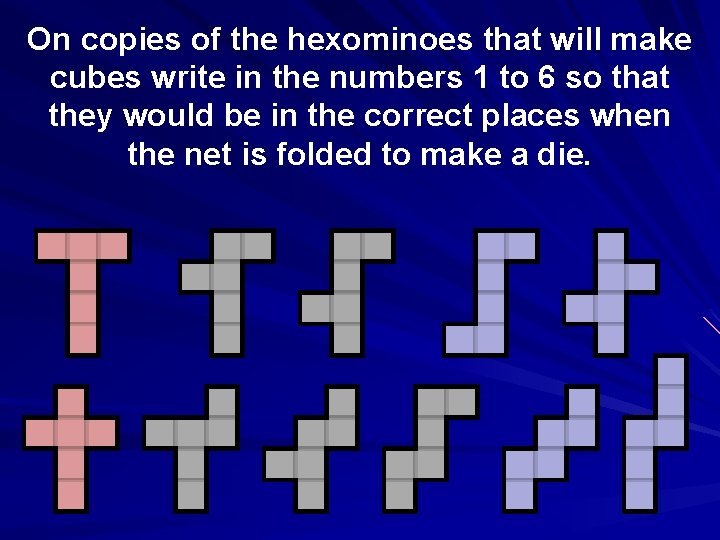
On copies of the hexominoes that will make cubes write in the numbers 1 to 6 so that they would be in the correct places when the net is folded to make a die.

Dice have been found in Egyptian tombs dating back to 2000 BC.
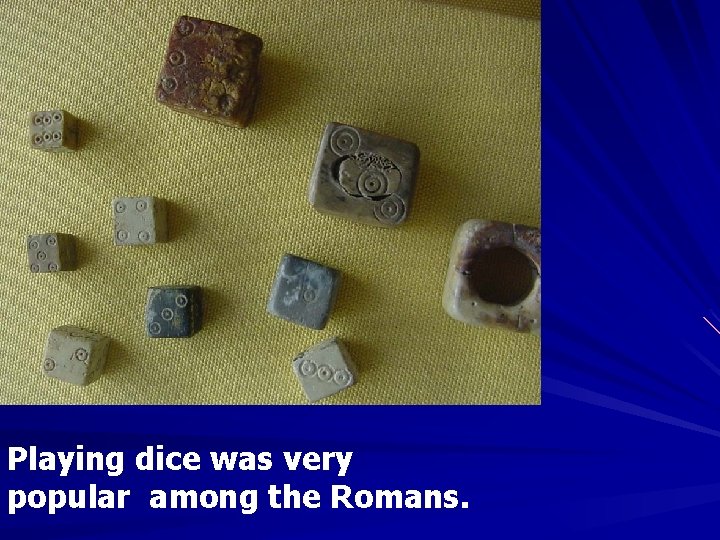
Playing dice was very popular among the Romans.
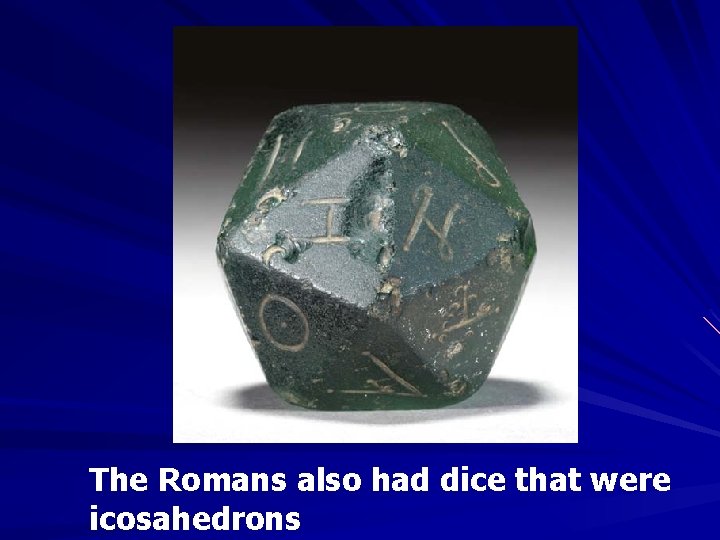
The Romans also had dice that were icosahedrons
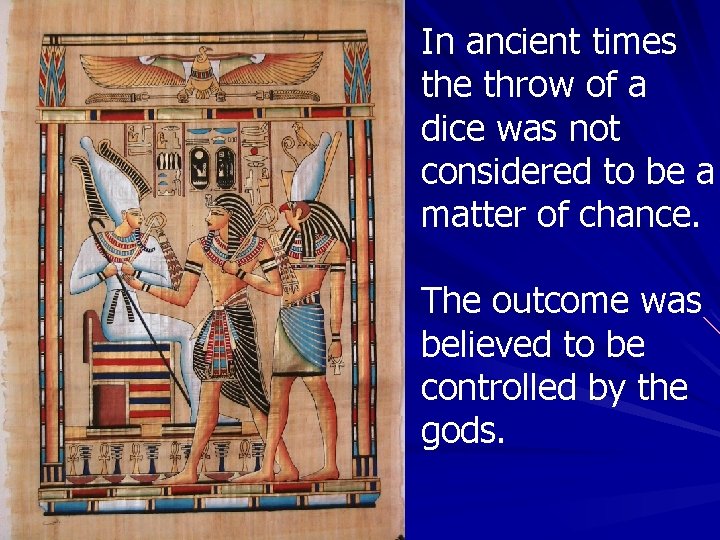
In ancient times the throw of a dice was not considered to be a matter of chance. The outcome was believed to be controlled by the gods.
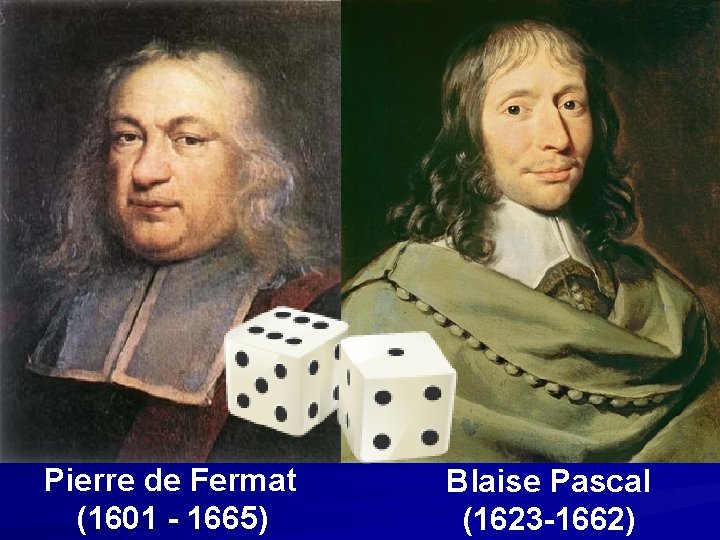
Pierre de Fermat (1601 - 1665) Blaise Pascal (1623 -1662)
A gambler's dispute in 1654 led to the creation of a mathematical theory of probability by two famous French mathematicians, Blaise Pascal and Pierre de Fermat. Antoine Gombaud, Chevalier de Méré, a French nobleman with an interest in gaming and gambling questions, called Pascal's attention to an apparent contradiction concerning a popular dice game. The game consisted in throwing a pair of dice 24 times. The problem was to decide whether or not to bet even money on the occurrence of at least one "double six" during the 24 throws.
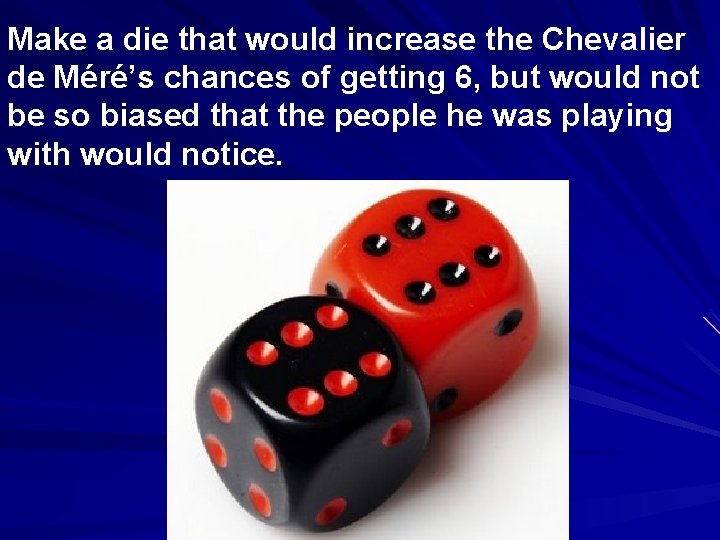
Make a die that would increase the Chevalier de Méré’s chances of getting 6, but would not be so biased that the people he was playing with would notice.
Draw up an outline of a unit plan using some or all of these ideas. Use the framework to identify mathematics learning objectives relating to the activities? Don’t forget mathematical processes and applications. Who will the unit be for? How many lessons would the unit last? What would be the sequence of the activities?
Using either the web page or the A 4 assessment criteria sheet discuss: • What role do the assessment criteria have? • When would they be used? • What specific activities or ways of working would ensure that appropriate evidence is captured? • How is this different from the way in which the objectives are used.
- Slides: 20