
HETAS Approved Retailer Course About HETAS Heating Equipment
HETAS Approved Retailer Course
About HETAS (Heating Equipment Testing and Approvals Scheme) is the official body recognised by the Government to approve biomass and solid fuel heating appliances, fuels and services including the regulation of competent installers and servicing businesses Visit our website for more information hetas. co. uk
HETAS Approved Retailers The HETAS scheme ensures that Approved Retailers have at least one HETAS trained member of staff on duty in the showroom at all times to advise customers on appliances and a number of key issues including maintenance, carbon monoxide, government regulations and suitable fuels
The Advantages & Benefits Consumer Confidence customers requesting HETAS installers Your business searchable on the HETAS web site over 50, 000 visitors per month Promotion & Marketing tools logo, window stickers, consumer advice sheets HETAS guide approved appliances and products helps customers find their ideal appliance Monthly e-newsletter industry news, technical updates, changes to standards, events Free technical help & support by phone or email from HETAS Exclusive access to the HETAS Online shop discounted products and workwear Dedicated HETAS Retailer-specific insurance bespoke insurance tailored to your needs
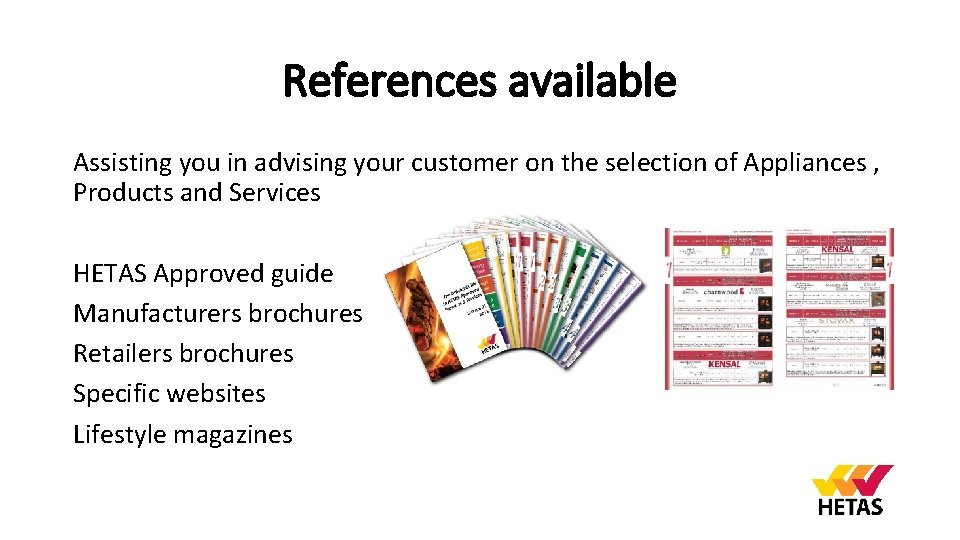
References available Assisting you in advising your customer on the selection of Appliances , Products and Services HETAS Approved guide Manufacturers brochures Retailers brochures Specific websites Lifestyle magazines
Recap How many visitors per month visit the HETAS website on average? Is technical advice and guidance available to Retailers from HETAS? What other benefits are available to Approved HETAS Retailers?
Section 2 Customer awareness – Advice & Guidance
Common Questions Group Exercise In groups take 20 minutes to discuss the below. On worksheets provided can you list a further 4 relevant questions? Q 1 I have an existing wooden beam in my fireplace is this okay? Q 2 What size does my stove need to be? Q 3 Can any property have a stove? Q 4 Can I use my existing Chimney?
Discussion Discuss one another's comments Are there any common themes – issues – questions Feedback on advice given
Q 1 - I have an existing wooden beam in my fireplace is this okay? “ This largely depends on the type of stove being installed and the distances from the beam in relation to the installation – A survey of the proposed installation will give further clarity on whether the beam will require removal and replacement with one of a variety of non combustible alternatives specifically designed to look like the real thing”
Q 2 - What size does my stove need to be? “The stove output is calculated dependant on the space to be heated – the general method is to calculate Height x Width x Depth of the room. This along with other relevant factors will indicate the size of the appliance required. “
Q 3 - Can any property have a stove? “More or less any property may be suitable irrespective of whether a chimney is present. A ‘system chimney’ may be installed as opposed to building a new chimney and may be run within the property or externally”
Q 4 - Can I use my existing Chimney “It may be fine to use the existing chimney; however dependant on the state of your chimney and manufacturers appliance specifications the chimney may need repairing to ensure it is structurally sound enough to be used or relined using a choice of chimney lining systems, this will be ascertained following a survey of the chimney by a competent person” For more information visit http: //www. hetas. co. uk/find-chimney-sweep/
Why do I need a HETAS Certificate? A HETAS Certificate issued following installation by a competent Installer indicates that the Installation has been completed to required regulations and standards. Notification of an Installation is a mandatory requirement of the Building Regulations, failure to notify : • May invalidate house insurance • May encumber buying or selling a property • Appliance may not be installed to Building Regulations, Manufacturers Instructions and associated Standards
Can I install the stove myself ? HETAS strongly recommend the installation is undertaken by a competent HETAS registered installer to ensure the installation is safe and complies with relevant Building Regulations and Standards Find an Approved installer on the HETAS Website http: //www. hetas. co. uk/find-installer/ Are you aware of http: //www. hetas. co. uk/the-consumer-rights-act/
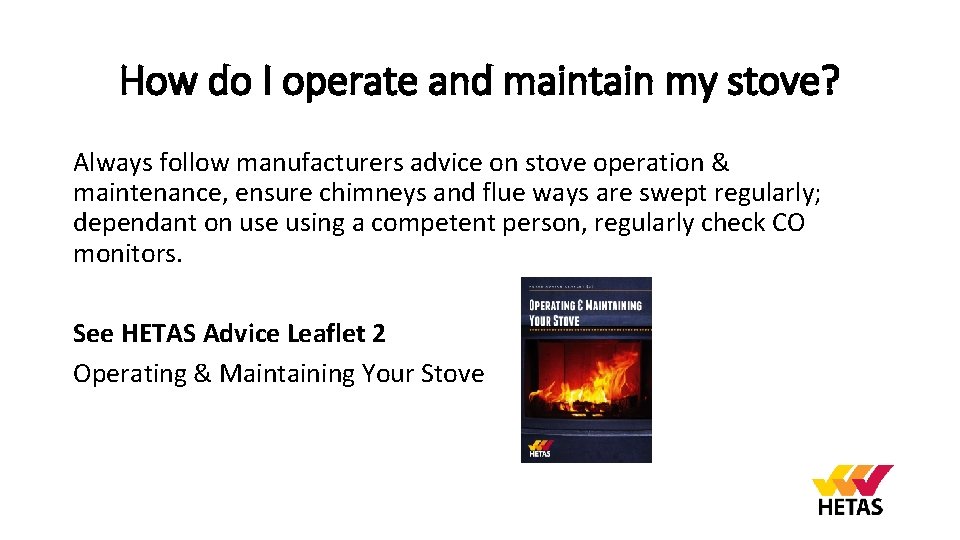
How do I operate and maintain my stove? Always follow manufacturers advice on stove operation & maintenance, ensure chimneys and flue ways are swept regularly; dependant on use using a competent person, regularly check CO monitors. See HETAS Advice Leaflet 2 Operating & Maintaining Your Stove
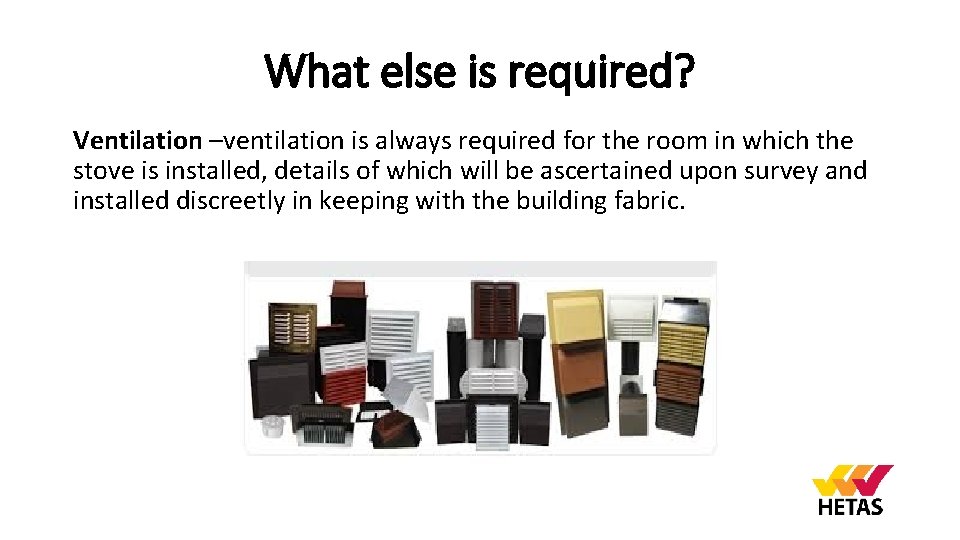
What else is required? Ventilation –ventilation is always required for the room in which the stove is installed, details of which will be ascertained upon survey and installed discreetly in keeping with the building fabric.
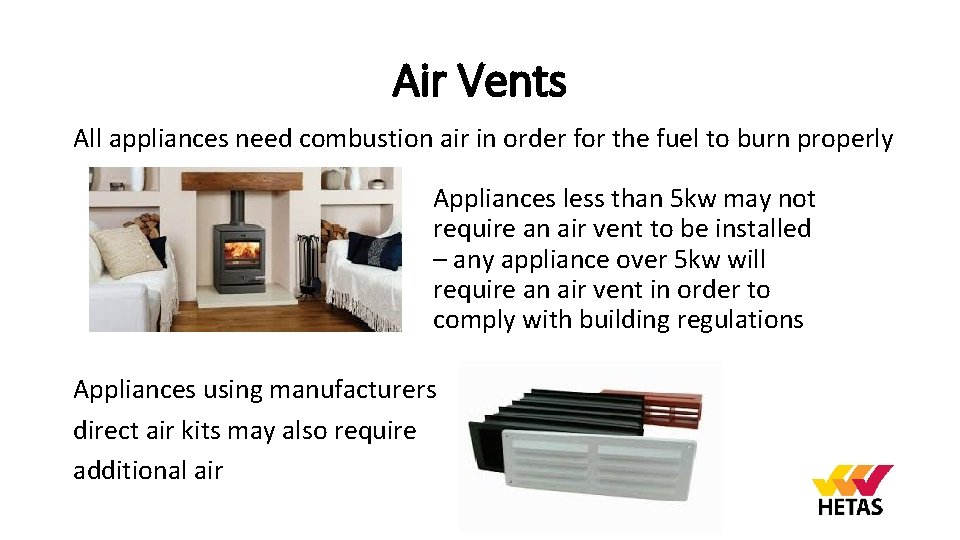
Air Vents All appliances need combustion air in order for the fuel to burn properly Appliances less than 5 kw may not require an air vent to be installed – any appliance over 5 kw will require an air vent in order to comply with building regulations Appliances using manufacturers direct air kits may also require additional air
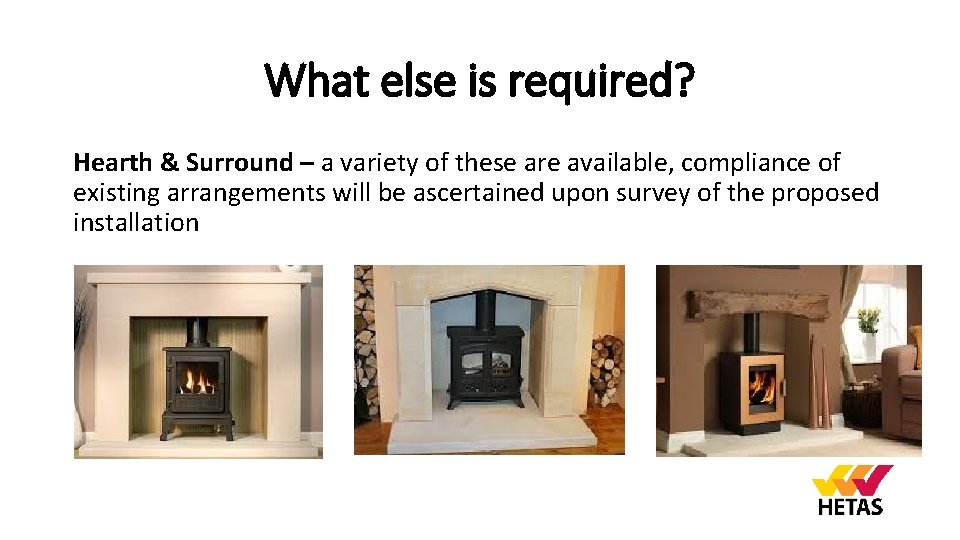
What else is required? Hearth & Surround – a variety of these are available, compliance of existing arrangements will be ascertained upon survey of the proposed installation
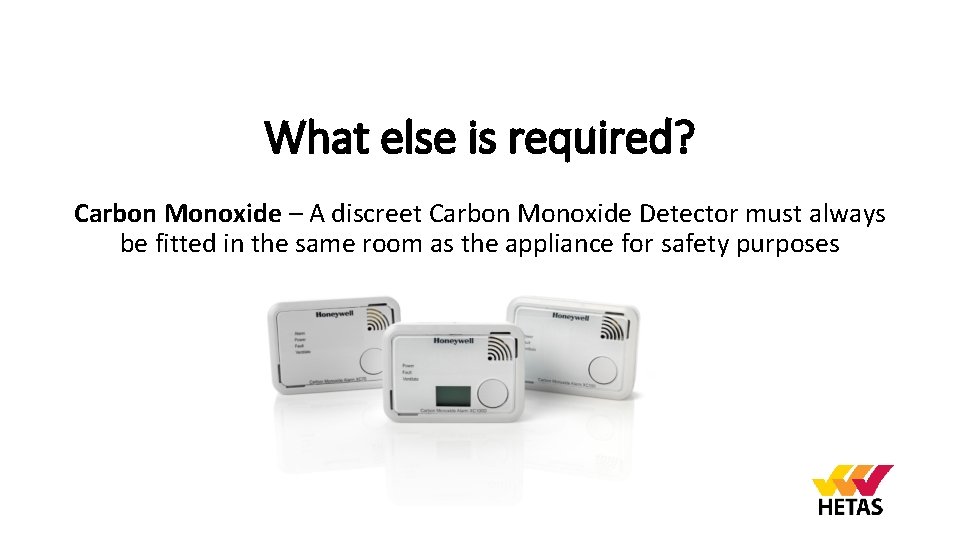
What else is required? Carbon Monoxide – A discreet Carbon Monoxide Detector must always be fitted in the same room as the appliance for safety purposes
Recap Is a CO monitor necessary? Why should a competent person carry out the installation? Why should the installation be notified to Local Building Control?
Section 3 Appliance Selection
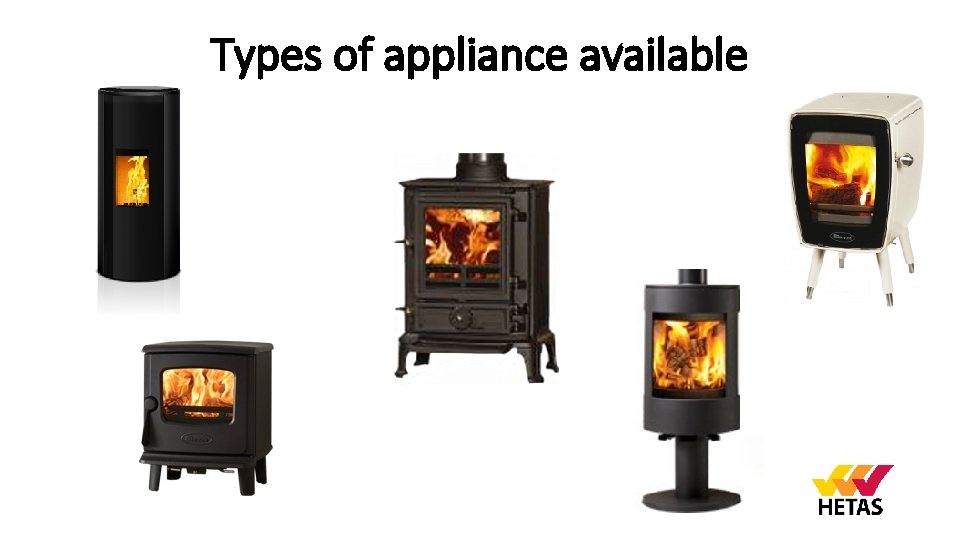
Types of appliance available
Types of Appliance Please refer to Official Guide to HETAS Products & Services The Open Fire Pellet Stoves Freestanding Open Fronted Inset Fire With Or Without Convection Closed Inset Fire (With Or Without Convection) Wood Burning or Multi-fuel Stove (Continuous/intermittent) Dry Stove With Boiler Solid Fuel Cookers Solid Fuel Boiler Biomass Appliances Slow heat release stoves (Heat Store)
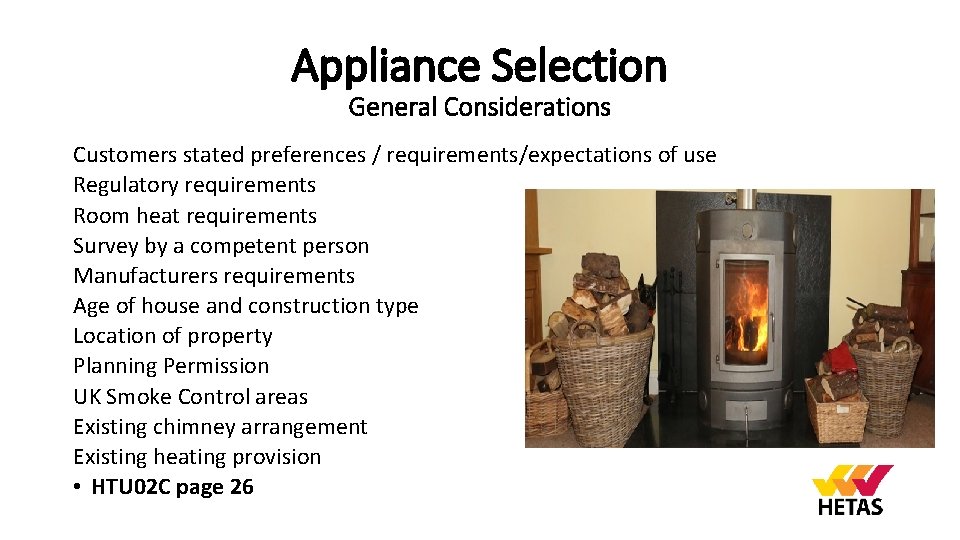
Appliance Selection General Considerations Customers stated preferences / requirements/expectations of use Regulatory requirements Room heat requirements Survey by a competent person Manufacturers requirements Age of house and construction type Location of property Planning Permission UK Smoke Control areas Existing chimney arrangement Existing heating provision • HTU 02 C page 26
Calculating Heat Demand
Calculating Heat Requirements Factors to consider regarding heat demand The lifestyle of the occupiers for example whether they prefer additional ventilation if windows are usually left open? Doubling the air changes within a room with a solid fuel appliance require approximately an extra heat requirement of: 0. 65 kw for a 28 m 3 room 1. 3 kw for a 57 m 3 room 2 kw for a 85 m 3 room Exposed locations - Add an additional 10% for these situations Temperature requirements, i. e. the elderly may require warmer conditions
Factors that may require further heat demand High Ceilings will limit heat transfer to adjacent rooms Installation location - A recessed location may reduce the output below the manufacturers claims. Refuelling periods Manufacturers Instructions should always be observed to see if any guidance is given for specific appliances These further factors should be added as a percentage or a value to the calculated size from the table as a result of the discussion with the client and their heating requirements
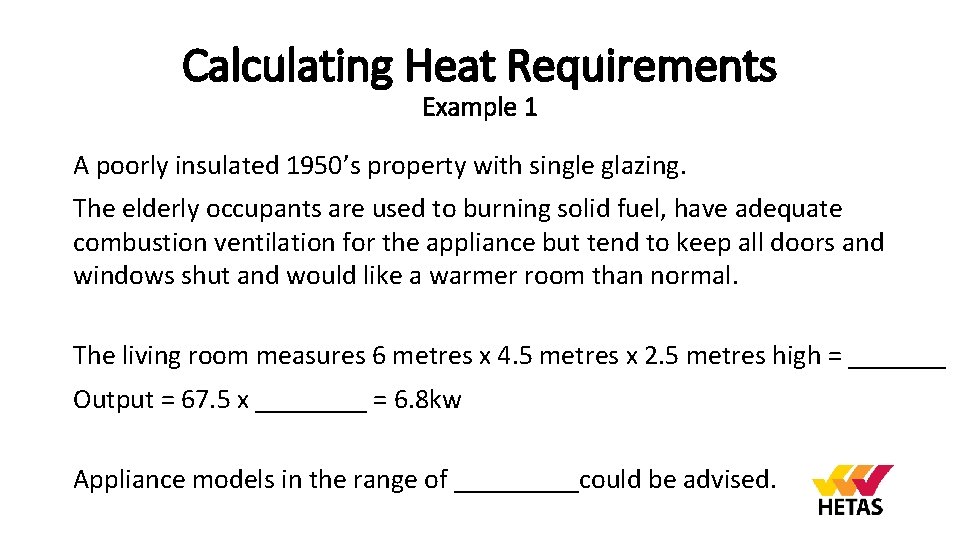
Calculating Heat Requirements Example 1 A poorly insulated 1950’s property with single glazing. The elderly occupants are used to burning solid fuel, have adequate combustion ventilation for the appliance but tend to keep all doors and windows shut and would like a warmer room than normal. The living room measures 6 metres x 4. 5 metres x 2. 5 metres high = _______ Output = 67. 5 x ____ = 6. 8 kw Appliance models in the range of _____could be advised.
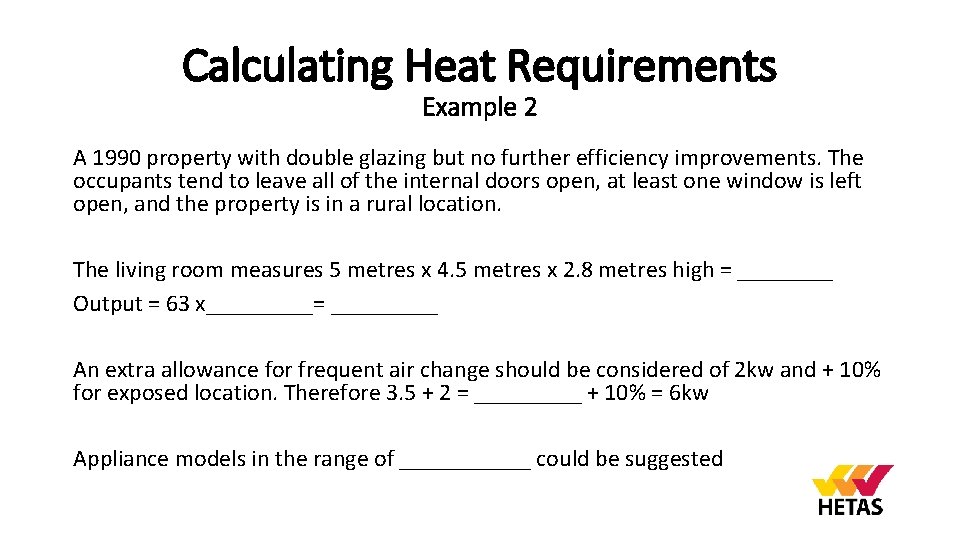
Calculating Heat Requirements Example 2 A 1990 property with double glazing but no further efficiency improvements. The occupants tend to leave all of the internal doors open, at least one window is left open, and the property is in a rural location. The living room measures 5 metres x 4. 5 metres x 2. 8 metres high = ____ Output = 63 x_____= _____ An extra allowance for frequent air change should be considered of 2 kw and + 10% for exposed location. Therefore 3. 5 + 2 = _____ + 10% = 6 kw Appliance models in the range of ______ could be suggested
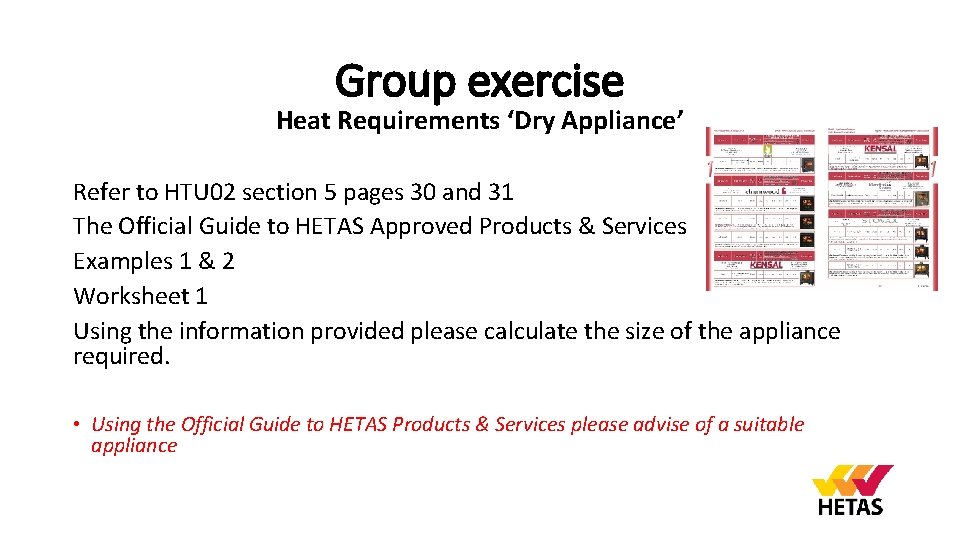
Group exercise Heat Requirements ‘Dry Appliance’ Refer to HTU 02 section 5 pages 30 and 31 The Official Guide to HETAS Approved Products & Services Examples 1 & 2 Worksheet 1 Using the information provided please calculate the size of the appliance required. • Using the Official Guide to HETAS Products & Services please advise of a suitable appliance
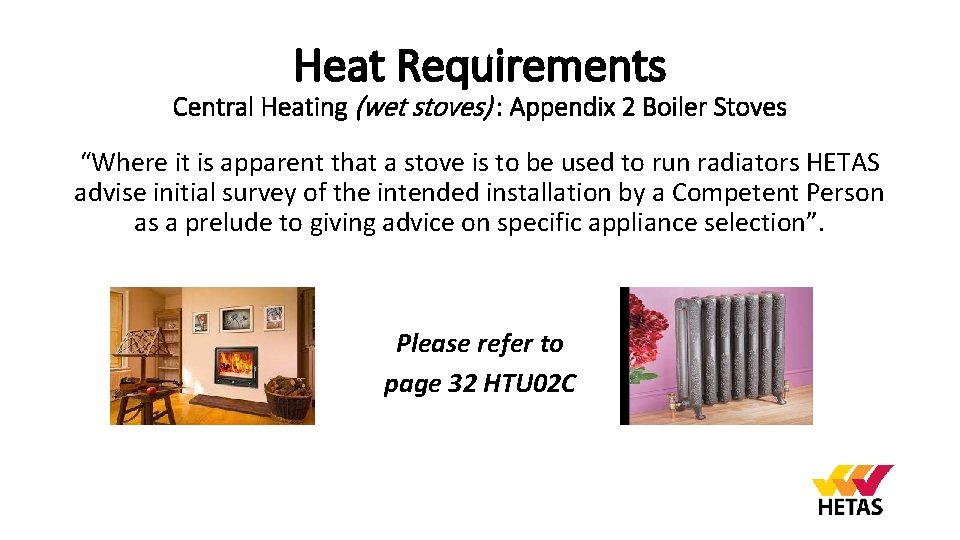
Heat Requirements Central Heating (wet stoves) : Appendix 2 Boiler Stoves “Where it is apparent that a stove is to be used to run radiators HETAS advise initial survey of the intended installation by a Competent Person as a prelude to giving advice on specific appliance selection”. Please refer to page 32 HTU 02 C
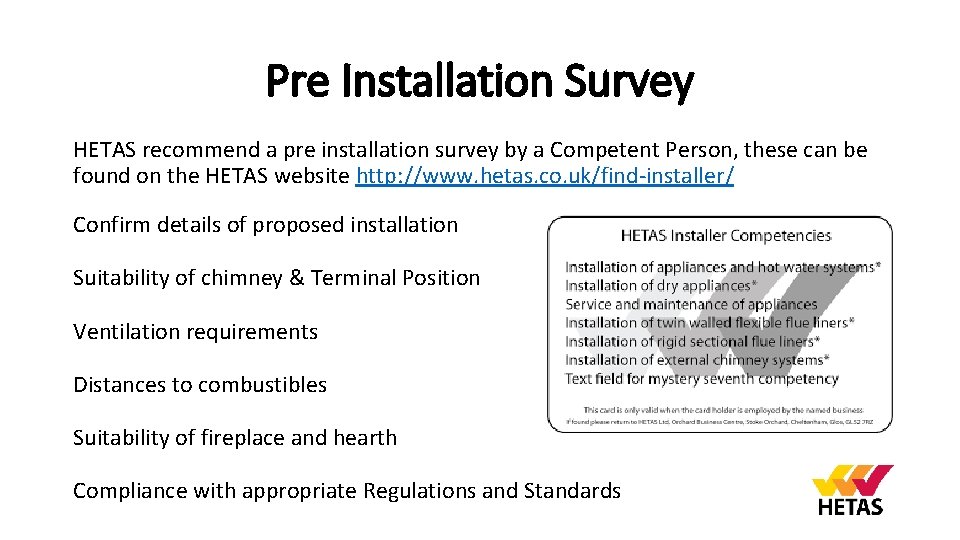
Pre Installation Survey HETAS recommend a pre installation survey by a Competent Person, these can be found on the HETAS website http: //www. hetas. co. uk/find-installer/ Confirm details of proposed installation Suitability of chimney & Terminal Position Ventilation requirements Distances to combustibles Suitability of fireplace and hearth Compliance with appropriate Regulations and Standards
Group exercise Pre Installation Survey Factors Affecting Selection of Appliance Please refer to HTU 02 C page 26 and worksheet 2 Discuss the ‘General considerations’ Who would be the best person to provide details and advice on the scenario’s on worksheet 2
Recap When would a wet appliance or boiler stove be required ? What effect would an exposed location have on a proposed installation in regards to heat demand? What effect may high ceilings have on heat?
Section 4 Fuel
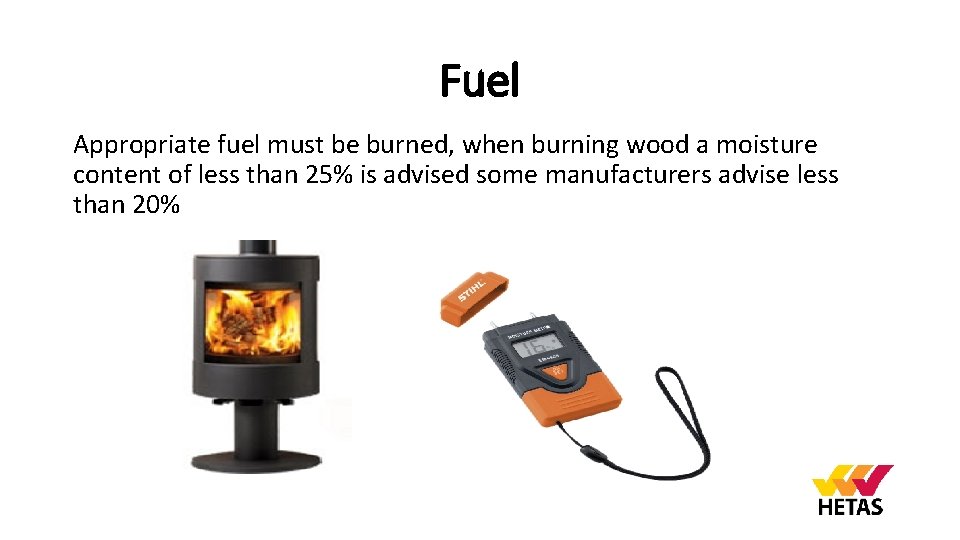
Fuel Appropriate fuel must be burned, when burning wood a moisture content of less than 25% is advised some manufacturers advise less than 20%
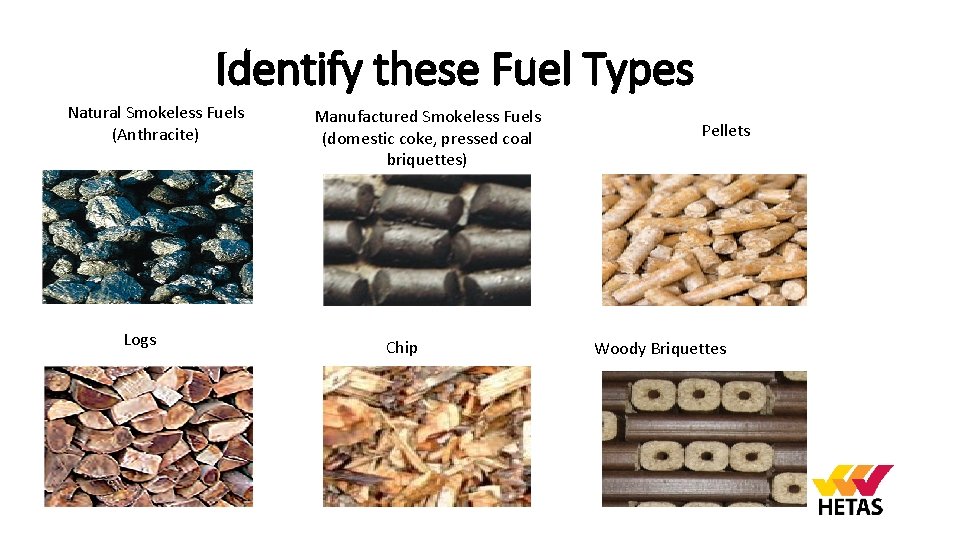
Identify these Fuel Types Natural Smokeless Fuels (Anthracite) Logs Manufactured Smokeless Fuels (domestic coke, pressed coal briquettes) Chip Pellets Woody Briquettes
Fuel Quality Standards Fuel quality schemes such as Woodsure Plus monitor the quality and type of fuel through compliance by one uniform system based on the EN 14961 -2 or BS EN ISO 17225; parts 1 – 6 (Refer to part 3 of The Official Guide to HETAS Services & Products) Wood logs Chips Pellets http: //www. hetas. co. uk/find-fuels/
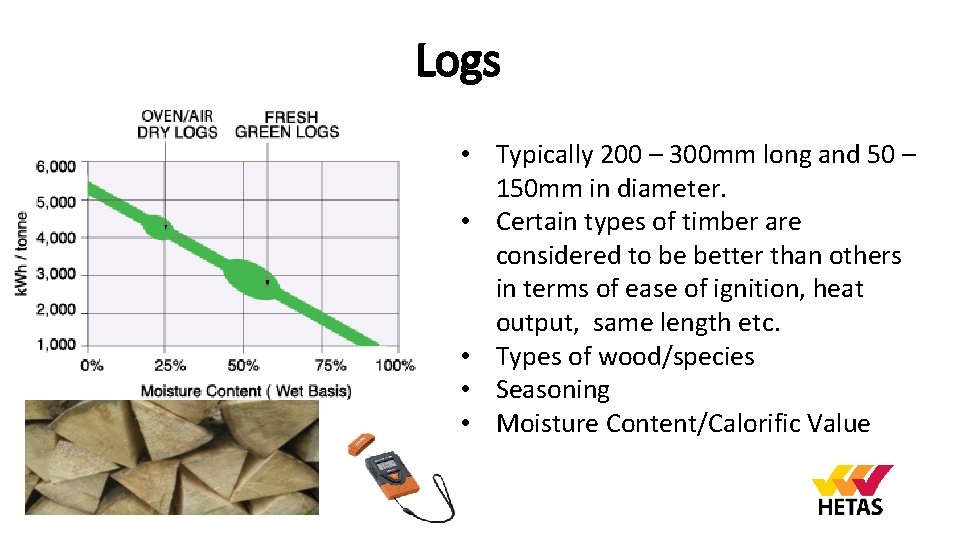
Logs • Typically 200 – 300 mm long and 50 – 150 mm in diameter. • Certain types of timber are considered to be better than others in terms of ease of ignition, heat output, same length etc. • Types of wood/species • Seasoning • Moisture Content/Calorific Value
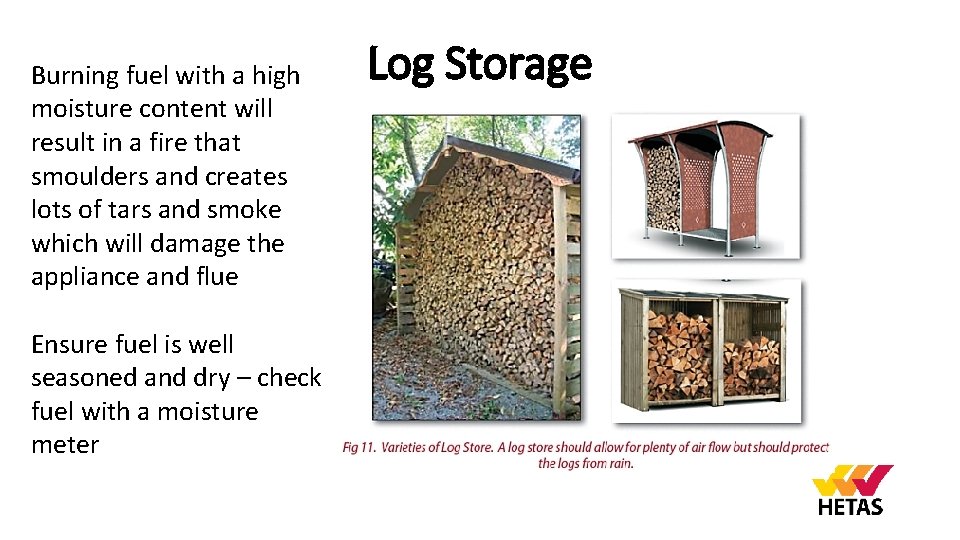
Burning fuel with a high moisture content will result in a fire that smoulders and creates lots of tars and smoke which will damage the appliance and flue Ensure fuel is well seasoned and dry – check fuel with a moisture meter Log Storage
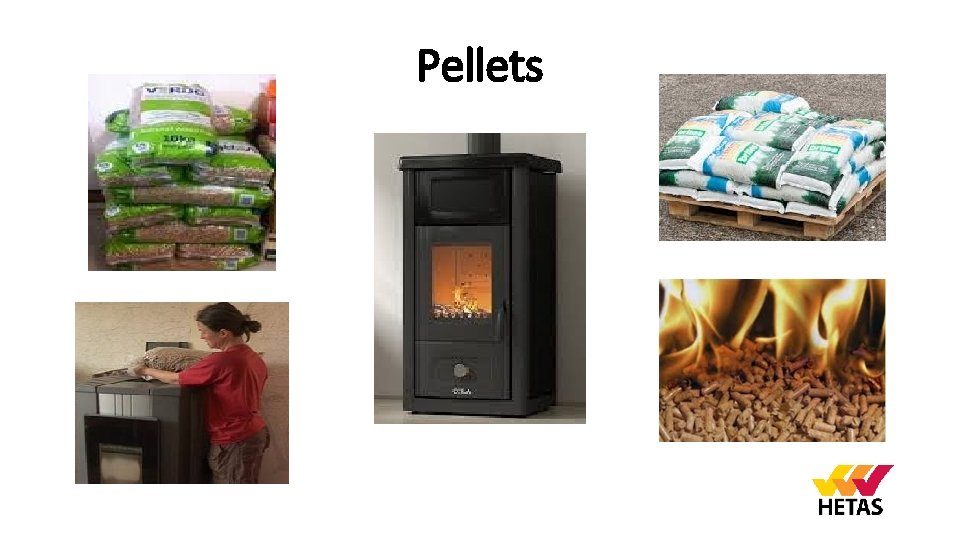
Pellets
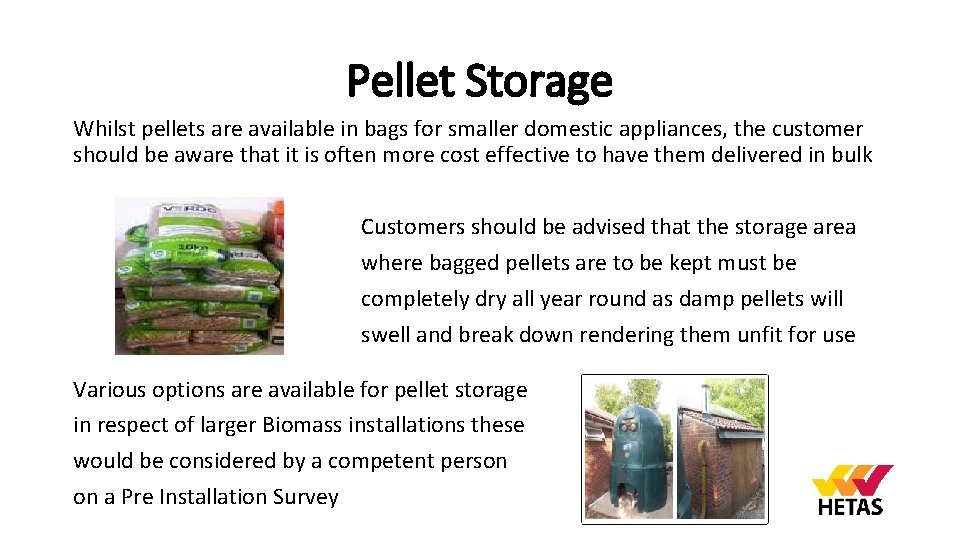
Pellet Storage Whilst pellets are available in bags for smaller domestic appliances, the customer should be aware that it is often more cost effective to have them delivered in bulk Customers should be advised that the storage area where bagged pellets are to be kept must be completely dry all year round as damp pellets will swell and break down rendering them unfit for use Various options are available for pellet storage in respect of larger Biomass installations these would be considered by a competent person on a Pre Installation Survey
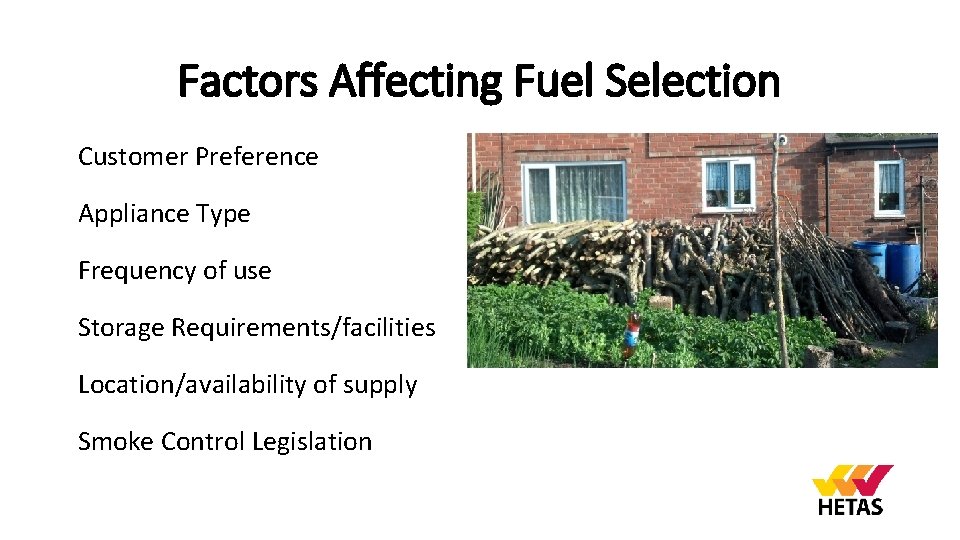
Factors Affecting Fuel Selection Customer Preference Appliance Type Frequency of use Storage Requirements/facilities Location/availability of supply Smoke Control Legislation
Smoke Control Area In a smoke control area, a solid fuel heating appliance must be either; • An exempt appliance using only specified fuel in the appliance instructions or see ‘exempt when burning’ on the DEFRA website (Multi-fuel stoves can also burn authorised smokeless fuels) Or • using an authorised smokeless fuel …. . ‘Authorised fuel may be burned on any appliance’ Source: HETAS Advice Leaflet (6)
Recap What is the maximum recommended moisture content for wood? What would be the effects of burning wood with high moisture content? What is seasoned wood? Which organisation monitors the quality and type of fuel available? What can be used to check the fuel is seasoned and fit for use? Where can pellets be stored?
Section 5 Guidance
Guidance - information available HETAS Advice Leaflets Manufacturers installation and service instructions HETAS Website Building Regulations & Legal Requirements (most Relevant) Smoke Control Areas The Official Guide to HETAS Products & Services
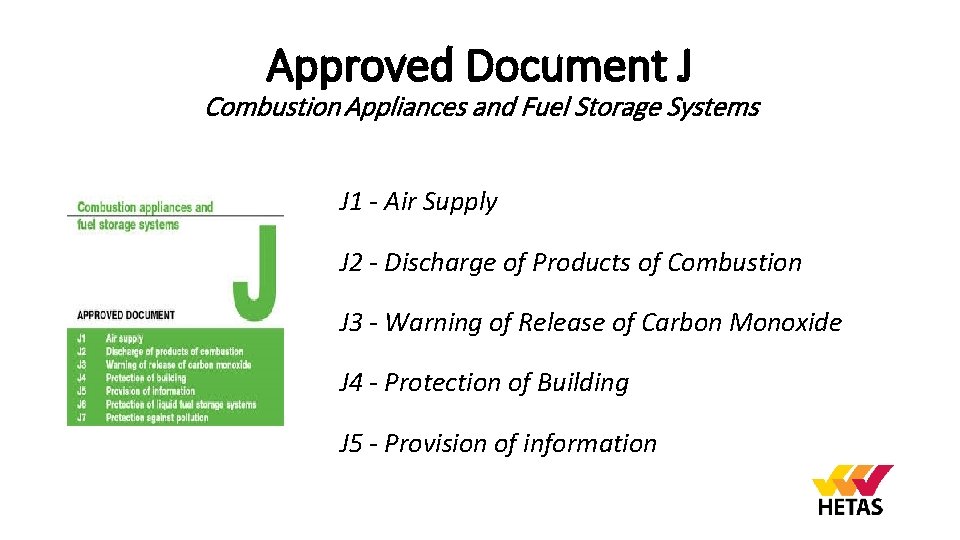
Approved Document J Combustion Appliances and Fuel Storage Systems J 1 - Air Supply J 2 - Discharge of Products of Combustion J 3 - Warning of Release of Carbon Monoxide J 4 - Protection of Building J 5 - Provision of information
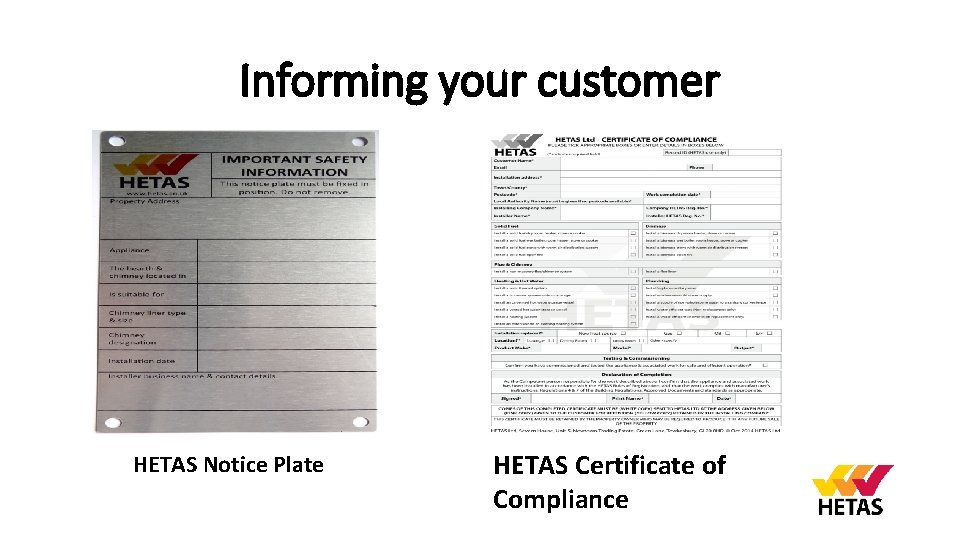
Informing your customer HETAS Notice Plate HETAS Certificate of Compliance
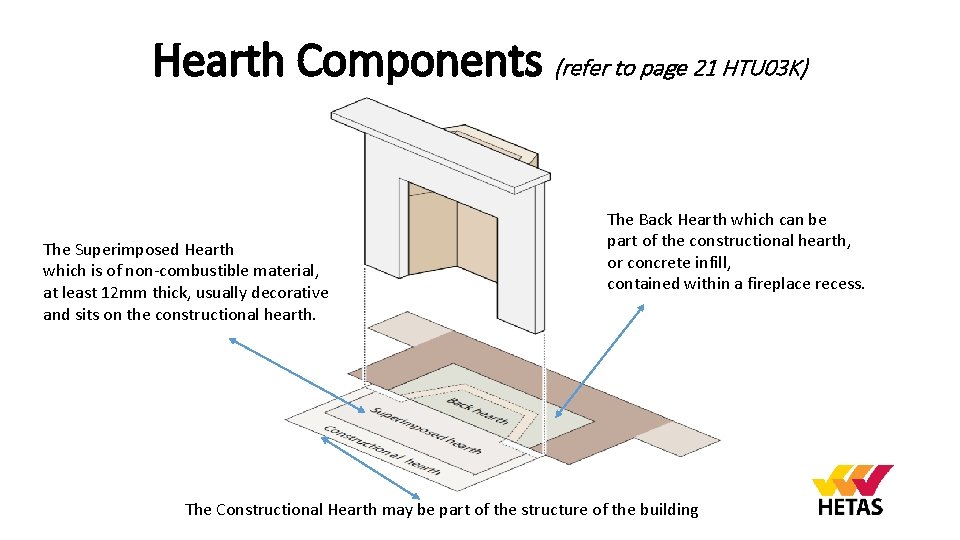
Hearth Components (refer to page 21 HTU 03 K) The Superimposed Hearth which is of non-combustible material, at least 12 mm thick, usually decorative and sits on the constructional hearth. The Back Hearth which can be part of the constructional hearth, or concrete infill, contained within a fireplace recess. The Constructional Hearth may be part of the structure of the building
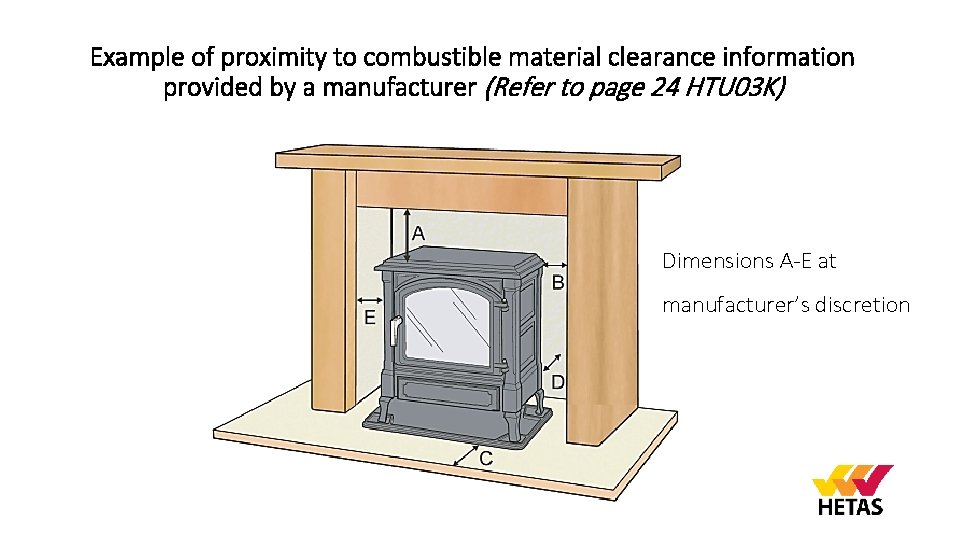
Example of proximity to combustible material clearance information provided by a manufacturer (Refer to page 24 HTU 03 K) Dimensions A-E at manufacturer’s discretion
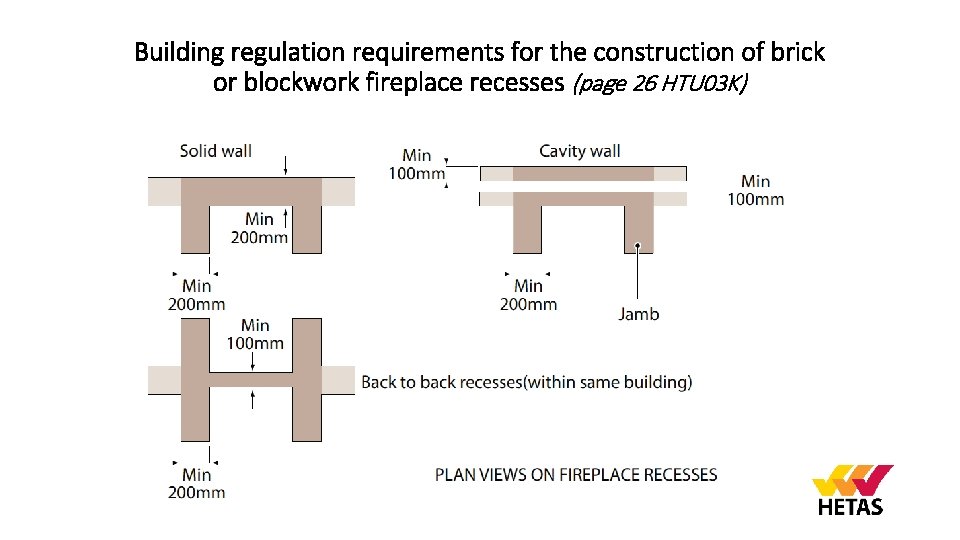
Building regulation requirements for the construction of brick or blockwork fireplace recesses (page 26 HTU 03 K)
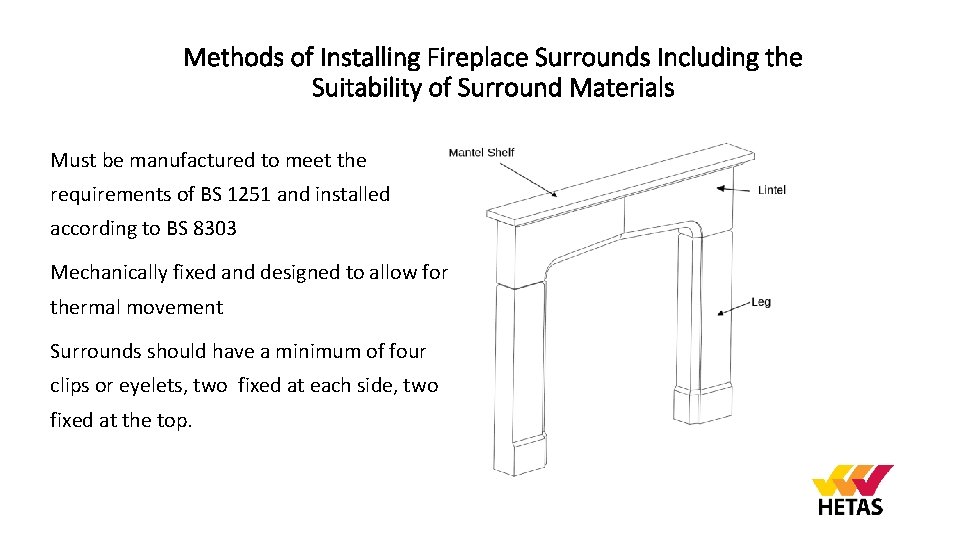
Methods of Installing Fireplace Surrounds Including the Suitability of Surround Materials Must be manufactured to meet the requirements of BS 1251 and installed according to BS 8303 Mechanically fixed and designed to allow for thermal movement Surrounds should have a minimum of four clips or eyelets, two fixed at each side, two fixed at the top.
Recap Which of the requirements of Approved Document J covers ‘Provision of Information’ ? Where would you normally find details on ‘Clearances to Combustible’s in relation to an appliance? What are the names of the three sections of Hearth components?
Section 6 Chimney and Flues
Chimney and Flue Definitions Chimney – a structure consisting of a wall or walls enclosing a flue or flues Flue – a passage for conveying the products of combustion to the outside atmosphere Flue liner – the wall of the chimney that is in contact with the products of combustion Fluepipe – a pipe, either single walled (bare or insulated) or double walled, which connects a combustion appliance to a flue in a chimney.
Building Regulations There is no regulation requiring an existing chimney to be lined. However the installer of an appliance must satisfy themselves that a chimney is free from defects and suitable for its intended use
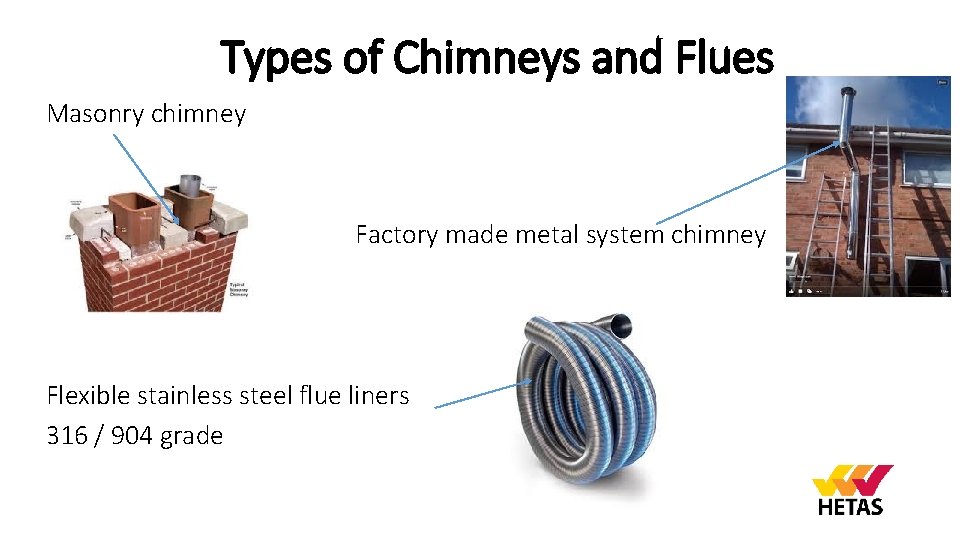
Types of Chimneys and Flues Masonry chimney Factory made metal system chimney Flexible stainless steel flue liners 316 / 904 grade
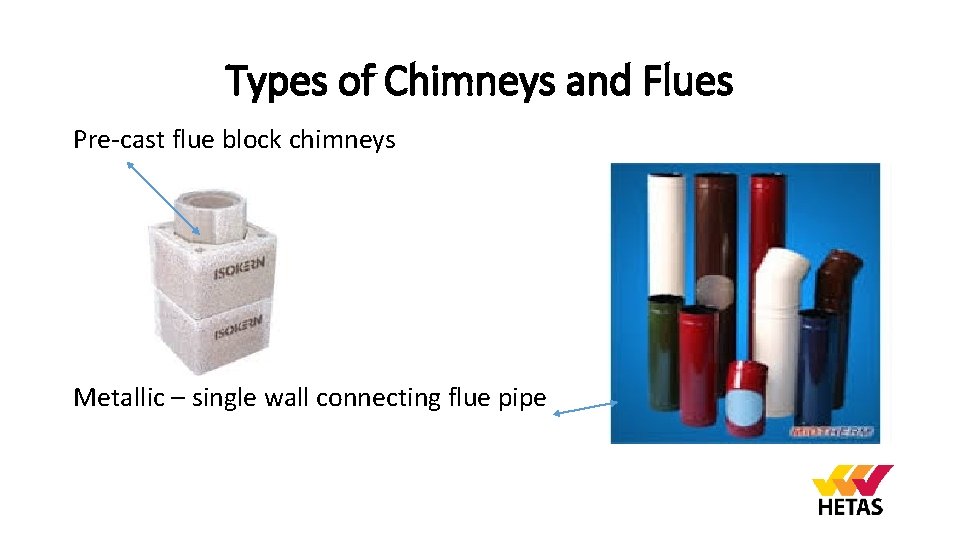
Types of Chimneys and Flues Pre-cast flue block chimneys Metallic – single wall connecting flue pipe
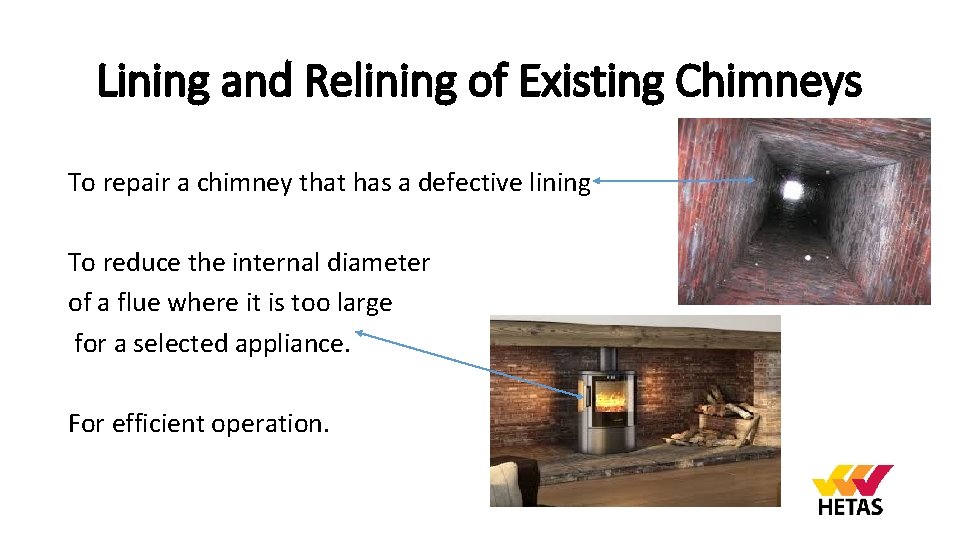
Lining and Relining of Existing Chimneys To repair a chimney that has a defective lining To reduce the internal diameter of a flue where it is too large for a selected appliance. For efficient operation.
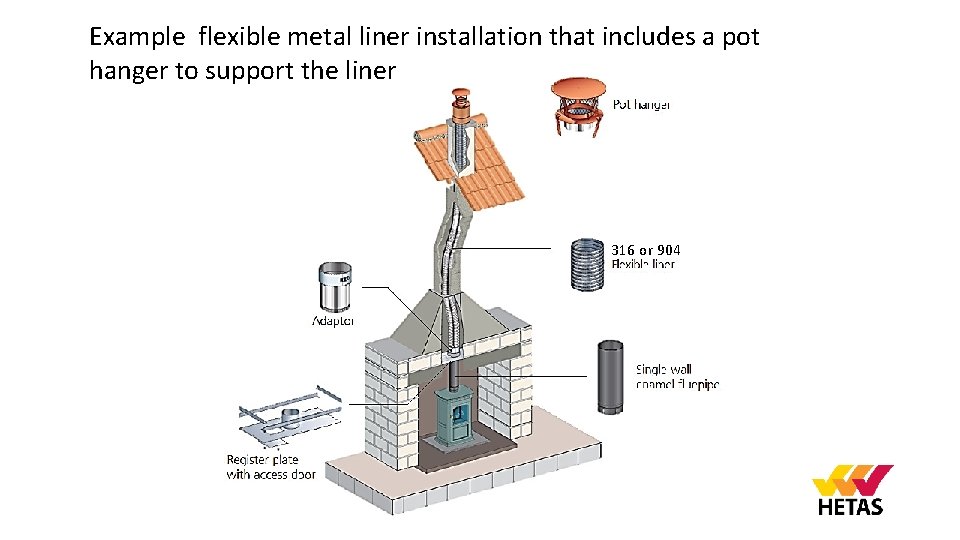
Example flexible metal liner installation that includes a pot hanger to support the liner 316 or 904
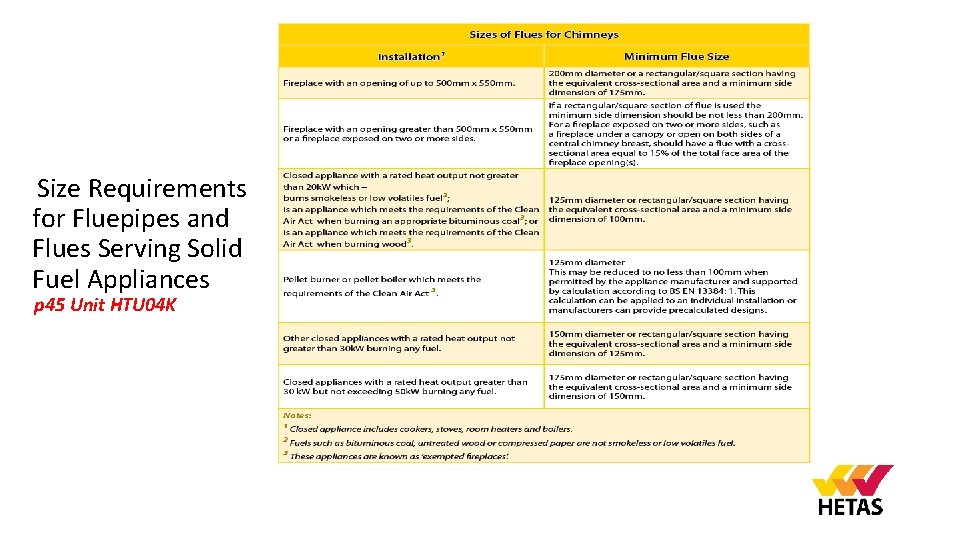
Size Requirements for Fluepipes and Flues Serving Solid Fuel Appliances p 45 Unit HTU 04 K
Recap What grades of flexible flue liner are available for solid fuel appliances? Where on the installation is a single wall connecting flue pipe used? What are three possible reasons for lining or re-lining an existing chimney?
The Advantages & Benefits Consumer Confidence customers requesting HETAS installers Your business searchable on the HETAS web site over 50, 000 visitors per month Promotion & Marketing tools logo, window stickers, consumer advice sheets HETAS guide approved appliances and products helps customers find their ideal appliance Monthly e-newsletter industry news, technical updates, changes to standards, events Free technical help & support by phone or email from HETAS Exclusive access to the HETAS Online shop discounted products and workwear Dedicated HETAS Retailer-specific insurance bespoke insurance tailored to your needs

How to Apply – visit www. hetas. co. uk or call 01684 278170 to request an Application pack. Complete and Return Get Registered – once you are registered you will receive a welcome pack and your business will be listed and searchable on our website, you will benefit from the industry leading services that HETAS offers Costs of Registration - from £ 100 + VAT Requirements – must have at least one HETAS Approved Product on showroom display, and a minimum of one member of staff on duty that has a HETAS Retailer qualification
Q&A Multiple Choice Assessment
- Slides: 67