
Hernias Umbilicus and Abdominal Wall Naseralla G Elsaadi

Hernias, Umbilicus and Abdominal Wall Naseralla G Elsaadi Consultant General Surgeon Clinical Surgery-in-General Benghazi Medical Centre Benghazi Naseralla G Elsaad l BMC 2018 2
Learning objectives § To appreciate that hernia can be irreducible, strangulate and become surgical emergencies; § To understand the anatomy, pathology and clinical presentation of the common hernias; § To know the common surgical approaches to hernias; § To understand the anatomy and common disorders of the abdominal wall; § To know the clinical presentations of common disorders of the umbilicus. Naseralla G Elsaad l BMC 2018 3
Definition of the hernia A hernia is a protrusion of a viscus or part of a viscus through an abnormal opening in the walls of its containing cavity. If the hernia extends beyond the abdominal cavity and is thus visible on the surface of the body, it is defined as an external hernia. If the outpouching is limited to peritoneal pockets, it is known as an internal hernia. Naseralla G Elsaad l BMC 2018 4
General features common to all hernias Aetiology Any condition that raises intra-abdominal pressure, such as a powerful effort, may produce a hernia. Different aetiological factors, such as increased intra-abdominal pressure (in pregnancy, intraabdominal malignancy, straining on micturition or defecation, chronic obstructive lung disease, ascites, chronic intestinal obstruction, and obesity), or pathological changes in connective tissue of the abdominal wall, are blamed, without conclusive significance. Naseralla G Elsaad l BMC 2018 5
General features common to all hernias Pathogenesis The pathogenesis of hernias is multifactorial. Congenital hernias are preformed hernial openings caused by incomplete closure of the abdominal wall (e. g. , persistent processus vaginalis), while, in acquired hernias, the cause is increasing dehiscence of fascial structure with accompanying loss of abdominal wall strength. Naseralla G Elsaad l BMC 2018 6
Composition of a hernia v The sac is a diverticulum of peritoneum, consisting of mouth, neck, body and fundus. The neck is usually well defined, but in some direct inguinal hernias and many incisional hernias there is no actual neck. v Coverings of the sac Coverings are derived from the layers of the abdominal wall through which the sac passes. Naseralla G Elsaad l BMC 2018 7
Composition of a hernia v Contents of the sac These can be: • Omentum- omentocele • Intestine- enterocele, more commonly small bowel • A portion of the circumference of the intestine. Richter’s hernia • A portion of the bladder (or a diverticulum) may constitute part of or be the sole contents of a direct inguinal, a sliding inguinal or a femoral hernia. • Ovary with or without the corresponding Fallopian tube • A Meckel’s diverticulum- a Littre’s hernia Naseralla G Elsaad l BMC 2018 8
Classification Irrespective of site, a hernia can be classified clinically into five types • Reducible- contents can be returned to abdomen • Irreducible- contents cannot be returned but there are no other complications • Obstructed vs. Incarcerated- bowel in the hernia is viable and has good blood supply but its lumen is obstructed • Strangulated- blood supply and venous drainage of the contents is obstructed • Inflamed- contents of the sac has become inflamed Naseralla G Elsaad l BMC 2018 9
Pathology of strangulated hernia The intestine is obstructed and its blood supply impaired. Initially, only the venous return is impeded, the wall of the intestine becomes congested and bright red with the transudation of the serous fluid into the sac. As venous stasis increases, the arterial supply becomes more and more impaired. Blood extravasated under the serosa and is effused into the lumen. The fluid in the sac becomes bloodstained and the shining serosa dull due to a fibrinous, sticky exudates. At this stage, the walls of the intestine have lost their tone and become friable. Naseralla G Elsaad l BMC 2018 10
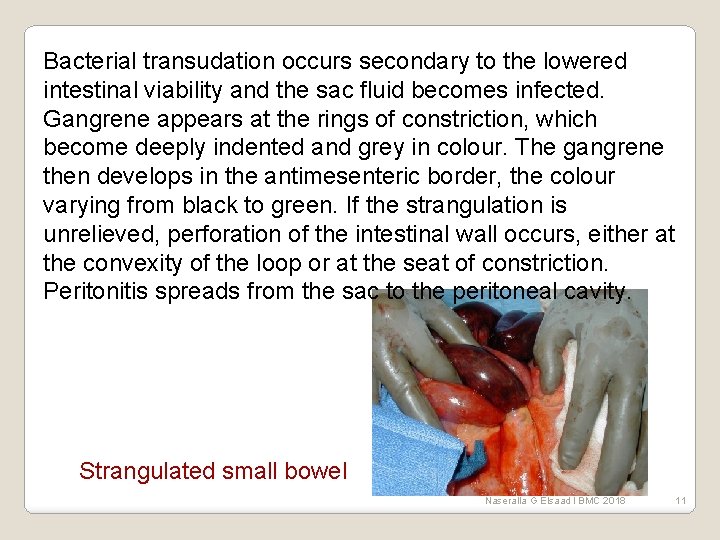
Bacterial transudation occurs secondary to the lowered intestinal viability and the sac fluid becomes infected. Gangrene appears at the rings of constriction, which become deeply indented and grey in colour. The gangrene then develops in the antimesenteric border, the colour varying from black to green. If the strangulation is unrelieved, perforation of the intestinal wall occurs, either at the convexity of the loop or at the seat of constriction. Peritonitis spreads from the sac to the peritoneal cavity. Strangulated small bowel Naseralla G Elsaad l BMC 2018 11
Clinical features of strangulated hernia Sudden pain, at first situated over the hernia, is followed by generalized abdominal pain, colicky in nature and often localized mainly at the umbilicus. Nausea and subsequently vomiting ensue. The hernia size may increases. On examination, the hernia is tense, extremely tender, irreducible and there is no expansile cough impulse. Unless the strangulation is relieved, the spasm of pain continues until peristaltic contractions cease with onset of ischaemia Naseralla G Elsaad l BMC 2018 12
Diagnosis of hernias Clinical history, physical examination with inspection and palpation of the hernial opening, auscultation, are employed for hernia diagnosis. In case of uncertain clinical findings, ultrasonography is the best means for confirming the hernial opening and contents. MRI is the best valid diagnostic tool for differentiating the causes of uncertain groin pain. Naseralla G Elsaad l BMC 2018 13
Diagnosis of hernias Differential diagnosis of groin hernias Inguinal lymphadenitis, lipoma, varicose nodules of the saphenous vein, vaginal hydrocele, spermatocele, encysted hydrocele of the cord in male or canal of the Nuck in female, tumours, abscesses, skin cysts, endometriosis, and incompletely descended testis. Naseralla G Elsaad l BMC 2018 14
Inguinal Hernia Inguinal hernia in the adult is the most common type of hernia (75%) and occurs mainly in males. Indirect herniation occurs through a persistent processus vaginalis (60– 70%) and direct herniation through the fossa inguinalis medialis (30– 40%). In up to 15% of patients, they occur bilaterally. Naseralla G Elsaad l BMC 2018 15
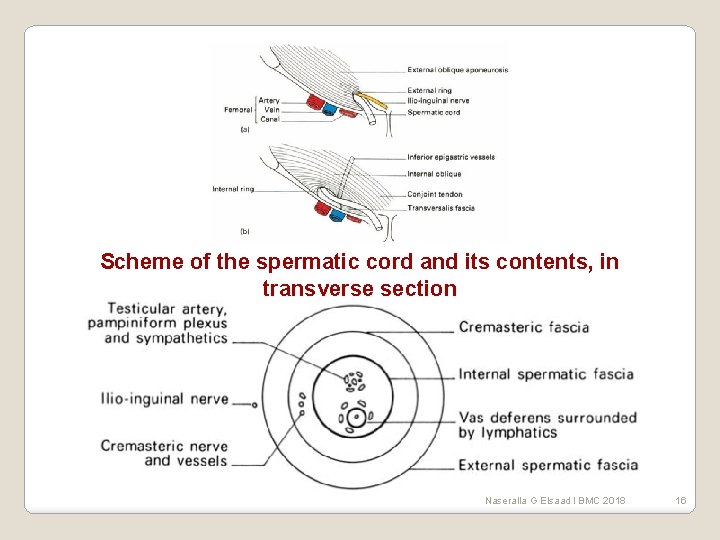
Scheme of the spermatic cord and its contents, in transverse section Naseralla G Elsaad l BMC 2018 16
Indirect (oblique) inguinal hernia This is the most common of all forms of hernia. It is most common in the young, whereas a direct hernia is most common in the elderly. In the first decade of life, inguinal hernia is more common on the right side. In adult males, 65% of inguinal hernias are indirect and 55% are right-sided. The hernia is bilateral in 12%. If both sides are explored in an infant presenting with one hernia, the incidence of a patent processus vaginalis on the other side is 60%. Naseralla G Elsaad l BMC 2018 17
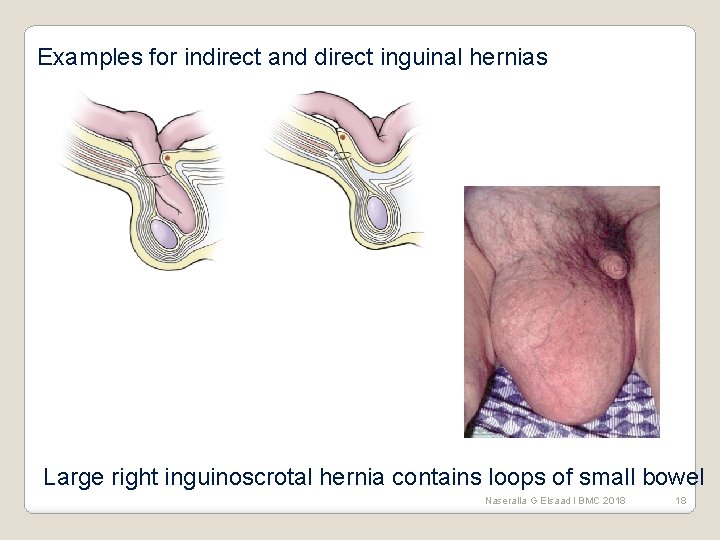
Examples for indirect and direct inguinal hernias Large right inguinoscrotal hernia contains loops of small bowel Naseralla G Elsaad l BMC 2018 18
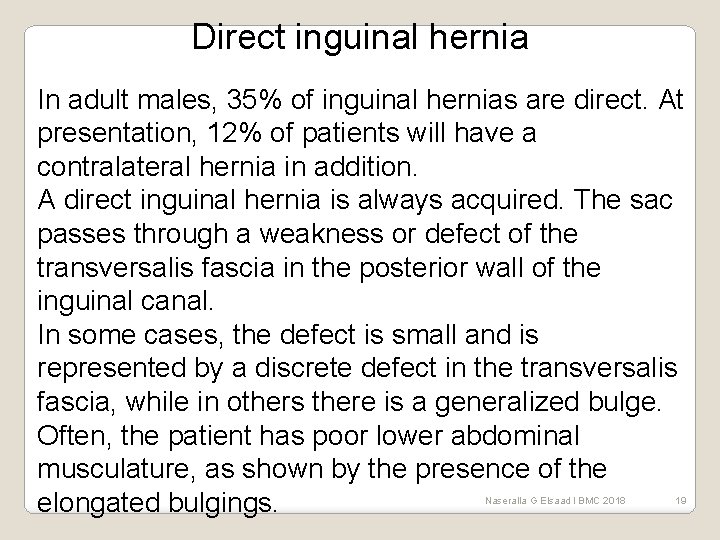
Direct inguinal hernia In adult males, 35% of inguinal hernias are direct. At presentation, 12% of patients will have a contralateral hernia in addition. A direct inguinal hernia is always acquired. The sac passes through a weakness or defect of the transversalis fascia in the posterior wall of the inguinal canal. In some cases, the defect is small and is represented by a discrete defect in the transversalis fascia, while in others there is a generalized bulge. Often, the patient has poor lower abdominal musculature, as shown by the presence of the elongated bulgings. Naseralla G Elsaad l BMC 2018 19
Strangulated inguinal hernia Strangulation of an inguinal hernia occurs at any time during life and in both sexes. Indirect inguinal hernias strangulate more commonly. Sometimes a hernia strangulates on the first occasion that it descends; more often, strangulation occurs in patients who have worn a truss for a long time and in those with a partially reducible or an irreducible hernia. In order of frequency, the constricting agent is: A. The neck of the sac B. The external inguinal ring in children C. Adhesions within the sac Naseralla G Elsaad l BMC 2018 20
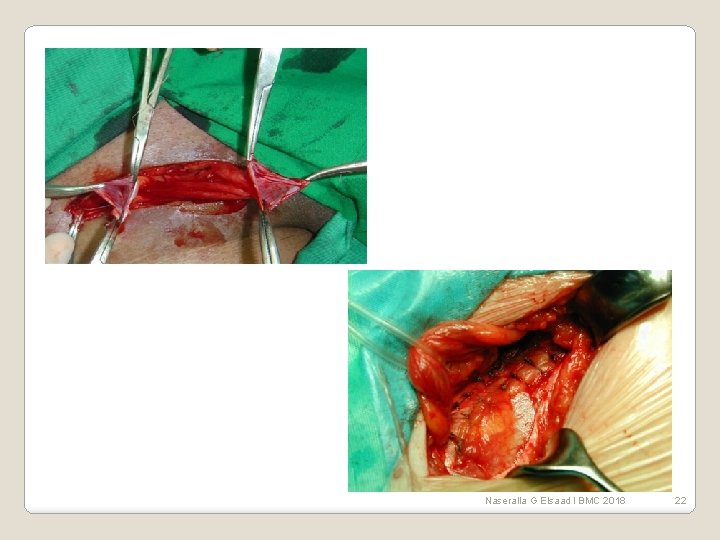
Treatment of indirect inguinal hernia Surgical operation is the treatment of choice. In adult, local, epidural or spinal, as well as general anaesthesia can be used. The basic operation is inguinal herniotomy which entails dissecting out and opening the hernia sac, reducing any contents and then transfixing the neck of the sac and removing the remainder. It is employed either by itself or as the first step in a repair procedure (herniorrhaphy). By itself it is sufficient for the treatment of hernia of infants, children, adolescents and young adults. Naseralla G Elsaad l BMC 2018 21
Naseralla G Elsaad l BMC 2018 22
Sliding hernia (hernia-en-glissade) As a result of slipping of the posterior parietal peritoneum on the underlying retroperitoneal structure, the posterior wall of the sac is not formed of peritoneum alone, but by sigmoid colon and its mesentery on the left side, the caecum on the right side and, sometimes, on either side by a portion of the urinary bladder. It should be clearly understood that the caecum, appendix or a portion of the colon wholly within a hernia sac does not constitute a sliding hernia. Naseralla G Elsaad l BMC 2018 23
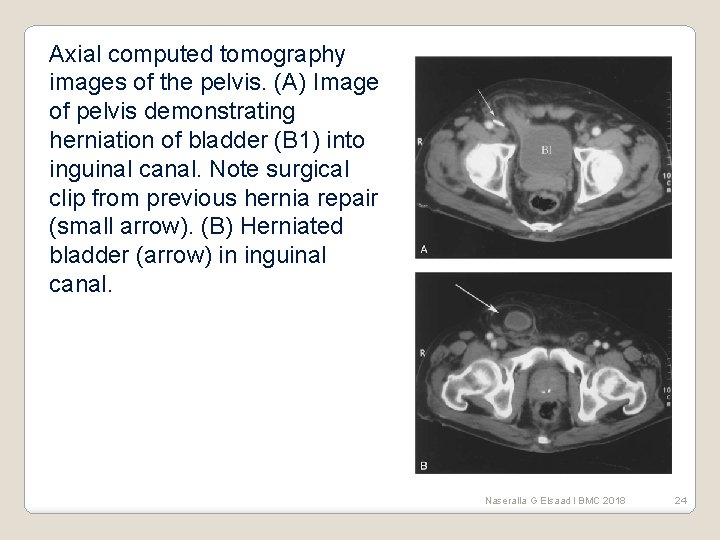
Axial computed tomography images of the pelvis. (A) Image of pelvis demonstrating herniation of bladder (B 1) into inguinal canal. Note surgical clip from previous hernia repair (small arrow). (B) Herniated bladder (arrow) in inguinal canal. Naseralla G Elsaad l BMC 2018 24
Femoral hernia is the third most common type of primary hernia. It accounts for about 20% of hernias in women and 5% in men. The overriding importance of femoral hernia lies in the facts that it cannot be controlled by a truss and that of all hernias it is the most liable to become strangulated, mainly because of the narrowness of the neck of the sac and the rigidity of the femoral ring. Strangulation is the initial presentation of 40% of femoral hernias. Naseralla G Elsaad l BMC 2018 25
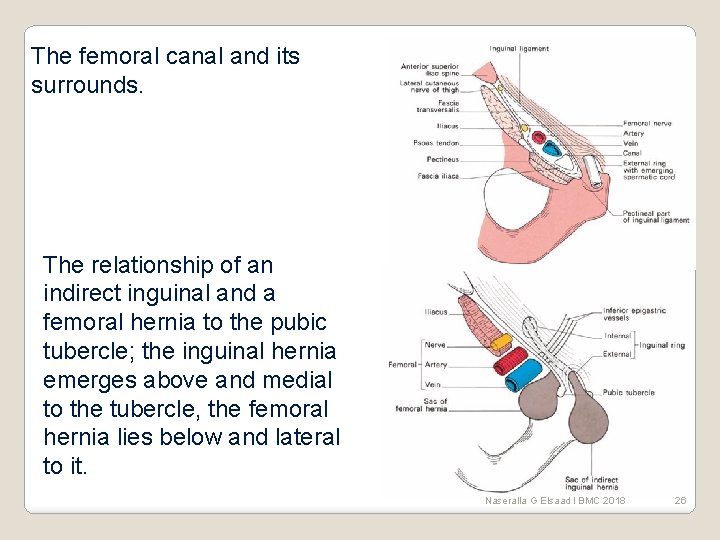
The femoral canal and its surrounds. The relationship of an indirect inguinal and a femoral hernia to the pubic tubercle; the inguinal hernia emerges above and medial to the tubercle, the femoral hernia lies below and lateral to it. Naseralla G Elsaad l BMC 2018 26
Pathology of the Femoral hernia As the hernia sac enlarges, it passes down the femoral canal descends vertically as far as emerges through the saphenous opening then turns upwards along the pathway presented by the superficial epigastric and superficial circumflex iliac vessels so that it may come to project above the inguinal ligament. There should not, however, be any difficulty in differentiating between an irreducible femoral and inguinal hernia. Naseralla G Elsaad l BMC 2018 27
Clinical features Femoral hernia is rare before puberty. Between 20 and 40 years of age the prevalence rises and continues to old age. The right side is affected twice as often as left and in 20% of cases the condition is bilateral. The symptoms to which a femoral hernia gives rise are less pronounced than those of an inguinal hernia; indeed, a small femoral hernia may be unnoticed by the patient or disregarded for years, perhaps until the day it strangulates. Adherence of the greater omentum sometimes causes a dragging pain. Rarely, a large sac is present. Naseralla G Elsaad l BMC 2018 28
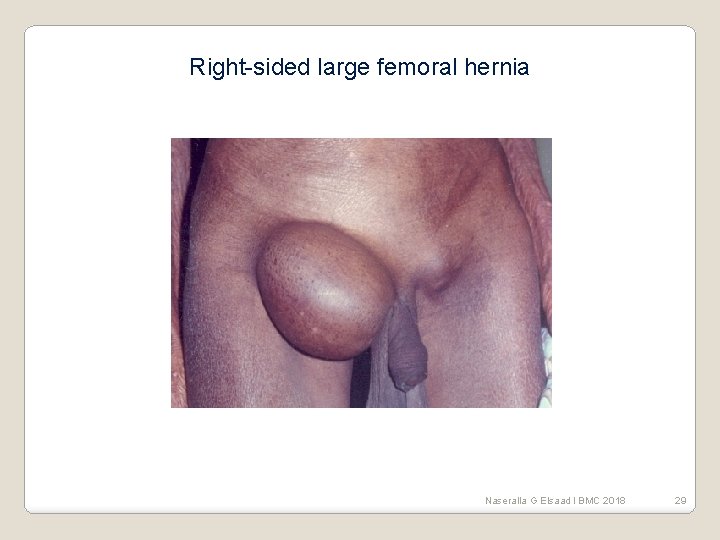
Right-sided large femoral hernia Naseralla G Elsaad l BMC 2018 29
Treatment of the femoral hernia The constant risk of strangulation is sufficient reason to recommend operation, which should be carried out soon after the diagnosis has been made. A truss is contraindicated because of this risk. The low approach operation (Lockwood) The high approach operation (Mc. Evedy) The transinguinal approach operation (Lotheissen) Naseralla G Elsaad l BMC 2018 30
Infantile umbilical hernias are covered in skin and involve the umbilical ring. They result from delayed or permanent failure of fusion of the obliterated umbilical vessels to the urachal remnant and margins of the umbilical ring. Infantile umbilical hernias are twice as common in boys as in girls. Umbilical hernias are common in: A. • premature infants B. • Down syndrome C. • Mucopolysaccharidosis D. • Beckwith–Wiedemann syndrome Naseralla G Elsaad l BMC 2018 31
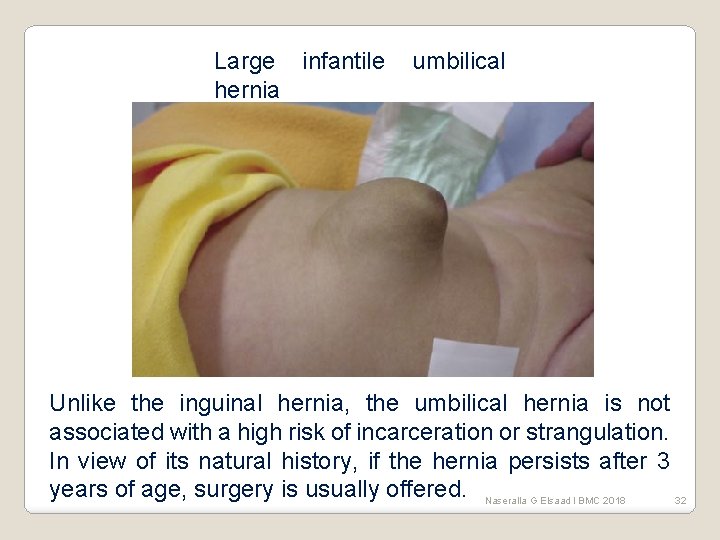
Large infantile hernia umbilical Unlike the inguinal hernia, the umbilical hernia is not associated with a high risk of incarceration or strangulation. In view of its natural history, if the hernia persists after 3 years of age, surgery is usually offered. Naseralla G Elsaad l BMC 2018 32
Treatment About 90% of infantile umbilical hernias disappear by the age of two years. Resolution is unlikely if the fascial defect is >1. 5 cm or if it persists beyond five years of age. Complications (e. g. strangulation of omentum or intestine) are extremely rare, so surgical referral is rarely required before two years of age. The appropriate timing of repair is controversial, but most paediatric surgeons delay repair until four years of age. Repair is carried out through a semicircular incision along the inner aspect of the umbilical skin. Naseralla G Elsaad l BMC 2018 33
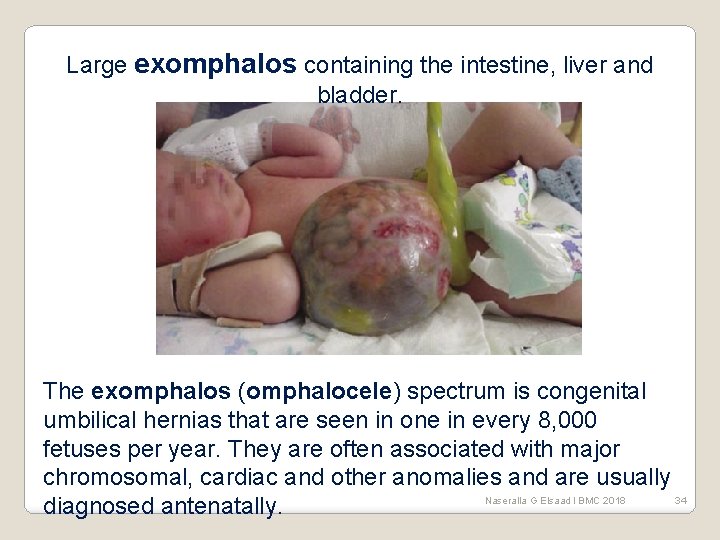
Large exomphalos containing the intestine, liver and bladder. The exomphalos (omphalocele) spectrum is congenital umbilical hernias that are seen in one in every 8, 000 fetuses per year. They are often associated with major chromosomal, cardiac and other anomalies and are usually Naseralla G Elsaad l BMC 2018 34 diagnosed antenatally.
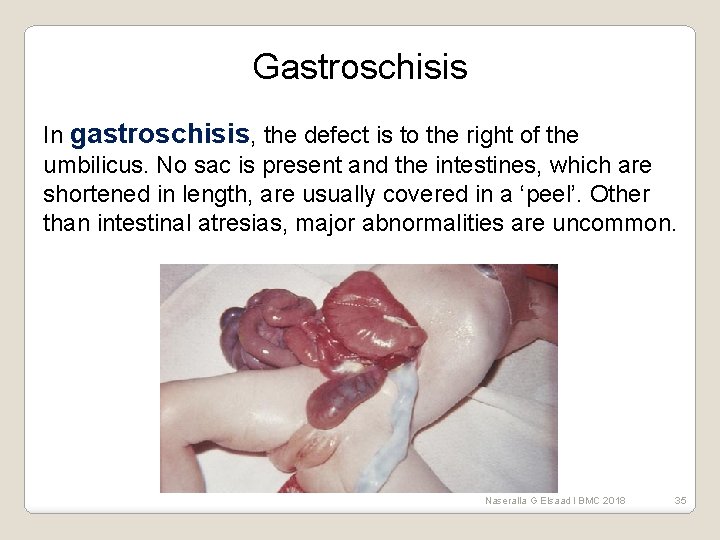
Gastroschisis In gastroschisis, the defect is to the right of the umbilicus. No sac is present and the intestines, which are shortened in length, are usually covered in a ‘peel’. Other than intestinal atresias, major abnormalities are uncommon. Naseralla G Elsaad l BMC 2018 35
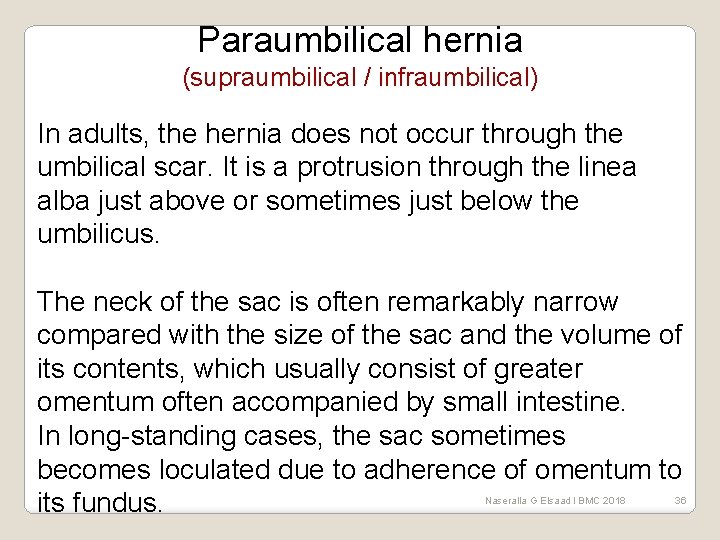
Paraumbilical hernia (supraumbilical / infraumbilical) In adults, the hernia does not occur through the umbilical scar. It is a protrusion through the linea alba just above or sometimes just below the umbilicus. The neck of the sac is often remarkably narrow compared with the size of the sac and the volume of its contents, which usually consist of greater omentum often accompanied by small intestine. In long-standing cases, the sac sometimes becomes loculated due to adherence of omentum to its fundus. Naseralla G Elsaad l BMC 2018 36
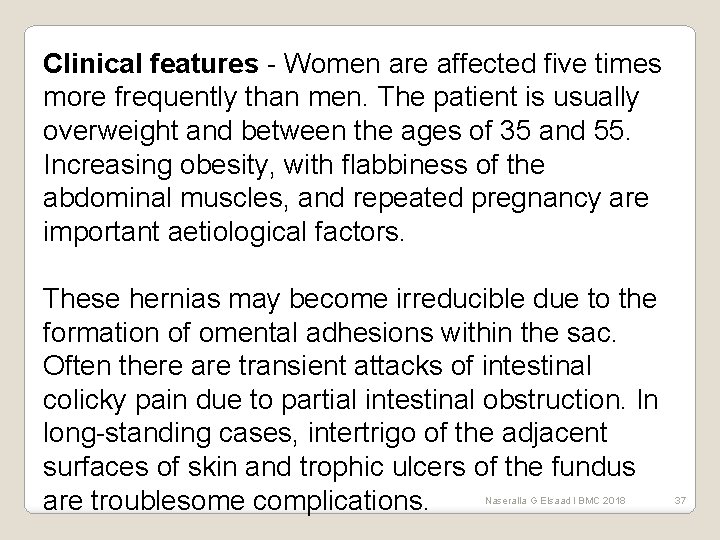
Clinical features - Women are affected five times more frequently than men. The patient is usually overweight and between the ages of 35 and 55. Increasing obesity, with flabbiness of the abdominal muscles, and repeated pregnancy are important aetiological factors. These hernias may become irreducible due to the formation of omental adhesions within the sac. Often there are transient attacks of intestinal colicky pain due to partial intestinal obstruction. In long-standing cases, intertrigo of the adjacent surfaces of skin and trophic ulcers of the fundus are troublesome complications. Naseralla G Elsaad l BMC 2018 37
Treatment Untreated, the hernia increases in size and more of its contents become irreducible. Eventually, strangulation may occur. Thus, operation should be advised in nearly all cases. If the patient is obese and the hernia is symptomless, operation can be postponed until the patient has lost weight. Naseralla G Elsaad l BMC 2018 38
Epigastric hernia (fatty hernia of the linea alba) An epigastric hernia occurs through the linea alba anywhere between xiphoid process and the umbilicus. Such a hernia commences as a protrusion of extraperitoneal fat through the linea alba, It is more likely that the defect occurs as a result of a weakened linea alba due to abnormal decussation of the fibres of the aponeurosis. More than one hernia may be present, and the most common cause of recurrence is failure to identify a second defect at the time of original repair. Naseralla G Elsaad l BMC 2018 39
Clinical features Symptomless: a small fatty hernia of the linea alba can be felt better than it can be seen and may be symptomless. Painful hernia: sometimes such a hernia gives rise to attacks of local pain, worse on physical exertion, and tenderness to touch and light clothing. Referred pain: it is not uncommon to find that the patient, who may not have noticed the hernia, complains of pain suggestive of a peptic ulcer. Naseralla G Elsaad l BMC 2018 40
Treatment If the hernia gives rise to symptoms, operation should be undertaken. An adequate vertical or transverse incision is made over the swelling, exposing the linea alba. The protruding extraperitoneal fat is cleared from the hernial orifice by gauze dissection. If the pedicle passing through the linea alba is slender, it is separated on all sides of the opening by blunt dissection. After ligating the pedicle, the small opening in the linea alba is closed with nonabsorbable sutures in adults and with absorbable Naseralla G Elsaad l BMC 2018 41
Rare varieties of external hernias Ø Spigelian hernia Ø Lumbar hernia Ø Perineal hernia Ø Obturator hernia Ø Interparietal hernia Ø Gluteal and sciatic hernias Naseralla G Elsaad l BMC 2018 42
Wound dehiscence /incisional hernia Wound dehiscence and incisional hernia are forms of abdominal wound failure, which may be defined as the failure of the incision to heal. Wound dehiscence is an acute wound failure and has an incidence of 1– 3%. It presents one week after surgery and may be preceded by a serosanguinous discharge. Incisional hernia is chronic wound failure and presents some time after surgery. The incidence of incisional hernia is 10– 15%; 90% of these occur within three years of surgery. Naseralla G Elsaad l BMC 2018 43
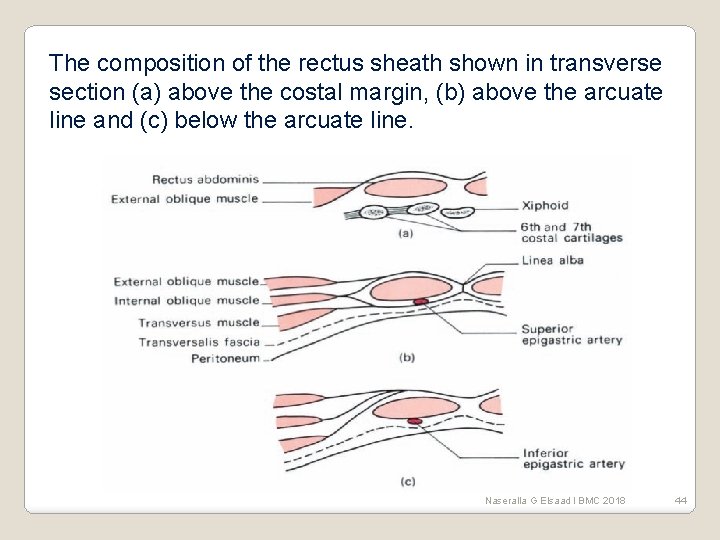
The composition of the rectus sheath shown in transverse section (a) above the costal margin, (b) above the arcuate line and (c) below the arcuate line. Naseralla G Elsaad l BMC 2018 44
Causes of wound failure The causes of acute and chronic wound failure are similar: poor surgical technique and wound infection cause acute dehiscence. Acute dehiscence is the commonest cause of incisional hernia. The development of incisional hernia is associated with a number of other risk factors. Naseralla G Elsaad l BMC 2018 45
Causes of wound failure Risk factors for the development of incisional hernia Ø Patient factors 1. Age 2. Male 3. Smoking 4. Obesity 5. Diabetes Ø Surgical factors 1. Emergency surgery 2. Bowel surgery 3. Suture type and technique 4. Wound infection 5. Wound dehiscence 6. Drainage Naseralla G Elsaad l BMC 2018 46
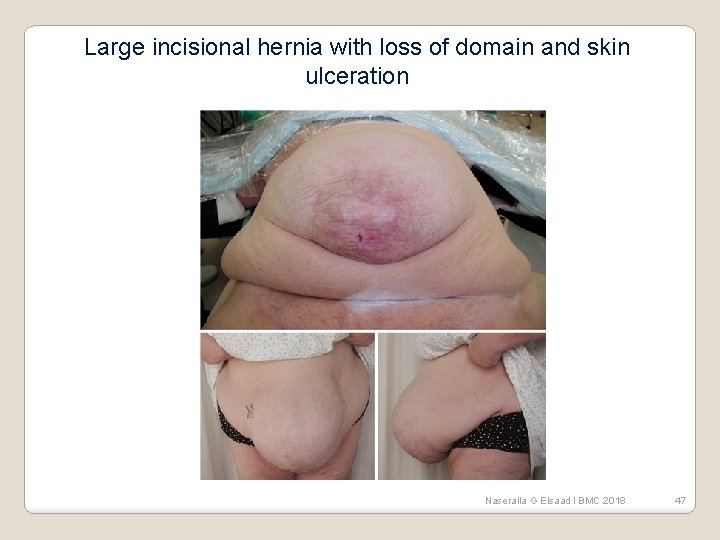
Large incisional hernia with loss of domain and skin ulceration Naseralla G Elsaad l BMC 2018 47
Abdominal wound dehiscence Clinical features A serosanguinous (pink) discharge from the wound is a forerunner of disruption in fully 50% of cases. It is the most pathognomonic sign of impending wound disruption Patients often felt something give way. If skin sutures have been removed, omentum or coils of intestine may be found through the wound. It is important to note that there may be symptoms and signs of intestinal obstruction. Naseralla G Elsaad l BMC 2018 48
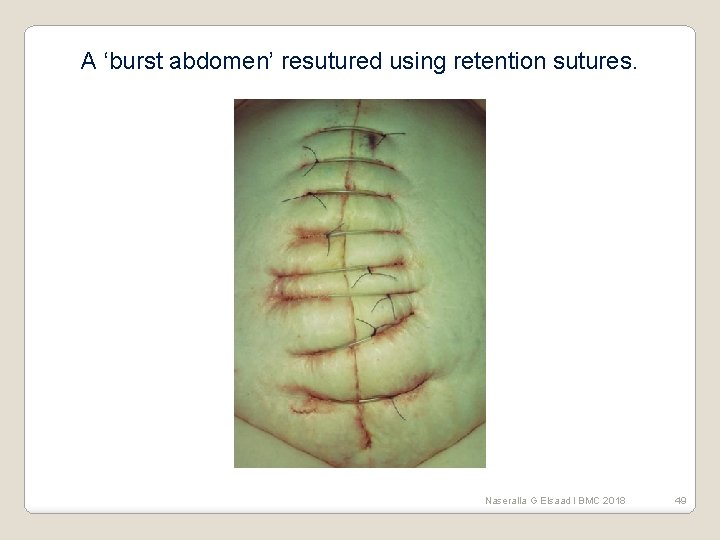
A ‘burst abdomen’ resutured using retention sutures. Naseralla G Elsaad l BMC 2018 49
Incisional hernias There is a high incidence of incisional hernia following operations for peritonitis because, as a rule, the wound becomes infected. An incisional hernia usually starts as a symptomless partial disruption of the deeper layers of a laparotomy wound during the immediate or very early postoperative. Clinical features Most patients with incisional hernias are, at least initially, asymptomatic. If symptoms occur, they commonly consist of: Ø • Restriction of movement or of wearing certain clothes Ø • Embarrassment due to disfigurement Naseralla G Elsaad l BMC 2018 50
Radio-imaging Study Radiological investigation may be required in obese patients with small hernias that are difficult to show clinically, and those with very large complicated hernias. Ultrasound examination may often show a fascial defect and provide a measurement of the size and identification of the contents of the hernial sac. CT scan is particularly helpful to fully assess large complex hernias, recurrent hernias or hernias with multiple defects. Naseralla G Elsaad l BMC 2018 51
Management of incisional hernia If the patient is obese, weight reduction by dieting should precede the operation. The repair of large hernias are highly specialized surgery. Most incisional hernias are repaired using one of several techniques that employ mesh. Polypropylene and polyethylene meshes are commonly used; they are flexible and easily cut to size. Naseralla G Elsaad l BMC 2018 52
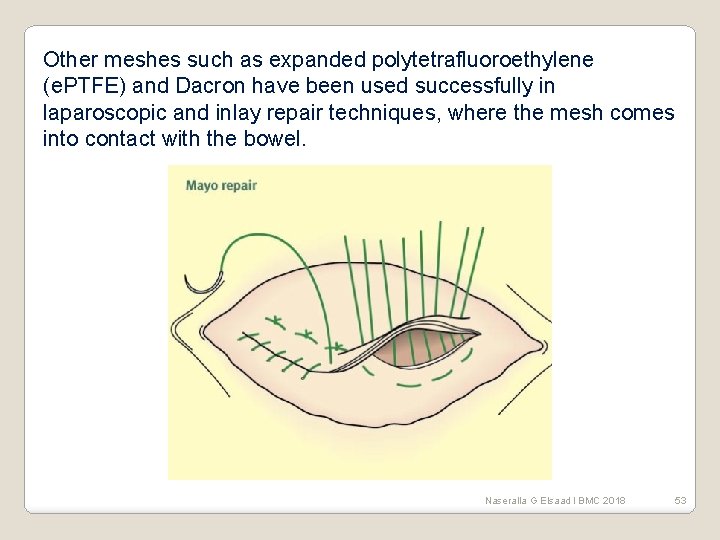
Other meshes such as expanded polytetrafluoroethylene (e. PTFE) and Dacron have been used successfully in laparoscopic and inlay repair techniques, where the mesh comes into contact with the bowel. Naseralla G Elsaad l BMC 2018 53
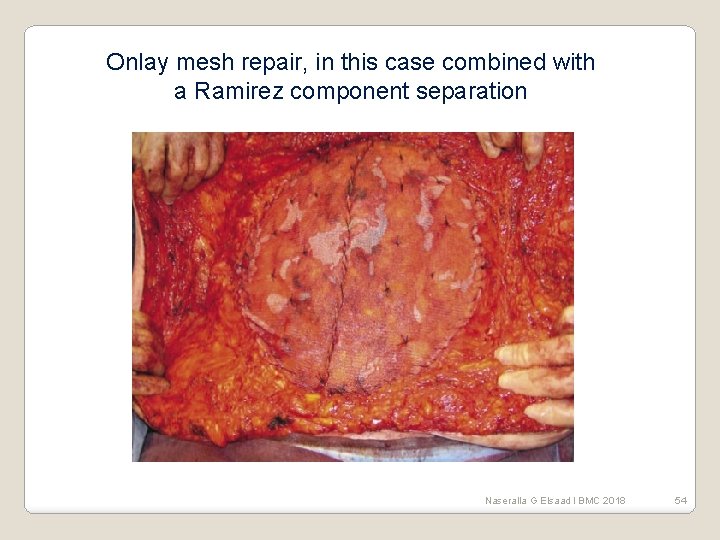
Onlay mesh repair, in this case combined with a Ramirez component separation Naseralla G Elsaad l BMC 2018 54
Divarication of recti abdominis It is seen principally in elderly multiparous patients. When the patient’s strains, a gap can be seen between the recti abdominis, through which the abdominal contents bulge. Treatment An abdominal belt is all that is required. There is no risk of strangulated intestinal contents. A similar condition is met with in babies, only the Divarication exists above the umbilicus. No treatment is necessary; as the child grows, a spontaneous cure results. Naseralla G Elsaad l BMC 2018 55
Disorders of the umbilicus Many of the problems associated with the umbilicus are congenital structural disorders. A good understanding of these problems can be obtained by considering the topological changes of early development. Naseralla G Elsaad l BMC 2018 56
Umbilical granulomas and polyps Sometimes a mass of granulation tissue forms after separation of the cord. This chronic infection may continue for weeks causes granulation tissue to pout at the umbilicus. Granulomas respond well to cauterization with a wet silver nitrate stick. . A persistent mass may be an umbilical polyp rather than a granuloma. Umbilical polyps are small hemispherical pink lesions covered in gastric or small bowel mucosa; they should be excised. Omphalitis (umbilical infection) It is diagnosed when there is pus or discharge at the umbilicus with spreading erythema and cellulitis. Omphalitis is associated with: • umbilical vascular catheterization, low birth weight, Naseralla G Elsaad l BMC 2018 57 perinatal sepsis, immunodeficiency.
Omphalomesenteric duct remnants The vitellointestinal duct may persist and connect the ileum to the umbilicus. The duct may be occluded, partially occluded or patent. It may contain ectopic gastric or pancreatic tissue. The spectrum includes: • Patent vitellointestinal duct- the resulting umbilical fistula discharges mucus and, rarely, faeces. • A Meckel’s diverticulum • Sinus tract- part of duct which is near to the umbilicus • Mucosal remnant (polyp see above) • Intra-abdominal cyst- connecting in the band between the umbilicus and the bowel • Fibrous band. ` Naseralla G Elsaad l BMC 2018 58
Neoplasms of the umbilicus Benign tumours Umbilical adenoma (raspberry tumour) This is commonly seen in infants. It is due to a partially unobliterated vitellointestinal duct. Mucosa prolapsing through the umbilicus gives rise to a raspberry-like tumour. Treatment: if the tumour is pedunculated, a ligature is tied around it and, in a few days, the polypus drops off. Should the tumour reappear after this procedure, umbilectomy is indicated. Naseralla G Elsaad l BMC 2018 59
Neoplasms of the umbilicus Endometrioma It occurs in women between the ages of 20 and 45 years. On histological examination it is found to consist of endometrial glands occupying the same plane in the dermis. The umbilicus become painful and bleeds at each menstruation. Umbilectomy will cure the condition. Naseralla G Elsaad l BMC 2018 60
Neoplasms of the umbilicus Malignant tumour of the umbilicus Secondary carcinoma at the umbilicus (Sister Joseph's nodule) is not very uncommon, but it is always a late manifestation of the disease. The primary neoplasm is often situated in the stomach, colon, or ovary, but a metastasis from the breast, probably transmitted along the lymphatics. Naseralla G Elsaad l BMC 2018 61
Neoplasms of the abdominal wall Desmoid tumour It is a tumour arising in the musculo-aponeurotic structures of the abdominal wall, especially below the level of the umbilicus. It is a completely unencapsulated fibroma and as so hard that it creaks when it is cut. Aetiology Eighty per cent of cases occur in women, many of whom have borne children, and the neoplasm occurs occasionally in scars of old surgery. Consequently, trauma for example the stretching of the muscle fibres during pregnancy or possibly a small haematoma of the abdominal wall, appears to be an aetiological factors. Naseralla G Elsaad l BMC 2018 62
Neoplasms of the abdominal wall Adenocarcinoma of the colon or of other viscera may invade the abdominal wall. In such cases, the resection of this extension, along with the primary growth, may require special repair of the resulting defect. Secondary implantation in the wound may follow any abdominal operation for carcinoma, and bladder cancer is notorious for this propensity. Naseralla G Elsaad l BMC 2018 63

Thanks For Your Attention Naseralla G Elsaad l BMC 2018 64
- Slides: 64