
HERNIA Begashaw M MD Introduction l Common surgical
HERNIA Begashaw M (MD)
Introduction l Common surgical problem l Adequate knowledge is important l Prevent serious complications
Definition – Is a protrusion of a viscus through an opening in the wall of the cavity
Component l Sac -Out pouch of the peritoneum-Four parts-Mouth, Neck, Body&Fundus l Content-viscus/organ inside a sac - Small bowel and omentum – the commonest - Large bowel appendix - Bladder
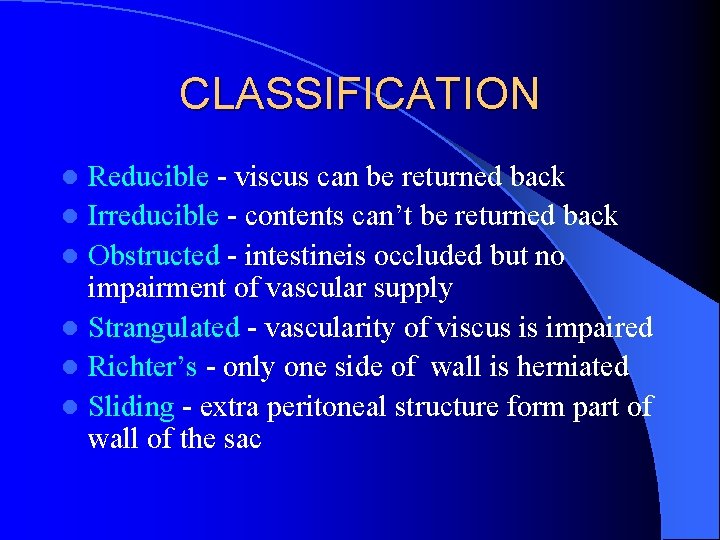
CLASSIFICATION Reducible - viscus can be returned back l Irreducible - contents can’t be returned back l Obstructed - intestineis occluded but no impairment of vascular supply l Strangulated - vascularity of viscus is impaired l Richter’s - only one side of wall is herniated l Sliding - extra peritoneal structure form part of wall of the sac l
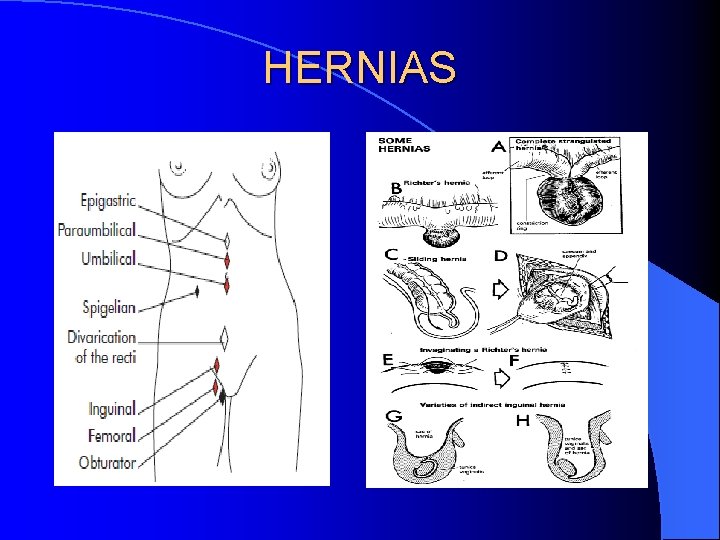
HERNIAS
Risk factors Increased intra abdominal pressure - Chronic cough - Straining at urination or defecation - Heavy wt lifting - Abdominal distension Ø Weakened abdominal wall - Advanced age - Malnutrition - Congenital defect – ppv - Trauma/surgery Ø
Clinical features Ø History - Lump - Pain, local aching, discomfort - Factors predisposing to increased intra abdominal pressure - Symptoms of int. obstruction/strangulation
Physical examination - Examine Standing & Lying - Lump – reducible, cough impulse with bowel sound - Reduced on lying & increases in size _coughing/ straining - Obstruction – tense, tender, irreducible with absent cough impulse - Strangulation – more tenderness, with warm indurated, and inflamed overlying skin
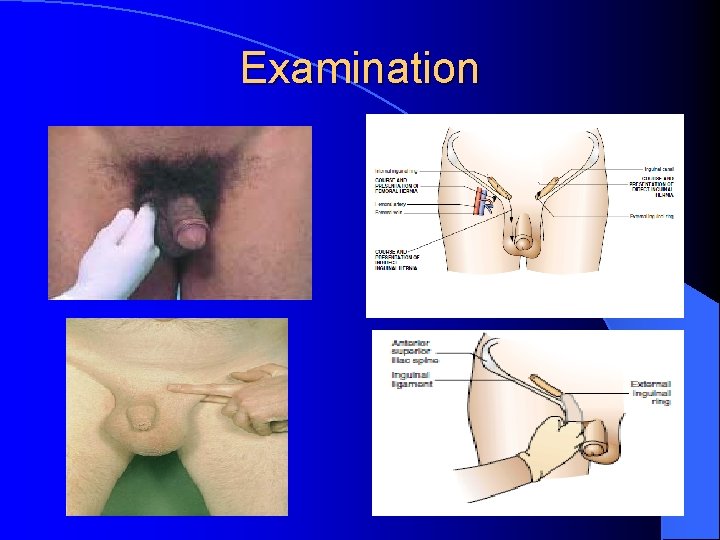
Examination
Investigation a clinical diagnosis l investigation is rarely needed l
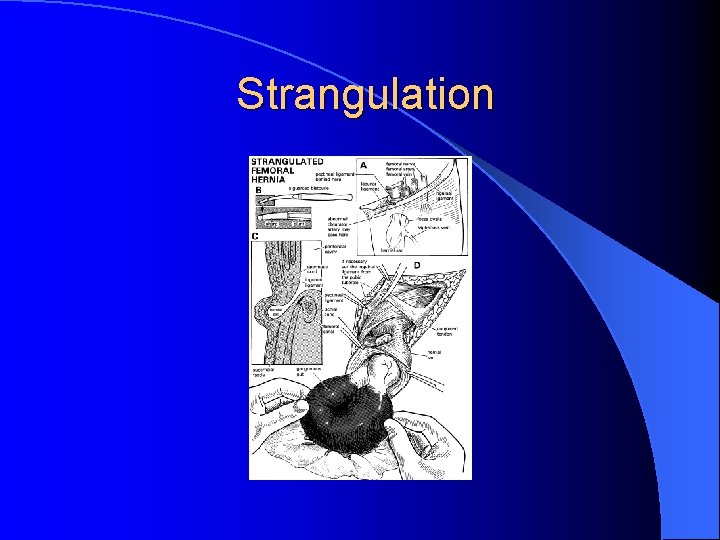
Complications 1. Irreducibility 2. Obstruction 3. Strangulation is a surgical emergency l Risk of obstruction and strangulation is very high in femoral hernia, paraumblical hernia and indirect inguinal hernia with narrow neck
Principles of management 1. Herniotomy - removal of the sac and closure of the neck - in infants and children 2. Herniorrhaphy - Herniotomy and repair of the wall to prevent recurrence
Obstruction Non operative -Gentle reduction - Put patient in head down position - Sedative is given - Gentle manipulation to reduce the hernia Ø Urgent Surgery - Failed reduction - All strangulated hernia Ø
Strangulation
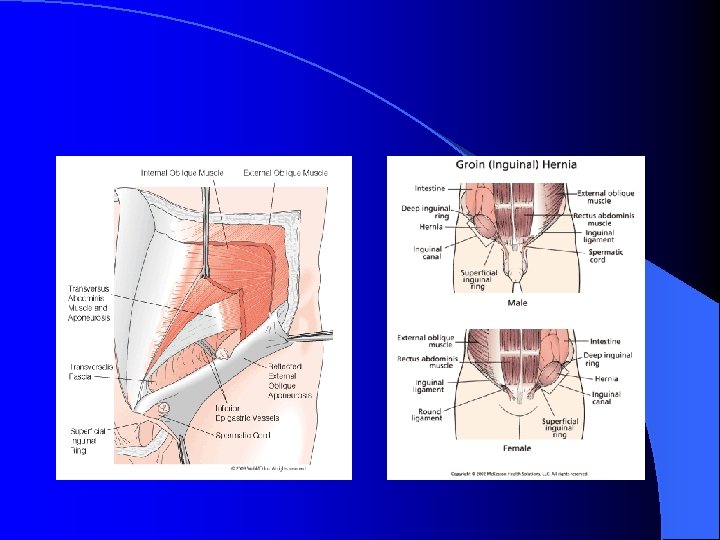
Anatomy-inguinal canal Boundary Anteriorly: External oblique apponeurosis Posteriorly: Fascia transversalis Inferiorly: Inguinal ligament Superiorly: Conjoined tendon and internal oblique M Ø Runs in antero inferior (Internal External ring) _Internal ring -2 cm above & 2 cm medial to mid inguinal ligament _External ring -just above pubic crest & tubercle Ø
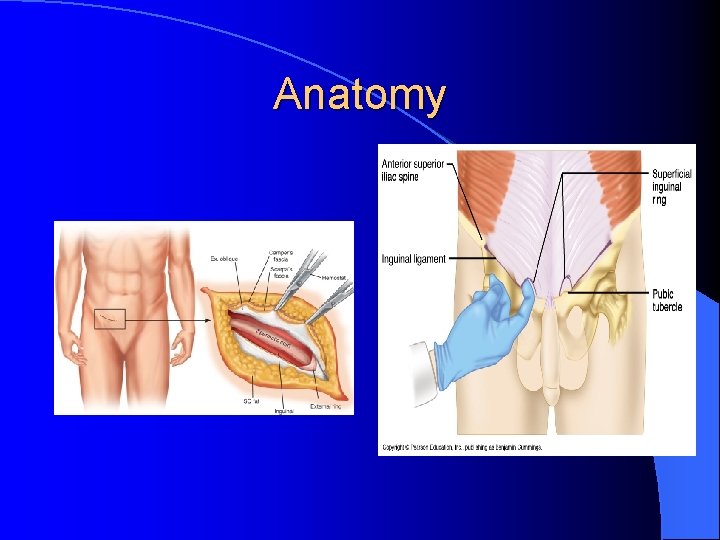
Anatomy
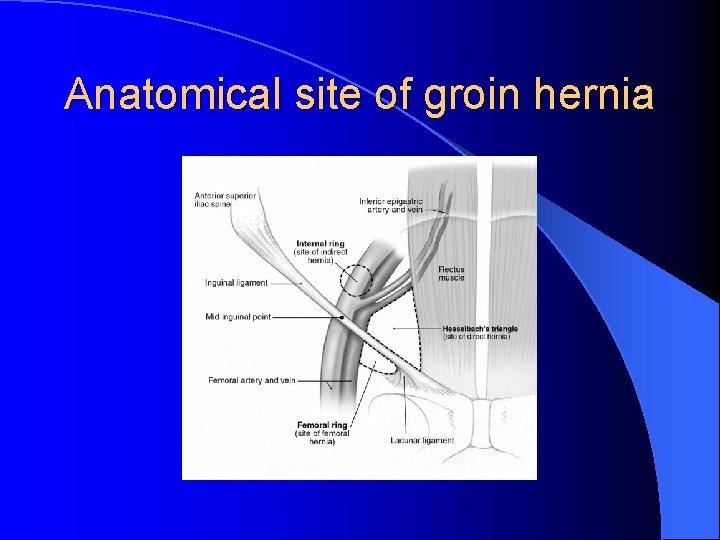
Anatomical site of groin hernia
Contents of inguinal canal Ø l l Male Spermatic vessels Vas deference Ileo inguinal nerve Genito femoral nerve Female l Round ligament Ø
Anatomy of Femoral canal Ø Is a narrow rigid space Ø Boundary - Inguinal ligament superiorly - Pectineal posteriorly - Lacunar medially. F - Femoral vein laterally Ø prone to obstruction & strangulation
Inguinal hernia - accounts for 80% - commonest is all ages & sexes - 20 x more common is males than women - more common on right side
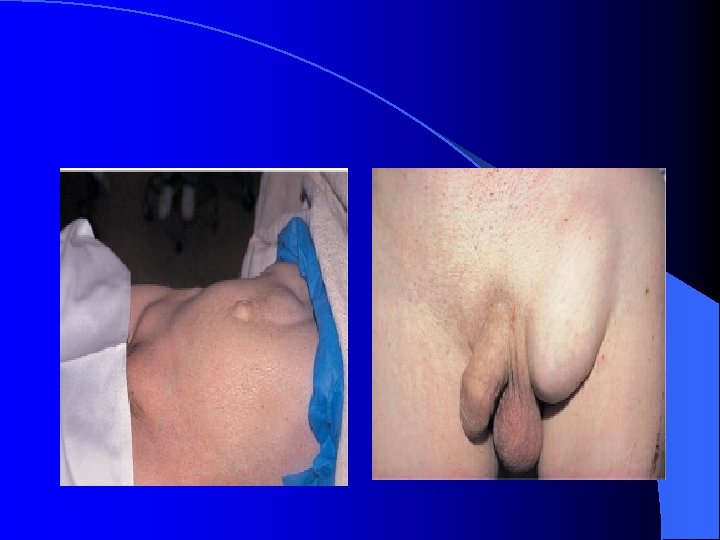
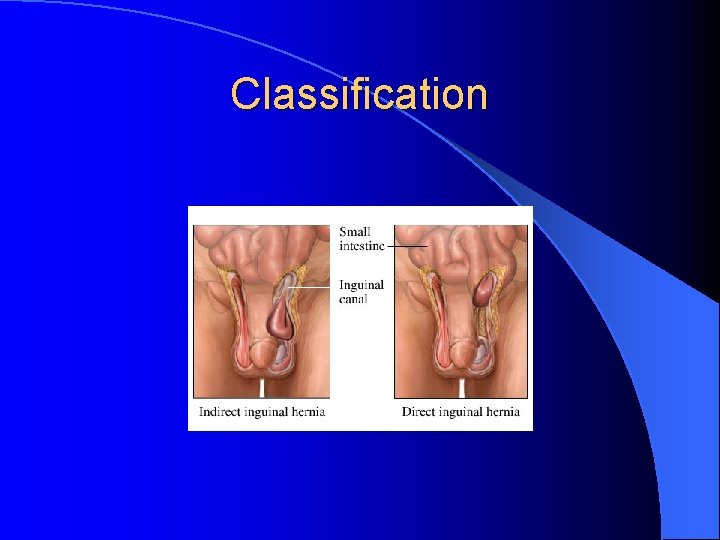
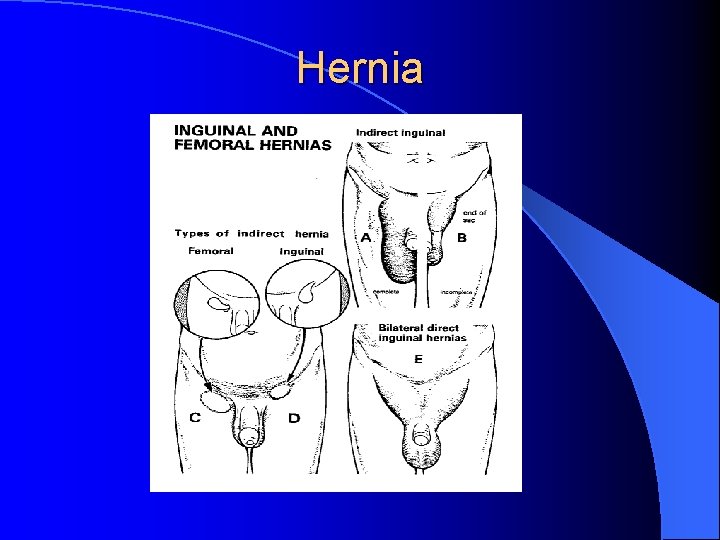
Classification 1 -Indirect_passes through internal inguinal ring along the inguinal canal -May extend down to the scrotum 2 -Direct_Bulges through post wall of inguinal canal
Classification
Hernia
Indirect inguinal hernia 60% on right - 40% Lt side - 20% bilateral - Due congenital defect patent processes vaginalis - 20 times more common in men -
Direct inguinal hernia due to wear and tear associated - advanced age - increased intra abdominal pressure -
Femoral Hernia - acquired downward protrusion of intestinal contents into the femoral canal - 4 times more common in females - rare in children
Clinical features History Physical examination - Elderly or middle aged woman - lump on anterior and upper thigh - may present with complaints associated with int. obstruction or strangulation - Small lump on lower groin, lateral and below pubic tubercle - Reducible/irreducibility - Bowel sound/cough impulse – usually absent
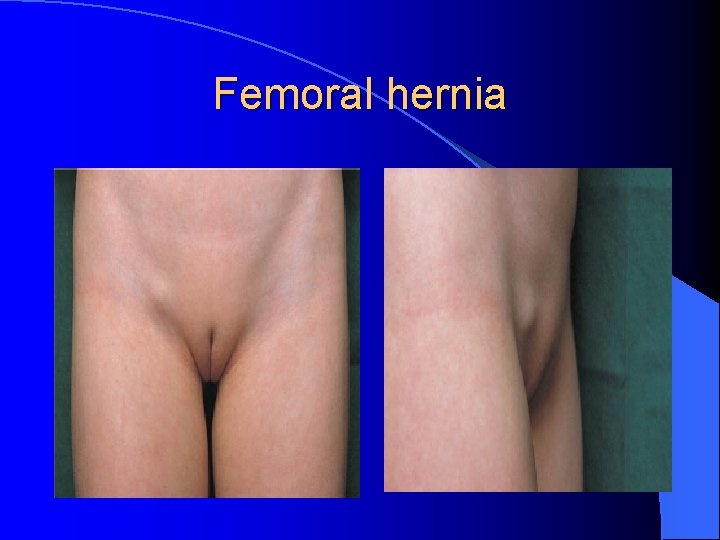
Femoral hernia
Management - surgical repair without delay
Umbilical Hernia Umbilicus is one of the weak sites of the abdomen A hernia can occur at this potential site Risk factors Female sex Multiparity Obesity Ascites l Complications Obstruction Strangulation Rupture l l l
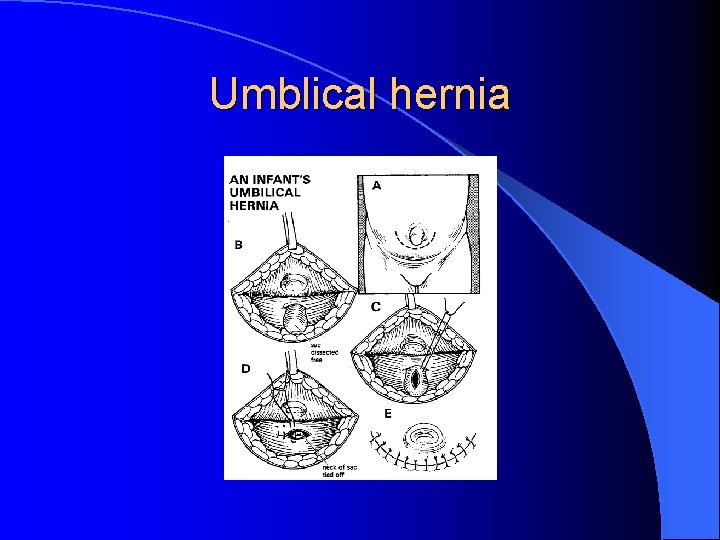
Umblical hernia
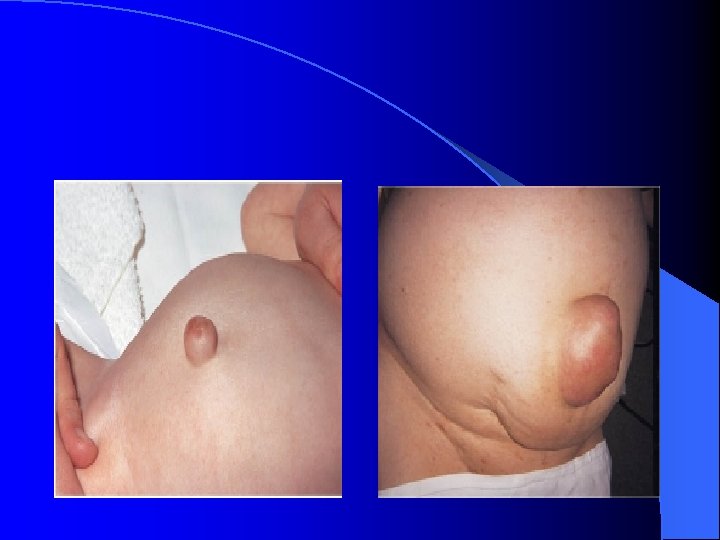
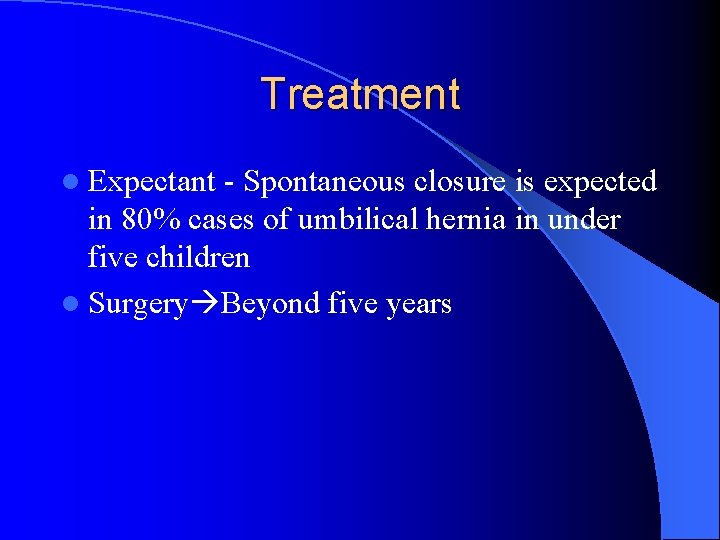
Treatment l Expectant - Spontaneous closure is expected in 80% cases of umbilical hernia in under five children l Surgery Beyond five years
Incisional Hernia l Risk Factors -Wound infection -Poor surgical technique ( -Chronic cough -Straining -Obesity
Clinical features l Risk of obstruction and strangulation is very rare l Local discomfort l Cosmetic problems l Difficulties with micturation and bowel movement when very large l Treatment Hernioplasty
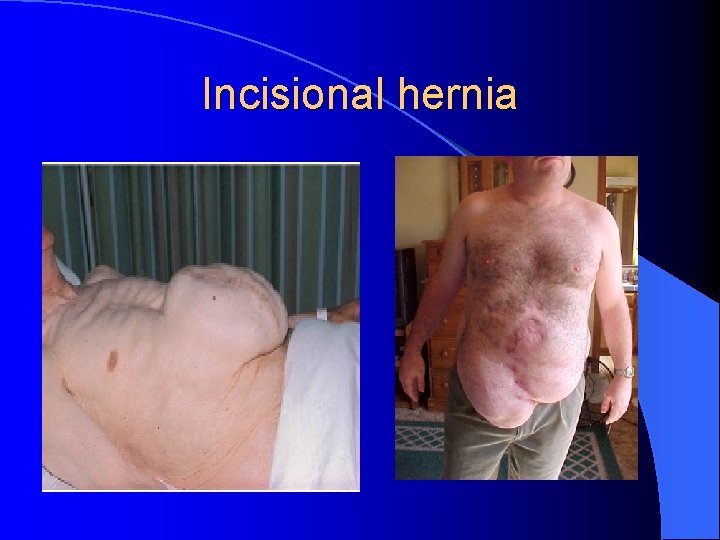
Incisional hernia
- Slides: 39