
Hepatotoxic Drugs Objectives By the end of the
Hepatotoxic Drugs Objectives: By the end of the lecture , you should know: ● Define the role of liver in drug detoxification ● Discuss the types (patterns) of hepatotoxicity ● Classify hepatotoxins ● Explain how a drug can inflict hepatotoxicity ● State the pathological consequences of hepatic injury ● Contrast the various clinical presentation of hepatotoxicity ● Enlist the possible treatment ★ The Drugs mentioned in the lecture are VERY important, know them and to which category they belong. Color index: Black : Main content Red : Important Blue: Males’ slides only Editing File Purple: Females’ slides only Grey: Extra info or explanation Green : Dr. notes
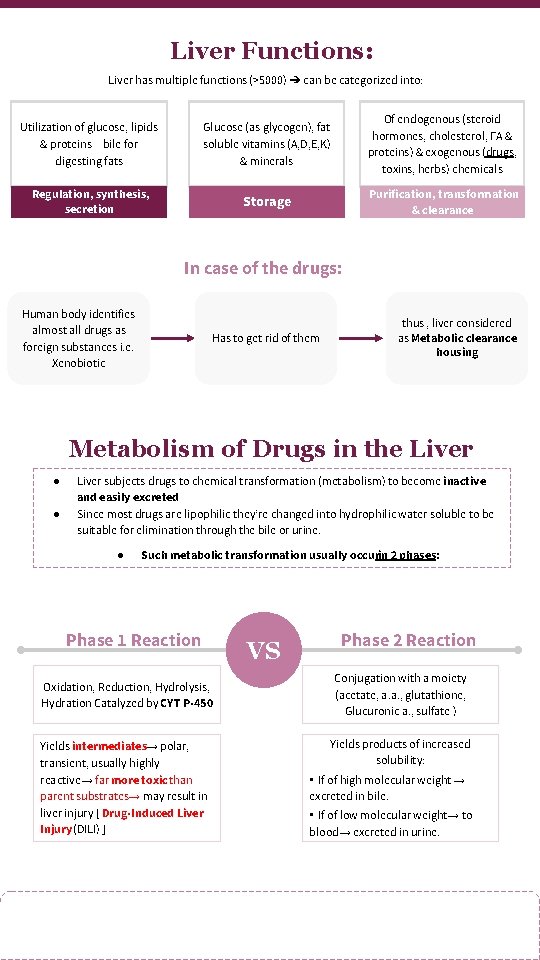
Liver Functions: Liver has multiple functions (>5000) ➔ can be categorized into: Utilization of glucose, lipids & proteins + bile for digesting fats Glucose (as glycogen), fat soluble vitamins (A, D, E, K) & minerals Of endogenous (steroid hormones, cholesterol, FA & proteins) & exogenous (drugs, toxins, herbs) chemicals Regulation, synthesis, secretion Storage Purification, transformation & clearance In case of the drugs: Human body identifies almost all drugs as foreign substances i. e. Xenobiotic thus , liver considered as Metabolic clearance housing Has to get rid of them Metabolism of Drugs in the Liver ● ● Liver subjects drugs to chemical transformation (metabolism) to become inactive and easily excreted Since most drugs are lipophilic they’re changed into hydrophilic water soluble to be suitable for elimination through the bile or urine. ● Such metabolic transformation usually occurin 2 phases: Phase 1 Reaction Oxidation, Reduction, Hydrolysis, Hydration Catalyzed by CYT P-450 Yields intermediates→ polar, transient, usually highly reactive→ far more toxic than parent substrates→ may result in liver injury [ Drug-Induced Liver Injury (DILI) ] VS Phase 2 Reaction Conjugation with a moiety (acetate, a. a. , glutathione, Glucuronic a. , sulfate ) Yields products of increased solubility: • If of high molecular weight → excreted in bile. • If of low molecular weight→ to blood→ excreted in urine.
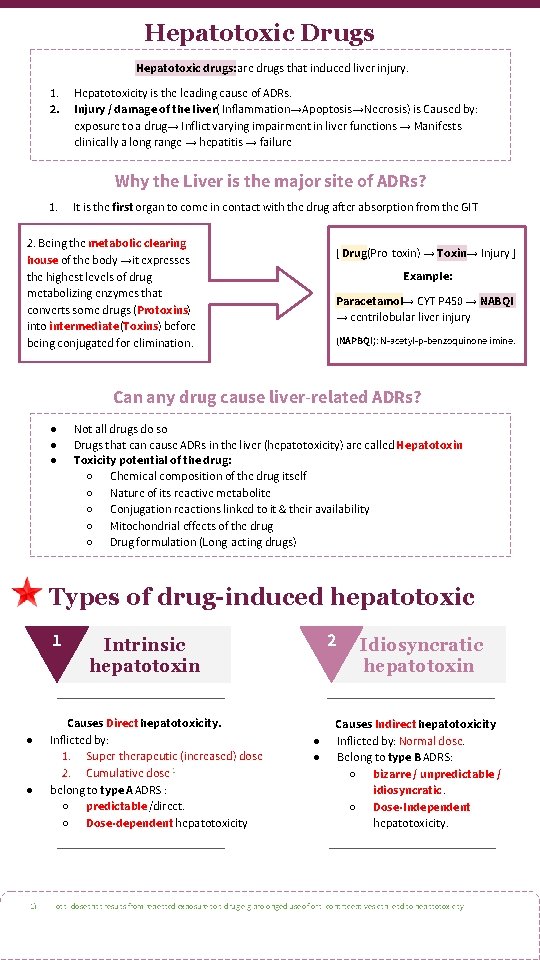
Hepatotoxic Drugs Hepatotoxic drugs: are drugs that induced liver injury. 1. 2. Hepatotoxicity is the leading cause of ADRs. Injury / damage of the liver( Inflammation→Apoptosis→Necrosis) is Caused by: exposure to a drug→ Inflict varying impairment in liver functions → Manifests clinically a long range → hepatitis → failure Why the Liver is the major site of ADRs? 1. It is the first organ to come in contact with the drug after absorption from the GIT 2. Being the metabolic clearing house of the body →it expresses the highest levels of drug metabolizing enzymes that converts some drugs (Protoxins) into intermediate (Toxins) before being conjugated for elimination. [ Drug(Pro-toxin) → Toxin→ Injury ] Example: Paracetamol→ CYT P 450 → NABQI → centrilobular liver injury (NAPBQI): N-acetyl-p-benzoquinone imine. Can any drug cause liver-related ADRs? ● ● ● Not all drugs do so Drugs that can cause ADRs in the liver (hepatotoxicity) are called Hepatotoxin Toxicity potential of the drug: ○ Chemical composition of the drug itself ○ Nature of its reactive metabolite ○ Conjugation reactions linked to it & their availability ○ Mitochondrial effects of the drug ○ Drug formulation (Long-acting drugs) Types of drug-induced hepatotoxic 1 ● ● 1) 2 Intrinsic hepatotoxin Causes Direct hepatotoxicity. Inflicted by: 1. Super-therapeutic (increased) dose 2. Cumulative dose 1 belong to type A ADRS : ○ predictable /direct. ○ Dose-dependent hepatotoxicity ● ● Idiosyncratic hepatotoxin Causes Indirect hepatotoxicity Inflicted by: Normal dose. Belong to type B ADRS: ○ bizarre / unpredictable / idiosyncratic. ○ Dose-Independent hepatotoxicity. Total dose that results from repeated exposure to a drug e. g prolonged use of oral contraceptives can lead to hepatotoxicity

Drugs that causes Intrinsic hepatotoxin Increased Dose ● ● ● Cumulative Dose Acetaminophen Salicylates Statins ● ● Both ● ● Amiodarone Oral contraceptive Methotrexate Alcohol Drugs that causes Idiosyncratic hepatotoxin Divided into: Hypersensitivity or Immunologic reactions: A drug or its metabolite binds to hepatic membranes or proteins which act as hapten 1 to induce a variety of immune reactions. Metabolic-idiosyncratic reactions: The metabolite of the offending drug interferes with hepatic metabolism as that of bilirubin or protein synthesis. . . etc Immunologic-idiosyncratic Hepatotoxicity Inflammatory cholestasis ● ● ● Erythromycin Chlorpropamide Chlorpromazine Viral hepatitis-like pattern ● ● ● Isoniazid Phenytoin Methyldopa Metabolic-idiosyncratic Hepatotoxicity Interfere with bilirubin metabolism ● ● Interfere with protein synthesis Erythromycin Rifampicin ● ● Corticosteroid Tetracycline “Note that not all drugs fall neatly into one of these categories, and overlapping mechanisms may occur with some drugs” How can a drug induces hepatotoxicity? Drug or its reactive metabolites can form covalent bonds with target molecules or alter the target molecule by non-covalent interactionsor both. 1 - Weaker 1 - Stronger 2 - It is adduct formation between the metabolite of the drug and cellular macromolecules Non-covalent interaction 3 - Impairment of mitochondrial Respiration. 3 - If covalent binding to protein leads to immunogenic reaction. 4 - If binding to DNA become carcinogenesis. 2 - Lipid peroxidation → generation of cytotoxic oxygen radicals. 4 - Depletion of GSH → reactions leads to oxidative stress. Covalent interaction 5 - Modification of sulfhydryl groups → impair Ca 2+ homeostasis. 6 - Protein synthesis inhibition. 1. a small molecule which, when combined with a larger carrier such as a protein, can elicit the production of antibodies which bind specifically to it.
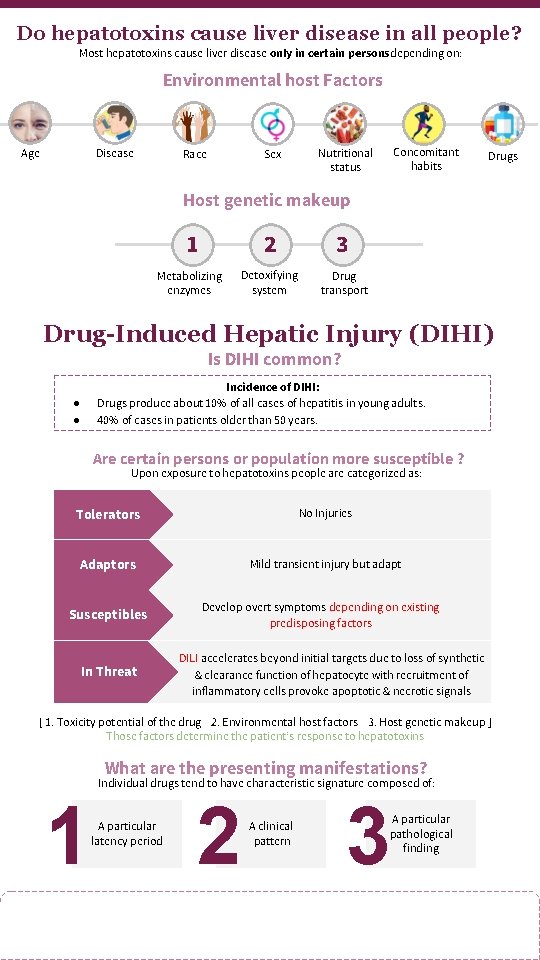
Do hepatotoxins cause liver disease in all people? Most hepatotoxins cause liver disease only in certain personsdepending on: Environmental host Factors Age Disease Race Sex Concomitant habits Nutritional status Drugs Host genetic makeup 1 2 3 Metabolizing enzymes Detoxifying system Drug transport Drug-Induced Hepatic Injury (DIHI) Is DIHI common? Incidence of DIHI: Drugs produce about 10% of all cases of hepatitis in young adults. 40% of cases in patients older than 50 years. ● ● Are certain persons or population more susceptible ? Upon exposure to hepatotoxins people are categorized as: Tolerators No Injuries Adaptors Mild transient injury but adapt Susceptibles In Threat Develop overt symptoms depending on existing predisposing factors DILI accelerates beyond initial targets due to loss of synthetic & clearance function of hepatocyte with recruitment of inflammatory cells provoke apoptotic & necrotic signals [ 1. Toxicity potential of the drug 2. Environmental host factors 3. Host genetic makeup ] Those factors determine the patient’s response to hepatotoxins What are the presenting manifestations? 1 Individual drugs tend to have characteristic signature composed of: A particular latency period 2 A clinical pattern 3 A particular pathological finding
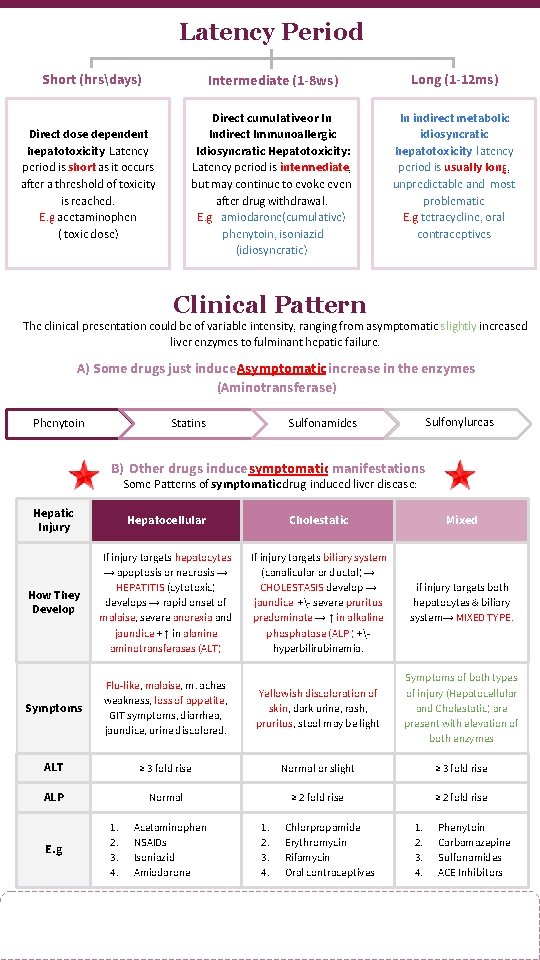
Latency Period Short (hrsdays) Direct dose dependent hepatotoxicity: Latency period is short as it occurs after a threshold of toxicity is reached. E. g acetaminophen ( toxic dose) Intermediate (1 -8 ws) Long (1 -12 ms) Direct cumulative or In Indirect Immunoallergic Idiosyncratic Hepatotoxicity: Latency period is intermediate, but may continue to evoke even after drug withdrawal. E. g -amiodarone(cumulative) -phenytoin, isoniazid (idiosyncratic) In indirect metabolic idiosyncratic hepatotoxicity: latency period is usually long, unpredictable and most problematic E. g tetracycline, oral contraceptives Clinical Pattern The clinical presentation could be of variable intensity, ranging from asymptomatic slightly increased liver enzymes to fulminant hepatic failure. A) Some drugs just induce Asymptomatic increase in the enzymes (Aminotransferase) Statins Phenytoin Sulfonylureas Sulfonamides B) Other drugs induce symptomatic manifestations Some Patterns of symptomatic drug-induced liver disease: Hepatic Injury Hepatocellular Cholestatic Mixed How They Develop If injury targets hepatocytes → apoptosis or necrosis → HEPATITIS (cytotoxic) develops → rapid onset of malaise, severe anorexia and jaundice + ↑ in alanine aminotransferases (ALT) If injury targets biliary system (canalicular or ductal) → CHOLESTASIS develop → jaundice +- severe pruritus predominate → ↑ in alkaline phosphatase (ALP ) +hyperbilirubinemia. if injury targets both hepatocytes & biliary system→ MIXED TYPE. Symptoms Flu-like, malaise, m. aches weakness, loss of appetite, GIT symptoms, diarrhea, jaundice, urine discolored. Yellowish discoloration of skin, dark urine, rash, pruritus, stool may be light Symptoms of both types of injury (Hepatocellular and Cholestatic) are present with elevation of both enzymes ALT ≥ 3 fold rise Normal or slight ≥ 3 fold rise ALP Normal ≥ 2 fold rise E. g 1. 2. 3. 4. Acetaminophen NSAIDs Isoniazid Amiodarone 1. 2. 3. 4. Chlorpropamide Erythromycin Rifamycin Oral contraceptives 1. 2. 3. 4. Phenytoin Carbamazepine Sulfonamides ACE Inhibitors
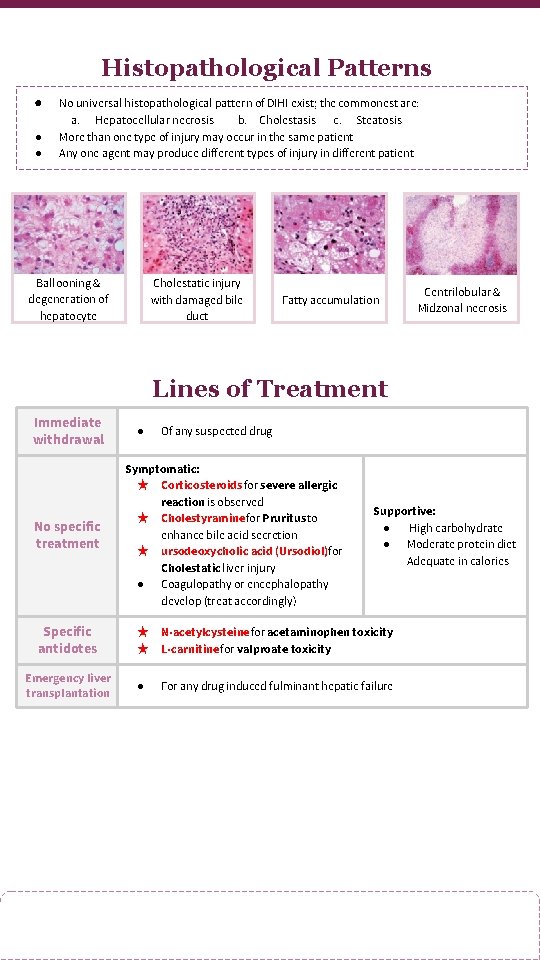
Histopathological Patterns ● ● ● No universal histopathological pattern of DIHI exist; the commonest are: a. Hepatocellular necrosis b. Cholestasis c. Steatosis More than one type of injury may occur in the same patient Any one agent may produce different types of injury in different patient Ballooning & degeneration of hepatocyte Cholestatic injury with damaged bile duct Fatty accumulation Centrilobular & Midzonal necrosis Lines of Treatment Immediate withdrawal No specific treatment ● Of any suspected drug Symptomatic: ★ Corticosteroids for severe allergic reaction is observed ★ Cholestyramine for Pruritus to enhance bile acid secretion ★ ursodeoxycholic acid (Ursodiol)for Cholestatic liver injury ● Coagulopathy or encephalopathy develop (treat accordingly) Supportive: ● High carbohydrate ● Moderate protein diet Adequate in calories Specific antidotes ★ ★ N-acetylcysteine for acetaminophen toxicity L-carnitine for valproate toxicity Emergency liver transplantation ● For any drug induced fulminant hepatic failure
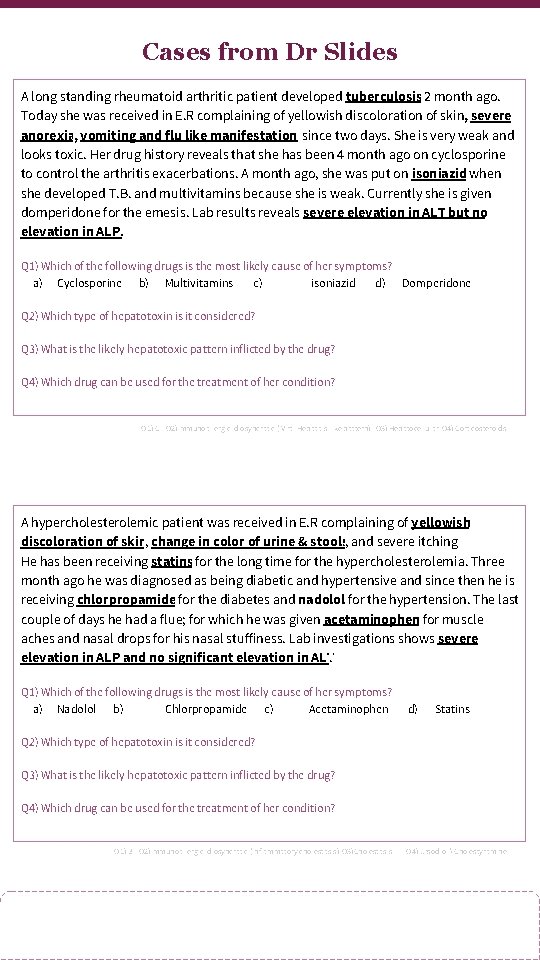
Cases from Dr Slides A long standing rheumatoid arthritic patient developed tuberculosis 2 month ago. Today she was received in E. R complaining of yellowish discoloration of skin, severe anorexia, vomiting and flu like manifestationssince two days. She is very weak and looks toxic. Her drug history reveals that she has been 4 month ago on cyclosporine to control the arthritis exacerbations. A month ago, she was put on isoniazid when she developed T. B. and multivitamins because she is weak. Currently she is given domperidone for the emesis. Lab results reveals severe elevation in ALT but no elevation in ALP. Q 1) Which of the following drugs is the most likely cause of her symptoms? a) Cyclosporine b) Multivitamins c) isoniazid d) Domperidone Q 2) Which type of hepatotoxin is it considered? Q 3) What is the likely hepatotoxic pattern inflicted by the drug? Q 4) Which drug can be used for the treatment of her condition? Q 1) C Q 2)Immunoallergic Idiosyncratic ( Viral Hepatitis-like pattern) Q 3) Hepatocellular Q 4) Corticosteroids A hypercholesterolemic patient was received in E. R complaining of yellowish discoloration of skin, change in color of urine & stools, and severe itching He has been receiving statins for the long time for the hypercholesterolemia. Three month ago he was diagnosed as being diabetic and hypertensive and since then he is receiving chlorpropamide for the diabetes and nadolol for the hypertension. The last couple of days he had a flue; for which he was given acetaminophen for muscle aches and nasal drops for his nasal stuffiness. Lab investigations shows severe elevation in ALP and no significant elevation in ALT. Q 1) Which of the following drugs is the most likely cause of her symptoms? a) Nadolol b) Chlorpropamide c) Acetaminophen d) Statins Q 2) Which type of hepatotoxin is it considered? Q 3) What is the likely hepatotoxic pattern inflicted by the drug? Q 4) Which drug can be used for the treatment of her condition? Q 1) B Q 2)Immunoallergic Idiosyncratic (Inflammatory cholestasis) Q 3)Cholestasis Q 4) Ursodiol Cholestyramine
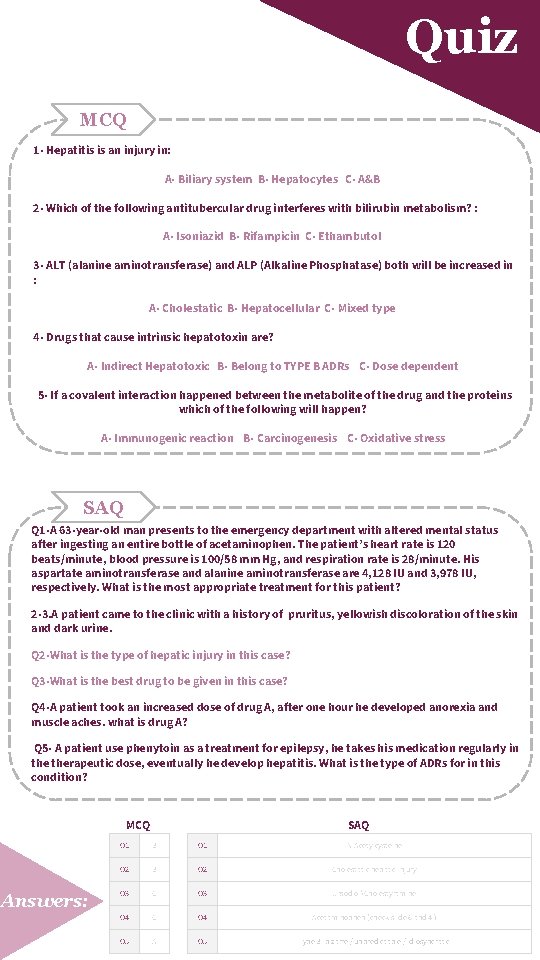
Quiz MCQ 1 - Hepatitis is an injury in: A- Biliary system B- Hepatocytes C- A&B 2 - Which of the following antitubercular drug interferes with bilirubin metabolism? : A- Isoniazid B- Rifampicin C- Ethambutol 3 - ALT (alanine aminotransferase) and ALP (Alkaline Phosphatase) both will be increased in : A- Cholestatic B- Hepatocellular C- Mixed type 4 - Drugs that cause intrinsic hepatotoxin are? A- Indirect Hepatotoxic B- Belong to TYPE B ADRs C- Dose dependent 5 - If a covalent interaction happened between the metabolite of the drug and the proteins which of the following will happen? A- Immunogenic reaction B- Carcinogenesis C- Oxidative stress SAQ Q 1 -A 63 -year-old man presents to the emergency department with altered mental status after ingesting an entire bottle of acetaminophen. The patient’s heart rate is 120 beats/minute, blood pressure is 100/58 mm Hg, and respiration rate is 28/minute. His aspartate aminotransferase and alanine aminotransferase are 4, 128 IU and 3, 978 IU, respectively. What is the most appropriate treatment for this patient? 2 -3. A patient came to the clinic with a history of pruritus, yellowish discoloration of the skin and dark urine. Q 2 -What is the type of hepatic injury in this case? Q 3 -What is the best drug to be given in this case? Q 4 -A patient took an increased dose of drug A, after one hour he developed anorexia and muscle aches. what is drug A? Q 5 - A patient use phenytoin as a treatment for epilepsy, he takes his medication regularly in therapeutic dose, eventually he develop hepatitis. What is the type of ADRs for in this condition? MCQ Answers: SAQ Q 1 B Q 1 N-Acetylcysteine Q 2 B Q 2 Cholestatic hepatic injury Q 3 C Q 3 UrsodiolCholestyramine Q 4 C Q 4 Acetaminophen (check slide 6 and 4 ) Q 5 A Q 5 Type B: bizarre / unpredictable / idiosyncratic

Share with us your ideas ! Good Luck , Future Doctors! Team Leaders: May Babaeer Zyad Aldosari This Amazing Work Was Done By: May Babaeer Nouf Al. Shammari Noura Al. Mazrou Shahad Al. Sahil
- Slides: 10