
HEPATITIS Iva Pitner Mentor A mega Horvat HEPATITIS
- Slides: 19
HEPATITIS Iva Pitner Mentor: A. Žmegač Horvat
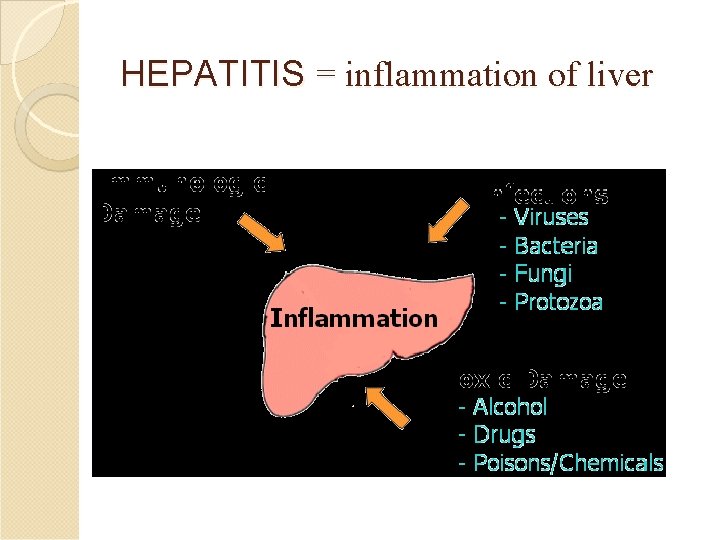
HEPATITIS = inflammation of liver
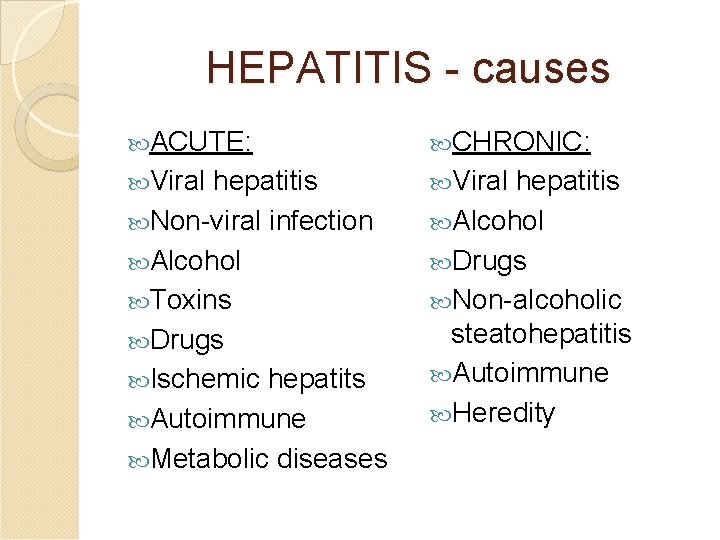
HEPATITIS - causes ACUTE: CHRONIC: Viral hepatitis Non-viral infection Alcohol Toxins Drugs Ischemic hepatits Autoimmune Metabolic diseases hepatitis Alcohol Drugs Non-alcoholic steatohepatitis Autoimmune Heredity
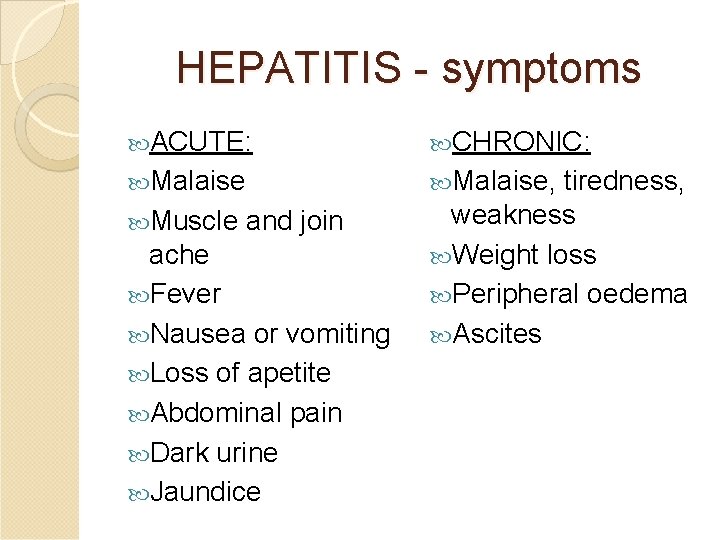
HEPATITIS - symptoms ACUTE: CHRONIC: Malaise, Muscle and join ache Fever Nausea or vomiting Loss of apetite Abdominal pain Dark urine Jaundice tiredness, weakness Weight loss Peripheral oedema Ascites
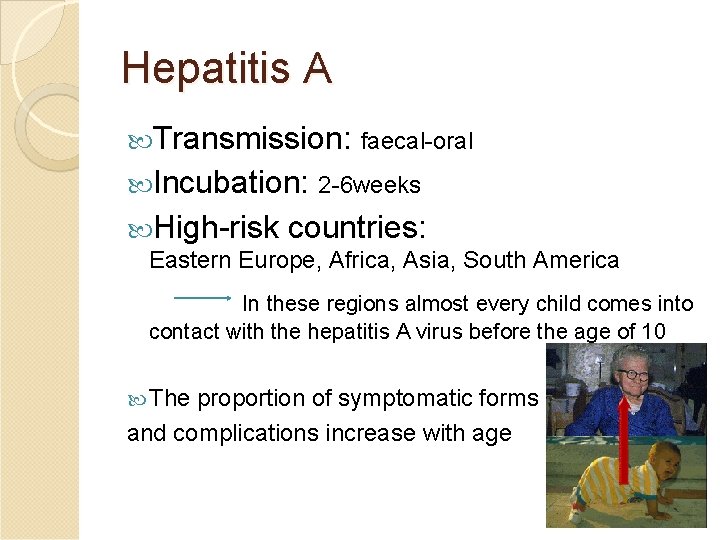
Hepatitis A Transmission: faecal-oral Incubation: 2 -6 weeks High-risk countries: Eastern Europe, Africa, Asia, South America In these regions almost every child comes into contact with the hepatitis A virus before the age of 10 The proportion of symptomatic forms and complications increase with age
• Diagnosis: AST, ALT, Igm, Ig. G • Prevention: hygienic measures passive immunization ( gives <3 months immunity to those at risk) active immunization • Treatment: nospecific, dietary food and long rest • CHRONIC LIVER DISEASE DOES NOT OCCUR!
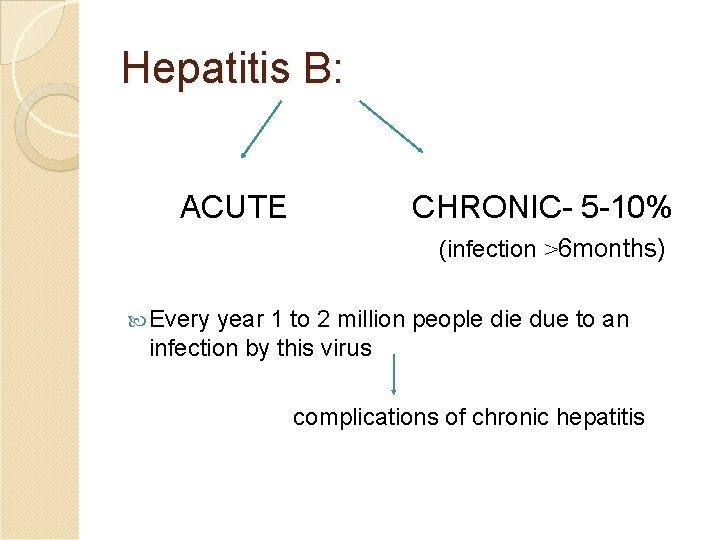
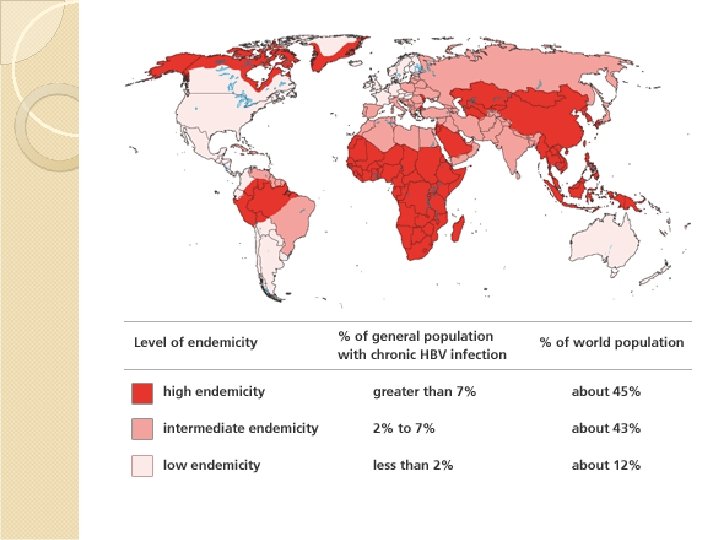
Hepatitis B: ACUTE CHRONIC- 5 -10% (infection >6 months) Every year 1 to 2 million people die due to an infection by this virus complications of chronic hepatitis
Transmission: blood and body fluids, iv drug abusers, sexual transmission Incubation: 1 -6 months Hepatitis B virus primarily interferes with functions of the liver by replicating in liver cells During HBV infection, the host immune response causes both hepatocellular damage and viral clearance
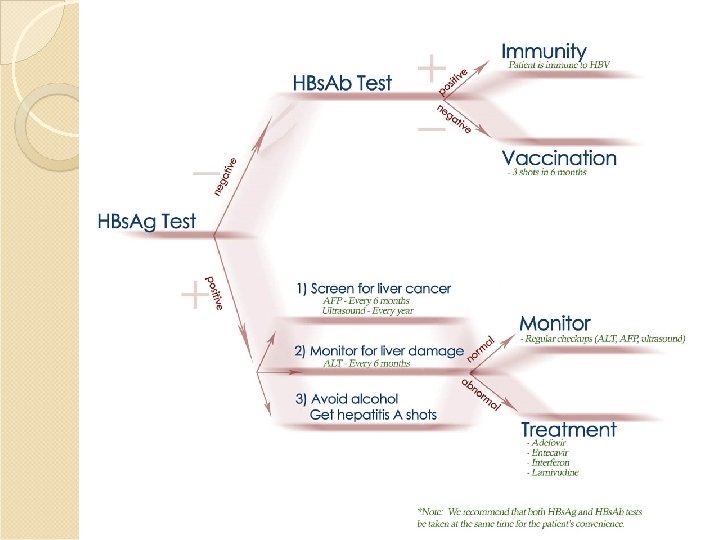
Diagnosis: HBs. Ag - 1 -6 months after exposure HBe. Ag - 1 -3 months after acute illness, high infectivity anti-HBc - past infection anti-HBs - implies vaccination HBs. Ag-positive for at least 6 months - hepatitis B carriers (may have chronic hepatitis B)
Prevention: vaccination Treatment: chronic- PAGinterferon-2α, antiviral drugs (lamivudine. . . )
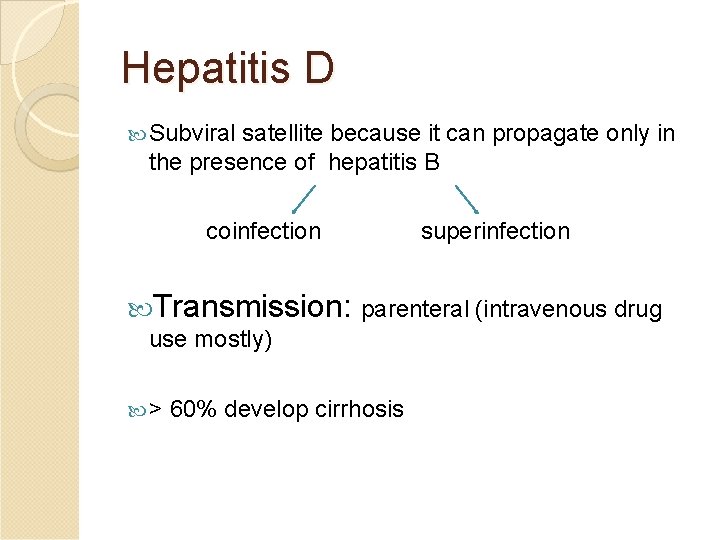
Hepatitis D Subviral satellite because it can propagate only in the presence of hepatitis B coinfection superinfection Transmission: parenteral (intravenous drug use mostly) > 60% develop cirrhosis
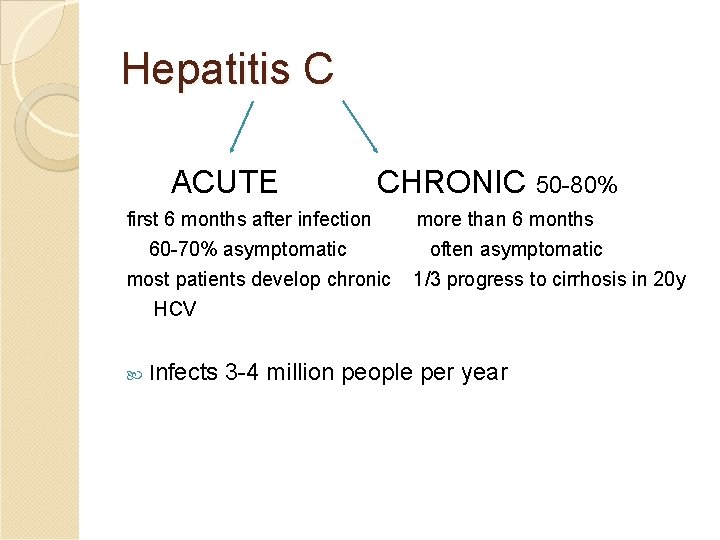
Hepatitis C ACUTE CHRONIC 50 -80% first 6 months after infection 60 -70% asymptomatic most patients develop chronic HCV Infects more than 6 months often asymptomatic 1/3 progress to cirrhosis in 20 y 3 -4 million people per year
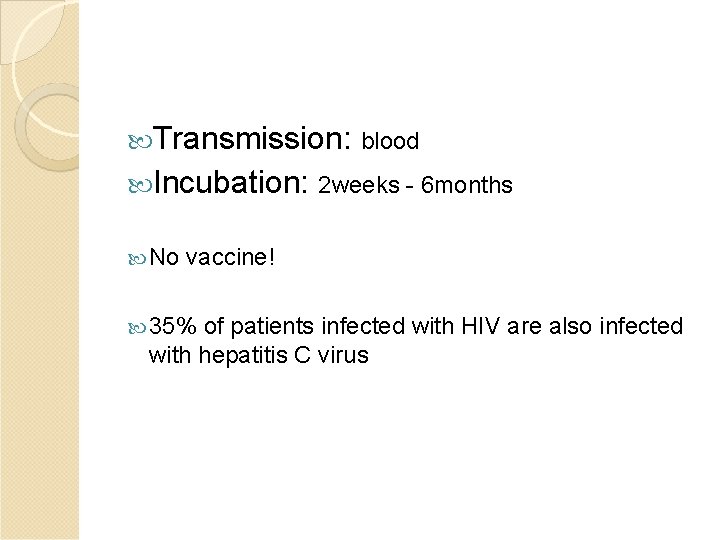
Transmission: blood Incubation: 2 weeks - 6 months No vaccine! 35% of patients infected with HIV are also infected with hepatitis C virus
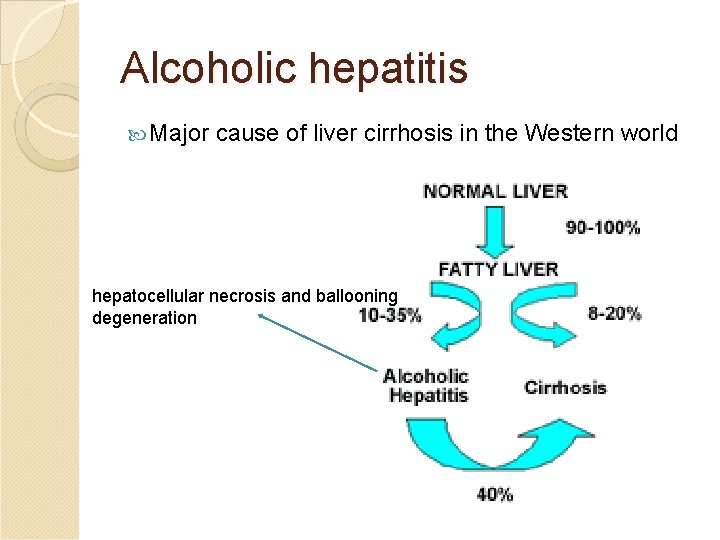
Alcoholic hepatitis Major cause of liver cirrhosis in the Western world hepatocellular necrosis and ballooning degeneration
References http: //www. emedicinehealth. com/hepatitis http: //en. wikipedia. org/ http: //www. hepatitis. org/hepatalcool_angl. htm Oxford handbook of clinical medicine