
Hepatitis B virus CDC website http www cdc
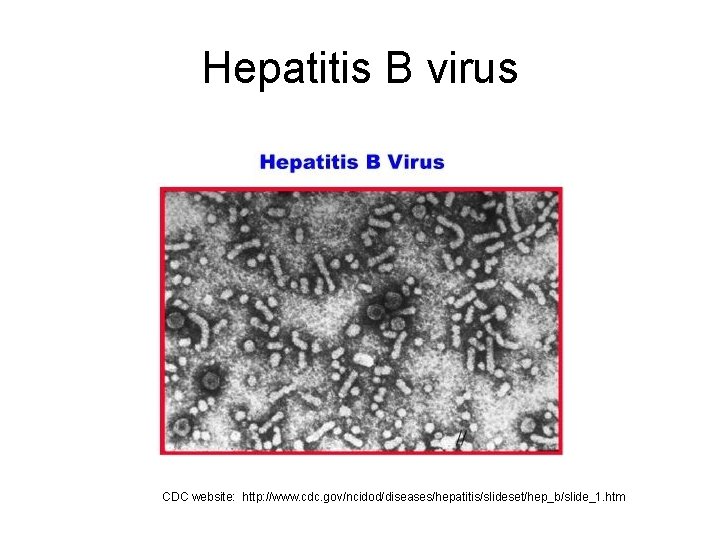
Hepatitis B virus CDC website: http: //www. cdc. gov/ncidod/diseases/hepatitis/slideset/hep_b/slide_1. htm
Key Features of Hepatitis B Virus Relevance • 250 million people infected worldwide. • In areas of Africa and East Asia, 50% of the population may be seropositive, 5 -15% may be chronically infected (carriers). • Carriers are 200 x more likely than non-carriers to develop primary hepatocellular carcinoma. • 300, 000 cases per year in the US; 4, 000 fatalities. 70 -90% of maternal-neonatal infections result in chronic infection.
Key Features of Hepatitis B Virus • Enveloped virion containing partial double-stranded circular DNA genome • Replication occurs through an RNA intermediate • Virus encodes and carries a reverse transcriptase • Virus encoded several antigenically and clinically predictive important proteins
Key Features of Hepatitis B Virus • Virus has a strict tissue tropism to the liver • Virus infected cells produce and release large amounts of HBs. Ag particles lacking DNA • Viral DNA can integrate into the host chromosome
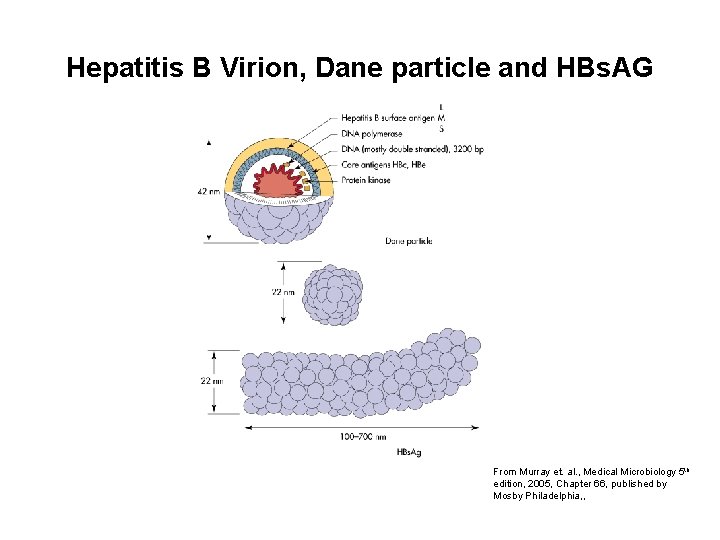
Hepatitis B Virion, Dane particle and HBs. AG From Murray et. al. , Medical Microbiology 5 th edition, 2005, Chapter 66, published by Mosby Philadelphia, ,
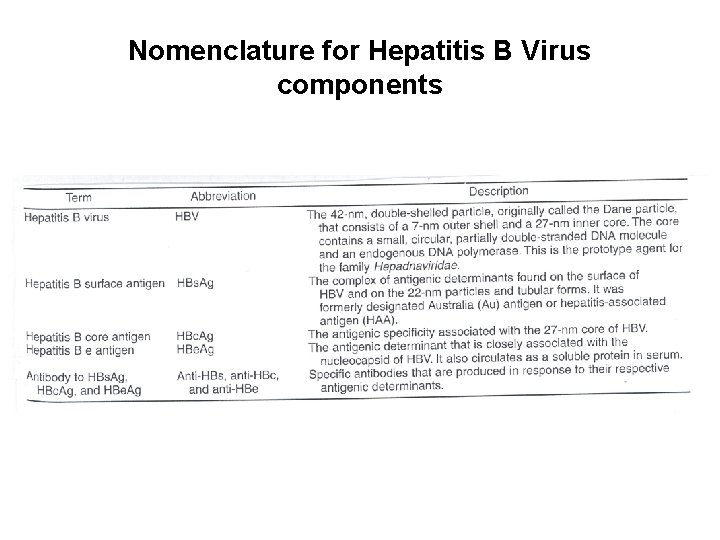
Nomenclature for Hepatitis B Virus components
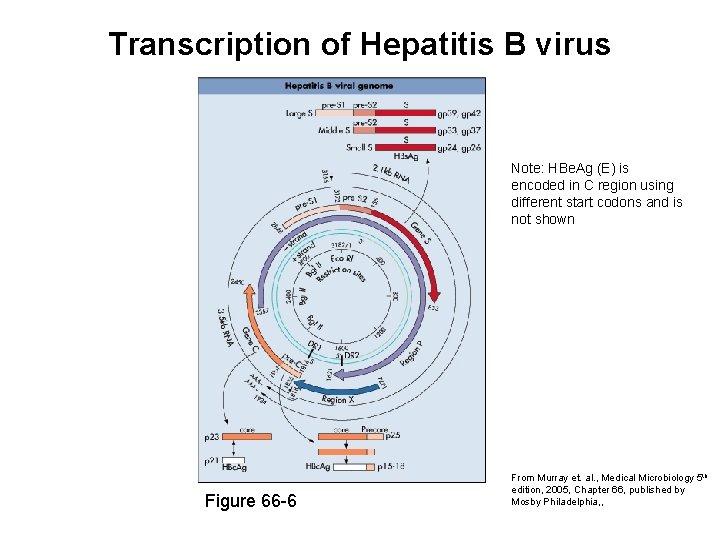
Transcription of Hepatitis B virus Note: HBe. Ag (E) is encoded in C region using different start codons and is not shown Figure 66 -6 From Murray et. al. , Medical Microbiology 5 th edition, 2005, Chapter 66, published by Mosby Philadelphia, ,
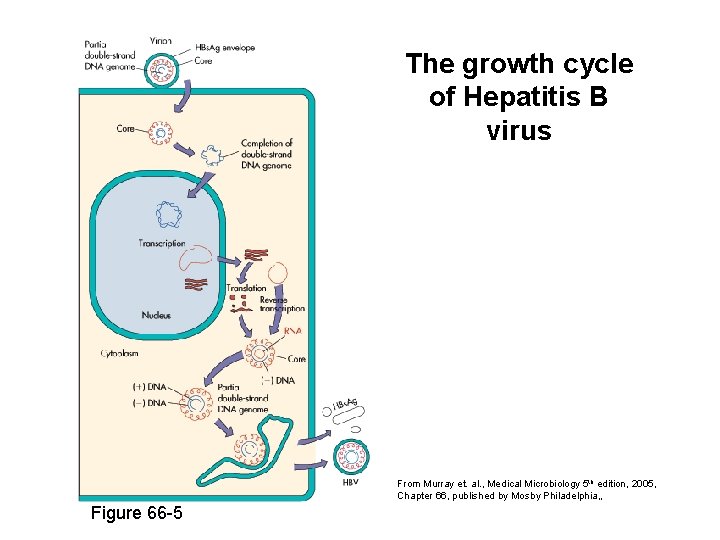
The growth cycle of Hepatitis B virus From Murray et. al. , Medical Microbiology 5 th edition, 2005, Chapter 66, published by Mosby Philadelphia, , Figure 66 -5
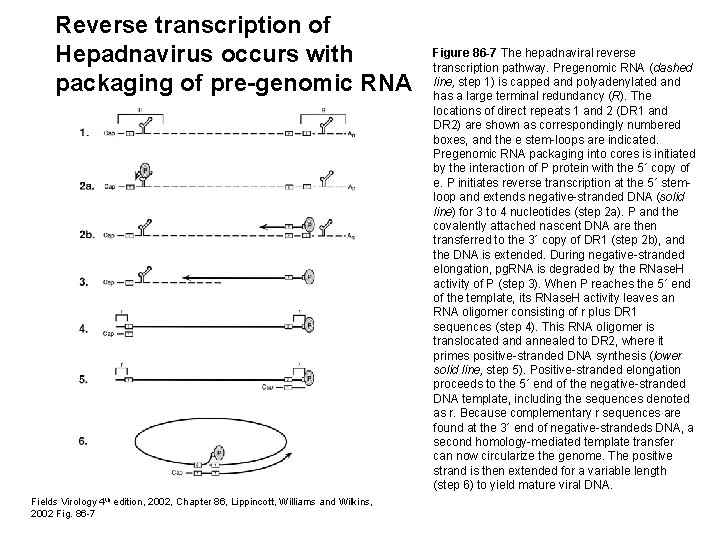
Reverse transcription of Hepadnavirus occurs with packaging of pre-genomic RNA Fields Virology 4 th edition, 2002, Chapter 86, Lippincott, Williams and Wilkins, 2002 Fig. 86 -7 Figure 86 -7 The hepadnaviral reverse transcription pathway. Pregenomic RNA (dashed line, step 1) is capped and polyadenylated and has a large terminal redundancy (R). The locations of direct repeats 1 and 2 (DR 1 and DR 2) are shown as correspondingly numbered boxes, and the e stem-loops are indicated. Pregenomic RNA packaging into cores is initiated by the interaction of P protein with the 5´ copy of e. P initiates reverse transcription at the 5´ stemloop and extends negative-stranded DNA (solid line) for 3 to 4 nucleotides (step 2 a). P and the covalently attached nascent DNA are then transferred to the 3´ copy of DR 1 (step 2 b), and the DNA is extended. During negative-stranded elongation, pg. RNA is degraded by the RNase. H activity of P (step 3). When P reaches the 5´ end of the template, its RNase. H activity leaves an RNA oligomer consisting of r plus DR 1 sequences (step 4). This RNA oligomer is translocated annealed to DR 2, where it primes positive-stranded DNA synthesis (lower solid line, step 5). Positive-stranded elongation proceeds to the 5´ end of the negative-stranded DNA template, including the sequences denoted as r. Because complementary r sequences are found at the 3´ end of negative-strandeds DNA, a second homology-mediated template transfer can now circularize the genome. The positive strand is then extended for a variable length (step 6) to yield mature viral DNA.
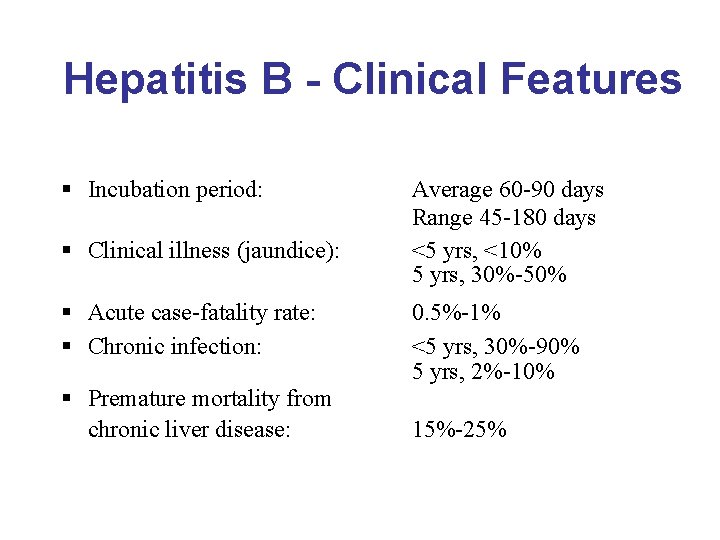
Hepatitis B - Clinical Features § Incubation period: § Clinical illness (jaundice): § Acute case-fatality rate: § Chronic infection: § Premature mortality from chronic liver disease: Average 60 -90 days Range 45 -180 days <5 yrs, <10% 5 yrs, 30%-50% 0. 5%-1% <5 yrs, 30%-90% 5 yrs, 2%-10% 15%-25%
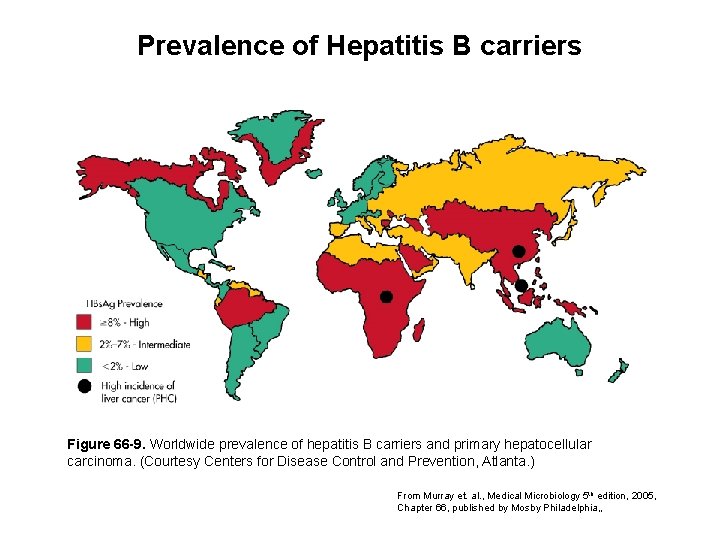
Prevalence of Hepatitis B carriers Figure 66 -9. Worldwide prevalence of hepatitis B carriers and primary hepatocellular carcinoma. (Courtesy Centers for Disease Control and Prevention, Atlanta. ) From Murray et. al. , Medical Microbiology 5 th edition, 2005, Chapter 66, published by Mosby Philadelphia, ,
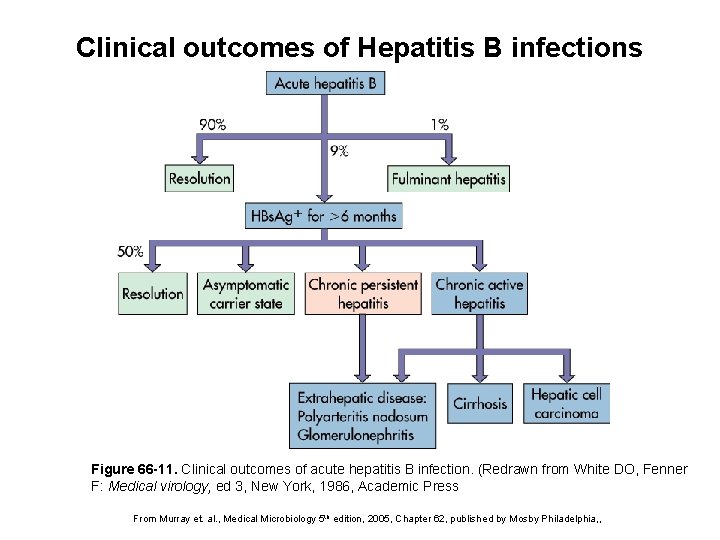
Clinical outcomes of Hepatitis B infections Figure 66 -11. Clinical outcomes of acute hepatitis B infection. (Redrawn from White DO, Fenner F: Medical virology, ed 3, New York, 1986, Academic Press From Murray et. al. , Medical Microbiology 5 th edition, 2005, Chapter 62, published by Mosby Philadelphia, ,

Immunological events of acute vs. chronic HBV infection A) Acute B) Chronic From Murray et. al. , Medical Microbiology 5 th edition, 2005, Chapter 66, published by Mosby Philadelphia, ,
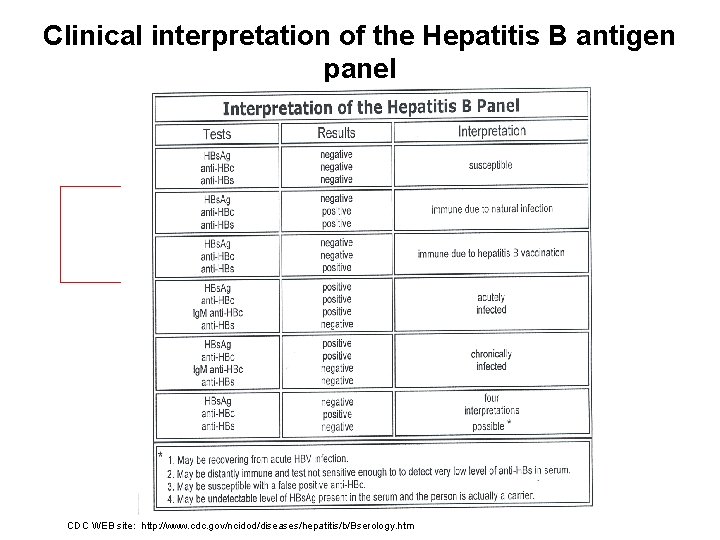
Clinical interpretation of the Hepatitis B antigen panel CDC WEB site: http: //www. cdc. gov/ncidod/diseases/hepatitis/b/Bserology. htm
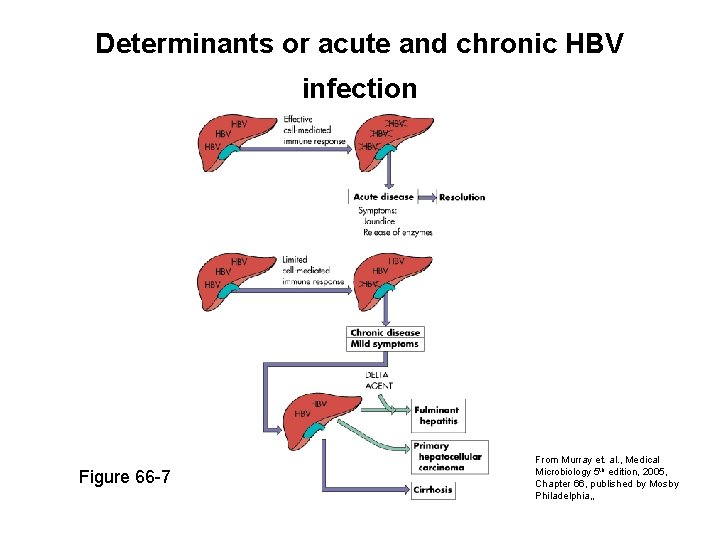
Determinants or acute and chronic HBV infection Figure 66 -7 From Murray et. al. , Medical Microbiology 5 th edition, 2005, Chapter 66, published by Mosby Philadelphia, ,
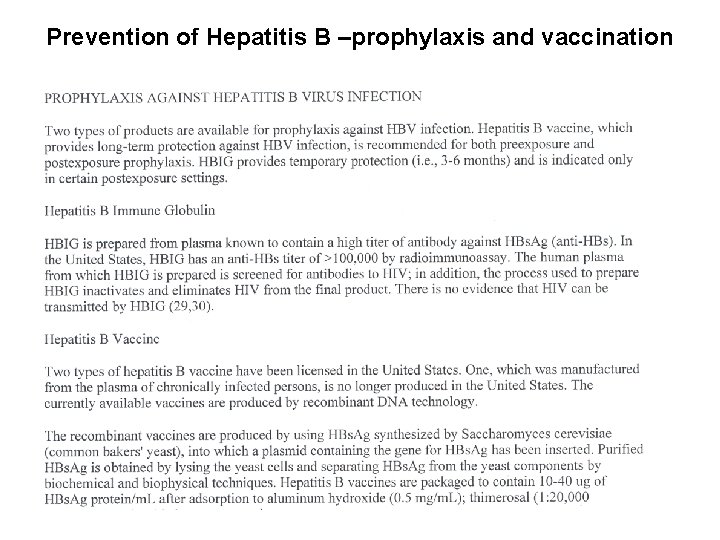
Prevention of Hepatitis B –prophylaxis and vaccination
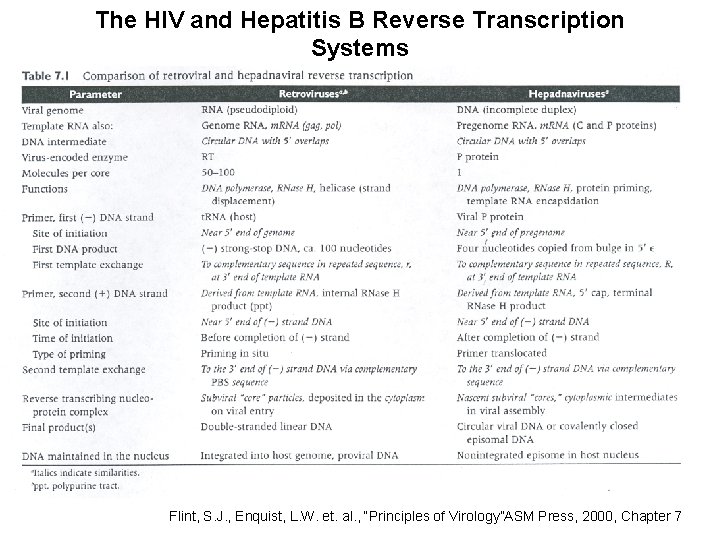
The HIV and Hepatitis B Reverse Transcription Systems Flint, S. J. , Enquist, L. W. et. al. , “Principles of Virology”ASM Press, 2000, Chapter 7
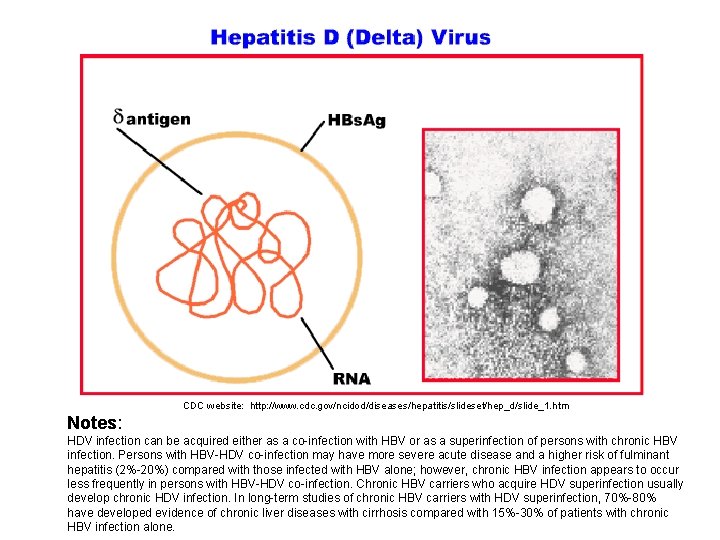
CDC website: http: //www. cdc. gov/ncidod/diseases/hepatitis/slideset/hep_d/slide_1. htm Notes: HDV infection can be acquired either as a co-infection with HBV or as a superinfection of persons with chronic HBV infection. Persons with HBV-HDV co-infection may have more severe acute disease and a higher risk of fulminant hepatitis (2%-20%) compared with those infected with HBV alone; however, chronic HBV infection appears to occur less frequently in persons with HBV-HDV co-infection. Chronic HBV carriers who acquire HDV superinfection usually develop chronic HDV infection. In long-term studies of chronic HBV carriers with HDV superinfection, 70%-80% have developed evidence of chronic liver diseases with cirrhosis compared with 15%-30% of patients with chronic HBV infection alone.
Key features of Hepatitis Delta Virus • Single stranded, self complementary RNA, encapsidated in Hbs. Ag • Small, amorphous particle • RNA encodes one protein: delta antigen • Replicates via RNA directed RNA synthesis, catalyzed by host RNA polymerase II
Key features of Hepatitis Delta Virus • Delta antigen required for replication, role unknown • Dependent on HBV as a “helper” • HBV provides Hbs. Ag • May be acquired as co-infection with HBV, or superinfection of HBV infection • Exacerbates HBV induced disease
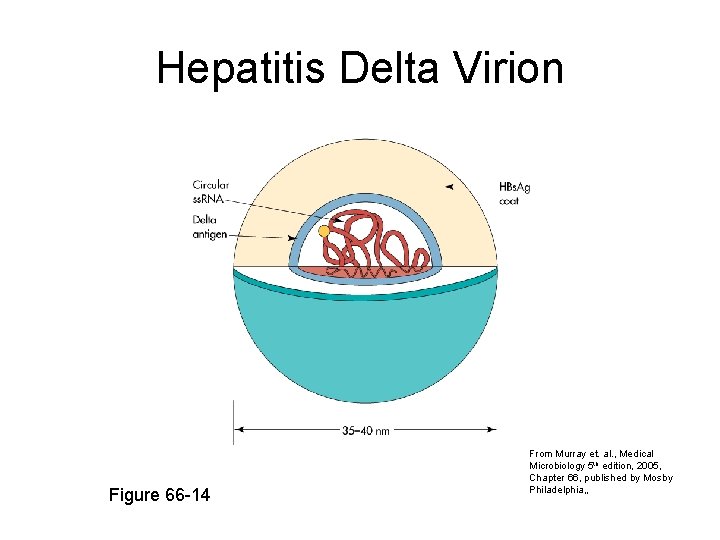
Hepatitis Delta Virion Figure 66 -14 From Murray et. al. , Medical Microbiology 5 th edition, 2005, Chapter 66, published by Mosby Philadelphia, ,
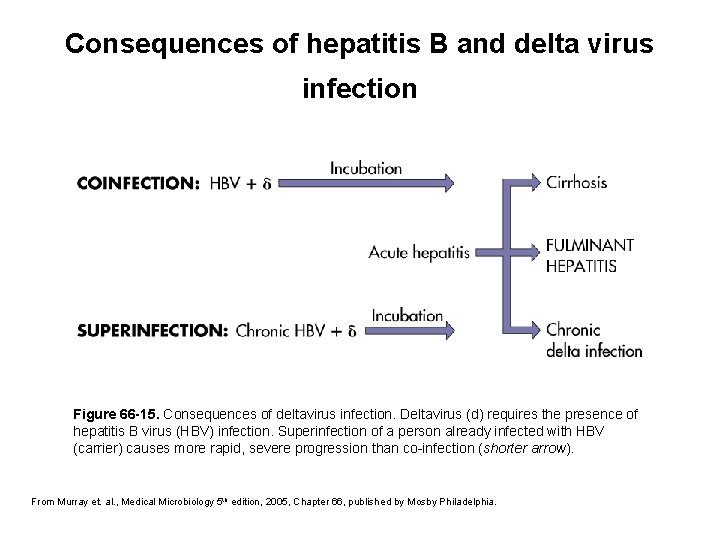
Consequences of hepatitis B and delta virus infection Figure 66 -15. Consequences of deltavirus infection. Deltavirus (d) requires the presence of hepatitis B virus (HBV) infection. Superinfection of a person already infected with HBV (carrier) causes more rapid, severe progression than co-infection (shorter arrow). From Murray et. al. , Medical Microbiology 5 th edition, 2005, Chapter 66, published by Mosby Philadelphia.
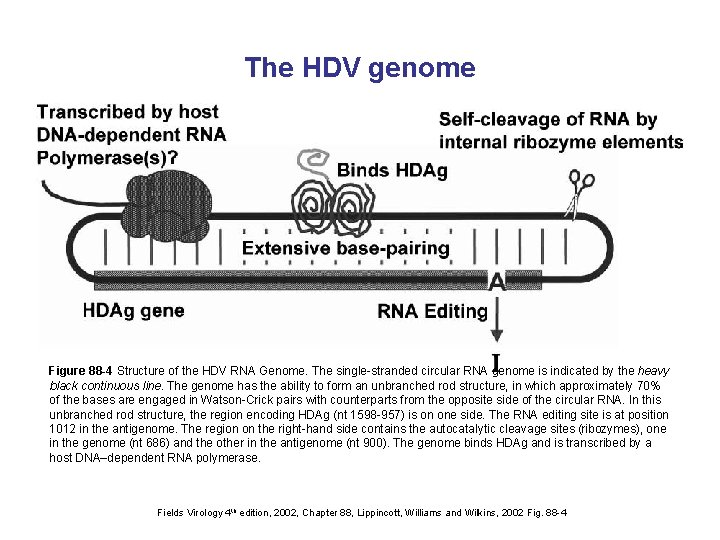
The HDV genome Figure 88 -4 Structure of the HDV RNA Genome. The single-stranded circular RNA genome is indicated by the heavy black continuous line. The genome has the ability to form an unbranched rod structure, in which approximately 70% of the bases are engaged in Watson-Crick pairs with counterparts from the opposite side of the circular RNA. In this unbranched rod structure, the region encoding HDAg (nt 1598 -957) is on one side. The RNA editing site is at position 1012 in the antigenome. The region on the right-hand side contains the autocatalytic cleavage sites (ribozymes), one in the genome (nt 686) and the other in the antigenome (nt 900). The genome binds HDAg and is transcribed by a host DNA–dependent RNA polymerase. Fields Virology 4 th edition, 2002, Chapter 88, Lippincott, Williams and Wilkins, 2002 Fig. 88 -4
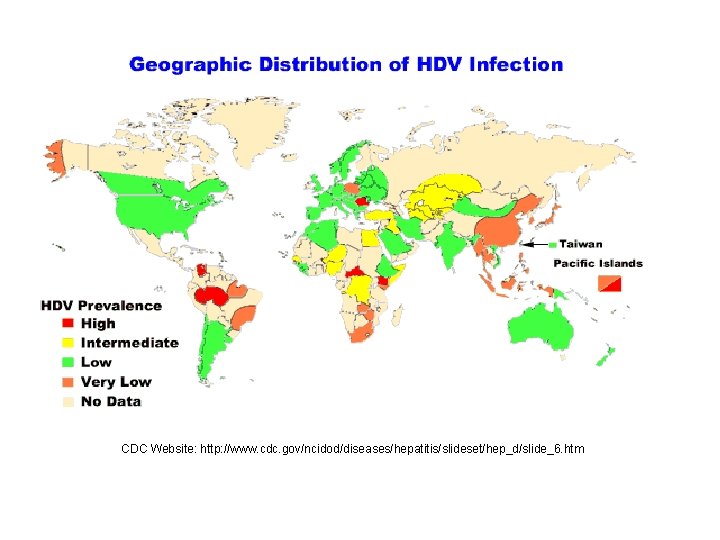
CDC Website: http: //www. cdc. gov/ncidod/diseases/hepatitis/slideset/hep_d/slide_6. htm
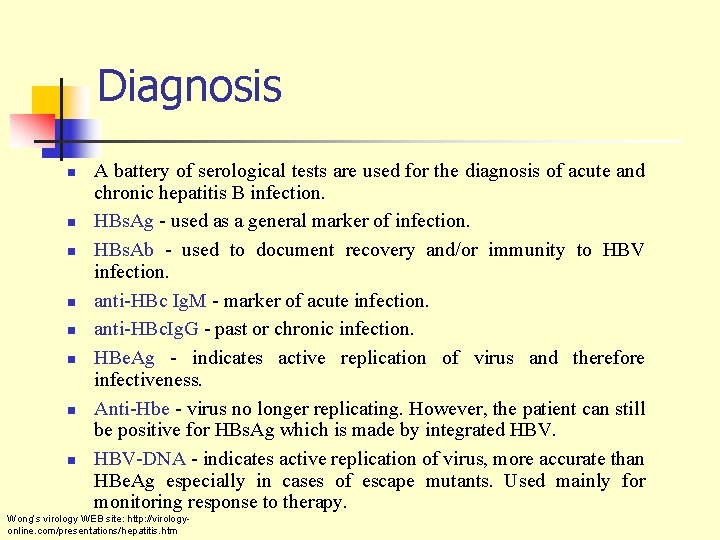
Diagnosis n n n n A battery of serological tests are used for the diagnosis of acute and chronic hepatitis B infection. HBs. Ag - used as a general marker of infection. HBs. Ab - used to document recovery and/or immunity to HBV infection. anti-HBc Ig. M - marker of acute infection. anti-HBc. Ig. G - past or chronic infection. HBe. Ag - indicates active replication of virus and therefore infectiveness. Anti-Hbe - virus no longer replicating. However, the patient can still be positive for HBs. Ag which is made by integrated HBV-DNA - indicates active replication of virus, more accurate than HBe. Ag especially in cases of escape mutants. Used mainly for monitoring response to therapy. Wong’s virology WEB site: http: //virologyonline. com/presentations/hepatitis. htm
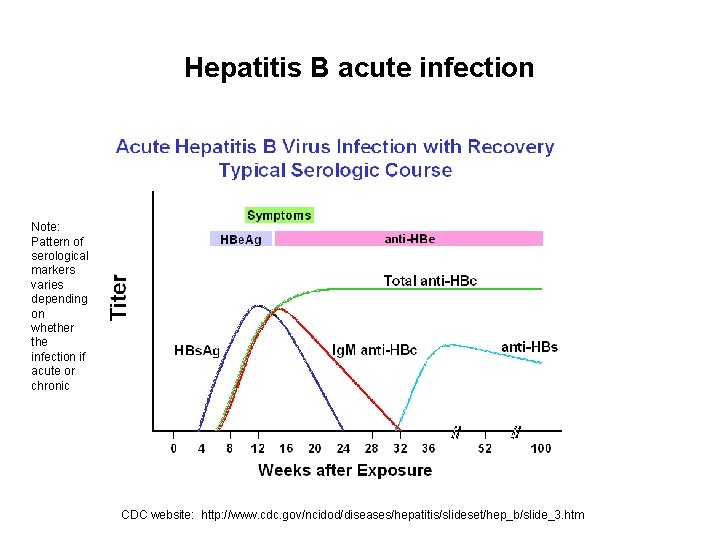
Hepatitis B acute infection Note: Pattern of serological markers varies depending on whether the infection if acute or chronic CDC website: http: //www. cdc. gov/ncidod/diseases/hepatitis/slideset/hep_b/slide_3. htm
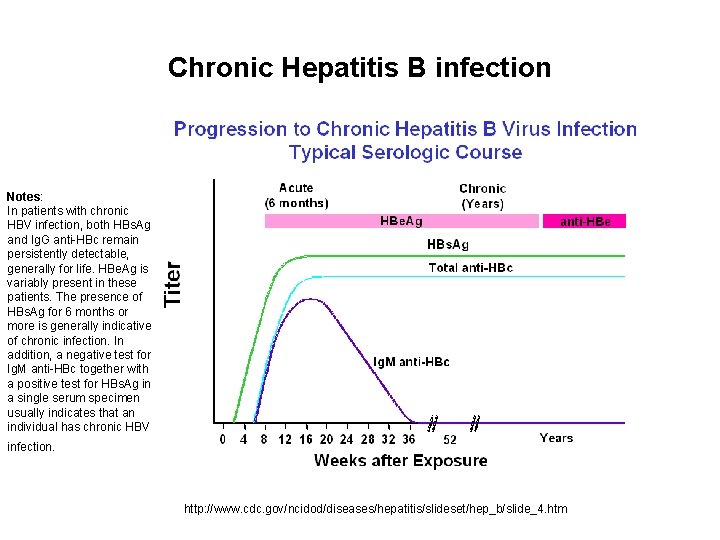
Chronic Hepatitis B infection Notes: In patients with chronic HBV infection, both HBs. Ag and Ig. G anti-HBc remain persistently detectable, generally for life. HBe. Ag is variably present in these patients. The presence of HBs. Ag for 6 months or more is generally indicative of chronic infection. In addition, a negative test for Ig. M anti-HBc together with a positive test for HBs. Ag in a single serum specimen usually indicates that an individual has chronic HBV infection. http: //www. cdc. gov/ncidod/diseases/hepatitis/slideset/hep_b/slide_4. htm
- Slides: 27