
Hepatitis B Training information for support workers What
Hepatitis B Training information for support workers
What is Hepatitis B? • Hepatitis B a viral infection. • It attacks the liver and can cause both chronic and acute disease. • It is caused by a virus that's spread through blood and body fluids. • It is spread through contact with blood or other body fluids of someone who is infected • An estimated 257 million people in the world are living with hepatitis B virus infection • Hepatitis B is an important occupational hazard for health workers. • It can be prevented by correct use of Protective equipment and infection control
Acute vs. Chronic • Becoming infected with Hepatitis B can result in either an acute or chronic infection. • When someone is first infected, it is called an acute infection or new infection. Most people are able to fight the virus with no symptoms. • Some adults are unable to get rid of the virus after six months and are diagnosed with “chronic infection. ”
How do you Contract it? The Hepatitis B virus is found in blood and bodily fluids. Infections of hepatitis B occur only if the virus is able to enter the blood stream and reach the liver. The virus can survive outside the body for at least 7 days and still be able to cause infection.
Through Blood Direct contact with infected blood can transmit the hepatitis B virus through: • Punctures of the skin with blood-contaminated sharps. • Direct contact with open sores of an infected person. • Splashes to skin that has scratches, abrasions, burns, or even minor rashes. • Splashes to mucous membranes in the mouth, nose, or eyes.
Through Saliva • Saliva of people with Hepatitis B can contain the Hepatitis B virus, but in very low concentrations compared with blood. • This means bite injuries can also spread Hepatitis B. • Intimate kissing may hold risks as blood could be present eg bleeding gums or ulcer. • There are no reports of infection from sharing of utensils.
Through Other Bodily Fluids • Hepatitis B is found in semen and vaginal secretions. The virus can be transmitted during unprotected sexual intercourse, and from mother to infant during birth. • Hepatitis B is not transmitted by casual contact eg sneezing, coughing, holding hugs, hugging, kissing [peck], breastfeeding etc
![You CANNOT catch it through • • Kissing [unless blood present] Holding hands Hugging](http://slidetodoc.com/presentation_image_h2/7a77cd19aec2b9115228b3671d5fe375/image-8.jpg "You CANNOT catch it through • • Kissing [unless blood present] Holding hands Hugging")
You CANNOT catch it through • • Kissing [unless blood present] Holding hands Hugging Coughing Sneezing Breastfeeding Sharing crockery and utensils
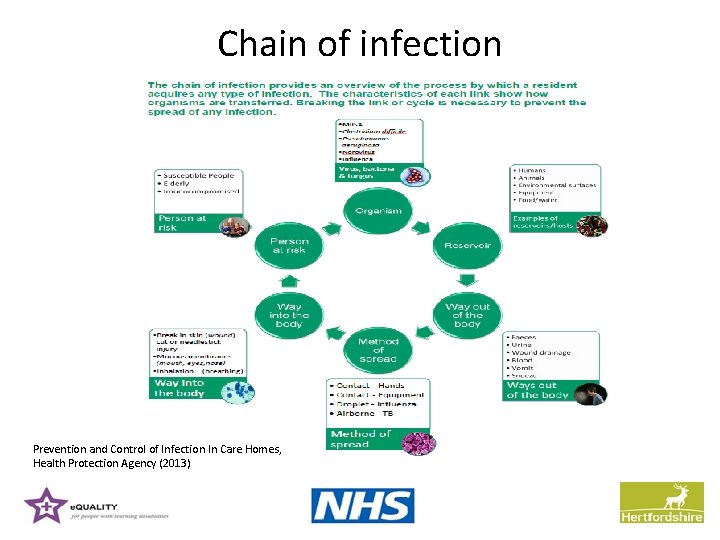
Chain of infection Prevention and Control of Infection In Care Homes, Health Protection Agency (2013)
Symptoms of Hepatitis B • Flu-like symptoms, including tiredness, a fever, and general aches and pains • Loss of appetite • Feeling or being sick • Diarrhoea • Abdominal (Stomach) pain • Yellowing of the skin and eyes (jaundice)
Measures to prevent infection • Infection Control • Personal Protective Equipment • Vaccination
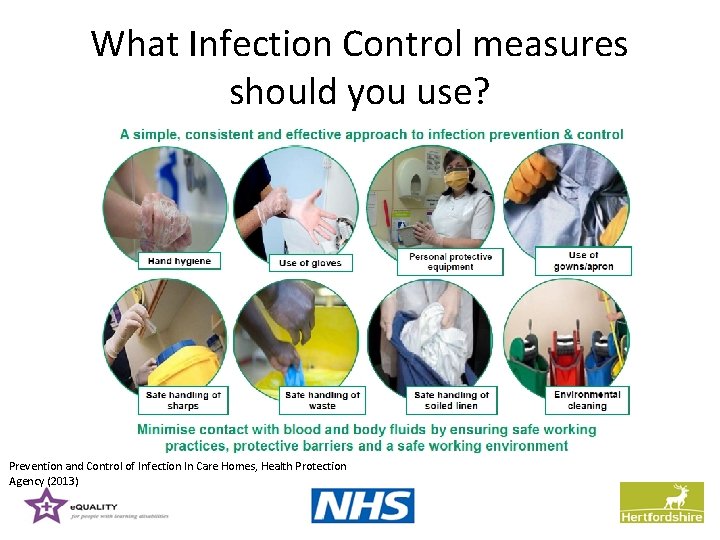
What Infection Control measures should you use? Prevention and Control of Infection In Care Homes, Health Protection Agency (2013)
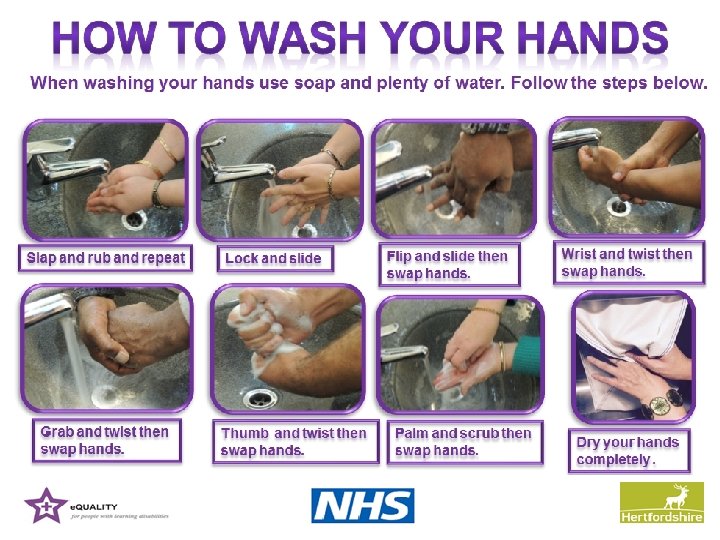
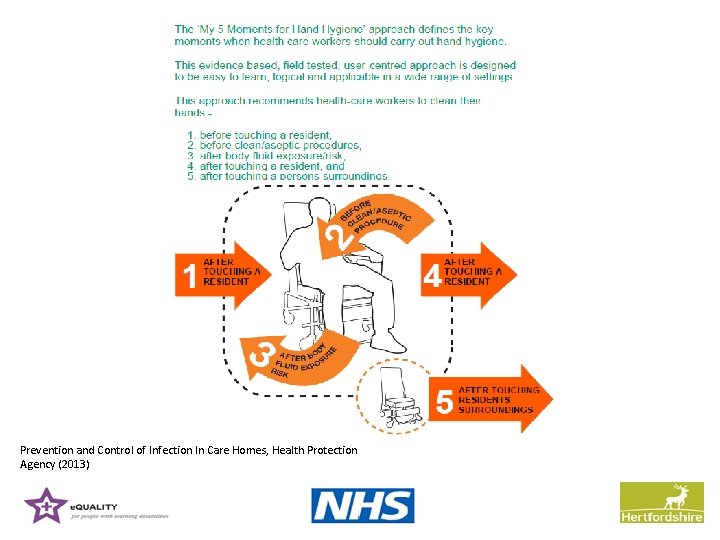
Prevention and Control of Infection In Care Homes, Health Protection Agency (2013)
Treatment for Hepatitis B depends on how long you've been infected for: • If you've been exposed to the virus in the past few days, emergency treatment can help stop you becoming infected. • If you've only had the infection for a few weeks or months (acute hepatitis B), you may only need treatment to relieve your symptoms while your body fights off the infection. • If you've had the infection for more than six months (chronic hepatitis B), you may be offered treatment with medicines that can keep the virus under control and reduce the risk of liver damage. Chronic Hepatitis B often requires long-term or lifelong treatment and regular monitoring to check for any further liver problems.
Resources • • • Prevention and Control of Infection In Care Homes, Health Protection Agency (2013) https: //assets. publishing. service. gov. uk/government/uploads/system/upl oads/attachment_data/file/214930/Care-Home-Resource-Summary. Feb 14 -2013. pdf http: //www. hepb. org/what-is-hepatitis-b/what-is-hepb/acute-vs-chronic/ https: //www. nhs. uk/conditions/hepatitis-b/ https: //www. gov. uk/government/collections/hepatitis-b-guidance-dataand-analysis
- Slides: 16