
Hepatitis B Medical contextual personal issues Bill Cayley
Hepatitis B Medical, contextual & personal issues Bill Cayley MD MDiv
Learning objectives Learners should be able to: • Describe clinical assessment of a patient with Hepatitis B • Discuss patient-centered management of viral hepatitis – Social and contextual issues – Personal issues
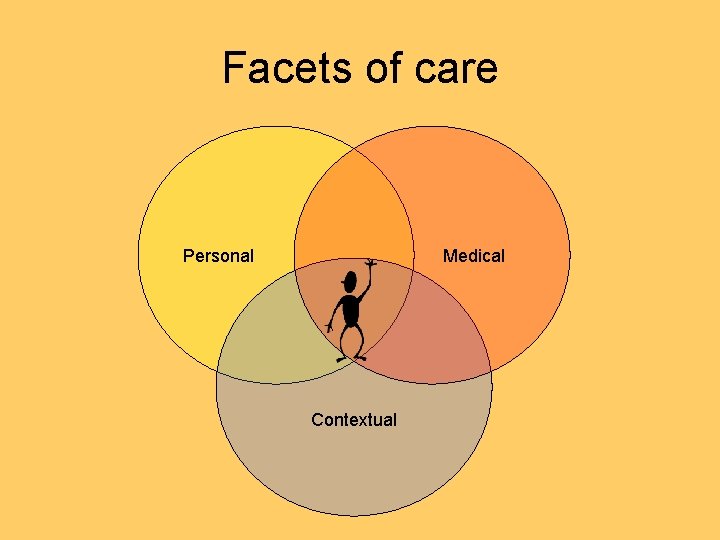
Facets of care Personal Medical Contextual
Mr Wilbur L 56 y. o. male with bloating & reflux – Bloating x 1 year, worse over past few weeks, more discomfort and reflux – Denies nausea, diarrhea or constipation – Concerned about Hepatitis B
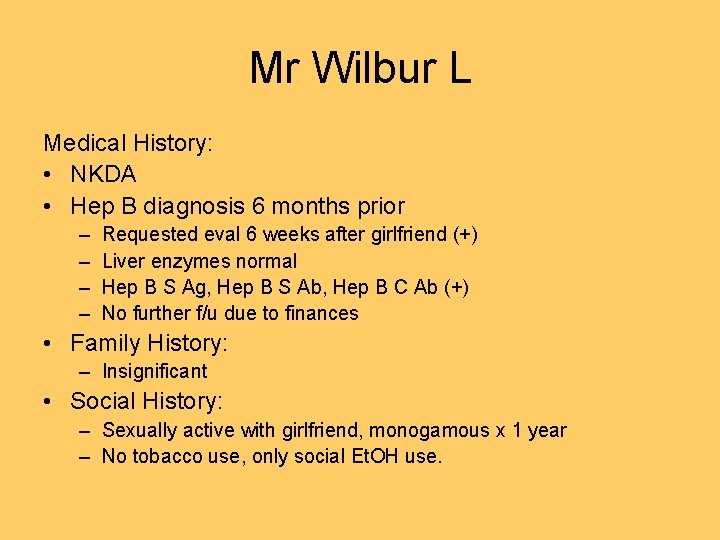
Mr Wilbur L Medical History: • NKDA • Hep B diagnosis 6 months prior – – Requested eval 6 weeks after girlfriend (+) Liver enzymes normal Hep B S Ag, Hep B S Ab, Hep B C Ab (+) No further f/u due to finances • Family History: – Insignificant • Social History: – Sexually active with girlfriend, monogamous x 1 year – No tobacco use, only social Et. OH use.
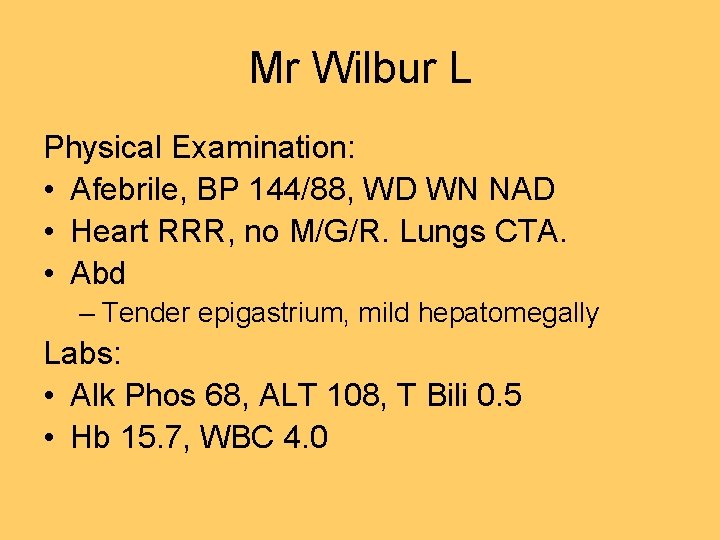
Mr Wilbur L Physical Examination: • Afebrile, BP 144/88, WD WN NAD • Heart RRR, no M/G/R. Lungs CTA. • Abd – Tender epigastrium, mild hepatomegally Labs: • Alk Phos 68, ALT 108, T Bili 0. 5 • Hb 15. 7, WBC 4. 0
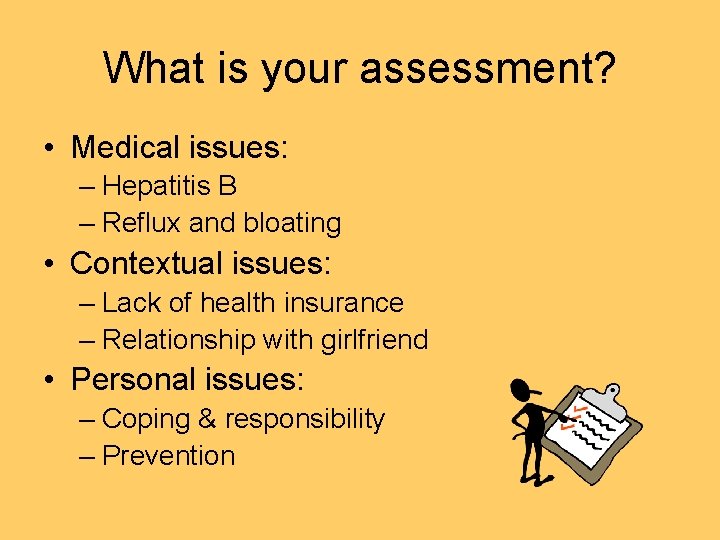
What is your assessment? • Medical issues: – Hepatitis B – Reflux and bloating • Contextual issues: – Lack of health insurance – Relationship with girlfriend • Personal issues: – Coping & responsibility – Prevention
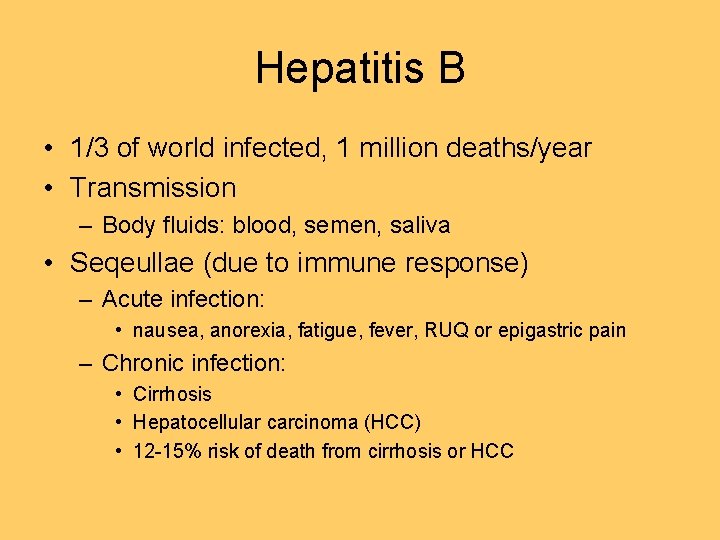
Hepatitis B • 1/3 of world infected, 1 million deaths/year • Transmission – Body fluids: blood, semen, saliva • Seqeullae (due to immune response) – Acute infection: • nausea, anorexia, fatigue, fever, RUQ or epigastric pain – Chronic infection: • Cirrhosis • Hepatocellular carcinoma (HCC) • 12 -15% risk of death from cirrhosis or HCC

Hepatitis B serology Interpretation of the Hepatitis B Panel Tests Results Interpretation HBs. Ag anti-HBc anti-HBs Negative Susceptible HBs. Ag anti-HBc anti-HBs Negative Positive Immune due to natural infection HBs. Ag anti-HBc anti-HBs Negative Positive HBs. Ag anti-HBc Ig. M anti-HBc anti-HBs Positive Negative HBs. Ag anti-HBc anti-HBs Negative Positive negative Immune due to hepatitis B vaccination** Acutely infected Chronically infected Four interpretations possible * Source: Centers for Disease Control (http: //www. cdc. gov/ncidod/diseases/hepatitis/b/Bserology. htm)
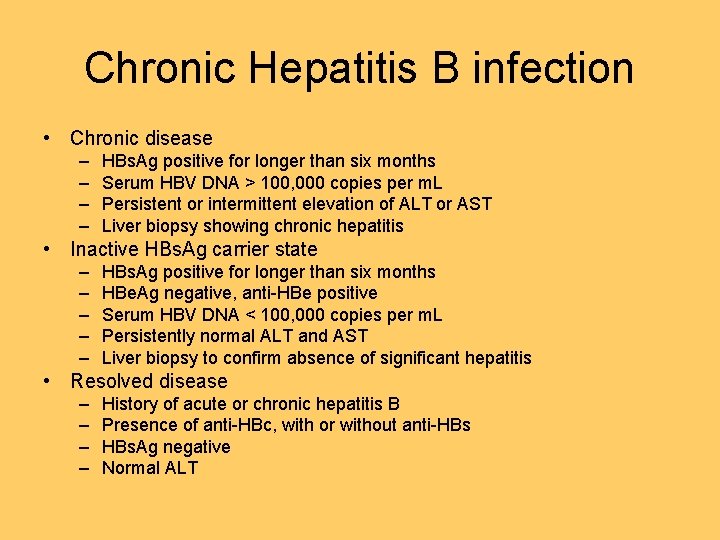
Chronic Hepatitis B infection • Chronic disease – – HBs. Ag positive for longer than six months Serum HBV DNA > 100, 000 copies per m. L Persistent or intermittent elevation of ALT or AST Liver biopsy showing chronic hepatitis • Inactive HBs. Ag carrier state – – – HBs. Ag positive for longer than six months HBe. Ag negative, anti-HBe positive Serum HBV DNA < 100, 000 copies per m. L Persistently normal ALT and AST Liver biopsy to confirm absence of significant hepatitis • Resolved disease – – History of acute or chronic hepatitis B Presence of anti-HBc, with or without anti-HBs HBs. Ag negative Normal ALT
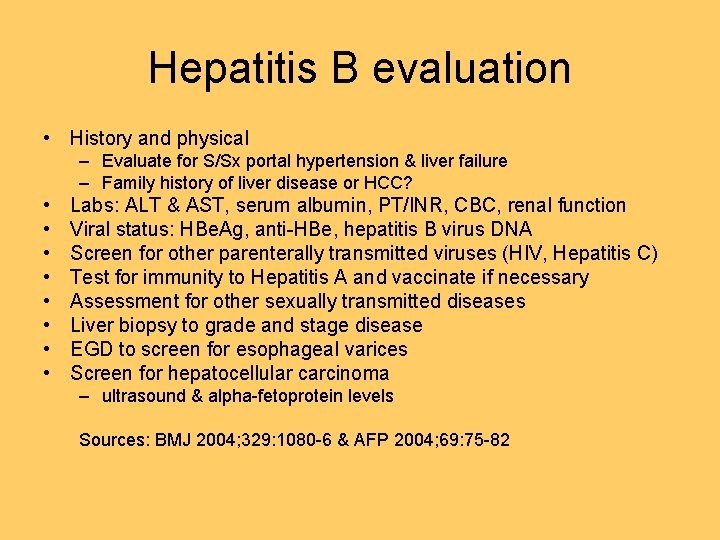
Hepatitis B evaluation • History and physical – Evaluate for S/Sx portal hypertension & liver failure – Family history of liver disease or HCC? • • Labs: ALT & AST, serum albumin, PT/INR, CBC, renal function Viral status: HBe. Ag, anti-HBe, hepatitis B virus DNA Screen for other parenterally transmitted viruses (HIV, Hepatitis C) Test for immunity to Hepatitis A and vaccinate if necessary Assessment for other sexually transmitted diseases Liver biopsy to grade and stage disease EGD to screen for esophageal varices Screen for hepatocellular carcinoma – ultrasound & alpha-fetoprotein levels Sources: BMJ 2004; 329: 1080 -6 & AFP 2004; 69: 75 -82
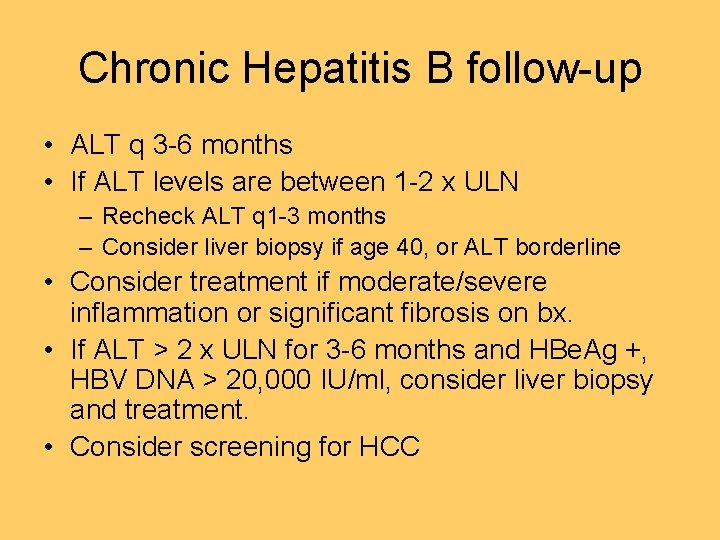
Chronic Hepatitis B follow-up • ALT q 3 -6 months • If ALT levels are between 1 -2 x ULN – Recheck ALT q 1 -3 months – Consider liver biopsy if age 40, or ALT borderline • Consider treatment if moderate/severe inflammation or significant fibrosis on bx. • If ALT > 2 x ULN for 3 -6 months and HBe. Ag +, HBV DNA > 20, 000 IU/ml, consider liver biopsy and treatment. • Consider screening for HCC
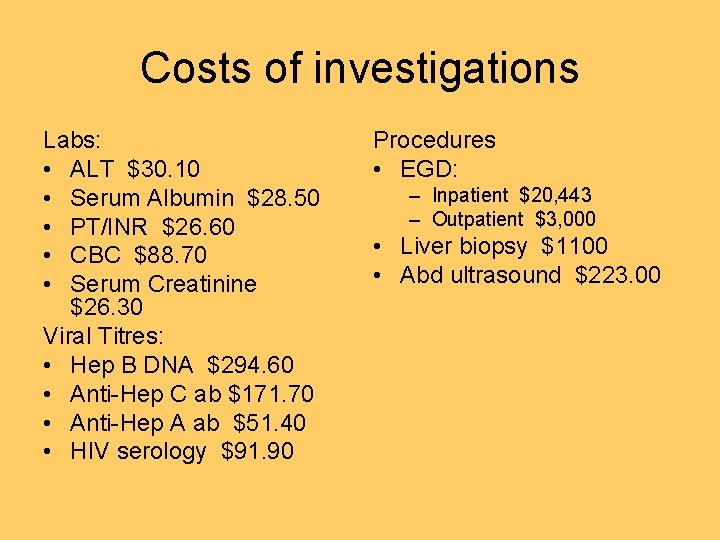
Costs of investigations Labs: • ALT $30. 10 • Serum Albumin $28. 50 • PT/INR $26. 60 • CBC $88. 70 • Serum Creatinine $26. 30 Viral Titres: • Hep B DNA $294. 60 • Anti-Hep C ab $171. 70 • Anti-Hep A ab $51. 40 • HIV serology $91. 90 Procedures • EGD: – Inpatient $20, 443 – Outpatient $3, 000 • Liver biopsy $1100 • Abd ultrasound $223. 00
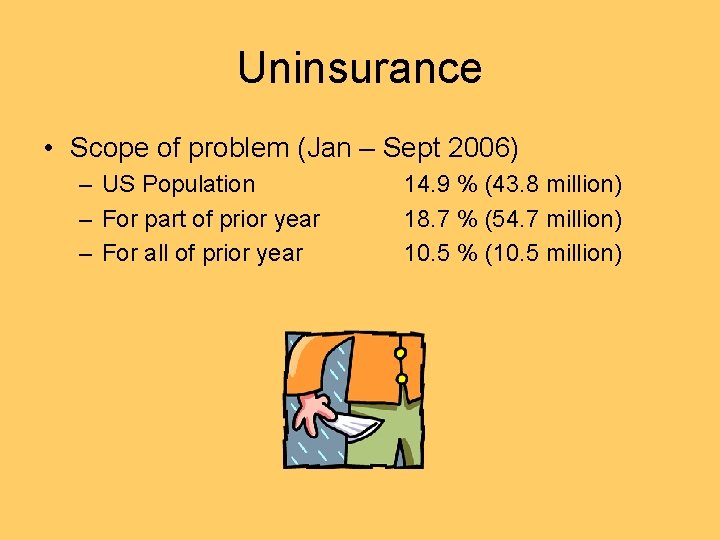
Uninsurance • Scope of problem (Jan – Sept 2006) – US Population – For part of prior year – For all of prior year 14. 9 % (43. 8 million) 18. 7 % (54. 7 million) 10. 5 % (10. 5 million)
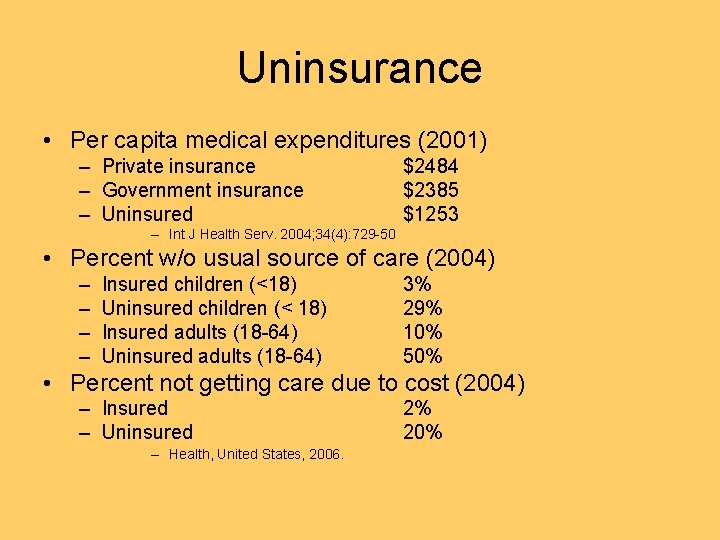
Uninsurance • Per capita medical expenditures (2001) – Private insurance – Government insurance – Uninsured $2484 $2385 $1253 – Int J Health Serv. 2004; 34(4): 729 -50 • Percent w/o usual source of care (2004) – – Insured children (<18) Uninsured children (< 18) Insured adults (18 -64) Uninsured adults (18 -64) 3% 29% 10% 50% • Percent not getting care due to cost (2004) – Insured – Uninsured – Health, United States, 2006. 2% 20%
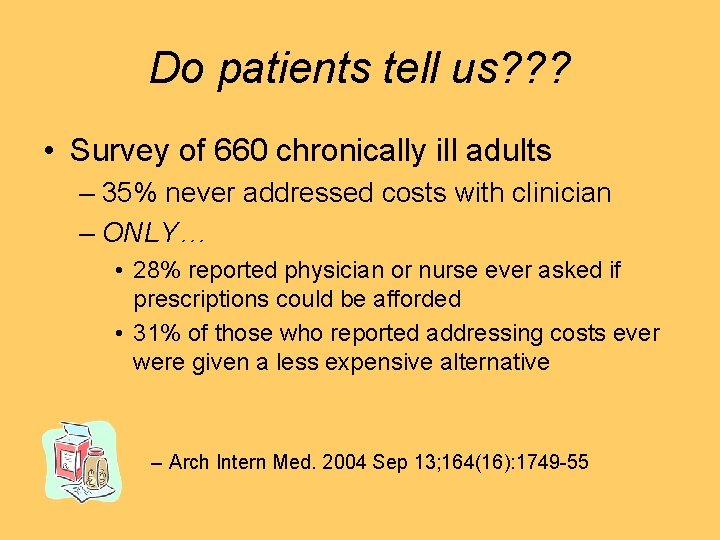
Do patients tell us? ? ? • Survey of 660 chronically ill adults – 35% never addressed costs with clinician – ONLY… • 28% reported physician or nurse ever asked if prescriptions could be afforded • 31% of those who reported addressing costs ever were given a less expensive alternative – Arch Intern Med. 2004 Sep 13; 164(16): 1749 -55
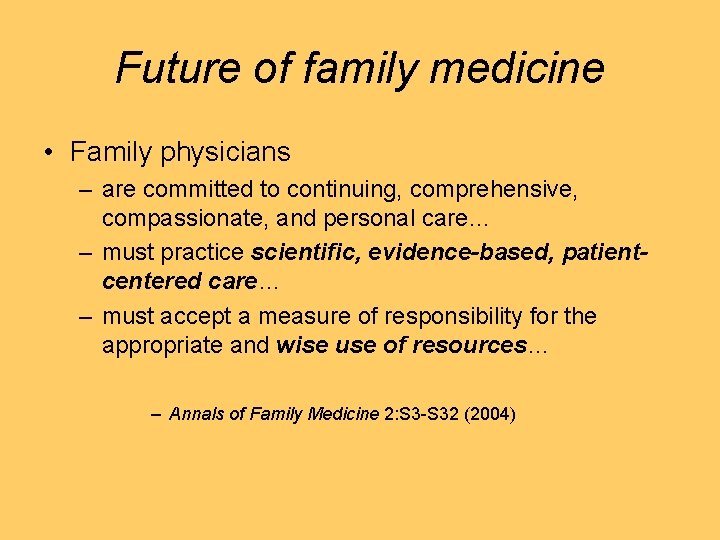
Future of family medicine • Family physicians – are committed to continuing, comprehensive, compassionate, and personal care… – must practice scientific, evidence-based, patientcentered care… – must accept a measure of responsibility for the appropriate and wise use of resources… – Annals of Family Medicine 2: S 3 -S 32 (2004)
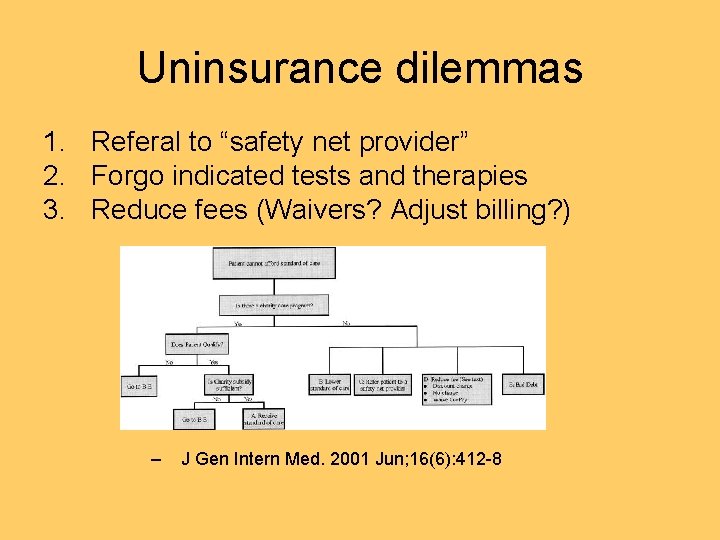
Uninsurance dilemmas 1. Referal to “safety net provider” 2. Forgo indicated tests and therapies 3. Reduce fees (Waivers? Adjust billing? ) – J Gen Intern Med. 2001 Jun; 16(6): 412 -8
Uninsured care: guidelines 1. 2. 3. 4. Ask about financial concerns Be knowledgeable about resources available Take into account the loss of continuity of care Physician may be forced to provide a nonstandard approach 5. Physicians should actively work to lower the cost of their services 6. Physicians must address issues of social justice outside of the office – J Gen Intern Med. 2001 Jun; 16(6): 412 -8
Moral career of poor patients Survey of 94 free clinic patients in France Attendance Experiences I. Occasional Humiliation Pragmatism II. Regular Initiation to regular care Settling into care-receiving Demanding for care III. Inconsistent attendance Instrumentalisation of services Crisis of marginality – Soc Sci Med. 2005 Sep; 61(6): 1369 -80
Interpersonal issues Those w/ Hep B should: • Have sexual contacts vaccinated • Use barrier protection for sexual intercourse • Not share toothbrushes or razors • Cover open cuts and scratches • Clean blood spills with detergent or bleach • Not donate blood, organs or sperms Those w Hep B can: • Participate in all activities including contact sports • Share food, utensils or kiss others AND • Should not be excluded from daycare or school • Should not be isolated from other children Source: Chronic Hepatitis B, AASLD
Personal issues • Finances – Insurance – Testing & treatment • Coping with chronic disease – Lifestyle decisions • Relationships – Blame? Responsibility? • Mental health – Depression?
Discussion Medical care? • Recommendations for further care? • Cost-effective management? Context • Discussion of options? • Would you: Refer? Forgo tests? Reduce fees? Discussing impact on: • Relationships? Lifestyle? Health?
Screening for Hepatitis B • Household & sexual contacts of HBs. Ag-(+) persons • Persons who have ever injected drugs • Persons with multiple sex partners or h/o STDs • Men who have sex with men • Inmates of correctional facilities • Individuals with chronically elevated ALT or AST • Individuals infected with HCV or HIV • Patients undergoing renal dialysis • All pregnant women
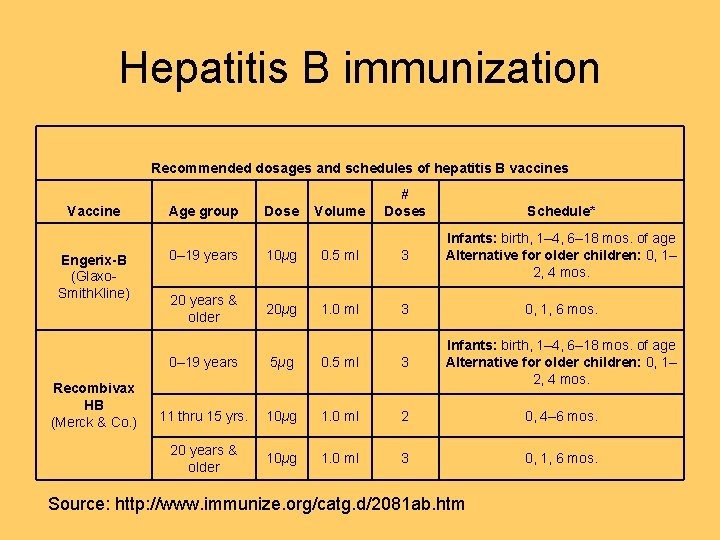
Hepatitis B immunization Recommended dosages and schedules of hepatitis B vaccines Vaccine Engerix-B (Glaxo. Smith. Kline) Recombivax HB (Merck & Co. ) Age group Dose Volume # Doses Schedule* 0– 19 years 10µg 0. 5 ml 3 Infants: birth, 1– 4, 6– 18 mos. of age Alternative for older children: 0, 1– 2, 4 mos. 20 years & older 20µg 1. 0 ml 3 0, 1, 6 mos. 0– 19 years 5µg 0. 5 ml 3 Infants: birth, 1– 4, 6– 18 mos. of age Alternative for older children: 0, 1– 2, 4 mos. 11 thru 15 yrs. 10µg 1. 0 ml 2 0, 4– 6 mos. 20 years & older 10µg 1. 0 ml 3 0, 1, 6 mos. Source: http: //www. immunize. org/catg. d/2081 ab. htm
Physician resources • Hepatitis B. Am Fam Physician. 2004; 69: 75 -82 (http: //www. aafp. org/afp/20040101/75. html) • Aggarwal R, Ranjan P. Preventing and treating hepatitis B infection. BMJ. 2004; 329: 1080 -6. (http: //www. bmj. com/cgi/content/full/329/7474/1080) • Lok AS, Mc. Mahon BJ. Chronic hepatitis B. Alexandria (VA): American Association for the Study of Liver Diseases; 2004. (https: //www. aasld. org/eweb/docs/chronichep_B. pdf) • CDC: Viral Hepatitis B (http: //www. cdc. gov/ncidod/diseases/hepatitis/b/) • Johns Hopkins Gastroenterology & Hepatology Resource Center (www. hopkins-gi. org)
Patient resources • Hepatitis B (Family. Doctor. org) (http: //familydoctor. org/online/famdocen/home/common/i nfections/hepatitis/032. html) • Hepatitis B (Patient. UK) (http: //www. patient. co. uk/showdoc/27000754/) • CDC: Viral Hepatitis B (http: //www. cdc. gov/ncidod/diseases/hepatitis/b/)

THANKS!
- Slides: 28