
Hepatitis B Global Epidemiology and Prevention Strategies Components
Hepatitis B: Global Epidemiology and Prevention Strategies
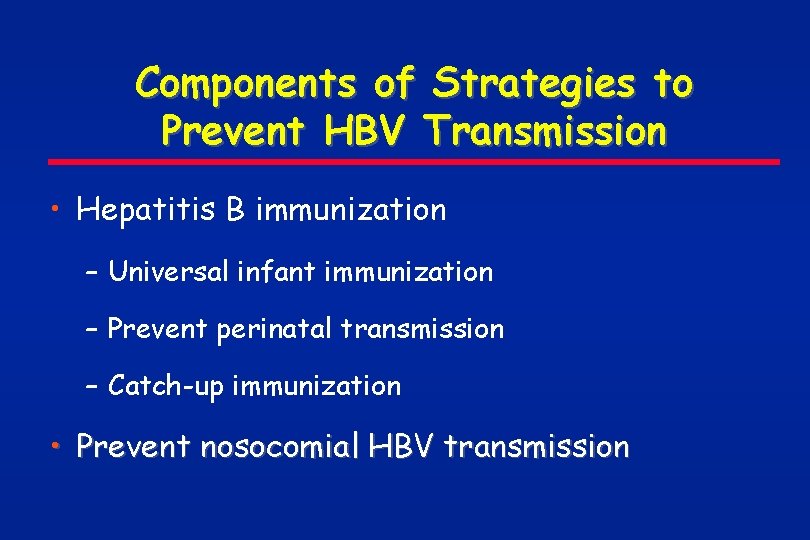
Components of Strategies to Prevent HBV Transmission • Hepatitis B immunization – Universal infant immunization – Prevent perinatal transmission – Catch-up immunization • Prevent nosocomial HBV transmission

Hepatitis B Virus Infection Global Disease Burden • 2, 000 million have markers of current or past infection • 350 million have chronic infection – 15%-25% will die from chronic liver disease (liver cancer and cirrhosis) – about 750, 000 deaths per year
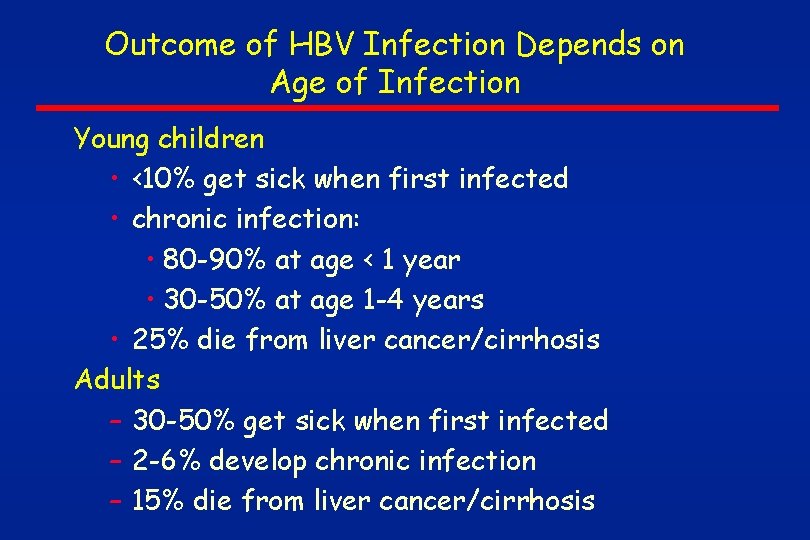
Outcome of HBV Infection Depends on Age of Infection Young children • <10% get sick when first infected • chronic infection: • 80 -90% at age < 1 year • 30 -50% at age 1 -4 years • 25% die from liver cancer/cirrhosis Adults – 30 -50% get sick when first infected – 2 -6% develop chronic infection – 15% die from liver cancer/cirrhosis

Geographic Distribution of Chronic HBV Infection HBs. Ag Prevalence 8% - High 2 -7% - Intermediate <2% - Low
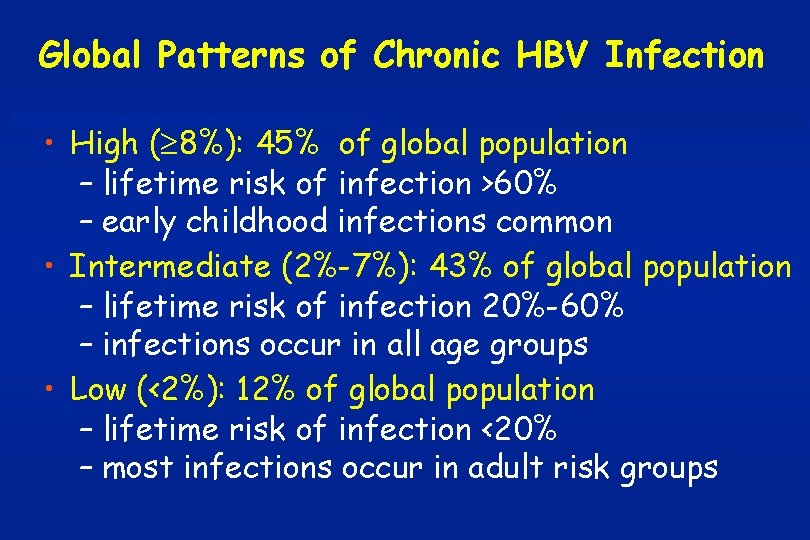
Global Patterns of Chronic HBV Infection • High ( 8%): 45% of global population – lifetime risk of infection >60% – early childhood infections common • Intermediate (2%-7%): 43% of global population – lifetime risk of infection 20%-60% – infections occur in all age groups • Low (<2%): 12% of global population – lifetime risk of infection <20% – most infections occur in adult risk groups
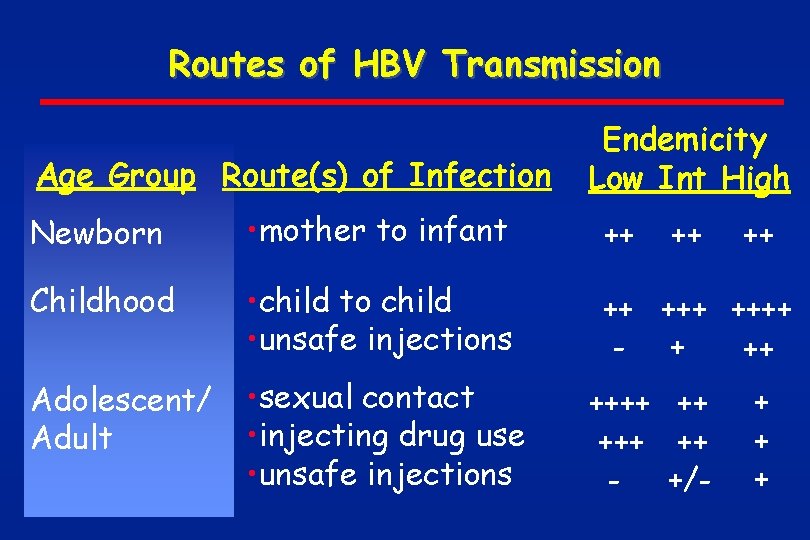
Routes of HBV Transmission Age Group Route(s) of Infection Endemicity Low Int High Newborn • mother to infant ++ Childhood • child to child • unsafe injections ++ ++++ - + ++ Adolescent/ Adult • sexual contact • injecting drug use • unsafe injections ++ ++ +++ ++ - +/- ++ +
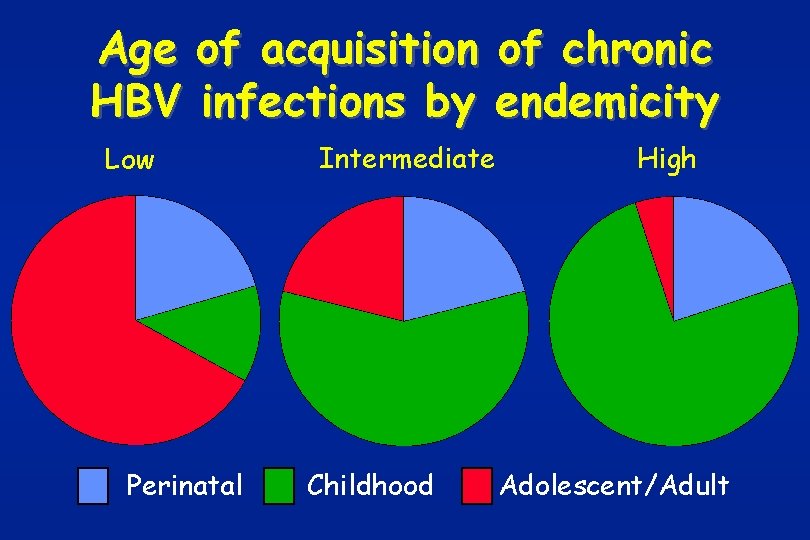
Age of acquisition of chronic HBV infections by endemicity Low Perinatal Intermediate Childhood High Adolescent/Adult
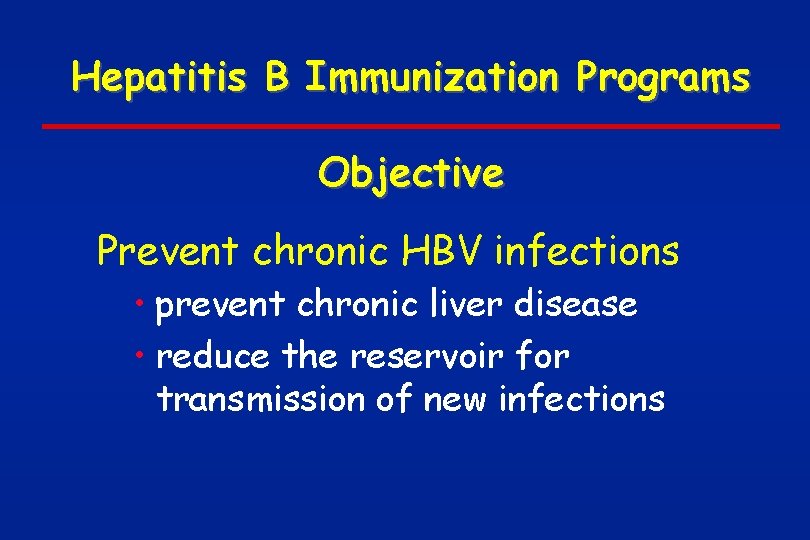
Hepatitis B Immunization Programs Objective Prevent chronic HBV infections • prevent chronic liver disease • reduce the reservoir for transmission of new infections
Components of Strategies to Prevent HBV Transmission • Hepatitis B immunization – Universal infant immunization – Prevent perinatal transmission – Catch-up immunization • Prevent nosocomial HBV transmission
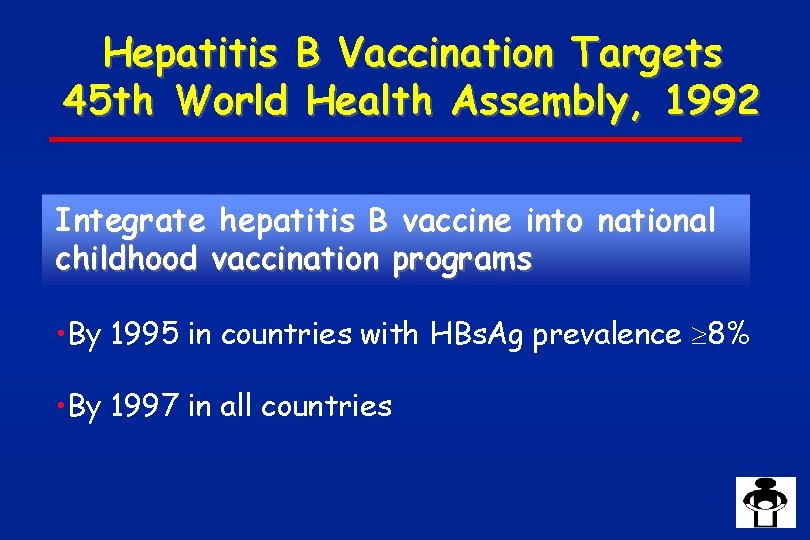
Hepatitis B Vaccination Targets 45 th World Health Assembly, 1992 Integrate hepatitis B vaccine into national childhood vaccination programs • By 1995 in countries with HBs. Ag prevalence 8% • By 1997 in all countries
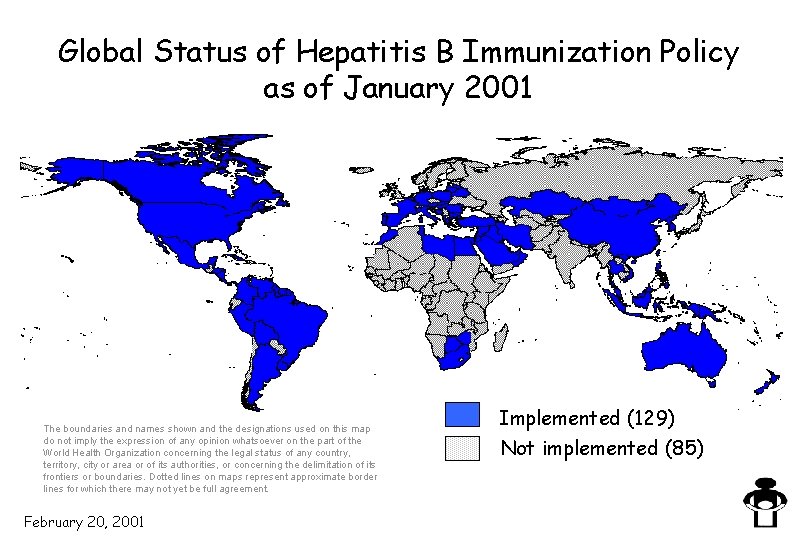
Global Status of Hepatitis B Immunization Policy as of January 2001 The boundaries and names shown and the designations used on this map do not imply the expression of any opinion whatsoever on the part of the World Health Organization concerning the legal status of any country, territory, city or area or of its authorities, or concerning the delimitation of its frontiers or boundaries. Dotted lines on maps represent approximate border lines for which there may not yet be full agreement. February 20, 2001 Implemented (129) Not implemented (85)

Hep B Vaccine Implementation in GFCV-Eligible Countries* Implemented (N=18) *4 th tranche-June 2001 Approved (N=24) Application pending (N=16) Not yet eligible - DTP 3<50% (N=16)
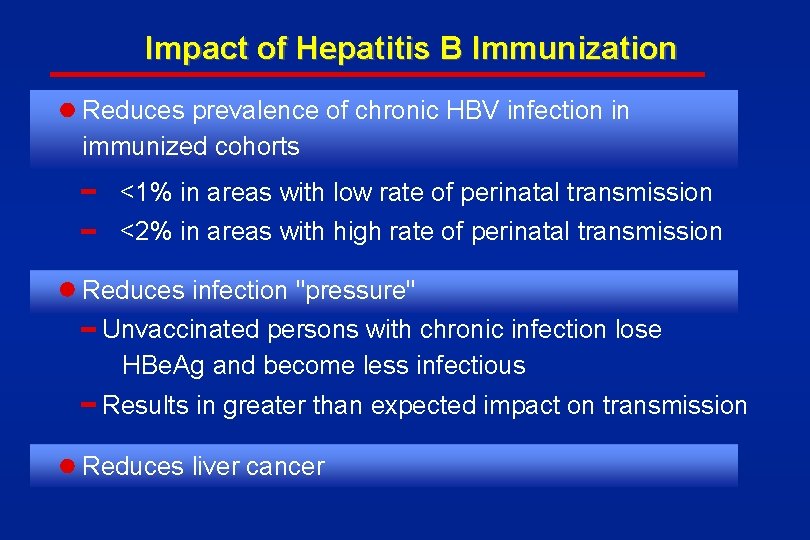
Impact of Hepatitis B Immunization Reduces prevalence of chronic HBV infection in immunized cohorts <1% in areas with low rate of perinatal transmission <2% in areas with high rate of perinatal transmission Reduces infection "pressure" Unvaccinated persons with chronic infection lose HBe. Ag and become less infectious Results in greater than expected impact on transmission Reduces liver cancer
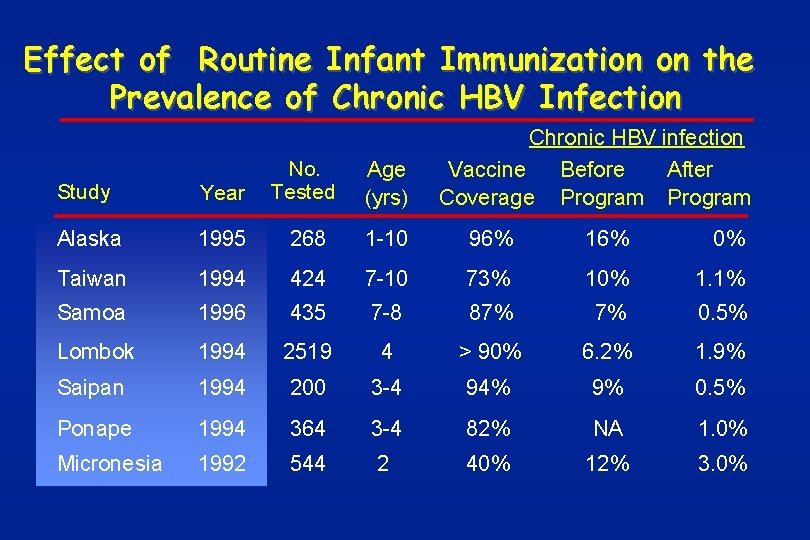
Effect of Routine Infant Immunization on the Prevalence of Chronic HBV Infection Chronic HBV infection Vaccine Before After Coverage Program Study Year No. Tested Alaska 1995 268 1 -10 96% 16% 0% Taiwan 1994 424 7 -10 73% 10% 1. 1% Samoa 1996 435 7 -8 87% 7% 0. 5% Lombok 1994 2519 4 > 90% 6. 2% 1. 9% Saipan 1994 200 3 -4 94% 9% 0. 5% Ponape 1994 364 3 -4 82% NA 1. 0% Micronesia 1992 544 2 40% 12% 3. 0% Age (yrs)
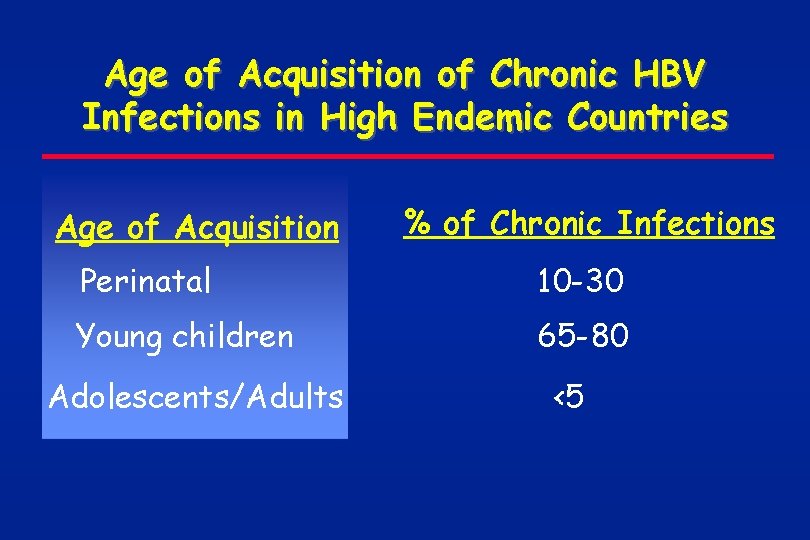
Age of Acquisition of Chronic HBV Infections in High Endemic Countries Age of Acquisition % of Chronic Infections Perinatal 10 -30 Young children 65 -80 Adolescents/Adults <5
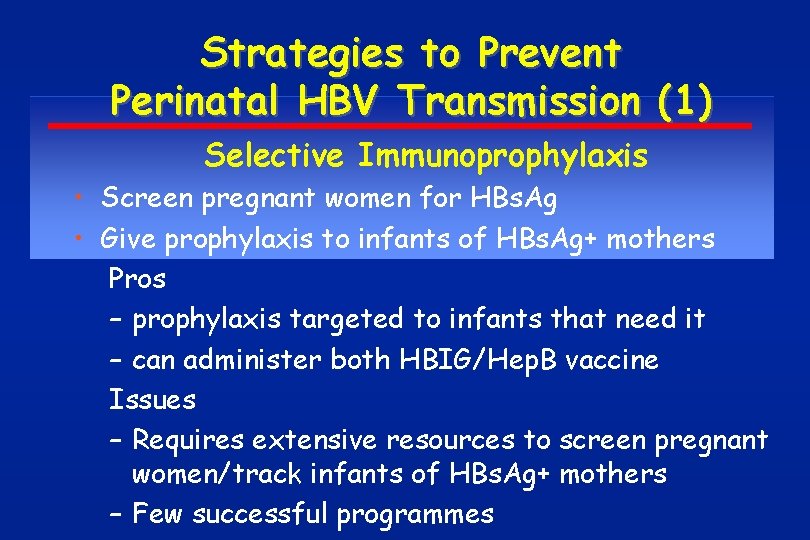
Strategies to Prevent Perinatal HBV Transmission (1) Selective Immunoprophylaxis • Screen pregnant women for HBs. Ag • Give prophylaxis to infants of HBs. Ag+ mothers Pros – prophylaxis targeted to infants that need it – can administer both HBIG/Hep. B vaccine Issues – Requires extensive resources to screen pregnant women/track infants of HBs. Ag+ mothers – Few successful programmes
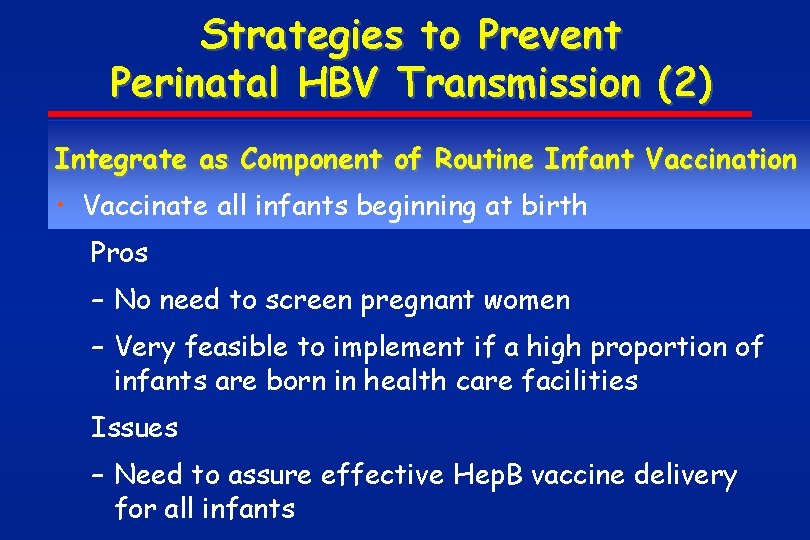
Strategies to Prevent Perinatal HBV Transmission (2) Integrate as Component of Routine Infant Vaccination • Vaccinate all infants beginning at birth Pros – No need to screen pregnant women – Very feasible to implement if a high proportion of infants are born in health care facilities Issues – Need to assure effective Hep. B vaccine delivery for all infants
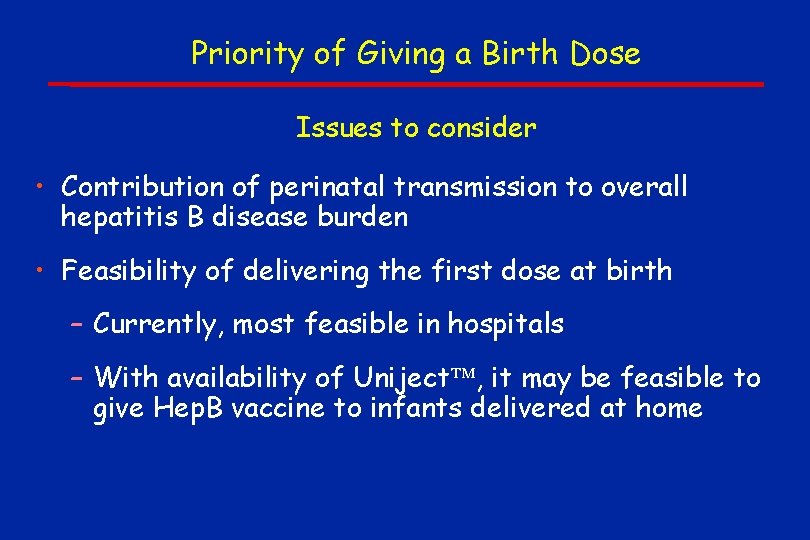
Priority of Giving a Birth Dose Issues to consider • Contribution of perinatal transmission to overall hepatitis B disease burden • Feasibility of delivering the first dose at birth – Currently, most feasible in hospitals – With availability of Uniject , it may be feasible to give Hep. B vaccine to infants delivered at home
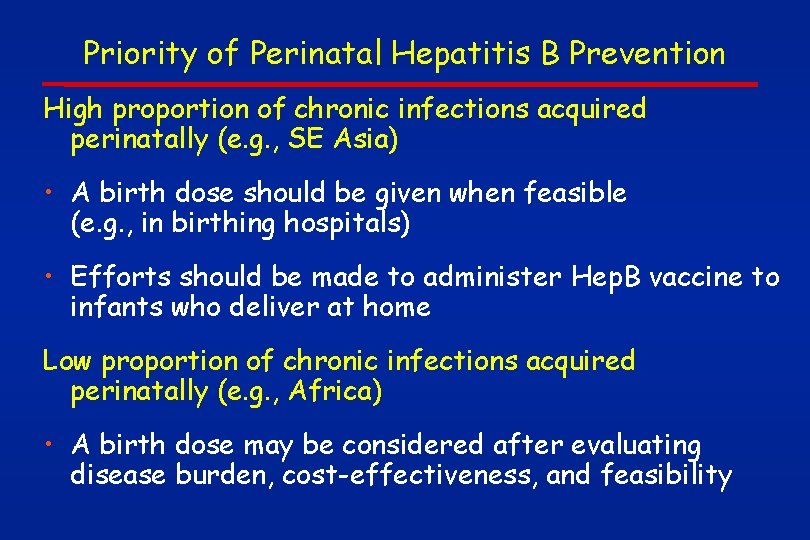
Priority of Perinatal Hepatitis B Prevention High proportion of chronic infections acquired perinatally (e. g. , SE Asia) • A birth dose should be given when feasible (e. g. , in birthing hospitals) • Efforts should be made to administer Hep. B vaccine to infants who deliver at home Low proportion of chronic infections acquired perinatally (e. g. , Africa) • A birth dose may be considered after evaluating disease burden, cost-effectiveness, and feasibility
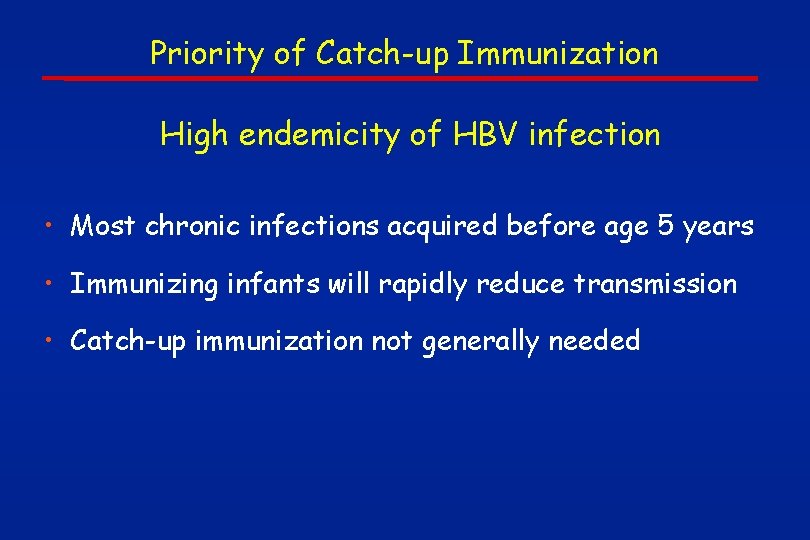
Priority of Catch-up Immunization High endemicity of HBV infection • Most chronic infections acquired before age 5 years • Immunizing infants will rapidly reduce transmission • Catch-up immunization not generally needed
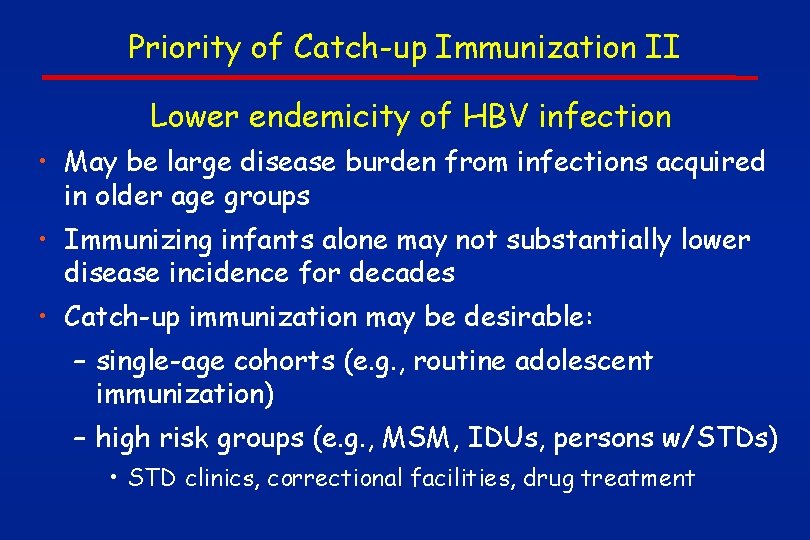
Priority of Catch-up Immunization II Lower endemicity of HBV infection • May be large disease burden from infections acquired in older age groups • Immunizing infants alone may not substantially lower disease incidence for decades • Catch-up immunization may be desirable: – single-age cohorts (e. g. , routine adolescent immunization) – high risk groups (e. g. , MSM, IDUs, persons w/STDs) • STD clinics, correctional facilities, drug treatment

Components of Strategies to Prevent HBV Transmission • Hepatitis B immunization – Universal infant immunization – Prevent perinatal transmission – Catch-up immunization • Prevent nosocomial HBV transmission
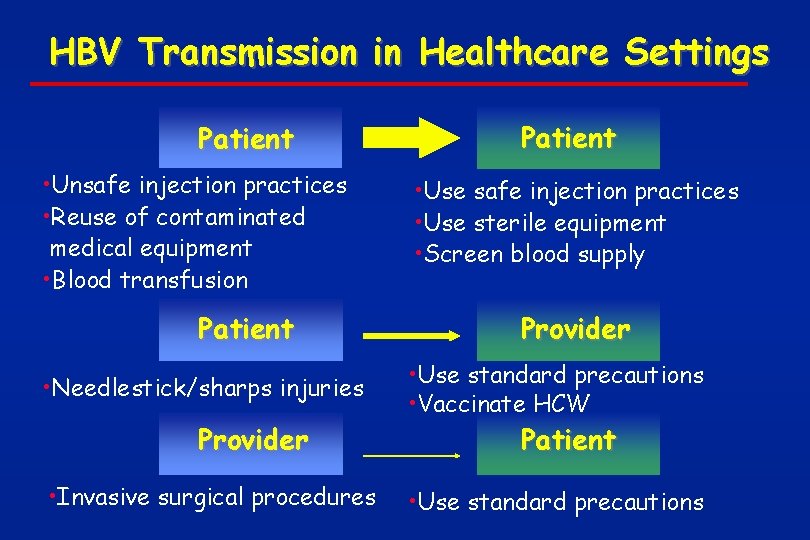
HBV Transmission in Healthcare Settings Patient • Unsafe injection practices • Reuse of contaminated medical equipment • Blood transfusion Patient • Needlestick/sharps injuries Provider • Invasive surgical procedures Patient • Use safe injection practices • Use sterile equipment • Screen blood supply Provider • Use standard precautions • Vaccinate HCW Patient • Use standard precautions
- Slides: 24