
Henderson Haggard classification Irritants Chemical asphyxiants Simple asphyxiants

- Slides: 18
Henderson & Haggard classification • • • Irritants: Chemical asphyxiants: Simple asphyxiants: Volatile drugs: Systemic poisons:
CARBON MONOXIDE
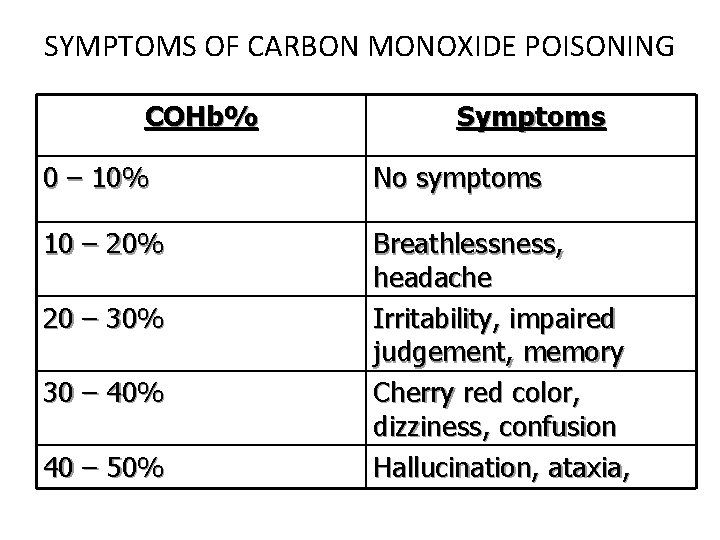
SYMPTOMS OF CARBON MONOXIDE POISONING COHb% Symptoms 0 – 10% No symptoms 10 – 20% Breathlessness, headache Irritability, impaired judgement, memory Cherry red color, dizziness, confusion Hallucination, ataxia, 20 – 30% 30 – 40% 40 – 50%
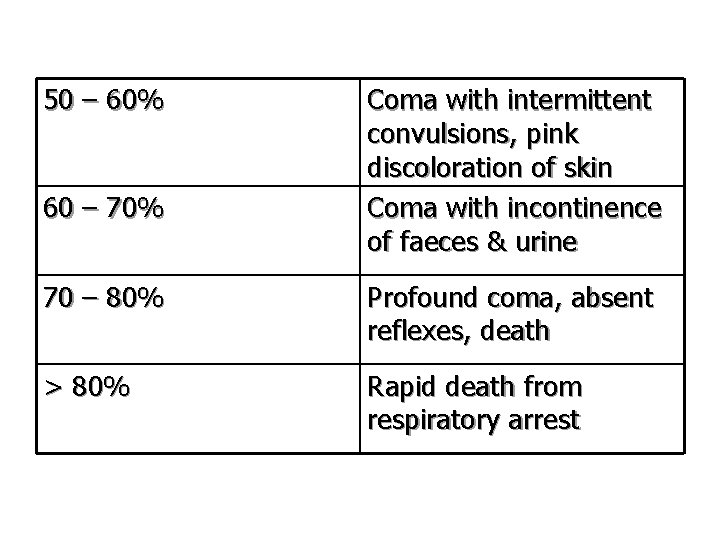
50 – 60% 60 – 70% Coma with intermittent convulsions, pink discoloration of skin Coma with incontinence of faeces & urine 70 – 80% Profound coma, absent reflexes, death > 80% Rapid death from respiratory arrest
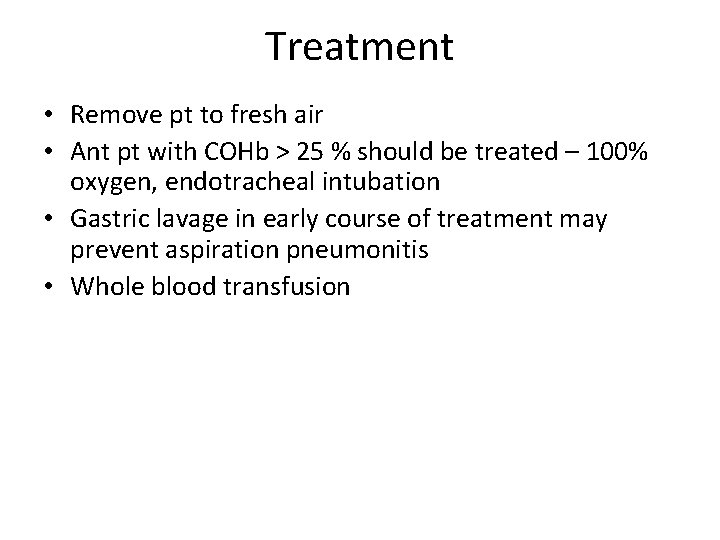
Treatment • Remove pt to fresh air • Ant pt with COHb > 25 % should be treated – 100% oxygen, endotracheal intubation • Gastric lavage in early course of treatment may prevent aspiration pneumonitis • Whole blood transfusion
PM appearance • Cherry red discoloration of skin, MM, conjunctivae, nail beds, areas of hypostasis, blood, tissues, internal organs • Blistering of skin of dependant areas
Circumstances of poisoning • Suicide- very rare • Accidental- by exposure to ehaust gas of petrol engines, gas in mines, incomplete combustion of wood, charcoal in ill ventilated rooms • Homicide- uncommon
HCN • Gas, liquid, solid • Bitter almond smell
Symptoms • • Head ach anxiety, confusion, convulsion coma Bradycardia, hypotension, pulmonary oedma Brick red diagnosis- lee-jones test
treatment • O 2 • Stomach decontamination • Antidote therapy- the 3 step Eli lilly cyanide kit approach • Amyl nitrate • Sodium nitrate iv • Sodium thiosulphate- iv
• • • Pma Odour Brick red color Cyanosis Froth from the mouth and nostril MLI suicide Mass homicide – genocide of jews Judicial execution
WAR GASES The term war gases includes any chemical (gaseous, liquid or solid) which is used to produce destruction or damage mostly in times of war
• • • Blistering gas Lung irritant Lachrymators Nasal irritant Paralysants Nerve gase
• Vesicant or blistering gases – Mustard gas, Lewisite – Volatile liquids – Discharged in artillery shells – S/S: irritation of ENT, nausea, vomiting, abdominal pain – BAL
• Asphyxiants or lung irritants – Chlorine, phosgene – S/S: watering of eyes, coughing, dyspnoea, tightness of chest, headache, vomiting, restlessness, stertorous breathing, cyanosis, collapse – Death due to acute pulmonary edema – Rx: eye wash with boric acid
• Lachrymators or tear gases – Chloracetophenone – S/S: irritation of eyes, lacrimation, spasm of eyelids, temporary blindness – Rx: remove to fresh air – Wash eye with normal saline – Weak sodium bicarbonate solution applied to affected parts
• Sternutators or nasal irritants – Diphenylamine chlorarsine (sickening gas) – Diphenyl cyanarsine – Action on vomiting centre in brain – Pain & irritation in the nose,
• Paralysants – Hydrocyanic acid – Carbon monoxide • Nerve gases – Compounds related to phosphate esters