
Hemostasis Hemostasis hemoblood staremain is the stoppage of
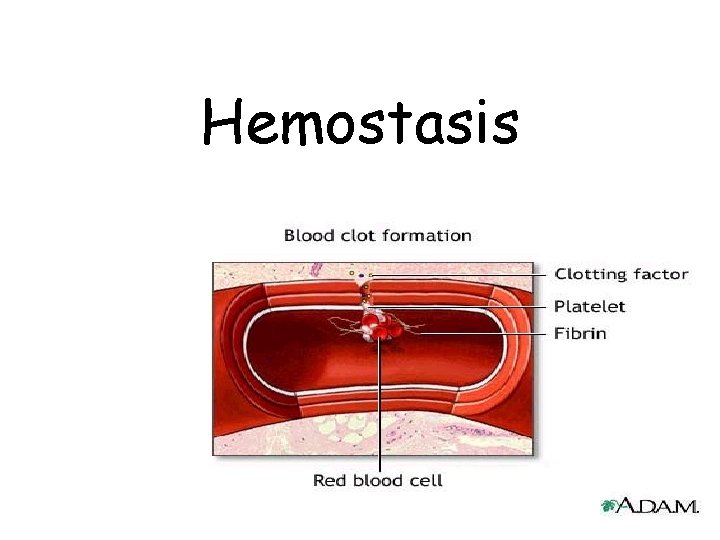
Hemostasis
• Hemostasis („hemo”=blood; sta=„remain”) is the stoppage of bleeding, which is vitally important when blood vessels are damaged.
Hemostasis • Heme= blood • stasis= to halt • Process of retaining blood within the vascular system • Repairs injury to blood vessels • Stops or prevents blood loss
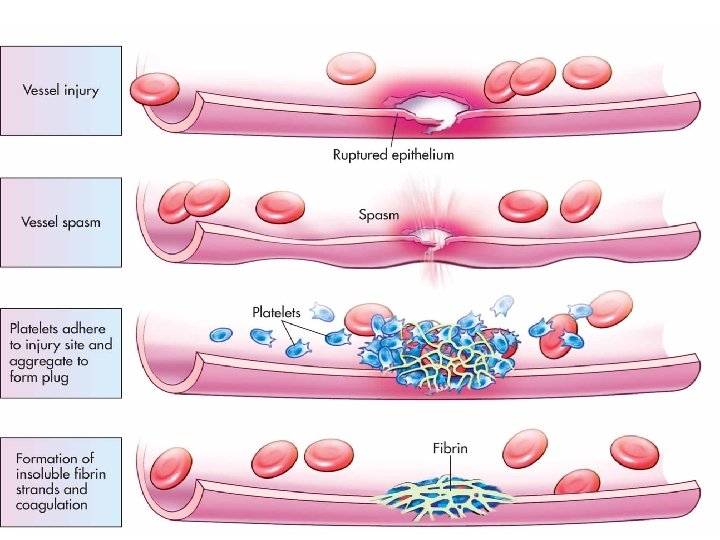
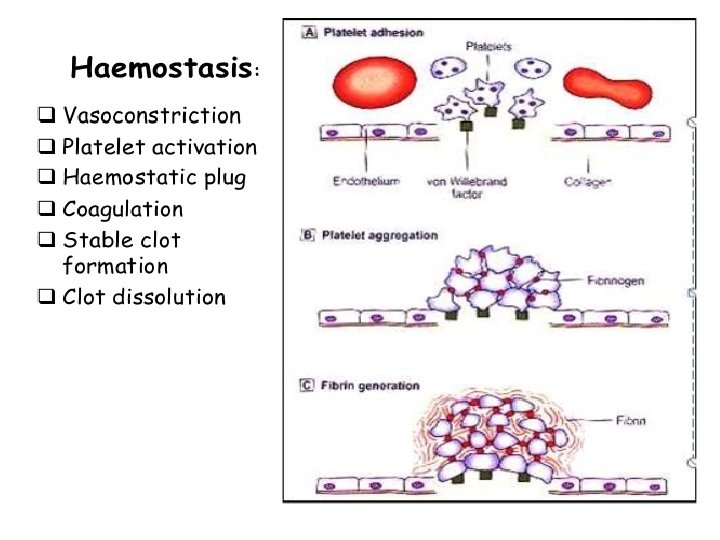
Stages of Hemostasis • 1. Vasoconstriction • 2. Formation of Platelet Plug • 3. Coagulation of blood.
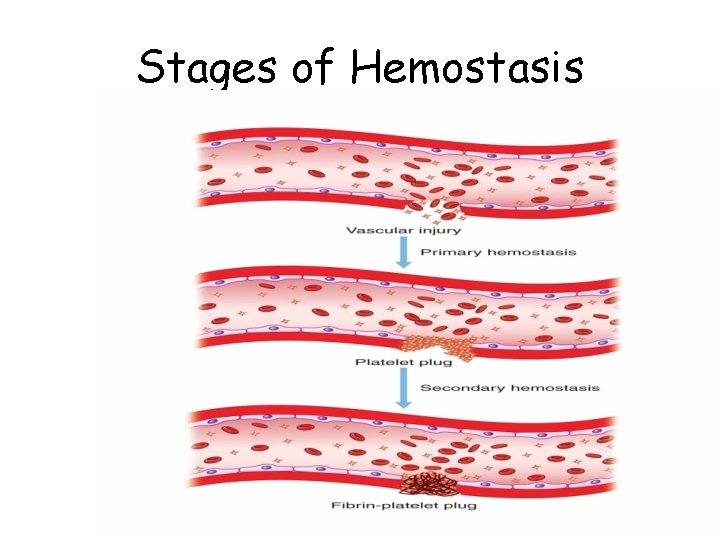
Stages of Hemostasis
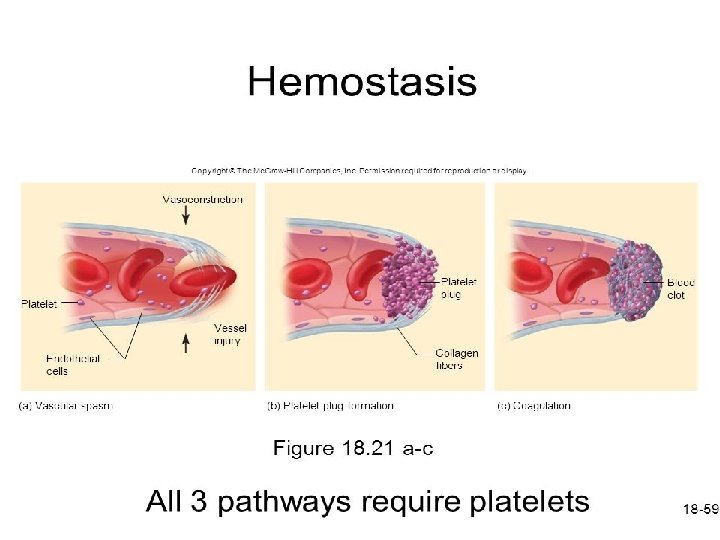
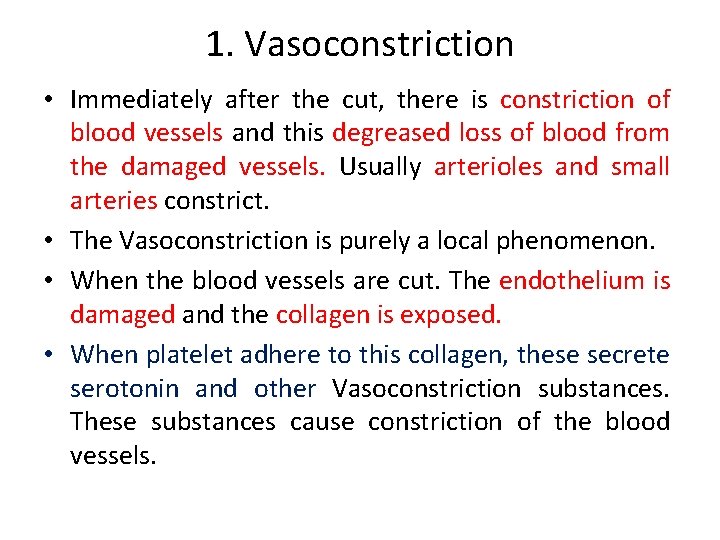
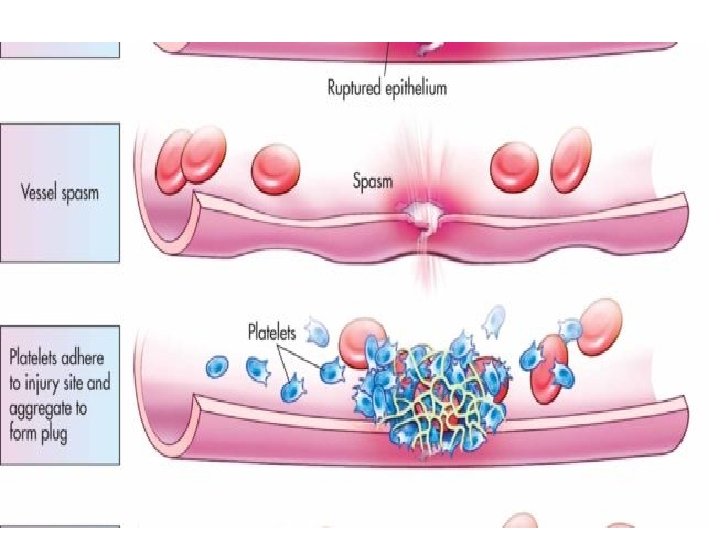
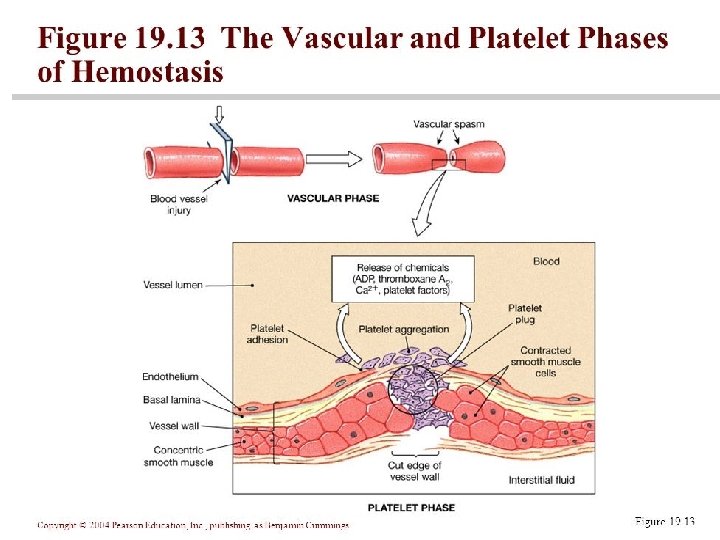
1. Vasoconstriction • Immediately after the cut, there is constriction of blood vessels and this degreased loss of blood from the damaged vessels. Usually arterioles and small arteries constrict. • The Vasoconstriction is purely a local phenomenon. • When the blood vessels are cut. The endothelium is damaged and the collagen is exposed. • When platelet adhere to this collagen, these secrete serotonin and other Vasoconstriction substances. These substances cause constriction of the blood vessels.
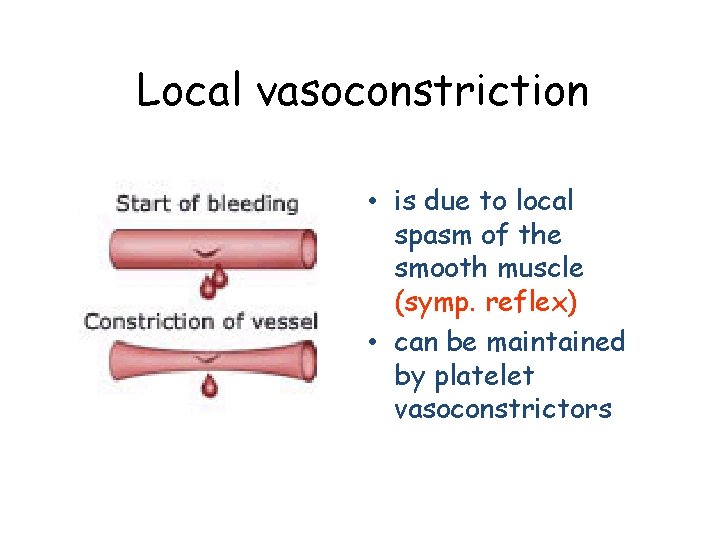
Local vasoconstriction • is due to local spasm of the smooth muscle (symp. reflex) • can be maintained by platelet vasoconstrictors
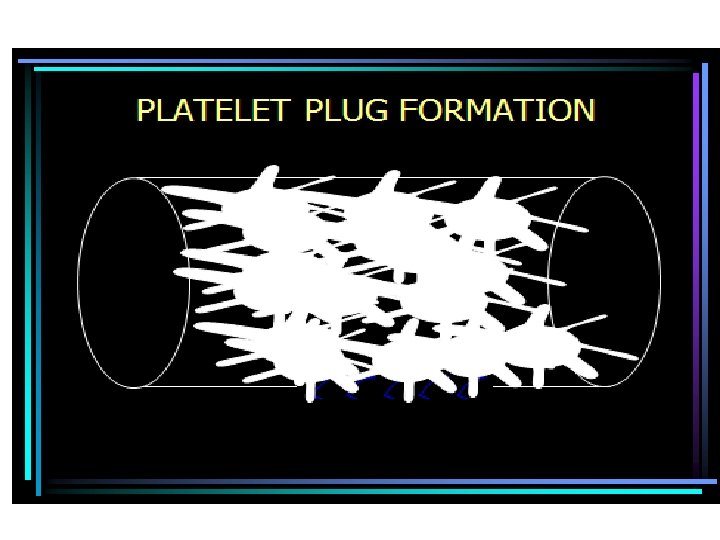
2. Formation of Platelet Plug • When platelet adhere to the collagen of rupture blood vessels, these platelet secrete ADP and thromboxane A 2. • These two substances attract more and more platelets and activate them. So more platelets aggregate and form a temporary loose plug, which closes the vessels and prevent the blood loss. • ,
• Thromboxane A 2 (TXA 2) is a type of thromboxanethat is produced by activated platelets and has prothrombotic properties: it stimulates activation of new platelets as well as increases platelet aggregation. . The same effect is also achieved by. ADP in platelet stimulation
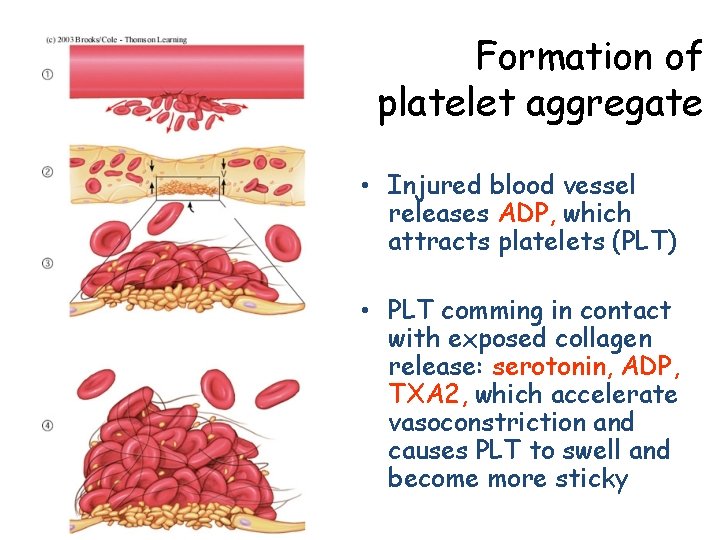
Formation of platelet aggregate • Injured blood vessel releases ADP, which attracts platelets (PLT) • PLT comming in contact with exposed collagen release: serotonin, ADP, TXA 2, which accelerate vasoconstriction and causes PLT to swell and become more sticky
3. Coagulation of blood. • During this process, the fibrinogen is converted in to fibrin. • The fibrin threads get attached to the loose platelet plug which blocks the ruptured part of blood vessels and prevents blood loss completely. The mechanism of blood coagulation is explained earlier.
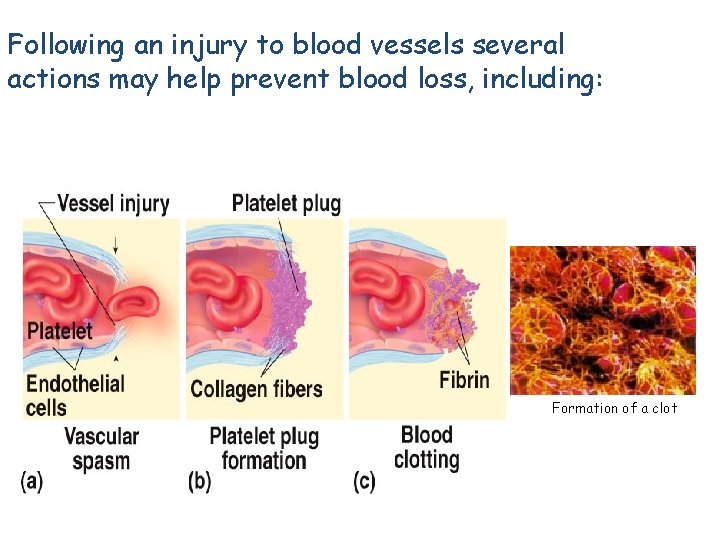
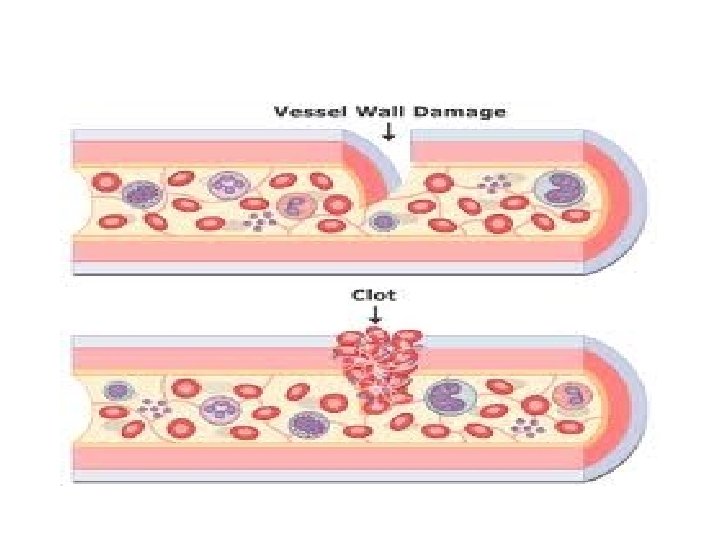
Following an injury to blood vessels several actions may help prevent blood loss, including: Formation of a clot
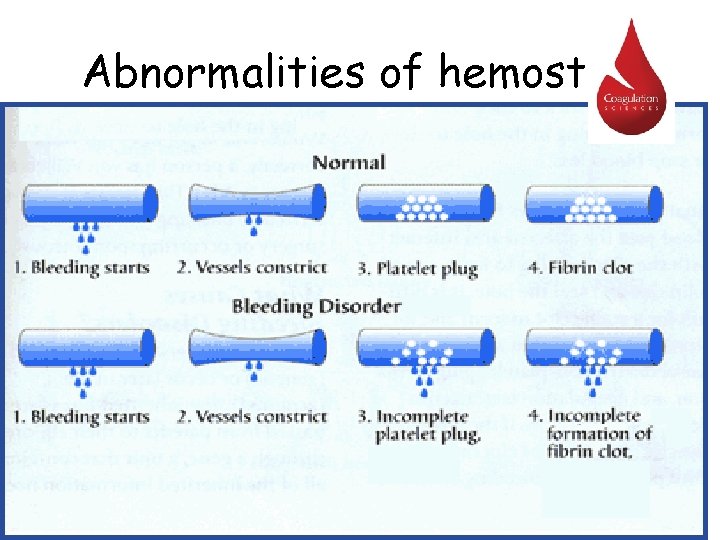
Abnormalities of hemostasis
- Slides: 20