
Hemostasis Hemostasis depends on the integrity of Blood
Hemostasis • Hemostasis depends on the integrity of – Blood vessels – Platelets – Coagulation factors
STEPS IN HEMOSTASIS • Transient arteriolar vasoconstriction due to reflex neurogenic mechanism and secretion of endothelin. • Formation of primary platelet plug due to adhesion of platelets to collagen and traces of thrombin. • Conversion into permanent plug supported by fibrin clot formed by activation of the coagulation cascade. • Lysis of fibrin and confinement of clot to the site of injury.
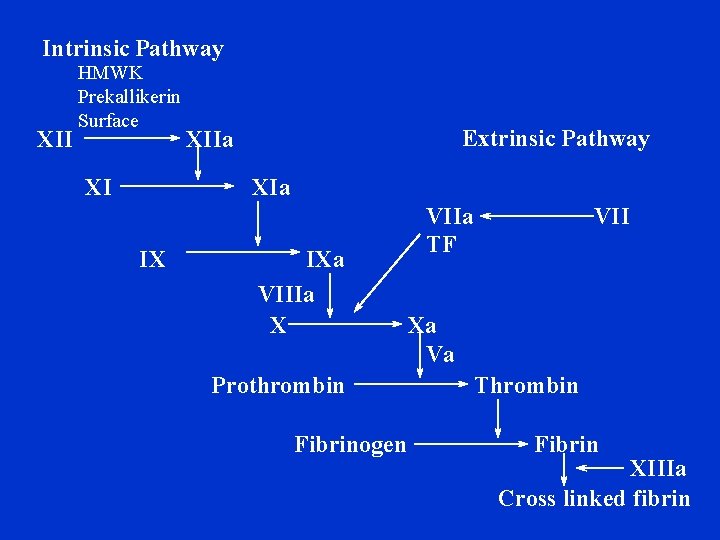
Intrinsic Pathway XII HMWK Prekallikerin Surface XI Extrinsic Pathway XIIa XIa IX IXa VIIIa X Prothrombin Fibrinogen VIIa TF VII Xa Va Thrombin Fibrin XIIIa Cross linked fibrin
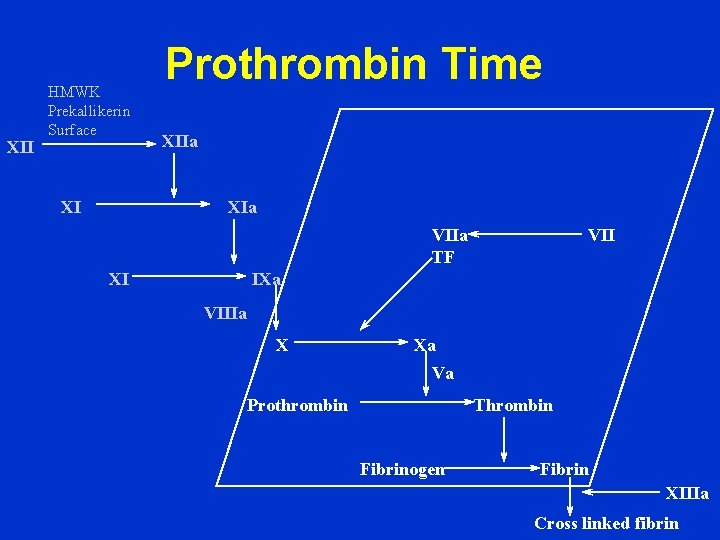
XII HMWK Prekallikerin Surface XI Prothrombin Time XIIa XIa VIIa TF XI VII IXa VIIIa X Xa Va Prothrombin Thrombin Fibrinogen Fibrin XIIIa Cross linked fibrin
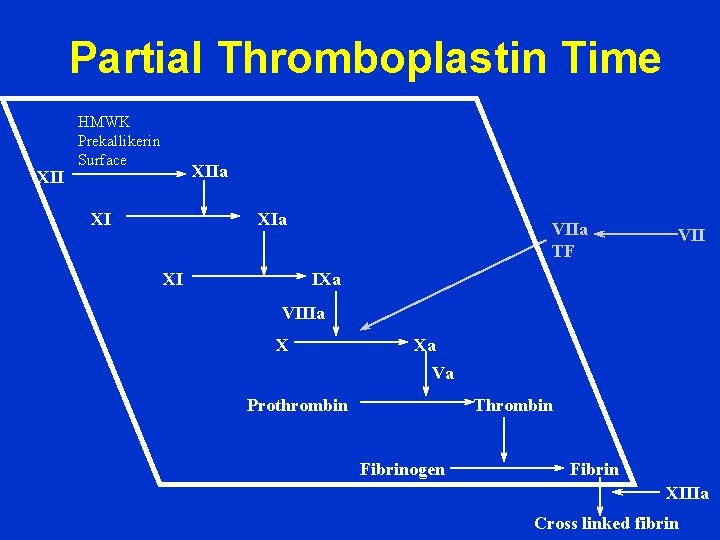
Partial Thromboplastin Time XII HMWK Prekallikerin Surface XIIa XI XIa XI VIIa TF VII IXa VIIIa X Xa Va Prothrombin Thrombin Fibrinogen Fibrin XIIIa Cross linked fibrin
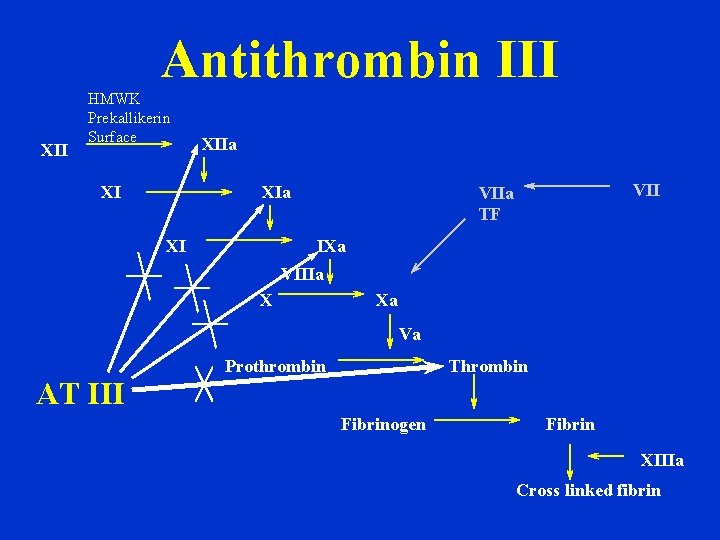
Antithrombin III XII HMWK Prekallikerin Surface XI XIIa XI VIIa TF IXa VIIIa X Xa Va Prothrombin Thrombin AT III Fibrinogen Fibrin XIIIa Cross linked fibrin
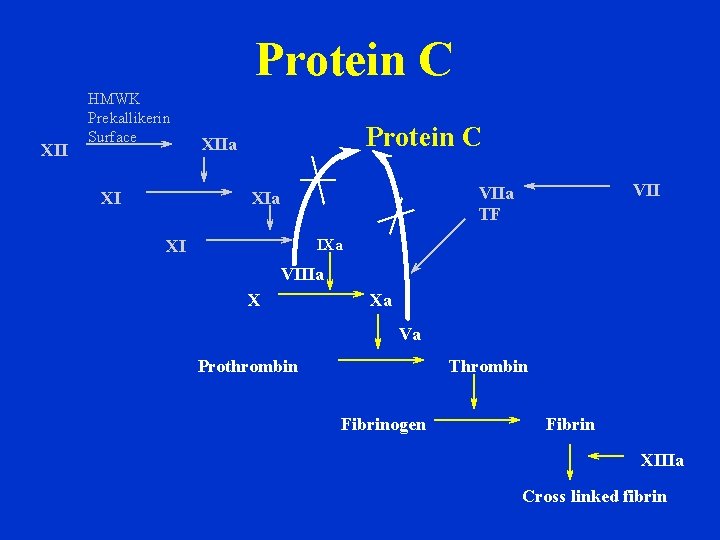
Protein C XII HMWK Prekallikerin Surface XI Protein C XIIa VIIa TF XIa IXa XI VIIIa X Xa Va Prothrombin Thrombin Fibrinogen Fibrin XIIIa Cross linked fibrin
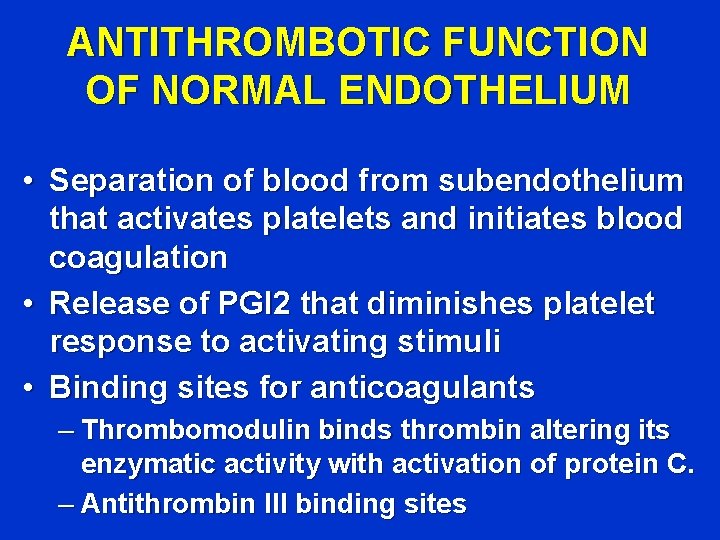
ANTITHROMBOTIC FUNCTION OF NORMAL ENDOTHELIUM • Separation of blood from subendothelium that activates platelets and initiates blood coagulation • Release of PGI 2 that diminishes platelet response to activating stimuli • Binding sites for anticoagulants – Thrombomodulin binds thrombin altering its enzymatic activity with activation of protein C. – Antithrombin III binding sites
PROTHROMBOTIC ROLE OF ENDOTHELIUM • Production of von Willebrand factor. • Synthesis of TF (induced by TNF, IL-1). • Binding of IXa and Xa on their surfaces.
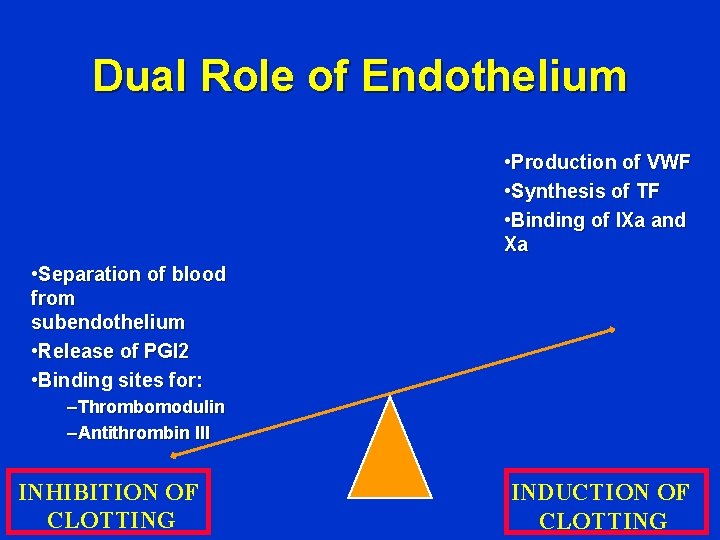
Dual Role of Endothelium • Production of VWF • Synthesis of TF • Binding of IXa and Xa • Separation of blood from subendothelium • Release of PGI 2 • Binding sites for: –Thrombomodulin –Antithrombin III INHIBITION OF CLOTTING INDUCTION OF CLOTTING
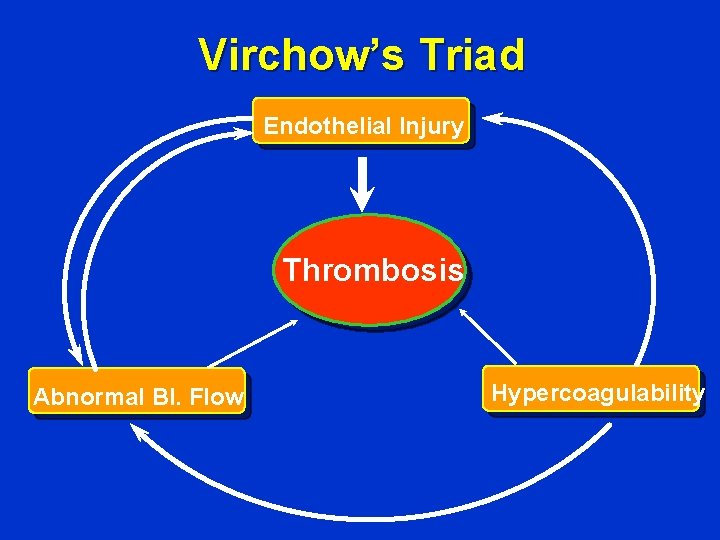
Virchow’s Triad Endothelial Injury Thrombosis Abnormal Bl. Flow Hypercoagulability
Endothelial injury • Important in heart and arterial thrombosis • Caused by – Hemodynamic stresses – Homocystinuria and hypercholesterolemia – Cigarette smoking – Inflammatory conditions • Results in – Platelet interaction with subendothelial collagen – Release of tissue factor
Alteration in Blood Flow • Turbulence in heart and arteries lead to endothelial injury • Stasis is the major cause of venous thrombosis • Stasis and turbulence lead to – Disruption of laminar flow causing platelets endothelial contact – Prevent dilution of activated factors – Decrease inflow of coagulation factor inhibitors – Help activate endothelial cells leading to thrombosis and leukocyte adhesion
Hypercoagulability • Genetic Causes – Factor V mutation – Antithrombin III deficiency – Protein C deficiency – Protein S deficiency – Defects in fibrinolysis • Acquired Causes – – – – – Bed rest and immobilization Myocardial infarction Tissue damage (surgery, accidents, burns) Cancer Artificial valves Antiphospholippid syndrome Polycythemia Sickle cell disease Oral contraceptives and hyperestrogenemia
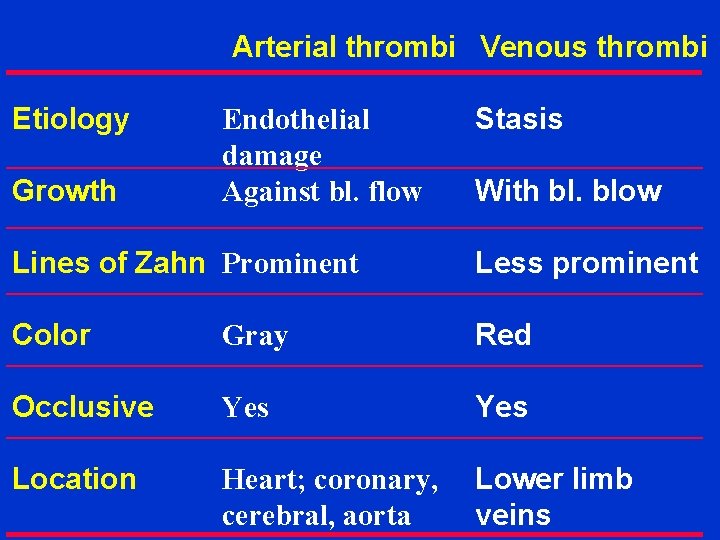
Arterial thrombi Venous thrombi Etiology Growth Endothelial damage Against bl. flow Stasis With bl. blow Lines of Zahn Prominent Less prominent Color Gray Red Occlusive Yes Location Heart; coronary, cerebral, aorta Lower limb veins
- Slides: 15