
Hemolytic uremic syndrome ShigaToxinProducing Escherichia coli O 104
- Slides: 21
Hemolytic uremic syndrome : Shiga-Toxin–Producing Escherichia coli O 104: H 4 Outbreak in Germany 2011. 9. 7 N Engl J Med 2011; 365: 709 -17 Seo Mi Seon
Introduction � HUS (hemolytic–uremic syndrome) � first described in children in the 1950 s � Triad : acute renal failure hemolytic anemia thrombocytopenia
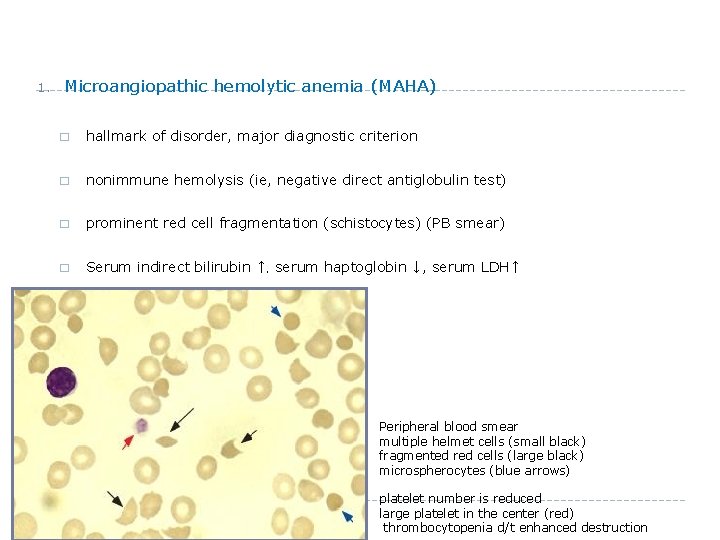
1. Microangiopathic hemolytic anemia (MAHA) � hallmark of disorder, major diagnostic criterion � nonimmune hemolysis (ie, negative direct antiglobulin test) � prominent red cell fragmentation (schistocytes) (PB smear) � Serum indirect bilirubin ↑, serum haptoglobin ↓, serum LDH↑ Peripheral blood smear multiple helmet cells (small black) fragmented red cells (large black) microspherocytes (blue arrows) platelet number is reduced large platelet in the center (red) thrombocytopenia d/t enhanced destruction
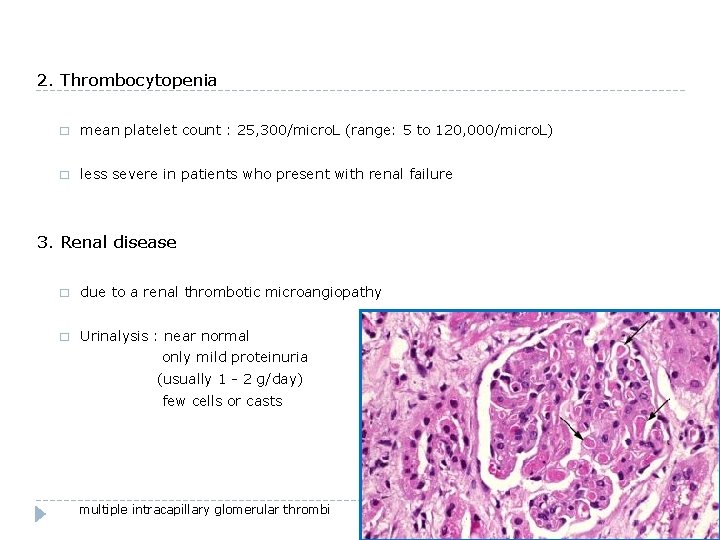
2. Thrombocytopenia � mean platelet count : 25, 300/micro. L (range: 5 to 120, 000/micro. L) � less severe in patients who present with renal failure 3. Renal disease � due to a renal thrombotic microangiopathy � Urinalysis : near normal only mild proteinuria (usually 1 - 2 g/day) few cells or casts multiple intracapillary glomerular thrombi
� diarrhea-associated HUS primarily in children cause : Shiga-toxin–producing Escherichia coli (serotype O 157: H 7) usual reservoir : ruminants (cattle) human infection : inadvertent ingestion of fecal matter ex) contaminated food or water contact with animals or farm environment 2’ through contact with infected humans rare event in adults ex) 1989 – 2006 only 21/322 adults (7%) listed in the Oklahoma registry as TTP or HUS with bloody diarrhea
� the Robert Koch Institute (Germany’s national-level public health authority) � 2011. 5. 19 three cases of the HUS in children admitted to the university hospital in the city of Hamburg � the case numbers were continuing to rise also in adults other areas of Germany (esp. northern Germany) � investigation of the outbreak was initiated to identify the causative agent and the vehicle of infection
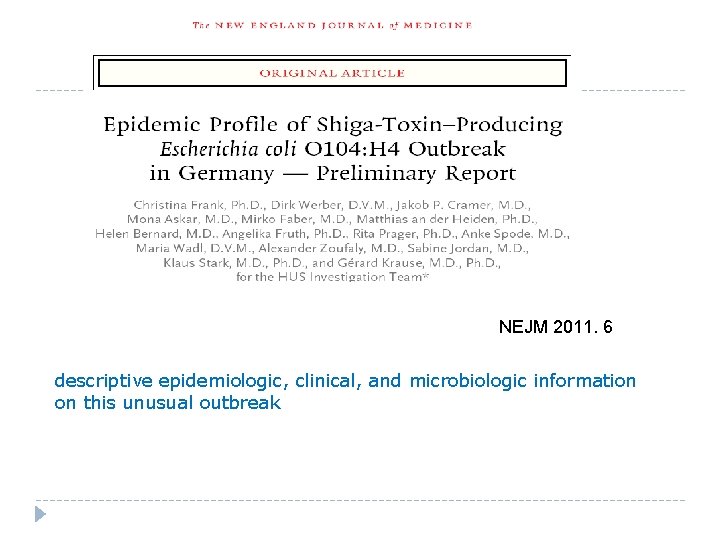
NEJM 2011. 6 descriptive epidemiologic, clinical, and microbiologic information on this unusual outbreak
Methods � data from reports of STEC gastroenteritis and HUS � clinical information on patients presenting to Hamburg University Medical Center � outbreak case : reported case of HUS or of gastroenteritis infected by Shiga-toxin–producing E. coli, serogroup O 104, serogroup unknown, onset of disease on or after May 1, 2011 in Germany
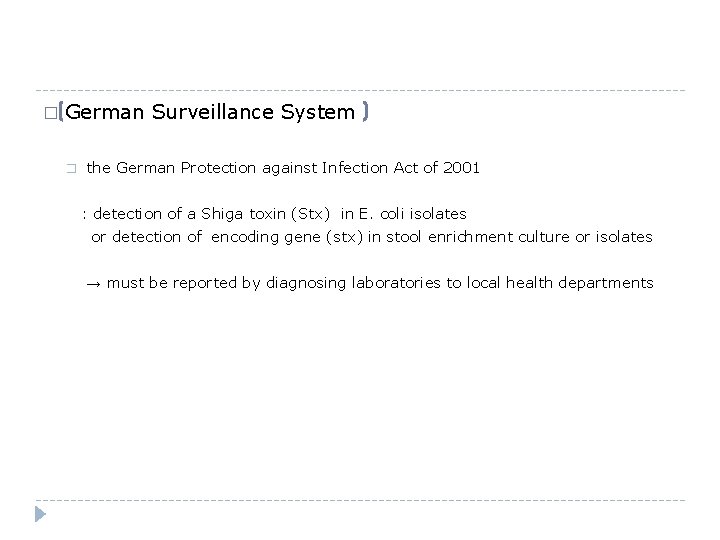
� German Surveillance System � the German Protection against Infection Act of 2001 : detection of a Shiga toxin (Stx) in E. coli isolates or detection of encoding gene (stx) in stool enrichment culture or isolates → must be reported by diagnosing laboratories to local health departments
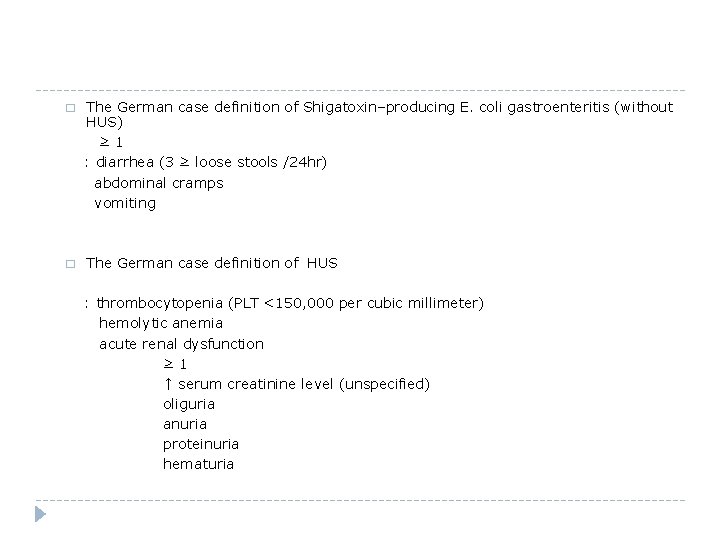
� The German case definition of Shigatoxin–producing E. coli gastroenteritis (without HUS) ≥ 1 : diarrhea (3 ≥ loose stools /24 hr) abdominal cramps vomiting � The German case definition of HUS : thrombocytopenia (PLT <150, 000 per cubic millimeter) hemolytic anemia acute renal dysfunction ≥ 1 ↑ serum creatinine level (unspecified) oliguria anuria proteinuria hematuria
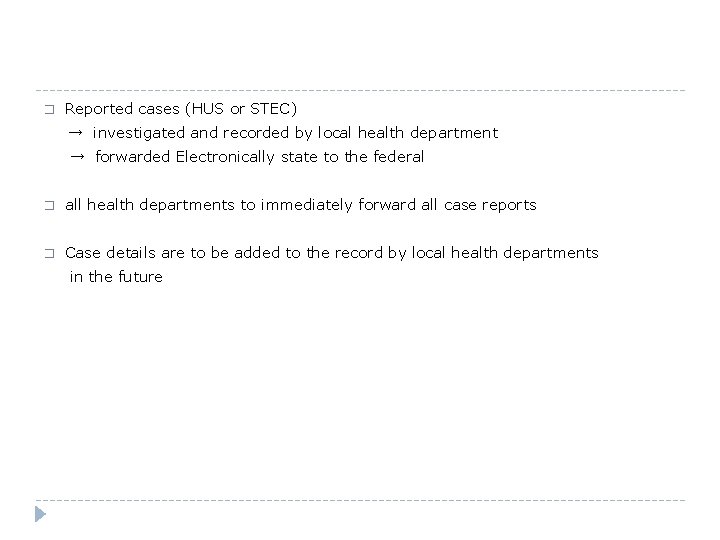
� Reported cases (HUS or STEC) → investigated and recorded by local health department → forwarded Electronically state to the federal � all health departments to immediately forward all case reports � Case details are to be added to the record by local health departments in the future
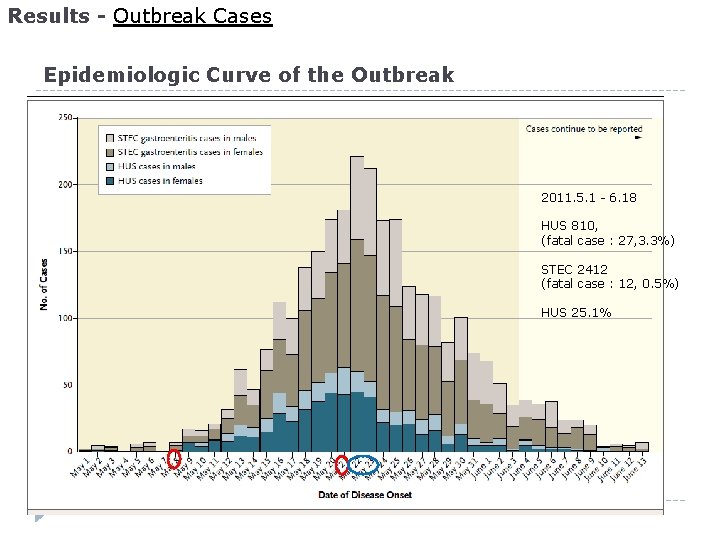
Results - Outbreak Cases Epidemiologic Curve of the Outbreak 2011. 5. 1 - 6. 18 HUS 810, (fatal case : 27, 3. 3%) STEC 2412 (fatal case : 12, 0. 5%) HUS 25. 1%
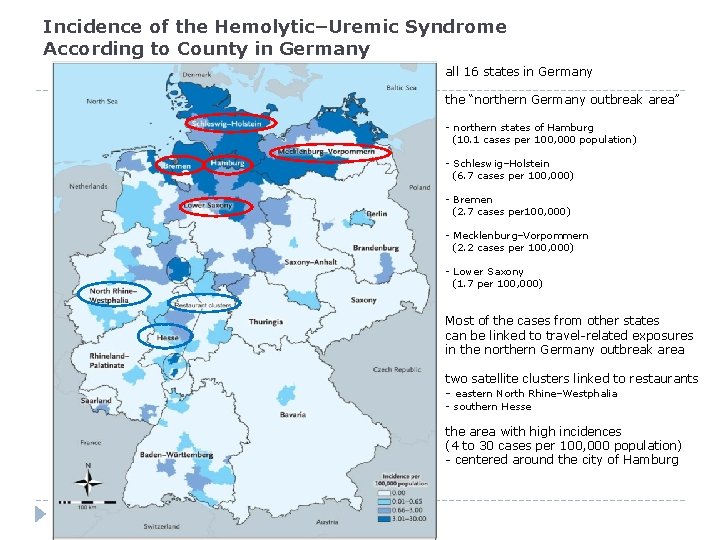
Incidence of the Hemolytic–Uremic Syndrome According to County in Germany all 16 states in Germany the “northern Germany outbreak area” - northern states of Hamburg (10. 1 cases per 100, 000 population) - Schleswig–Holstein (6. 7 cases per 100, 000) - Bremen (2. 7 cases per 100, 000) - Mecklenburg–Vorpommern (2. 2 cases per 100, 000) - Lower Saxony (1. 7 per 100, 000) Most of the cases from other states can be linked to travel-related exposures in the northern Germany outbreak area two satellite clusters linked to restaurants - eastern North Rhine–Westphalia - southern Hesse the area with high incidences (4 to 30 cases per 100, 000 population) - centered around the city of Hamburg
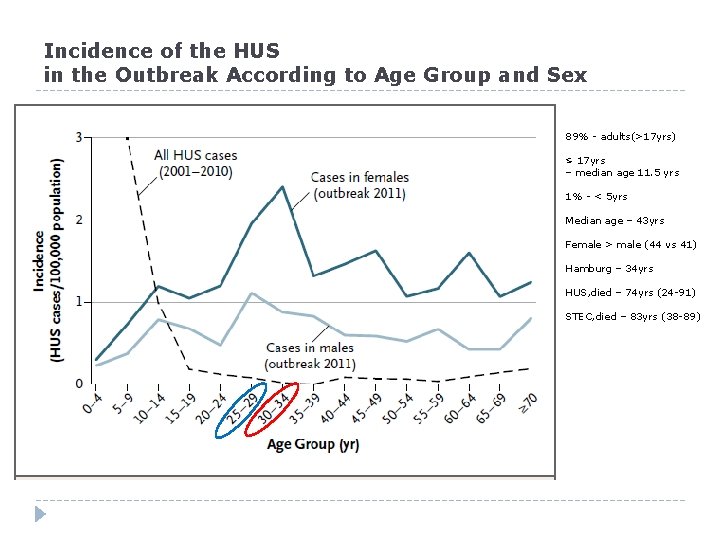
Incidence of the HUS in the Outbreak According to Age Group and Sex 89% - adults(>17 yrs) ≤ 17 yrs – median age 11. 5 yrs 1% - < 5 yrs Median age – 43 yrs Female > male (44 vs 41) Hamburg – 34 yrs HUS, died – 74 yrs (24 -91) STEC, died – 83 yrs (38 -89)
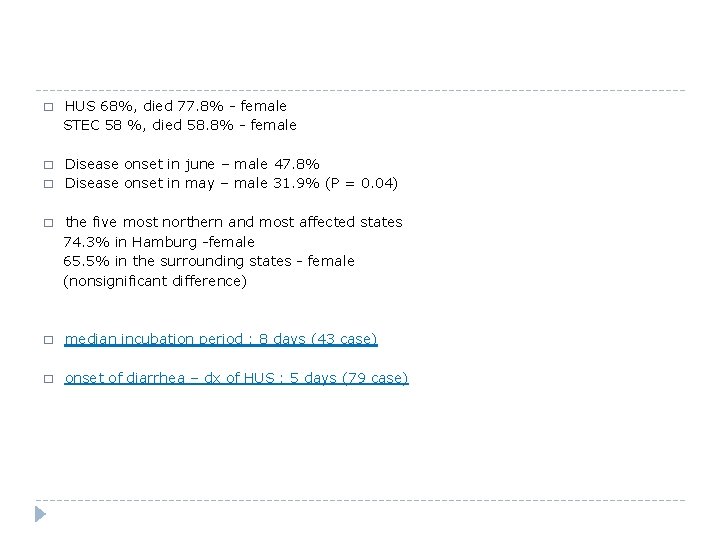
� HUS 68%, died 77. 8% - female STEC 58 %, died 58. 8% - female � Disease onset in june – male 47. 8% Disease onset in may – male 31. 9% (P = 0. 04) � � the five most northern and most affected states 74. 3% in Hamburg -female 65. 5% in the surrounding states - female (nonsignificant difference) � median incubation period : 8 days (43 case) � onset of diarrhea – dx of HUS : 5 days (79 case)
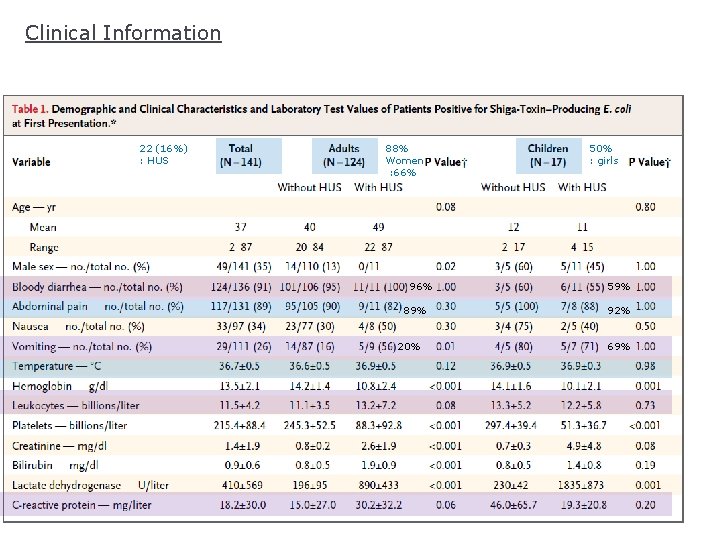
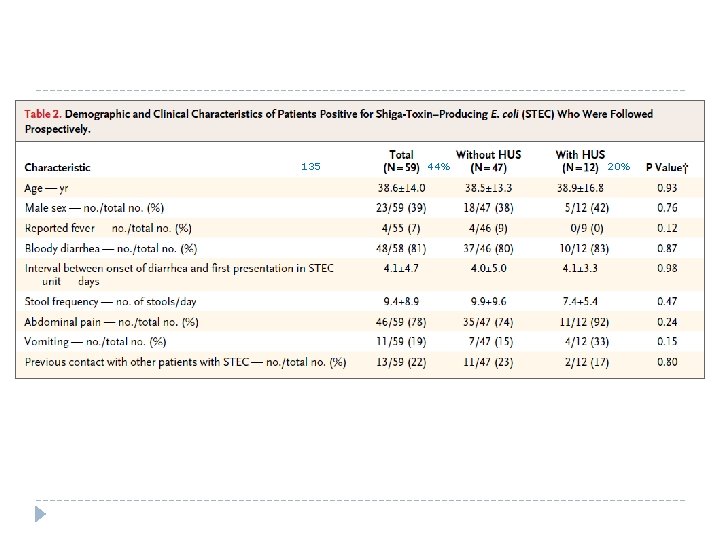
Clinical Information 22 (16%) : HUS 88% Women : 66% 96% 89% 20% 50% : girls 59% 92% 69%
135 44% 20%
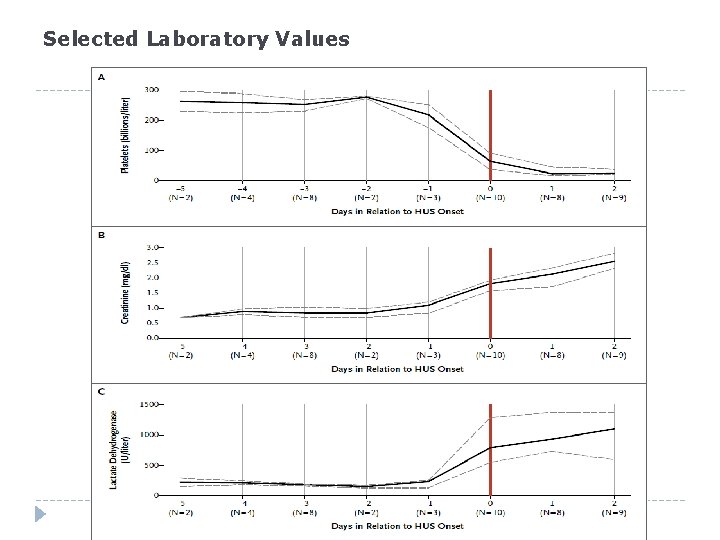
Selected Laboratory Values
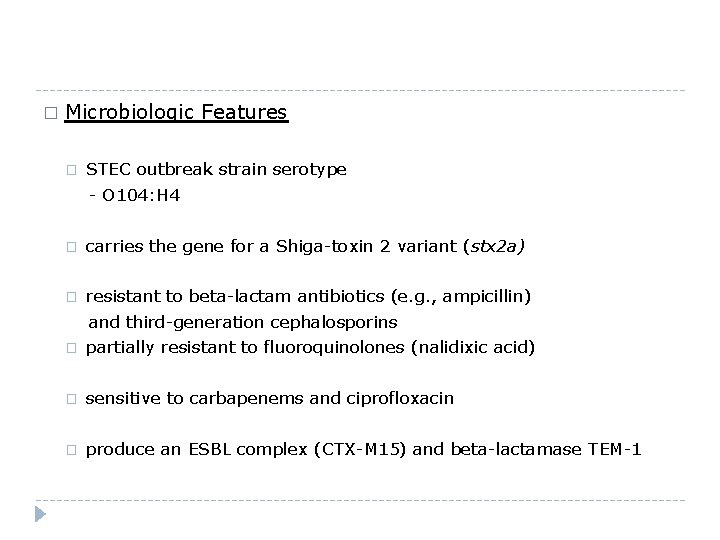
� Microbiologic Features � STEC outbreak strain serotype - O 104: H 4 � carries the gene for a Shiga-toxin 2 variant (stx 2 a) � � resistant to beta-lactam antibiotics (e. g. , ampicillin) and third-generation cephalosporins partially resistant to fluoroquinolones (nalidixic acid) � sensitive to carbapenems and ciprofloxacin � produce an ESBL complex (CTX-M 15) and beta-lactamase TEM-1
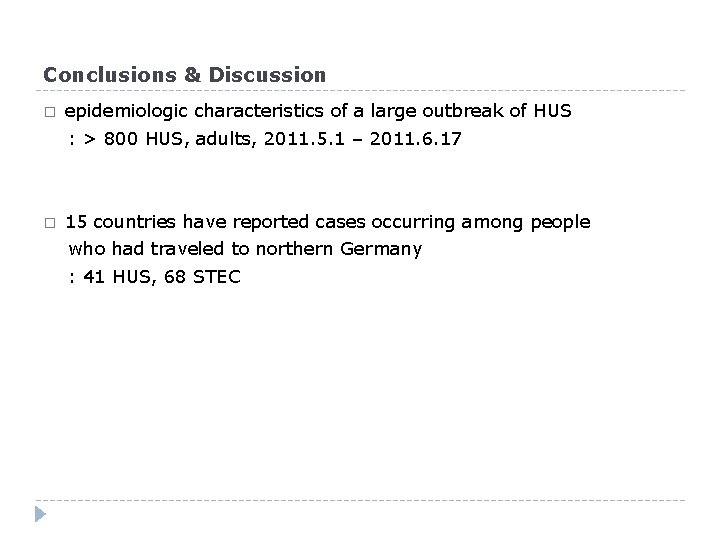
Conclusions & Discussion � epidemiologic characteristics of a large outbreak of HUS : > 800 HUS, adults, 2011. 5. 1 – 2011. 6. 17 � 15 countries have reported cases occurring among people who had traveled to northern Germany : 41 HUS, 68 STEC
� differences between this outbreak & previous outbreaks (STEC) : in Japan in 1996, 121 HUS 1. 25% HUS : vs STEC O 157: H 7 → 6% HUS exceptionally virulent incubation period 8 days vs 3 -4 days 2. 89% adults (women) : lacks the intestinal adherence factor intimin (encoded by the gene eae) particular importance for virulence in children 3. non–O 157 Shiga-toxin–producing E. Coli strain (O 104: H 4)