
Hemis Pot By Maggie Boston Illustrations by Susan
Hemi’s Pot By Maggie Boston Illustrations by Susan Trisna Better Start Literacy Approach Reader Series
Hemi’s Pot Book 5 This reader for young children is part of a reading series for the Better Start Literacy Approach. Each book provides reading practice for children to decode short words with a focus on target consonants and vowels. The reader has been designed to support class teaching activities that are part of the Better Start Literacy Approach.
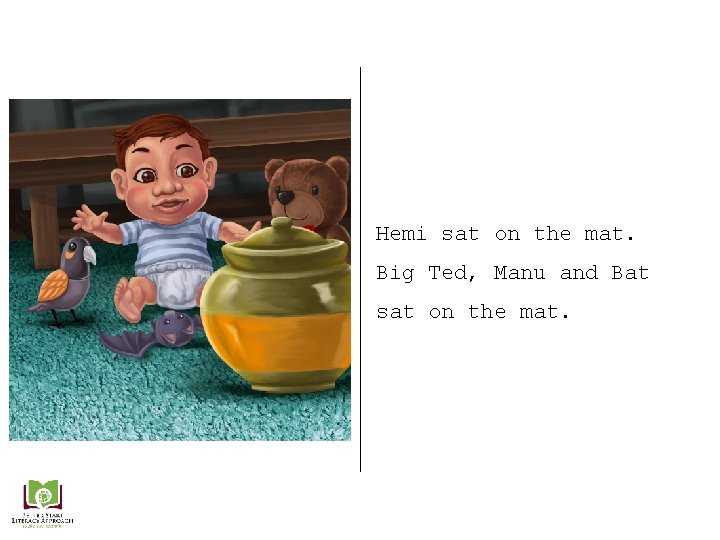
Hemi sat on the mat. Big Ted, Manu and Bat sat on the mat.
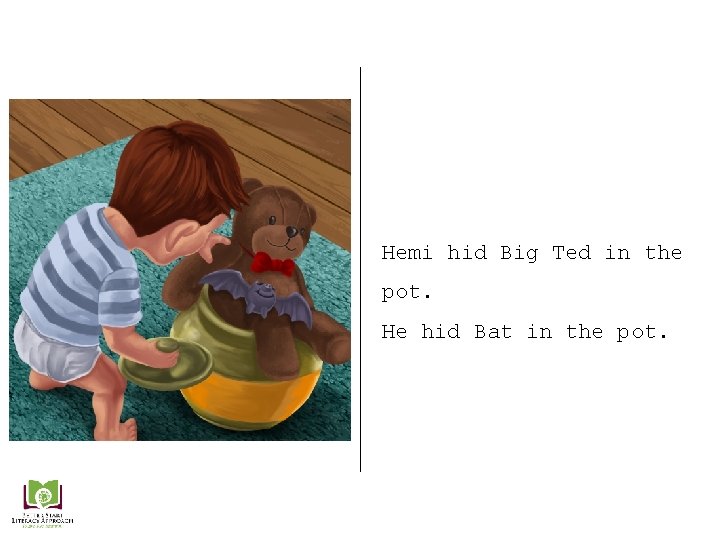
Hemi hid Big Ted in the pot. He hid Bat in the pot.
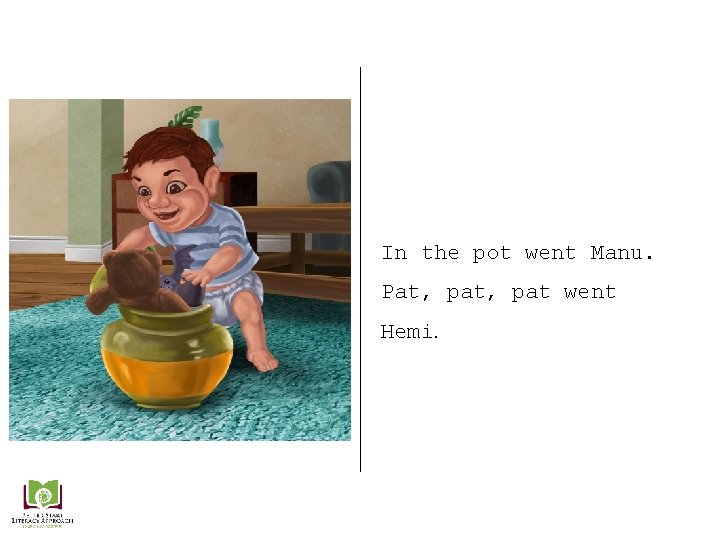
In the pot went Manu. Pat, pat went Hemi.
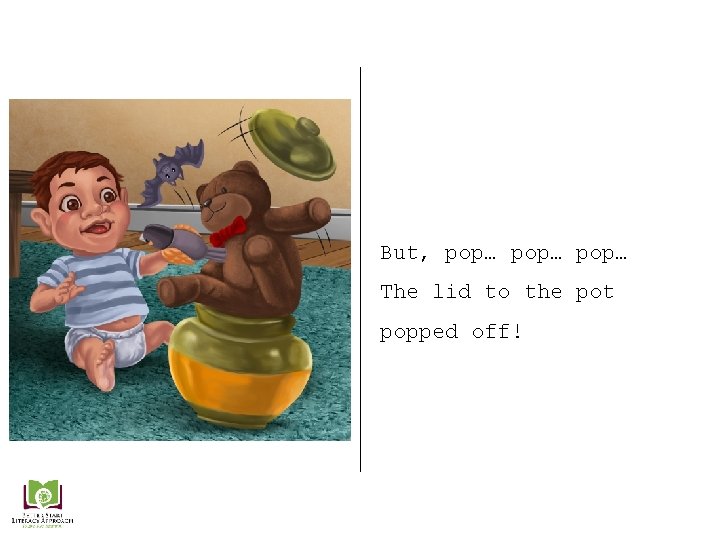
But, pop… The lid to the pot popped off!
Teaching Notes: Book 5 Hemi’s Pot Reading practice: This story provides children with practice in decoding and understanding short words with a focus on words that include p or t consonants and include a, e, o and i vowels. Introduce the text and read the story aloud together pointing to each word as you read. Encourage children to help you “sound out” the regular words in the story (see words in bold print below). Help children sound out the word and then blend the sounds together, for example, p-o-t = pot. When reading unknown words (e. g. , toy, his, Manu), tell children the words as you read together. Give plenty of praise for children’s reading attempts and encourage re-reading to build accuracy and fluency. Hemi sat on the mat. Big Ted, Manu and Bat sat on the mat Hemi hid Big Ted in the pot. He hid Bat in the pot. In the pot went Manu. Pat, pat went Hemi. But, pop… pop! The lid to the pot popped off! Phonological Awareness Practice segmenting and blending words. Ask children to clap out each phoneme (sound) in the word: p-o-t (3 sounds, 3 claps), t-e-d (3 sounds), p-a-t (3 sounds). Help children to find each word you segment on the page. Think of all the words you can that start with a p or t sound. Find objects in the room that start with a p or t sound.
Spelling Listen and identify where the sound change occurs in words. Use the phrasing: “If this word spells pot, can you make it say hot. If this word says hot can you change it to hat”. Give plenty of praise and encouragement for reading and spelling attempts. Change pot to pop to mop Change Ted to bed to led Vocabulary Discuss the meaning of the word hid. How is its meaning different from the words hide and hidden? Practice using hid in a sentence. Story Discussion Discuss the game Hemi was playing with his pet toys - why did the lid pop off? Story Retell Ask the children to re-tell the story to a friend or family member. Prompt as necessary using picture cues. Give plenty of praise and encouragement. Print Concepts Bring children’s attention to the lower and upper case version for the letter Tt and Pp. Think of people’s names or place names that start with T or P. Write them down, highlighting the capital T or P.

The Better Start Literacy Approach has been developed through the University of Canterbury Child Well-being Research Institute. The lead research team includes: Professor Gail Gillon, Associate Professors Brigid Mc. Neill and Alison Arrow, Drs Amy Scott and Amanda Denston and Professor Angus Macfarlane. Published February, 2020, UC Child Well-being Research Institute. The Better Start Literacy Approach is supported by the A Better Start National Science Challenge, a 10 -year programme of research investigating practical, evidencebased solutions that make a measurable difference for our tamariki. https: //www. abetterstart. nz/
- Slides: 9