
Heme structure The iron is held in the
- Slides: 23
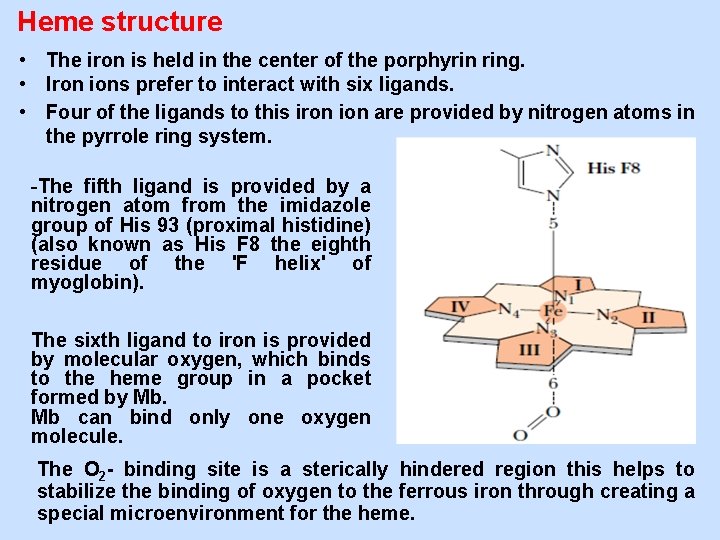
Heme structure • The iron is held in the center of the porphyrin ring. • Iron ions prefer to interact with six ligands. • Four of the ligands to this iron ion are provided by nitrogen atoms in the pyrrole ring system. -The fifth ligand is provided by a nitrogen atom from the imidazole group of His 93 (proximal histidine) (also known as His F 8 the eighth residue of the 'F helix' of myoglobin). The sixth ligand to iron is provided by molecular oxygen, which binds to the heme group in a pocket formed by Mb. Mb can bind only one oxygen molecule. The O 2 - binding site is a sterically hindered region this helps to stabilize the binding of oxygen to the ferrous iron through creating a special microenvironment for the heme.
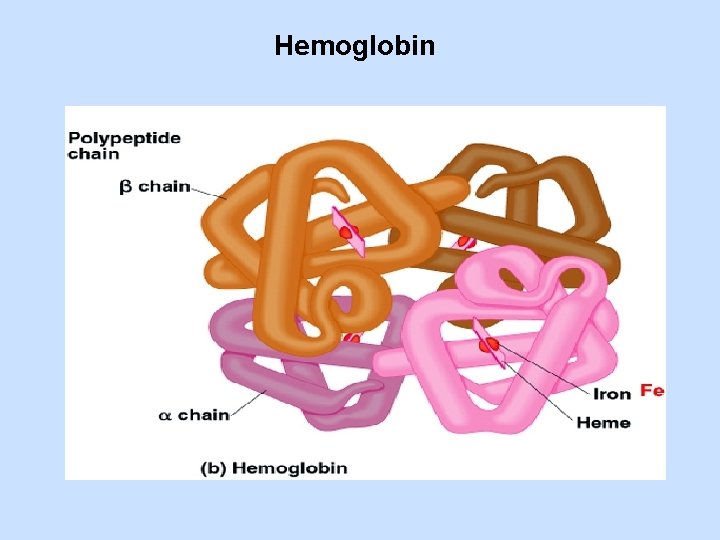
Hemoglobin
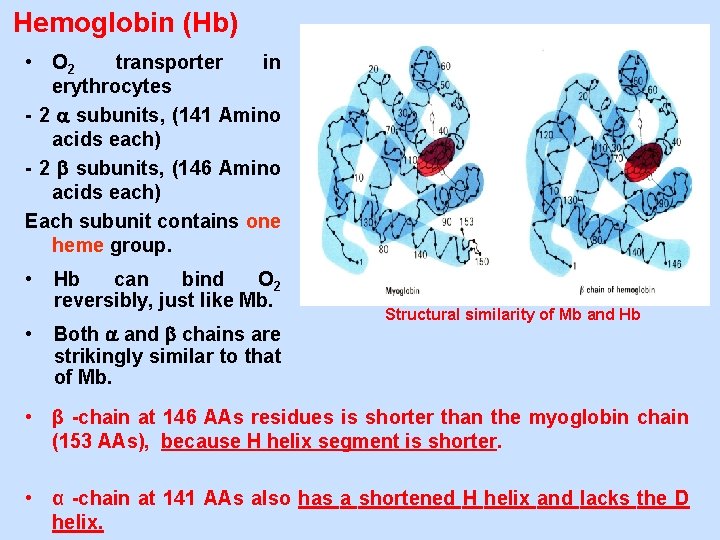
Hemoglobin (Hb) • O 2 transporter in erythrocytes - 2 subunits, (141 Amino acids each) - 2 subunits, (146 Amino acids each) Each subunit contains one heme group. • • Hb can bind O 2 reversibly, just like Mb. Both and chains are strikingly similar to that of Mb. Structural similarity of Mb and Hb • β -chain at 146 AAs residues is shorter than the myoglobin chain (153 AAs), because H helix segment is shorter. • α -chain at 141 AAs also has a shortened H helix and lacks the D helix.
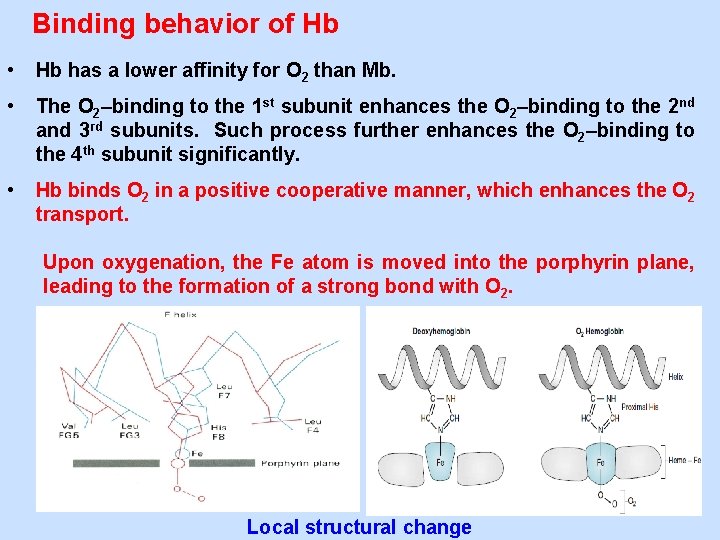
Binding behavior of Hb • Hb has a lower affinity for O 2 than Mb. • The O 2–binding to the 1 st subunit enhances the O 2–binding to the 2 nd and 3 rd subunits. Such process further enhances the O 2–binding to the 4 th subunit significantly. • Hb binds O 2 in a positive cooperative manner, which enhances the O 2 transport. Upon oxygenation, the Fe atom is moved into the porphyrin plane, leading to the formation of a strong bond with O 2. Local structural change
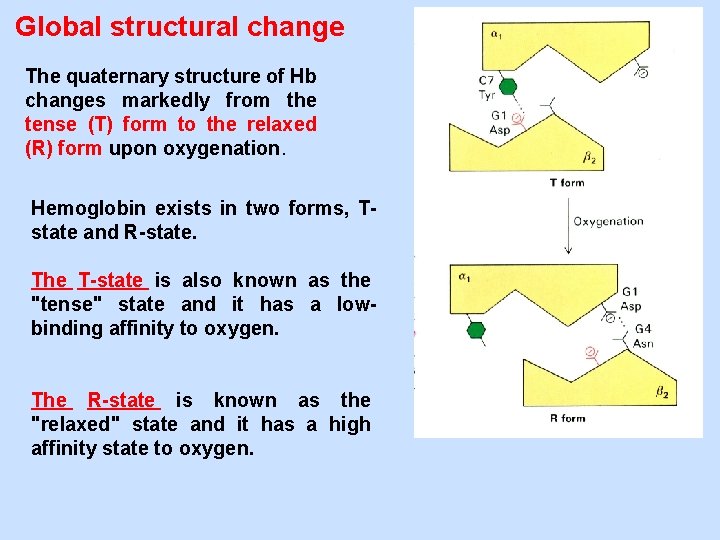
Global structural change The quaternary structure of Hb changes markedly from the tense (T) form to the relaxed (R) form upon oxygenation. Hemoglobin exists in two forms, Tstate and R-state. The T-state is also known as the "tense" state and it has a lowbinding affinity to oxygen. The R-state is known as the "relaxed" state and it has a high affinity state to oxygen.
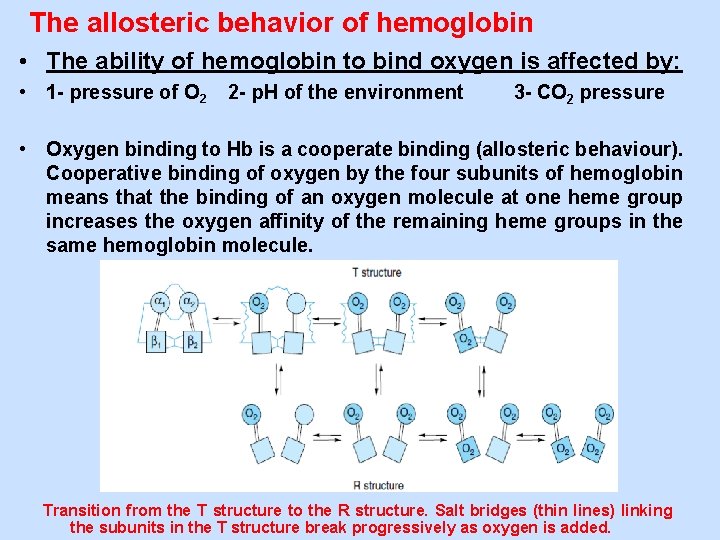
The allosteric behavior of hemoglobin • The ability of hemoglobin to bind oxygen is affected by: • 1 - pressure of O 2 2 - p. H of the environment 3 - CO 2 pressure • Oxygen binding to Hb is a cooperate binding (allosteric behaviour). Cooperative binding of oxygen by the four subunits of hemoglobin means that the binding of an oxygen molecule at one heme group increases the oxygen affinity of the remaining heme groups in the same hemoglobin molecule. Transition from the T structure to the R structure. Salt bridges (thin lines) linking the subunits in the T structure break progressively as oxygen is added.
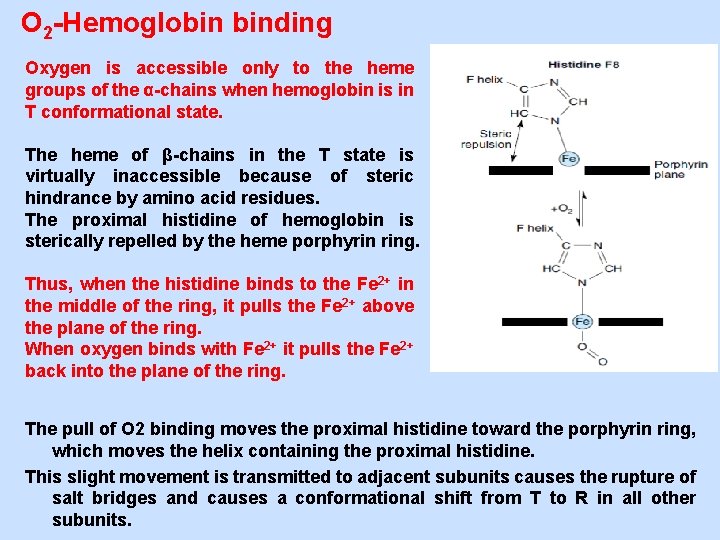
O 2 -Hemoglobin binding Oxygen is accessible only to the heme groups of the α-chains when hemoglobin is in T conformational state. The heme of β-chains in the T state is virtually inaccessible because of steric hindrance by amino acid residues. The proximal histidine of hemoglobin is sterically repelled by the heme porphyrin ring. Thus, when the histidine binds to the Fe 2+ in the middle of the ring, it pulls the Fe 2+ above the plane of the ring. When oxygen binds with Fe 2+ it pulls the Fe 2+ back into the plane of the ring. The pull of O 2 binding moves the proximal histidine toward the porphyrin ring, which moves the helix containing the proximal histidine. This slight movement is transmitted to adjacent subunits causes the rupture of salt bridges and causes a conformational shift from T to R in all other subunits.
Oxygen release hemoglobin • The release of oxygen from hemoglobin is enhanced by: • 1 - low p. H 2 - increased pressure of CO 2 3 - low O 2 pressure. • Carbon dioxide reacts with water to give carbonic acid, which decomposes into bicarbonate and protons: • CO 2 + H 2 O → H 2 CO 3 → HCO 3 - + H+ • Therefore, blood with high carbon dioxide levels is also lower in p. H (more acidic) which leads to a decrease in affinity for oxygen by hemoglobin. • Hemoglobin can bind protons and carbon dioxide which causes a conformational change in the protein and facilitates the release of oxygen. • This decrease in hemoglobin's affinity for oxygen by the binding of carbon dioxide and acid is known as the Bohr effect. (hemoglobin's oxygen binding affinity is inversely related both to acidity and to the concentration of carbon dioxide)
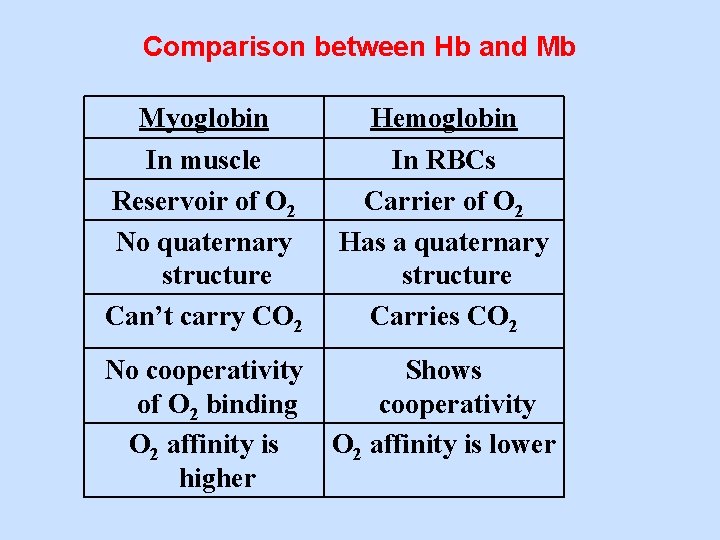
Comparison between Hb and Mb Myoglobin Hemoglobin In muscle Reservoir of O 2 No quaternary structure Can’t carry CO 2 In RBCs Carrier of O 2 Has a quaternary structure Carries CO 2 No cooperativity of O 2 binding O 2 affinity is higher Shows cooperativity O 2 affinity is lower
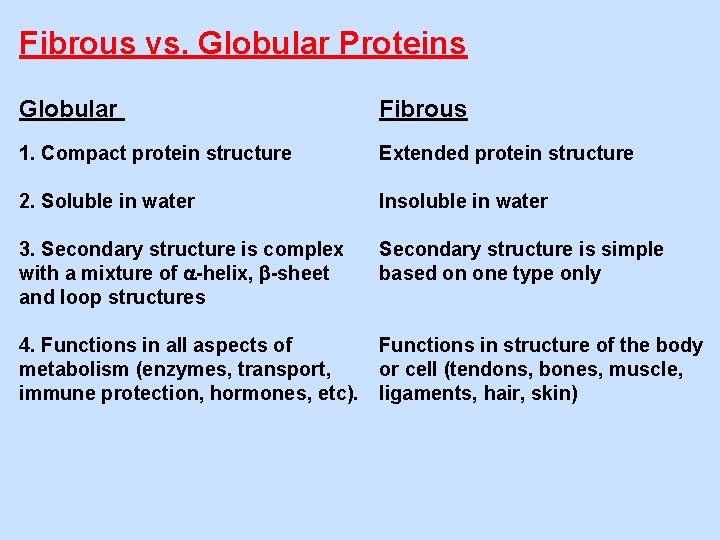
Fibrous vs. Globular Proteins Globular Fibrous 1. Compact protein structure Extended protein structure 2. Soluble in water Insoluble in water 3. Secondary structure is complex with a mixture of -helix, -sheet and loop structures Secondary structure is simple based on one type only 4. Functions in all aspects of metabolism (enzymes, transport, immune protection, hormones, etc). Functions in structure of the body or cell (tendons, bones, muscle, ligaments, hair, skin)
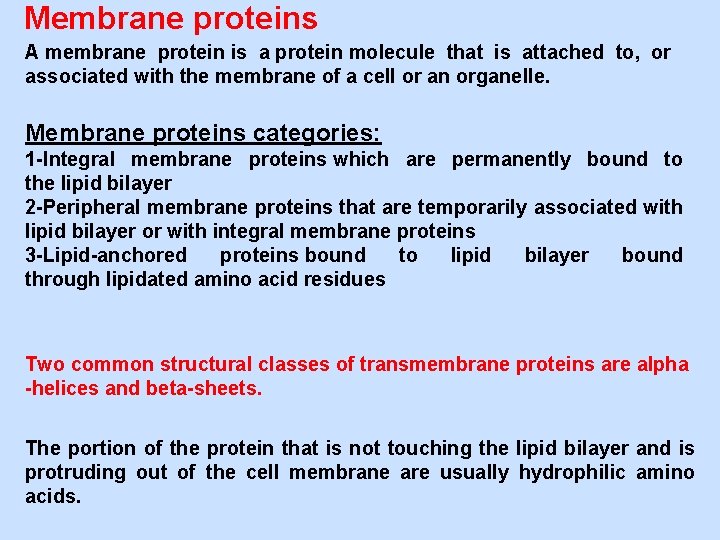
Membrane proteins A membrane protein is a protein molecule that is attached to, or associated with the membrane of a cell or an organelle. Membrane proteins categories: 1 -Integral membrane proteins which are permanently bound to the lipid bilayer 2 -Peripheral membrane proteins that are temporarily associated with lipid bilayer or with integral membrane proteins 3 -Lipid-anchored proteins bound to lipid bilayer bound through lipidated amino acid residues Two common structural classes of transmembrane proteins are alpha -helices and beta-sheets. The portion of the protein that is not touching the lipid bilayer and is protruding out of the cell membrane are usually hydrophilic amino acids.
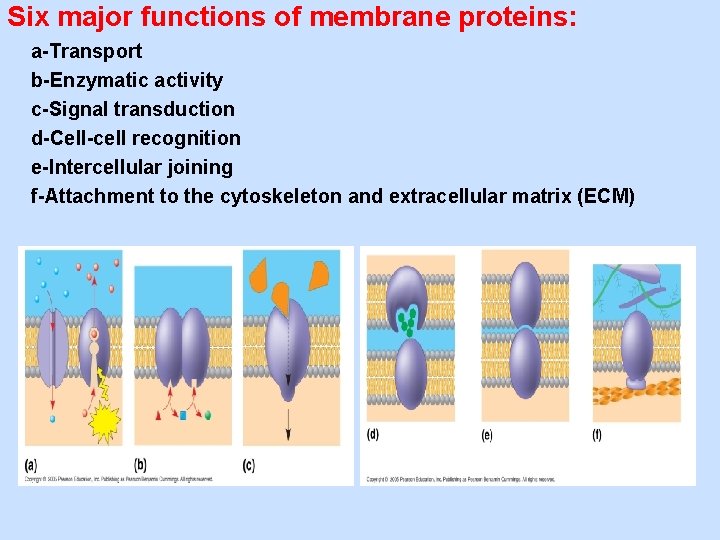
Six major functions of membrane proteins: a-Transport b-Enzymatic activity c-Signal transduction d-Cell-cell recognition e-Intercellular joining f-Attachment to the cytoskeleton and extracellular matrix (ECM)
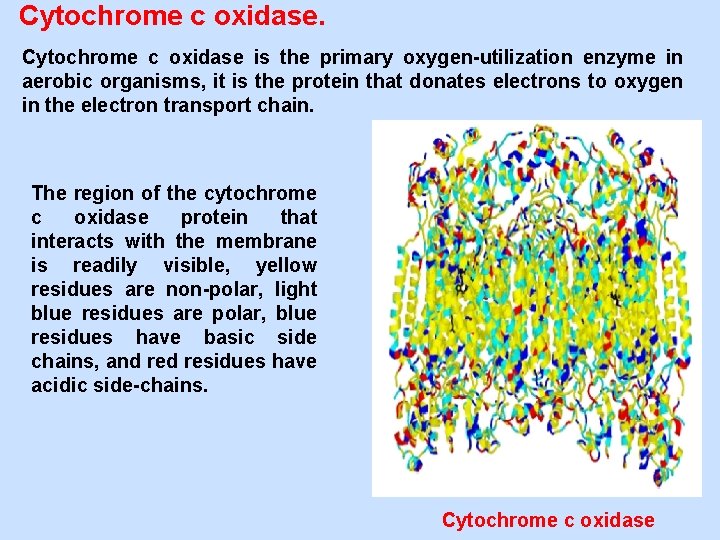
Cytochrome c oxidase is the primary oxygen-utilization enzyme in aerobic organisms, it is the protein that donates electrons to oxygen in the electron transport chain. The region of the cytochrome c oxidase protein that interacts with the membrane is readily visible, yellow residues are non-polar, light blue residues are polar, blue residues have basic side chains, and residues have acidic side-chains. Cytochrome c oxidase
Clinical examples on protein abnormalities
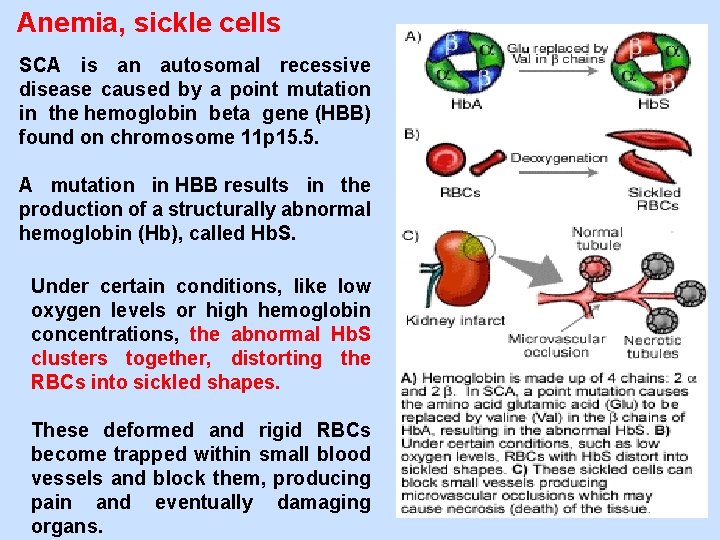
Anemia, sickle cells SCA is an autosomal recessive disease caused by a point mutation in the hemoglobin beta gene (HBB) found on chromosome 11 p 15. 5. A mutation in HBB results in the production of a structurally abnormal hemoglobin (Hb), called Hb. S. Under certain conditions, like low oxygen levels or high hemoglobin concentrations, the abnormal Hb. S clusters together, distorting the RBCs into sickled shapes. These deformed and rigid RBCs become trapped within small blood vessels and block them, producing pain and eventually damaging organs.
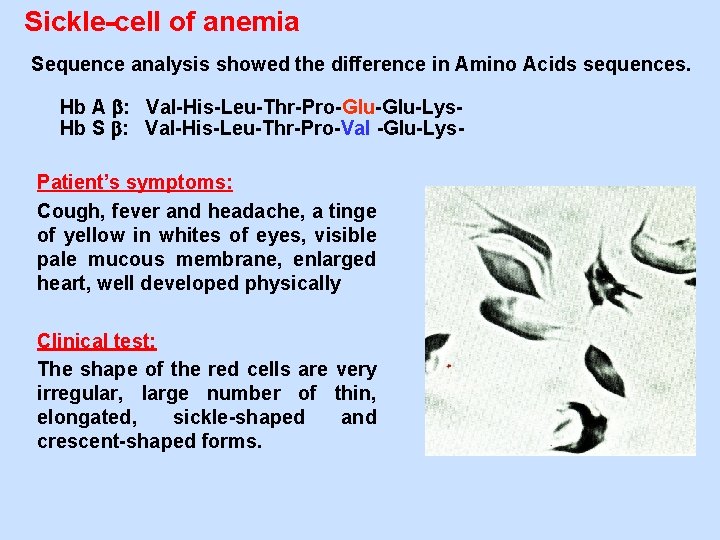
Sickle-cell of anemia Sequence analysis showed the difference in Amino Acids sequences. Hb A : Val-His-Leu-Thr-Pro-Glu-Lys. Hb S : Val-His-Leu-Thr-Pro-Val -Glu-Lys. Patient’s symptoms: Cough, fever and headache, a tinge of yellow in whites of eyes, visible pale mucous membrane, enlarged heart, well developed physically Clinical test: The shape of the red cells are very irregular, large number of thin, elongated, sickle-shaped and crescent-shaped forms.
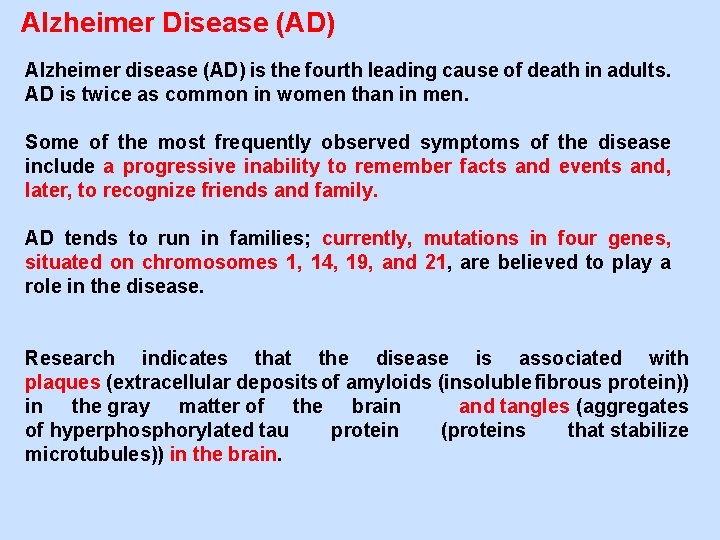
Alzheimer Disease (AD) Alzheimer disease (AD) is the fourth leading cause of death in adults. AD is twice as common in women than in men. Some of the most frequently observed symptoms of the disease include a progressive inability to remember facts and events and, later, to recognize friends and family. AD tends to run in families; currently, mutations in four genes, situated on chromosomes 1, 14, 19, and 21, are believed to play a role in the disease. Research indicates that the disease is associated with plaques (extracellular deposits of amyloids (insoluble fibrous protein)) in the gray matter of the brain and tangles (aggregates of hyperphosphorylated tau protein (proteins that stabilize microtubules)) in the brain.
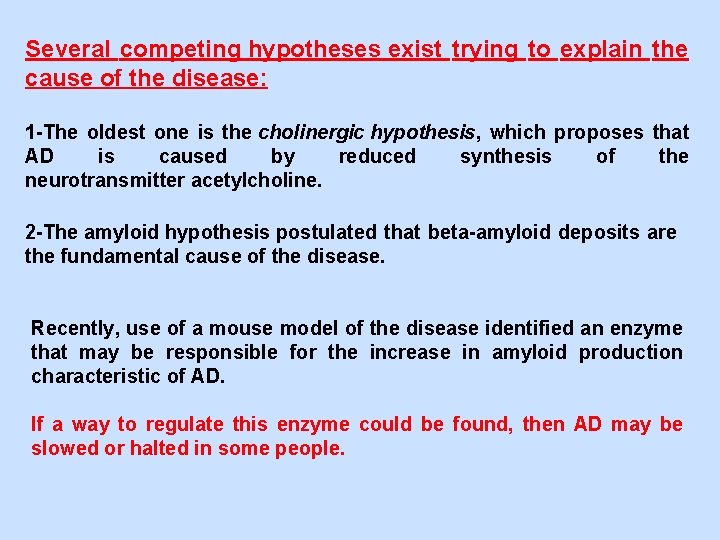
Several competing hypotheses exist trying to explain the cause of the disease: 1 -The oldest one is the cholinergic hypothesis, which proposes that AD is caused by reduced synthesis of the neurotransmitter acetylcholine. 2 -The amyloid hypothesis postulated that beta-amyloid deposits are the fundamental cause of the disease. Recently, use of a mouse model of the disease identified an enzyme that may be responsible for the increase in amyloid production characteristic of AD. If a way to regulate this enzyme could be found, then AD may be slowed or halted in some people.
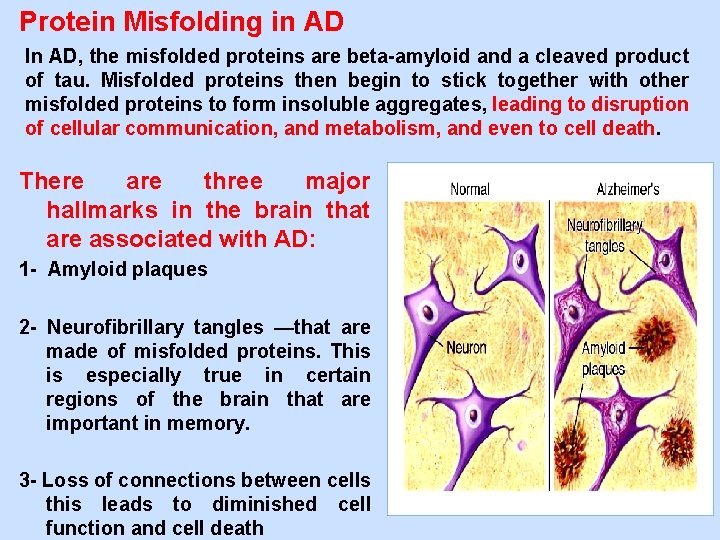
Protein Misfolding in AD In AD, the misfolded proteins are beta-amyloid and a cleaved product of tau. Misfolded proteins then begin to stick together with other misfolded proteins to form insoluble aggregates, leading to disruption of cellular communication, and metabolism, and even to cell death. There are three major hallmarks in the brain that are associated with AD: 1 - Amyloid plaques 2 - Neurofibrillary tangles —that are made of misfolded proteins. This is especially true in certain regions of the brain that are important in memory. 3 - Loss of connections between cells this leads to diminished cell function and cell death
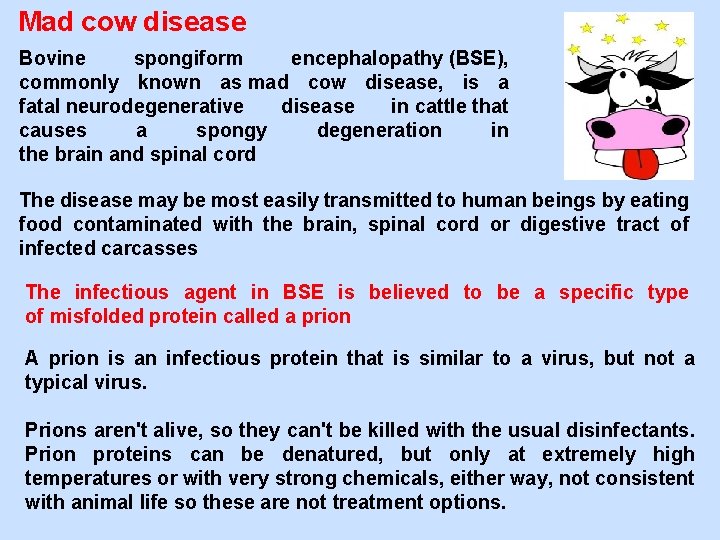
Mad cow disease Bovine spongiform encephalopathy (BSE), commonly known as mad cow disease, is a fatal neurodegenerative disease in cattle that causes a spongy degeneration in the brain and spinal cord The disease may be most easily transmitted to human beings by eating food contaminated with the brain, spinal cord or digestive tract of infected carcasses The infectious agent in BSE is believed to be a specific type of misfolded protein called a prion A prion is an infectious protein that is similar to a virus, but not a typical virus. Prions aren't alive, so they can't be killed with the usual disinfectants. Prion proteins can be denatured, but only at extremely high temperatures or with very strong chemicals, either way, not consistent with animal life so these are not treatment options.
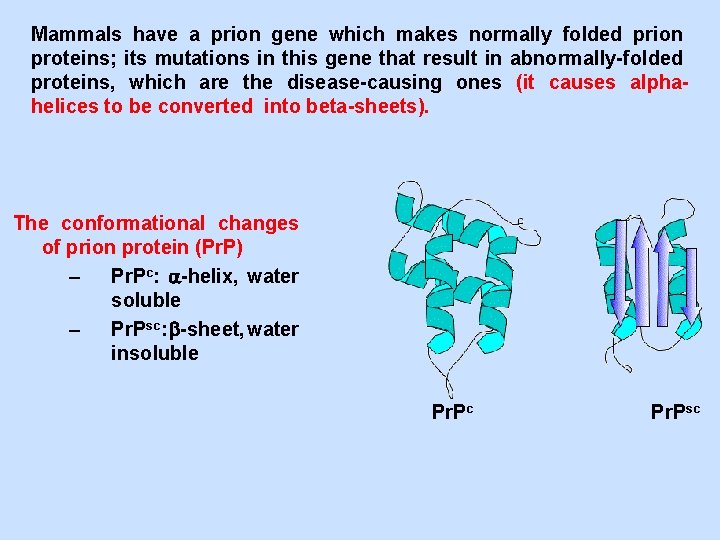
Mammals have a prion gene which makes normally folded prion proteins; its mutations in this gene that result in abnormally-folded proteins, which are the disease-causing ones (it causes alphahelices to be converted into beta-sheets). The conformational changes of prion protein (Pr. P) – Pr. Pc: -helix, water soluble – Pr. Psc: -sheet, water insoluble Pr. Pc Pr. Psc
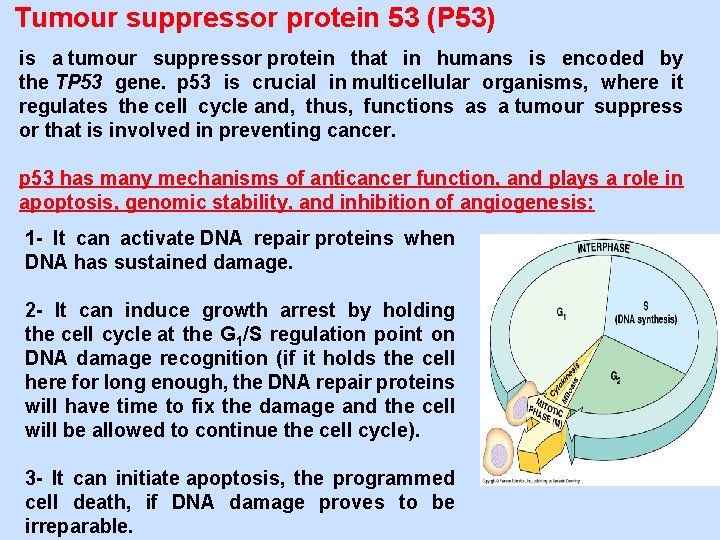
Tumour suppressor protein 53 (P 53) is a tumour suppressor protein that in humans is encoded by the TP 53 gene. p 53 is crucial in multicellular organisms, where it regulates the cell cycle and, thus, functions as a tumour suppress or that is involved in preventing cancer. p 53 has many mechanisms of anticancer function, and plays a role in apoptosis, genomic stability, and inhibition of angiogenesis: 1 - It can activate DNA repair proteins when DNA has sustained damage. 2 - It can induce growth arrest by holding the cell cycle at the G 1/S regulation point on DNA damage recognition (if it holds the cell here for long enough, the DNA repair proteins will have time to fix the damage and the cell will be allowed to continue the cell cycle). 3 - It can initiate apoptosis, the programmed cell death, if DNA damage proves to be irreparable.
If the TP 53 gene is damaged, tumour suppression is severely reduced. People who inherit only one functional copy of the. TP 53 gene will most likely develop tumours in early adulthood, a disease known as Li-Fraumeni syndrome. More than 50 percent a mutation or deletion of the TP 53 gene. of human tumours contain The TP 53 gene can also be damaged in cells by mutagens (chemicals, radiation, or viruses), increasing the likelihood that the cell will begin decontrolled division. The mechanism by which p 53 chooses between growth arrest and apoptosis is not known. Several factors may influence the choice: (1) Cell type (2) Oncogenic composition of the cell (3) The intensity of the stress conditions. (4)The level of p 53 expression and its interaction with specific proteins.