Helping students of primary school to speak and
- Slides: 15
Helping students of primary school to speak and write words and simple sentences in English • Dr. G. Mary Sunanda • HYD TS • INDIA
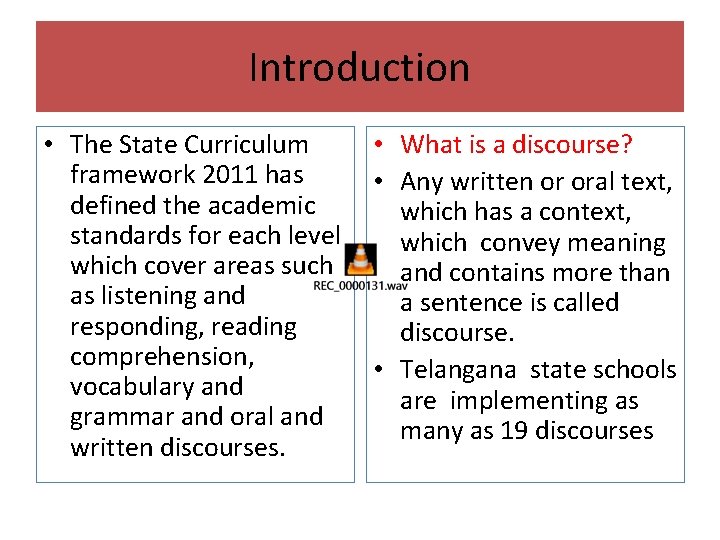
Introduction • The State Curriculum framework 2011 has defined the academic standards for each level which cover areas such as listening and responding, reading comprehension, vocabulary and grammar and oral and written discourses. • What is a discourse? • Any written or oral text, which has a context, which convey meaning and contains more than a sentence is called discourse. • Telangana state schools are implementing as many as 19 discourses
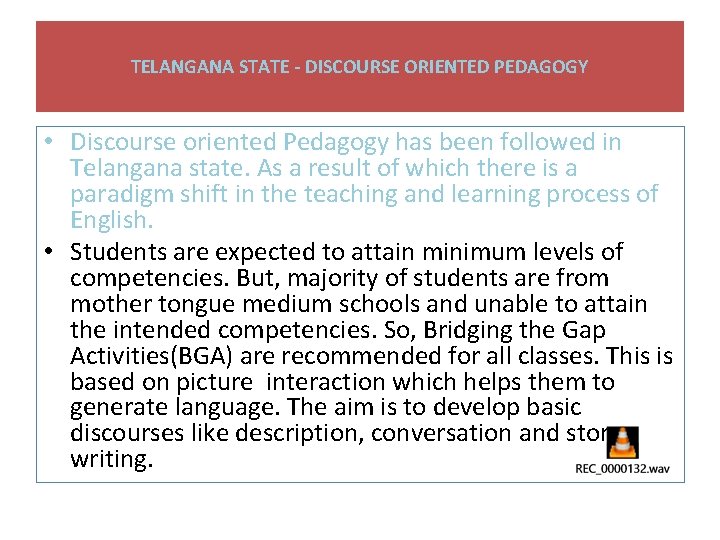
TELANGANA STATE - DISCOURSE ORIENTED PEDAGOGY • Discourse oriented Pedagogy has been followed in Telangana state. As a result of which there is a paradigm shift in the teaching and learning process of English. • Students are expected to attain minimum levels of competencies. But, majority of students are from mother tongue medium schools and unable to attain the intended competencies. So, Bridging the Gap Activities(BGA) are recommended for all classes. This is based on picture interaction which helps them to generate language. The aim is to develop basic discourses like description, conversation and story writing.
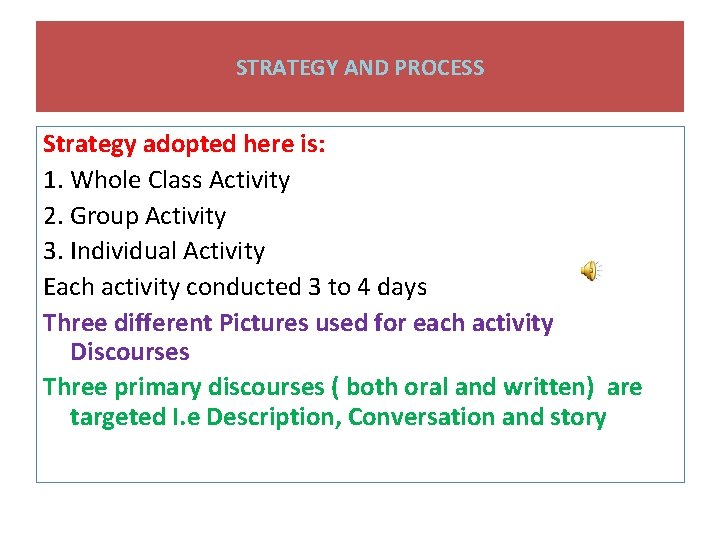
STRATEGY AND PROCESS Strategy adopted here is: 1. Whole Class Activity 2. Group Activity 3. Individual Activity Each activity conducted 3 to 4 days Three different Pictures used for each activity Discourses Three primary discourses ( both oral and written) are targeted I. e Description, Conversation and story
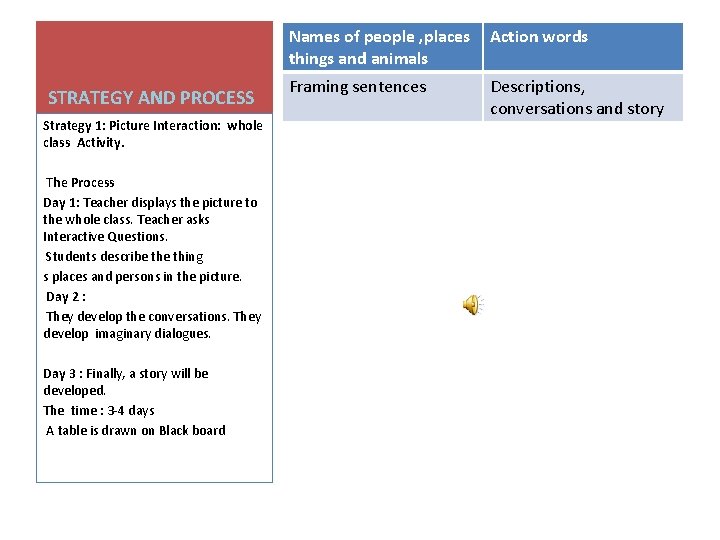
STRATEGY AND PROCESS Strategy 1: Picture Interaction: whole class Activity. The Process Day 1: Teacher displays the picture to the whole class. Teacher asks Interactive Questions. Students describe thing s places and persons in the picture. Day 2 : They develop the conversations. They develop imaginary dialogues. Day 3 : Finally, a story will be developed. The time : 3 -4 days A table is drawn on Black board Names of people , places things and animals Action words Framing sentences Descriptions, conversations and story
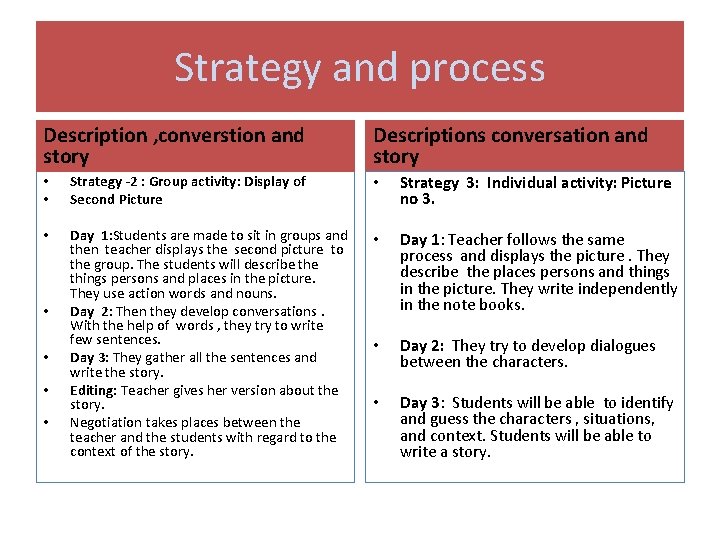
Strategy and process Description , converstion and story Descriptions conversation and story • • Strategy -2 : Group activity: Display of Second Picture • Strategy 3: Individual activity: Picture no 3. • Day 1: Students are made to sit in groups and then teacher displays the second picture to the group. The students will describe things persons and places in the picture. They use action words and nouns. Day 2: Then they develop conversations. With the help of words , they try to write few sentences. Day 3: They gather all the sentences and write the story. Editing: Teacher gives her version about the story. Negotiation takes places between the teacher and the students with regard to the context of the story. • Day 1: Teacher follows the same process and displays the picture. They describe the places persons and things in the picture. They write independently in the note books. • Day 2: They try to develop dialogues between the characters. • Day 3: Students will be able to identify and guess the characters , situations, and context. Students will be able to write a story. • •
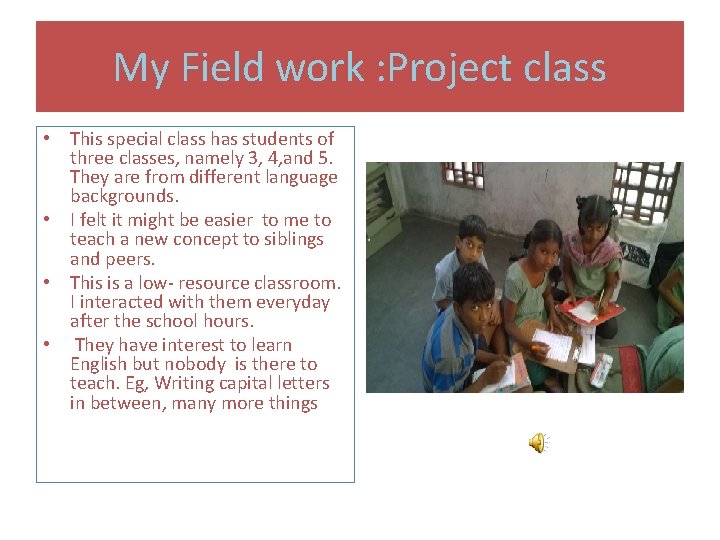
My Field work : Project class • This special class has students of three classes, namely 3, 4, and 5. They are from different language backgrounds. • I felt it might be easier to me to teach a new concept to siblings and peers. • This is a low- resource classroom. I interacted with them everyday after the school hours. • They have interest to learn English but nobody is there to teach. Eg, Writing capital letters in between, many more things
OBJECTIVES • To encourage students to develop language competencies. • To create English speaking environment in classroom • To help them get enough practice in Descriptions Conversations and story telling and writing. • To record the evidences of students. • To share the research among colleagues • To make students autonomous learners of English
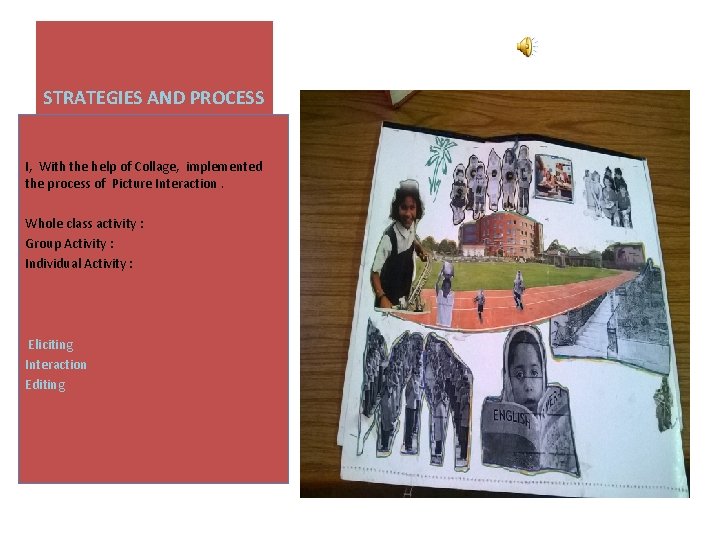
STRATEGIES AND PROCESS I, With the help of Collage, implemented the process of Picture Interaction. Whole class activity : Group Activity : Individual Activity : Eliciting Interaction Editing
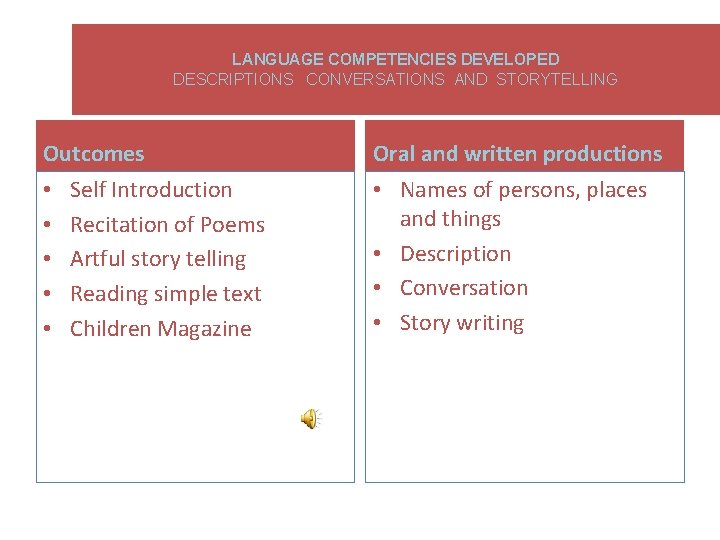
LANGUAGE COMPETENCIES DEVELOPED DESCRIPTIONS CONVERSATIONS AND STORYTELLING Outcomes • • • Self Introduction Recitation of Poems Artful story telling Reading simple text Children Magazine Oral and written productions • Names of persons, places and things • Description • Conversation • Story writing
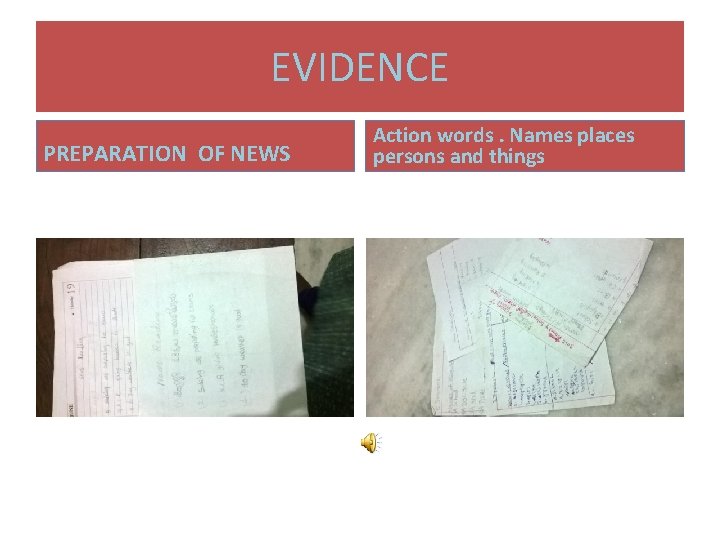
EVIDENCE PREPARATION OF NEWS Action words. Names places persons and things
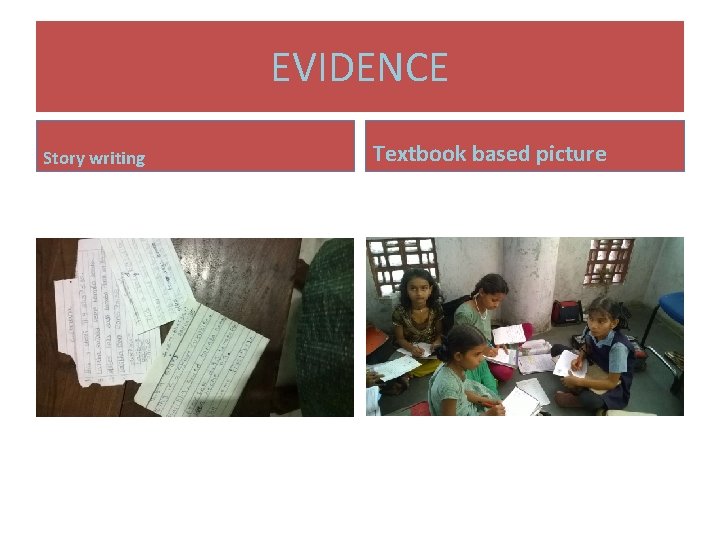
EVIDENCE Story writing Textbook based picture
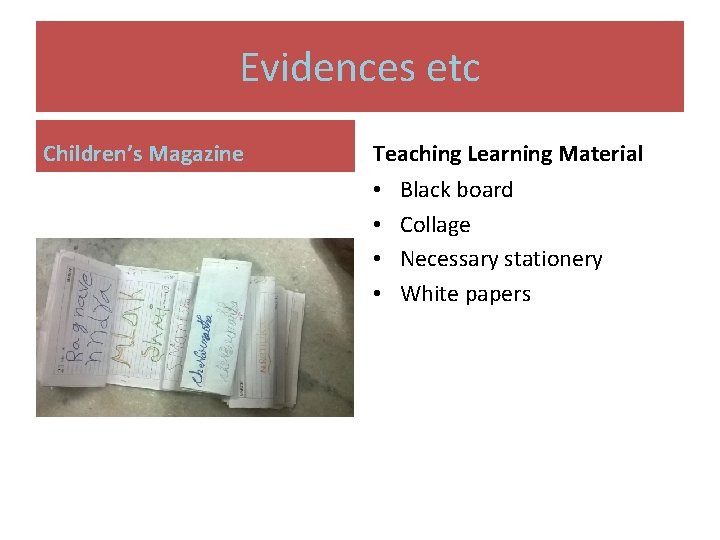
Evidences etc Children’s Magazine Teaching Learning Material • • Black board Collage Necessary stationery White papers
FINIDNGS suggestions • The performed better than the boys. • They like English language • They identified names people, persons and things in the picture • They performed activities of LSRW H with ease. • • Learning is not an isolated process • Teaching is not a hidden or within four walls process • Starting of online course like, Certificate course in English Proficiency -Junior s. 6 th class students can appear for the exam and take the certificate( govt schools) after getting passed. Students will have hands on experience. Certificate course in English Proficiency – seniors. 9 th class students can take a test during the summer vacation. • Teachers must help the students to prepare for these exams, apart from their regular tests and annual exams. • Curriculum should accommodate these changes. Teachers should be encouraged to do Action Research. •
CHALLENGES • Providing a well furnished classroom • Mother tongue intervention • Multilinguism • Attendance