
HELPING PEOPLE CHANGE BEHAVIOR Identifying Stages of Change
HELPING PEOPLE CHANGE BEHAVIOR Identifying Stages of Change Ver D/sv/04. 09. 2013
Ever felt frustrated in helping someone change behavior…
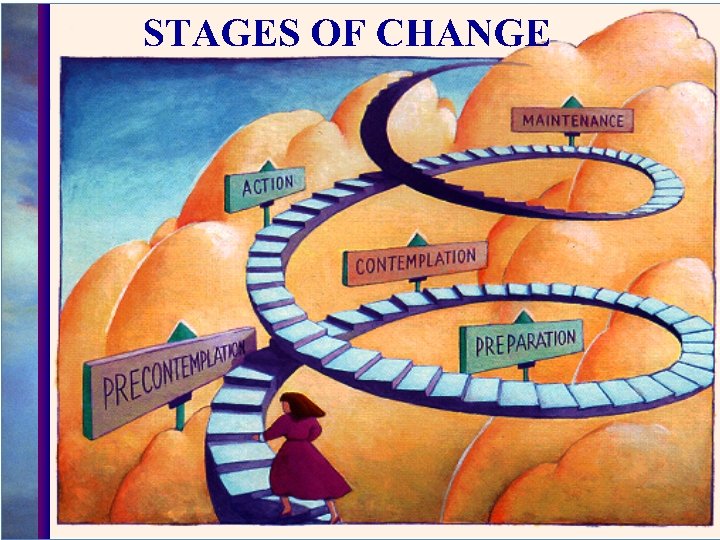
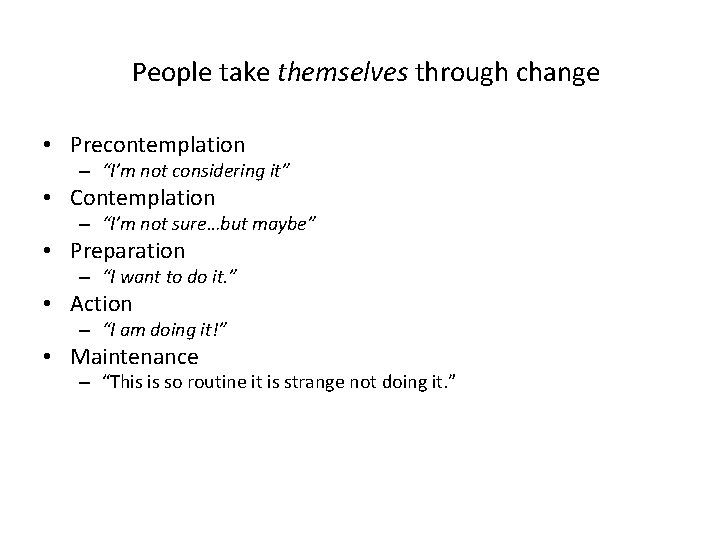
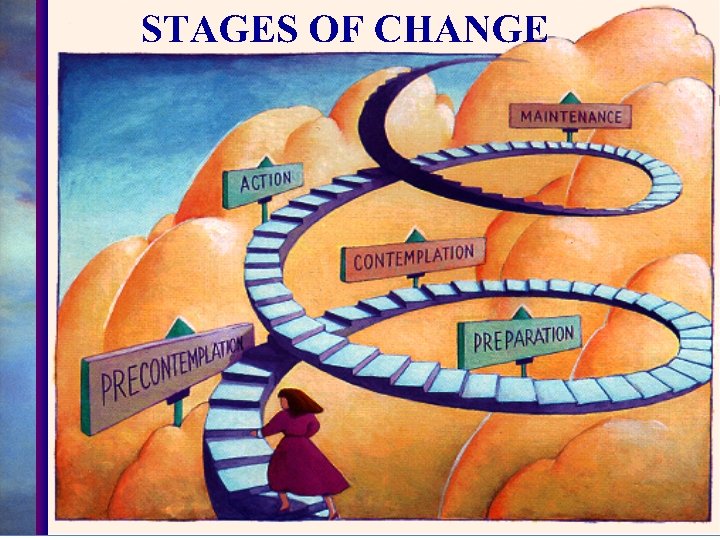
People take themselves through change • Precontemplation – “I’m not considering it” • Contemplation – “I’m not sure…but maybe” • Preparation – “I want to do it. ” • Action – “I am doing it!” • Maintenance – “This is so routine it is strange not doing it. ”
What is Joel’s Stage of Change? Healthy Eating = Physical Activity = Glucose Self-testing = Medication Use =

Joel Healthy Eating Video • Eating Habits. avi How important and how confident do you think Joel is in making changes?

Depression and Diabetes Ver D/sv/04. 09. 2013
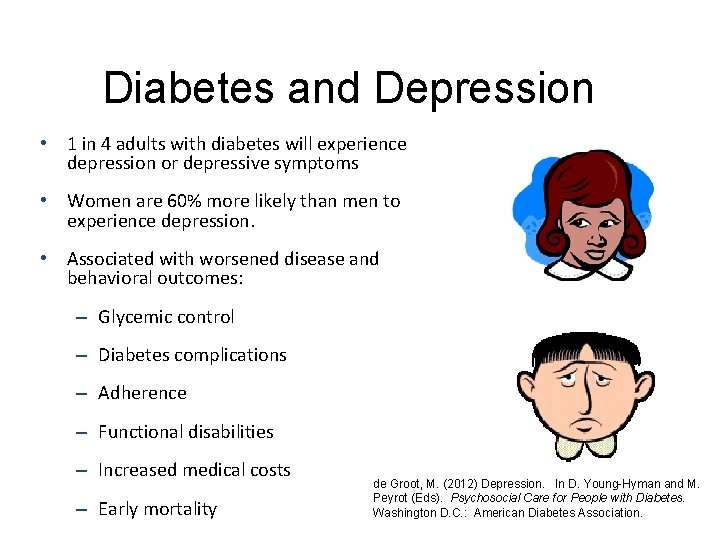
Diabetes and Depression • 1 in 4 adults with diabetes will experience depression or depressive symptoms • Women are 60% more likely than men to experience depression. • Associated with worsened disease and behavioral outcomes: – Glycemic control – Diabetes complications – Adherence – Functional disabilities – Increased medical costs – Early mortality de Groot, M. (2012) Depression. In D. Young-Hyman and M. Peyrot (Eds). Psychosocial Care for People with Diabetes. Washington D. C. : American Diabetes Association.
Screening and Treatment • Screen for depression – PRIME-MD/PHQ-9 – Review responses during the patient visit – Review your institution’s policy on protocol for suicidal intent and plan • Treatment is effective for depression in people with diabetes – Talk therapy (psychotherapy) (Lustman et al. , 1998) – Antidepressant medication (Lustman et al. , 1997, 2000, 2006)
Role of Healthcare Providers • • • You can set the tone for the discussion of depression Identify local mental health referral sources Make referrals as needed Monitor changes in mood at each visit Follow-up referrals at the next contact – Pt adherence to antidepressant medication – Counseling services • Monitor medications over the long-term

HELPING PEOPLE CHANGE BEHAVIOR Through Motivational Interviewing Ver D/sv/04. 09. 2013
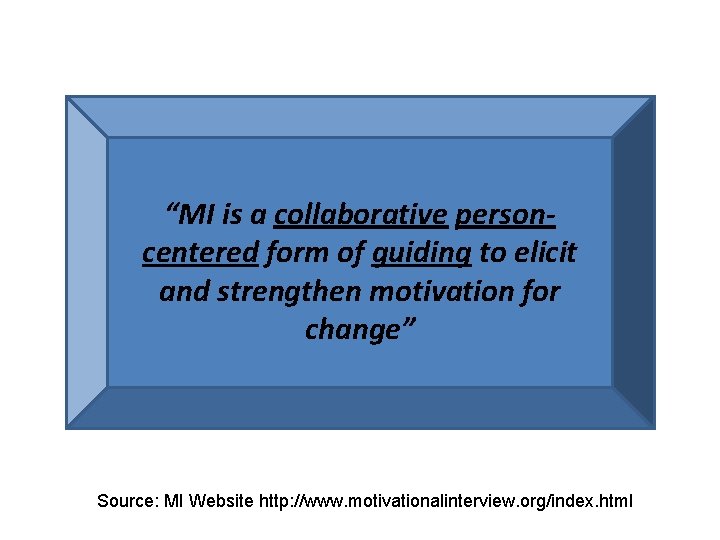
“MI is a collaborative personcentered form of guiding to elicit and strengthen motivation for change” Source: MI Website http: //www. motivationalinterview. org/index. html
Goals of MI • Involve the patient as an active participant in the relationship with you. • Learn brief motivational strategies for use in health care settings. • Clinician creates opportunities for people to explore change based on careful listening and empathy. Motivational Interviewing in Health Care: Rollnick, Miller and Butler 2008
“Patients have most of their answers within them. ”
What tips the balance against change? • • • Lecturing arguing warning Overly directive Telling pt what to do before they are ready Trying to insert information into the patient You working harder than the patient
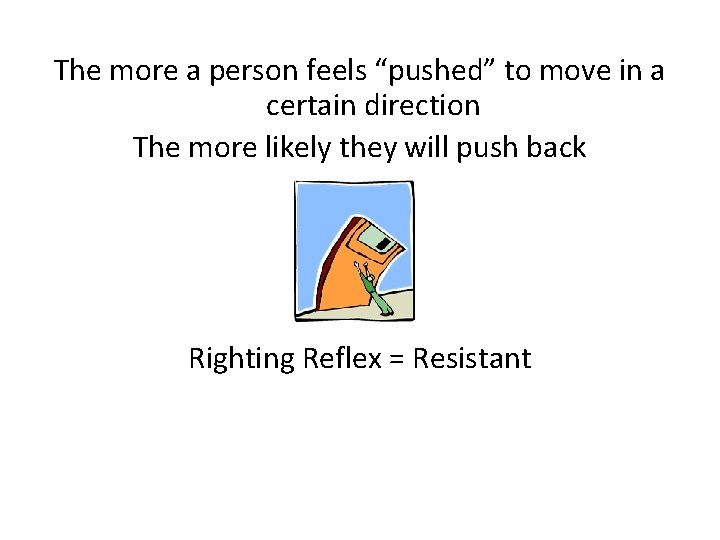
The more a person feels “pushed” to move in a certain direction The more likely they will push back Righting Reflex = Resistant
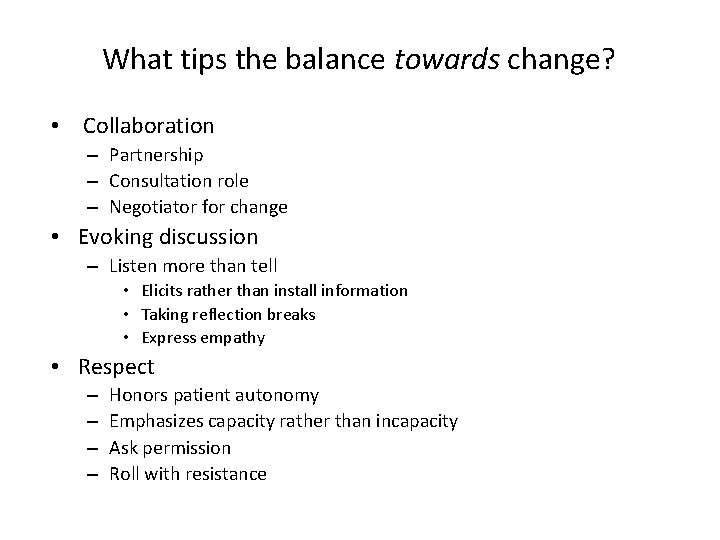
What tips the balance towards change? • Collaboration – Partnership – Consultation role – Negotiator for change • Evoking discussion – Listen more than tell • Elicits rather than install information • Taking reflection breaks • Express empathy • Respect – – Honors patient autonomy Emphasizes capacity rather than incapacity Ask permission Roll with resistance
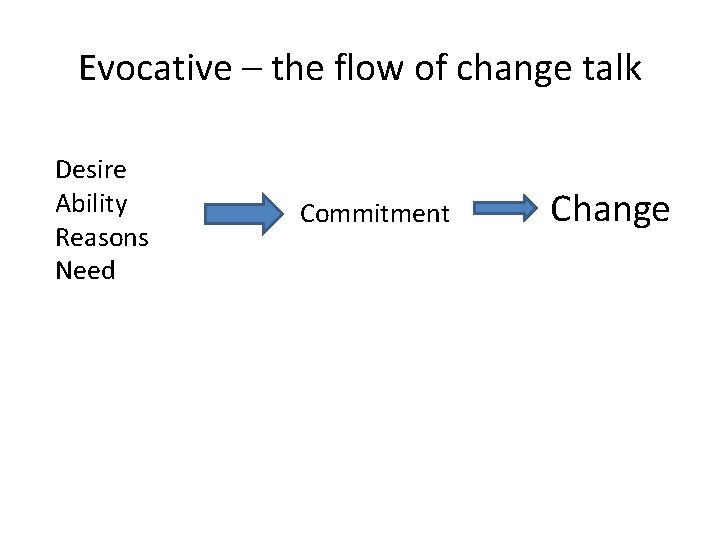
Evocative – the flow of change talk Desire Ability Reasons Need Commitment Change
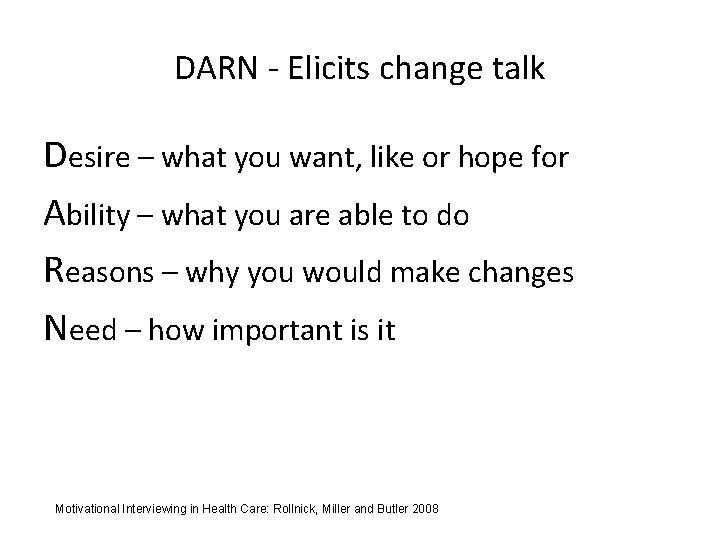
DARN - Elicits change talk Desire – what you want, like or hope for Ability – what you are able to do Reasons – why you would make changes Need – how important is it Motivational Interviewing in Health Care: Rollnick, Miller and Butler 2008
Human Ruler
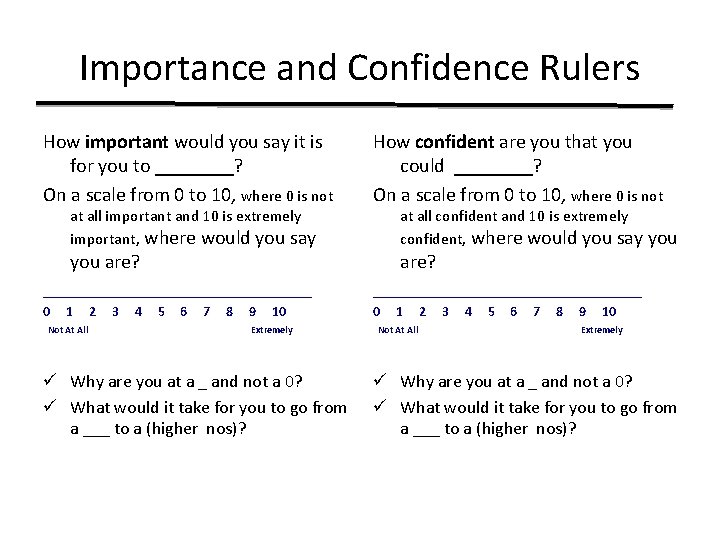
Importance and Confidence Rulers How important would you say it is for you to ____? On a scale from 0 to 10, where 0 is not at all important and 10 is extremely important, where would you say How confident are you that you could ____? On a scale from 0 to 10, where 0 is not at all confident and 10 is extremely confident, where would you say you are? ______________________________ 0 0 1 Not At All 2 3 4 5 6 7 8 9 10 Extremely ü Why are you at a _ and not a 0? ü What would it take for you to go from a ___ to a (higher nos)?
Contemplation Stage: Physical Activity • Physical Activity. avi
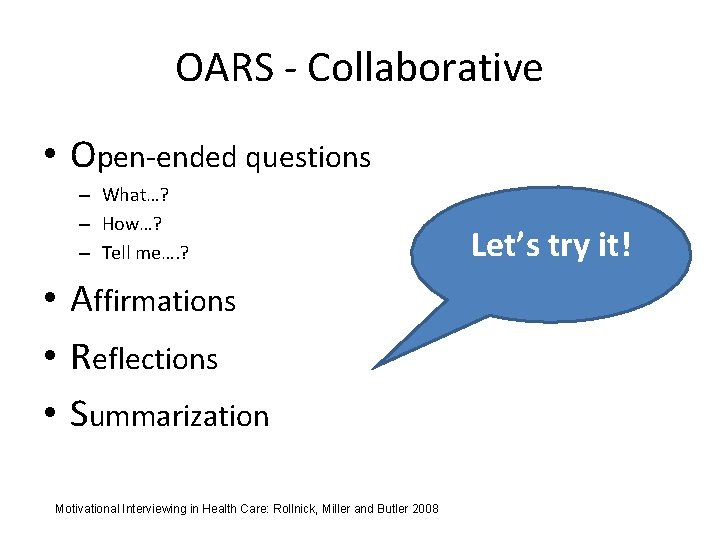
OARS - Collaborative • Open-ended questions – What…? – How…? – Tell me…. ? • Affirmations • Reflections • Summarization Motivational Interviewing in Health Care: Rollnick, Miller and Butler 2008 Let’s try it!
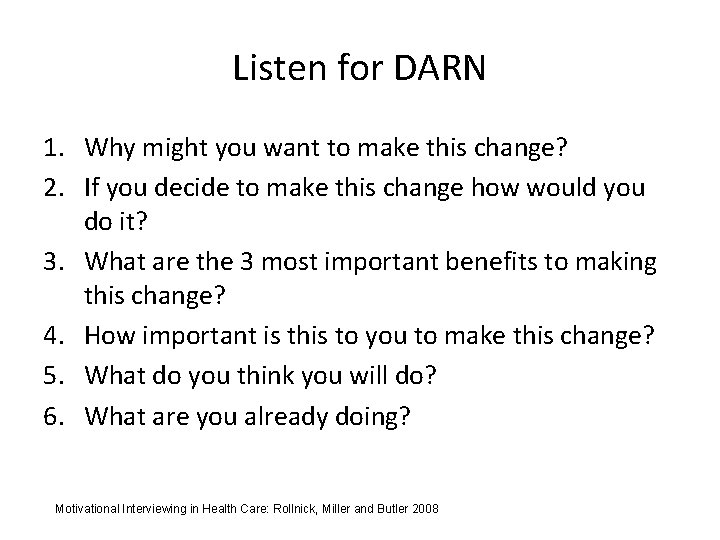
Listen for DARN 1. Why might you want to make this change? 2. If you decide to make this change how would you do it? 3. What are the 3 most important benefits to making this change? 4. How important is this to you to make this change? 5. What do you think you will do? 6. What are you already doing? Motivational Interviewing in Health Care: Rollnick, Miller and Butler 2008
Listen for Commitment So, what do you make of all this now? What do you think you’ll do? What, if anything, do you plan to do? What do you intend to do?
Why, oh why won’t our patients just DO what we TELL them to do? ? ? .
Try Ambivalence on for Size • Think of something you are ambivalent about. • Take turns guiding each other toward change. • REMEMBER …YOU have the answers inside.
Putting it all together for Joel Healthy Eating => Precontemplation Physical Activity => Contemplation Glucose Self-testing => Preparation Medication Use => Action/ Maintenance Smoking => Action

- Slides: 32