
Helping and Happiness Prosocial behavior What is prosocial
Helping and Happiness
Prosocial behavior � What is prosocial behavior? Altruism? � Why do people help? Or not help? � WARNING: https: //www. youtube. com/watch? v=N 9 Ku. UR 2 -p 9 Q � Do animals show prosocial behavior?

Micro-level factors (see Table 10. 1) � Evolutionary roots � Neuro structures � Empathy � Development � Personality � Attachment/Relationships
Evolutionary approaches to prosocial behavior � Kin altruism/inclusive fitness � Reciprocal altruism (Direct vs Indirect) � Signaling theory
Empathy � Davis’s IRI ◦ What are the components?

Developmental processes � Temperament � Socialization � Social/cognitive development
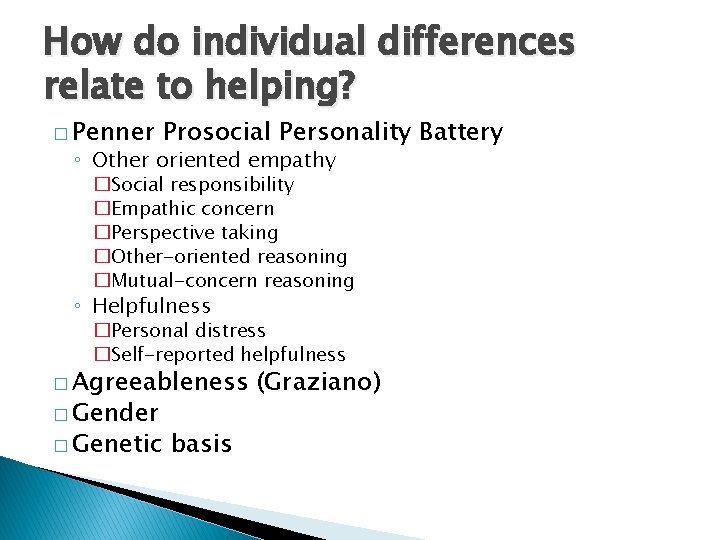
How do individual differences relate to helping? � Penner Prosocial Personality Battery ◦ Other oriented empathy �Social responsibility �Empathic concern �Perspective taking �Other-oriented reasoning �Mutual-concern reasoning ◦ Helpfulness �Personal distress �Self-reported helpfulness � Agreeableness � Gender � Genetic basis (Graziano)
Meso-level variables � Situational factors � Motivations for helping � Recipients’ reaction to aid
Bystander intervention (Latané & Darley, 1969) � What are the steps? � What are the processes? � What mattered and didn’t matter in helping rates in their studies? � Why did they get more help with the ‘other’ was a friend than a stranger? � Why don’t people admit others’ influence? � Why didn’t they help?
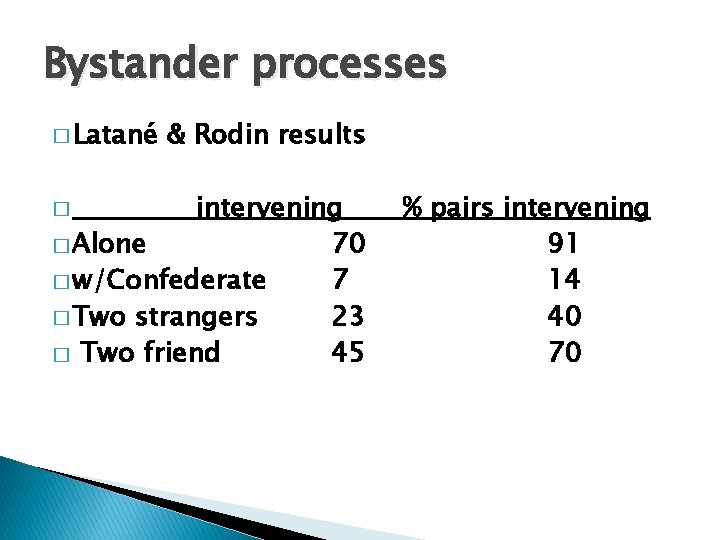
Bystander processes � Latané & Rodin results intervening � Alone 70 � w/Confederate 7 � Two strangers 23 � Two friend 45 � % pairs intervening 91 14 40 70
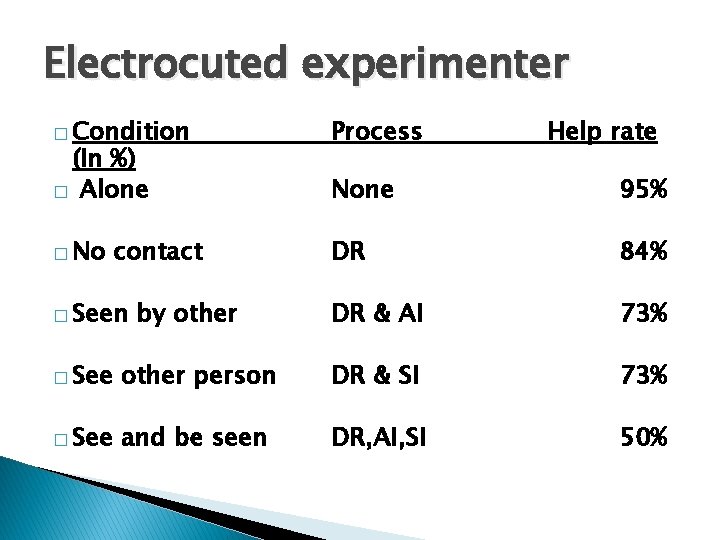
Electrocuted experimenter � Condition (In %) � Alone � No contact � Seen by other Process Help rate None 95% DR 84% DR & AI 73% � See other person DR & SI 73% � See and be seen DR, AI, SI 50%
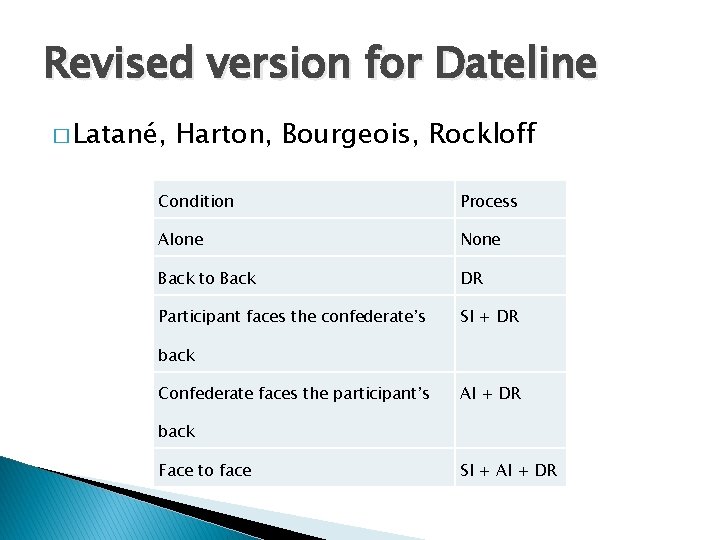
Revised version for Dateline � Latané, Harton, Bourgeois, Rockloff Condition Process Alone None Back to Back DR Participant faces the confederate’s SI + DR back Confederate faces the participant’s AI + DR back Face to face SI + AI + DR
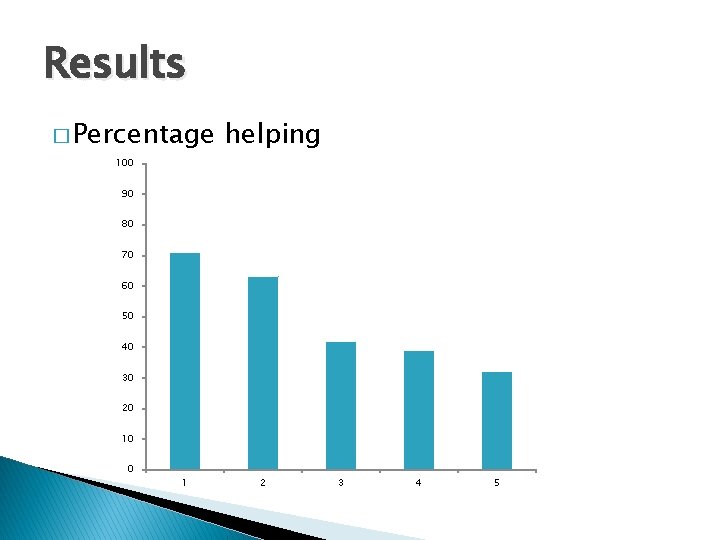
Results � Percentage helping 100 90 80 70 60 50 40 30 20 10 0 1 2 3 4 5
Philpot, Liebst, Levine, Bernasco, & Rosenkrantz Lindegaard, 2019 � What did they do in this study? � Do their results go against the bystander effect?
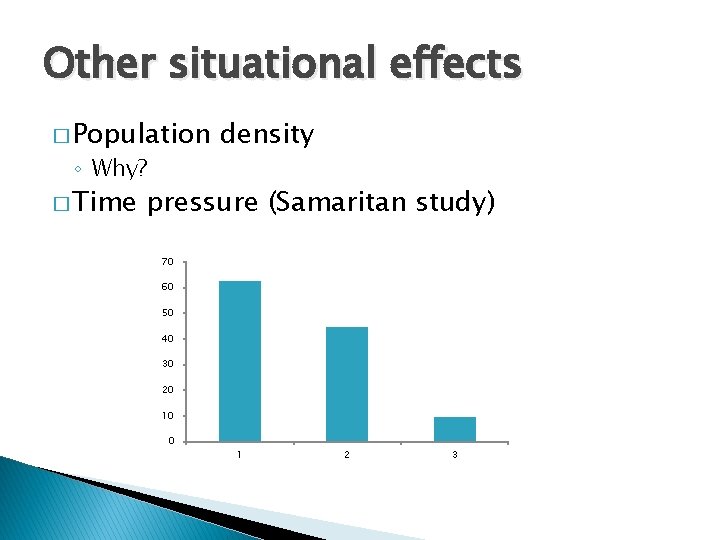
Other situational effects � Population ◦ Why? � Time density pressure (Samaritan study) 70 60 50 40 30 20 10 0 1 2 3
Batson’s motivations � Egoism ◦ Arousal: cost-reward model (Dovidio, Piliavin) ◦ Negative state relief model (Cialdini) � Altruism � Collectivism � Principalism
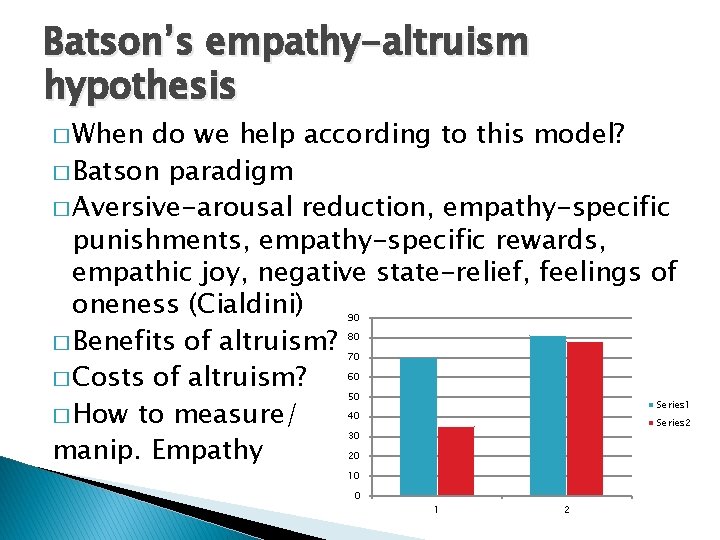
Batson’s empathy-altruism hypothesis � When do we help according to this model? � Batson paradigm � Aversive-arousal reduction, empathy-specific punishments, empathy-specific rewards, empathic joy, negative state-relief, feelings of oneness (Cialdini) � Benefits of altruism? � Costs of altruism? � How to measure/ manip. Empathy 90 80 70 60 50 Series 1 40 Series 2 30 20 10 0 1 2
Who asks for help? � Who is more likely to ask for help? � From whom?
Macro level � Volunteerism � Cooperation ◦ Resource dilemmas (tragedy of the commons) ◦ Public goods dilemmas ◦ Social value orientation � Intergroup helping
Volunteerism � How does it differ from other types of helping? � What leads people to volunteer? � Should service learning be required? � Differences by country
Cultural differences in helping � See Table 2: http: //www 2. psych. ubc. ca/~ara/Manuscripts /Levine%20 et%20 al%20 helping. pdf � Cultural differences in 3 situations � More per capita purchasing power, less helping � Hispanic countries tended to be higher � NO relationship to individualism/collectivism � Why?
Heroism � What is heroism? � Can anyone be a hero? � Is it automatic? � How does it differ from altruism? � Who is a hero? � How is heroism socially constructed?
How can you increase prosocial behavior? � http: //www. youtube. com/watch? v=6 Jf. HB 2 cru JU � http: //heroicimagination. org/
Positive psychology � History � http: //ppc. sas. upenn. edu/ � What is it?
Subjective well being � What is SWB? � How is it different from objective well being? � How is it operationally defined? � What relates to higher SWB? � How can you increase your SWB? � How can policies increase it?
Theories of SWB � Set point/hedonic adaptation � Satisfaction of goals � Mental states
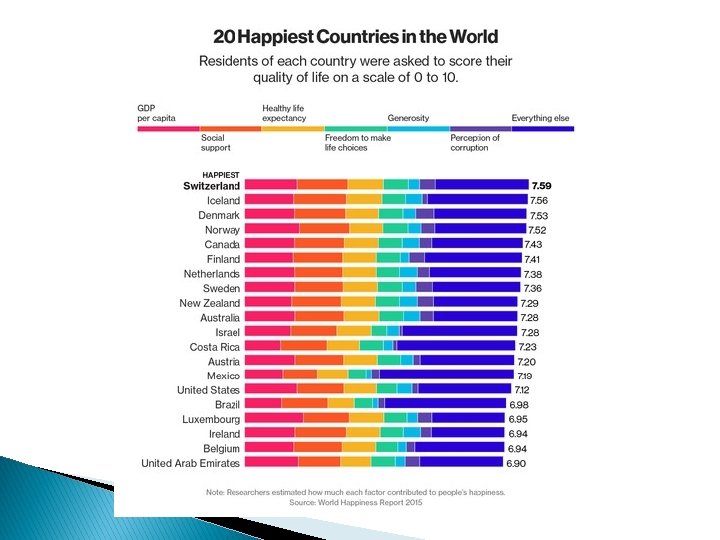
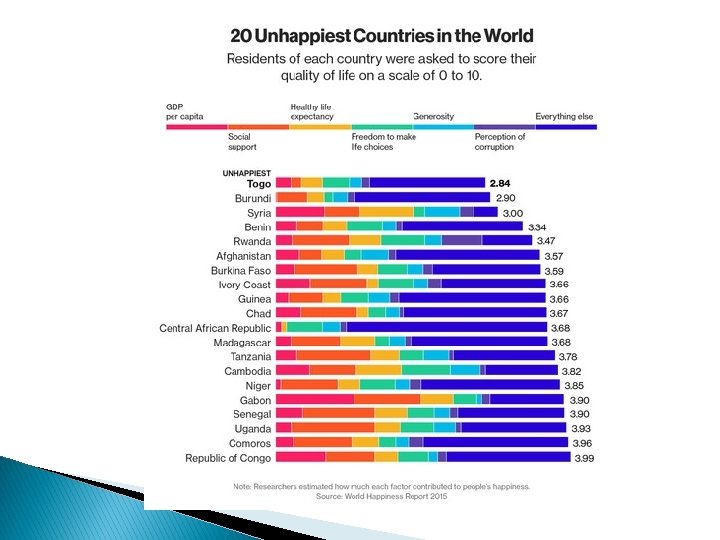
Cultural differences in SWB � What are some of the differences? � Why are there differences?
Coming up � https: //sites. uni. edu/harton/papinfo. htm
- Slides: 30