
Hello Year 7 My name is Mrs Marks



- Slides: 10
Hello Year 7! My name is Mrs Marks and I am the Head of English at De La Salle. I have visited many of your primary schools and I have been very impressed with the quality of work you have produced. I am really looking forward to meeting you all and I know the rest of the English teachers at De La Salle are excited to meet you too!
Analysing Fiction Texts When studying a piece of fiction, you should always keep in mind that the writer is trying to create effects for the reader. Every decision they make is deliberate (where they choose to set the story, the words they choose to use, the names of their characters) and designed to make us readers think and feel a certain way.
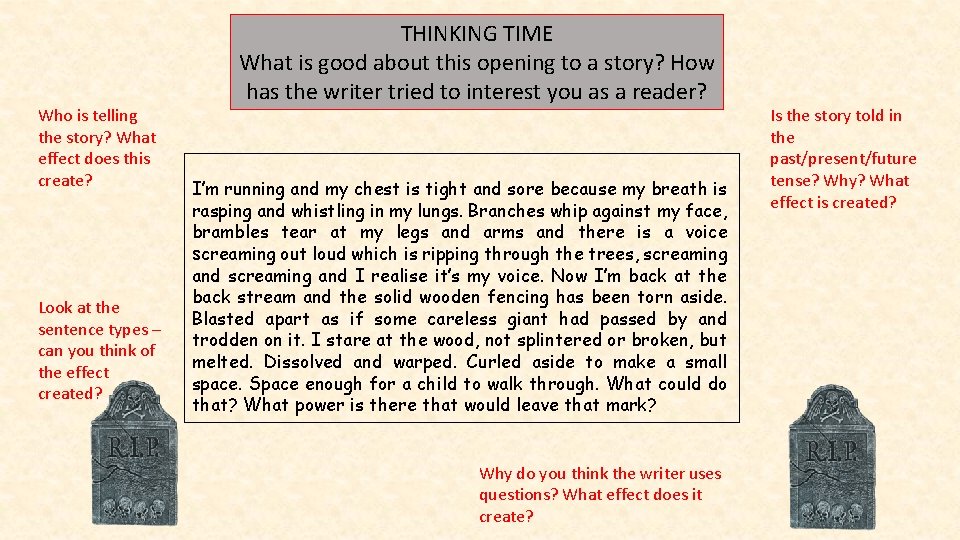
Who is telling the story? What effect does this create? Look at the sentence types – can you think of the effect created? THINKING TIME What is good about this opening to a story? How has the writer tried to interest you as a reader? I’m running and my chest is tight and sore because my breath is rasping and whistling in my lungs. Branches whip against my face, brambles tear at my legs and arms and there is a voice screaming out loud which is ripping through the trees, screaming and I realise it’s my voice. Now I’m back at the back stream and the solid wooden fencing has been torn aside. Blasted apart as if some careless giant had passed by and trodden on it. I stare at the wood, not splintered or broken, but melted. Dissolved and warped. Curled aside to make a small space. Space enough for a child to walk through. What could do that? What power is there that would leave that mark? Why do you think the writer uses questions? What effect does it create? Is the story told in the past/present/future tense? Why? What effect is created?
WHAT ABOUT THE FOLLOWING? First person narrator – creates a bond with the reader. We are told things from their perspective. A range of simple and complex sentences are used I’m running and my chest is tight and sore because my breath is rasping and whistling in my lungs. Branches whip against my face, brambles tear at my legs and arms and there is a voice screaming out loud which is ripping through the trees, screaming and I realise it’s my voice. Now I’m back at the back stream and the solid wooden fencing has been torn aside. Blasted apart as if some careless giant had passed by and trodden on it. I stare at the wood, not splintered or broken, but melted. Dissolved and warped. Curled aside to make a small space. Space enough for a child to walk through. What could do that? What power is there that would leave that mark? The questions create tension and raise questions that the reader wants an answer to – what is the danger the character faces? The story is in the present tense. It is happening as it unfolds. Creates a sense of immediacy and danger.
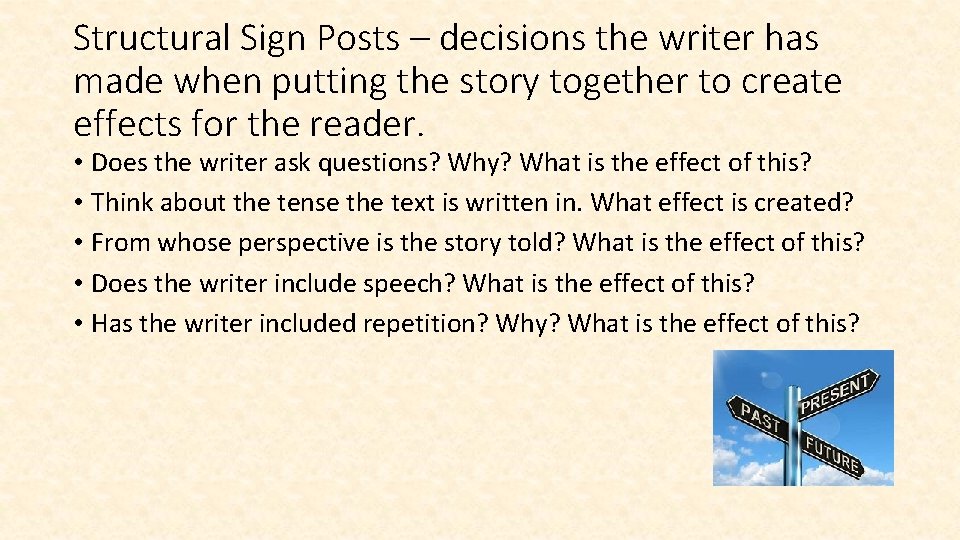
Structural Sign Posts – decisions the writer has made when putting the story together to create effects for the reader. • Does the writer ask questions? Why? What is the effect of this? • Think about the tense the text is written in. What effect is created? • From whose perspective is the story told? What is the effect of this? • Does the writer include speech? What is the effect of this? • Has the writer included repetition? Why? What is the effect of this?
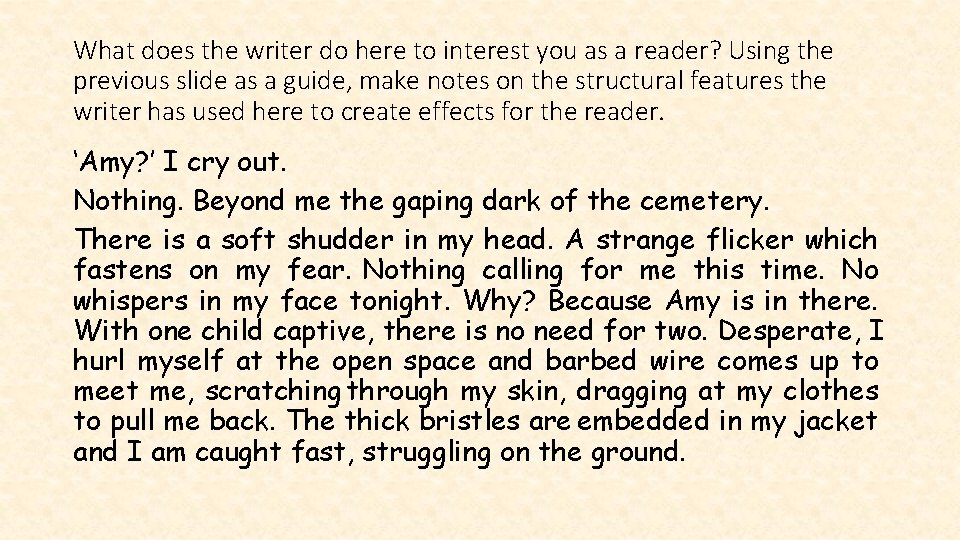
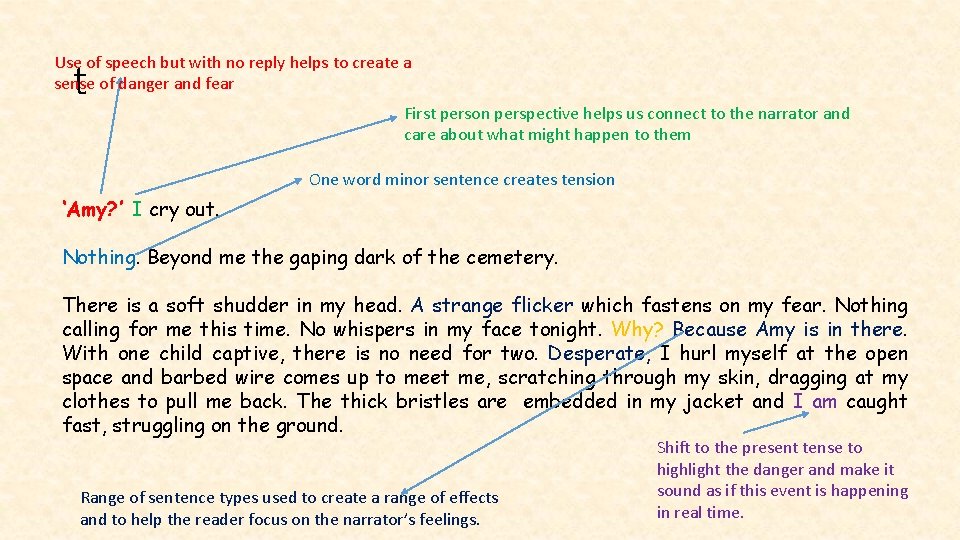
What does the writer do here to interest you as a reader? Using the previous slide as a guide, make notes on the structural features the writer has used here to create effects for the reader. ‘Amy? ’ I cry out. Nothing. Beyond me the gaping dark of the cemetery. There is a soft shudder in my head. A strange flicker which fastens on my fear. Nothing calling for me this time. No whispers in my face tonight. Why? Because Amy is in there. With one child captive, there is no need for two. Desperate, I hurl myself at the open space and barbed wire comes up to meet me, scratching through my skin, dragging at my clothes to pull me back. The thick bristles are embedded in my jacket and I am caught fast, struggling on the ground.
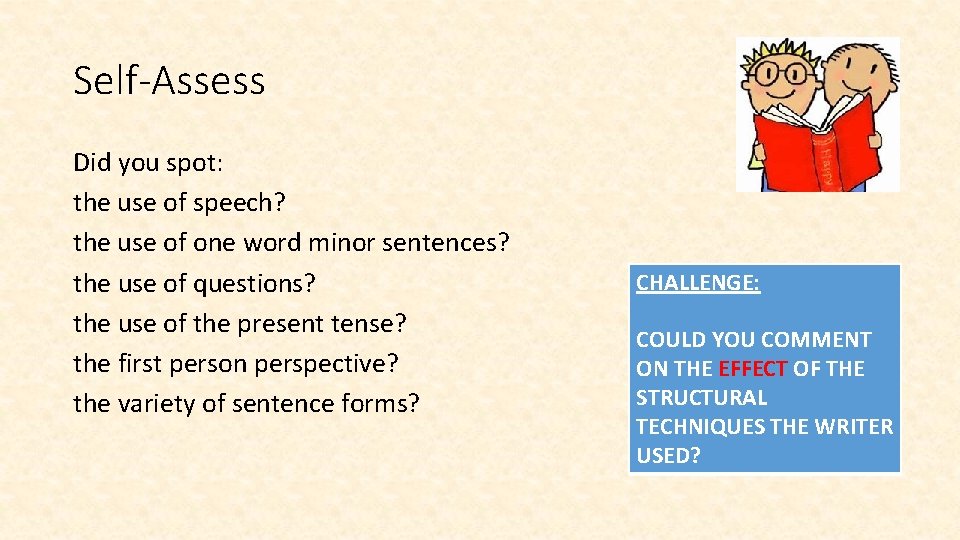
Self-Assess Did you spot: the use of speech? the use of one word minor sentences? the use of questions? the use of the present tense? the first person perspective? the variety of sentence forms? CHALLENGE: COULD YOU COMMENT ON THE EFFECT OF THE STRUCTURAL TECHNIQUES THE WRITER USED?
Use of speech but with no reply helps to create a sense of danger and fear t First person perspective helps us connect to the narrator and care about what might happen to them One word minor sentence creates tension ‘Amy? ’ I cry out. Nothing. Beyond me the gaping dark of the cemetery. There is a soft shudder in my head. A strange flicker which fastens on my fear. Nothing calling for me this time. No whispers in my face tonight. Why? Because Amy is in there. With one child captive, there is no need for two. Desperate, I hurl myself at the open space and barbed wire comes up to meet me, scratching through my skin, dragging at my clothes to pull me back. The thick bristles are embedded in my jacket and I am caught fast, struggling on the ground. Range of sentence types used to create a range of effects and to help the reader focus on the narrator’s feelings. Shift to the present tense to highlight the danger and make it sound as if this event is happening in real time.
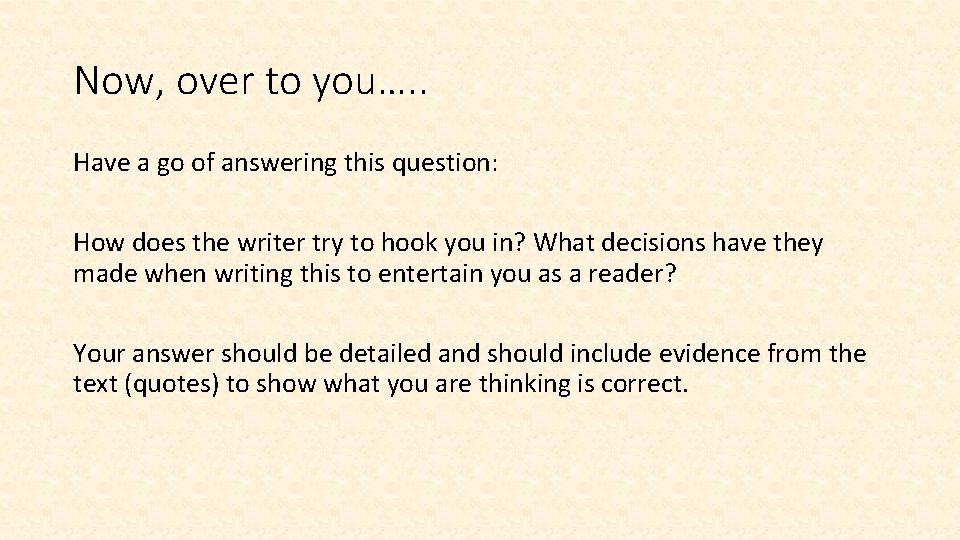
Now, over to you…. . Have a go of answering this question: How does the writer try to hook you in? What decisions have they made when writing this to entertain you as a reader? Your answer should be detailed and should include evidence from the text (quotes) to show what you are thinking is correct.
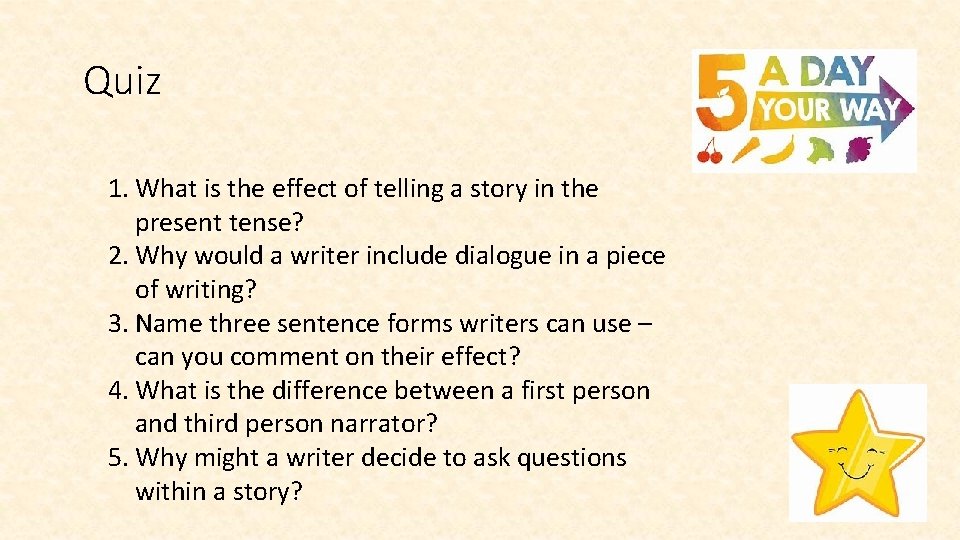
Quiz 1. What is the effect of telling a story in the present tense? 2. Why would a writer include dialogue in a piece of writing? 3. Name three sentence forms writers can use – can you comment on their effect? 4. What is the difference between a first person and third person narrator? 5. Why might a writer decide to ask questions within a story?