
HELICOPTERSHIP INTERFACE TESTING CONFIGURATION MANAGEMENT SETPSFTE San Jose
- Slides: 27
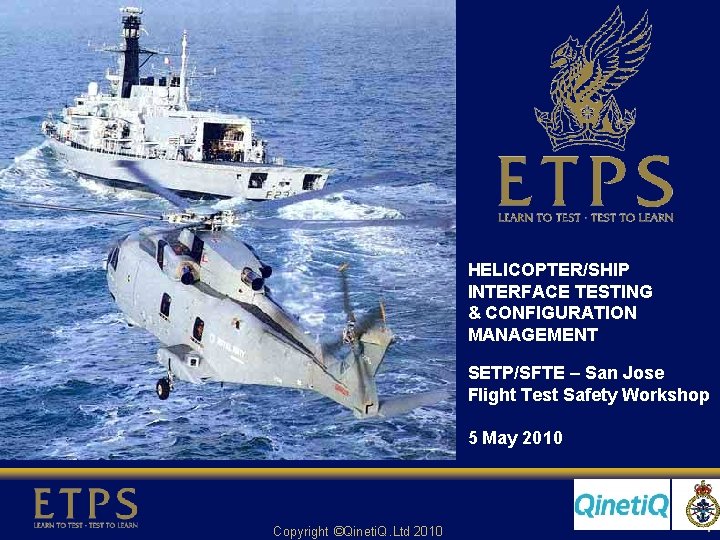
HELICOPTER/SHIP INTERFACE TESTING & CONFIGURATION MANAGEMENT SETP/SFTE – San Jose Flight Test Safety Workshop 5 May 2010 Copyright ©Qineti. Q. Ltd 2010 1
Paul Edwards Technical Manager and TP Tutor Royal Navy 1985 – 2004 ETPS RW TP COURSE 1998 Bob Badham Principal FTE Tutor A&AEE/DERA/Qineti. Q Boscombe Down ETPS RW FTE COURSE 1980 2
The Need for HSIT Training Operating a helicopter to a moving deck is a challenging undertaking Operators need a clearance that will keep them as safe as possible while providing the greatest flexibility possible Testers need to provide this clearance SAFELY & EFFICIENTLY To do this, Testers need to understand HSIT methodologies and their options thoroughly. 3
What are we testing? The ability of pilot & machine to effect a safe deck transition (take off & landing) Configuration variation is immense Desired envelope to be defined by end user Desired configuration range may not be completely known 4
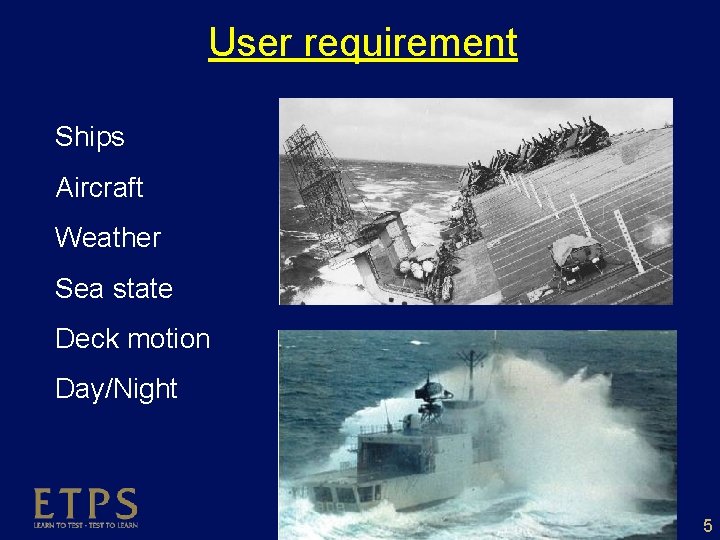
User requirement Ships Aircraft Weather Sea state Deck motion Day/Night 5
Configuration!? The challenge is CONFIGURATION Audience participation phase …… What principal areas do we need to consider in our configuration management? 6
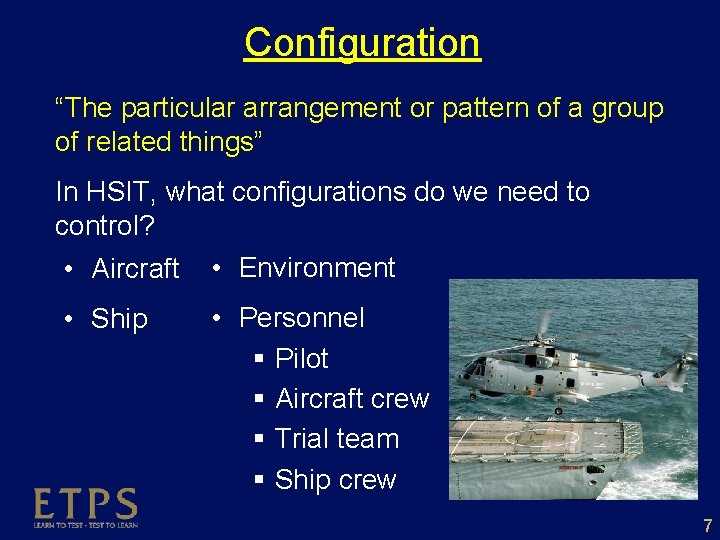
Configuration “The particular arrangement or pattern of a group of related things” In HSIT, what configurations do we need to control? • Aircraft • Environment • Ship • Personnel § Pilot § Aircraft crew § Trial team § Ship crew 7
Configuration 1 - Aircraft AUM Referred mass CG FCS Clearance for degraded mode? External Stores Handling & Performance effects? Jettisonable ballast? Deck Interface Clearance for degraded mode? Cockpit Armour 8
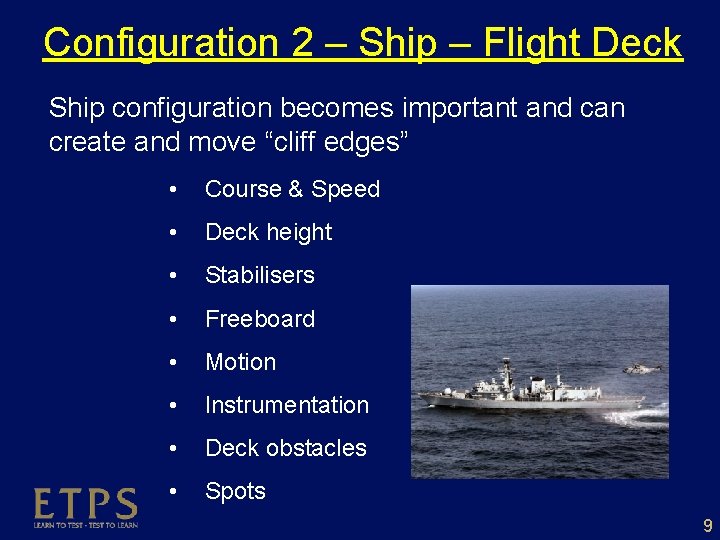
Configuration 2 – Ship – Flight Deck Ship configuration becomes important and can create and move “cliff edges” • Course & Speed • Deck height • Stabilisers • Freeboard • Motion • Instrumentation • Deck obstacles • Spots 9
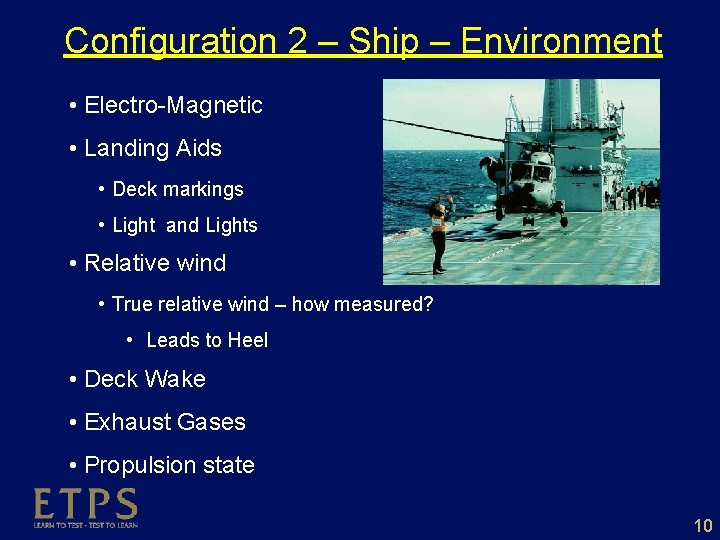
Configuration 2 – Ship – Environment • Electro-Magnetic • Landing Aids • Deck markings • Light and Lights • Relative wind • True relative wind – how measured? • Leads to Heel • Deck Wake • Exhaust Gases • Propulsion state 10
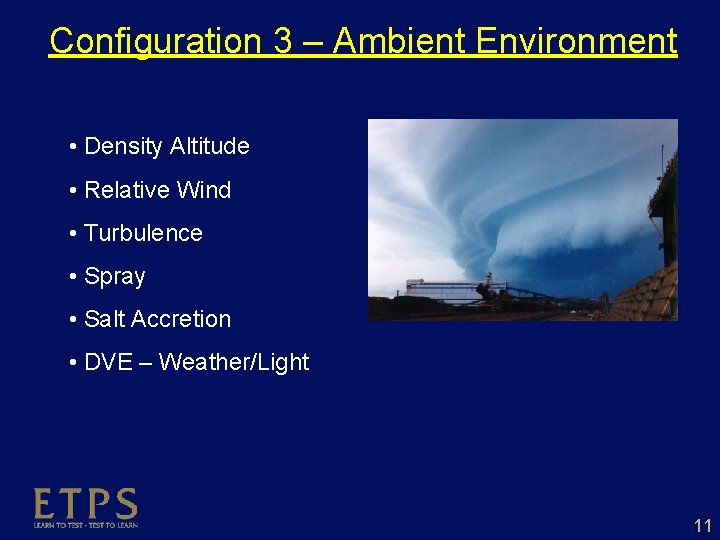
Configuration 3 – Ambient Environment • Density Altitude • Relative Wind • Turbulence • Spray • Salt Accretion • DVE – Weather/Light 11
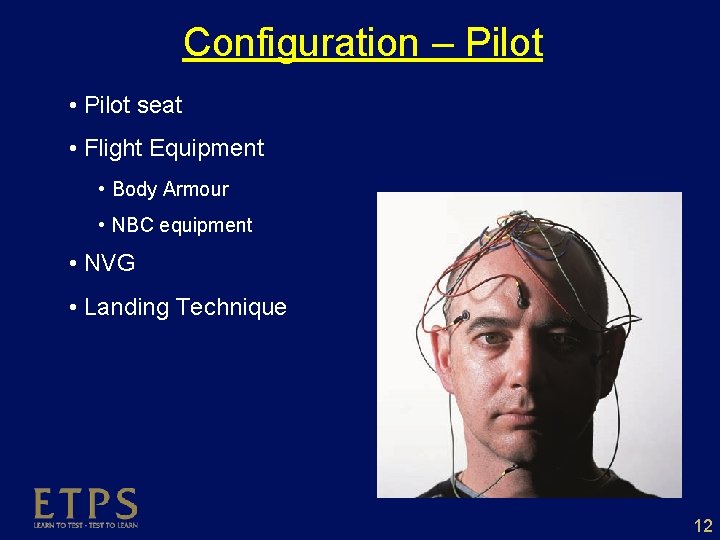
Configuration – Pilot • Pilot seat • Flight Equipment • Body Armour • NBC equipment • NVG • Landing Technique 12
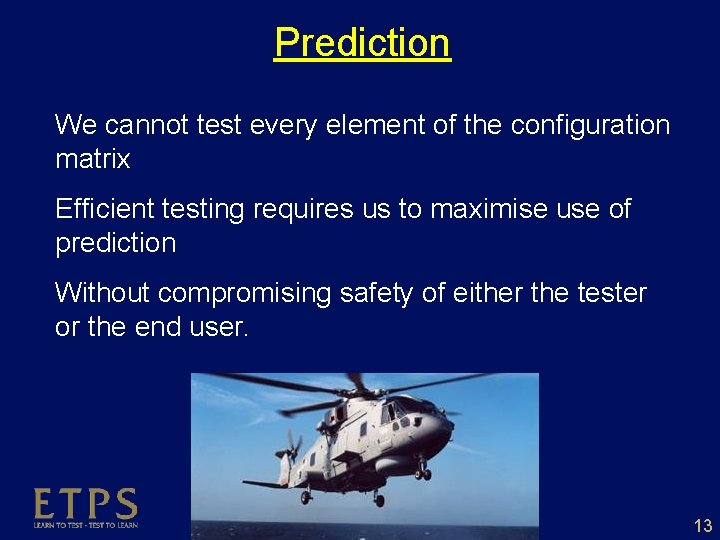
Prediction We cannot test every element of the configuration matrix Efficient testing requires us to maximise use of prediction Without compromising safety of either the tester or the end user. 13
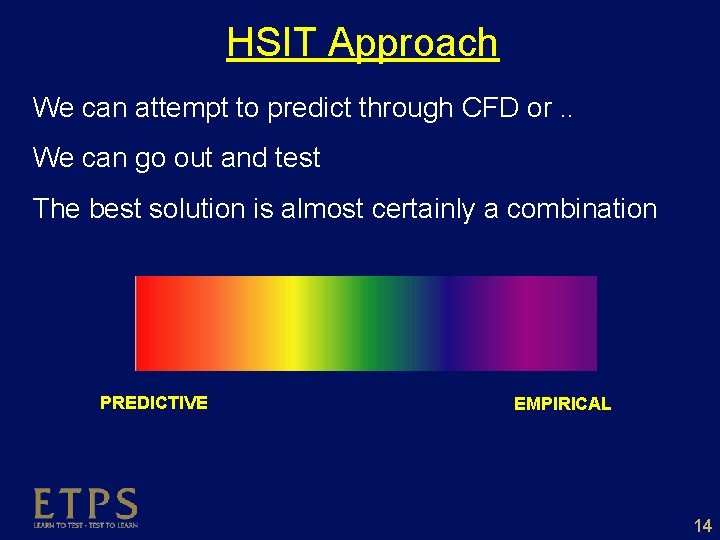
HSIT Approach We can attempt to predict through CFD or. . We can go out and test The best solution is almost certainly a combination PREDICTIVE EMPIRICAL 14
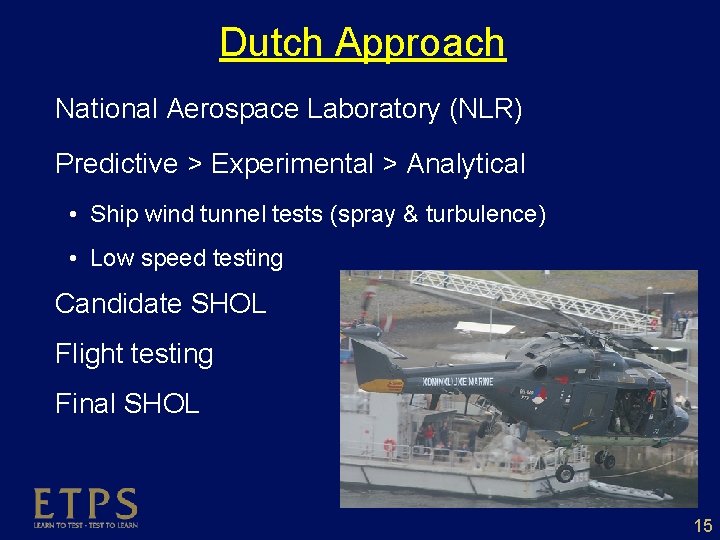
Dutch Approach National Aerospace Laboratory (NLR) Predictive > Experimental > Analytical • Ship wind tunnel tests (spray & turbulence) • Low speed testing Candidate SHOL Flight testing Final SHOL 15
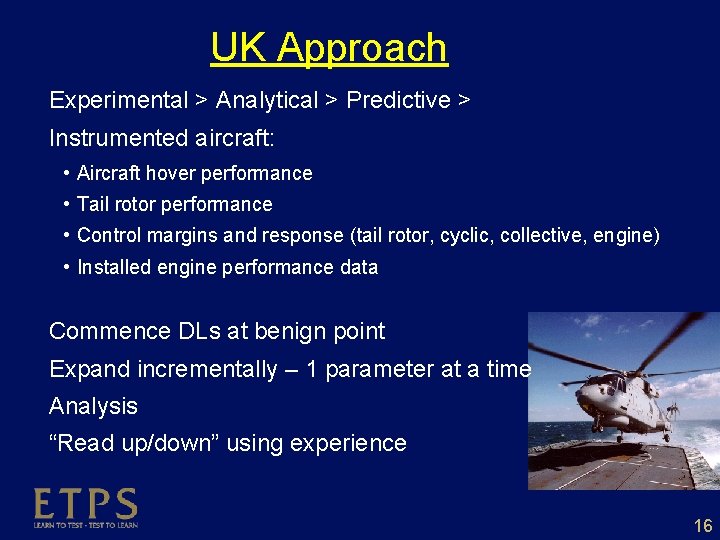
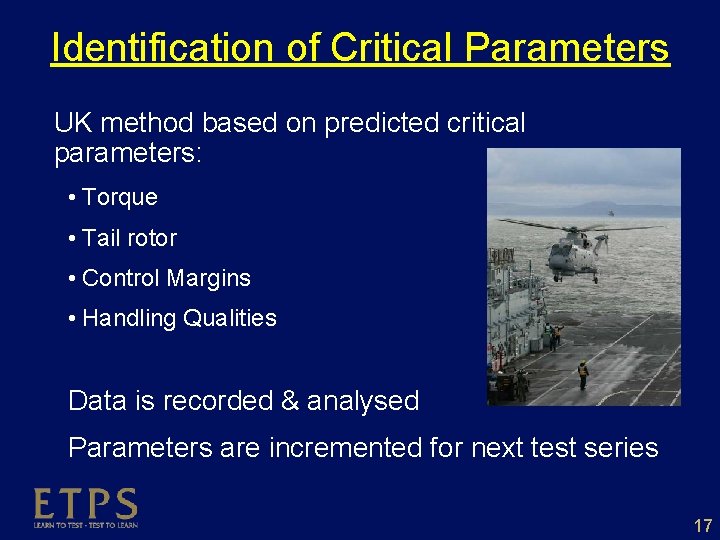
UK Approach Experimental > Analytical > Predictive > Instrumented aircraft: • Aircraft hover performance • Tail rotor performance • Control margins and response (tail rotor, cyclic, collective, engine) • Installed engine performance data Commence DLs at benign point Expand incrementally – 1 parameter at a time Analysis “Read up/down” using experience 16
Identification of Critical Parameters UK method based on predicted critical parameters: • Torque • Tail rotor • Control Margins • Handling Qualities Data is recorded & analysed Parameters are incremented for next test series 17
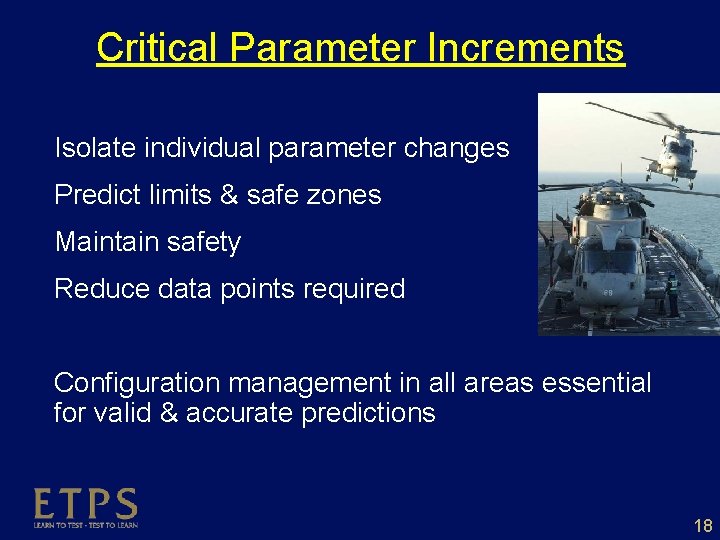
Critical Parameter Increments Isolate individual parameter changes Predict limits & safe zones Maintain safety Reduce data points required Configuration management in all areas essential for valid & accurate predictions 18
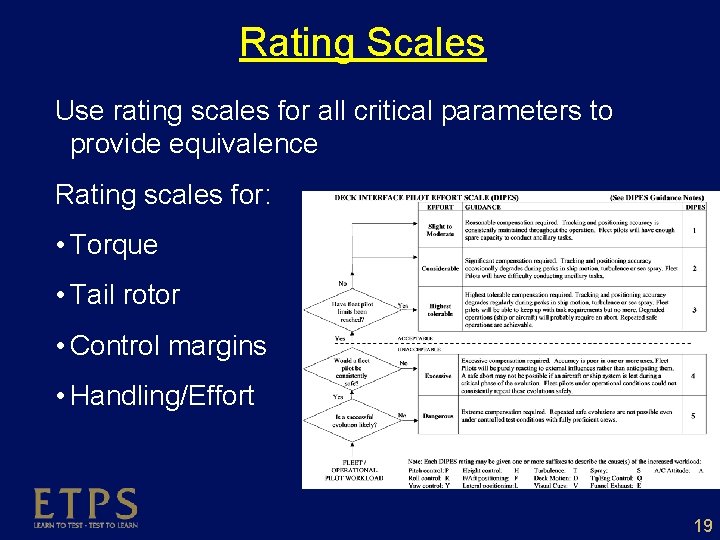
Rating Scales Use rating scales for all critical parameters to provide equivalence Rating scales for: • Torque • Tail rotor • Control margins • Handling/Effort 19
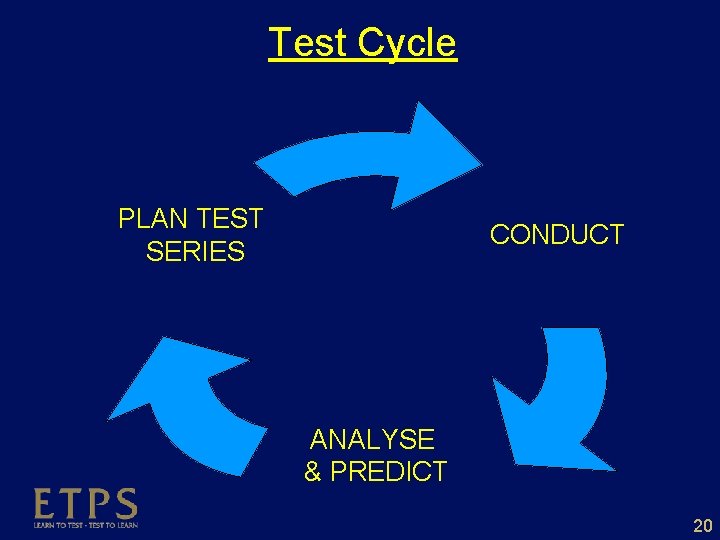
Test Cycle PLAN TEST SERIES CONDUCT ANALYSE & PREDICT 20
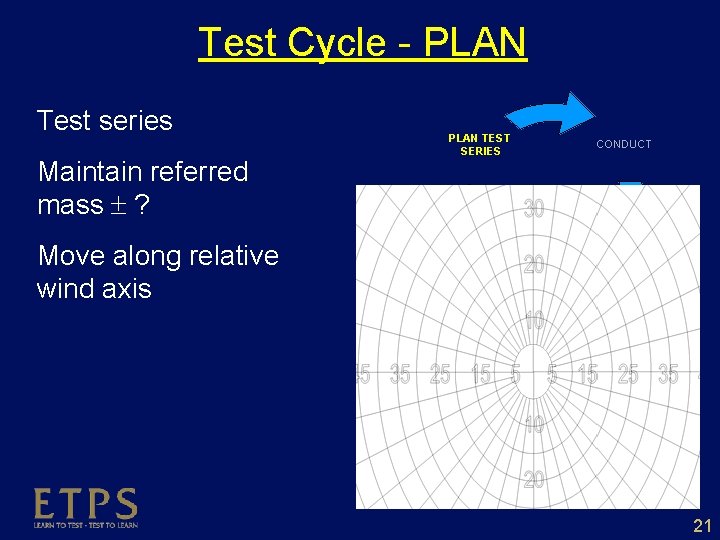
Test Cycle - PLAN Test series Maintain referred mass ? Move along relative wind axis PLAN TEST SERIES CONDUCT ANALYSE & PREDICT 21
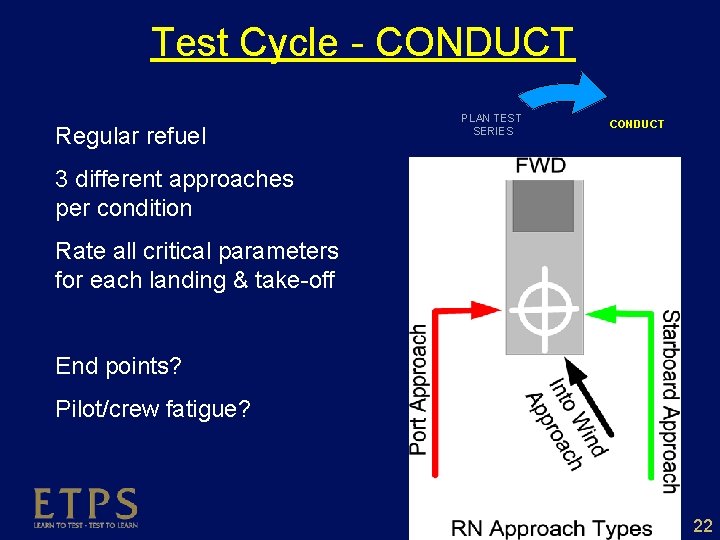
Test Cycle - CONDUCT Regular refuel 3 different approaches per condition PLAN TEST SERIES CONDUCT ANALYSE & PREDICT Rate all critical parameters for each landing & take-off End points? Pilot/crew fatigue? 22
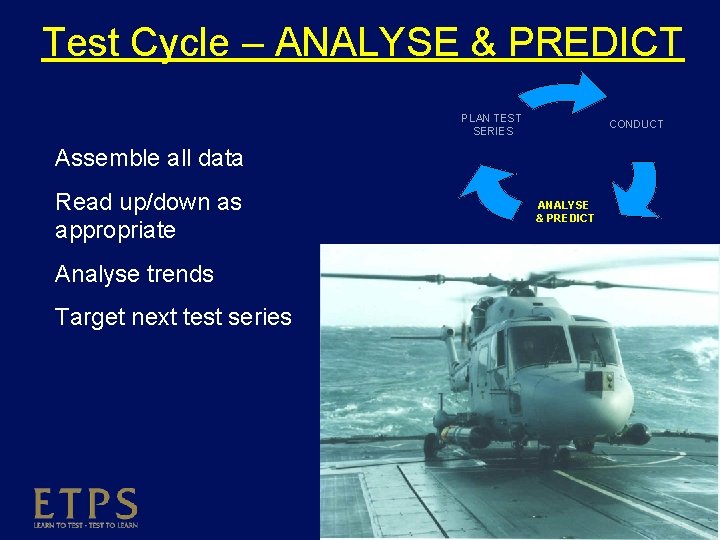
Test Cycle – ANALYSE & PREDICT PLAN TEST SERIES CONDUCT Assemble all data Read up/down as appropriate ANALYSE & PREDICT Analyse trends Target next test series 23
Trials Progression CAUTIOUS PROGRESSIVE Change 1 parameter at a time! Wind speed • Wind direction • A/C weight • A/C configuration • Ship motion (ideally) • & lighting 24
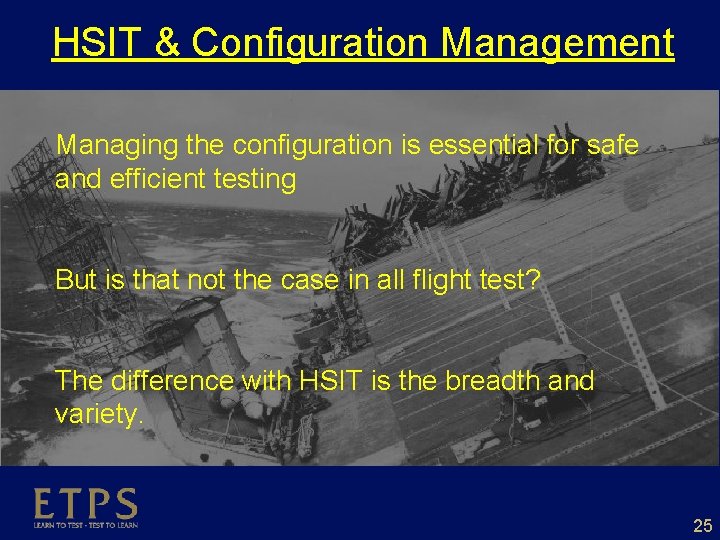
HSIT & Configuration Management Managing the configuration is essential for safe and efficient testing But is that not the case in all flight test? The difference with HSIT is the breadth and variety. 25
Knowledge is the Key The knowledge is out there! LEARN TO TEST …. . … TEST TO LEARN 27
Questions? Copyright ©Qineti. Q. Ltd 2010 28