
Hegemonic Masculinity and Male Mental Health By Michael
Hegemonic Masculinity and Male Mental Health By Michael Badalamenti HONR-203: Men and Masculinity
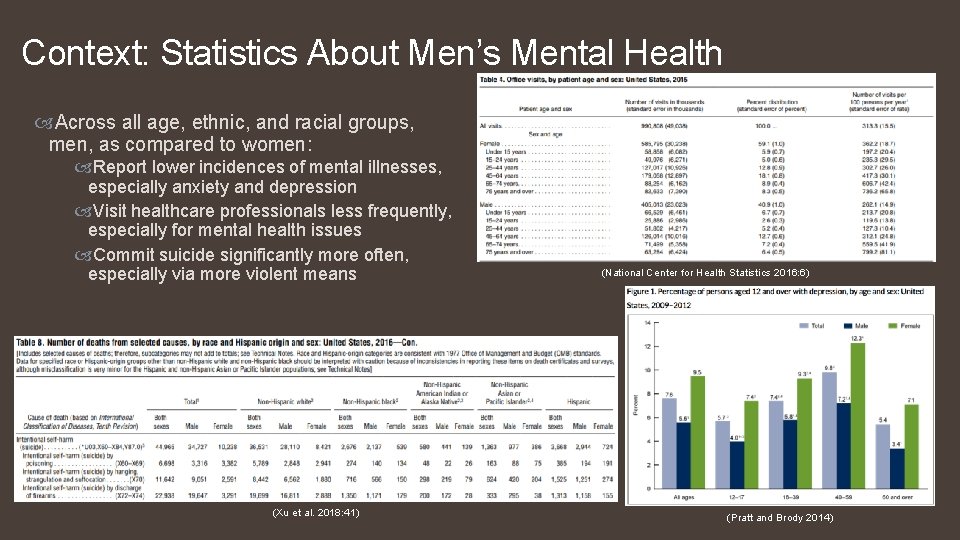
Context: Statistics About Men’s Mental Health Across all age, ethnic, and racial groups, men, as compared to women: Report lower incidences of mental illnesses, especially anxiety and depression Visit healthcare professionals less frequently, especially for mental health issues Commit suicide significantly more often, especially via more violent means (Xu et al. 2018: 41) (National Center for Health Statistics 2016: 6) (Pratt and Brody 2014)
Thesis: Traditional hegemonic masculine ideologies play a significant negative role in male mental health issues Exploring ways in which these ideologies… Contribute to mental illness in men Gender and stigmatize mental illness and disorders Complicate the diagnosis and treatment process for men
Hegemonic Masculinity – Dominant form of masculinity, meant to normalize gender differences, be accepted as matter of fact (Wade and Ferree 2019: 138) Constructions of masculinity (that may contradict each other) including: Basic Terms and Definitions Physical strength and mental stoicism Propensity for violence and substance abuse High sexual performance Intellect, rationality Power over women Workers, breadwinners, economic providers Independence Precarious Manhood Theory – Manhood must be proved, performed. Men are not automatically men in a social sense (Vandello et al. 2008) Makes masculinity fragile, femininity damaging Mental Health – overall status, mental wellbeing of a person Mental Illness – a status of poor mental health Mental Disorder – a specific, abnormal mental condition that typically contributes to mental illness Controversy in distinguishing mental disorders vs. benign social deviance (Meyer 2003: 674) Example – historical debates over homosexuality
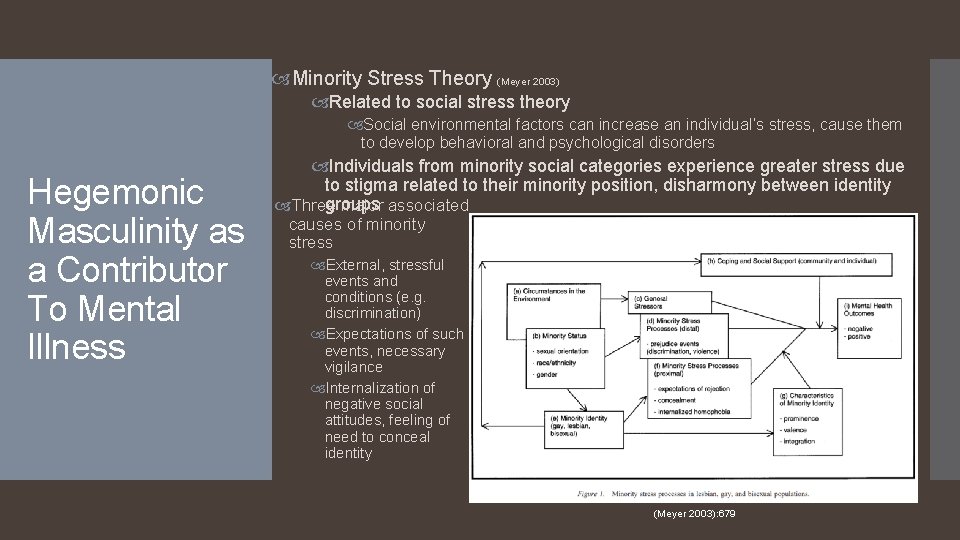
Minority Stress Theory (Meyer 2003) Related to social stress theory Social environmental factors can increase an individual’s stress, cause them to develop behavioral and psychological disorders Hegemonic Masculinity as a Contributor To Mental Illness Individuals from minority social categories experience greater stress due to stigma related to their minority position, disharmony between identity groups Three major associated causes of minority stress External, stressful events and conditions (e. g. discrimination) Expectations of such events, necessary vigilance Internalization of negative social attitudes, feeling of need to conceal identity (Meyer 2003): 679
Stresses felt by men that fail to meet hegemonic ideal Example – unemployed men that agreed “others saw me as less of a man when I lost my job” more likely to experience depression, anxiety, low self esteem (Michniewicz et al. 2015: 307) Hegemonic Masculinity as a Contributor To Mental Illness Trend in women much weaker – femininity not as precarious, breadwinning not as much of an expectation Men have committed suicide due to debilitating injuries preventing them from returning to work (Ogrodniczuk and Oliffe 2010) Example – gay and bisexual men 3 times more likely to have depression, 4. 7 times more likely to have panic disorder than heterosexual men (Cochran et al. 2003: 55) Men experience more judgement for violating gender norms than women (Sirin et al. 2004) Social status model – masculinity associated with higher social status than femininity, thus deviance corresponds with loss of status Increases real, perceived, and internalized stigma for nonconformity with hegemonic norms within men Conclusion: hegemonic masculinity harms the mental health of gender nonconformists, men who do not live up to ideal manhood, especially if they subscribe to these ideologies
Mental disorders, their symptoms, are gendered (Michniewicz et al. 2015) Disorders with largely internalizing factors typically feminine Gendered Mental Health and Stigma Marked by mood disturbance, sadness, anxiety Include major depressive disorder, generalized anxiety disorder, eating disorders Disorders with largely externalizing typically factors masculine Marked by low impulse control, substance abuse Include antisocial personality disorder, alcoholism, ADHD Symptoms of gender-atypical disorders can be emasculating Feelings of helplessness, overwhelming emotions, lower libido, lethargy –symptoms of depression – incompatible with hegemonic masculinity (Oliffe et al. 2010: 470 -474) Increases stress of mental disorder, creates feedback loop
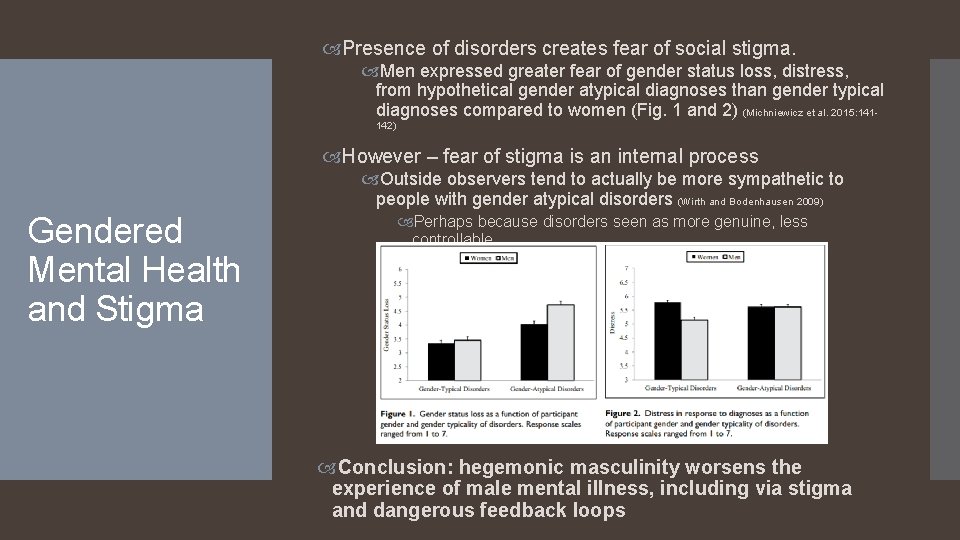
Presence of disorders creates fear of social stigma. Men expressed greater fear of gender status loss, distress, from hypothetical gender atypical diagnoses than gender typical diagnoses compared to women (Fig. 1 and 2) (Michniewicz et al. 2015: 141142) However – fear of stigma is an internal process Outside observers tend to actually be more sympathetic to people with gender atypical disorders (Wirth and Bodenhausen 2009) Gendered Mental Health and Stigma Perhaps because disorders seen as more genuine, less controllable Conclusion: hegemonic masculinity worsens the experience of male mental illness, including via stigma and dangerous feedback loops
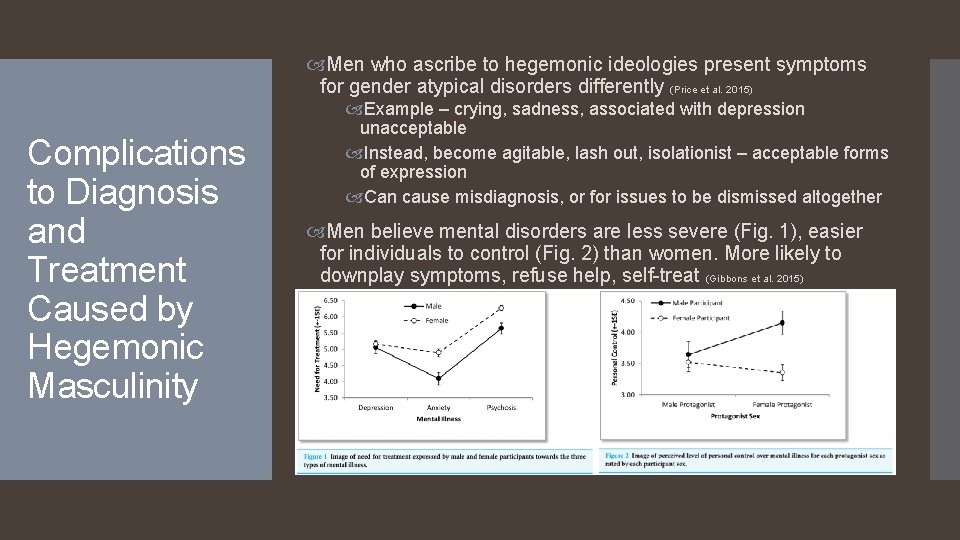
Men who ascribe to hegemonic ideologies present symptoms for gender atypical disorders differently (Price et al. 2015) Complications to Diagnosis and Treatment Caused by Hegemonic Masculinity Example – crying, sadness, associated with depression unacceptable Instead, become agitable, lash out, isolationist – acceptable forms of expression Can cause misdiagnosis, or for issues to be dismissed altogether Men believe mental disorders are less severe (Fig. 1), easier for individuals to control (Fig. 2) than women. More likely to downplay symptoms, refuse help, self-treat (Gibbons et al. 2015)
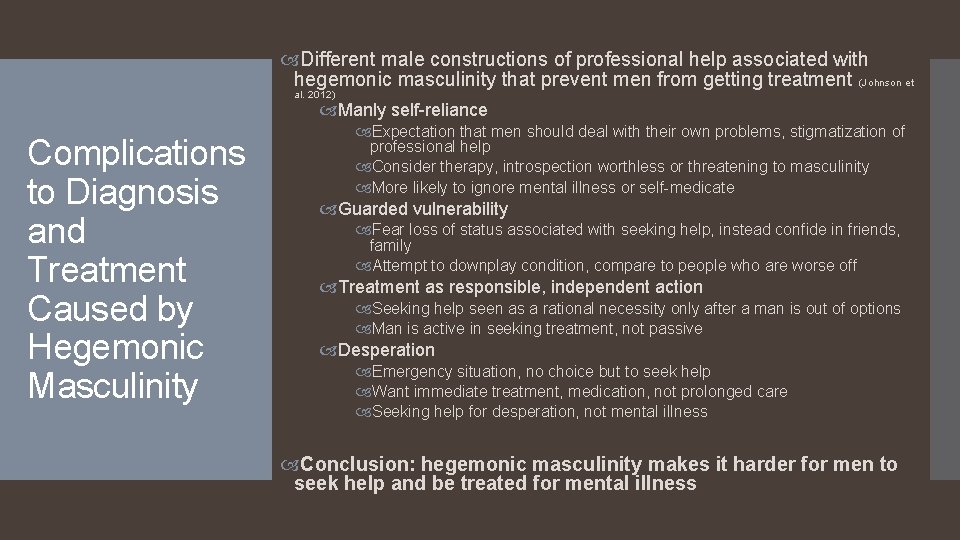
Different male constructions of professional help associated with hegemonic masculinity that prevent men from getting treatment (Johnson et al. 2012) Manly self-reliance Complications to Diagnosis and Treatment Caused by Hegemonic Masculinity Expectation that men should deal with their own problems, stigmatization of professional help Consider therapy, introspection worthless or threatening to masculinity More likely to ignore mental illness or self-medicate Guarded vulnerability Fear loss of status associated with seeking help, instead confide in friends, family Attempt to downplay condition, compare to people who are worse off Treatment as responsible, independent action Seeking help seen as a rational necessity only after a man is out of options Man is active in seeking treatment, not passive Desperation Emergency situation, no choice but to seek help Want immediate treatment, medication, not prolonged care Seeking help for desperation, not mental illness Conclusion: hegemonic masculinity makes it harder for men to seek help and be treated for mental illness
Positive Effects of Hegemonic Masculinity on Mental Health? Some positive effects exist Positive identification with a social group, especially a majority group, can boost esteem (Meyer 2003: 675) However – identification with hegemonic masculinity made difficult by precarious manhood theory Positive aspects of hegemonic masculinity can help with recovery (Johnson et al. 2012: 346) Ideals of self-control, stoicism, can help turn some people towards treatment However, can just add stress, make things worse for others
Questions?
References
- Slides: 13