
Hedging and speculative strategies using index futures Finance
- Slides: 17
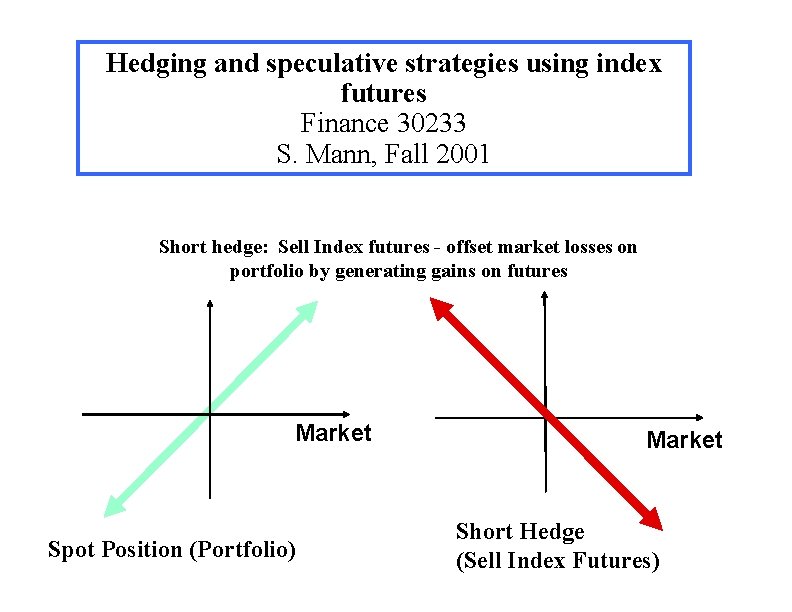
Hedging and speculative strategies using index futures Finance 30233 S. Mann, Fall 2001 Short hedge: Sell Index futures - offset market losses on portfolio by generating gains on futures Market Spot Position (Portfolio) Market Short Hedge (Sell Index Futures)
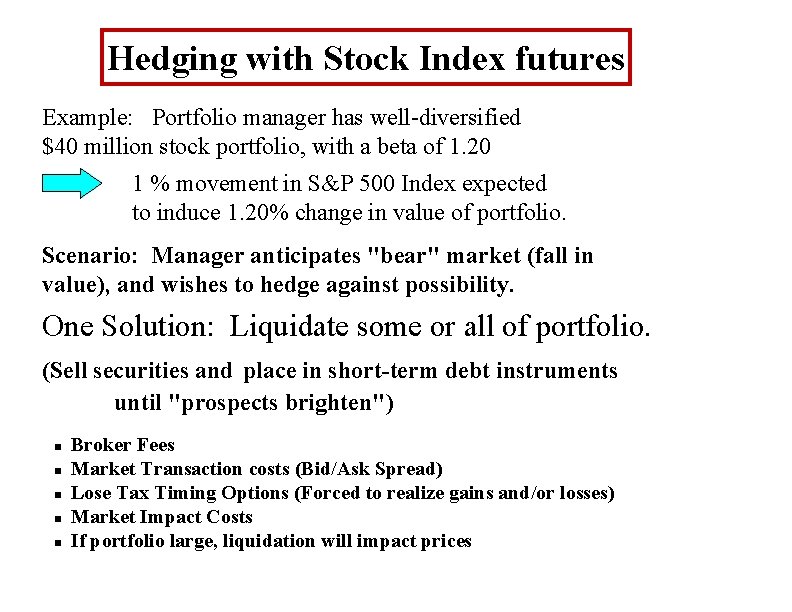
Hedging with Stock Index futures Example: Portfolio manager has well-diversified $40 million stock portfolio, with a beta of 1. 20 1 % movement in S&P 500 Index expected to induce 1. 20% change in value of portfolio. Scenario: Manager anticipates "bear" market (fall in value), and wishes to hedge against possibility. One Solution: Liquidate some or all of portfolio. (Sell securities and place in short-term debt instruments until "prospects brighten") n n n Broker Fees Market Transaction costs (Bid/Ask Spread) Lose Tax Timing Options (Forced to realize gains and/or losses) Market Impact Costs If portfolio large, liquidation will impact prices
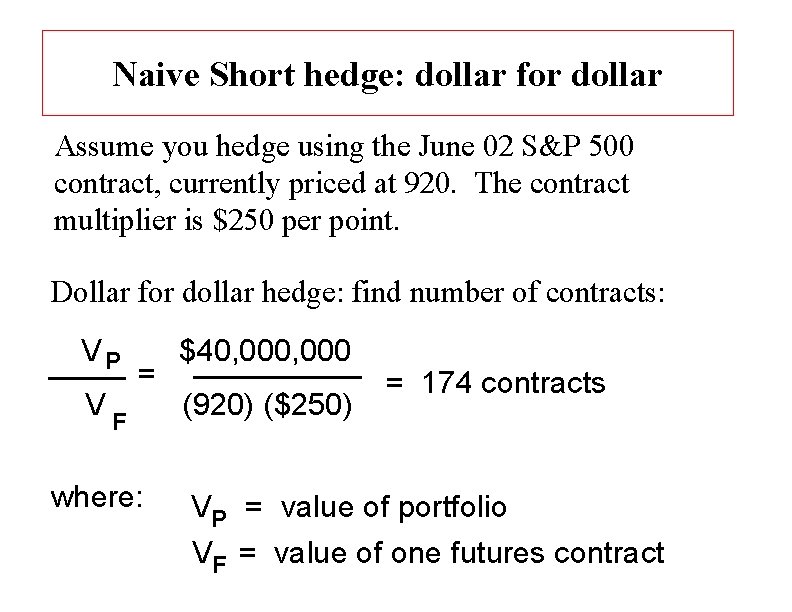
Naive Short hedge: dollar for dollar Assume you hedge using the June 02 S&P 500 contract, currently priced at 920. The contract multiplier is $250 per point. Dollar for dollar hedge: find number of contracts: VP VF = where: $40, 000 (920) ($250) = 174 contracts VP = value of portfolio VF = value of one futures contract
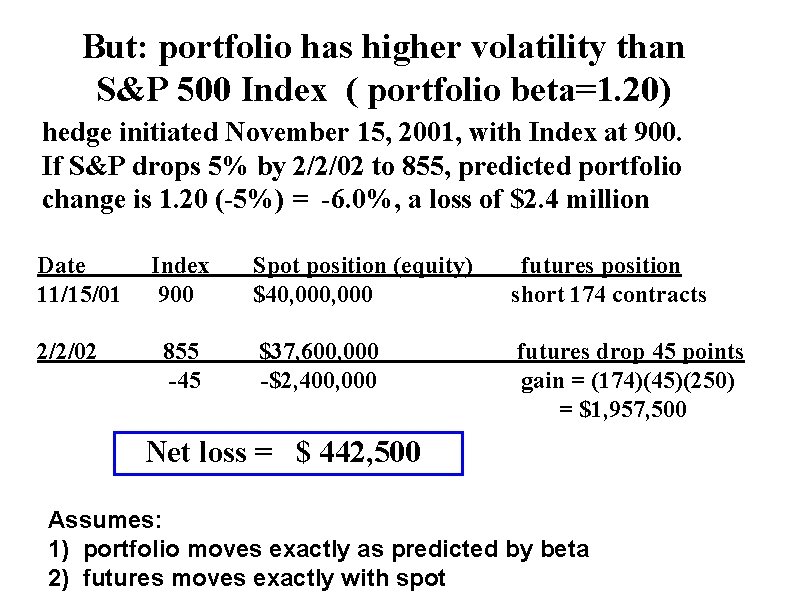
But: portfolio has higher volatility than S&P 500 Index ( portfolio beta=1. 20) hedge initiated November 15, 2001, with Index at 900. If S&P drops 5% by 2/2/02 to 855, predicted portfolio change is 1. 20 (-5%) = -6. 0%, a loss of $2. 4 million Date 11/15/01 2/2/02 Index 900 855 -45 Spot position (equity) $40, 000 futures position short 174 contracts $37, 600, 000 -$2, 400, 000 futures drop 45 points gain = (174)(45)(250) = $1, 957, 500 Net loss = $ 442, 500 Assumes: 1) portfolio moves exactly as predicted by beta 2) futures moves exactly with spot
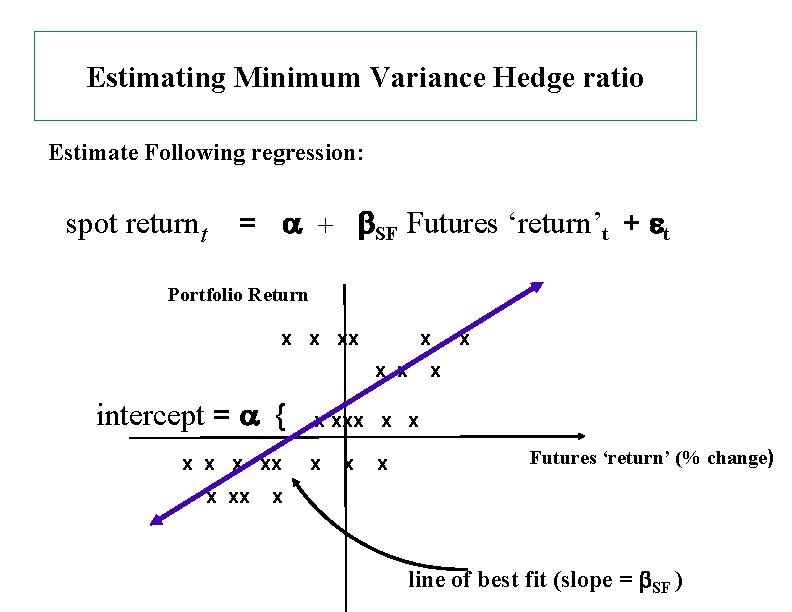
Estimating Minimum Variance Hedge ratio Estimate Following regression: spot returnt = a + b. SF Futures ‘return’t + et Portfolio Return x x x x intercept = a { x xx x x x xxx x x Futures ‘return’ (% change) x line of best fit (slope = b. SF )
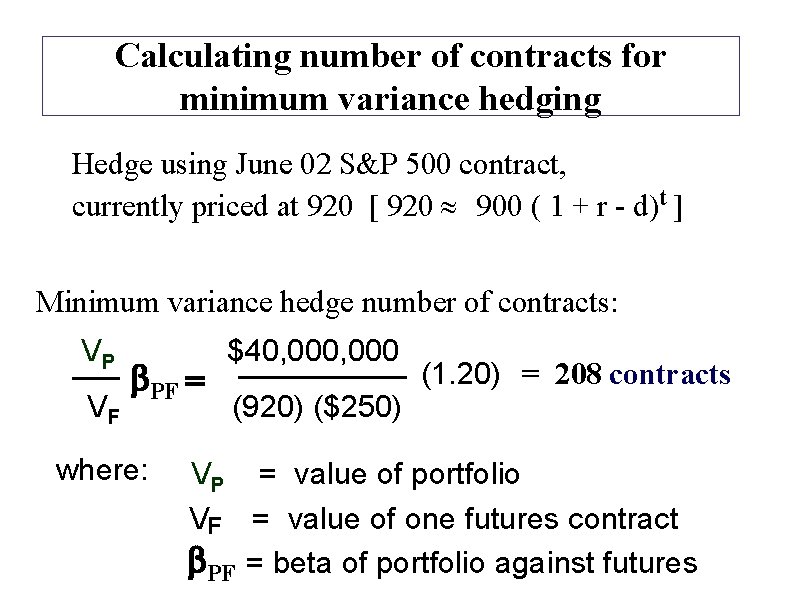
Calculating number of contracts for minimum variance hedging Hedge using June 02 S&P 500 contract, currently priced at 920 [ 920 900 ( 1 + r - d)t ] Minimum variance hedge number of contracts: VP VF b. PF = where: $40, 000 (920) ($250) (1. 20) = 208 contracts VP = value of portfolio VF = value of one futures contract b. PF = beta of portfolio against futures
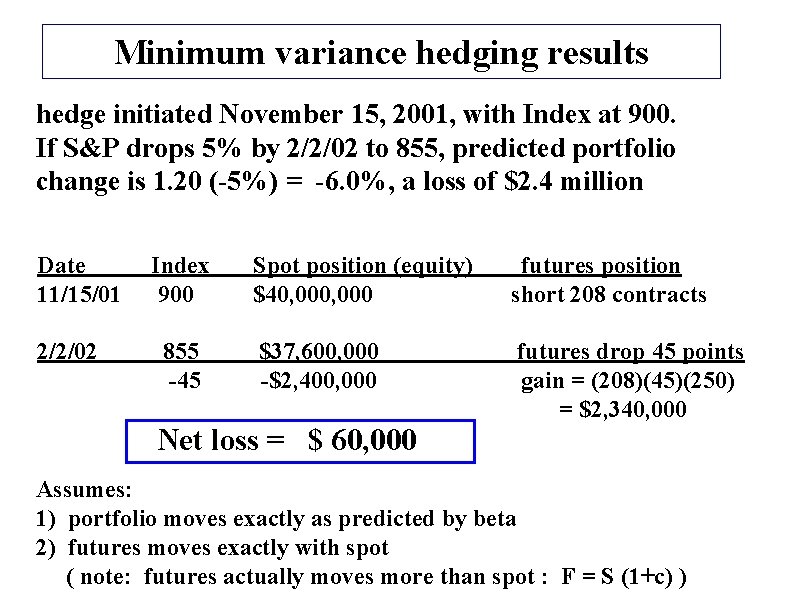
Minimum variance hedging results hedge initiated November 15, 2001, with Index at 900. If S&P drops 5% by 2/2/02 to 855, predicted portfolio change is 1. 20 (-5%) = -6. 0%, a loss of $2. 4 million Date 11/15/01 2/2/02 Index 900 855 -45 Spot position (equity) $40, 000 futures position short 208 contracts $37, 600, 000 -$2, 400, 000 futures drop 45 points gain = (208)(45)(250) = $2, 340, 000 Net loss = $ 60, 000 Assumes: 1) portfolio moves exactly as predicted by beta 2) futures moves exactly with spot ( note: futures actually moves more than spot : F = S (1+c) )
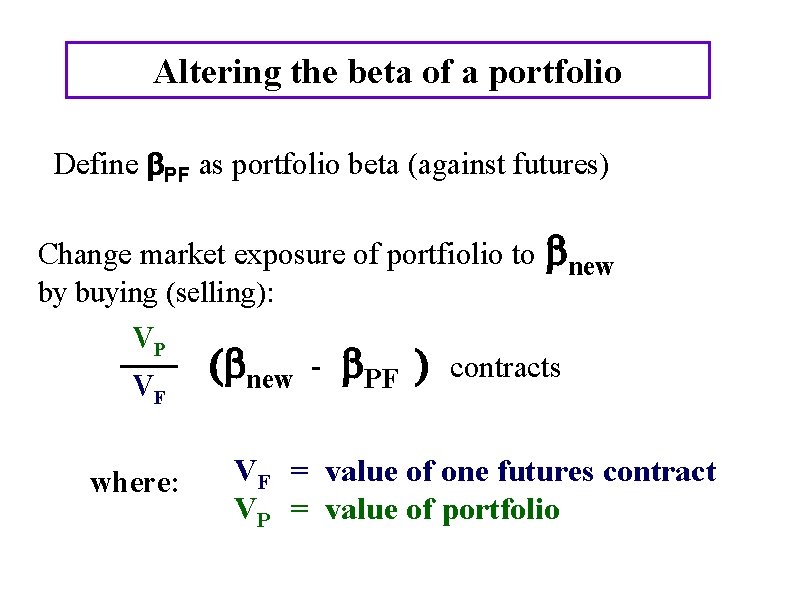
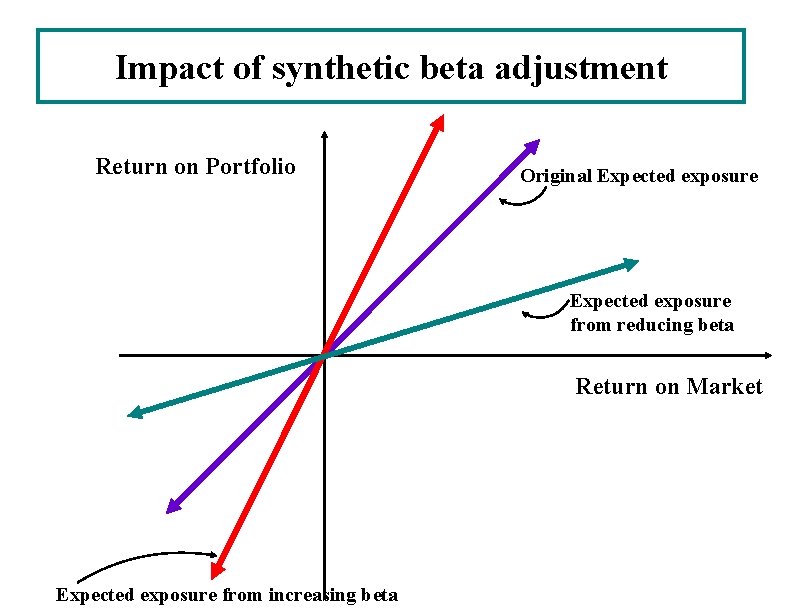
Altering the beta of a portfolio Define b. PF as portfolio beta (against futures) Change market exposure of portfiolio to bnew by buying (selling): VP (b - b. PF ) contracts new VF where: VF = value of one futures contract VP = value of portfolio
Impact of synthetic beta adjustment Return on Portfolio Original Expected exposure from reducing beta Return on Market Expected exposure from increasing beta
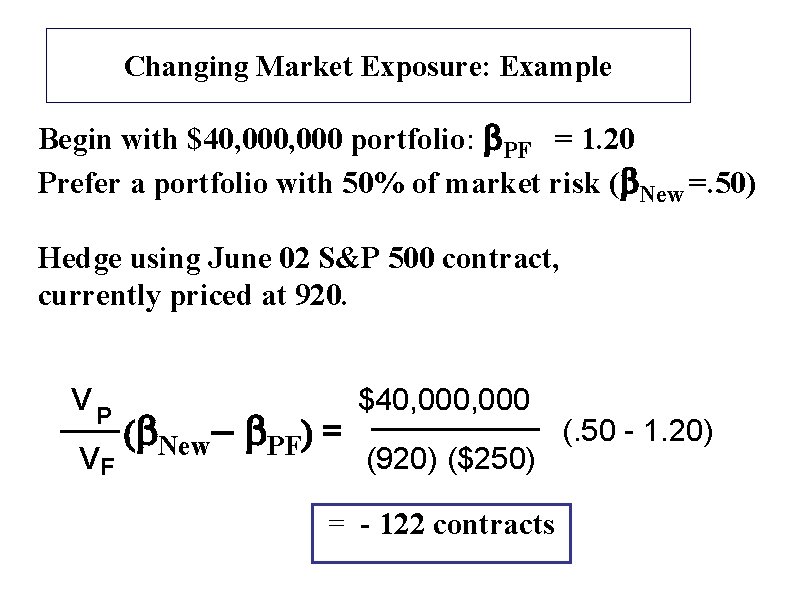
Changing Market Exposure: Example Begin with $40, 000 portfolio: b. PF = 1. 20 Prefer a portfolio with 50% of market risk (b. New =. 50) Hedge using June 02 S&P 500 contract, currently priced at 920. VP VF (b. New- b. PF) = $40, 000 (920) ($250) = - 122 contracts (. 50 - 1. 20)
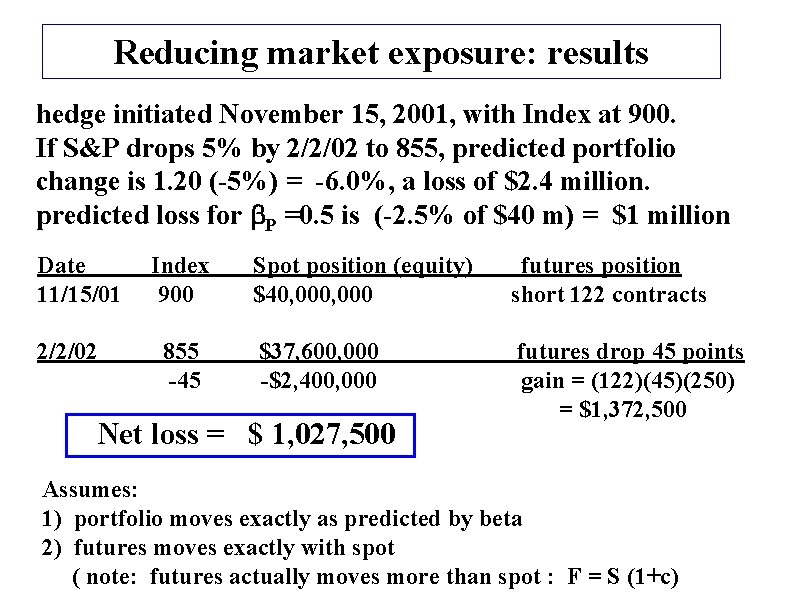
Reducing market exposure: results hedge initiated November 15, 2001, with Index at 900. If S&P drops 5% by 2/2/02 to 855, predicted portfolio change is 1. 20 (-5%) = -6. 0%, a loss of $2. 4 million. predicted loss for b. P =0. 5 is (-2. 5% of $40 m) = $1 million Date 11/15/01 2/2/02 Index 900 855 -45 Spot position (equity) $40, 000 futures position short 122 contracts $37, 600, 000 -$2, 400, 000 futures drop 45 points gain = (122)(45)(250) = $1, 372, 500 Net loss = $ 1, 027, 500 Assumes: 1) portfolio moves exactly as predicted by beta 2) futures moves exactly with spot ( note: futures actually moves more than spot : F = S (1+c)
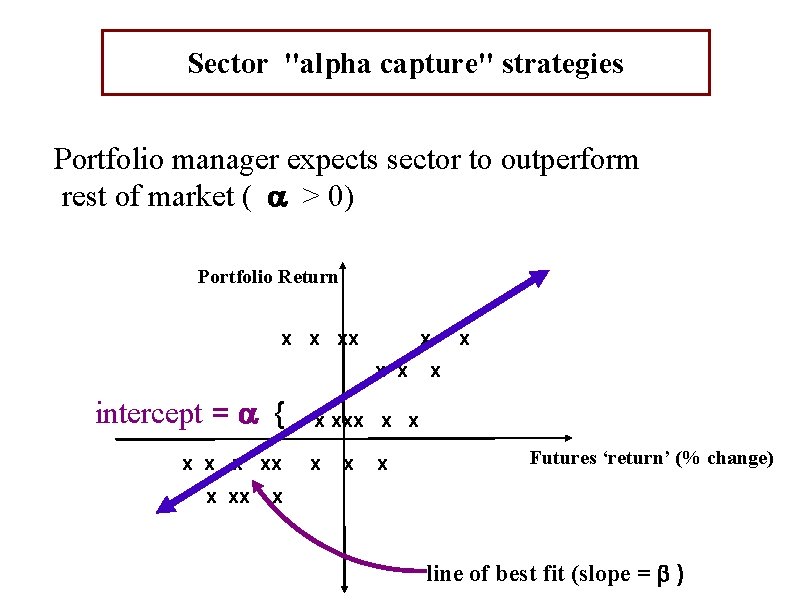
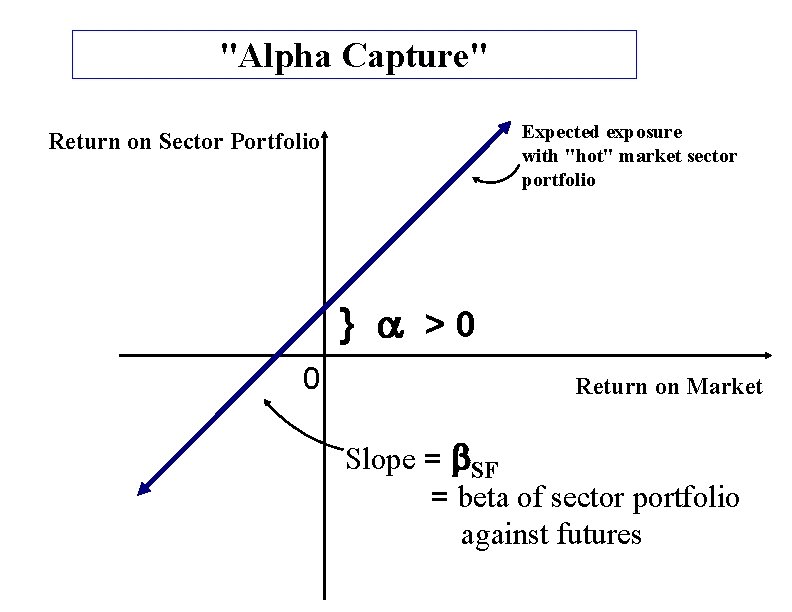
Sector "alpha capture" strategies Portfolio manager expects sector to outperform rest of market ( a > 0) Portfolio Return x x x x intercept = a { x xx x x x xxx x x Futures ‘return’ (% change) x line of best fit (slope = b )
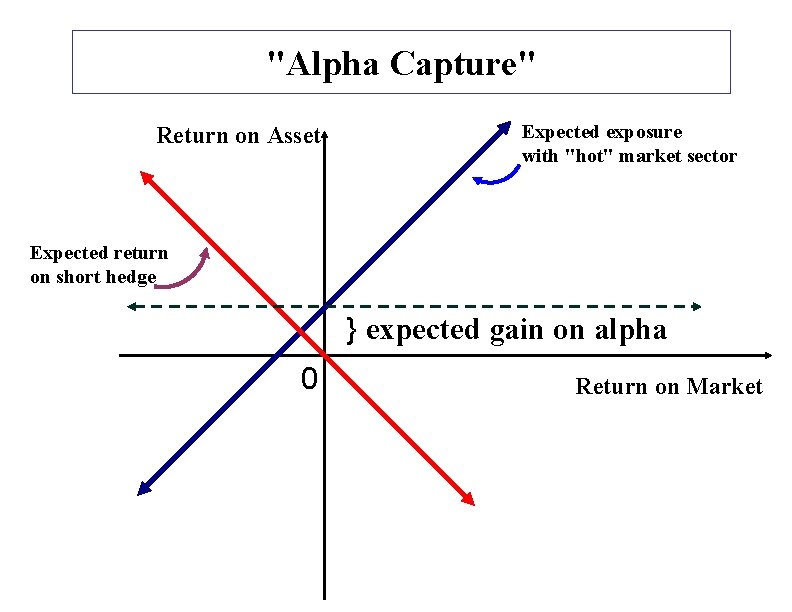
"Alpha Capture" Expected exposure with "hot" market sector portfolio Return on Sector Portfolio } a >0 0 Return on Market Slope = b. SF = beta of sector portfolio against futures
"Alpha Capture" Return on Asset Expected exposure with "hot" market sector Expected return on short hedge } expected gain on alpha 0 Return on Market
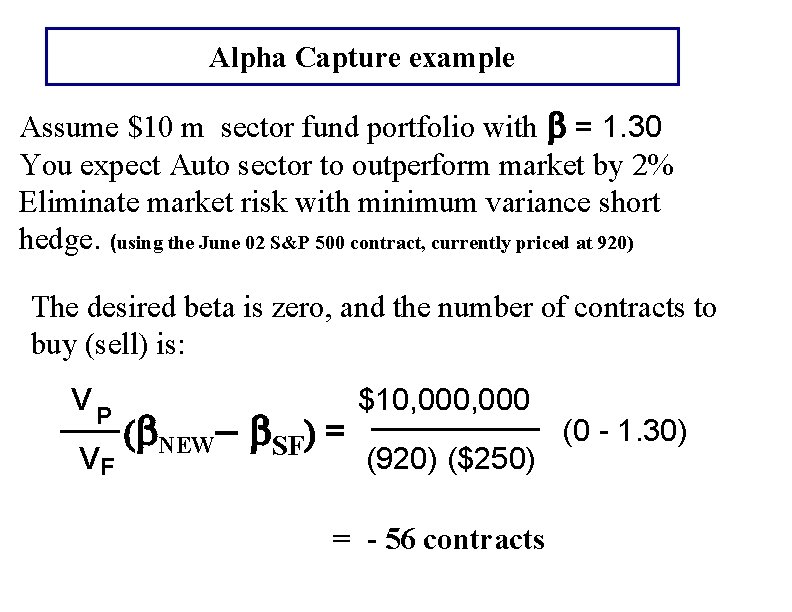
Alpha Capture example Assume $10 m sector fund portfolio with b = 1. 30 You expect Auto sector to outperform market by 2% Eliminate market risk with minimum variance short hedge. (using the June 02 S&P 500 contract, currently priced at 920) The desired beta is zero, and the number of contracts to buy (sell) is: VP VF (b. NEW- b. SF) = $10, 000 (920) ($250) = - 56 contracts (0 - 1. 30)
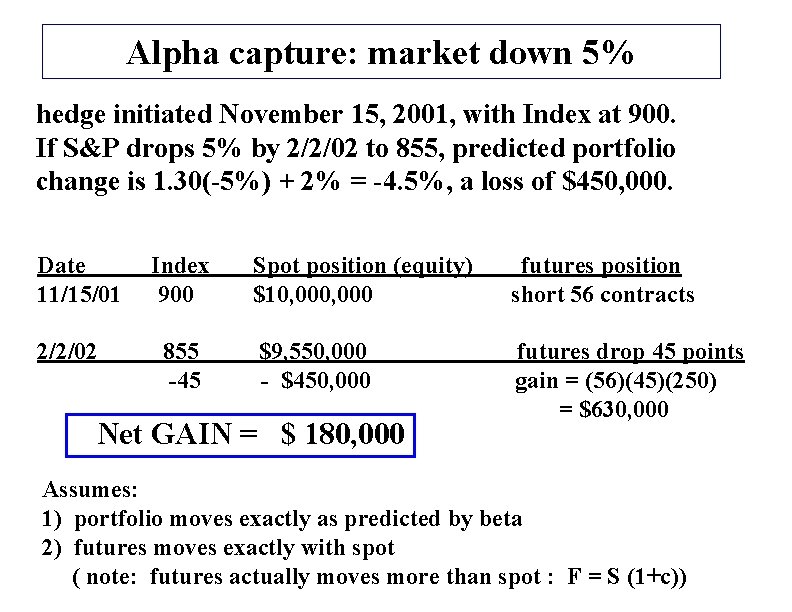
Alpha capture: market down 5% hedge initiated November 15, 2001, with Index at 900. If S&P drops 5% by 2/2/02 to 855, predicted portfolio change is 1. 30(-5%) + 2% = -4. 5%, a loss of $450, 000. Date 11/15/01 2/2/02 Index 900 855 -45 Spot position (equity) $10, 000 futures position short 56 contracts $9, 550, 000 - $450, 000 futures drop 45 points gain = (56)(45)(250) = $630, 000 Net GAIN = $ 180, 000 Assumes: 1) portfolio moves exactly as predicted by beta 2) futures moves exactly with spot ( note: futures actually moves more than spot : F = S (1+c))
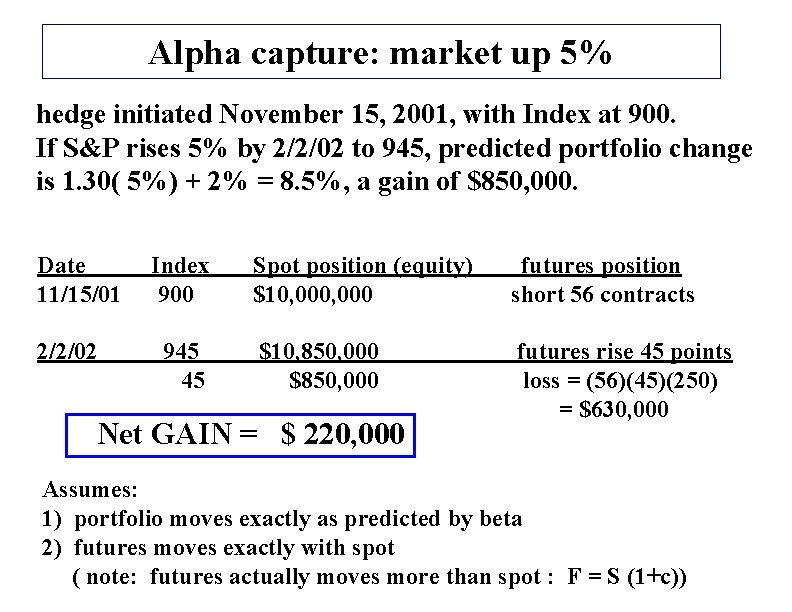
Alpha capture: market up 5% hedge initiated November 15, 2001, with Index at 900. If S&P rises 5% by 2/2/02 to 945, predicted portfolio change is 1. 30( 5%) + 2% = 8. 5%, a gain of $850, 000. Date 11/15/01 2/2/02 Index 900 945 45 Spot position (equity) $10, 000 futures position short 56 contracts $10, 850, 000 $850, 000 futures rise 45 points loss = (56)(45)(250) = $630, 000 Net GAIN = $ 220, 000 Assumes: 1) portfolio moves exactly as predicted by beta 2) futures moves exactly with spot ( note: futures actually moves more than spot : F = S (1+c))