
Heavy Traffic Limit Theorems for RealTime Computer Systems

- Slides: 33
Heavy Traffic Limit Theorems for Real-Time Computer Systems Presented by: John Lehoczky Carnegie Mellon Co-authors: B. Doytchinov, J. Hansen, L. Kruk, R. Rajkumar, C. Yeung, and H. Zhu Presented at WORMS 04 April 19, 2004 1
Background: 1 • • Real-time systems refer to computer and communication systems in which the applications/tasks/jobs/packets have explicit timing requirements (deadlines). These arise in (e. g. ): – voice and video transmission (e. g. videoconferencing) – control systems (e. g. automotive) – avionics systems 2
Background: 2 We often distinguish different types of real-time systems or tasks: • Hard real-time: any failure to meet a deadline is regarded as a system failure. (e. g. avionics or control systems) • Soft real-time: deadline misses or packet loss is acceptable as long as it doesn’t reduce the Qo. S below requirements (e. g. multi-media applications). 3
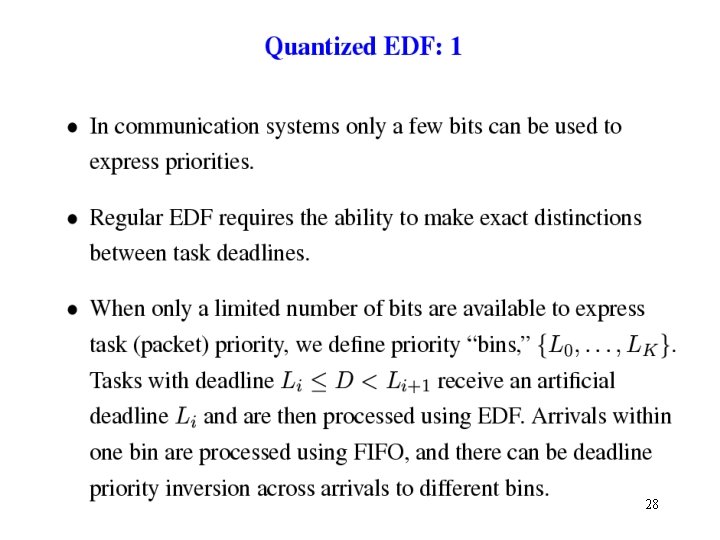
Goals • For a given workload model we want: – to predict the fraction of the workload that will miss its deadlines (end-to-end deadlines in the network case), – to design workload scheduling and control policies that will ensure Qo. S guarantees (e. g. a suitably small fraction miss their deadlines), – to investigate network design issues, e. g. : • Number of priority bits needed • Cost/benefit from flow tables • Cost/benefit from keeping lead-time information 4
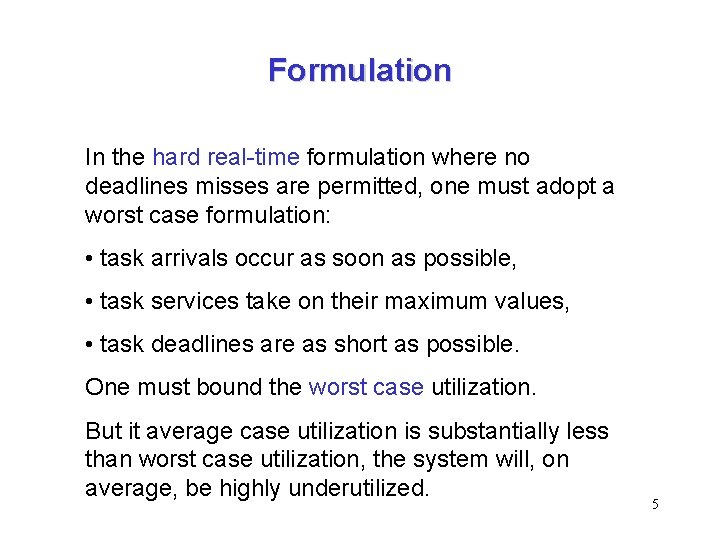
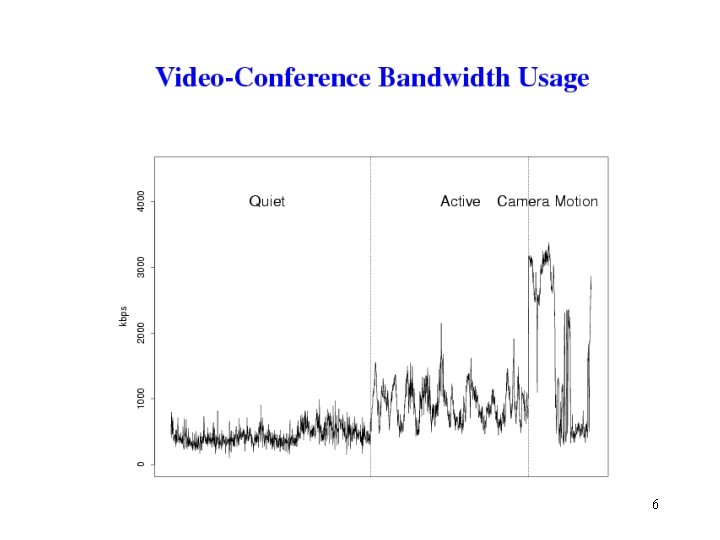
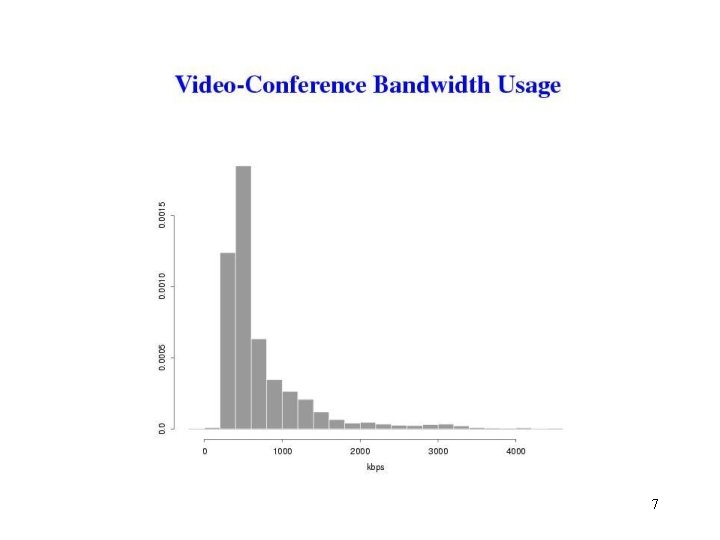
Formulation In the hard real-time formulation where no deadlines misses are permitted, one must adopt a worst case formulation: • task arrivals occur as soon as possible, • task services take on their maximum values, • task deadlines are as short as possible. One must bound the worst case utilization. But it average case utilization is substantially less than worst case utilization, the system will, on average, be highly underutilized. 5
6
7
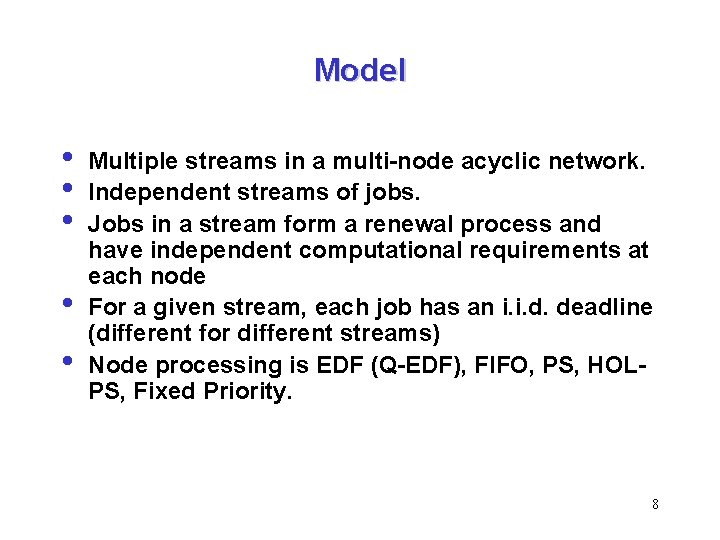
Model • • • Multiple streams in a multi-node acyclic network. Independent streams of jobs. Jobs in a stream form a renewal process and have independent computational requirements at each node For a given stream, each job has an i. i. d. deadline (different for different streams) Node processing is EDF (Q-EDF), FIFO, PS, HOLPS, Fixed Priority. 8
9
10
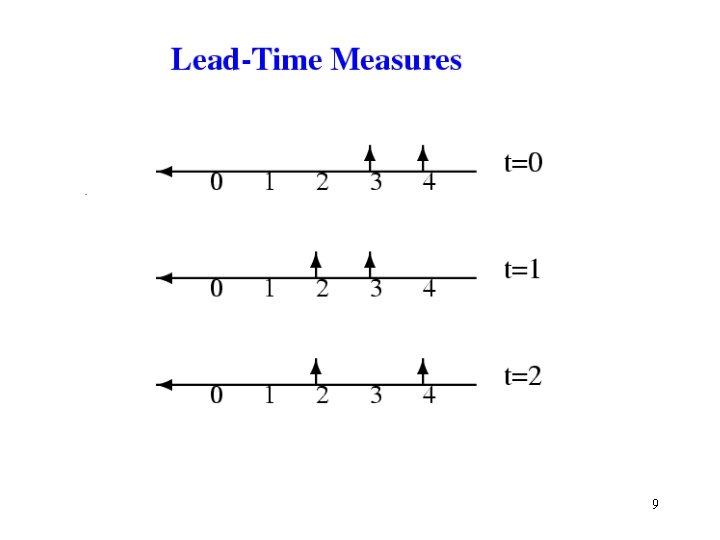
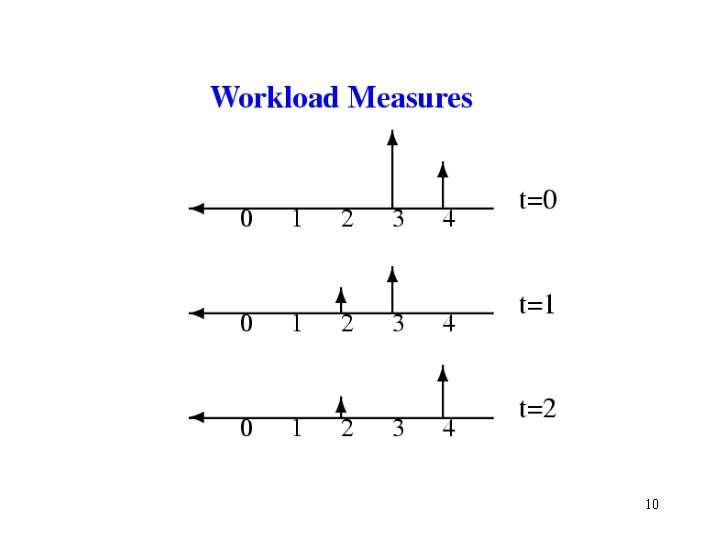
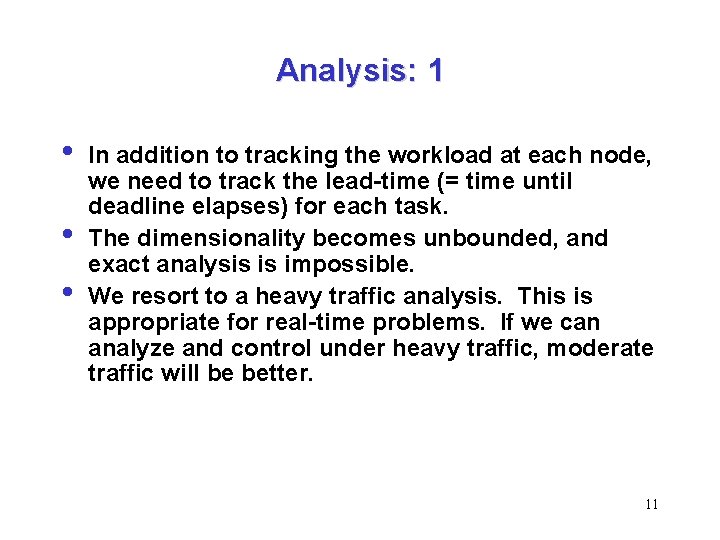
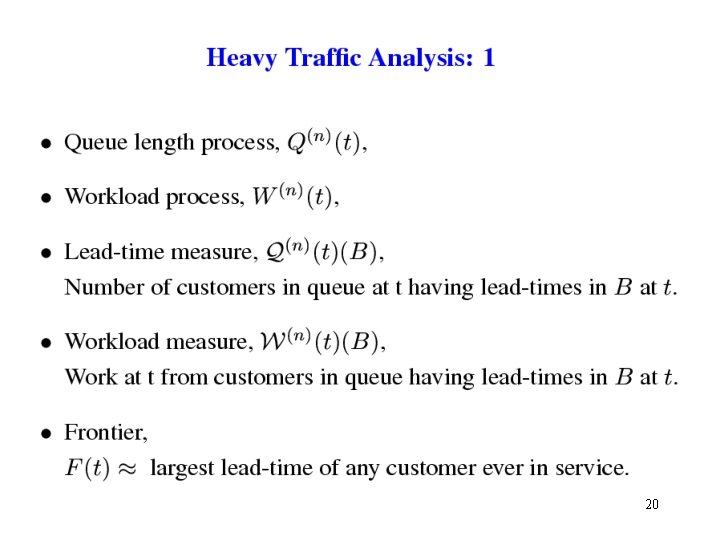
Analysis: 1 • • • In addition to tracking the workload at each node, we need to track the lead-time (= time until deadline elapses) for each task. The dimensionality becomes unbounded, and exact analysis is impossible. We resort to a heavy traffic analysis. This is appropriate for real-time problems. If we can analyze and control under heavy traffic, moderate traffic will be better. 11
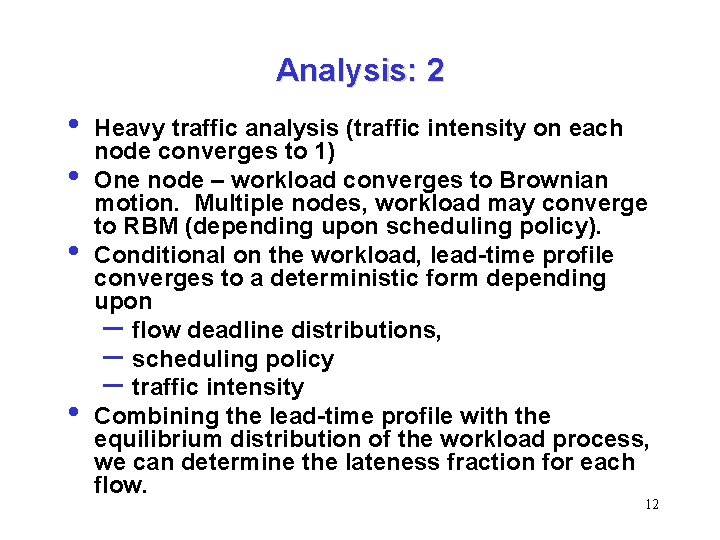
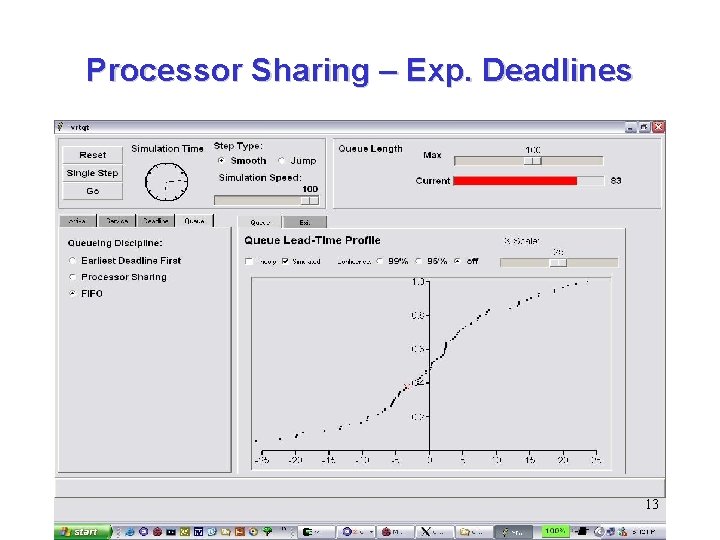
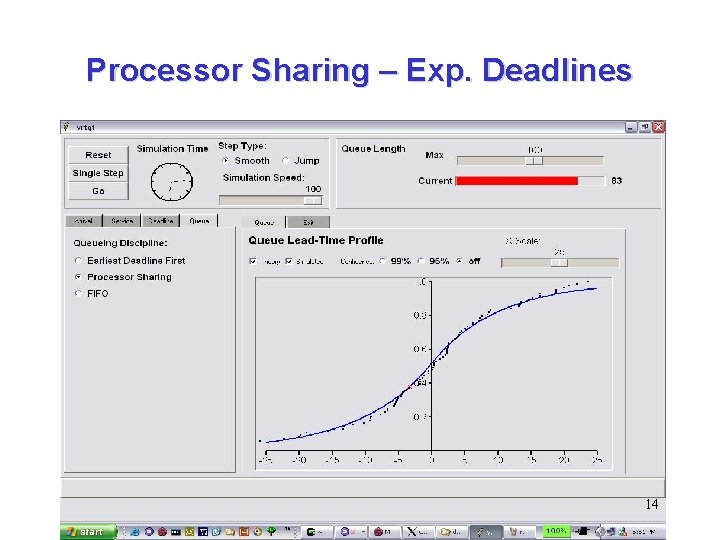
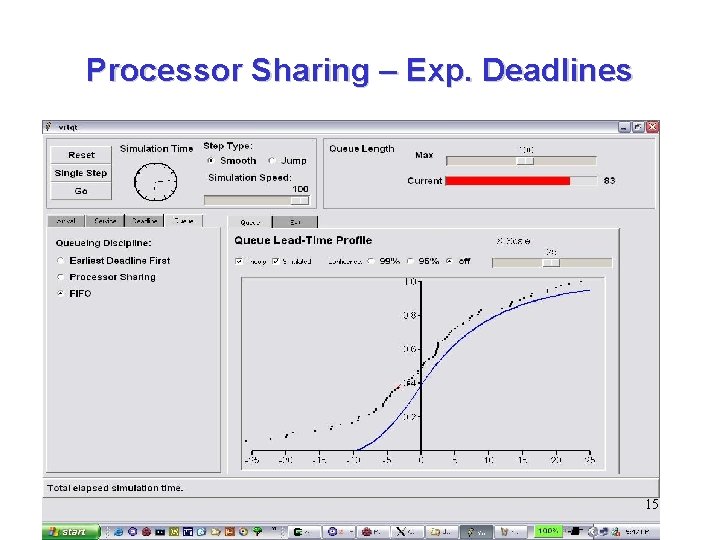
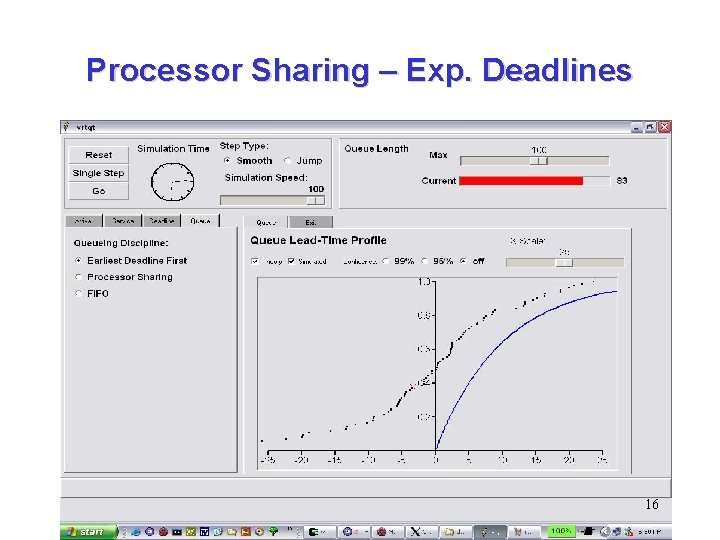
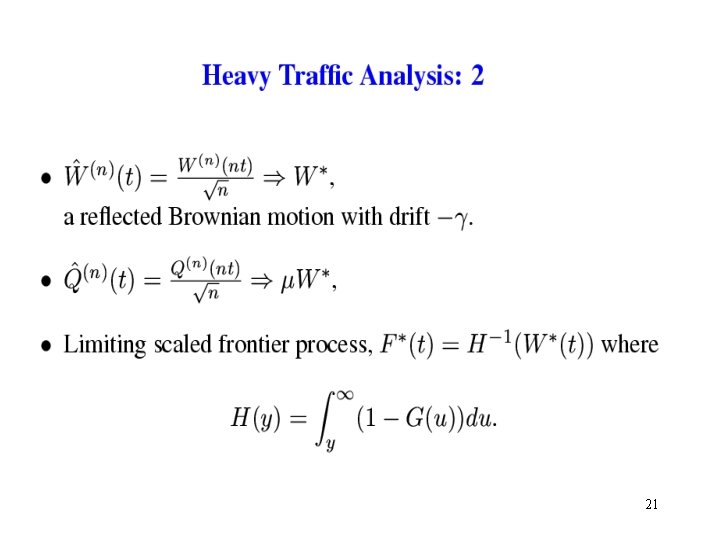
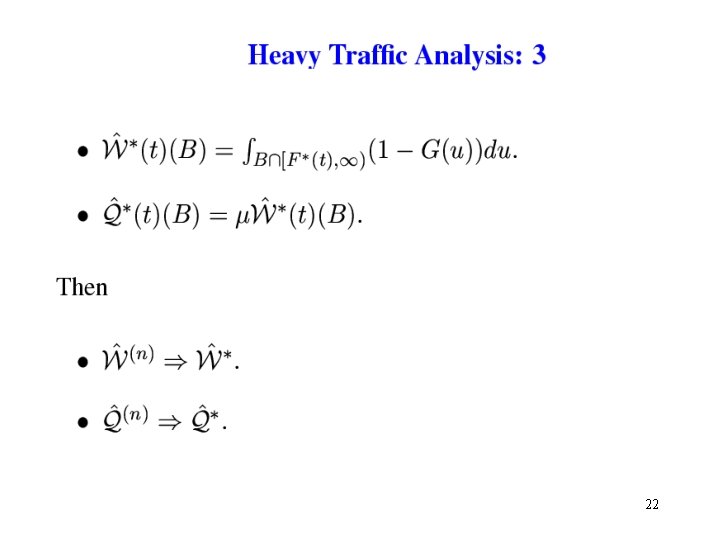
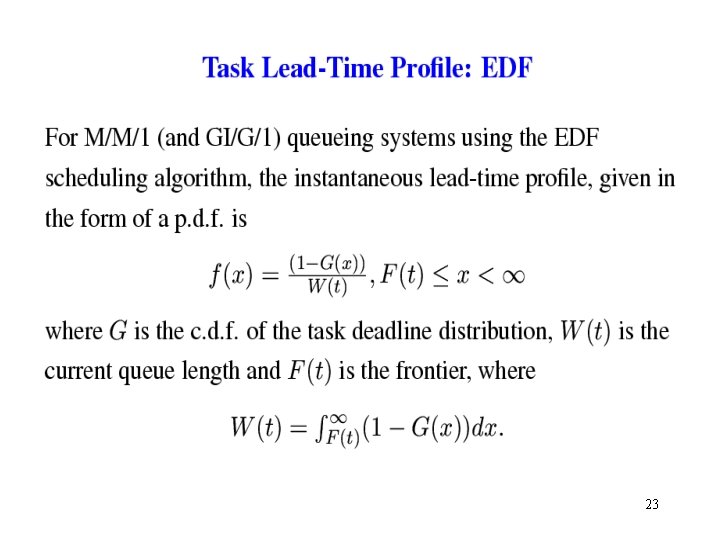
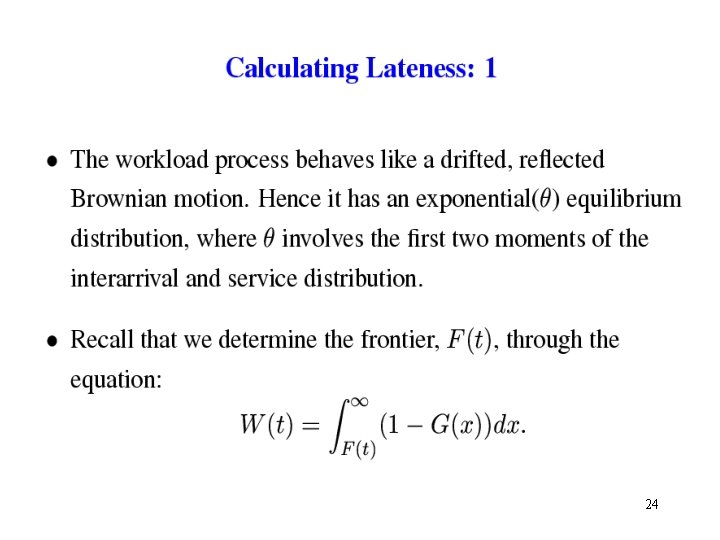
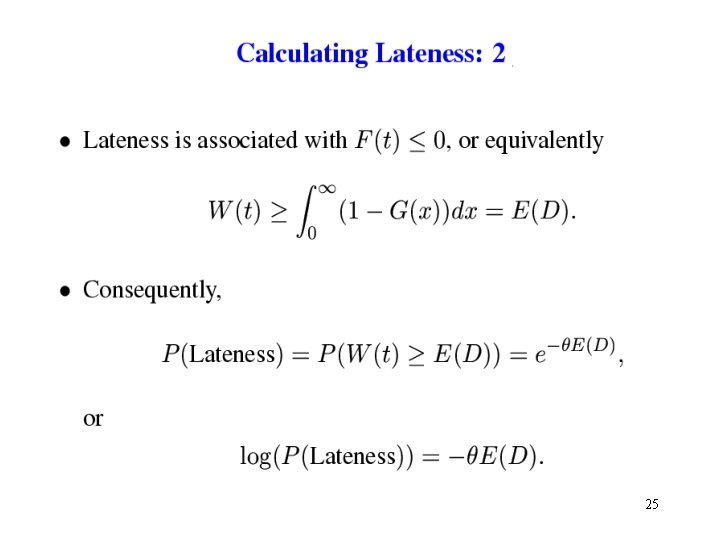
Analysis: 2 • • Heavy traffic analysis (traffic intensity on each node converges to 1) One node – workload converges to Brownian motion. Multiple nodes, workload may converge to RBM (depending upon scheduling policy). Conditional on the workload, lead-time profile converges to a deterministic form depending upon – flow deadline distributions, – scheduling policy – traffic intensity Combining the lead-time profile with the equilibrium distribution of the workload process, we can determine the lateness fraction for each flow. 12
Processor Sharing – Exp. Deadlines 13
Processor Sharing – Exp. Deadlines 14
Processor Sharing – Exp. Deadlines 15
Processor Sharing – Exp. Deadlines 16
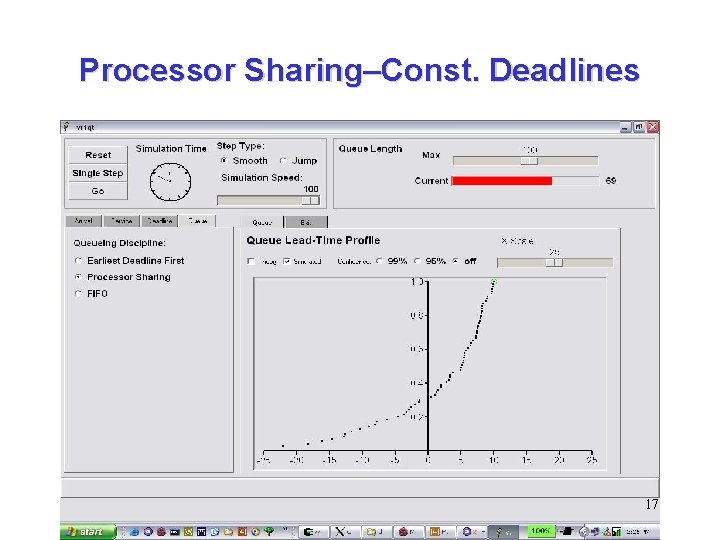
Processor Sharing–Const. Deadlines 17
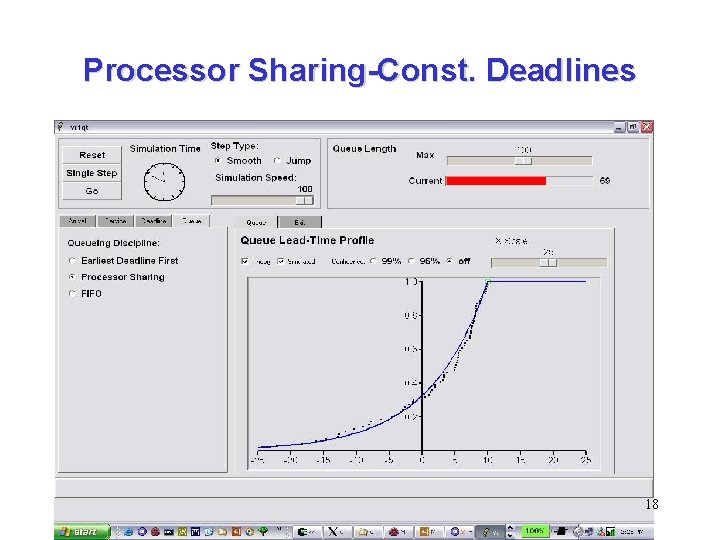
Processor Sharing-Const. Deadlines 18
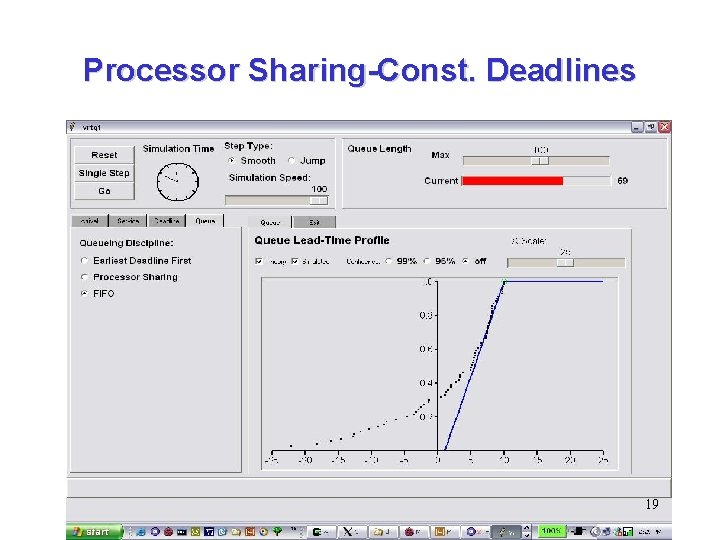
Processor Sharing-Const. Deadlines 19
20
21
22
23
24
25
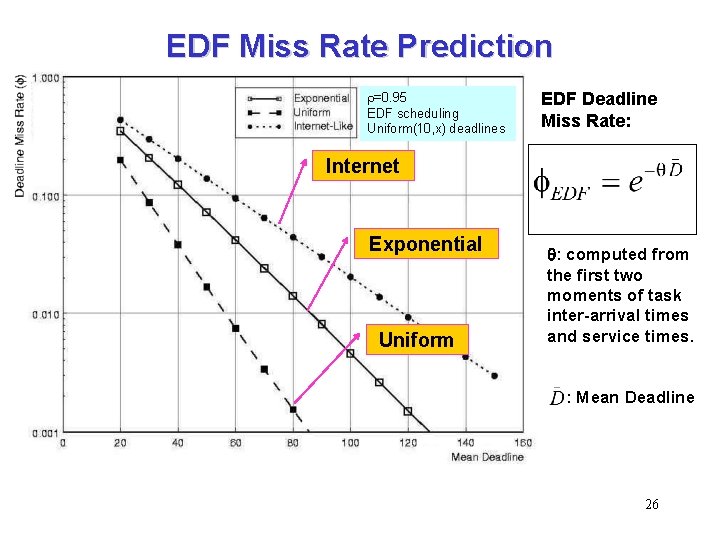
EDF Miss Rate Prediction =0. 95 EDF scheduling Uniform(10, x) deadlines EDF Deadline Miss Rate: Internet Exponential Uniform : computed from the first two moments of task inter-arrival times and service times. : Mean Deadline 26
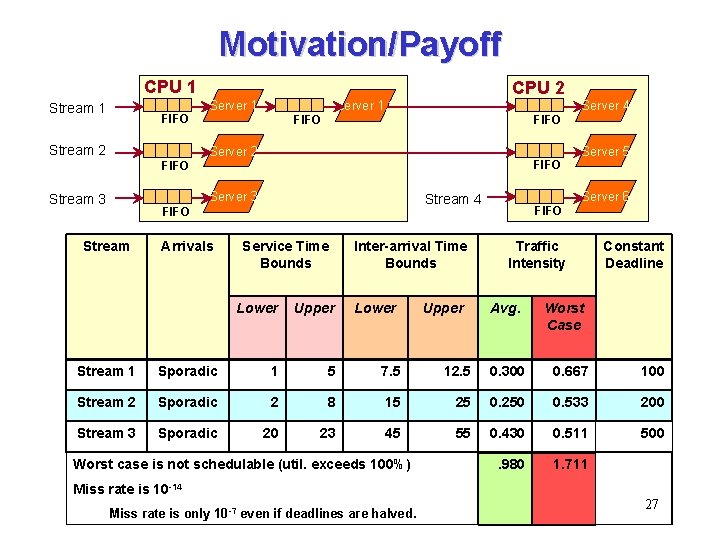
Motivation/Payoff CPU 1 Stream 1 FIFO Stream 2 CPU 2 Server 1. 1 Server 4 FIFO Server 2 Server 5 FIFO Server 3 Stream Arrivals Server 6 Stream 4 FIFO Service Time Bounds Lower Upper Inter-arrival Time Bounds Lower Upper FIFO Traffic Intensity Avg. Constant Deadline Worst Case Stream 1 Sporadic 1 5 7. 5 12. 5 0. 300 0. 667 100 Stream 2 Sporadic 2 8 15 25 0. 250 0. 533 200 Stream 3 Sporadic 20 23 45 55 0. 430 0. 511 500 . 980 1. 711 Worst case is not schedulable (util. exceeds 100%) Miss rate is 10 -14 Miss rate is only 10 -7 even if deadlines are halved. 27
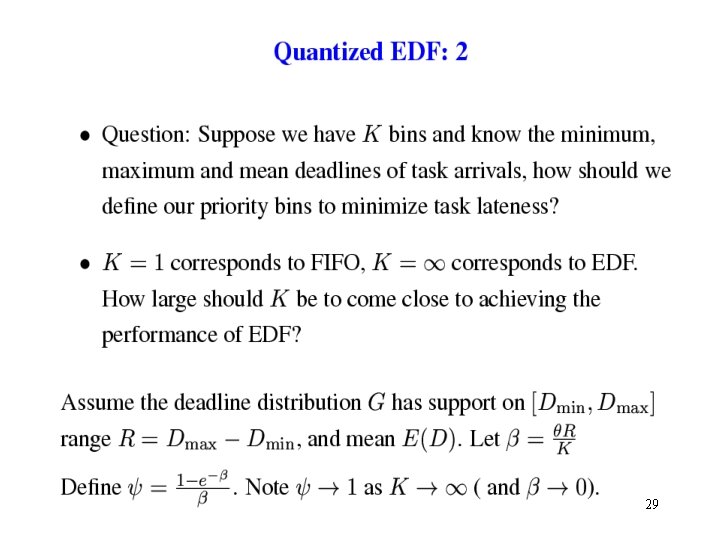
28
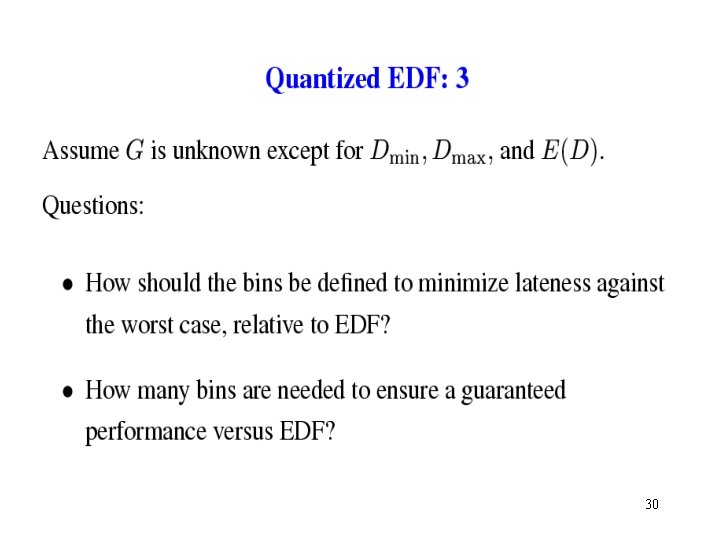
29
30
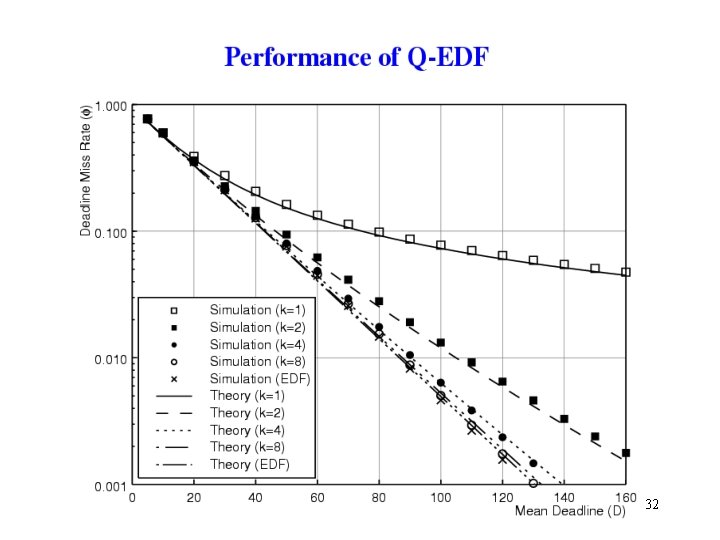
31
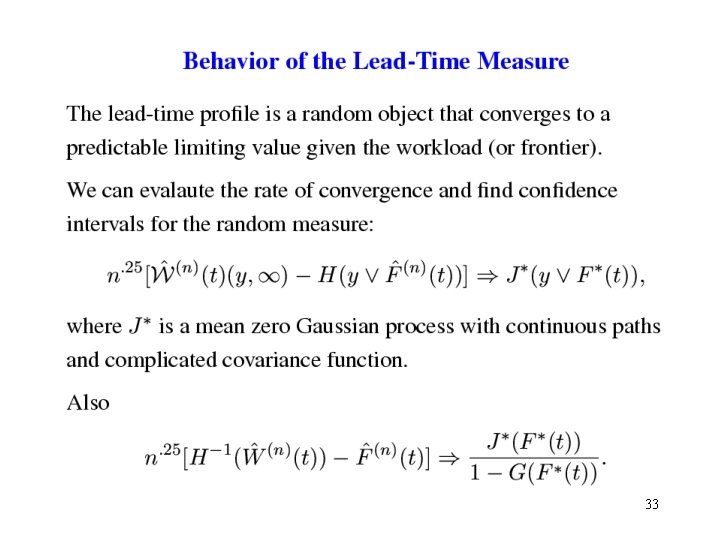
32
33