
Heavy minerals in limestones from Bkk mountains Hungary
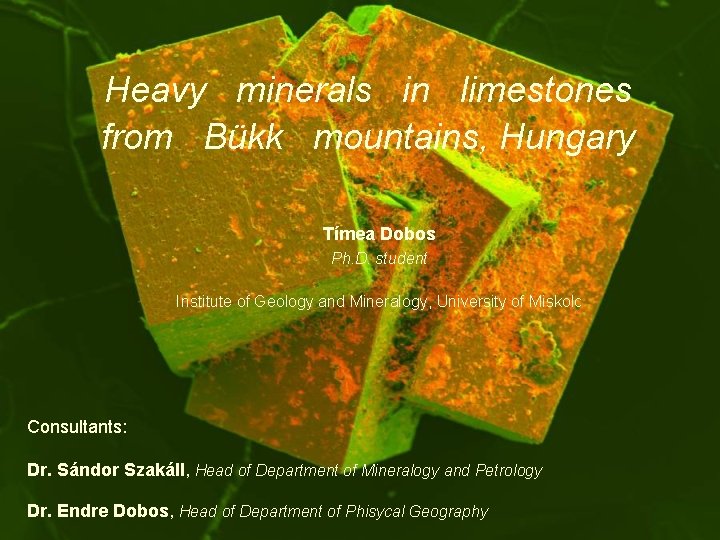
Heavy minerals in limestones from Bükk mountains, Hungary Tímea Dobos Ph. D. student Institute of Geology and Mineralogy, University of Miskolc Consultants: Dr. Sándor Szakáll, Head of Department of Mineralogy and Petrology Dr. Endre Dobos, Head of Department of Phisycal Geography
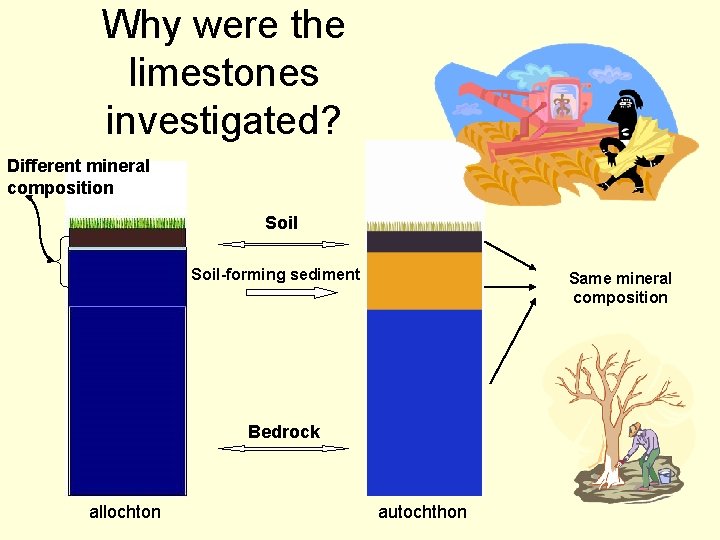
Why were the limestones investigated? Different mineral composition Soil-forming sediment Same mineral composition Bedrock allochton autochthon
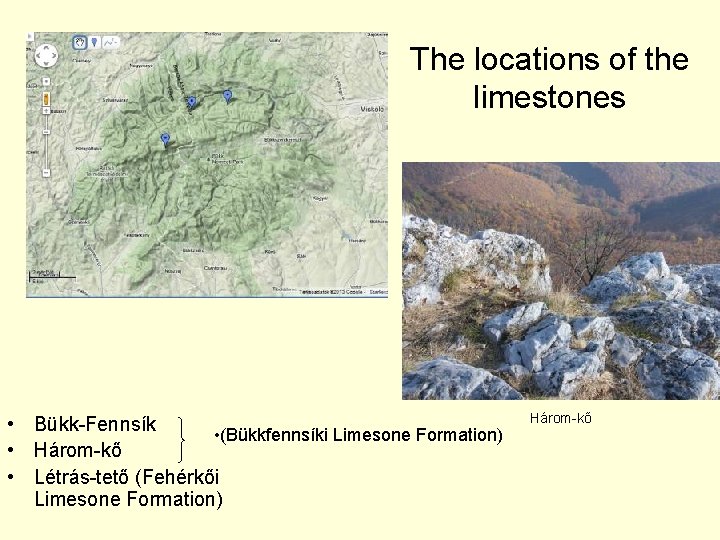
The locations of the limestones • Bükk-Fennsík • (Bükkfennsíki Limesone Formation) • Három-kő • Létrás-tető (Fehérkői Limesone Formation) Három-kő
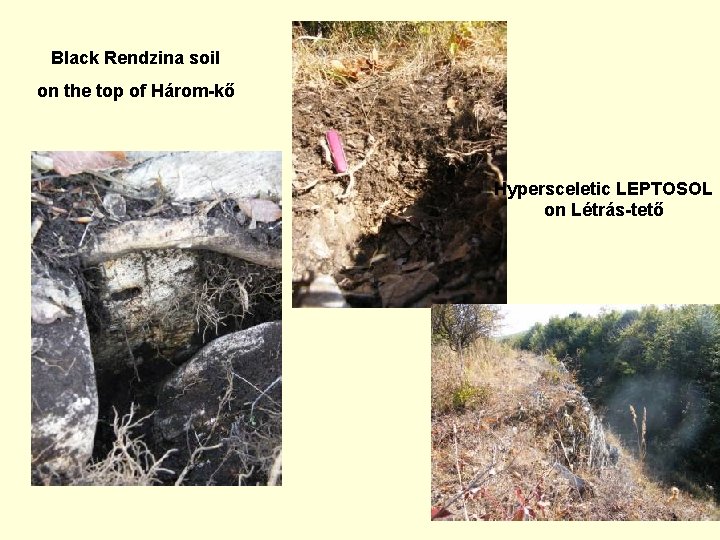
Black Rendzina soil on the top of Három-kő Hypersceletic LEPTOSOL on Létrás-tető
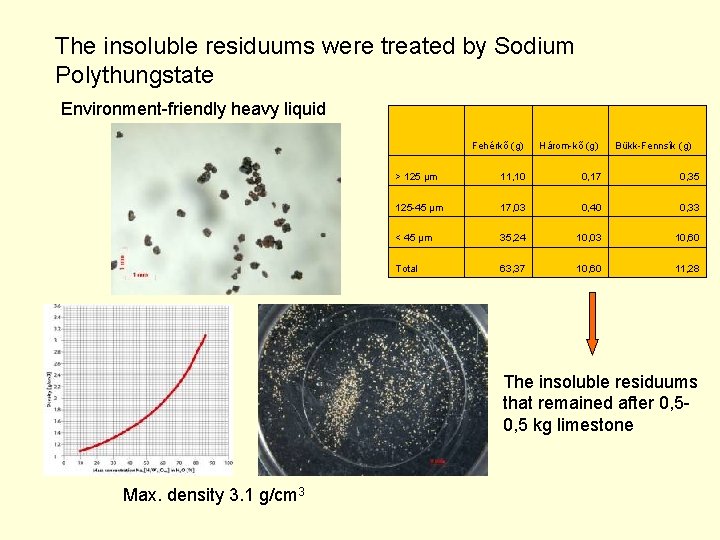
The insoluble residuums were treated by Sodium Polythungstate Environment-friendly heavy liquid Fehérkő (g) Három-kő (g) Bükk-Fennsík (g) > 125 µm 11, 10 0, 17 0, 35 125 -45 µm 17, 03 0, 40 0, 33 < 45 µm 35, 24 10, 03 10, 60 Total 63, 37 10, 60 11, 28 The insoluble residuums that remained after 0, 5 kg limestone Max. density 3. 1 g/cm 3
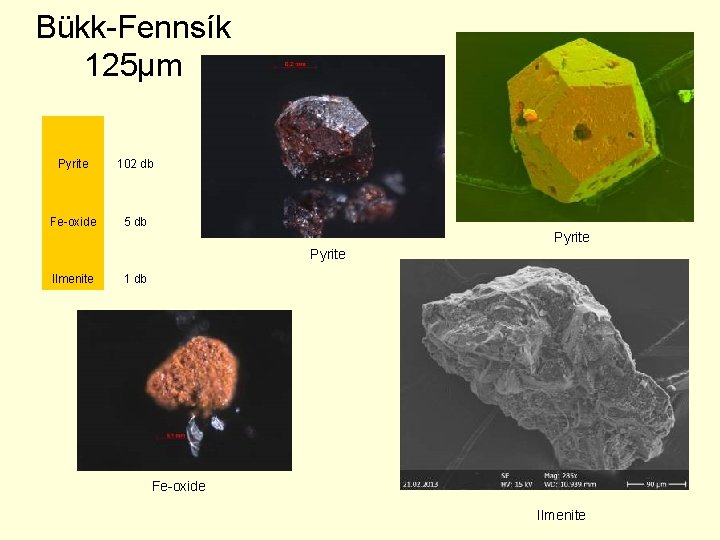
Bükk-Fennsík 125µm Pyrite 102 db Fe-oxide 5 db Pyrite Ilmenite 1 db Fe-oxide Ilmenite
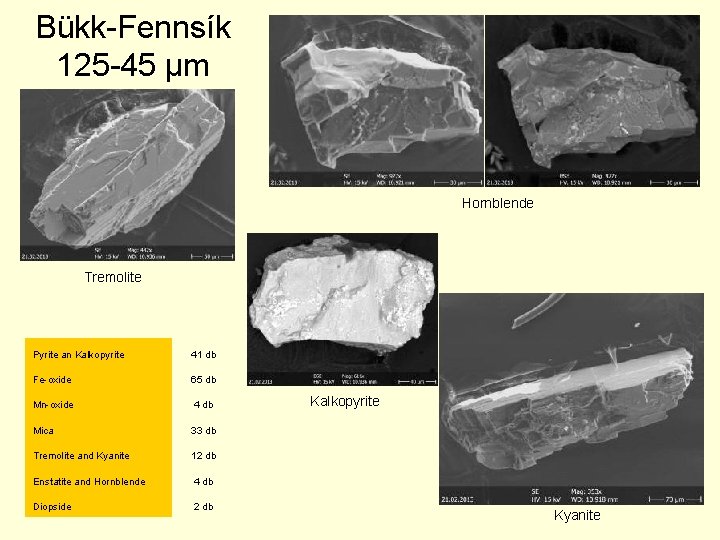
Bükk-Fennsík 125 -45 µm Hornblende Tremolite Pyrite an Kalkopyrite 41 db Fe-oxide 65 db Mn-oxide 4 db Mica 33 db Tremolite and Kyanite 12 db Enstatite and Hornblende 4 db Diopside 2 db Kalkopyrite Kyanite
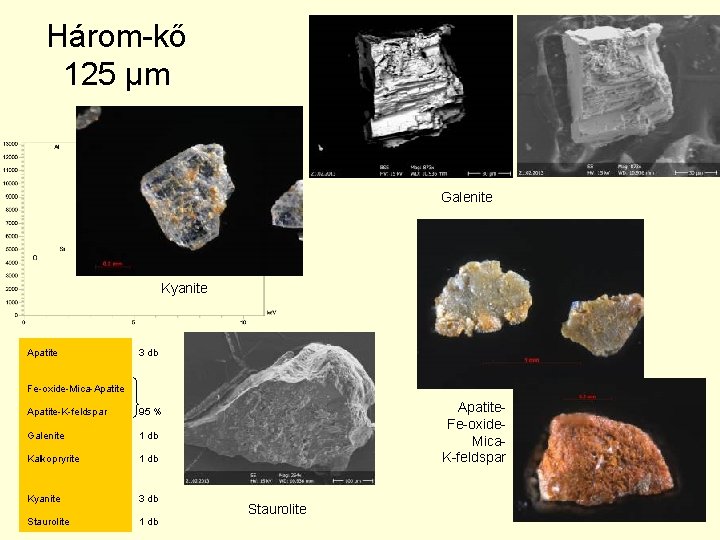
Három-kő 125 µm Galenite Kyanite Apatite 3 db Fe-oxide-Mica-Apatite-K-feldspar 95 % Galenite 1 db Kalkopryrite 1 db Kyanite 3 db Staurolite 1 db Apatite. Fe-oxide. Mica. K-feldspar Staurolite
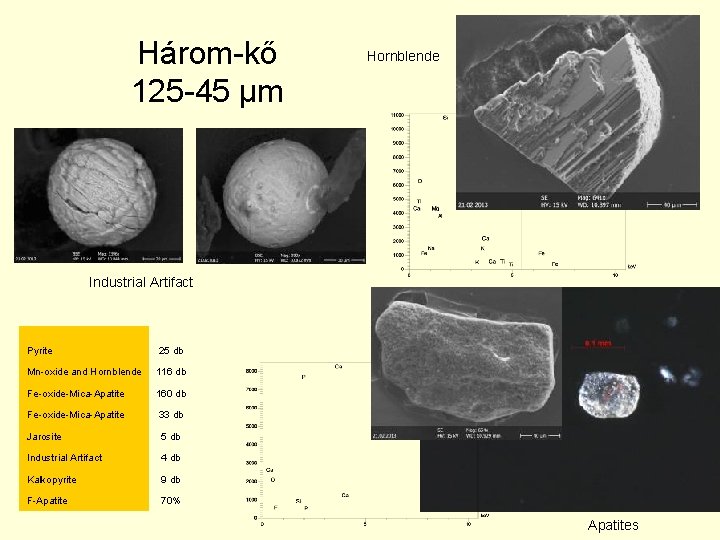
Három-kő 125 -45 µm Hornblende Industrial Artifact Pyrite 25 db Mn-oxide and Hornblende 116 db Fe-oxide-Mica-Apatite 160 db Fe-oxide-Mica-Apatite 33 db Jarosite 5 db Industrial Artifact 4 db Kalkopyrite 9 db F-Apatite 70% Apatites
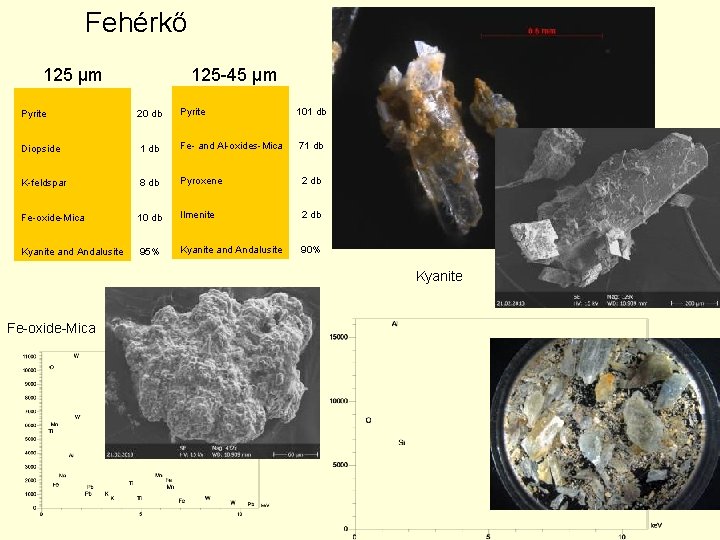
Fehérkő 125 µm 125 -45 µm Pyrite 20 db Pyrite 101 db Diopside 1 db Fe- and Al-oxides-Mica 71 db K-feldspar 8 db Pyroxene 2 db Fe-oxide-Mica 10 db Ilmenite 2 db Kyanite and Andalusite 95% Kyanite and Andalusite 90% Kyanite Fe-oxide-Mica
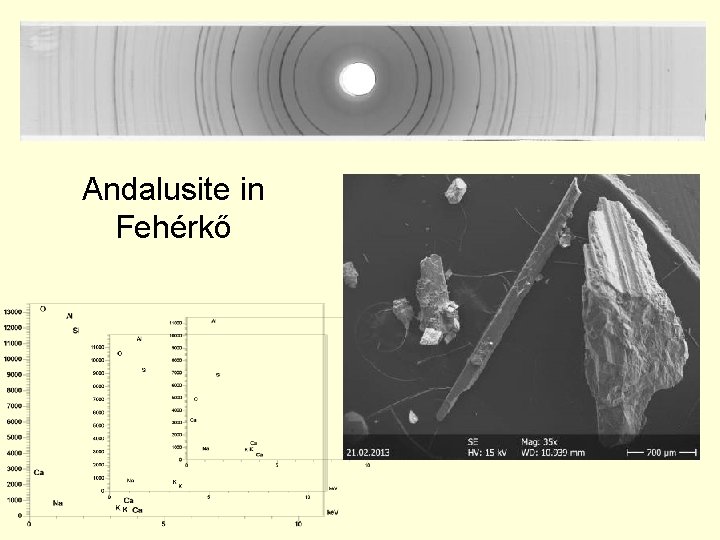
Andalusite in Fehérkő
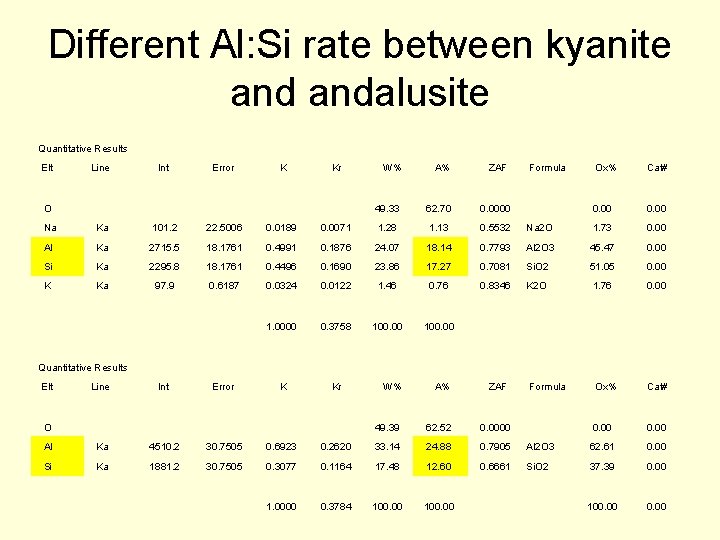
Different Al: Si rate between kyanite andalusite Quantitative Results Elt Line Int Error Kr O W% A% ZAF Formula Ox% Cat# 49. 33 62. 70 0. 0000 0. 00 Na Ka 101. 2 22. 5006 0. 0189 0. 0071 1. 28 1. 13 0. 5532 Na 2 O 1. 73 0. 00 Al Ka 2715. 5 18. 1761 0. 4991 0. 1876 24. 07 18. 14 0. 7793 Al 2 O 3 45. 47 0. 00 Si Ka 2295. 8 18. 1761 0. 4496 0. 1690 23. 86 17. 27 0. 7081 Si. O 2 51. 05 0. 00 K Ka 97. 9 0. 6187 0. 0324 0. 0122 1. 46 0. 76 0. 8346 K 2 O 1. 76 0. 00 1. 0000 0. 3758 100. 00 Kr W% A% ZAF Formula Ox% Cat# 49. 39 62. 52 0. 0000 0. 00 Quantitative Results Elt Line Int Error O Al Ka 4510. 2 30. 7505 0. 6923 0. 2620 33. 14 24. 88 0. 7905 Al 2 O 3 62. 61 0. 00 Si Ka 1881. 2 30. 7505 0. 3077 0. 1164 17. 48 12. 60 0. 6661 Si. O 2 37. 39 0. 00 1. 0000 0. 3784 100. 00
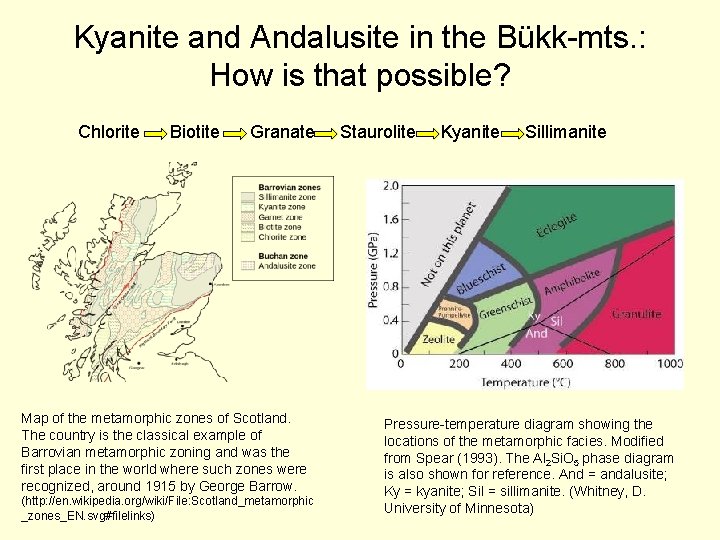
Kyanite and Andalusite in the Bükk-mts. : How is that possible? Chlorite Biotite Granate Staurolite Kyanite Sillimanite Map of the metamorphic zones of Scotland. The country is the classical example of Barrovian metamorphic zoning and was the first place in the world where such zones were recognized, around 1915 by George Barrow. (http: //en. wikipedia. org/wiki/File: Scotland_metamorphic _zones_EN. svg#filelinks) Pressure-temperature diagram showing the locations of the metamorphic facies. Modified from Spear (1993). The Al 2 Si. O 5 phase diagram is also shown for reference. And = andalusite; Ky = kyanite; Sil = sillimanite. (Whitney, D. University of Minnesota)
Thank you for your attention!
- Slides: 14