
Heavy Metal Toxicity Scott Phillips MD FACP FACMT



- Slides: 68
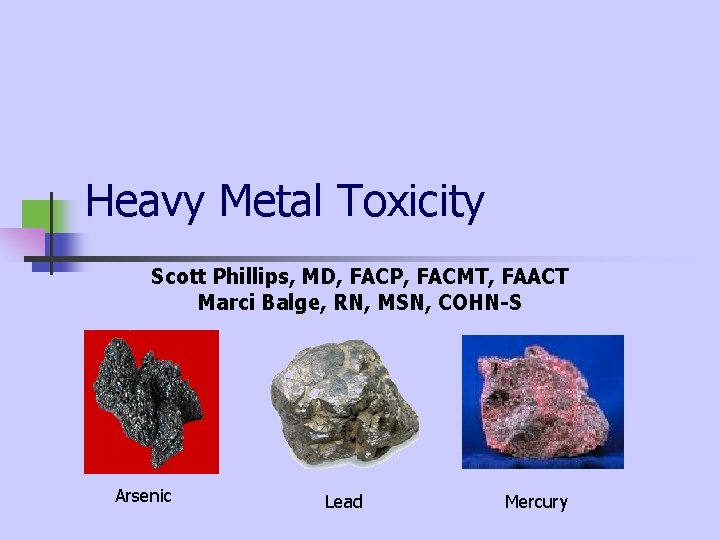
Heavy Metal Toxicity Scott Phillips, MD, FACP, FACMT, FAACT Marci Balge, RN, MSN, COHN-S Arsenic Lead Mercury
This educational module was produced by Scott Phillips MD, FACP, FACMT, FAACT and Marci Balge, RN, MSN, COHN-S for The University of Texas Health Science Center at San Antonio (UTHSCSA) Environmental Medicine Education Program and South Texas Environmental Education and Research Program (STEER-San Antonio/Laredo/Harlingen, Texas) Administrative support was provided by the Association of Occupational and Environmental Clinics through funding to UTHSCSA by the Agency for Toxic Substances and Disease Registry (ATSDR), U. S. Department of Health and Human Services. Use of this program must include acknowledgement of the authors, UTHSCSA and the funding support. For information about other educational modules contact the UTHSCSA STEER office, Mail Code 7796, 7703 Floyd Curl Drive, San Antonio, Texas 78229 -3900, (210)567 -7407.
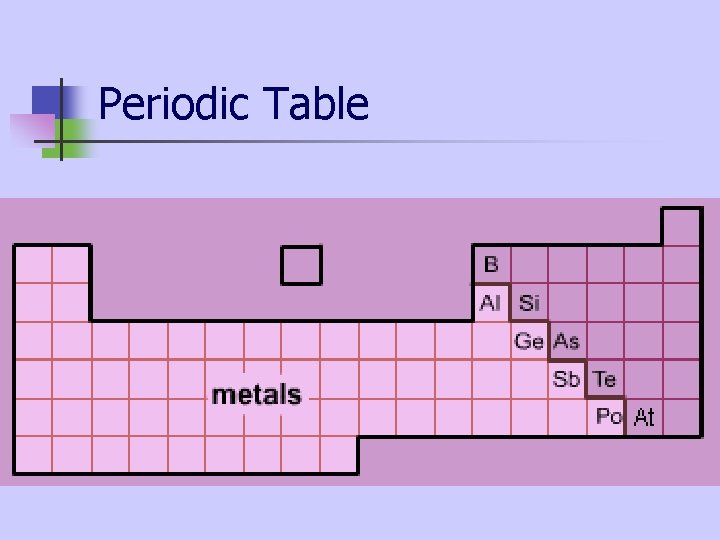
Definitions n ‘Metals’ originally included only gold, silver, copper, iron, lead, and tin. n n Dense, malleable, lustrous Conduct heat and electricity, cations Many other elements since added to the list with some of these characteristics ‘Metalloids’ are elements with features intermediate between metals and non-metals. Example: arsenic
Periodic Table
‘Heavy metal’ n n A metal having an atomic weight greater than sodium, a density greater than 5 g/cm 3 Some notion of toxicity Usually includes lead, cadmium and mercury Many others may variably be added to list
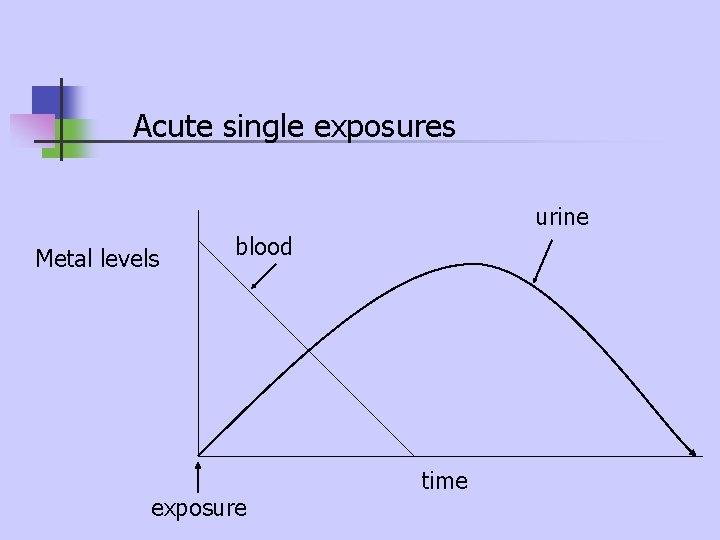
Acute single exposures urine Metal levels blood exposure time
Case Presentation n 15 -month old boy was treated with ampicillin for abdominal pain and diarrhea. The problem continued and the parent gave the child multiple doses of a Central American “home remedy” called azarcon. The child developed seizures. PE BP 103/68, P 94, RR 22, Tmax 98 F. Exam: listless, with poor motor tone. No neck stiffness, the heart, lungs and abdomen were unremarkable. Sz re-occurred. WBC 9. 6 no anemia, Plts Nl, Lytes nl, UA nl Spinal tap was nl, with elevated opening pressure, cerebral edema was found on Cat Scan of the Head.
Case (cont) n n n The child was intubated, given lorazepam, fosphenatoin and phenobarbital without control of the Sz. An x-ray reveled a radiopaque image in the GI tract. The child expired, despite aggressive supportive care. What is azarcon?
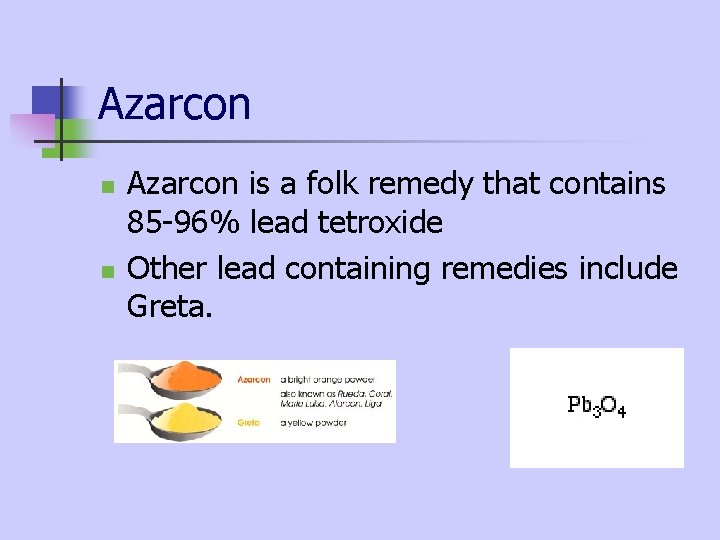
Azarcon n n Azarcon is a folk remedy that contains 85 -96% lead tetroxide Other lead containing remedies include Greta.
Case (cont. ) n The child was found to have a blood lead level of 124 ug/dl. , and died from lead encephalopathy.
Lead
Lead Paint n n n The use of lead in residential paint was banned in 1977 Lead-containing pigments still are used for outdoor paint products because of their bright colors and weather resistant properties Tetraethyl and tetramethyl lead are still used as additives in gasoline in several countries
Sources of Exposure n n n Soil and dust Paint chips Contaminated water Parents lead-related occupation Folk remedies Congenital exposure n n Pica Developmental delay
Toxicocokinetics and Toxicoynamics n Absorption: n n Lungs: depends on size particle GI: n n n Skin: n n n Adults: 20 -30% Children: as much as 50% of dietary lead n Inadequate intake of iron, calcium, and total calories are associated with higher lead levels Inorganic lead is not absorbed Organic lead is well absorbed Lead is carried bound to the RBC
Pharmacokinetics and Pharmacoynamics n Distributed extensively throughout tissues: bone, teeth, liver, lung, kidney, brain, and spleen
n n Body lead storage: bones- can constitute a source of remobilization and continued toxicity after the exposure has ceased Lead crosses the BBB and concentrates in the gray matter Lead crosses the placenta Excretion: n n Kidneys. The excretion increases with increasing body stores (30 g-200 g/day) Feces
Clinical Manifestation n Acute toxicity n Acute encephalopathy, renal failure and severe GI symptoms
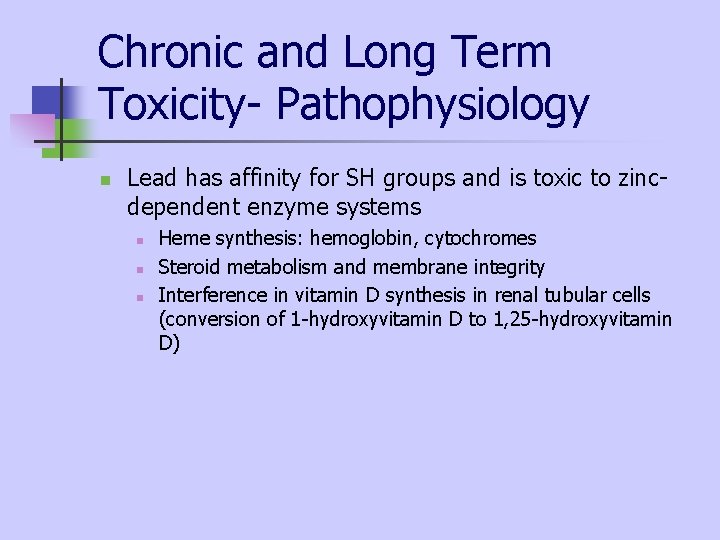
Chronic and Long Term Toxicity- Pathophysiology n Lead has affinity for SH groups and is toxic to zincdependent enzyme systems n n n Heme synthesis: hemoglobin, cytochromes Steroid metabolism and membrane integrity Interference in vitamin D synthesis in renal tubular cells (conversion of 1 -hydroxyvitamin D to 1, 25 -hydroxyvitamin D)
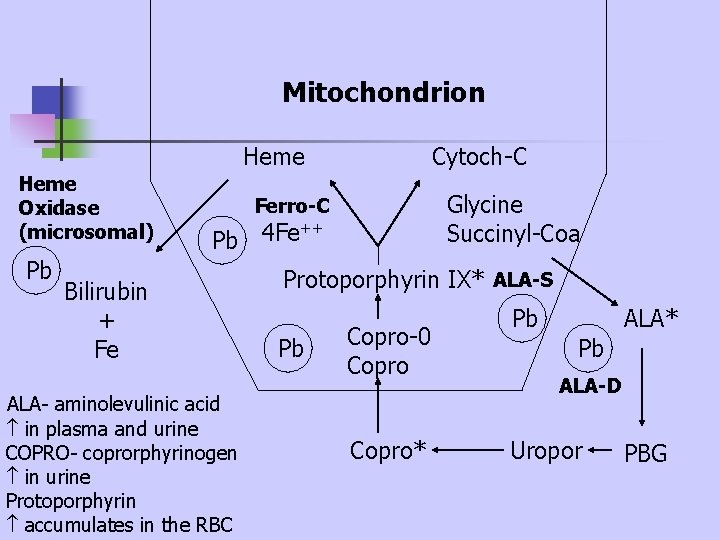
Mitochondrion Heme Oxidase (microsomal) Pb Cytoch-C Glycine Succinyl-Coa Ferro-C ++ 4 Fe Pb Bilirubin + Fe ALA- aminolevulinic acid in plasma and urine COPRO- coprorphyrinogen in urine Protoporphyrin accumulates in the RBC Protoporphyrin IX* ALA-S Pb Copro-0 Copro* Pb ALA-D Uropor PBG
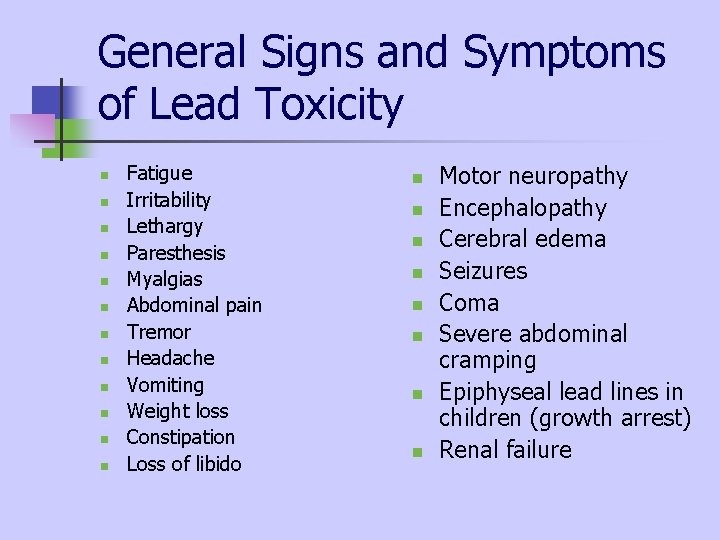
General Signs and Symptoms of Lead Toxicity n n n Fatigue Irritability Lethargy Paresthesis Myalgias Abdominal pain Tremor Headache Vomiting Weight loss Constipation Loss of libido n n n n Motor neuropathy Encephalopathy Cerebral edema Seizures Coma Severe abdominal cramping Epiphyseal lead lines in children (growth arrest) Renal failure
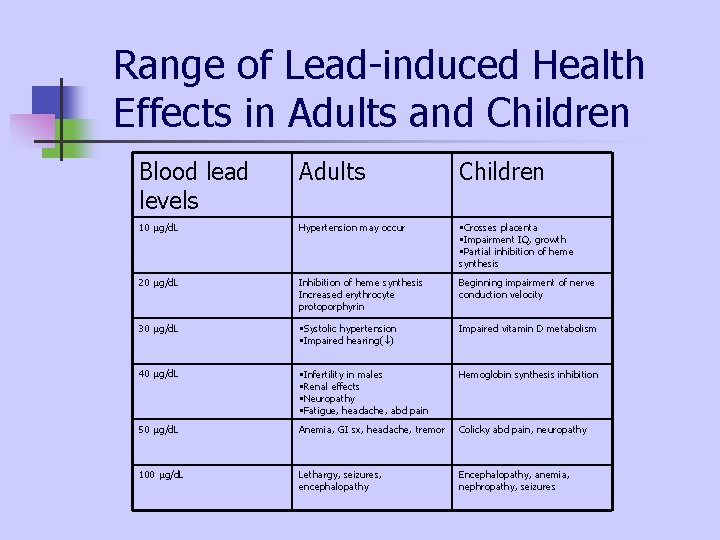
Range of Lead-induced Health Effects in Adults and Children Blood lead levels Adults Children 10 g/d. L Hypertension may occur • Crosses placenta • Impairment IQ, growth • Partial inhibition of heme synthesis 20 g/d. L Inhibition of heme synthesis Increased erythrocyte protoporphyrin Beginning impairment of nerve conduction velocity 30 g/d. L • Systolic hypertension • Impaired hearing( ) Impaired vitamin D metabolism 40 g/d. L • Infertility in males • Renal effects • Neuropathy • Fatigue, headache, abd pain Hemoglobin synthesis inhibition 50 g/d. L Anemia, GI sx, headache, tremor Colicky abd pain, neuropathy 100 g/d. L Lethargy, seizures, encephalopathy Encephalopathy, anemia, nephropathy, seizures
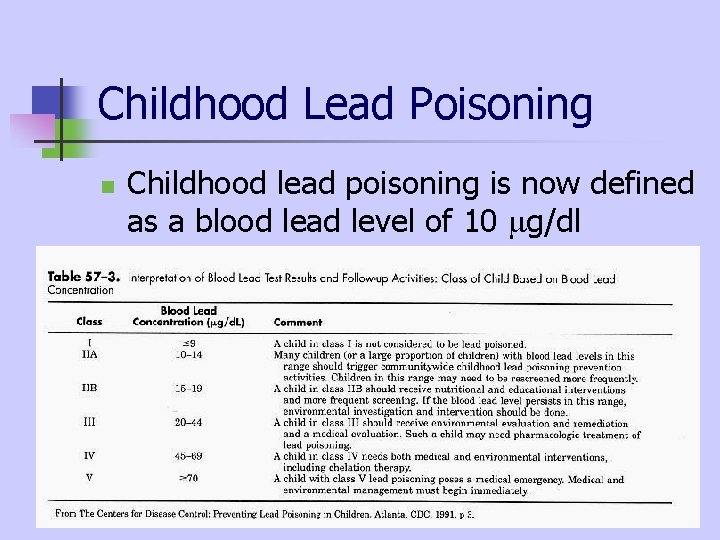
Childhood Lead Poisoning n Childhood lead poisoning is now defined as a blood lead level of 10 g/dl
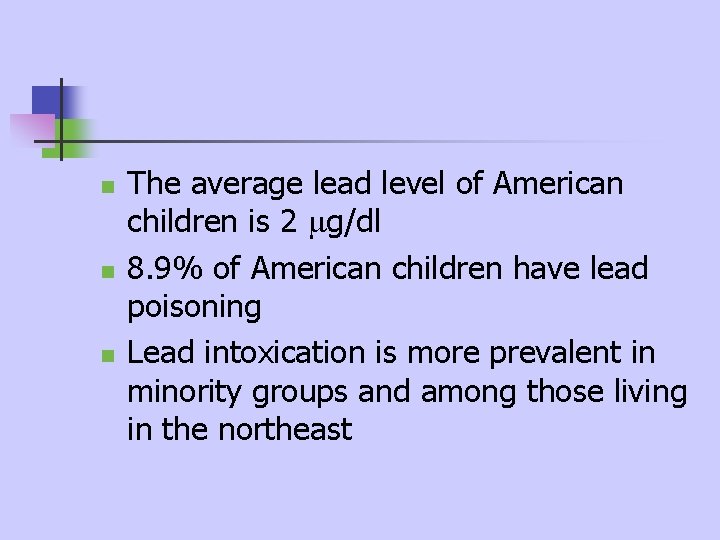
n n n The average lead level of American children is 2 g/dl 8. 9% of American children have lead poisoning Lead intoxication is more prevalent in minority groups and among those living in the northeast
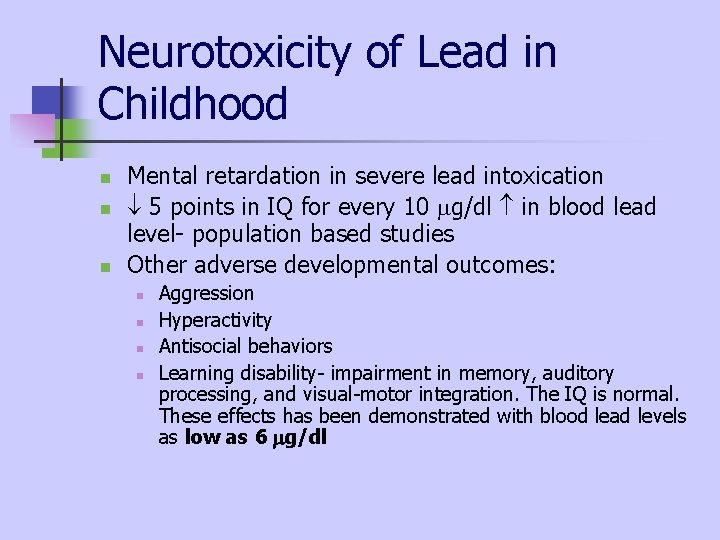
Neurotoxicity of Lead in Childhood n n n Mental retardation in severe lead intoxication 5 points in IQ for every 10 g/dl in blood lead level- population based studies Other adverse developmental outcomes: n n Aggression Hyperactivity Antisocial behaviors Learning disability- impairment in memory, auditory processing, and visual-motor integration. The IQ is normal. These effects has been demonstrated with blood lead levels as low as 6 g/dl
Diagnosis n n n Evaluation of clinical symptoms and signs CBC Serum iron levels, TIBC, ferritin Abdominal radiographs (for recent ingestion of leadcontaining material) Whole blood lead level X-ray fluorescence (XRF)- to asses body burden
Treatment n n n Environmental inspection/hazard reduction Nutritional supplementation Chelation therapy
Nutritional Supplementation n n Iron supplementation Calcium supplementation – calcium rich foods Phosphorus supplementation Frequent food consumption- regular meals + snacks
Chelation Therapy n BLL > 70 g/dl or encephalopathy n n Hospital admission Administration of a parenteral chelator BLL > 45 g/dl- oral chelator BLL 25 -45 g/dl- if these levels persist despite environmental intervention
Arsenic
Introduction n n Arsenic is common in the environment Sources n n n Groundwater Arsenic containing mineral ores Industrial processes n n n Semiconductor manufacturing (gallium arsenide) Fossil fuels Wood treated with arsenic preservatives Metallurgy Smelting (copper, zinc, lead) and refining of metals and ores Glass manufacturing
Introduction n Commercial products n n n Food n n Wood preservatives Pesticides Herbicides Fungicides Seafood and fish Others n n Antiparasitic drugs Folk remedies
Soil Pica n n Soil pica behavior: when children ingest large amounts of soil at a time (e. g. up to 1 teaspoon or 5, 000 mg) Children 1 to 2 years old have strongest soil pica behavior, which may occur as part of their normal exploratory behavior Preschool children also purposely eat soil for unknown reasons Some cultures promote eating soil, specifically clay, as part of a cultural practice
Toxicokinetics n n T 1/2 of inorganic arsenic in the blood is 10 hrs and of organic arsenic is around 30 hours 2 -4 weeks after the exposure ceases, most of the remaining arsenic in the body is found in keratin-rich tissues (nails, hair, skin)
Toxicokinetics n n Inorganic arsenic is converted to organic arsenic (biomethylation to monomethyl arsonic- MMA or DMA) in the liver. This may represent a process of detoxification Renally excreted (30 -50% of inorganic arsenic is excreted in about 3 days). Both forms are excreted depend on the acuteness of the exposure and dose
Pathophysiology n Trivalent forms: n n n Pentavalent forms n n bind to sulfhydryl groups leading to inhibition of enzymatic systems inhibit the Krebs cycle and oxidative phosporylation. These lead to inhibition of ATP production can replace the stable phosphate ester bond in ATP and produce an arsenic ester stable bond which is not a high energy bond Endothelial damage, loss of capillary integrity, capillary leakage, volume loss, shock
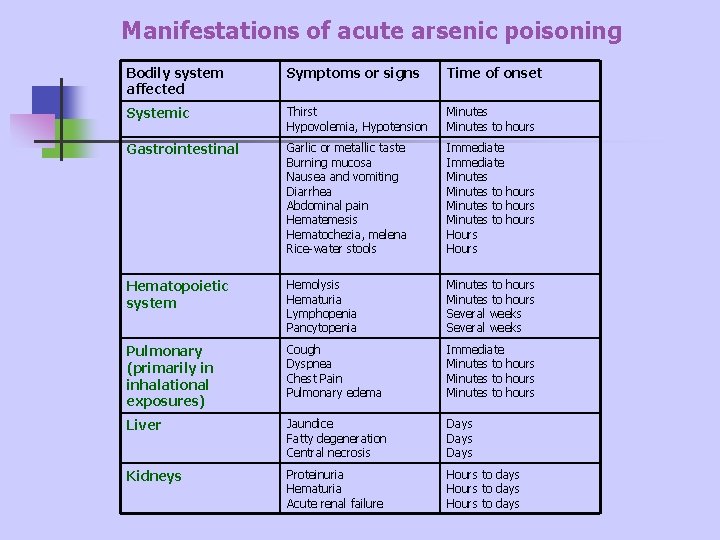
Manifestations of acute arsenic poisoning Bodily system affected Symptoms or signs Time of onset Systemic Thirst Hypovolemia, Hypotension Minutes to hours Gastrointestinal Garlic or metallic taste Burning mucosa Nausea and vomiting Diarrhea Abdominal pain Hematemesis Hematochezia, melena Rice-water stools Immediate Minutes to hours Hours Hematopoietic system Hemolysis Hematuria Lymphopenia Pancytopenia Minutes to hours Several weeks Pulmonary (primarily in inhalational exposures) Cough Dyspnea Chest Pain Pulmonary edema Immediate Minutes to hours Liver Jaundice Fatty degeneration Central necrosis Days Kidneys Proteinuria Hematuria Acute renal failure Hours to days
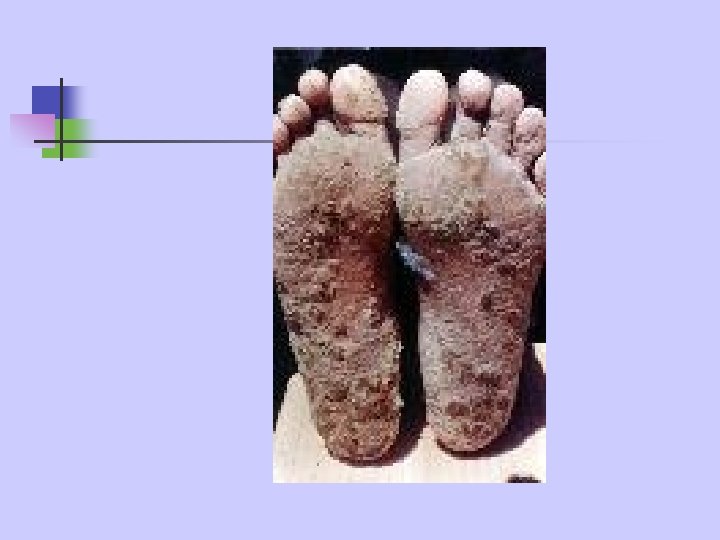
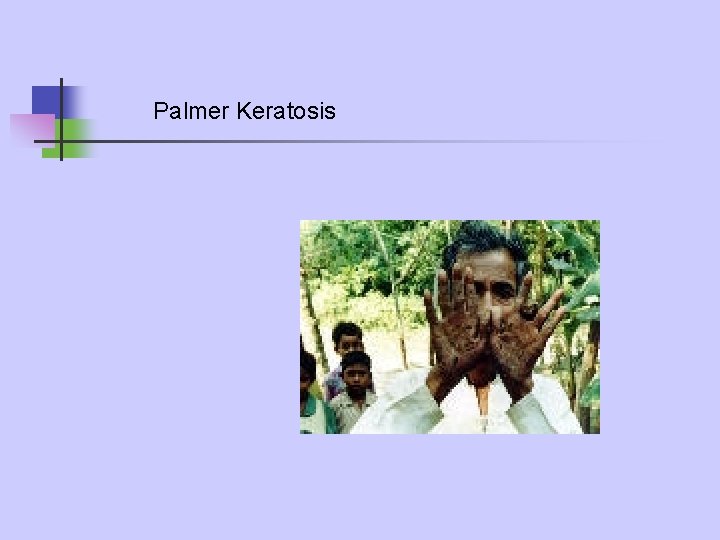
Palmer Keratosis
Biological Monitoring n Urinary arsenic measurement n n n Spot sample (mcg/L) Timed urine collection (mcg/24 hours) Normal values n n n Spot urine= ~10 mcg/L (10 -150 mcg/L) 24 hours urine collection=<25 mcg/24 hours Whole blood= <1 mcg/L (usually is elevated in acute intoxication)
Biological Monitoring n n Ingestion of seafood may elevate urinary arsenic levels If urinary arsenic levels are high n n n Ask the patient whether he ingested seafood in the last 72 hours Speciation can be performed in several laboratories Methylated derivatives determination in the urine. These levels are not influenced by the presence of organic arsenic from marine origin
Treatment of acute poisoning n n Gastric lavage Activated charcoal does not bind well inorganic arsenic Whole bowel irrigation with polyethylene glycol Skin decontamination in dermal exposure
Treatment of acute poisoning n n Supportive care Chelation therapy should be instituted promptly (minutes to hours) n n BAL (British anti-Lewisite)- IM Succimer (DMSA)- PO DMPS – PO, IV D-Penicillamine- less effective
Cadmium
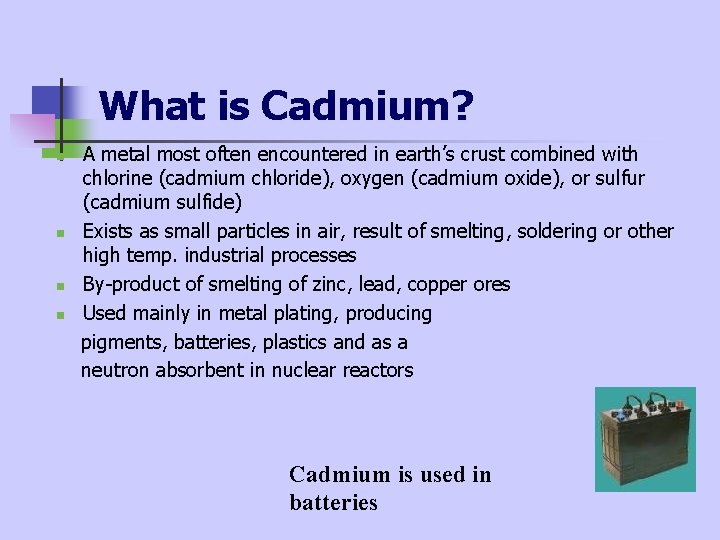
What is Cadmium? n n A metal most often encountered in earth’s crust combined with chlorine (cadmium chloride), oxygen (cadmium oxide), or sulfur (cadmium sulfide) Exists as small particles in air, result of smelting, soldering or other high temp. industrial processes By-product of smelting of zinc, lead, copper ores Used mainly in metal plating, producing pigments, batteries, plastics and as a neutron absorbent in nuclear reactors Cadmium is used in batteries
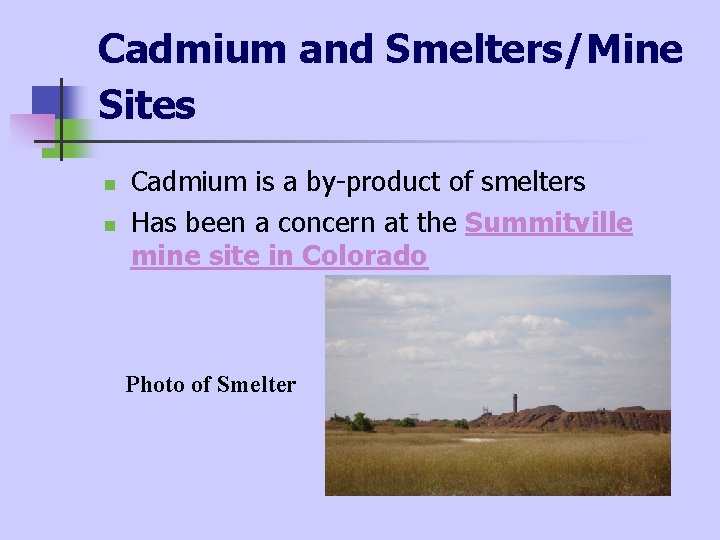
Cadmium and Smelters/Mine Sites n n Cadmium is a by-product of smelters Has been a concern at the Summitville mine site in Colorado Photo of Smelter
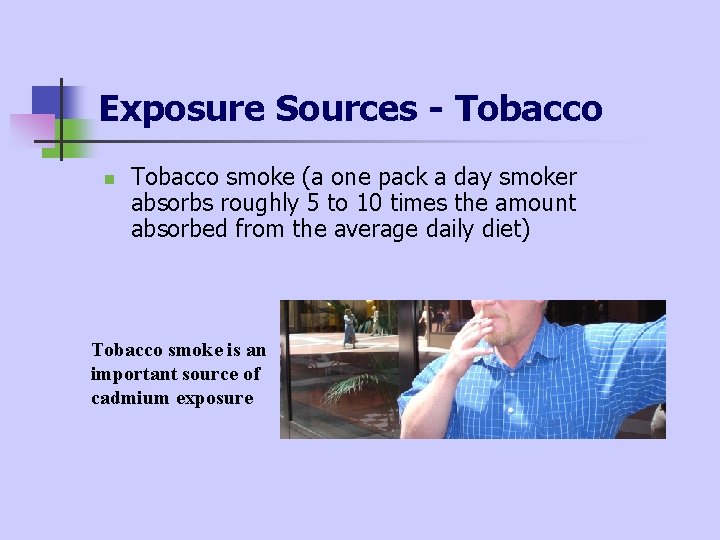
Exposure Sources - Tobacco n Tobacco smoke (a one pack a day smoker absorbs roughly 5 to 10 times the amount absorbed from the average daily diet) Tobacco smoke is an important source of cadmium exposure
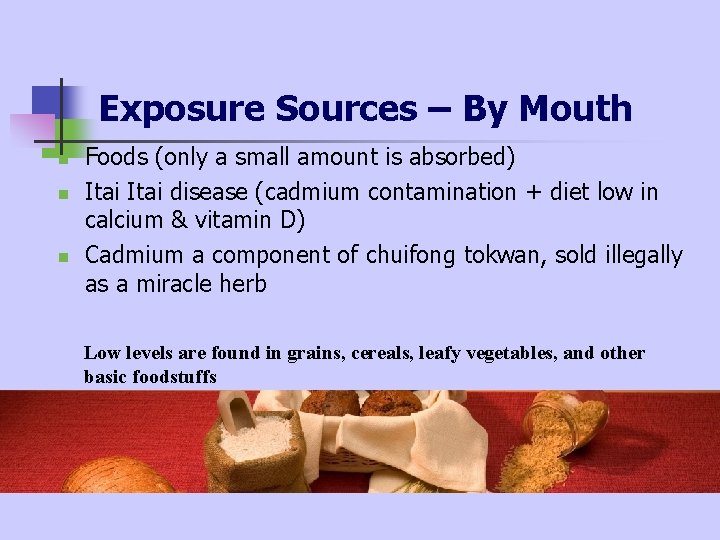
Exposure Sources – By Mouth n n n Foods (only a small amount is absorbed) Itai disease (cadmium contamination + diet low in calcium & vitamin D) Cadmium a component of chuifong tokwan, sold illegally as a miracle herb Low levels are found in grains, cereals, leafy vegetables, and other basic foodstuffs
Biologic Fate n n n Cadmium has no known beneficial function in the human body Is transported in the blood bound to metallothionein Greatest concentrations found in kidneys & liver Urinary excretion is slow Biologic half-life may be up to 30 yrs.
Why Is Cadmium a Health Hazard? n n n Affects lungs & kidneys 2 o effects on skeletal system Binds to sulfhydryl groups, displacing other metals from metalloenzymes, disrupting those enzymes Competes with calcium for binding sites on regulatory proteins Lipid peroxidation has been demonstrated
Respiratory Effects n Acute inhalation may mimic metal fume fever Fever, chills & decreases in FVC and FEV 1 Initial symptoms: flu-like symptoms n Later: chest pain, cough, dyspnea n Bronchospasm and hemoptysis may occur n n Chronic inhalation MAY result in impairment of pulmonary function with reduction in ventilatory capacity
Renal Effects n n May cause tubular and glomerular damage with resultant proteinuria May follow chronic inhalation or ingestion Latency period of ~10 yrs Nephropathy is progressive & irreversible
Renal Effects n n n Chronic exposure – progressive renal tubular dysfunction Toxic effects are dose related Critical renal concentration Decreased GFR Chronic renal failure Kidney stones more common
Skeletal Effects n Bone lesions occur late in severe chronic poisoning n n n Pseudofractures Other effects of osteomalacia and osteoporosis Appear to be secondary to increased urinary calcium and phosphorus losses
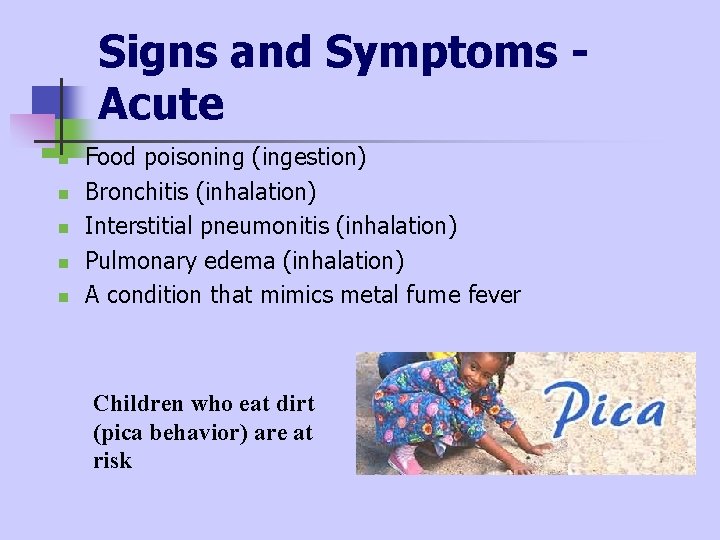
Signs and Symptoms Acute n n n Food poisoning (ingestion) Bronchitis (inhalation) Interstitial pneumonitis (inhalation) Pulmonary edema (inhalation) A condition that mimics metal fume fever Children who eat dirt (pica behavior) are at risk
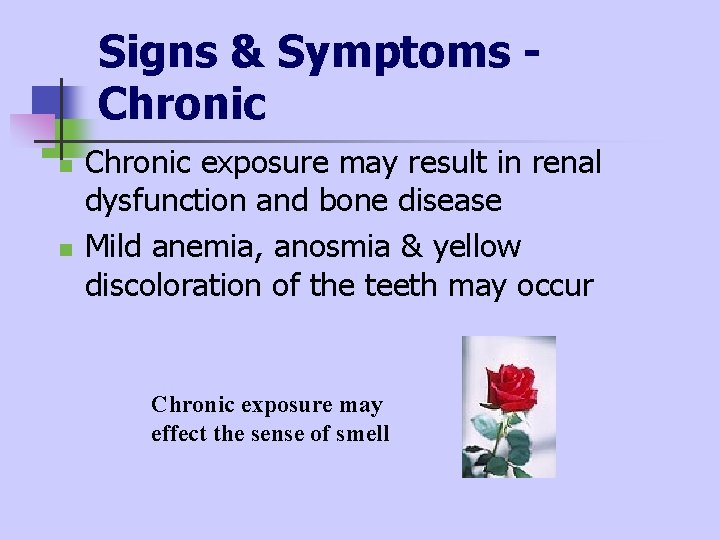
Signs & Symptoms Chronic n n Chronic exposure may result in renal dysfunction and bone disease Mild anemia, anosmia & yellow discoloration of the teeth may occur Chronic exposure may effect the sense of smell
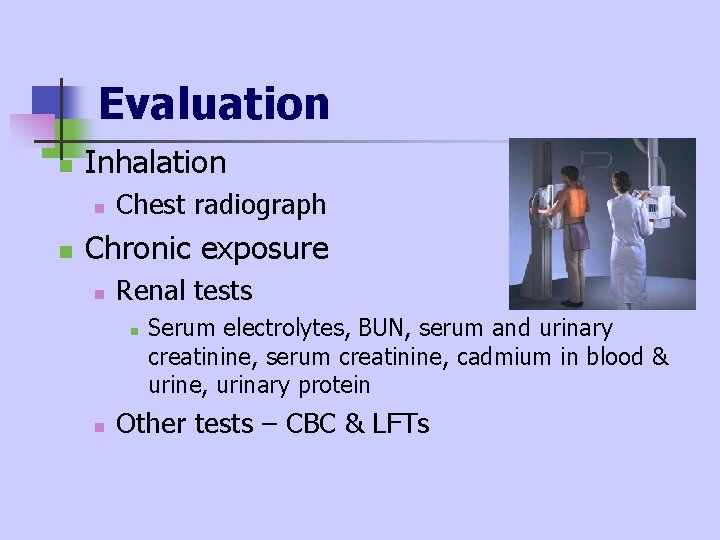
Evaluation n Inhalation n n Chest radiograph Chronic exposure n Renal tests n n Serum electrolytes, BUN, serum and urinary creatinine, serum creatinine, cadmium in blood & urine, urinary protein Other tests – CBC & LFTs
Direct Biologic Indicators n n n 24 hour urine cadmium – reflects exposure over time an total body burden Blood cadmium Cadmium in hair – not reliable No quantitative relationship between hair cadmium levels and body burden
Indirect Biologic Indicators n n n Urinary ß 2 -microglobulin – evaluate urine levels > 300 g/g creatinine Urinary RBP Urinary metallothionein (MT)
Treatment & Management n Acute Exposure n n No proven treatment n Supportive treatment includes fluid replacement, oxygen, mechanical ventilation. With ingestion, gastric decontamination by emesis or gastric lavage soon after exposure. Activated charcoal not proven effective Chronic – Prevent further exposure
Mercury
Mercury n n n Occurs in three forms (elemental, inorganic salts, and organic compounds) Contamination results from mining, smelting, and industrial discharges. Mercury in water can be converted by bacteria to organic mercury (more toxic) in fish. Can also be found in thermometers, dental amalgams, fluorescent light bulbs, disc batteries, electrical switches, folk remedies, chemistry sets and vaccines.
Mercury - Exposure n n n Elemental n liquid at room temperature that volatizes readily n rapid distribution in body by vapor, poor in GI tract Inorganic n poorly absorbed in GI tract, but can be caustic n dermal exposure has resulted in toxicity Organic n lipid soluble and well absorbed via GI, lungs and skin n can cross placenta and into breast milk
Elemental Mercury n n n At high concentrations, vapor inhalation produces acute necrotizing bronchitis, pneumonitis, and death. Long term exposure affects CNS. n Early: insomnia, forgetfulness, anorexia, mild tremor n Late: progressive tremor and erethism (red palms, emotional lability, and memory impairment) n Salivation, excessive sweating, renal toxicity (proteinuria, or nephrotic syndrome) Dental amalgams do not pose a health risk.
Inorganic Mercury n n n Gastrointestinal ulceration or perforation and hemorrhage are rapidly produced, followed by circulatory collapse. Breakdown of mucosal barriers leads to increased absorption and distribution to kidneys (proximal tubular necrosis and anuria). Acrodynia (Pink disease) usually from dermal exposure n maculopapular rash, swollen and painful extremities, peripheral neuropathy, hypertension, and renal tubular dysfunction.
Organic Mercury n n Toxicity occurs with long term exposure and effects the CNS. n Signs progress from paresthesias to ataxia, followed by generalized weakness, visual and hearing impairment, tremor and muscle spasticity, and then coma and death. Teratogen with large chronic exposure n Asymptomatic mothers with severely affected infants n Infants appeared normal at birth, but psychomotor retardation, blindness, deafness, and seizures developed over time.
Diagnosis and Treatment n n n Dx made by history and physical and lab analysis. Inorganic mercury can be measured in 24 hour urine collection; organic mercury is measured in whole blood. The most important and effective treatment is to identify the source and end the exposure Chelating agents (DMSA) may enhance inorganic mercury elimination. Dimercaprol may increase mercury concentration in the brain.
Mercury - Prevention n Many mercury compounds are no longer sold in the United States. Elemental mercury spills: n Roll onto a sheet of paper and place in airtight container n Use of a vacuum cleaner should be avoided because it causes mercury to vaporize (unless it is a Hg Vac) n Consultation with environmental cleaning company is advised with large spills. State advisories on public limit or avoid consumption of certain fish from specific bodies of water.
Questions?