
Heating the Atmosphere Chapter 17 Section 2 Energy
- Slides: 18
Heating the Atmosphere Chapter 17, Section 2
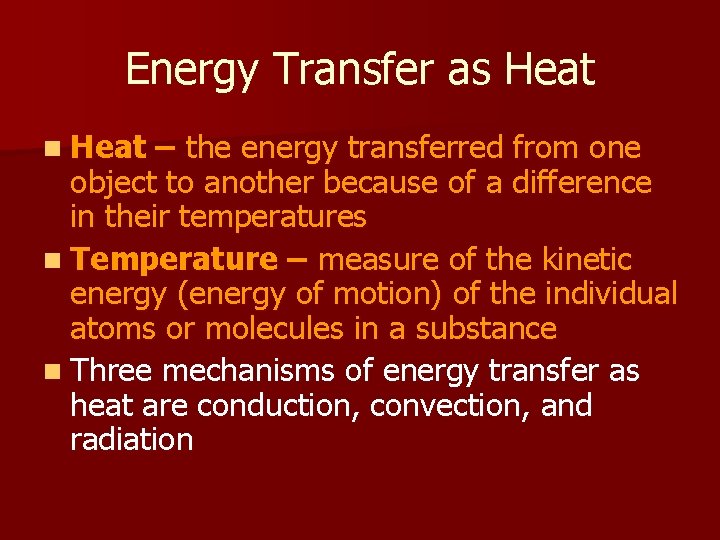
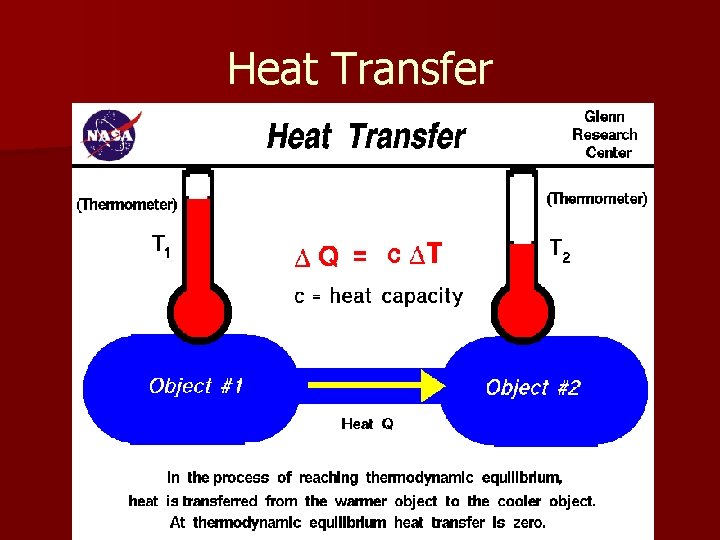
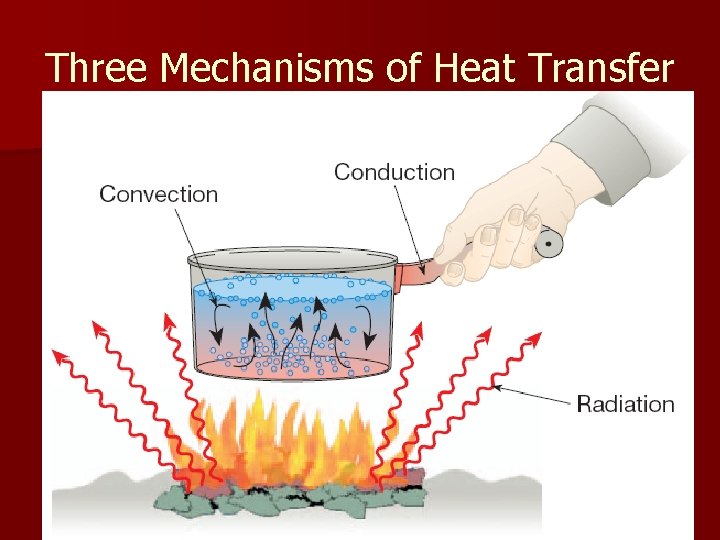
Energy Transfer as Heat n Heat – the energy transferred from one object to another because of a difference in their temperatures n Temperature – measure of the kinetic energy (energy of motion) of the individual atoms or molecules in a substance n Three mechanisms of energy transfer as heat are conduction, convection, and radiation
Heat Transfer
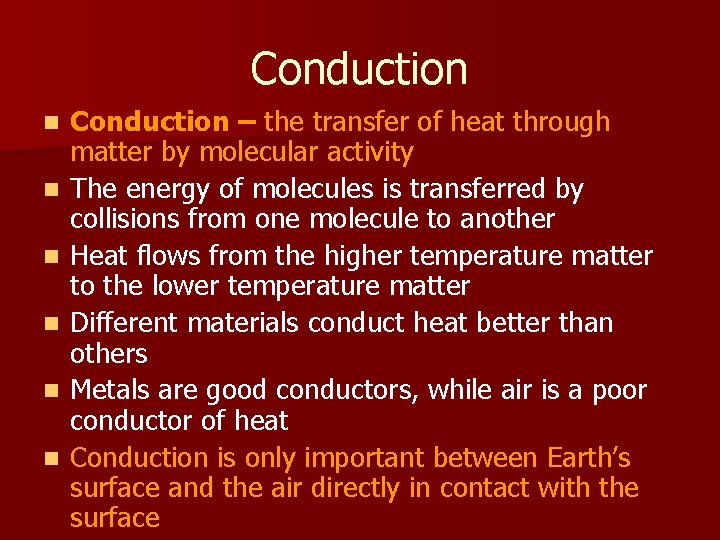
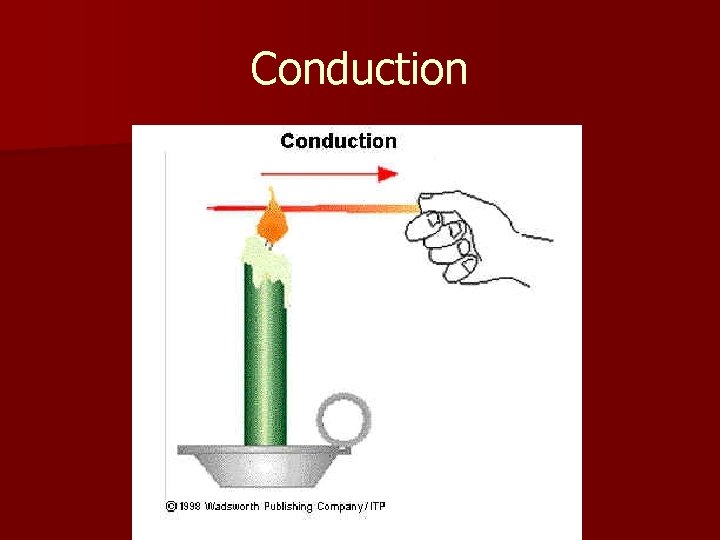
Conduction n n n Conduction – the transfer of heat through matter by molecular activity The energy of molecules is transferred by collisions from one molecule to another Heat flows from the higher temperature matter to the lower temperature matter Different materials conduct heat better than others Metals are good conductors, while air is a poor conductor of heat Conduction is only important between Earth’s surface and the air directly in contact with the surface
Conduction
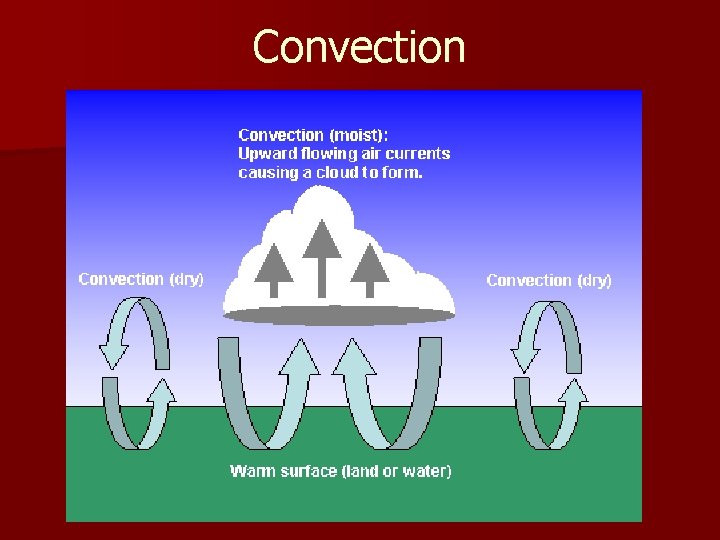
Convection n n Much of the heat transfer that occurs in the atmosphere is carried on by convection Convection – the transfer of heat by mass movement or circulation within a substance Convection takes place in fluids, like the ocean and air, where the atoms and molecules are free to move about Convection also takes place in solids, such as Earth’s mantle, which behave as fluids over long periods of time Most of the heat acquired by radiation and conduction in the lowest layer of the atmosphere is transferred by convective flow
Convection
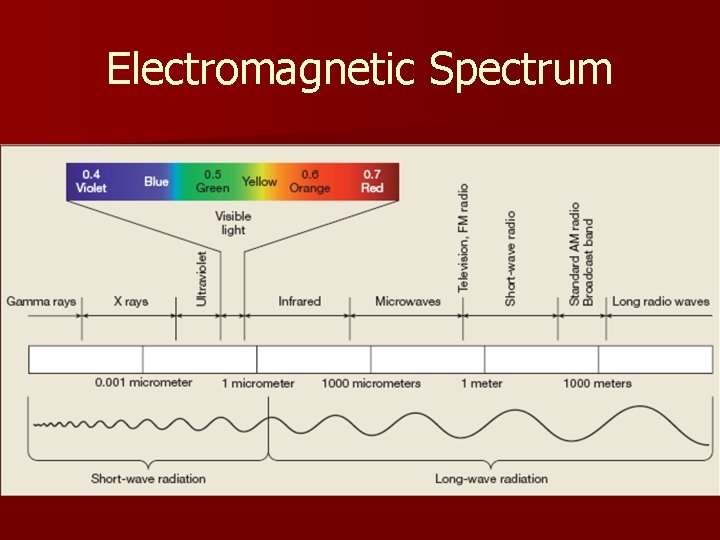
Electromagnetic Waves n n n The sun is the ultimate source of energy that creates our weather All radiation from the sun (electromagnetic waves), whether X-rays, radio waves, or heat waves, travel through the vacuum of space at 300, 000 km/s (only slightly slower through our atmosphere) Electromagnetic waves move outward from their source and come in a variety of sizes The most important difference between types is their wavelength (Radio waves have the longest, and Gamma waves have the shortest) Visible light is a small part of this electromagnetic spectrum (each color corresponds to a specific wavelength of visible light), the combination of which is white light
Electromagnetic Spectrum
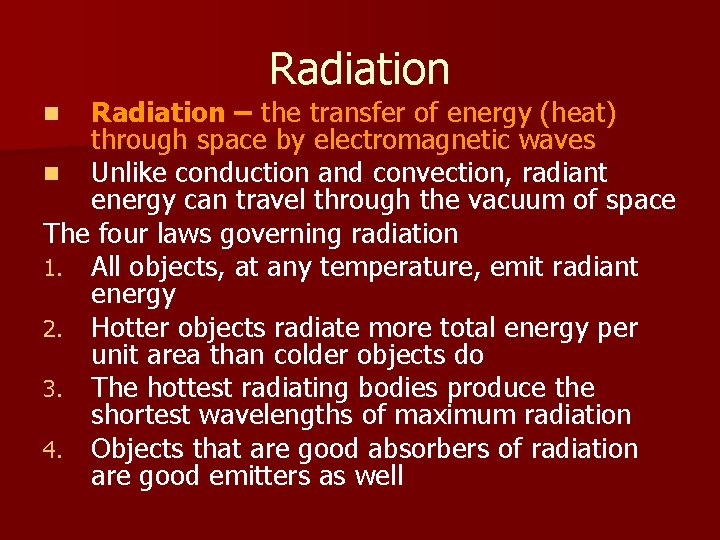
Radiation – the transfer of energy (heat) through space by electromagnetic waves n Unlike conduction and convection, radiant energy can travel through the vacuum of space The four laws governing radiation 1. All objects, at any temperature, emit radiant energy 2. Hotter objects radiate more total energy per unit area than colder objects do 3. The hottest radiating bodies produce the shortest wavelengths of maximum radiation 4. Objects that are good absorbers of radiation are good emitters as well n
Three Mechanisms of Heat Transfer
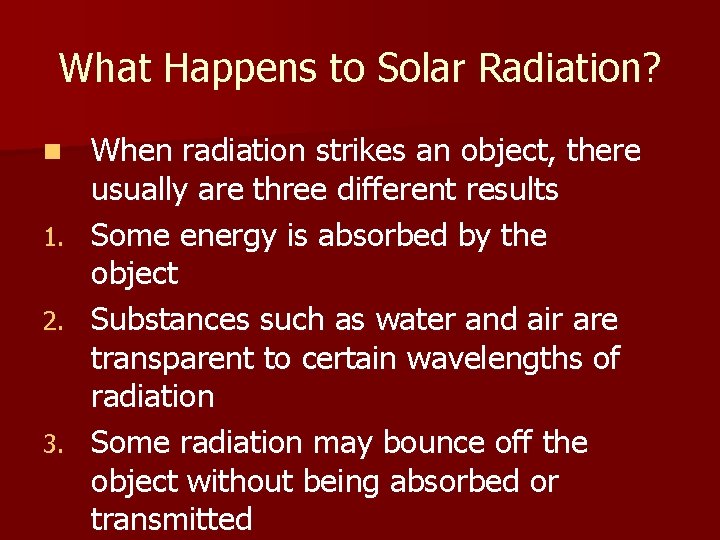
What Happens to Solar Radiation? When radiation strikes an object, there usually are three different results 1. Some energy is absorbed by the object 2. Substances such as water and air are transparent to certain wavelengths of radiation 3. Some radiation may bounce off the object without being absorbed or transmitted n
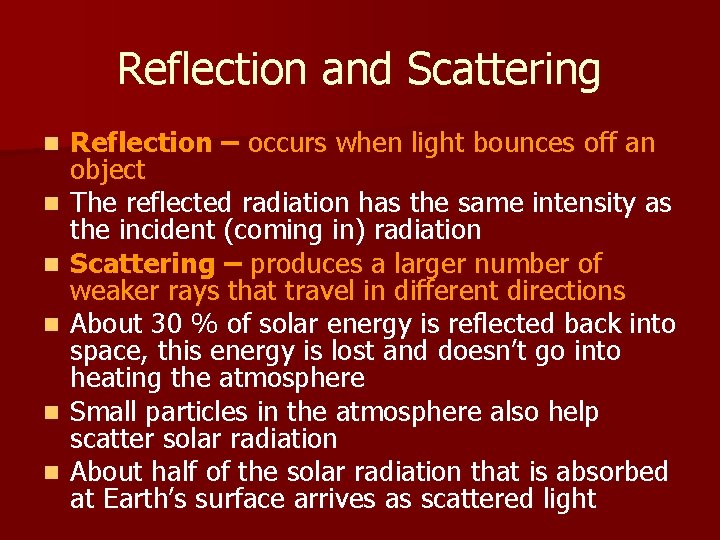
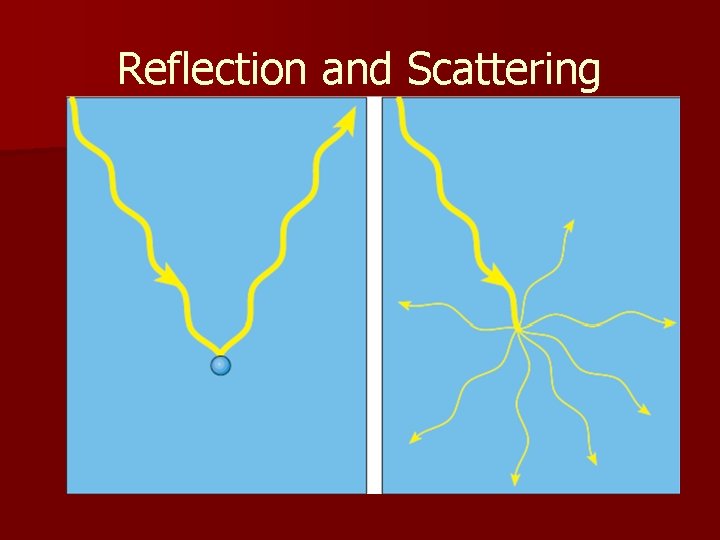
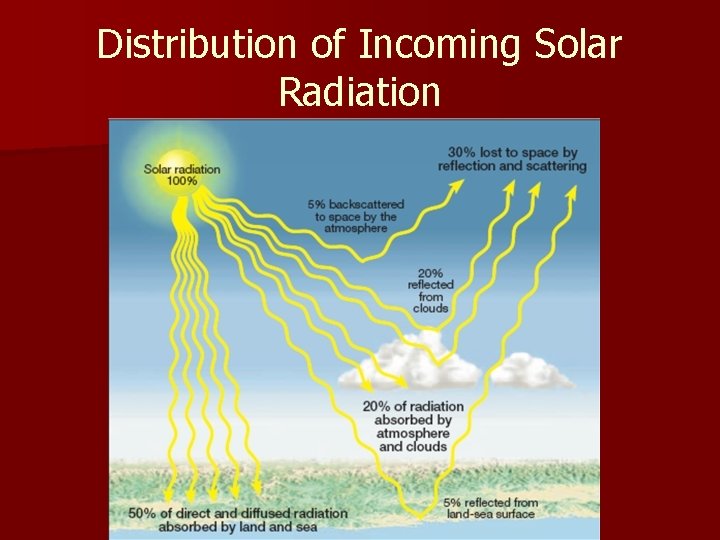
Reflection and Scattering n n n Reflection – occurs when light bounces off an object The reflected radiation has the same intensity as the incident (coming in) radiation Scattering – produces a larger number of weaker rays that travel in different directions About 30 % of solar energy is reflected back into space, this energy is lost and doesn’t go into heating the atmosphere Small particles in the atmosphere also help scatter solar radiation About half of the solar radiation that is absorbed at Earth’s surface arrives as scattered light
Reflection and Scattering
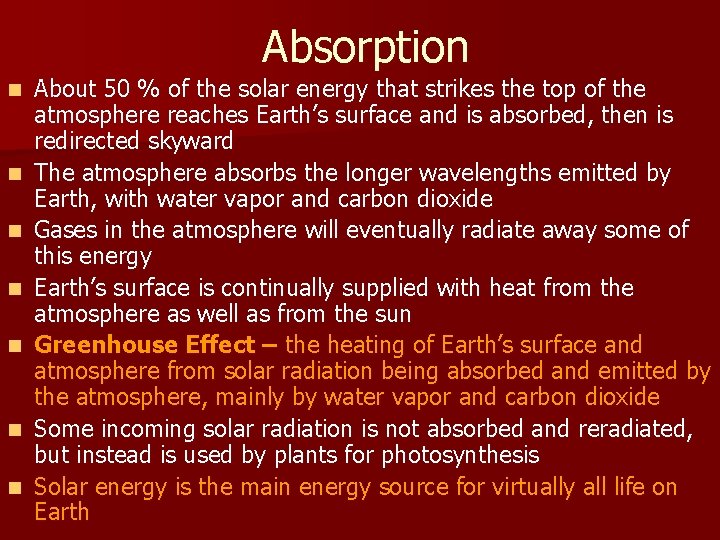
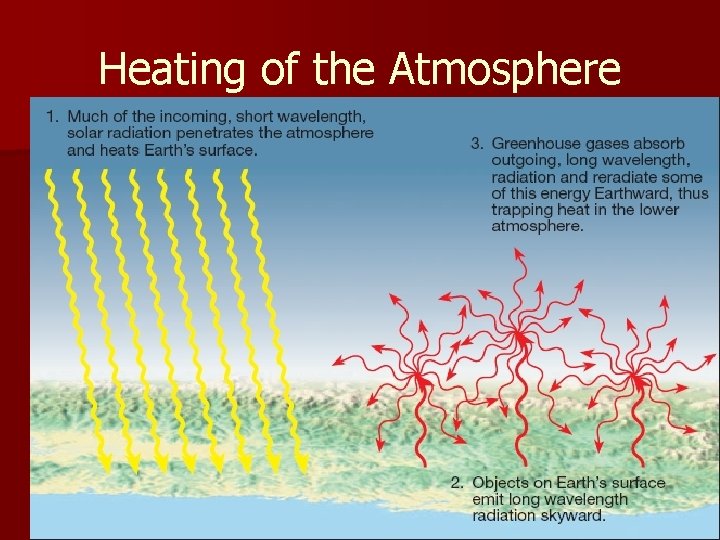
Absorption n n n About 50 % of the solar energy that strikes the top of the atmosphere reaches Earth’s surface and is absorbed, then is redirected skyward The atmosphere absorbs the longer wavelengths emitted by Earth, with water vapor and carbon dioxide Gases in the atmosphere will eventually radiate away some of this energy Earth’s surface is continually supplied with heat from the atmosphere as well as from the sun Greenhouse Effect – the heating of Earth’s surface and atmosphere from solar radiation being absorbed and emitted by the atmosphere, mainly by water vapor and carbon dioxide Some incoming solar radiation is not absorbed and reradiated, but instead is used by plants for photosynthesis Solar energy is the main energy source for virtually all life on Earth
Heating of the Atmosphere
Distribution of Incoming Solar Radiation
Assignment n Read Chapter 17, Section 2 (pg. 483 – 487) n Do Section 17. 2 Assessment #1 -5 (pg. 487)